



richword
Author
Lvl 6. 🗺️ Guide
32/40
32Posts
8Likes
4Followers
2Following
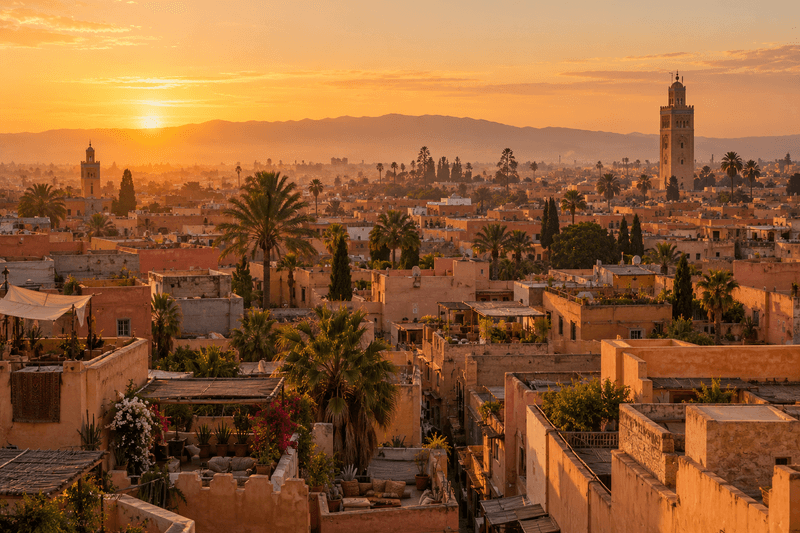
Morocco: Which City to Choose - Marrakech, Fez, Chefchaouen or Essaouira
Morocco has many interesting cities, and you cannot cover them all in one trip. We compared four popular destinations to make choosing a route easier. Marrakech A noisy city with a huge old medina and Jemaa el-Fnaa square, where traders and musicians gather in the evening. Known for: The medina, the Majorelle Garden, souk markets Best for: Those who like vivid impressions and bustle How long: Two days is usually enough Fez One of the oldest cities in the country, with a maze of narrow streets in the old medina where it is easy to get lost. Known for: One of the largest medinas in the world, tanneries, old madrasas Best for: Those interested in history and crafts How long: One to two days Chefchaouen A small town in the Rif mountains whose streets and houses are painted in shades of blue. Known for: The blue medina and mountain views Best for: A calm break and beautiful photos How long: One day or one night is enough Essaouira A town on the Atlantic coast with a fortified medina, ramparts and a fresh wind. Known for: Ramparts, the port, fish restaurants Best for: Those who want to rest by the ocean How long: One to two days Important: bargaining is customary in the medina, and entry rules and trip conditions change. Agree on a price in advance and check current requirements on official websites. How to Choose Want noise and vivid impressions - choose Marrakech Interested in history and crafts - Fez Need quiet and beautiful views - Chefchaouen Want the ocean and a cool breeze - Essaouira Bottom Line It is better to pick two or three cities and see them calmly than to try to fit everything in. The roads between cities are long, so allow time for transfers.
0
0
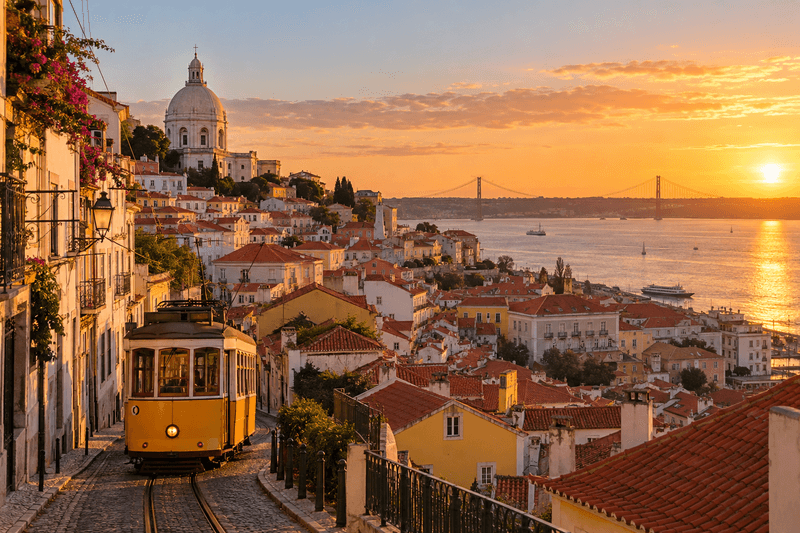
Lisbon in 3 Days: A Day-by-Day Itinerary
Lisbon sits on hills by the ocean, and what matters here are the old quarters, the trams and the views over the Tagus River. Three days is enough to see the center, the Belém district and take a trip to Sintra. Below is a route you can adjust to your taste. Day 1. Alfama and the Center Morning: a walk through Alfama, the oldest district with narrow streets Afternoon: St. George's Castle and viewpoints over the city Evening: a walk down to Commerce Square and the waterfront The district lies on hills, so comfortable shoes are a must. From the viewpoints you see the rooftops and the river, especially beautiful toward evening. Day 2. Belém Belém Tower by the water Jerónimos Monastery in the Manueline style The famous pastel de nata pastries in Belém Belém is on the western edge of Lisbon and can be reached by tram or train. There are many museums here, so pick one or two to avoid rushing. Day 3. Sintra Pena Palace on a hill, bright and colorful Sintra's old town with its narrow streets Optional: Cabo da Roca, the westernmost point of mainland Europe Sintra is about an hour away by train, and from there it is convenient to continue by bus or taxi. The weather on the hills often changes, so bring a light jacket. Important: opening hours, tickets and transport schedules change. Check them on official websites before the trip and book popular places in advance. Practical Tips Wear comfortable shoes: the streets are hilly and paved with stone Watch your pockets on trams and in crowds Bring water and a snack for Sintra Leave time to rest in the afternoon Bottom Line Three days in Lisbon is a relaxed pace: the city, the ocean coast and fairytale Sintra. The main thing is not to rush and to check current information.
0
0
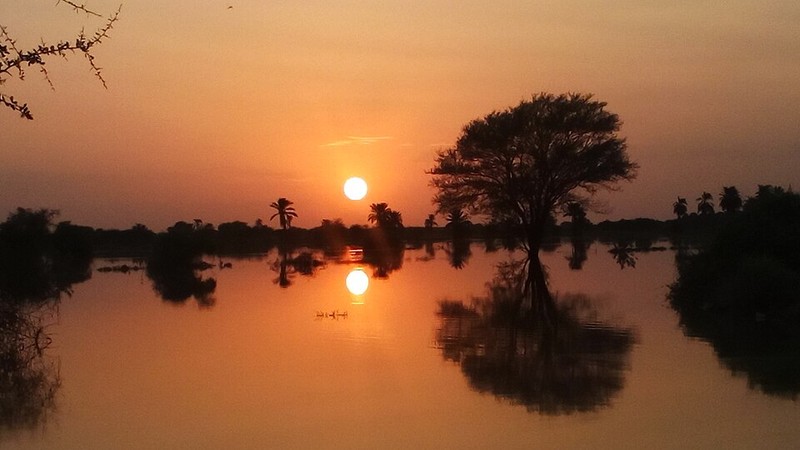
Sunset on the Nile: A Ride on a Traditional Felucca
As the daytime heat begins to fade, the Nile becomes especially beautiful. I set off on a felucca, a traditional Egyptian sailing boat that has travelled the river for centuries. The evening breeze filled the white sail, the boat glided gently across the water, and the noise of the big city gradually faded into the distance. Sailing the Great River on a Traditional Boat A felucca is a small wooden sailing boat commonly seen on the Nile in Cairo, Luxor, Aswan and other Egyptian cities. Unlike motorised sightseeing boats, it moves with the wind, making the journey quiet and unhurried. Sometimes the boat changes direction as the captain catches a favourable breeze, adding to the charm of the experience. I settled onto the soft cushions and watched the riverbanks pass by. In one stretch, modern buildings and lively promenades came into view; elsewhere, there were green trees, palms and small landing places for boats. Here, the Nile seems to connect different sides of Egypt: busy modern life and a peaceful riverside landscape that has changed little over generations. Golden Light over the Nile As sunset approached, the water began reflecting the warm colours of the sky. The sun slowly sank towards the horizon, turning the clouds pink and gold. Other feluccas drifted in the distance, their sails standing out against the evening light. Voices occasionally carried from the shore, but the water around our boat remained wonderfully peaceful. One of the nicest things was putting my phone away and simply watching the river. When travelling, it is easy to want to see as much as possible, but this ride reminded me that sometimes one beautiful moment is enough. There is no need to rush between attractions: you can watch the sky, listen to the water and feel the gentle breeze. How to Arrange a Felucca Ride Felucca rides are offered in many Egyptian cities along the Nile. Before boarding, check the duration, price, departure point and whether the price covers the full time you have booked. If you want to catch the sunset, agree on the departure time with the captain in advance, taking the season and local sunset time into account. Light clothing is useful on the boat, while a thin extra layer may be welcome after sunset. Bring water and sun protection, and ask about safety arrangements before setting off. Wind affects the boat's speed, so the actual duration of the ride may differ from what you expect. A Nile sunset is memorable not because it is spectacular, but because it is simple. A white sail, a golden path across the water and palm silhouettes along the shore turn an ordinary boat ride into one of those moments that make travel worthwhile. If you visit Egypt, try to set aside at least one evening for the river - it may become one of your warmest memories of the trip.
0
0
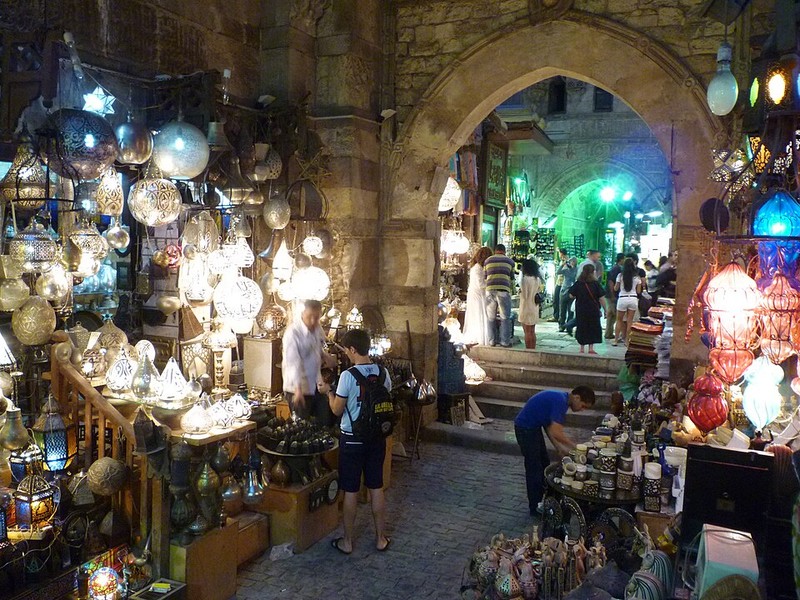
One Evening at Khan el-Khalili Bazaar
Cairo has places where time seems to move differently. Turn from a busy street into the lanes of Khan el-Khalili, and another world opens up: historic buildings, shops filled with brass lanterns, piles of spices, the aroma of coffee and the voices of traders. I arrived towards evening, as the market gradually filled with people and warm light gave the narrow streets a special atmosphere. A Maze of Shops and Eastern Aromas Khan el-Khalili is one of Cairo's best-known historic bazaars. Its history dates back to the 14th century, when a trading complex was established here. Today, it is a maze of streets and alleys selling souvenirs, jewellery, brassware, textiles, perfume oils, spices and traditional handicrafts. I wandered past the shop windows, looking at colourful glass lamps, painted plates and small figurines. In some shops, artisans work with metal; in others, fragrant spices are stacked into pyramids or bottles of scented oils line the shelves. Shopping is only part of the experience. It is equally interesting to watch everyday life: shopkeepers chatting with neighbours, visitors choosing gifts and travellers stopping to take photographs. Tea, Coffee and the Art of Bargaining After walking around, I decided to take a break at a local café. The historic district has traditional coffeehouses serving strong coffee, tea and other drinks. Conversations, clinking cups and street noise fill the air, while people sit with friends and watch the crowds pass by. Shopping at the bazaar has its own customs. Bargaining is common in many souvenir shops, so there is no need to rush into the first purchase. It is better to compare a few similar items, ask about the price and decide calmly whether the offer suits you. Negotiating can be a friendly part of the interaction rather than a contest that must be won. When the Lanterns Light Up As evening approaches, the bazaar takes on a special charm. Lamps glow in shop windows, golden light reflects off metalwork and the alleys grow busier. Around every corner, you may discover another shop, a small courtyard or a café that could easily be missed in the daytime rush. You do not need a long shopping list to enjoy Khan el-Khalili. Sometimes the best way to experience it is to wander without hurrying, try local drinks, admire handmade objects and listen to the rhythm of old Cairo. Before leaving, I looked back at the illuminated lanes and realised that evenings like this often stay in the memory longer than the most famous sights. If you visit Cairo, allow a few hours for the bazaar and wear comfortable shoes. Keep an eye on your belongings, confirm prices before buying and leave room for spontaneous detours. At Khan el-Khalili, the most interesting discovery is often not on the main street but just around the next corner.
0
0
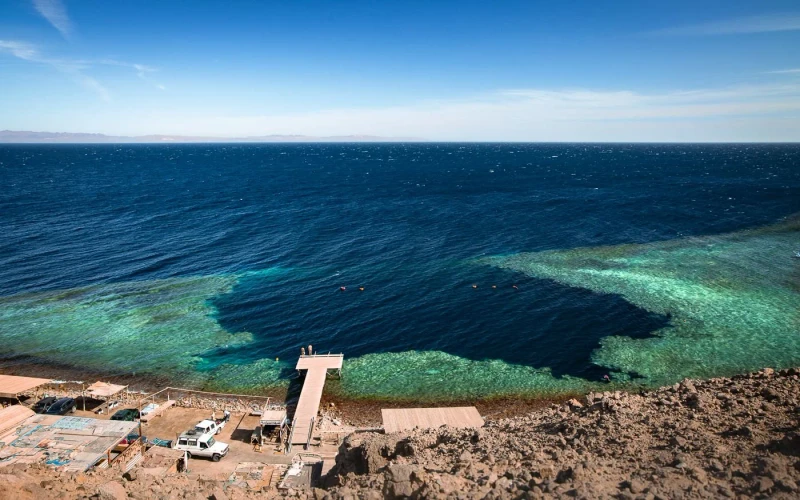
The Blue Hole in Dahab
On the Red Sea coast, near the Egyptian town of Dahab, lies a place that attracts divers from around the world. The Blue Hole looks like a vast circle of deep blue water surrounded by coral reef. From the shore, it seems almost bottomless, while the sea shifts from clear turquoise to rich sapphire. Where the Reef Drops into the Deep The Blue Hole is located around 8-10 kilometres north of Dahab on the Sinai Peninsula. It is a natural underwater sinkhole in the coral reef, descending to more than 100 metres. Its steep walls disappear into darkness, while corals and many Red Sea fish can be seen closer to the surface. Even without diving, the scenery makes the trip worthwhile. From the shore, the contrast between the bright coastal water and the dark circular opening is striking. Small cafés nearby offer a place to rest after a walk and look out over the sea, with the rugged Sinai Mountains in the background. The Underwater World of the Red Sea The Blue Hole is known for diving and snorkelling. In the clear water, visitors can observe coral formations, schools of tropical fish and other reef inhabitants. For many travellers, it is a chance to experience the underwater world of the Red Sea beyond photographs. It is important to distinguish an ordinary dive along the reef from the famous underwater Arch, a natural tunnel connecting the Blue Hole with the open sea. It lies at a depth of about 55 metres and is intended only for trained technical divers with the appropriate training, equipment and dive plan. Attempting it without the necessary qualifications can be fatal. How to Visit the Blue Hole Visitors usually reach the site by car or on an excursion from Dahab. You can admire the scenery from shore, snorkel when conditions are suitable, or dive with a certified instructor. Before entering the water, check sea conditions, use appropriate equipment and follow the advice of local professionals. The Blue Hole is remarkable not only for its depth but also for the unusual combination of desert mountains, coral coastline and clear water. It is a reminder of how extraordinary the Red Sea can be, and why exploring it calls for curiosity as well as respect for the risks.
0
0
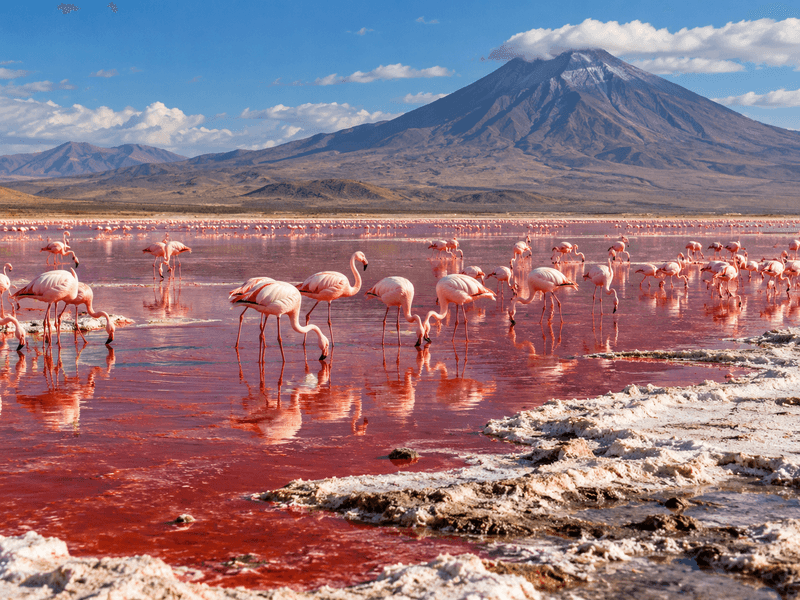
Lake Natron: Red Water and Thousands of Flamingos
When I first saw photographs of Lake Natron in Tanzania, I thought the landscape belonged to another planet. Parts of the water appear red or pink, the shores are covered with white mineral crusts, and thousands of flamingos gather in the shallows. Against dry hills and a vast sky, the lake looks almost unreal. Yet this remarkable scenery is part of a delicate ecosystem adapted to conditions that many living things could not survive. Lake Natron lies in northern Tanzania, near the Kenyan border in the East African Rift Valley. It is a shallow, salty, alkaline lake fed by rivers and hot springs, with almost no outlet. Under the strong sun, water evaporates, minerals accumulate and the shoreline changes over time. Why does the water turn red? Natron's unusual chemistry is the key. During the dry season, evaporation increases the concentration of salts, and patches of red, orange and pink appear in the shallows. These colours are associated with salt-loving microorganisms, including certain cyanobacteria that can survive in highly alkaline water. The lake does not have one uniform colour: depth, salinity, sunlight and season all make a difference. In some places, white mineral deposits cover the surface like a thin layer of ice. The water should not be touched casually, however. Its alkalinity can irritate skin and eyes, and the lake is not a place for an ordinary swim, even when a section looks like a peaceful pink lagoon. The scenery changes throughout the year. After rain, the lake may spread across a wider area, while in hot, dry periods the salt crusts and colourful shallows become more prominent. This changing landscape is part of what makes Natron so compelling for photographers and travellers. Why do flamingos come here? Lake Natron is one of the most important breeding sites for lesser flamingos in East Africa. The harsh environment can work in the birds' favour: high salinity and alkalinity limit the number of potential predators and competitors. In the shallows, flamingos find food, including microscopic algae and other tiny organisms. When large flocks gather, pink silhouettes reflect on the water and their calls carry across the shore. From higher ground, the view can be extraordinary: a long shoreline, patches of coloured water and a moving pink ribbon of birds. Their numbers and locations change with the season and lake conditions, so a huge flock is never guaranteed. How to visit without harming the environment Trips to Natron are often arranged from Arusha or included in a northern Tanzania itinerary. Roads in this remote area can be challenging, so travelling with an experienced local driver or guide is often the easiest option. Check road conditions, accommodation and the weather before setting out. Drinking water, sun protection and sturdy footwear are essential in the hot, dusty climate. Keep your distance from the birds, avoid nesting areas and take all rubbish away. Do not taste the water or touch mineral deposits if you do not know whether contact is safe. Natron is remarkable because its fragile ecosystem supports life in an extreme chemical environment, and its unusual colours are part of a much larger natural cycle. I would remember this place for more than its red water and flamingos. It makes you realise how varied the natural world can be. A landscape may look imaginary, yet its beauty is created by real processes unfolding before our eyes.
0
0
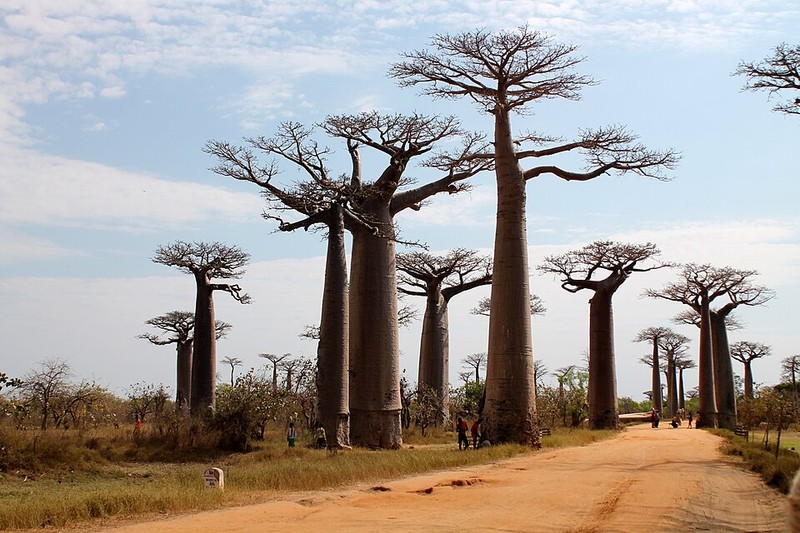
The Avenue of the Baobabs: Trees That Look Upside Down
Some places are impossible to mistake for anywhere else. Madagascar's Avenue of the Baobabs is one of them. Across the plains in the island's west stand enormous trees with massive trunks and almost bare branches. From a distance, they look as though someone pulled them out of the ground, turned them upside down and planted them again with their roots pointing skyward. When I first saw photographs of this landscape, it looked like a scene from a fantasy film. Yet these baobabs are real, and they have witnessed generations of people come and go. I arrived in the late afternoon, as the sun began to sink toward the horizon. The road passed through rural settlements and fields before gradually leading to the famous avenue. At first, only a few trees appeared, but soon they lined both sides of the dirt road. Their silhouettes rose above the plain, while their broad trunks took on a warm reddish glow in the evening light. Why baobabs look as if their roots are in the air The trees' unusual shape is their most striking feature. Baobabs have exceptionally thick trunks that can store water, helping them survive long dry periods. During the dry season, they lose their leaves, leaving only powerful branches against the sky. These branches resemble roots spreading through the air. The avenue lies near Morondava in western Madagascar. The trees here are Grandidier's baobabs, Adansonia grandidieri, a species known for its tall form and smooth, greyish trunk. Some grow to several dozen metres tall, and individual trees may be hundreds of years old. They have survived a changing landscape and become one of Madagascar's most recognizable natural symbols. The Avenue of the Baobabs is not a planted ornamental park. These trees remain in an area whose landscape has changed significantly through farming and deforestation. Today, the place is also a reminder of how fragile natural environments can be. When is the best time to visit? The most popular time to arrive is just before sunset. The sunlight turns the trunks golden and coppery, while long shadows stretch across the reddish earth. Many travellers come at this hour, so early morning can offer a quieter walk. The light is softer then, the air is fresher and the surroundings are often more peaceful. The easiest way to reach the avenue is from Morondava. Visitors often combine the trip with stops at fishing villages and other natural sites in western Madagascar. Roads can be rough, so check route conditions in advance and allow enough time for the journey. Why this landscape is worth seeing The avenue impresses visitors with more than the size of its trees. It is the sense of space that makes it special: open plains, red earth, enormous trunks and a sky that seems to change colour before your eyes. Unlike many famous attractions, there are no elaborate structures or artificial decorations here. The landscape has been shaped by nature itself. I stayed until the sun had almost disappeared below the horizon. The baobabs became dark silhouettes, and the sky slowly shifted from orange to violet. At that moment, it was easy to understand why people say the trees look upside down: their branches resemble the roots of fantastic plants reaching toward the sky. The scene stayed with me long after I left, reminding me that some of the world's strangest wonders do not belong to imaginary places - they already exist on our planet.
0
0
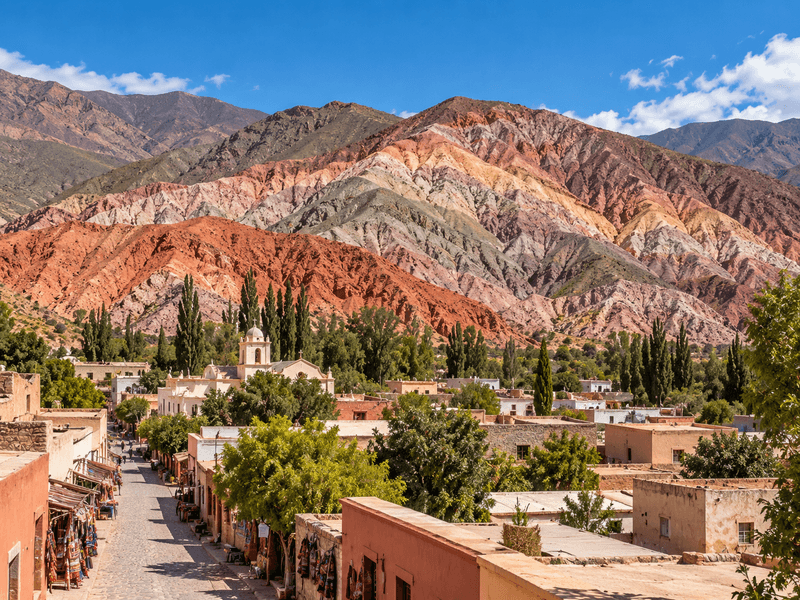
The Seven Colors of Purmamarca Mountain
Before the trip, I had seen photos of Purmamarca dozens of times, so I thought I knew what to expect. But when I finally saw Cerro de los Siete Colores in person, the photographs suddenly seemed much less impressive. The mountain really looks as if someone painted enormous stripes across its slopes. The mountain appears right behind the houses Purmamarca sits at the foot of the mountain at about 2,275 meters above sea level. The town itself is small, with white houses, narrow streets, a little square with an artisan market and a church. But after walking only a short distance, the main landscape suddenly appears behind the rooftops. At first I noticed mostly red and brown tones. Then yellow, gray, pink and greenish layers became visible. They run across the slopes like bands of paint. In reality, the colors come from different geological layers and sediments that formed over hundreds of millions of years. The mountain was especially beautiful in the morning, when the sunlight reached the slopes from the side and made the individual layers much easier to see. Then I realized Purmamarca is more than one mountain After taking my first photos, I decided to explore the surrounding landscape. One of the most interesting walks is Paseo de los Colorados , a roughly 3-kilometer circular route around the colorful rock formations. The landscape keeps changing along the way. Some slopes become almost completely red, then gray and yellow walls appear, with dry riverbeds and trails running between them. Against these enormous formations, Purmamarca looks incredibly small. This was when I understood why photographs from this part of Argentina look so unusual. The colors are real - the camera simply cannot always capture the scale of the landscape around them. The most beautiful part began when the light changed By midday I was back near the town. The mountain already looked different. The soft morning colors had become more contrasting, while shadows emphasized the shape of the slopes. That is when I noticed another special thing about Purmamarca: the mountain never looks exactly the same throughout the day. As the sun moves, some bands become brighter while others almost disappear into shadow. Purmamarca lies in the Quebrada de Humahuaca, a historic mountain corridor that is a UNESCO World Heritage Site. Other colorful mountains, small Andean villages and roads leading toward the high-altitude Puna are nearby. In the end, I realized that the seven colors are only the first impression. The real pleasure is simply stopping, looking at the mountains and watching the landscape change with the light.
0
0
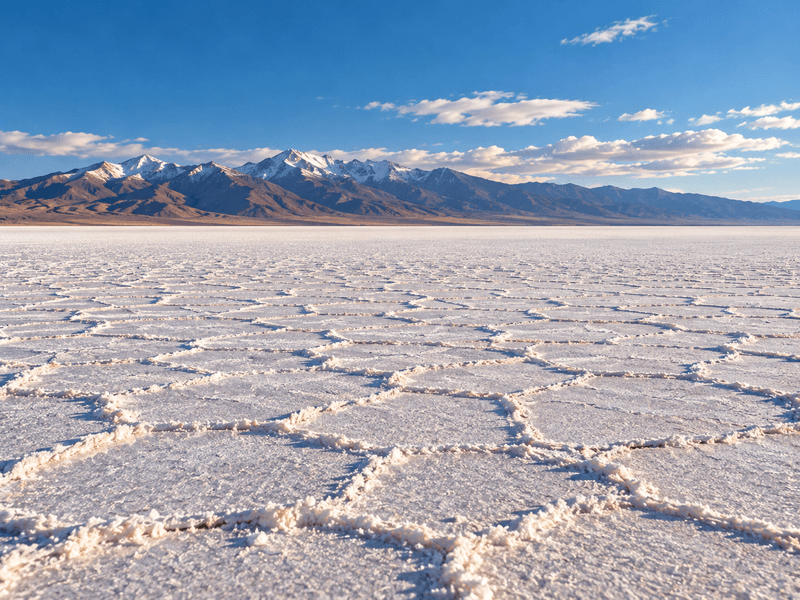
Salinas Grandes: A White Desert More Than 3,000 Meters Above Sea Level
Before visiting Salinas Grandes, I had seen photographs of this place several times and always thought they looked slightly exaggerated. An enormous white surface, a perfectly flat horizon and deep blue skies seemed almost unreal. When I finally arrived, however, the photographs suddenly seemed too ordinary. Salinas Grandes lies in the Argentine Puna at around 3,450 meters above sea level. It is a vast salt plain that seems almost endless. The white surface stretches toward the horizon while the surrounding mountains look surprisingly distant. The road here is already an adventure The journey begins long before reaching the salt flats. From Purmamarca, the road climbs through Cuesta de Lipán and the landscape gradually changes. Green valleys disappear behind you, vegetation becomes scarce and the mountains become increasingly rugged. Then a white line appears in the distance. At first it is difficult to understand what you are seeing. It could be snow or an enormous lake. The closer you get, the clearer it becomes: it is salt. The white surface seems endless Stepping out of the car and walking onto the salt flat creates a strange sensation. There are almost no familiar landmarks. White ground, blue sky and distant mountains make it difficult to judge distances. The salt forms unusual patterns and geometric shapes. During the rainy season, parts of Salinas Grandes become covered with water and turn into a huge natural mirror. I especially liked the simple contrast of white salt, blue sky and brownish mountains. There is nothing complicated about the landscape, yet that simplicity makes it incredibly powerful. At this altitude, you feel the scale differently There is another part of Salinas Grandes that photographs cannot really explain: the altitude. You are standing at around 3,450 meters above sea level, and your body can notice the difference. After the drive and walking, you may feel tired, especially if you came from a much lower elevation. It is worth taking things slowly, drinking enough water, protecting yourself from the sun and paying attention to how your body reacts to the altitude. But the altitude also makes the landscape feel even more extraordinary. This is not simply a desert. It is a high-altitude emptiness with almost no trees, dry transparent air and enormous horizons. At one point I stopped in the middle of the white plain and understood that this feeling of scale is exactly why people come here. Salinas Grandes is one of those places that is difficult to capture completely in a photograph. In a picture it is just a white surface surrounded by mountains. In reality, you hear the wind, feel the altitude and realize how enormous the landscape really is. That is probably why this white desert stayed in my memory longer than many of Argentina's better-known natural attractions.
0
0
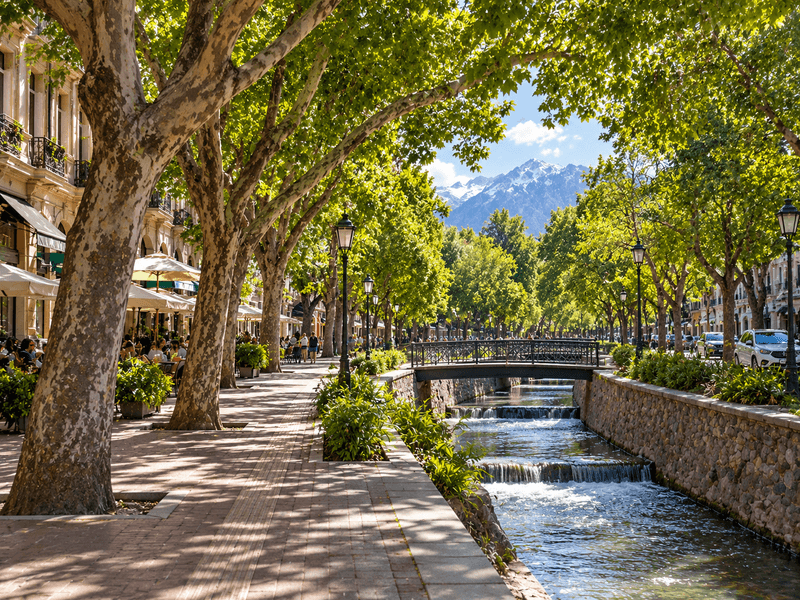
Mendoza Turned Out to Be Much More Than a Wine Region
Before traveling to Mendoza, I almost automatically associated the region with wine. Vineyards, tastings and a bottle of Malbec with the Andes in the background - that was more or less the picture in my head. Within the first few hours, however, it became clear that I had seriously underestimated this place. Mendoza turned out to be a city with a distinctive atmosphere, wide streets, enormous amounts of greenery and mountains that constantly remind you where you are. The city itself is surprisingly green The first thing that surprised me in Mendoza was the number of trees. Wide streets disappear under greenery, trees form natural tunnels above the sidewalks, and small irrigation channels run alongside the roads. It is especially interesting when you remember where the city is located. The climate is dry and rainfall is limited, while the surrounding landscape is largely arid. Mendoza became green thanks to an extensive irrigation system. That makes walking through the city completely different from what you might expect from a place surrounded by dry landscapes. Then the vineyards appear Of course, it is impossible to visit Mendoza without encountering wine. Outside the city, vineyards stretch along the roads, while snow-covered peaks of the Andes rise on the horizon. This was where I finally understood why Argentine Malbec became so famous. But the wine itself is only part of the experience. The combination of vineyards, dry climate, mountain air and enormous Andes is what makes the region so memorable. At that point Mendoza stopped being just a wine region for me. Wine is part of a much bigger story - the story of how people learned to grow grapes almost on the edge of dry land and mountains. A completely different Mendoza begins beyond the city The strongest impression came from traveling toward the Andes. The farther you go, the less familiar city life remains. The road begins to climb, the landscape becomes harsher and the mountains gradually take over the horizon. The main star of this route is Aconcagua, the highest mountain in South America. Even without planning a climb, traveling into this part of the province feels like an adventure. This contrast became my biggest discovery. Mendoza can begin with a glass of Malbec beneath the trees, continue through vineyards and end beneath enormous Andean peaks. Now when I think about Mendoza, wine is not the first thing that comes to mind. I remember the green streets, irrigation channels, vineyards against the mountains and the road disappearing into the Andes.
0
0
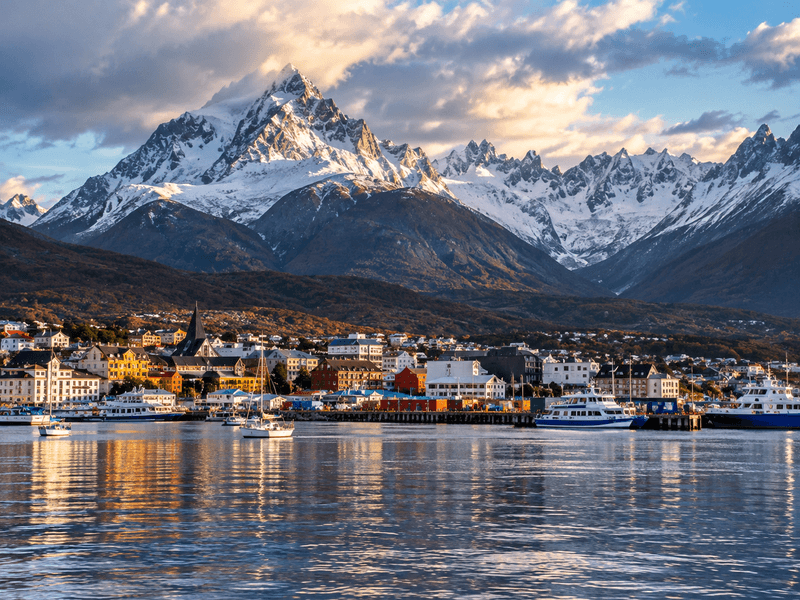
Ushuaia: The City at the End of the World
When I first saw Ushuaia on a map, its location was what surprised me most. The city lies in the far south of Argentina, between the mountains and the Beagle Channel, with the vast land of Tierra del Fuego stretching beyond it. It felt strange that such a remote place could have a real city with streets, cafés, hotels and a port. After just one day, however, I understood that Ushuaia is memorable for more than its location. You constantly feel how far you are from the familiar world. A city between mountains and cold water My first impression of Ushuaia was very different from that of an ordinary resort town. There is no feeling of endless summer here. Rugged mountains rise around the city, snow can remain on the peaks even in summer, and the weather can change within minutes. On one side there is the city, with houses, restaurants and tourist shops. On the other are mountains, forests and the cold waters of the Beagle Channel. The journey farther south starts here Ushuaia is an important starting point for exploring Tierra del Fuego and for cruises toward Antarctica. In the port you can see tourist ships and smaller boats heading into the Beagle Channel. I went out onto the water, and that was when the city revealed another side. The buildings disappeared behind us, replaced by islands, mountains and open water. Sea lions and birds can be spotted on the rocks. The thought that travelers leave from here for Antarctica makes the place even more impressive. The national park where the city ends Another reason to visit Ushuaia is Tierra del Fuego National Park. Roads pass through forests, with lakes, rivers and mountain slopes appearing along the way. In the morning you can drink coffee in the city and watch ships in the port, and shortly afterward find yourself among forests and mountains with almost no urban noise. That is what makes Ushuaia a true city at the end of the world. Its main attraction is the feeling that you have reached a very remote corner of the south, with Antarctica lying beyond. After Ushuaia, I realized that some cities are remembered not for the number of attractions they have, but simply for where they are.
0
0
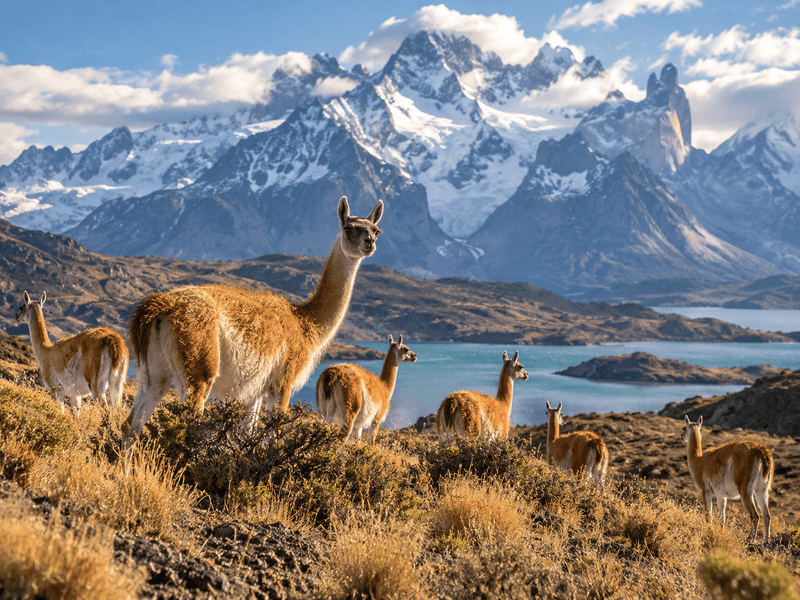
Why Patagonia Is One of the Best Places to Experience Wildlife
Before traveling to Patagonia, I imagined wildlife encounters in a fairly simple way: go far from the cities, find a national park and hope to get lucky. Patagonia turned out to be different. The landscapes are so vast that animals become part of the scenery, and an encounter can happen when you least expect it. You don't have to search for wildlife for hours One of Patagonia's strongest impressions is its enormous sense of space. Roads cross steppes, mountains, lakes and coastlines, while in some areas there are so few people that it feels as if nothing exists around you. That is when you start noticing life everywhere. Guanacos appear on the slopes, large birds fly over the roads, and sea lions and penguins can be found along the coast. Sometimes an animal is only a few dozen meters away and still behaves completely calmly. I especially liked that it never feels like a zoo. Nobody gathers the animals in one place for tourists. They simply live in their natural surroundings, while people are only temporary visitors. Penguins, whales and sea lions are only part of the story Patagonia is fascinating because the wildlife changes depending on the location and season. The coast of Chubut is home to famous colonies of Magellanic penguins. In parts of the Valdes Peninsula, you can observe sea lions, elephant seals and whales. The most remarkable part is seeing animals without glass between you and them or from a huge viewing platform. Near penguin colonies, for example, you can walk along marked trails while the birds move between their burrows and head toward the ocean. The important thing is not to approach them deliberately, feed them or block their path. Whale encounters feel completely different. You may see a huge back or tail appear above the water in the distance. A few seconds later, the ocean becomes completely calm again. Those moments stay with you precisely because they cannot be staged or repeated on command. The real attraction is the feeling of untouched nature In Patagonia, I realized that a wildlife experience does not have to be a checklist of animals. Sometimes the feeling of the place matters much more. You can drive for hours along an empty road surrounded by dry grass, mountains and strong wind, and suddenly see a herd of guanacos. You can reach the ocean and find dozens of sea lions on the shore. You can watch a penguin colony for a long time and realize that the birds simply do not care about the people nearby. That is why Patagonia leaves such a strong impression. You may see penguins, whales, guanacos, sea lions and countless birds, but the most important discovery is different: nature here does not try to impress tourists. It simply goes on living its own life.
0
0
Norway's Fjords: 5 Places Worth Seeing
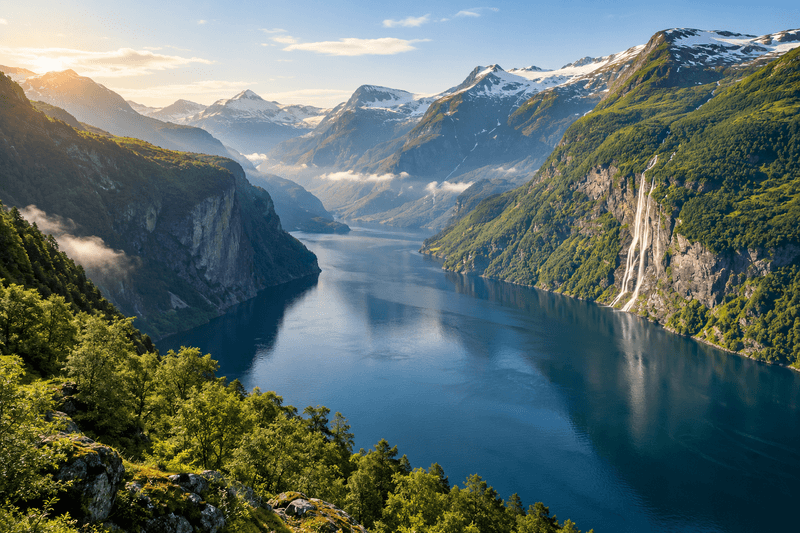
Norway is known for its fjords, narrow sea inlets between tall cliffs. You can reach them from Bergen, and the main spots are not far from each other. We have gathered five places worth including in your route and added tips on how to prepare. In Short Best time: summer, roughly June to September, when the main trails and roads are open. Base for the route: Bergen, from where most fjords are easy to reach. Allow time: there are long roads and ferries between the spots. Check the weather in advance: it changes fast in the mountains. Geirangerfjord Geirangerfjord is a UNESCO World Heritage Site together with Nærøyfjord. Its slopes are decorated with waterfalls, the best known of which is called the Seven Sisters. It is best to see the fjord from the water on a cruise or ferry trip, and then climb to one of the viewpoints above it. Geirangerfjord Nærøyfjord Nærøyfjord is considered one of the narrowest fjords in Europe, and its slopes rise almost vertically. You can see it from a boat or a kayak starting from the villages of Gudvangen and Flåm. It is quiet here, and the slopes around you seem very close. Nærøyfjord The Flåm Railway Flåm is a small village where the famous Flåmsbana railway begins. The route is about 20 km long, takes roughly an hour and descends more than 800 meters. From the train windows you can see waterfalls, mountain valleys and the fjord, which makes it one of the easiest ways to see Norwegian nature without long hikes. The Flåm Railway Preikestolen Preikestolen , the Pulpit Rock, is a flat cliff about 600 meters above Lysefjord. The trail is about 4 km one way and takes roughly two hours, with some steep parts. There is no fence at the top, so be careful near the edge, especially in wind. Preikestolen Trolltunga Trolltunga , the Troll's Tongue, is a rock sticking out about 700 meters above the lake. The route is long: around 28 km round trip, usually taking 8 to 12 hours. You need good fitness, suitable shoes and an early start, and in bad weather it is better to skip the hike. Trolltunga Tip: do not try to see everything in one go. There are long roads and ferries between the fjords, so it is better to pick two or three places and take them calmly. What to Bring A waterproof jacket Warm clothes in layers Comfortable trail shoes Water and a snack A charged phone and a power bank Was Norway Worth the Trip? Absolutely. The fjords look different depending on weather and time of day, and even a short trip stays with you for a long time. The main thing is to plan the route in advance and not rush.
0
0
Ouro Preto: The Brazilian City That Is Nothing Like Rio
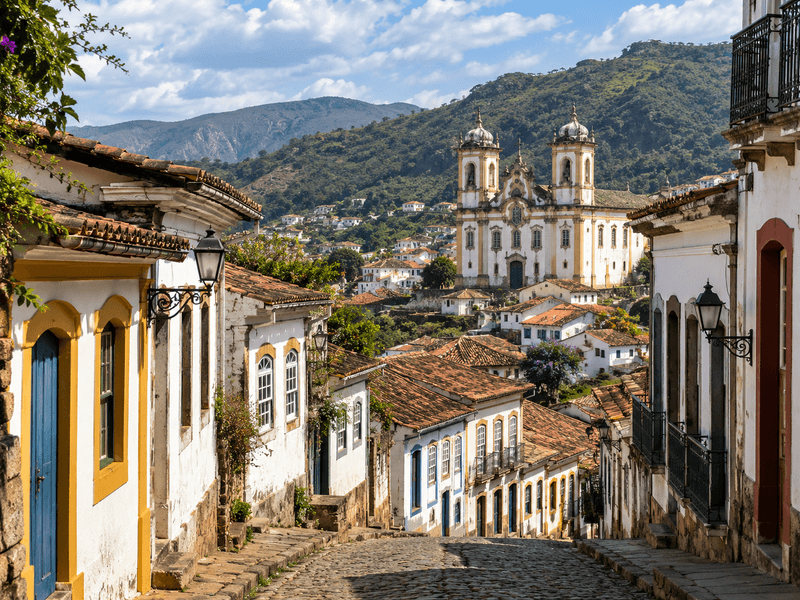
When I traveled to Ouro Preto, I expected another beautiful Brazilian city, just a little older and quieter than Rio. But after only a few minutes of walking, I realized that comparing the two was almost pointless. There is no ocean, no long beach and no feeling of a huge metropolis. Instead, there are steep hills, narrow streets, old houses and historic churches. My first impression - this felt like a different Brazil After Rio, the difference was especially noticeable. In Ouro Preto, the city seems to be built directly into the mountains. I kept stopping because every turn revealed another view. Houses stand on the slopes, while streets suddenly climb or descend. These streets are what give the city its character. The historic center has preserved its old layout and colonial architecture. I started walking into one church after another What surprised me most was the number of beautiful historic churches. Inside, I found carved wood, gold decoration, religious sculptures and painted ceilings. The Church of Saint Francis of Assisi was especially memorable, connected with the famous Brazilian Baroque artist Aleijadinho. I stopped trying to remember every name and simply enjoyed the details. At Tiradentes Square, I finally stopped and realized that Ouro Preto is best experienced as one historic ensemble. Then I remembered how this city came to exist It all started with gold. At the end of the 17th and beginning of the 18th century, rich deposits were discovered in the region, and Ouro Preto became one of the main centers of gold mining. The wealth helped build large churches, public buildings and beautiful houses. When the gold cycle ended, the city lost much of its economic importance, but its historic architecture survived. Another important chapter is the Inconfidência Mineira, the 1789 movement against Portuguese colonial rule. Ouro Preto is nothing like Rio - and that is exactly why I liked it I went to Rio for the ocean, mountains and famous views. In Ouro Preto, I discovered a completely different Brazil - historic, mountainous and a little quieter. There is no need to hurry here. You can walk along an old street, visit a church, climb another hill, have a coffee and keep wandering. After Rio, I thought I already knew what Brazil could look like. Ouro Preto quickly proved me wrong.
1
0
Ouro Preto: The Brazilian City That Is Nothing Like Rio
When I traveled to Ouro Preto, I expected another beautiful Brazilian city, just a little older and quieter than Rio. But after only a few minutes of walking, I realized that comparing the two was almost pointless. There is no ocean, no long beach and no feeling of a huge metropolis. Instead, there are steep hills, narrow streets, old houses and historic churches. My first impression - this felt like a different Brazil After Rio, the difference was especially noticeable. In Ouro Preto, the city seems to be built directly into the mountains. I kept stopping because every turn revealed another view. Houses stand on the slopes, while streets suddenly climb or descend. These streets are what give the city its character. The historic center has preserved its old layout and colonial architecture. I started walking into one church after another What surprised me most was the number of beautiful historic churches. Inside, I found carved wood, gold decoration, religious sculptures and painted ceilings. The Church of Saint Francis of Assisi was especially memorable, connected with the famous Brazilian Baroque artist Aleijadinho. I stopped trying to remember every name and simply enjoyed the details. At Tiradentes Square, I finally stopped and realized that Ouro Preto is best experienced as one historic ensemble. Then I remembered how this city came to exist It all started with gold. At the end of the 17th and beginning of the 18th century, rich deposits were discovered in the region, and Ouro Preto became one of the main centers of gold mining. The wealth helped build large churches, public buildings and beautiful houses. When the gold cycle ended, the city lost much of its economic importance, but its historic architecture survived. Another important chapter is the Inconfidência Mineira, the 1789 movement against Portuguese colonial rule. Ouro Preto is nothing like Rio - and that is exactly why I liked it I went to Rio for the ocean, mountains and famous views. In Ouro Preto, I discovered a completely different Brazil - historic, mountainous and a little quieter. There is no need to hurry here. You can walk along an old street, visit a church, climb another hill, have a coffee and keep wandering. After Rio, I thought I already knew what Brazil could look like. Ouro Preto quickly proved me wrong.
0
0
I Swam in the Middle of a Desert in Brazil
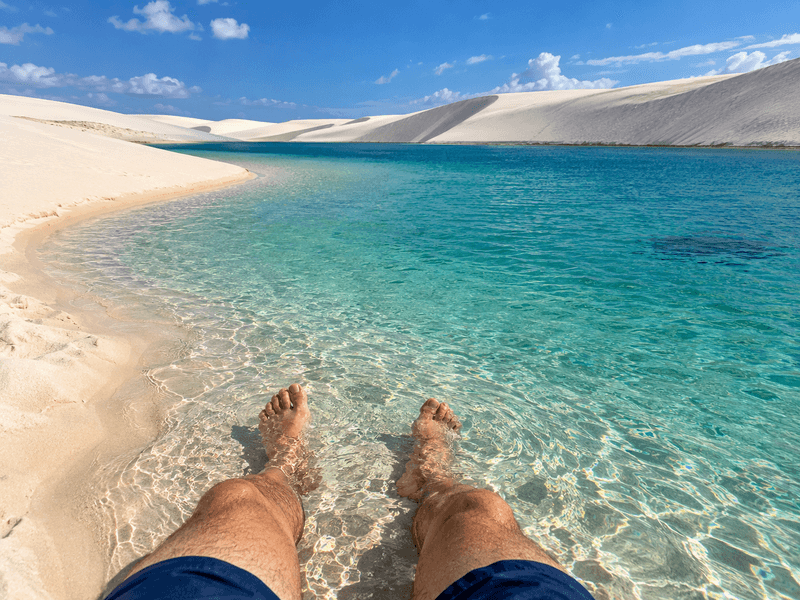
When I first saw photos of Lençóis Maranhenses, I thought they had to be edited. Huge white dunes with dozens of clear blue lagoons between them did not look real. A desert and water in the same place simply did not make sense to me. So when I got to Brazil, I decided to see it with my own eyes. Lençóis Maranhenses National Park is located in the state of Maranhão in northeastern Brazil. Its landscape is made up of enormous sand dunes and freshwater lagoons that form between them thanks to seasonal rainfall. At first, I saw nothing but sand We reached the first lagoon by an off-road vehicle along sandy tracks. Then the vehicle stopped and we continued on foot. There were dunes everywhere - one after another as far as I could see. It really felt like I had entered a giant desert. I had started wondering whether the photographs exaggerated the beauty of the place when I climbed one more dune. Then I saw water below me. A small turquoise lagoon was sitting between the white sand hills. A few minutes later, I was walking down toward it. I stepped into the water in the middle of the sand The strangest feeling came when I finally entered the water. There was no sea, no river and no familiar beach around me. Just white sand, blue water and tall dunes. The water felt pleasantly cool after walking across the hot sand. I swam, looked across the lagoon and kept thinking that the whole scene looked unreal. An hour earlier I had been walking through a desert-like landscape, and now I was swimming in the middle of it. I also loved how the landscape changes over time. Because the dunes move and the lagoons are seasonal, some disappear while others form in different places. Why is there water here at all? I later learned that the lagoons of Lençóis Maranhenses are not permanent lakes. They are formed by rainwater collecting between the dunes. That is why the appearance of the park changes depending on the season. This is what makes the place so unusual. It is not simply a beautiful desert. It is a landscape where sand and freshwater constantly interact. On the way back, I climbed another dune and looked behind me. There were only white waves of sand and small blue patches of water. That was when I understood why photographs of this place look almost impossible - reality is even more unusual. I would definitely come back Lençóis Maranhenses turned out to be one of those places that are difficult to compare with anywhere else. It is not a classic beach and not an ordinary desert. You can walk across the sand, climb a dune and a few minutes later find yourself swimming in cool freshwater. If you are planning a trip here, it is worth considering the seasonal nature of the lagoons and the park's visitor rules. For me, the main memory will always be this strange feeling: I came to see a desert and ended up swimming right in the middle of it.
0
0
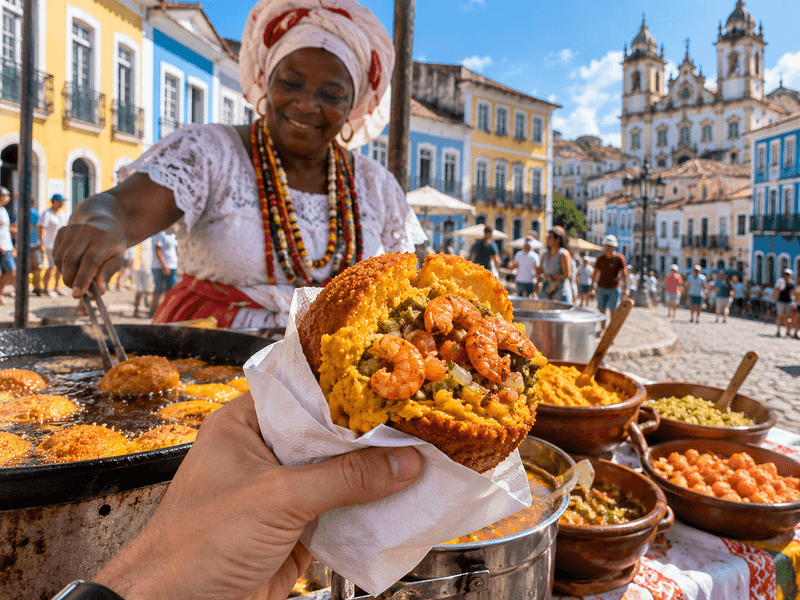
I Tried Real Acarajé in Salvador
Before visiting Salvador, I imagined acarajé as simply a fried street snack. But when I first saw it being prepared right on the street, I realized there was much more to it. In front of me was a traditional tabuleiro run by a baiana, with small balls of dough frying in hot palm oil. Acarajé is made from black-eyed peas, onion and spices, then fried in dendê oil. It is usually cut open and filled with vatapá, caruru, dried shrimp, salad and pepper. My first acarajé was eaten right on the street At first, I simply watched the preparation. The baiana, dressed in traditional clothing, quickly shaped another acarajé and dropped it into the hot oil. The distinctive smell of dendê made it almost impossible to walk past. I ordered one with vatapá, shrimp and a little pepper. The outside was crispy, while the inside was soft and airy. The filling added a creamy texture and rich flavor, while the pepper turned out to be much hotter than I expected. It turned out to be much more than a snack While eating, I started paying attention not only to the food. These stalls are part of everyday life in Salvador. Baianas prepare and sell traditional foods in streets, squares, markets and during local celebrations. The history of acarajé is closely connected to Brazil's African heritage. The tradition came from West Africa with enslaved Africans and eventually became one of the most recognizable parts of Bahia's culture. In a religious context, acarajé is also connected with Candomblé traditions and the orixás. Now I understand why you should try it in Salvador The most interesting part for me was realizing that acarajé cannot be seen simply as a dish. When you buy it from a baiana on the street, you are also encountering a part of the city's history. There is African heritage, religious tradition and everyday street life all in one place. I came to try local food and ended up with a much richer experience. The hot acarajé, the smell of dendê, the noise of the street and the small line at the stall stayed in my memory much longer than many meals in regular restaurants. If I return to Salvador, I will definitely stop at another tabuleiro and try acarajé again. Next time, though, I will probably ask for a little less pepper.
0
0
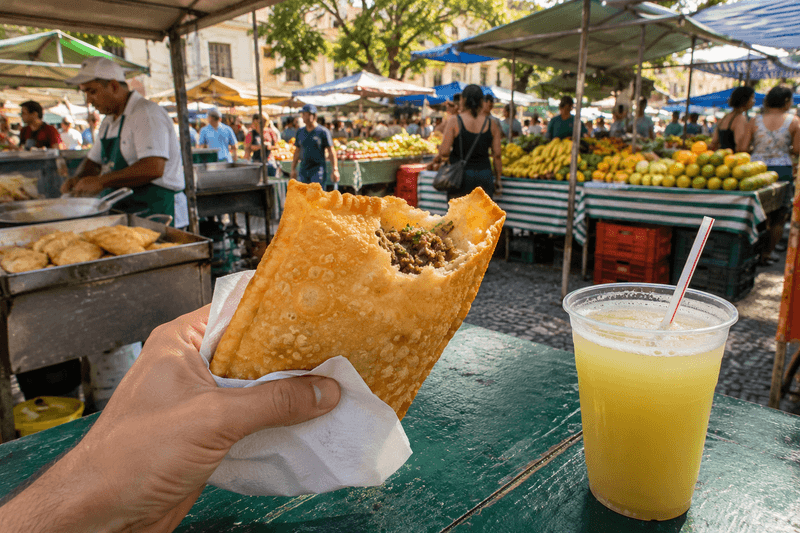
I Tried Pastel at a Brazilian Market
Before visiting Brazil, I imagined street food here quite differently. I thought I would have to look for something unusual at the market - exotic fruit, grilled meat, or dishes I had never even heard of. Then I noticed a small stall selling hot pastéis and decided to try something that locals eat as an everyday snack. Pastel is a thin, crispy pastry filled with different ingredients and fried in hot oil. At Brazilian markets and street fairs, it is often enjoyed with cold caldo de cana - fresh sugarcane juice. I Had No Idea Which One to Choose There were already several people standing at the stall. Large golden pastéis were displayed in front of me, while a menu listed different fillings. There were options with meat, cheese, hearts of palm and other ingredients. I chose the simplest meat version. While it was being prepared, I watched the process. The pastry was quickly dropped into hot oil, and a few minutes later a huge crispy envelope appeared in front of me. My first impression was simple - it was incredibly crispy. The first bite made that unmistakable crunch, and a few crumbs immediately fell onto the plate. But the most interesting part was inside. There was plenty of filling, the meat was well seasoned, and the thin pastry did not overpower the flavor. I expected an ordinary fried snack, but it turned out to be a surprisingly satisfying meal. Then I Understood Why Caldo de Cana Works After the pastel, I decided to try caldo de cana. I had never tasted it before and honestly had no idea what to expect. The juice was extremely sweet and cold. After the hot and slightly salty pastel, the combination worked surprisingly well. It felt like a perfect balance of opposites: crispy and soft, hot and cold, salty and sweet. I sat there with a plastic cup of juice and watched everyday life continue around me. People were buying vegetables, talking to vendors, and another batch of food was being prepared nearby. Nothing was staged for tourists - and that was exactly what I liked about it. The Best Part Wasn't Actually the Pastel When I finished, I realized that the taste wasn't even what stayed with me the most. It was the feeling of the whole experience. You simply arrive at a market, choose food you have never tried before, sit among local people and spend a few minutes watching the city. No fancy restaurant, complicated presentation or long menu. Pastel turned out to be exactly the kind of food I wanted to find in Brazil, even though I wasn't looking for it at first. Simple, hot, crispy and completely satisfying. Now, if I find myself at a Brazilian market again, I definitely won't walk past a pastel stall. Next time, though, I will probably try a different filling.
0
0
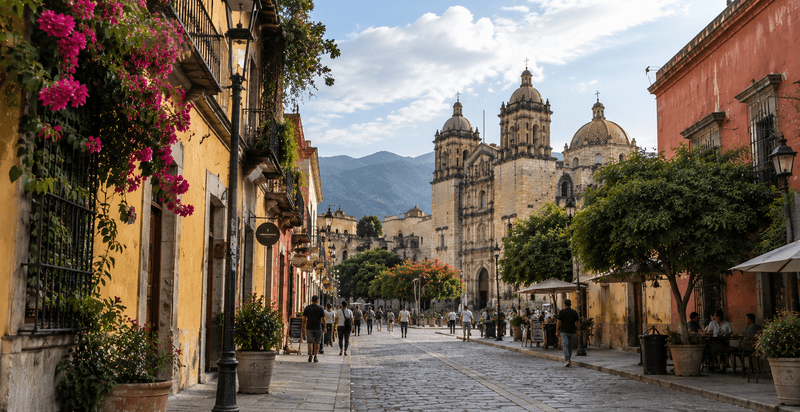
Oaxaca Was the Most Atmospheric Stop on My Trip
I arrived in Oaxaca after several busy days in Mexico, planning to take a short break. Yet on my first evening I already wanted to stay longer. Here you do not have to hunt for experiences: step outside and you find music, tempting food and colorful facades. A City Made for Wandering In the morning I left my map behind. Streets in the historic center led past ochre, blue and terracotta houses, with leafy courtyards hidden behind open doors. At Santo Domingo church I lingered in the square, watching the city wake up. For once, I felt no need to rush. Even coffee in a quiet courtyard became an experience of its own. A Market That Changed My Lunch Plans By lunchtime I reached the 20 de Noviembre market. Bread, chocolate, spices and dried chilies filled the stalls, while food sizzled in tiny kitchens. I ordered a tlayuda, a huge crisp tortilla topped with beans, cheese and meat. Then I tasted mole, a rich sauce whose layers of spice, sweetness and bitterness surprised me. A cup of local hot chocolate kept me wandering among the stalls. An Evening I Remember Better Than the Sights At sunset I returned to the center. Musicians played as warm light fell across the old buildings, and families gathered in the square. A small musical procession passed by; I never learned what it celebrated, but it captured the spirit of Oaxaca for me. Traditions here are not just museum exhibits: they live in workshops, markets and everyday street life. I left feeling that I had barely begun. I still wanted to visit nearby craft villages and try dishes whose names I had not learned. But Oaxaca had already become my favorite stop, not because of one landmark, but because of the rhythm of an ordinary day.
0
0
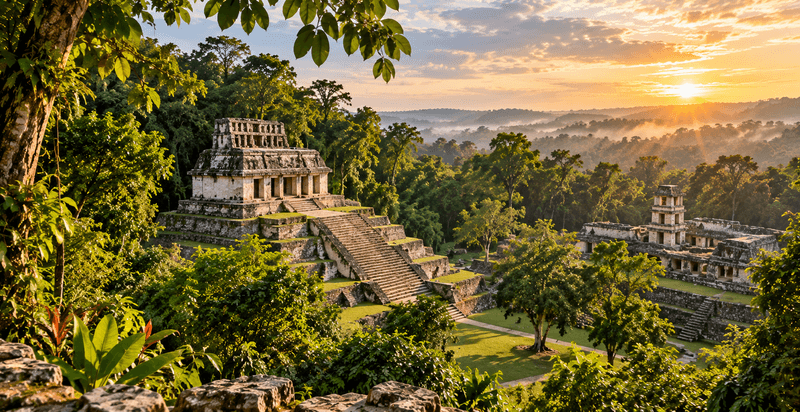
Palenque: Maya Ruins Hidden in the Jungle
When I first saw photos of Palenque, I thought it looked like a place created for an adventure movie. Huge stone temples, moss-covered steps and real jungle all around them. But photographs cannot capture the most important part: the feeling of walking through an ancient city and suddenly seeing another temple appear between the trees. The Road Ends and the Jungle Begins Palenque is located in the Mexican state of Chiapas, surrounded by dense tropical vegetation. Even on the way to the archaeological site, it feels different from an ordinary ruins tour. There is greenery everywhere, humid air, birds and the constant sound of the forest. When I entered the ancient city, I simply started walking without following a strict plan. Stone walls, stairways and small plazas appeared between the trees. Many buildings are surrounded by forest, creating the impression that you have not arrived at an archaeological site at all, but have accidentally discovered it in the jungle. I Was Standing in the City of Pakal The history of Palenque is closely connected with its famous ruler Pakal the Great, during whose reign the city reached its peak. This is where the famous Temple of the Inscriptions stands, one of Palenque's most recognizable buildings. In 1952, archaeologist Alberto Ruz Lhuillier discovered Pakal's tomb inside this temple. It was strange to realize that beneath these ancient stones once lay the burial of one of the most famous rulers of the Maya world. But Palenque is much more than one temple. Nearby stands a huge palace complex with courtyards, passageways and a tower. Farther on are the Temple of the Cross, the Temple of the Sun and other buildings. The farther I walked, the more I understood how large and sophisticated this ancient city must have been. The Best Part Happens Between the Temples What I enjoyed most was not even one particular building, but the atmosphere. In one place, a large plaza opens in front of you; a few minutes later, you are walking along a narrow path surrounded by enormous trees. You hear water somewhere in the forest, birds fly overhead and more stone walls appear behind the vines. Palenque is different from many other famous Maya cities because the jungle is part of the experience . After the ancient city was abandoned around the 9th century, dense vegetation gradually covered its buildings. For centuries, the ruins remained hidden among the forest. I caught myself slowing down several times. I did not want to simply photograph the temples. I wanted to look at the reliefs, stairways, stonework and the way nature was slowly reclaiming the space around the ancient city. Was Palenque Worth the Trip? Absolutely. If you are traveling through Chiapas, Palenque deserves to be high on your list. History, architecture and nature come together here in a way that is difficult to find elsewhere. For me, Palenque turned out to be much more than another Maya ruin. It is a place where the ancient city is not separated from nature - it is almost swallowed by it. That is exactly why walking here stayed with me much longer than an ordinary archaeological tour.
1
0
Agua Azul Waterfalls: Is the Water Really That Blue?
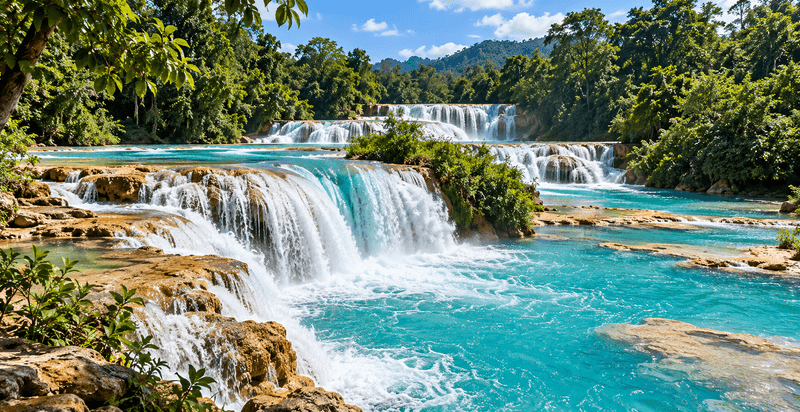
Before traveling to Chiapas, I had seen photos of the Agua Azul waterfalls several times and always wondered the same thing: can water really be that blue? In the pictures, it looked almost unreal - bright turquoise cascades surrounded by dense jungle. So when I finally arrived, the first thing I wanted to see was that famous color. I Finally Saw the Water With My Own Eyes The road to the waterfalls passes through the green landscapes of Chiapas, and the scenery becomes more tropical as you get closer. Then the water suddenly appears between the trees. First I saw one small cascade, then another, and gradually an entire series of waterfalls and natural pools opened up in front of me. And yes - the water really is that color . In person, it looks even more interesting than in photographs. The turquoise shade is especially noticeable where the water is calmer and sunlight reaches the surface. Why Is the Water Blue? It turns out there is no need for photo editing. The water flows over limestone and picks up dissolved minerals. Light-colored limestone deposits form on the rocks and riverbed, while sunlight creates that unusual blue-turquoise appearance. There is one important detail, though. Agua Azul does not always look the same . After heavy rain, the river carries more water and suspended sediment, and the famous turquoise color can become much less intense. That is why photos from different seasons can make the same place look completely different. I arrived on a good day, when the water was clear and bright. Under the sun, the cascades really did look almost unreal. There Is More Than Just the Water Agua Azul is not a single tall waterfall but a whole series of cascades flowing over limestone terraces. Small pools form between them, surrounded by dense tropical vegetation. I kept walking higher along the path and stopped again and again because every viewpoint revealed something new. In some places the water fell as a thin white stream, while in others it became a wide turquoise flow. Was It Worth the Trip? Absolutely. Especially if you are traveling through Chiapas and planning to visit Palenque. After noisy cities and archaeological sites, the atmosphere here feels completely different - water, jungle and the constant sound of falling cascades. The important thing is not to come only expecting the perfect Instagram photo. Agua Azul is interesting precisely because its color changes with the weather, water level and light. But on a good day, you really can see that incredible blue water you have seen in photographs.
0
0
I Took a Boat Ride Through the Canals of Xochimilco
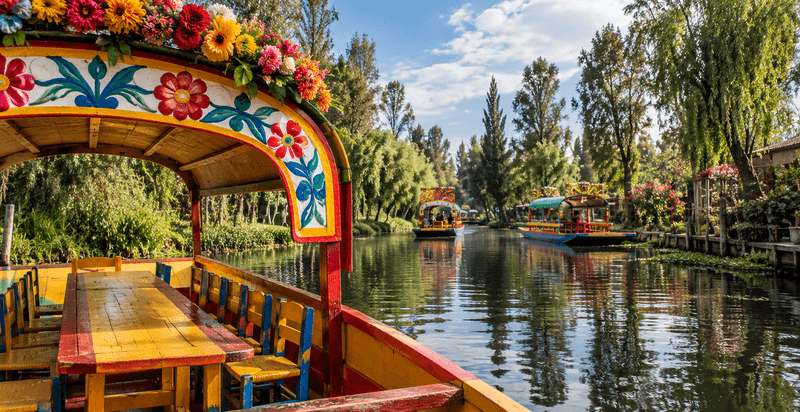
In Mexico City, I had become used to busy streets, cars, markets and huge crowds. That is why my trip to Xochimilco felt like such an unexpected change of pace. I headed south of the city, climbed into a colorful trajinera and, within a few minutes, found myself in a completely different world. The City Was Suddenly Far Away At first it felt strange to realize that a place like this could exist inside such a huge metropolis. Instead of skyscrapers and busy streets, there were canals, trees, greenery and small patches of land. The boat moved slowly across the water while the noise of the city gradually disappeared. Xochimilco still preserves its old canal system and traditional agricultural plots known as chinampas . Today it is one of the most unusual parts of Mexico City, where an ancient landscape exists right next to a modern metropolis. The Trajineras Have Their Own Atmosphere The boat itself turned out to be much more interesting than I expected. Trajineras are painted in different colors, decorated with flowers and often have their own names. On some boats, people celebrate small parties, have lunch, listen to music and simply spend time together. After a while, a boat carrying musicians appeared nearby. I could hear mariachi music from a distance, and suddenly the whole scene looked like something from a Mexican movie. People were singing on one boat, taking photos on another, while food was being sold from a third. Small vendor boats sometimes came alongside ours. You could buy corn, drinks, snacks and other food. It felt like a real floating market , except that the streets had been replaced by water. It Is Easy to Forget You Are in a Megacity What I liked most was that the trip required no special plan. You can simply sit, look around and watch life unfold along the canals. There are greenhouses and plants, small houses and, from time to time, another colorful trajinera appears between the trees. At one point I realized that I had completely stopped thinking about Mexico City. It felt as if I were far beyond the limits of the enormous city. In reality, the capital was still all around me. That is probably what makes Xochimilco so special. It is not just a boat ride for photographs. A small piece of a completely different Mexico has survived here - quieter, greener and closely connected to water and agriculture. Was It Worth Going? Absolutely. If you spend several days in Mexico City, I would definitely set aside at least a few hours for Xochimilco. After museums, squares, markets and the endless movement of the city, this kind of trip is a perfect change of pace. I returned toward evening. The water became quieter, the sun dropped lower, and the colorful trajineras gradually disappeared around the bends of the canals. That day I realized that Mexico City is much more than a huge metropolis. Sometimes all you need to do is get on a boat and travel a little away from the center to discover a completely different side of the city.
1
0
I Walked Into a Mexico City Market and Realized I Didn't Need Tourist Restaurants Anymore
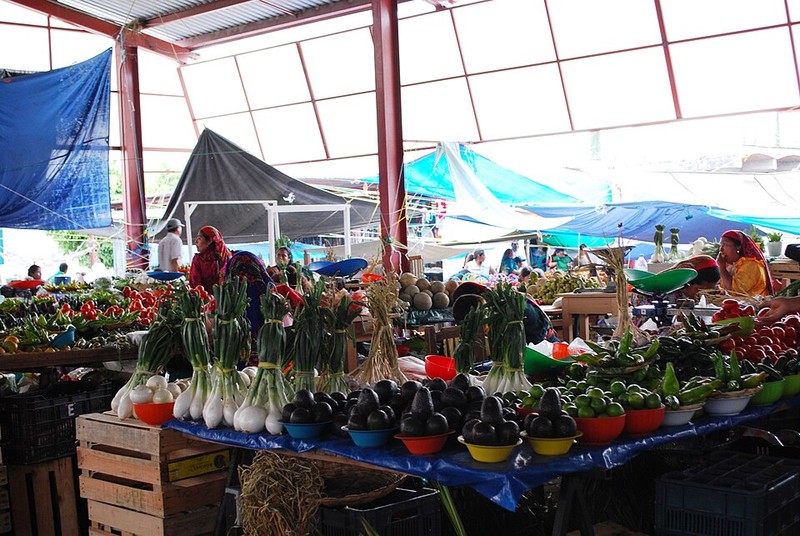
I quickly realized one thing in Mexico City: if you really want to feel the rhythm of the city, restaurants alone are not enough. So one morning I simply stepped away from the tourist route and headed to a local market. I wasn't looking for a particular dish and didn't even know what I was going to eat. I just wanted to see what people who live here actually have for breakfast and lunch. My First Impression I was immediately surrounded by noise, smells and colors. Stalls selling vegetables, fruit, spices, meat, fresh tortillas and prepared food followed one another almost without a break. Vendors were talking loudly, someone was bargaining, and someone else would pick up an order and disappear into the crowd. After a few minutes I realized that simply looking wasn't going to work. The smell of grilled meat and fresh tortillas finally convinced me to stop at one of the small food stalls. Tacos Instead of a Restaurant I decided to start with the simplest option - tacos with meat, fresh salsa and onion . There was no fancy presentation. Just a few small tortillas, meat, some greens and several bowls of sauces that looked slightly dangerous to someone used to European levels of spiciness. I ate the first taco almost immediately. The meat was hot, the tortilla was soft, and the salsa had exactly the kind of flavor I had been missing in many tourist places. Then I added a little more sauce. Then a little more. That was my mistake. The chili barely registered at first. A few seconds later, however, it became very clear that I had seriously overestimated my ability to handle Mexican heat. The vendor looked at me and simply smiled, as if he had seen the same reaction a thousand times before. Why I Started Going to Markets After the tacos, I decided to try tostadas . A crispy tortilla topped with beans, meat, salad, cheese, sour cream and sauce. It looked simple, but somehow these are the dishes that stay in your memory the longest. People around me were having breakfast, talking and buying food to take home. For them, the market wasn't an attraction or a place they visited for photographs. It was simply part of everyday life. And that was what I liked most. In a tourist restaurant, you know you have come to get a certain experience. Here, everything happened naturally. You walk between the stalls, see a dish you don't recognize, ask what it is, and five minutes later you are sitting there with a plate in front of you. After that day, I stopped looking only for beautiful restaurants in Mexico City. Of course, they can be great too, but a market makes it much easier to experience the real city . You can see what locals buy, what they eat, how they interact and what life in the neighborhood is like. Most importantly, this was where I discovered several dishes that I later searched for in other parts of Mexico. Sometimes the best restaurant isn't a restaurant at all, but a small food stall in the middle of a noisy market.
0
0
Venice. The final point of our trip to Italy
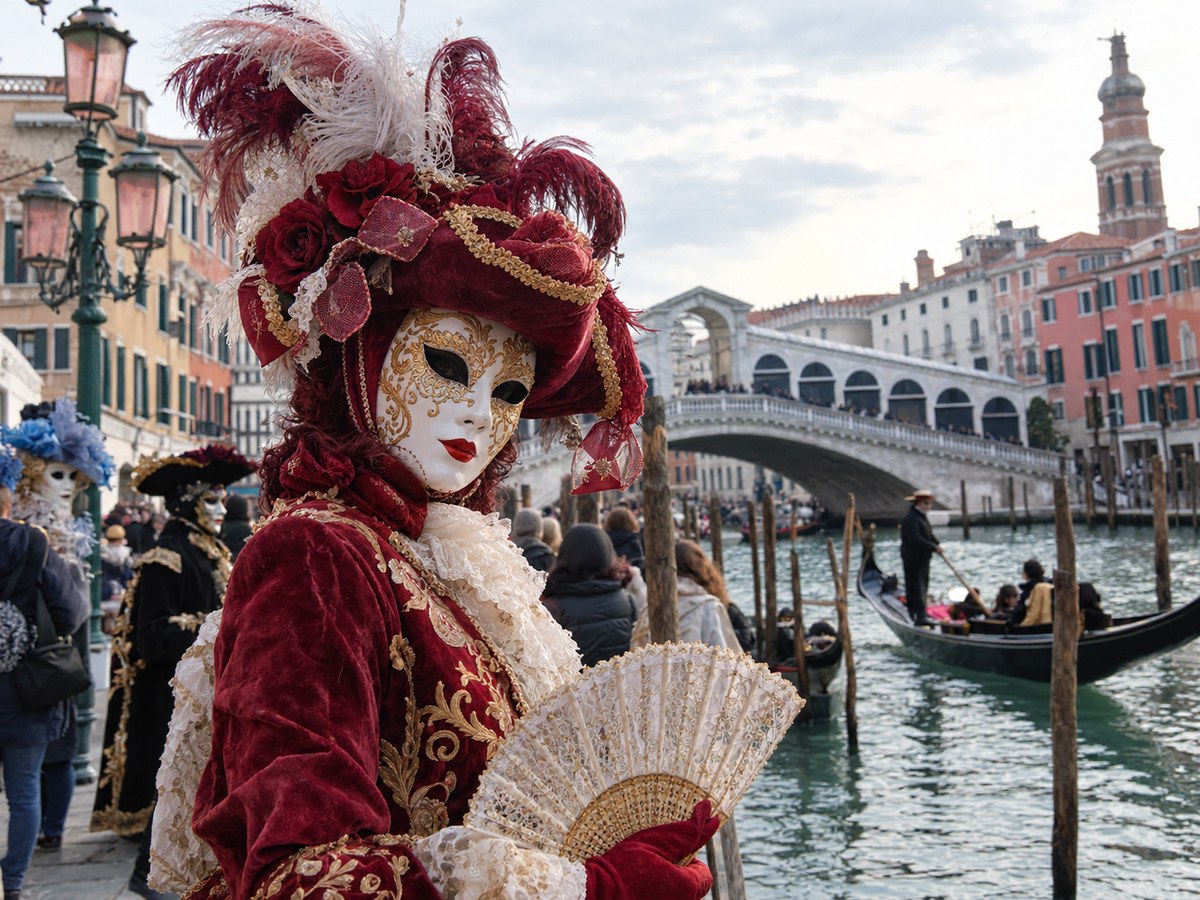
Venice was the main destination of our trip to Italy. Since the end of January, we have been gradually moving north - from Rome to Florence, then to Bologna and Verona, and now we have finally reached the city for which we had planned this trip at the beginning of February. The 2026 Venice Carnival took place from January 31 to February 17, and we were supposed to leave on February 9, so there wasn't much time left. First morning in Venice When we reached the canals, it immediately became clear that Venice was not at all like any of the previous cities on the route. It's almost impossible to just walk the usual way here - the streets turn into bridges, bridges lead to squares, and around the next bend a canal with boats and ancient facades reappears. But this time the city was special. Carnival was already approaching on the streets. People were photographing costumes and masks, performances were taking place in the squares, and among ordinary passers-by there were more and more people who seemed to come from another era. St. Mark's Square The first thing we did was go to St. Mark's Square. I've seen her many times in photographs, but the space feels completely different in person. On one side is the Basilica of San Marco, next to the bell tower, surrounded by ancient buildings, and tourists are constantly moving between them. During the carnival, the square also turns into a large stage. The 2026 program included performances, parades, and a mask contest. One of the central elements was the "Olympus - Alle origini del gioco" program, dedicated to mythology, gaming and sports in the year of the Milano Cortina Winter Olympic and Paralympic Games. But what I liked most was not even the specific event, but the people. You could just stand on the square and watch the carnival participants pass by. Some of the costumes looked very carefully thought out, and the masks were so unusual that I wanted to look at every detail. Carnival is not only on the square At first I thought that the main atmosphere would be only around San Marco, but it turned out that the carnival is gradually spreading throughout the city. Street performances, music, circus acts and theatrical performances took place on the streets and small squares. The official 2026 program included more than 350 street performers, about 80 companies, and about a thousand performances in various locations in Venice, Mestre, and the lagoon islands. That's why we stopped using the map on purpose and just started walking around. In one place we got to a small performance, ten minutes later we found ourselves near the canal, then we found a quiet courtyard where there were no tourists at all. Masks and Venice Of course, it was the masks that I was waiting for the most. On a typical day, Venice itself looks a bit theatrical, but during carnival this feeling increases several times. Carnival Venice 2026 It was especially interesting to see people in costumes not only at official events. Someone was just walking around the city and letting tourists take pictures of themselves, someone was standing by the canal, and someone was posing near ancient buildings. Sometimes it felt like you were inside a historical film. However, not all of Venice was noisy. It was worth moving a little away from the main tourist routes, and the carnival fuss practically disappeared. The narrow alleys became empty, only the sound of water could be heard, and from behind the houses there was sometimes a view of a small canal. Venice in the evening The city has changed especially much in the evening. During the day, costumes, people, and events took all the attention, and after sunset, Venice became a little mysterious again. We walked from San Marco to the Rialto Bridge, turned into unfamiliar alleys several times on purpose, and eventually found ourselves on an almost empty street. At such moments, I realized that carnival is only one part of the experience. If we had come here solely for masks and events, we would have missed Venice itself. Canals, bridges, old houses, water between buildings and a very special silence away from the center turned out to be no less interesting. Last day of the trip On February 9th, it was time to finish the trip. It was on this day that the so-called "fat week" of the carnival began, which lasted until February 17, so the city was just entering the busiest period of the holiday. We managed to see enough to understand the scale of what was happening, but it was still a bit of a pity to leave. As we were picking up our things and heading to the train station, I took another look back at the canals. In two weeks, we traveled through several completely different cities - from ancient Rome to Florence, Bologna and Verona, and ended the journey here, among the masks and canals of Venice. That's why I chose the end of January and the beginning of February for this trip. It was possible not just to see Italy, but to gradually move around the country towards a specific goal. And when Venice appears in front of you at the end of the route during the carnival, it seems that all the previous stops really led here.
3
0
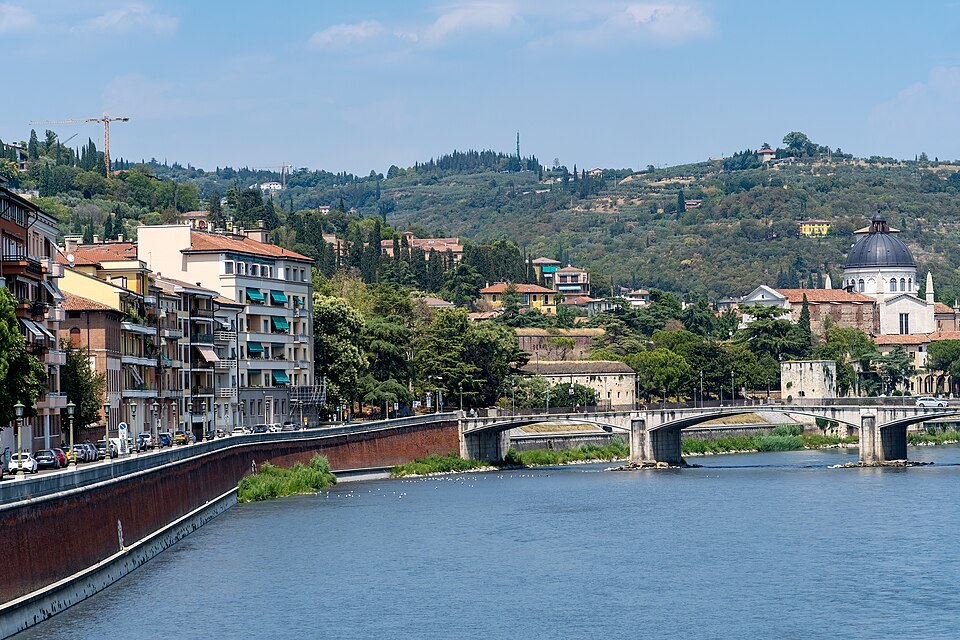
Verona is the city of Romeo and Juliet
After Bologna, our route continued further north. The next stop was Verona, a city that I had imagined before the trip primarily as a place of the story of Romeo and Juliet. But it turned out that this famous story hides a very beautiful and cozy old town, which is pleasant to just walk around without haste. Arrival in Verona We arrived in Verona in early February 2026. After Bologna, the city seemed a little different - there was more of a feeling of medieval Italy, and the narrow streets of the historical center gradually led us to large squares. From the train station, we headed towards the center, left our things and almost immediately went for a walk. The weather was cool but dry, so the end of January and the beginning of February turned out to be quite comfortable for a walk. Bra Square and Arena The first big stop was Bra Square. It is here that the famous Verona Arena is located - a huge Roman amphitheater, which immediately reminds you of how ancient the history of this city is. Arena di Verona After the Colosseum in Rome, it was difficult to surprise me with such a structure, but the Arena in Verona has a completely different environment. It stands right in the center of modern urban life - surrounded by cafes, restaurants, shops and ordinary streets, so the ancient monument here is perceived not as a separate archaeological zone, but as part of the city itself. Streets of the old town We continued walking from Bra Square. After a while, we came to the Erbe Square, one of the most famous squares in Verona. I just wanted to stop here, look at the old facades and sit in a cafe for a while. Then we went to the Piazza della Signoria, and from there to the river Adige. On the way, they deliberately turned off the main streets several times. That's exactly how, in my opinion, Verona is worth exploring: without a clear route, allowing the city to tell you where to go next. Erbe Square Juliet's Balcony Of course, we couldn't avoid Juliet's courtyard. The place is quite touristy, and there were noticeably more people here than on the neighboring streets. The balcony has long been one of the symbols of Verona, although the story of Romeo and Juliet itself is literary. Juliet's House We didn't stay here for a long time and went for a walk around the center again. By evening, Verona had become especially pleasant - the lights turned on, the squares became quieter, and the old buildings took on a completely different look. Verona turned out to be exactly the stop I need between big cities. I didn't want to make a list of dozens of attractions here. I just wanted to walk, look around and enjoy the atmosphere of old Italy. But our trip was coming to the main goal. After Verona, the last section of the route was Venice. That's where we were heading for the main event of the trip - the Carnival of Venice.
0
0
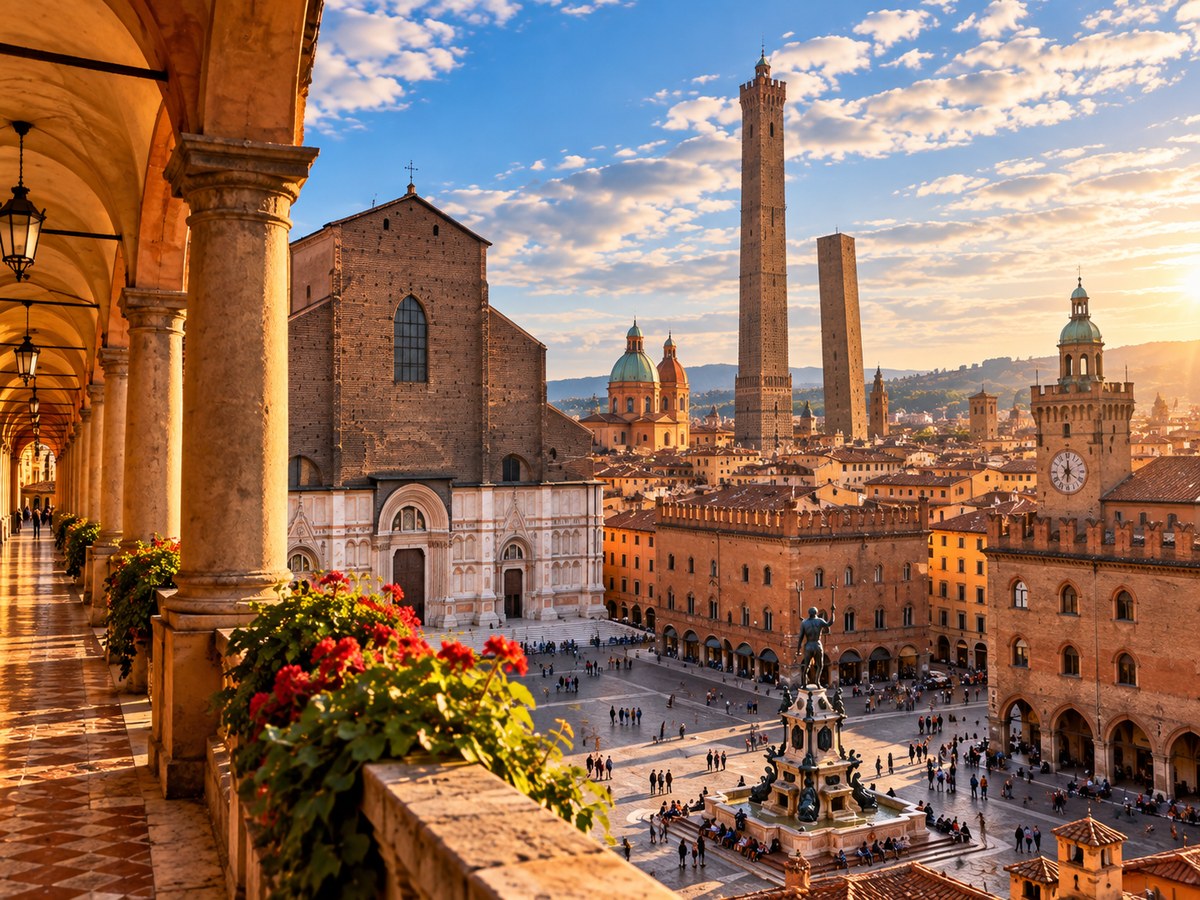
From Florence to Bologna: we continue our journey
After Florence, our route continued north. The next destination was Bologna, a city I knew much less about before the trip than I did about Rome or Florence. But that's why it was especially interesting for me to come there. I didn't want to see another city from the list of the main tourist destinations in Italy, but a place with its own atmosphere. The road from Florence From Florence we went to Bologna by train. The journey took quite a bit of time, so after some time after departure, the Italian cityscape appeared outside the window again. At the end of January, the weather was cool, but it was quite suitable for a walk. When we got off the train at Bologna Station, the first thing we did was leave our things and set off on foot towards the historic center. The first streets of Bologna The first thing that catches your eye in Bologna is the long covered galleries. The porticos here literally accompany you through the streets, so even in cool weather you can safely walk without thinking about every gust of wind or light rain. We gradually reached Piazza Maggiore, the main square of the city. There are several famous buildings located almost nearby, so you don't have to look for sights for a long time. The Basilica of San Petronio towers over the square, and nearby are the old palace and the famous fountain of Neptune. Two towers After the square, we continued our walk to the two towers - Asinelli and Garizenda. They have become one of the symbols of Bologna. It's especially interesting to look at them from below: you immediately notice how much the towers are tilted and how unusual they look among the surrounding houses. Asinelli and Garizenda Towers Then we just walked along the historical streets without any strict route. I liked that feeling in Bologna - the city doesn't constantly try to surprise with huge monuments. It's more interesting to look at the details here: old facades, arches, small squares, doors and endless porticos. A city that is remembered for its food Of course, it would be strange to come to Bologna and not try the local cuisine. It is here that the birthplace of bolognese is located, although in Italy itself the traditional sauce is more often called ragù alla bolognese. Bolognese We found a small place in the center and ordered pasta. After several days of traveling, such a lunch turned out to be very useful - a hot meal, a glass of wine and the opportunity to relax a little before a further walk. By evening, Bologna had become even more cozy. We walked around Piazza Maggiore again, looked at the illuminated buildings and gradually returned to the hotel. Bologna turned out to be completely different from either Rome or Florence. There is less of the feeling of a huge tourist city and more of the usual Italian life. And ahead of us was the next destination on the route - Verona, after which we had to go further north to the main destination of the trip - Venice and carnival.
1
0
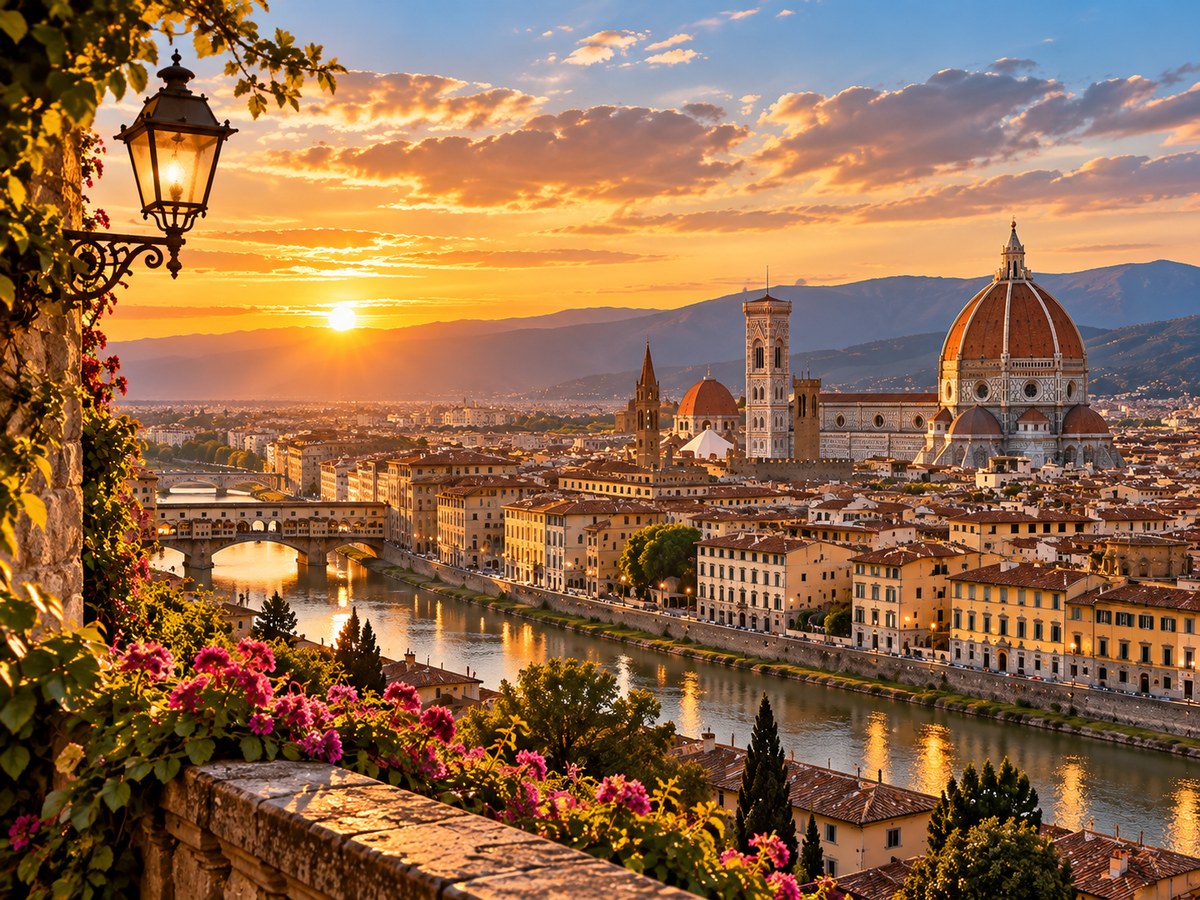
Florence Trip
After the first days in Rome, we went further north. Our itinerary was designed for several weeks - from the end of January to February 9, 2026, and the main purpose of the trip was the Carnival of Venice. But there were several more cities I wanted to see before Venice, so Florence was the next stop. The road from Rome to Florence In the morning we packed up and went to Roma Termini train station. After the hustle and bustle of Rome, the train seemed like an almost ideal way to continue the journey: I sat down, put my suitcase away, looked out the window - and after a while the urban landscape began to gradually change. The trip from Rome to Florence took about an hour and a half. We decided not to take a car in advance, because in the historical centers of Italian cities it hinders rather than helps. In addition, the Firenze Santa Maria Novella train station is located almost in the center, so after arrival you did not have to waste time on a long journey. First impression of Florence When we left the station, we immediately felt a completely different atmosphere. After the large-scale Rome, Florence seemed more compact and calm. There is no need to constantly use transport here - many of the main places are within walking distance of each other. It was cool, as it should be at the end of January, but the weather turned out to be quite comfortable for a walk. We left our things and almost immediately went to the historical center. I didn't want to build a detailed route, but just to get a little comfortable in the city. The first evening in the city The first thing we did was go to the Cathedral of Santa Maria del Fiore. Even after the Colosseum and other impressive places in Rome, the Florence Duomo was able to surprise. Brunelleschi's huge dome towered over the surrounding buildings, and the square itself was filled with people, despite the winter season. Interior From the cathedral, we continued along the narrow streets to the Piazza della Signoria, and then to the Arno. By evening, the city had become even more interesting - there were fewer tourists, the buildings were illuminated, and dusk was gradually falling over the river. I found myself thinking that this is the format of travel that I like the most: not trying to see everything in one day, but leaving time just to take a walk and feel the city. We had a few days ahead in Florence, followed by Bologna and Verona. And with each passing city, we had to get closer to the main goal of this trip - Venice and its carnival.
1
0
Rome. Which started my journey in Italy
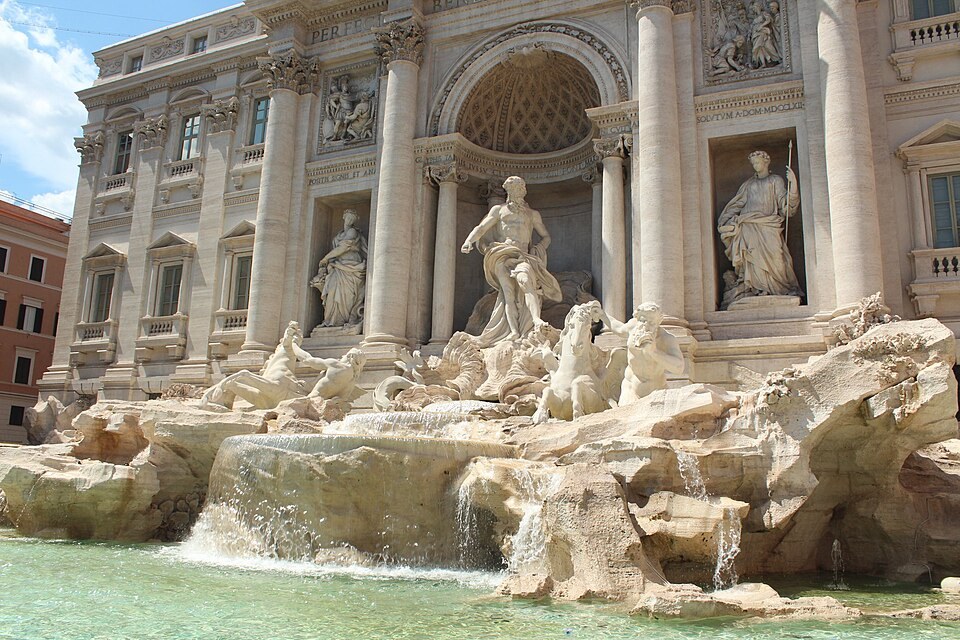
I decided not to try to see Rome all in one day. This is simply impossible here - the historical center is so full of monuments, squares and ancient streets that sometimes it is enough to walk a few hundred meters to stop again and realize that you are looking at another place with a centuries-old history. That's why I made the first day as simple as possible: no transportation and a complicated plan, just a walk through the center of Rome. I just wanted to walk from one historical place to another and gradually get to know the city. Colosseum - the beginning of the route In the morning, I started walking by the Colosseum. Even if you've seen him dozens of times in photographs, he makes a completely different impression in person. Especially when you approach it on foot and gradually understand the scale of the structure. Nearby is the Triumphal Arch of Constantine, and then the huge archaeological zone of the Roman Forum begins. I didn't try to go through it all quickly, but just lingered a bit, looking at the columns, ruins of temples and the remains of ancient buildings. It's especially easy to imagine how massive ancient Rome was. Rome Colosseum From ancient Rome to Venice Square After the Colosseum, I walked towards Venice Square. The road itself became part of the walk here - old buildings, churches, small squares and fragments of ancient structures were literally constantly encountered. I made my first big stop at Venice Square. The huge white monument to Victor Emmanuel II immediately stands out from the surrounding architecture. After the ancient ruins of the Colosseum and the Forum, a completely different Rome is before our eyes - a later, large-scale and solemn one. The Pantheon Then I turned off the main streets and walked through the small alleys of the historical center to the Pantheon. This is where the walk became especially interesting. In Rome, sometimes you don't even need to specifically look for a landmark. You're just walking down an ordinary street, turning a corner, and suddenly a huge ancient column, fountain, or ancient square appears in front of you. The Pantheon turned out to be just such a place. It looks majestic from the outside, but it is especially interesting to go inside and look at the huge circular space and the dome with a large hole in the center. You stand inside and try to imagine how many generations of people have already seen this place before you. Trevi Fountain I continued my walk from the Pantheon to the Trevi Fountain. The distance is short, so I didn't use public transport again. The closer you get to the fountain, the more people there are. And then the street suddenly opens up, and Trevi appears in front of you. I stayed here longer than I had planned. Even if you don't attach much importance to the tradition of throwing a coin into a fountain, you still want to stand near it for a while and look at the details. It is especially impressive how large-scale the composition is hidden among the ordinary streets of the historical center. Navona Square The last point of my walk was Piazza Navona. After the narrow streets, the square seems huge. An ancient stadium once stood in its place, and the modern square has retained its characteristic elongated shape. In the center is the famous Bernini Fountain of the Four Rivers. I wasn't in a hurry here anymore - I just sat down nearby and rested for a while after a few hours of walking. Navona Square First day in Rome The result was a route of about 6-7 kilometers, but the distance was practically not felt. Every few minutes I wanted to stop, look at the building, go into the courtyard or take a photo. I liked the fact that all the main points of this route are quite close to each other. You don't have to constantly take the subway or look for a taxi - you can safely walk most of the way. By the evening, I already felt Rome much better than if I had just driven through it on a tour bus. The Colosseum, the Roman Forum, Venice Square, the Pantheon, the Trevi Fountain and Piazza Navona gradually formed into one big walk through the history of the city. That's how our trip to Italy began. Rome became the first point of the route, and then we went north to Florence.
0
0
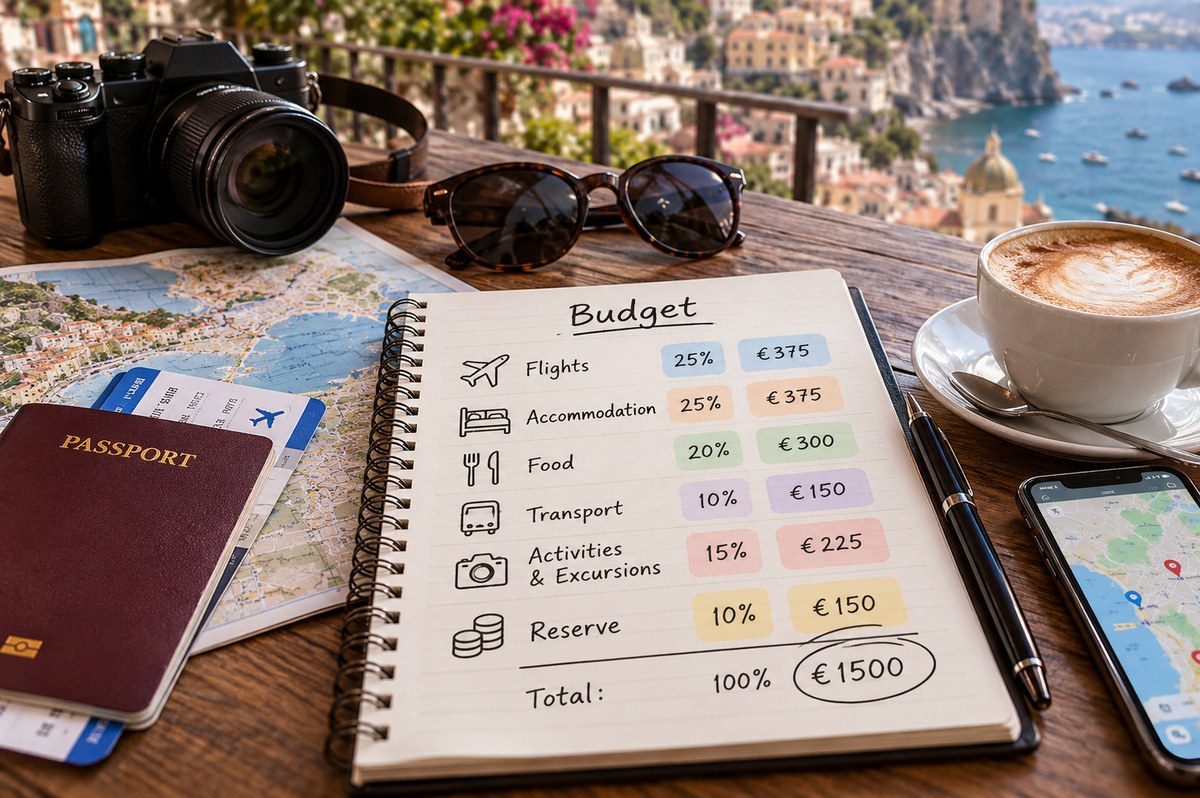
How do I calculate my trip budget
I used to just look at the price of the tickets and the hotel, add them up and think I roughly understand the budget. I was almost always wrong. Now I count the trip as a percentage, so it's much easier to understand where the money really ends. My budget scheme For a typical 7-day trip, I'm focusing on about this proportion.: 35-40% - flights and accommodation; 20-25% - food; 10-15% - on-site transportation; 10-15% - entertainment, excursions and tickets; 10% is a reserve for unforeseen expenses. For example, if I'm willing to spend 1,500 euros for the entire trip, then I'll put about 550 euros on flights and accommodation, 330 euros on food, 180 euros on transport, another 290 euros on attractions and entertainment, and about 150 euros I try not to touch at all. How much is it per day? It's more convenient for me to count my daily expenses separately. If I have 800 euros left after paying for the tickets and the hotel, I don't just divide this amount by 7 days. First, I subtract the reserve. For example, I leave 100 € in case of unforeseen expenses. That leaves 700 €, which is about 100 € per day . Of these, I can focus on about 35-40 € for food, 15-20 € for transport and 30-40 € for entertainment. I leave the rest for coffee, small purchases, or just reschedule for the next day. The most important part is the reserve I used to think of the reserve as money that could be spent if I had any left. Now, on the contrary, at first I consider them inviolable. For a week-long trip, I try to have at least 10% of the total budget . If the trip costs 1,500 €, that's 150€. This money may be needed for an unplanned taxi, ticket change, extra night at the hotel or other situation that cannot be foreseen in advance. Where did I go wrong most often? The biggest mistake is to count only large expenses. A ticket for 300 €, a hotel for 500 € - everything is clear. And then there's coffee for 5 €, taxi for 20 €, entrance ticket for 15 €, dinner for 35 € and a few other little things. In a week, these "little things" easily turn into several hundred euros. So now, before traveling, I first determine the total limit , then categorize it, and only after that do I start booking. This way I understand in advance not only how much the trip itself costs, but also how much money I can safely spend every day without returning home with an unpleasant surprise.
0
0
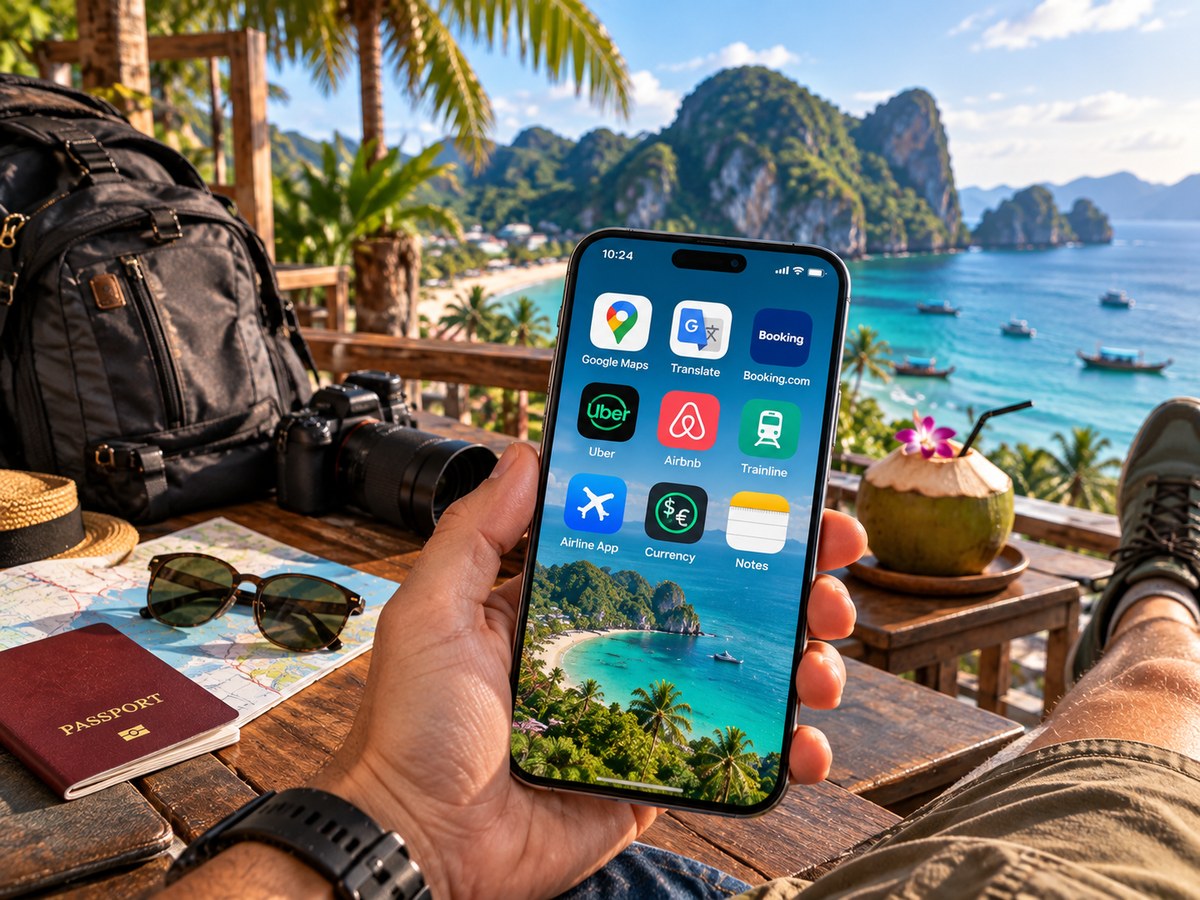
Which apps have been useful to me on my journey?
I used to be quite skeptical about travel apps. It seemed that the card, hotel reservation and translator were enough, and everything else could be solved on the spot. Then I went on trips several times where the Internet suddenly disappeared, the navigator sent me somewhere wrong, and the desired address turned out to be written in a language I don't understand at all. After that, my phone gradually turned into a full-fledged travel kit. Now, before the trip, I check several applications in advance and try to set them up at home. Not because I want to look at the screen all the time, but on the contrary - to spend as little time on the phone as possible while traveling. Maps and navigation The first thing I install before any trip is the maps app. I usually use Google Maps, and for some trips I additionally download offline maps. Offline mode is generally one of the most useful things for me. One day I found myself in a small town where the mobile Internet was so bad that the map loaded at about the same speed as a tree grows. It's good that the desired area was saved in advance. The maps also turned out to be useful not only for finding attractions. I often look at where supermarkets, pharmacies, cafes, bus stops and public toilets are located. The last point is especially appreciated after a few hours of walking. Translator Translator is an application that I used to open only as a last resort. Now I use it all the time. It's especially convenient when you can just take a picture of the menu, signboard, or instructions and get a translation. It's much faster than trying to type an unfamiliar word manually. But the most interesting thing happens not in restaurants, but during regular communication. Sometimes it's enough to show a person a translation on the screen to solve a problem that could turn into a ten-minute pantomime without a phone. At the same time, I try to download the required language in advance. When traveling, the Internet has an unpleasant habit of disappearing exactly when it is needed most. Booking of accommodation The hotel booking app is also always at hand. I like the opportunity to quickly open the address, view the booking conditions and show the driver exactly where to go. In addition, I save a screenshot of the booking. It seems like a small thing until you find yourself at the reception desk with a dead phone and start explaining to the hotel employee that the room is indeed booked, just that the confirmation is somewhere "in the cloud" for some reason. Airline's App After a few trips, I stopped considering it useless. An electronic boarding pass, flight information, exit number, and departure time changes are all much more convenient to keep in one place. This is especially useful when the flight is delayed. Instead of looking for information on the scoreboard every ten minutes, you can just check your phone. However, I still sometimes keep a paper copy of important documents. Apparently, after a certain amount of traveling, you begin to realize that technology is fine until it suddenly decides not to work. Taxi and transportation The taxi app greatly simplifies life in an unfamiliar city. There is no need to explain to the driver with gestures where to go and try to understand the local fares. Besides, I like to see the approximate cost of the trip in advance. This helps you at least roughly understand how much it will cost to move around the city. If I use public transport, I download the application of the local metro or transport system in advance. Sometimes it shows routes much better than regular maps. Currency Converter At first glance, it seems that a currency converter is not particularly needed. Then you go into the store, see the price in the local currency, and start mentally multiplying, dividing, and rounding. After five minutes, you don't know if this lunch is really inexpensive or if you've just spent half your budget on a drink. So now I just open the converter and check. The note-taking app But this app is often underestimated. I'm creating one note with the hotel's address, booking number, departure time, important phone numbers, and a small list of places I want to visit. I can also write down the name of a cafe I like or the address of a store I happened to see on a walk. As a result, you don't have to remember later: "Where did I see this? It seems to be somewhere near that square..." And the main thing is not to turn traveling into working with a smartphone. With all this, I try not to install twenty apps for every occasion. Maps, translator, reservations, transportation, airline, currency converter, and notes are enough for most trips. Because apps should help you travel, not replace the journey itself. It doesn't make much sense to come to another country and spend half the day staring at a screen. Sometimes it's better to close the card, put the phone in your pocket and just go where the street leads. That's when most of the time there are places that weren't on my original itinerary at all.
0
0
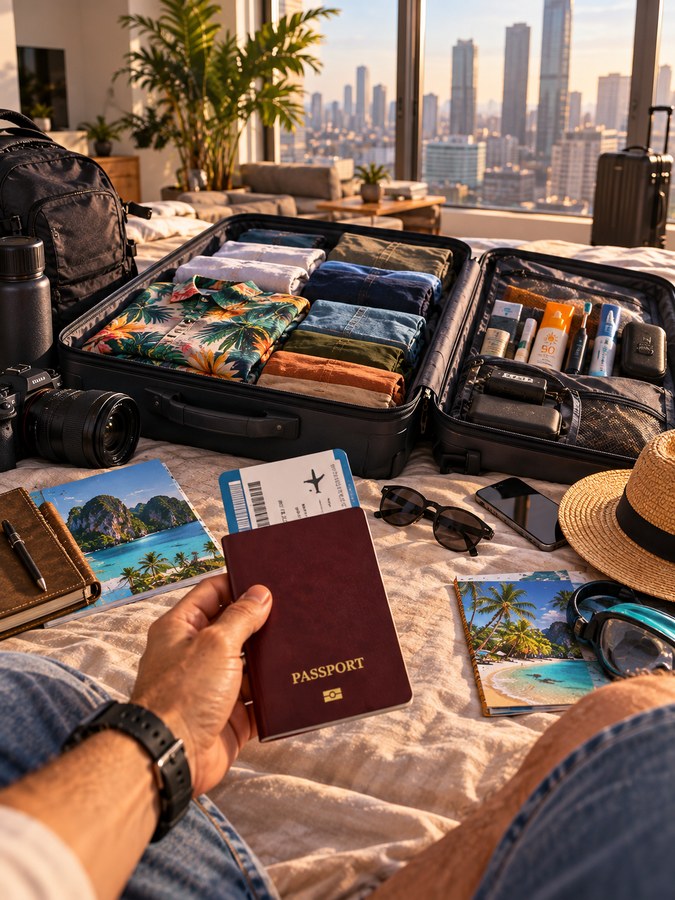
What should I take with me on a trip for a week?
What am I taking with me on a trip for a week I used to pack my suitcase before every trip, as if I was going to emigrate instead of for a week. I took three pairs of shoes, clothes for all occasions, and half the bathroom, and for some reason I always managed to forget something I really needed. One day I returned from a trip with half the things that I hadn't taken out of my suitcase at all. But I had to buy a phone charger at the airport. After that, I decided to conduct an experiment: to assemble the next week's trip as intelligently as possible - only what I really use. And it turned out that there are much fewer things needed than it seems. Clothes: the main thing is not to take too much The first rule I've learned for myself is not to take clothes for every day . If I'm traveling for a week, I don't need seven T-shirts, seven pairs of socks, and seven sets of clothes at all. I usually take 4-5 T-shirts, a pair of shorts or light trousers, one more versatile pair of trousers, several sets of underwear and socks. If the trip assumes cool weather, I add a light sweatshirt or jacket. I also make sure to take something in which I can go out properly in the evening. Not because I'm going to go to a restaurant every day, but because one day there's bound to be a situation where you want to go out for dinner after the beach, and you look like you've just come from a desert tour. I try to limit shoes to two pairs: comfortable sneakers and something light. If I take the third pair, I almost always regret it later, because it takes up half the suitcase and lies there idle for most of the trip. The first-aid kit that I underestimated before I had another problem with the first aid kit for a long time.: I either didn't take anything at all, or I put so much in there, as if I were going to open my own medical center. Now I'm taking a small set of the most necessary things: remedies that may be useful to me personally, patches, antiseptic, painkillers and medications that I take regularly. Plus, something for stomach problems - after several trips, I realized that the local cuisine can sometimes surprise more than any attraction. I put sunscreen on separately if I go to a place where there is a lot of sun. I used to consider it something optional, until one day I spent the whole next day in my room, because I decided the day before that "an hour in the sun wouldn't do anything." Did. Electronics This is where I try to control myself especially strongly. The phone number is clear. Charging is the same. I almost always take a powerbank, especially if I plan to walk and take pictures a lot. I also have a small universal socket adapter that has been living in a travel bag for a long time. I only take my laptop when I'm really going to use it. If the trip is an ordinary tourist trip, then most often I leave him at home. After all, I'm going to see a new city, not continue to sit in front of the screen. I'm taking headphones too. Sometimes a long flight or bus ride becomes much more enjoyable if you can turn on the music and just look out the window. Documents and things that you remember too late My passport and money are obvious, but I try to keep my documents in more than one place. I keep a copy of my passport and basic travel information on my phone so that I don't run out of information in case of an unpleasant situation. Before departure, I check the insurance, reservations, tickets and the address of the accommodation. All this takes a few minutes, but it's much more pleasant to check your documents at home than to try to figure out at the airport why the booking confirmation letter suddenly disappeared just when it was needed. I also take a small backpack for daily walks. It holds water, a phone, a power bank, documents, sunglasses and some small things. What am I not taking now? It's probably even more important. I stopped taking clothes "just in case," huge bottles of cosmetics, several books that I don't read anyway, extra shoes, and all sorts of things that could theoretically be useful. Because after a week of traveling, a simple thing almost always turns out: if I really need some small change, it can most likely be bought on the spot. But for some reason I have to carry all this on myself for seven days. Now, before closing the suitcase, I ask myself one question: "Am I sure I'm going to use this?" If the answer is "well, maybe," the item usually stays at home. And the more I travel, the more I like this approach. A good suitcase for a week-long trip is not one that can barely be closed. This is the one that, after packing, you can safely pick up with one hand and not feel that you accidentally packed your whole house there along with your things.
0
0
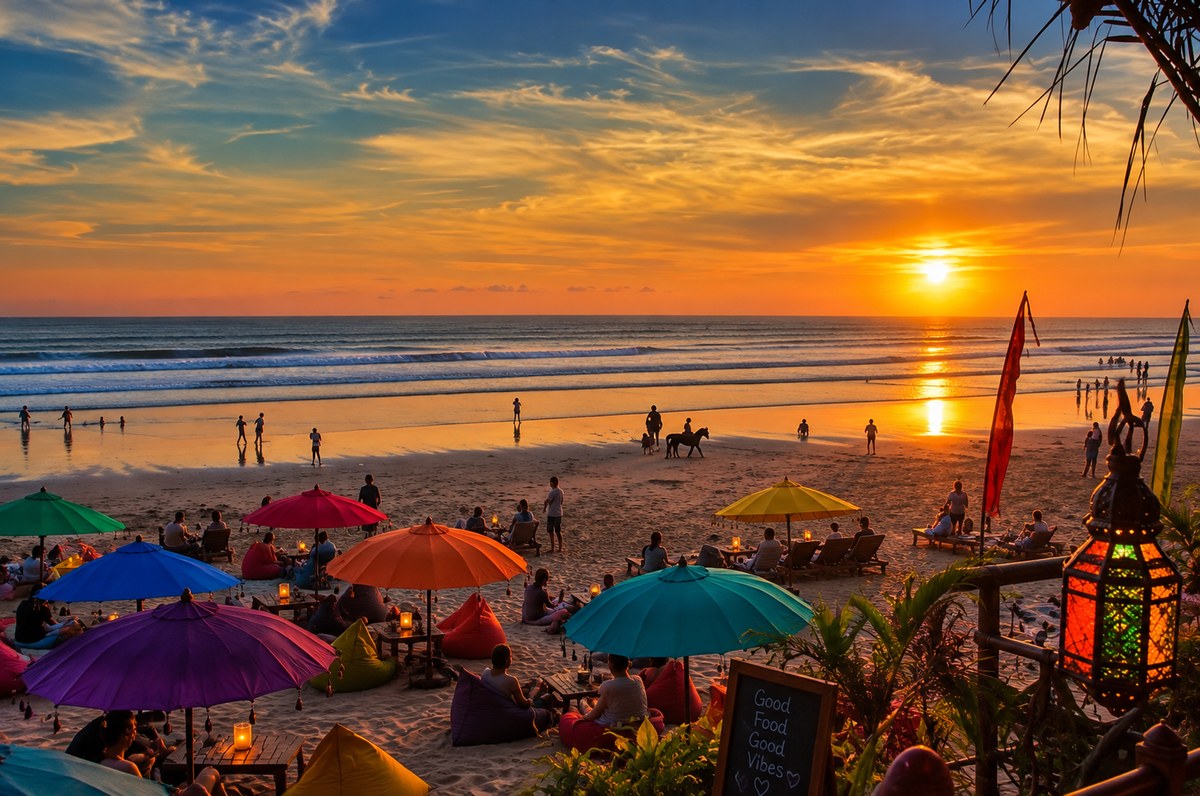
Bali Sunset
I specially arrived at the beach in advance so that I could find a good place before sunset. As a result, I just sat on the sand for about twenty minutes and watched as people gradually gathered by the water. Someone was taking pictures, someone was talking, children were running along the shore, and the locals were quietly going about their business. When the sun began to sink to the horizon, everything around became somehow unrealistically calm. The water reflected orange light, the waves rolled onto the shore one after another, and the palm trees against the sky turned almost into silhouettes. I took some photos, but then I put my phone away. Sometimes you don't want to photograph a place, but just remember it as you saw it for the first time. Bali Sunset Probably, it is for the sake of such evenings that it is worth sometimes traveling far from home.
0
0
No reviews yet
Nothing saved yet
No trips yet
No scheduled stories
