


The Blue Hole in Dahab
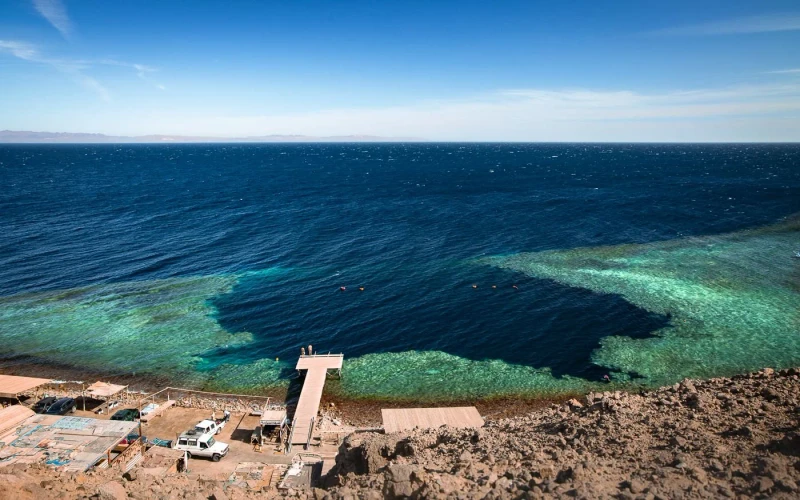
On the Red Sea coast, near the Egyptian town of Dahab, lies a place that attracts divers from around the world. The Blue Hole looks like a vast circle of deep blue water surrounded by coral reef. From the shore, it seems almost bottomless, while the sea shifts from clear turquoise to rich sapphire.
Where the Reef Drops into the Deep
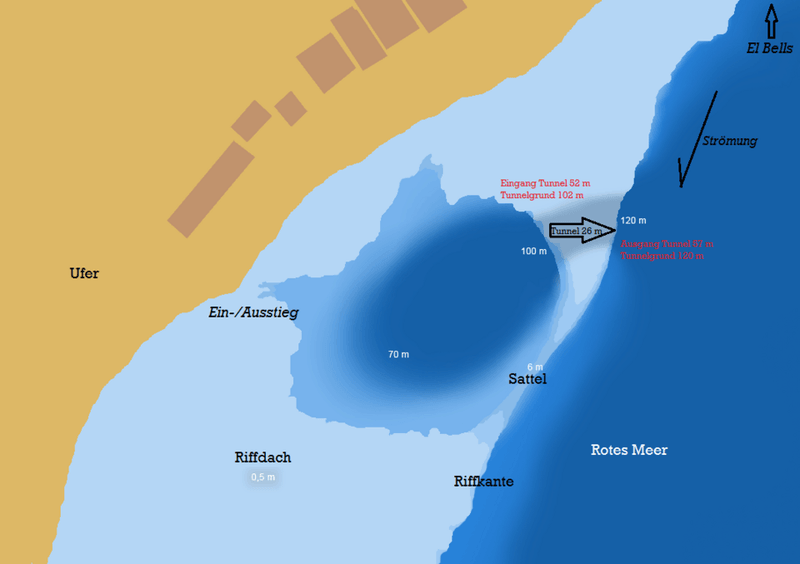
The Blue Hole is located around 8-10 kilometres north of Dahab on the Sinai Peninsula. It is a natural underwater sinkhole in the coral reef, descending to more than 100 metres. Its steep walls disappear into darkness, while corals and many Red Sea fish can be seen closer to the surface.
Even without diving, the scenery makes the trip worthwhile. From the shore, the contrast between the bright coastal water and the dark circular opening is striking. Small cafés nearby offer a place to rest after a walk and look out over the sea, with the rugged Sinai Mountains in the background.
The Underwater World of the Red Sea
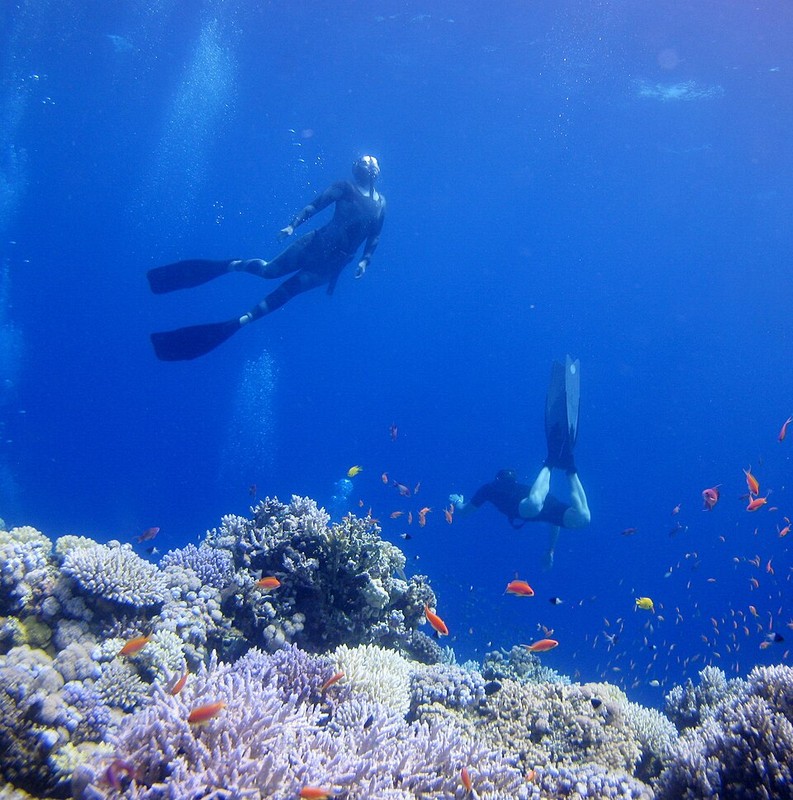
The Blue Hole is known for diving and snorkelling. In the clear water, visitors can observe coral formations, schools of tropical fish and other reef inhabitants. For many travellers, it is a chance to experience the underwater world of the Red Sea beyond photographs.
It is important to distinguish an ordinary dive along the reef from the famous underwater Arch, a natural tunnel connecting the Blue Hole with the open sea. It lies at a depth of about 55 metres and is intended only for trained technical divers with the appropriate training, equipment and dive plan. Attempting it without the necessary qualifications can be fatal.
How to Visit the Blue Hole
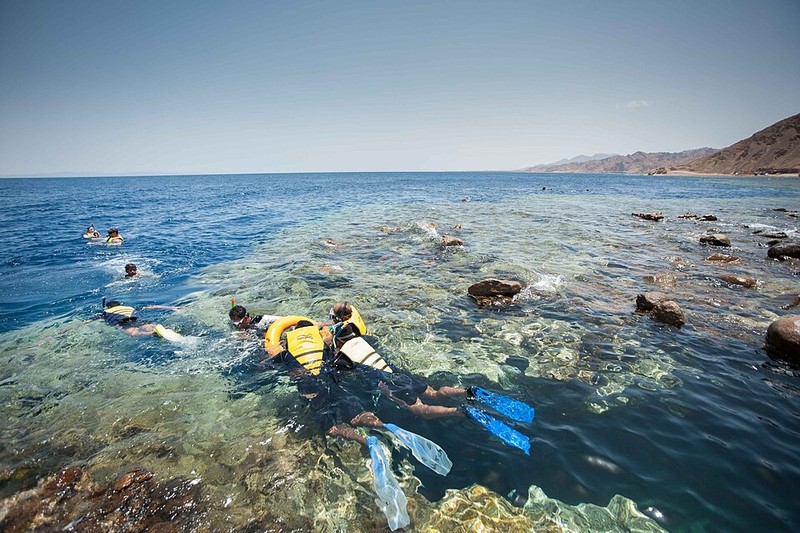
Visitors usually reach the site by car or on an excursion from Dahab. You can admire the scenery from shore, snorkel when conditions are suitable, or dive with a certified instructor. Before entering the water, check sea conditions, use appropriate equipment and follow the advice of local professionals.
The Blue Hole is remarkable not only for its depth but also for the unusual combination of desert mountains, coral coastline and clear water. It is a reminder of how extraordinary the Red Sea can be, and why exploring it calls for curiosity as well as respect for the risks.



Comments