


Lake Natron: Red Water and Thousands of Flamingos
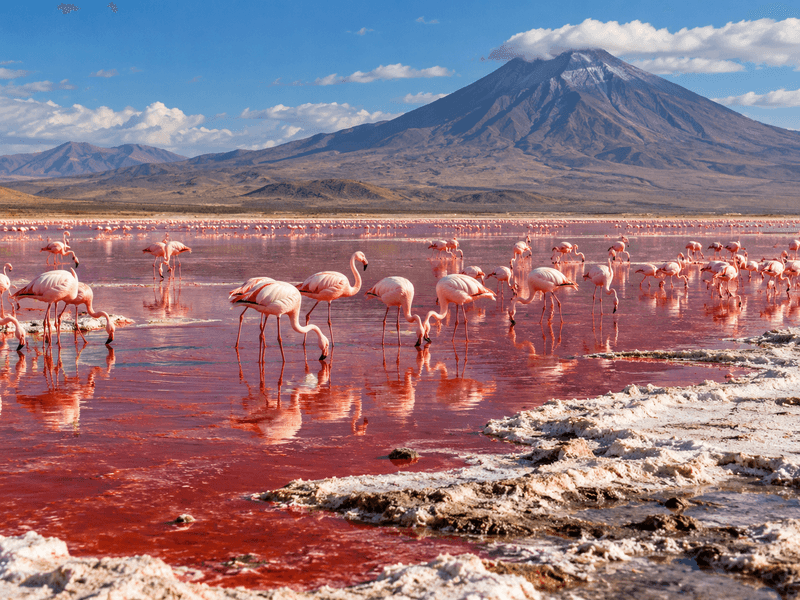
When I first saw photographs of Lake Natron in Tanzania, I thought the landscape belonged to another planet. Parts of the water appear red or pink, the shores are covered with white mineral crusts, and thousands of flamingos gather in the shallows. Against dry hills and a vast sky, the lake looks almost unreal. Yet this remarkable scenery is part of a delicate ecosystem adapted to conditions that many living things could not survive.
Lake Natron lies in northern Tanzania, near the Kenyan border in the East African Rift Valley. It is a shallow, salty, alkaline lake fed by rivers and hot springs, with almost no outlet. Under the strong sun, water evaporates, minerals accumulate and the shoreline changes over time. 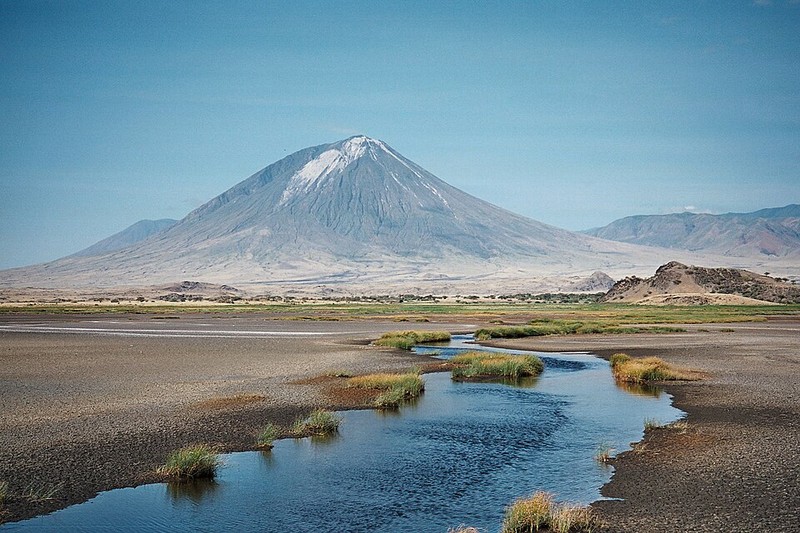
Why does the water turn red?
Natron's unusual chemistry is the key. During the dry season, evaporation increases the concentration of salts, and patches of red, orange and pink appear in the shallows. These colours are associated with salt-loving microorganisms, including certain cyanobacteria that can survive in highly alkaline water. The lake does not have one uniform colour: depth, salinity, sunlight and season all make a difference.
In some places, white mineral deposits cover the surface like a thin layer of ice. The water should not be touched casually, however. Its alkalinity can irritate skin and eyes, and the lake is not a place for an ordinary swim, even when a section looks like a peaceful pink lagoon.
The scenery changes throughout the year. After rain, the lake may spread across a wider area, while in hot, dry periods the salt crusts and colourful shallows become more prominent. This changing landscape is part of what makes Natron so compelling for photographers and travellers. 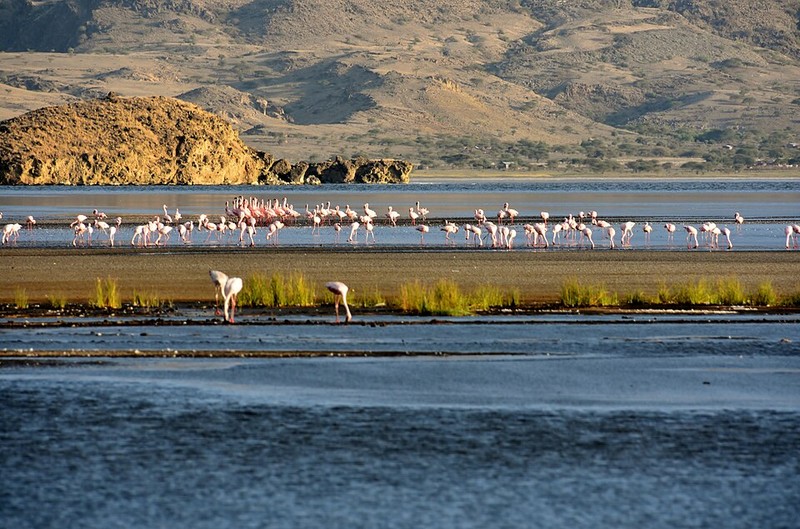
Why do flamingos come here?
Lake Natron is one of the most important breeding sites for lesser flamingos in East Africa. The harsh environment can work in the birds' favour: high salinity and alkalinity limit the number of potential predators and competitors. In the shallows, flamingos find food, including microscopic algae and other tiny organisms.
When large flocks gather, pink silhouettes reflect on the water and their calls carry across the shore. From higher ground, the view can be extraordinary: a long shoreline, patches of coloured water and a moving pink ribbon of birds. Their numbers and locations change with the season and lake conditions, so a huge flock is never guaranteed.
How to visit without harming the environment
Trips to Natron are often arranged from Arusha or included in a northern Tanzania itinerary. Roads in this remote area can be challenging, so travelling with an experienced local driver or guide is often the easiest option. Check road conditions, accommodation and the weather before setting out. Drinking water, sun protection and sturdy footwear are essential in the hot, dusty climate.
Keep your distance from the birds, avoid nesting areas and take all rubbish away. Do not taste the water or touch mineral deposits if you do not know whether contact is safe. Natron is remarkable because its fragile ecosystem supports life in an extreme chemical environment, and its unusual colours are part of a much larger natural cycle.
I would remember this place for more than its red water and flamingos. It makes you realise how varied the natural world can be. A landscape may look imaginary, yet its beauty is created by real processes unfolding before our eyes. 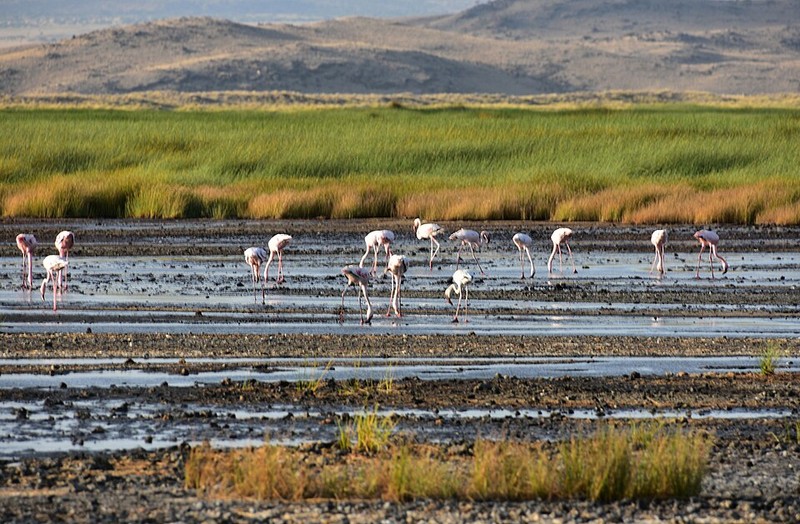




Comments