


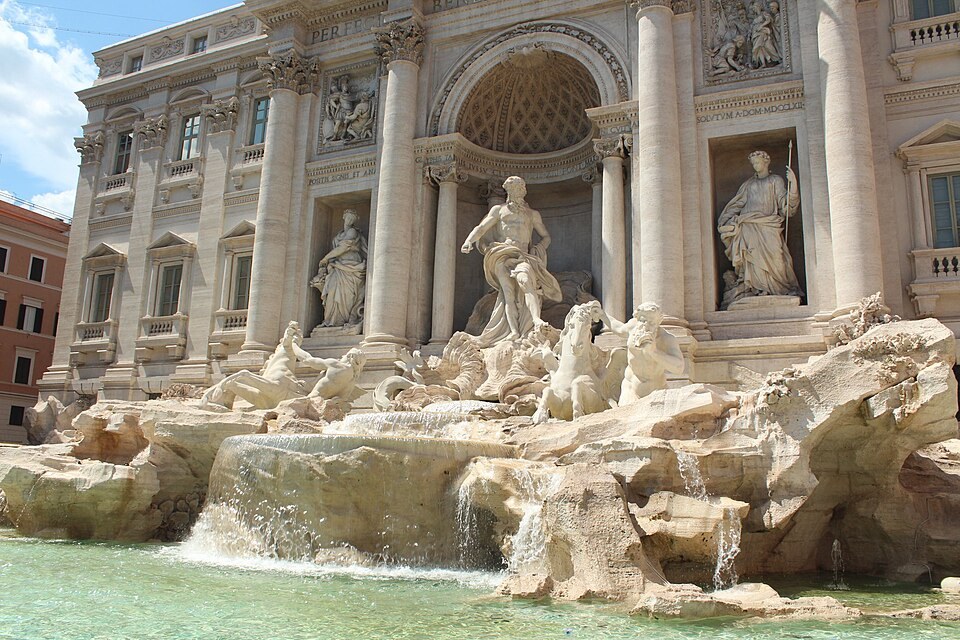
Rome. Which started my journey in Italy
I decided not to try to see Rome all in one day. This is simply impossible here - the historical center is so full of monuments, squares and ancient streets that sometimes it is enough to walk a few hundred meters to stop again and realize that you are looking at another place with a centuries-old history. That's why I made the first day as simple as possible: no transportation and a complicated plan, just a walk through the center of Rome. I just wanted to walk from one historical place to another and gradually get to know the city. Colosseum - the beginning of the route In the morning, I started walking by the Colosseum. Even if you've seen him dozens of times in photographs, he makes a completely different impression in person. Especially when you approach it on foot and gradually understand the scale of the structure. Nearby is the Triumphal Arch of Constantine, and then the huge archaeological zone of the Roman Forum begins. I didn't try to go through it all quickly, but just lingered a bit, looking at the columns, ruins of temples and the remains of ancient buildings. It's especially easy to imagine how massive ancient Rome was. Rome Colosseum From ancient Rome to Venice Square After the Colosseum, I walked towards Venice Square. The road itself became part of the walk here - old buildings, churches, small squares and fragments of ancient structures were literally constantly encountered. I made my first big stop at Venice Square. The huge white monument to Victor Emmanuel II immediately stands out from the surrounding architecture. After the ancient ruins of the Colosseum and the Forum, a completely different Rome is before our eyes - a later, large-scale and solemn one. The Pantheon Then I turned off the main streets and walked through the small alleys of the historical center to the Pantheon. This is where the walk became especially interesting. In Rome, sometimes you don't even need to specifically look for a landmark. You're just walking down an ordinary street, turning a corner, and suddenly a huge ancient column, fountain, or ancient square appears in front of you. The Pantheon turned out to be just such a place. It looks majestic from the outside, but it is especially interesting to go inside and look at the huge circular space and the dome with a large hole in the center. You stand inside and try to imagine how many generations of people have already seen this place before you. Trevi Fountain I continued my walk from the Pantheon to the Trevi Fountain. The distance is short, so I didn't use public transport again. The closer you get to the fountain, the more people there are. And then the street suddenly opens up, and Trevi appears in front of you. I stayed here longer than I had planned. Even if you don't attach much importance to the tradition of throwing a coin into a fountain, you still want to stand near it for a while and look at the details. It is especially impressive how large-scale the composition is hidden among the ordinary streets of the historical center. Navona Square The last point of my walk was Piazza Navona. After the narrow streets, the square seems huge. An ancient stadium once stood in its place, and the modern square has retained its characteristic elongated shape. In the center is the famous Bernini Fountain of the Four Rivers. I wasn't in a hurry here anymore - I just sat down nearby and rested for a while after a few hours of walking. Navona Square First day in Rome The result was a route of about 6-7 kilometers, but the distance was practically not felt. Every few minutes I wanted to stop, look at the building, go into the courtyard or take a photo. I liked the fact that all the main points of this route are quite close to each other. You don't have to constantly take the subway or look for a taxi - you can safely walk most of the way. By the evening, I already felt Rome much better than if I had just driven through it on a tour bus. The Colosseum, the Roman Forum, Venice Square, the Pantheon, the Trevi Fountain and Piazza Navona gradually formed into one big walk through the history of the city. That's how our trip to Italy began. Rome became the first point of the route, and then we went north to Florence.
❤ 0
💬 0
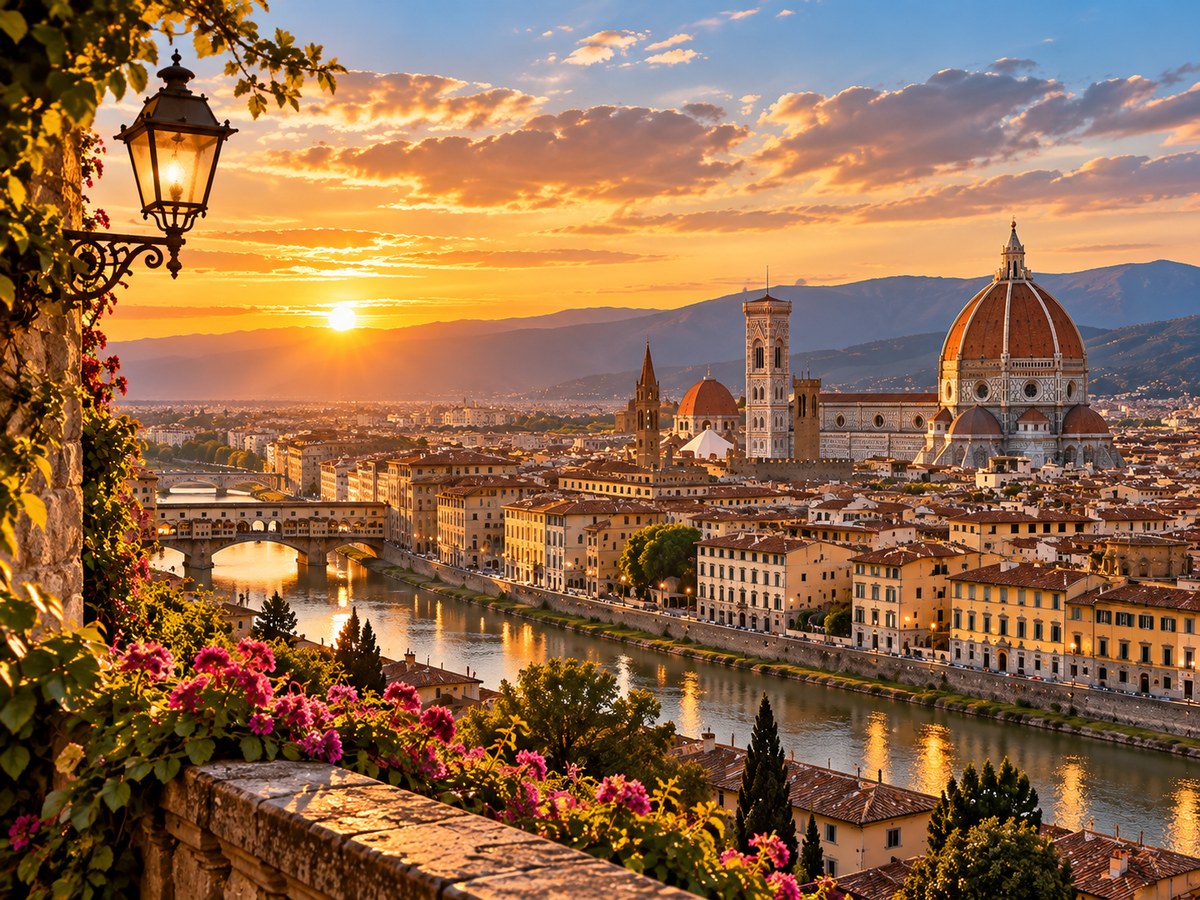
Florence Trip
After the first days in Rome, we went further north. Our itinerary was designed for several weeks - from the end of January to February 9, 2026, and the main purpose of the trip was the Carnival of Venice. But there were several more cities I wanted to see before Venice, so Florence was the next stop. The road from Rome to Florence In the morning we packed up and went to Roma Termini train station. After the hustle and bustle of Rome, the train seemed like an almost ideal way to continue the journey: I sat down, put my suitcase away, looked out the window - and after a while the urban landscape began to gradually change. The trip from Rome to Florence took about an hour and a half. We decided not to take a car in advance, because in the historical centers of Italian cities it hinders rather than helps. In addition, the Firenze Santa Maria Novella train station is located almost in the center, so after arrival you did not have to waste time on a long journey. First impression of Florence When we left the station, we immediately felt a completely different atmosphere. After the large-scale Rome, Florence seemed more compact and calm. There is no need to constantly use transport here - many of the main places are within walking distance of each other. It was cool, as it should be at the end of January, but the weather turned out to be quite comfortable for a walk. We left our things and almost immediately went to the historical center. I didn't want to build a detailed route, but just to get a little comfortable in the city. The first evening in the city The first thing we did was go to the Cathedral of Santa Maria del Fiore. Even after the Colosseum and other impressive places in Rome, the Florence Duomo was able to surprise. Brunelleschi's huge dome towered over the surrounding buildings, and the square itself was filled with people, despite the winter season. Interior From the cathedral, we continued along the narrow streets to the Piazza della Signoria, and then to the Arno. By evening, the city had become even more interesting - there were fewer tourists, the buildings were illuminated, and dusk was gradually falling over the river. I found myself thinking that this is the format of travel that I like the most: not trying to see everything in one day, but leaving time just to take a walk and feel the city. We had a few days ahead in Florence, followed by Bologna and Verona. And with each passing city, we had to get closer to the main goal of this trip - Venice and its carnival.
❤ 1
💬 0
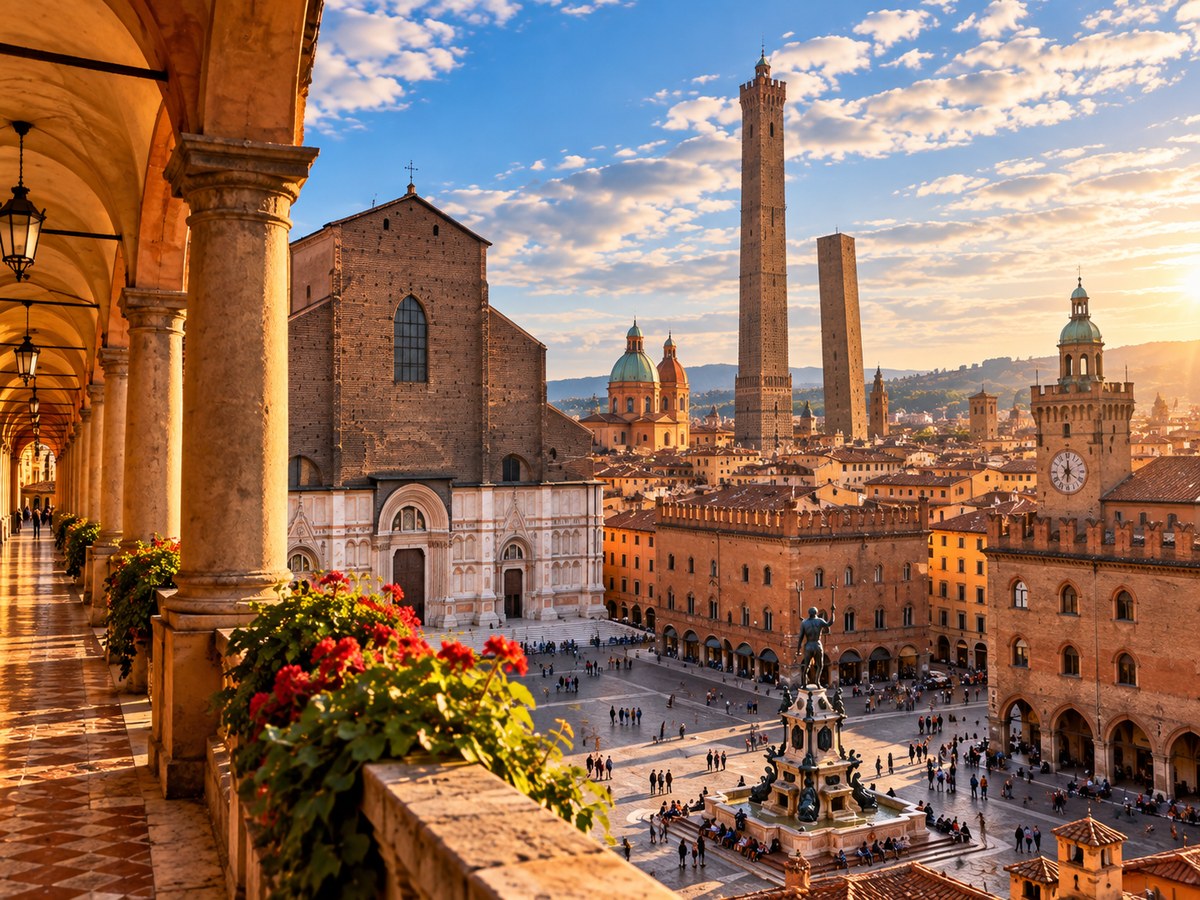
From Florence to Bologna: we continue our journey
After Florence, our route continued north. The next destination was Bologna, a city I knew much less about before the trip than I did about Rome or Florence. But that's why it was especially interesting for me to come there. I didn't want to see another city from the list of the main tourist destinations in Italy, but a place with its own atmosphere. The road from Florence From Florence we went to Bologna by train. The journey took quite a bit of time, so after some time after departure, the Italian cityscape appeared outside the window again. At the end of January, the weather was cool, but it was quite suitable for a walk. When we got off the train at Bologna Station, the first thing we did was leave our things and set off on foot towards the historic center. The first streets of Bologna The first thing that catches your eye in Bologna is the long covered galleries. The porticos here literally accompany you through the streets, so even in cool weather you can safely walk without thinking about every gust of wind or light rain. We gradually reached Piazza Maggiore, the main square of the city. There are several famous buildings located almost nearby, so you don't have to look for sights for a long time. The Basilica of San Petronio towers over the square, and nearby are the old palace and the famous fountain of Neptune. Two towers After the square, we continued our walk to the two towers - Asinelli and Garizenda. They have become one of the symbols of Bologna. It's especially interesting to look at them from below: you immediately notice how much the towers are tilted and how unusual they look among the surrounding houses. Asinelli and Garizenda Towers Then we just walked along the historical streets without any strict route. I liked that feeling in Bologna - the city doesn't constantly try to surprise with huge monuments. It's more interesting to look at the details here: old facades, arches, small squares, doors and endless porticos. A city that is remembered for its food Of course, it would be strange to come to Bologna and not try the local cuisine. It is here that the birthplace of bolognese is located, although in Italy itself the traditional sauce is more often called ragù alla bolognese. Bolognese We found a small place in the center and ordered pasta. After several days of traveling, such a lunch turned out to be very useful - a hot meal, a glass of wine and the opportunity to relax a little before a further walk. By evening, Bologna had become even more cozy. We walked around Piazza Maggiore again, looked at the illuminated buildings and gradually returned to the hotel. Bologna turned out to be completely different from either Rome or Florence. There is less of the feeling of a huge tourist city and more of the usual Italian life. And ahead of us was the next destination on the route - Verona, after which we had to go further north to the main destination of the trip - Venice and carnival.
❤ 1
💬 0
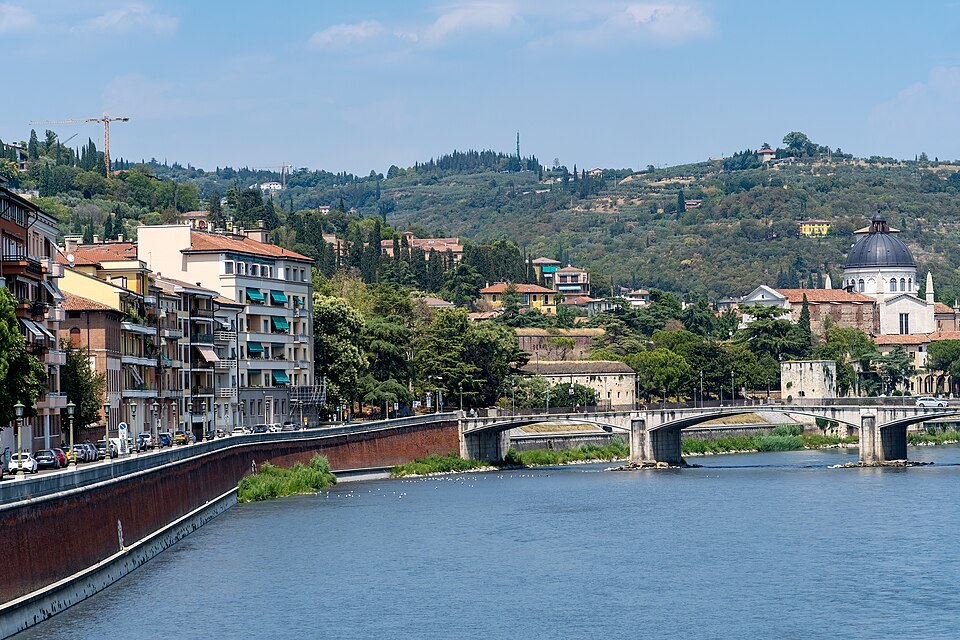
Verona is the city of Romeo and Juliet
After Bologna, our route continued further north. The next stop was Verona, a city that I had imagined before the trip primarily as a place of the story of Romeo and Juliet. But it turned out that this famous story hides a very beautiful and cozy old town, which is pleasant to just walk around without haste. Arrival in Verona We arrived in Verona in early February 2026. After Bologna, the city seemed a little different - there was more of a feeling of medieval Italy, and the narrow streets of the historical center gradually led us to large squares. From the train station, we headed towards the center, left our things and almost immediately went for a walk. The weather was cool but dry, so the end of January and the beginning of February turned out to be quite comfortable for a walk. Bra Square and Arena The first big stop was Bra Square. It is here that the famous Verona Arena is located - a huge Roman amphitheater, which immediately reminds you of how ancient the history of this city is. Arena di Verona After the Colosseum in Rome, it was difficult to surprise me with such a structure, but the Arena in Verona has a completely different environment. It stands right in the center of modern urban life - surrounded by cafes, restaurants, shops and ordinary streets, so the ancient monument here is perceived not as a separate archaeological zone, but as part of the city itself. Streets of the old town We continued walking from Bra Square. After a while, we came to the Erbe Square, one of the most famous squares in Verona. I just wanted to stop here, look at the old facades and sit in a cafe for a while. Then we went to the Piazza della Signoria, and from there to the river Adige. On the way, they deliberately turned off the main streets several times. That's exactly how, in my opinion, Verona is worth exploring: without a clear route, allowing the city to tell you where to go next. Erbe Square Juliet's Balcony Of course, we couldn't avoid Juliet's courtyard. The place is quite touristy, and there were noticeably more people here than on the neighboring streets. The balcony has long been one of the symbols of Verona, although the story of Romeo and Juliet itself is literary. Juliet's House We didn't stay here for a long time and went for a walk around the center again. By evening, Verona had become especially pleasant - the lights turned on, the squares became quieter, and the old buildings took on a completely different look. Verona turned out to be exactly the stop I need between big cities. I didn't want to make a list of dozens of attractions here. I just wanted to walk, look around and enjoy the atmosphere of old Italy. But our trip was coming to the main goal. After Verona, the last section of the route was Venice. That's where we were heading for the main event of the trip - the Carnival of Venice.
❤ 0
💬 0
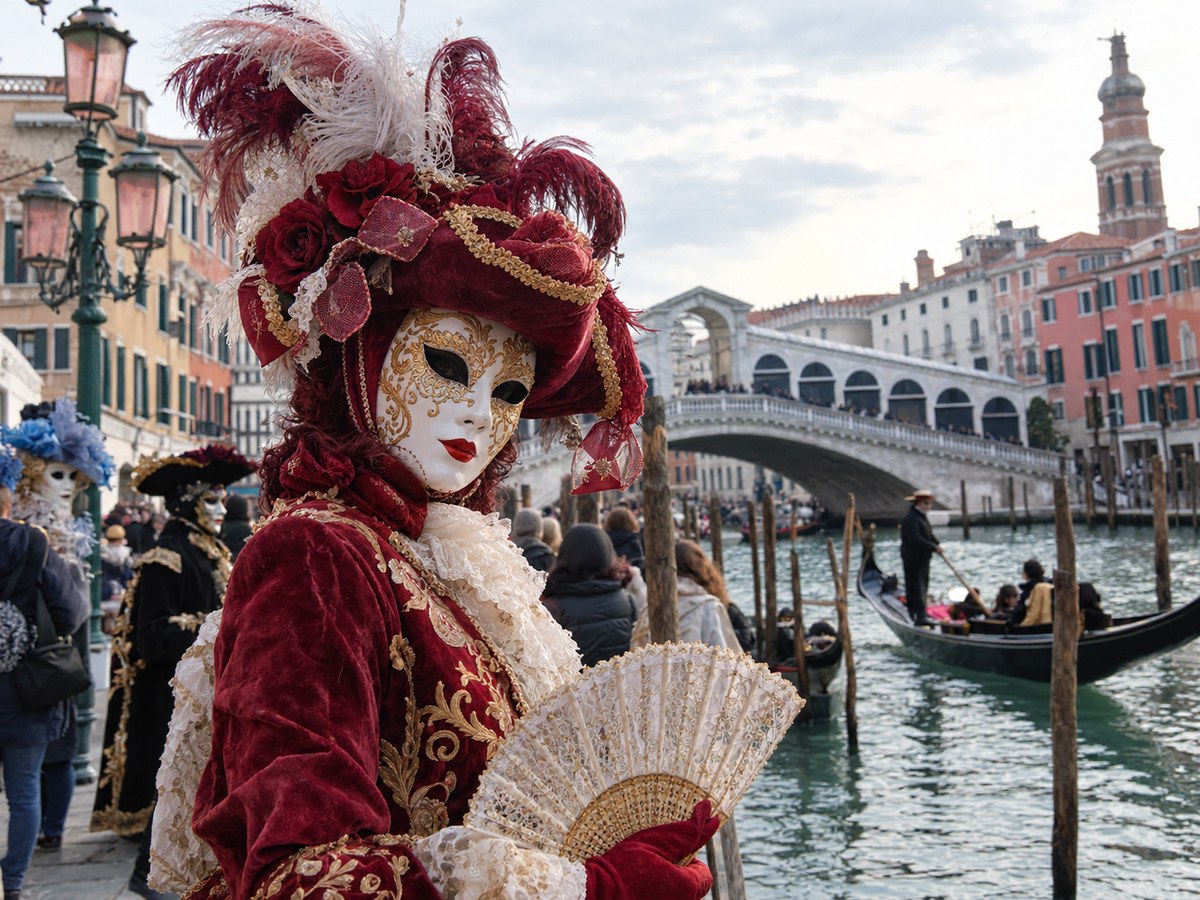
Venice. The final point of our trip to Italy
Venice was the main destination of our trip to Italy. Since the end of January, we have been gradually moving north - from Rome to Florence, then to Bologna and Verona, and now we have finally reached the city for which we had planned this trip at the beginning of February. The 2026 Venice Carnival took place from January 31 to February 17, and we were supposed to leave on February 9, so there wasn't much time left. First morning in Venice When we reached the canals, it immediately became clear that Venice was not at all like any of the previous cities on the route. It's almost impossible to just walk the usual way here - the streets turn into bridges, bridges lead to squares, and around the next bend a canal with boats and ancient facades reappears. But this time the city was special. Carnival was already approaching on the streets. People were photographing costumes and masks, performances were taking place in the squares, and among ordinary passers-by there were more and more people who seemed to come from another era. St. Mark's Square The first thing we did was go to St. Mark's Square. I've seen her many times in photographs, but the space feels completely different in person. On one side is the Basilica of San Marco, next to the bell tower, surrounded by ancient buildings, and tourists are constantly moving between them. During the carnival, the square also turns into a large stage. The 2026 program included performances, parades, and a mask contest. One of the central elements was the "Olympus - Alle origini del gioco" program, dedicated to mythology, gaming and sports in the year of the Milano Cortina Winter Olympic and Paralympic Games. But what I liked most was not even the specific event, but the people. You could just stand on the square and watch the carnival participants pass by. Some of the costumes looked very carefully thought out, and the masks were so unusual that I wanted to look at every detail. Carnival is not only on the square At first I thought that the main atmosphere would be only around San Marco, but it turned out that the carnival is gradually spreading throughout the city. Street performances, music, circus acts and theatrical performances took place on the streets and small squares. The official 2026 program included more than 350 street performers, about 80 companies, and about a thousand performances in various locations in Venice, Mestre, and the lagoon islands. That's why we stopped using the map on purpose and just started walking around. In one place we got to a small performance, ten minutes later we found ourselves near the canal, then we found a quiet courtyard where there were no tourists at all. Masks and Venice Of course, it was the masks that I was waiting for the most. On a typical day, Venice itself looks a bit theatrical, but during carnival this feeling increases several times. Carnival Venice 2026 It was especially interesting to see people in costumes not only at official events. Someone was just walking around the city and letting tourists take pictures of themselves, someone was standing by the canal, and someone was posing near ancient buildings. Sometimes it felt like you were inside a historical film. However, not all of Venice was noisy. It was worth moving a little away from the main tourist routes, and the carnival fuss practically disappeared. The narrow alleys became empty, only the sound of water could be heard, and from behind the houses there was sometimes a view of a small canal. Venice in the evening The city has changed especially much in the evening. During the day, costumes, people, and events took all the attention, and after sunset, Venice became a little mysterious again. We walked from San Marco to the Rialto Bridge, turned into unfamiliar alleys several times on purpose, and eventually found ourselves on an almost empty street. At such moments, I realized that carnival is only one part of the experience. If we had come here solely for masks and events, we would have missed Venice itself. Canals, bridges, old houses, water between buildings and a very special silence away from the center turned out to be no less interesting. Last day of the trip On February 9th, it was time to finish the trip. It was on this day that the so-called "fat week" of the carnival began, which lasted until February 17, so the city was just entering the busiest period of the holiday. We managed to see enough to understand the scale of what was happening, but it was still a bit of a pity to leave. As we were picking up our things and heading to the train station, I took another look back at the canals. In two weeks, we traveled through several completely different cities - from ancient Rome to Florence, Bologna and Verona, and ended the journey here, among the masks and canals of Venice. That's why I chose the end of January and the beginning of February for this trip. It was possible not just to see Italy, but to gradually move around the country towards a specific goal. And when Venice appears in front of you at the end of the route during the carnival, it seems that all the previous stops really led here.
❤ 3
💬 0