

Alfred Donny
Author
Lvl 5. 🏛️ Discoverer
20/25
20Posts
12Likes
6Followers
2Following
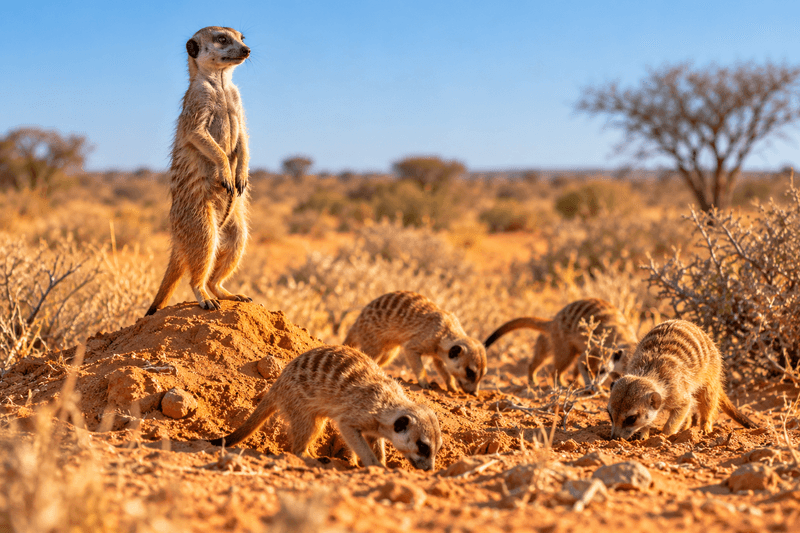
Meerkats in the Desert: One Keeps Watch While the Others Forage
Morning in the Kalahari Desert begins with movement. One by one, small meerkats emerge from their burrow, look around and spread across the sandy ground. Some dig in the dry soil, while others turn over stones and investigate shrubs. One climbs onto a small mound, rises on its hind legs and carefully scans the surroundings. While the group searches for breakfast, this little sentinel seems to be on duty. Meerkats live in the arid regions of southern Africa, including the Kalahari. These small members of the mongoose family are adapted to heat and open landscapes. Their long claws help them dig, while dark patches around their eyes reduce glare from the sun. Underground burrows protect them from heat, predators and chilly nights. Why does one meerkat stand guard? Life on an open plain can be dangerous. Birds of prey may attack from above, while snakes and other predators move along the ground. When the group is foraging, one meerkat often takes a raised position, stands upright and watches the sky and nearby terrain. If the lookout detects danger, it gives an alarm call. The others respond by rushing towards shelter or seeking a safer place. Different threats can trigger different calls, helping the group react quickly. The lookout does not necessarily stay in position for long; meerkats may take turns, and sometimes several animals watch the surroundings at once. It may look as though one tiny animal has a formal shift protecting everyone else. In reality, this behaviour helps the whole group survive in a place where danger can appear without warning. What do meerkats find in the sand? While one animal watches, the others search for food. They dig through sand, inspect spaces beneath stones and explore dry plants. Their diet includes insects, larvae, spiders, scorpions and other small animals. They may also find tiny lizards or plant matter. A strong sense of smell and nimble front paws help them uncover prey hidden below the surface. Despite their cute appearance, meerkats are not helpless. They can tackle some dangerous prey, although hunting still requires care. During the hottest hours, they tend to reduce their activity and forage more in the morning and late afternoon. Water is important too, and they obtain it not only from drinking sources but also from their food. Life in a close-knit family Meerkats usually live in groups, interacting with one another, caring for young and sharing a network of burrows. Young animals learn by watching adults: they explore the ground, practise finding food and gradually learn how to respond to alarm calls. Watch quietly from a distance and you may notice a whole series of small scenes: one meerkat digging a hole, another standing upright, and young ones clumsily copying the adults. Avoid approaching burrows, feeding the animals or interrupting their foraging. They are wild animals, and human interference can alter their natural behaviour. Meeting meerkats is a reminder that survival in the desert depends on more than strength. Awareness, cooperation and warning one another in time are essential. One keeps watch while the others forage, and the whole group carries on beneath the hot African sun.
0
0
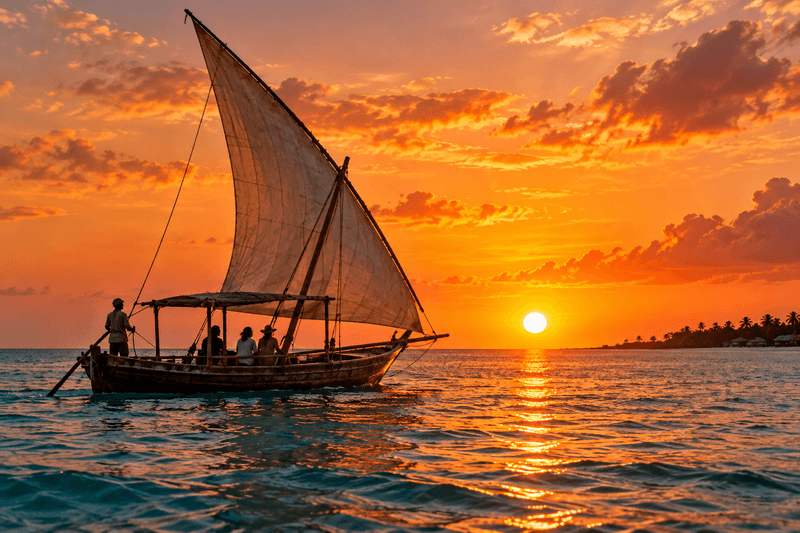
Sunset on a Traditional Boat off Zanzibar
There is a special way to welcome the evening in Zanzibar: heading out onto the ocean aboard a traditional wooden dhow. When we left the shore, the sun was still high enough to sparkle on the turquoise water. The wind filled the sail, the coastline slowly receded, and the sounds of the beach gave way to the gentle movement of the waves. It seemed like an ordinary sunset, yet from the water it felt completely different. Dhows are traditional sailing vessels used for centuries along the coast of East Africa and across the Indian Ocean. They are closely connected with the region's maritime trade between Africa, the Arabian Peninsula and India. With their wooden hulls, distinctive shapes and tall sails, they remain a familiar sight around Zanzibar. Local fishers still use boats of this kind, while some are adapted for evening trips along the coast. As the sun begins to descend The light gradually changes. Bright blue gives way to soft gold, and the sun lays a shimmering path across the water. The shoreline becomes a dark line of palm trees, while the sails of other boats resemble silhouettes in a painting. It is the kind of moment when conversation slows down and everyone simply watches the sky change. A Zanzibar sunset can turn the clouds orange, pink and violet. Every evening is different: sometimes the sky is almost clear, while on other days the clouds create a whole palette of colours. The display depends on the weather and the sun's position, so no one can guarantee a perfect sunset in advance. That uncertainty is part of the charm - you have to be out on the water and let the evening unfold. More than a beautiful photograph A dhow trip is not just an opportunity to take striking pictures. It offers a glimpse of Zanzibar's deep connection with the sea. For centuries, the ocean has been a trade route, a source of food and a part of everyday island life. Boats remain important to local culture, although tourist cruises are different from ordinary fishing trips. Before booking, check the trip length, departure point and whether drinks or light snacks are included. Some excursions use sailing dhows, while others use motorboats designed to resemble traditional vessels. If an authentic atmosphere matters to you, ask which type of boat will be used. It is also worth checking the forecast and sea conditions. Preparing for an evening cruise Bring light clothing, sun protection and a phone or camera secured with a strap. It can be breezy on the water, and the air may cool quickly after sunset. Choose an operator that provides life jackets and follows safety procedures. Do not stand up or move around the boat without the crew's permission, especially when the sea is choppy. When the sun finally disappears below the horizon, the water darkens and a last strip of light remains in the sky. The boat turns back towards shore, where the beach lights begin to appear. I would remember this evening for more than its colours. It offered a rare sense of calm: a wooden boat, a warm breeze, the open ocean and a few precious minutes with nowhere else to be.
0
0
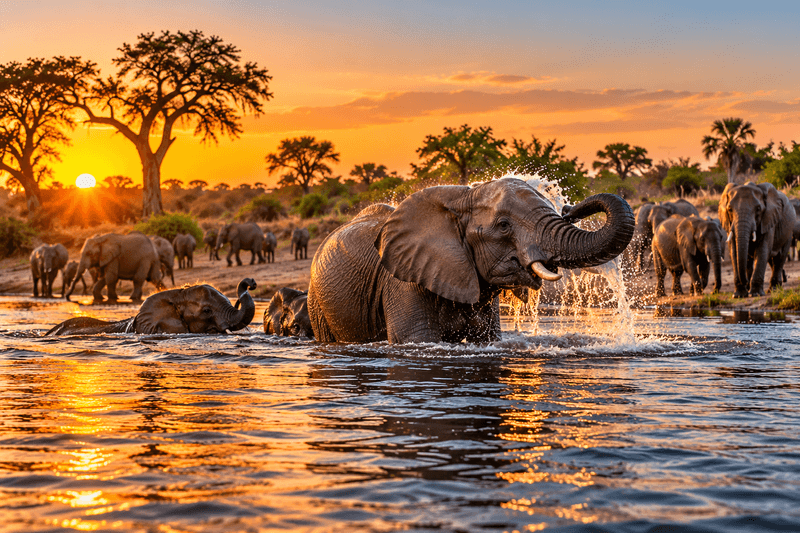
Elephants on the Chobe River: A Safari from the Water
I used to imagine an African safari as a dusty jeep ride across the savanna, searching for animals hidden in tall grass. But along Botswana's Chobe River, the experience is different. You can travel by boat and watch elephants almost at water level. Huge silhouettes emerge from the vegetation, slowly descend to the river and step into the shallows while trees and clouds shimmer on the surface. The Chobe River flows through northern Botswana and gives its name to Chobe National Park, one of the country's best-known wildlife destinations. Its banks include open floodplains, sandy stretches and dense vegetation. During the dry season, water becomes especially important, drawing elephants, buffalo, antelope and other savanna animals to the river. Why are there so many elephants here? Chobe National Park is famous for its large herds of African elephants. In dry months, many animals stay close to the river to drink, cool off and find vegetation. Sometimes an entire family group appears on the bank. Adult females remain close to their calves while younger elephants splash and play in the shallows. Watching them from a boat is fascinating. You can see elephants carefully descend a sandy slope, draw water with their trunks, spray themselves and cross the river. Some become almost completely submerged, leaving only their heads and trunks above the surface. Their movements are unpredictable, however: large herds may arrive together, while on other days the riverbank seems empty. This is not a zoo or a performance for visitors. Elephants decide for themselves when to approach the water, so patience matters more than getting a photograph at any cost. A river safari: a different view of Africa River safaris usually take place in a motorboat with a local guide. The guide helps spot animals, explains their behaviour and maintains a safe distance. Besides elephants, you may see hippos, crocodiles, waterbuck and many bird species. Buffalo sometimes rest in the shallows, while fish eagles and kingfishers perch in nearby trees. Late afternoon can be especially beautiful, when the sun sits lower and casts warm light across the water. Animals are reflected on the river's surface, and the banks turn golden. Morning trips are rewarding too: the air is cooler, and some animals remain active after the night. Exact departure times and trip lengths depend on the operator, weather and water levels. When to go and what to know The dry season, roughly May to October, is often chosen for river wildlife viewing because animals tend to gather around available water. Conditions vary from year to year, while the rainy season brings greener landscapes and different wildlife experiences. Before travelling, check road conditions, boat schedules and accommodation availability. Bring binoculars, sunglasses, a hat and a camera lens suitable for photographing animals from a distance. Follow the guide's instructions, do not stand up without permission and never try to attract an animal's attention. Even an apparently calm elephant is a powerful wild animal that needs room. A Chobe safari is memorable for more than close encounters with elephants. Africa reveals a quieter side here: water splashes against the boat, birds call from the vegetation, and enormous animals arrive to drink on their own schedule. The chance to watch them without disrupting their lives is what makes this journey special.
0
0
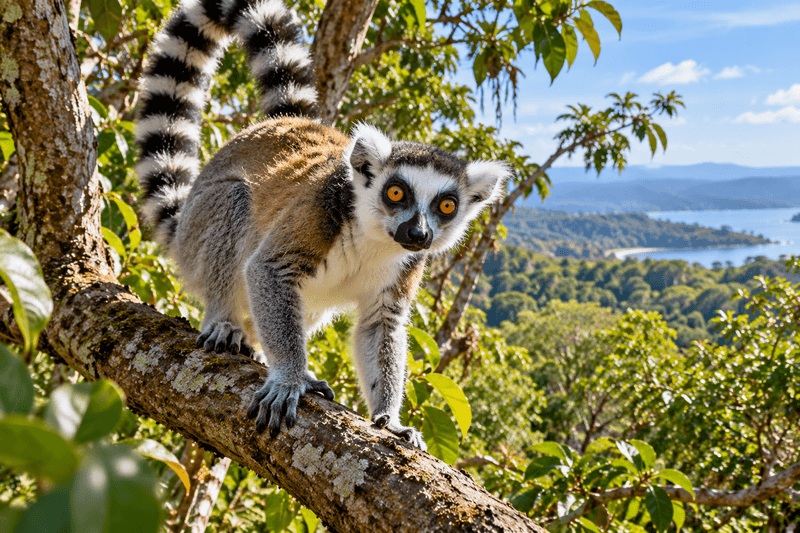
Lemurs in the Wild: An Encounter You’ll Never Forget
Madagascar is one of those places where nature seems to follow its own rules. Unusual plants grow here, forests shelter animals found nowhere else on Earth, and lemurs leap between the branches. Before my trip, I had only seen them in documentaries, so I had no idea how amusing and extraordinary they would be in real life. I set off for a forest reserve early in the morning, while the air was still cool and a light mist hung above the trails. The guide warned me that lemurs might appear without warning: you hear a rustle, look up, and suddenly several curious faces are watching from a tree. That is exactly what happened. First, a long striped tail flashed through the leaves, then a wide-eyed lemur appeared on a branch. Meeting the forest’s residents The ring-tailed lemurs impressed me most. Their long black-and-white tails make them easy to recognize, even from a distance. They moved along the ground in small groups, leaped onto rocks and watched their surroundings carefully. Some searched for food, while others sat in the sunshine with their front paws raised, almost as if they were sunbathing. Lemurs are different from the monkeys most people know. They are a distinct group of primates that evolved in relative isolation on Madagascar. Many species live on the island, each adapted to its own habitat: some inhabit dry forests, while others prefer humid tropical vegetation. Seeing them in the wild means discovering a unique natural world shaped over millions of years. The best part was watching them without rushing. One lemur cautiously approached the trail, looked in my direction and quickly followed the others. The encounter lasted only seconds, but these are the moments that stay with you far longer than ordinary holiday photographs. Why lemurs need protection Behind their charming appearance is a vulnerable world. Many lemur species are threatened with extinction. Their natural habitats are shrinking because of deforestation, expanding farmland and other human pressures. For animals found only in Madagascar, the loss of forest can mean the disappearance of an entire population. That is why it is best to observe lemurs in national parks and reserves where conservation specialists work. Do not feed them, try to catch them or approach too closely. Even if a lemur looks friendly, it is still a wild animal that needs space. Planning your own encounter Andasibe-Mantadia National Park in eastern Madagascar and Berenty Reserve in the south are two places to consider. Different species live in different areas, so the best choice depends on your route and which animals you hope to see. A local guide can help you spot lemurs while minimizing disturbance to their natural behavior. I left the forest feeling as though I had briefly stepped into another world. No elaborate attractions are needed here: just follow the trail, listen to the leaves rustling and look carefully around you. When a wide-eyed lemur suddenly appears among the branches, you understand why meeting these animals is so hard to forget.
0
0
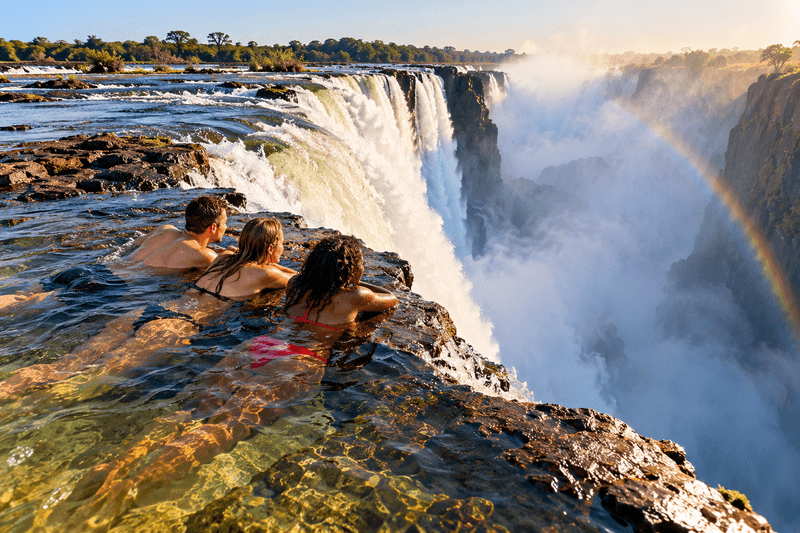
Swimming at the Edge of Victoria Falls: What to Know About Devil’s Pool
Imagine floating in clear water just a few steps from the edge of one of the world's most powerful waterfalls. A vast drop opens before you, the Zambezi thunders below, and a natural rock pool lies behind you. It sounds unbelievable, but this place exists. Known as Devil’s Pool, it sits at Victoria Falls on the border between Zambia and Zimbabwe. After seeing photos of the pool, I wanted to understand how visitors could get into the water so close to the drop. Devil’s Pool is not an ordinary tourist swimming pool, but a natural basin formed in rock near the waterfall's edge. Visits are possible only when water levels are suitable and as part of an organized guided excursion. Where is Devil’s Pool? Devil’s Pool is on the Zambian side of Victoria Falls, near Livingstone Island. During the low-water season, conditions may allow visitors to reach the natural pool, where a rock lip helps prevent swimmers from being swept over the edge. That is why the photographs look so astonishing: people appear to be swimming right beside the drop. However, this is not a fenced or fully protected platform. Beyond the rocky edge is a fall of more than a hundred metres. Strong currents, slippery rocks and changing river levels can create serious hazards. Visitors must never attempt the experience independently. Trained guides assess the conditions and decide whether access is permitted that day. Excursions usually involve reaching the island and crossing a section of water. The exact route depends on river conditions and the operator's procedures. Before booking, check the duration, participant requirements and what the price includes. When can you swim there? The key factor is the water level of the Zambezi. During high-water periods, Devil’s Pool closes because the current becomes too dangerous. Access is generally possible during the dry season, roughly from August to January, although exact dates change from year to year with rainfall and river conditions. Do not plan your visit based on the calendar alone. Even if tours operated during the same month last year, conditions may be different this season. Confirm current availability with an authorized operator before travelling. Is the experience worth it? For travellers who enjoy unusual adventures, Devil’s Pool can become one of the most memorable moments of a trip to Africa. It offers an extraordinary perspective on the falls and a close-up sense of the river's power. But it is not simply a place for a relaxed swim. Follow your guide's instructions, never approach the edge on your own, and skip the excursion if conditions seem unsafe. Do not try to recreate the photographs without professional supervision: the natural rock basin does not guarantee protection from a fall. Beauty and risk coexist here, so caution matters more than getting a dramatic picture.
0
0
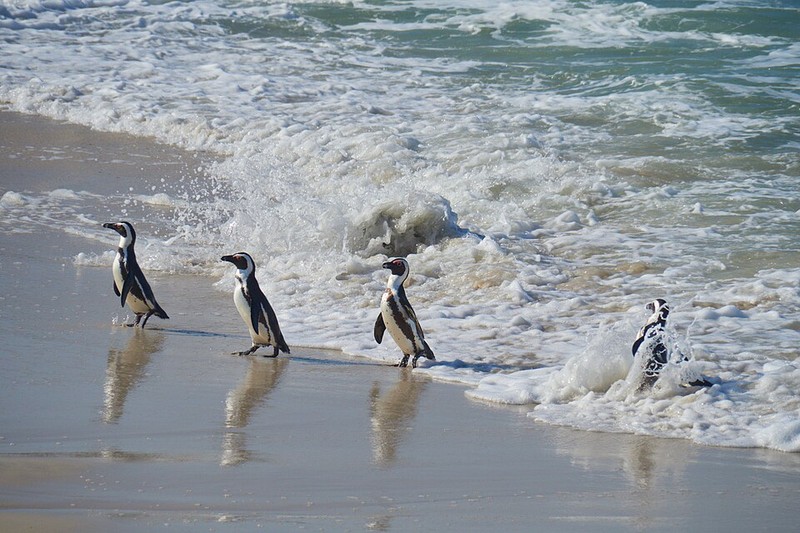
Penguins on an African Beach: Where to See Them
When people imagine Africa, they often picture hot savannas, elephants and lions. Yet in the south of the continent, penguins stroll along sandy beaches. This is not a zoo but the real coastline of South Africa. I had wanted to see these birds in the wild for a long time, so I headed to Boulders Beach near Cape Town. The drive follows the ocean past rocky coves and small coastal settlements. Even along the way, you begin to appreciate how varied Africa's landscapes can be. Seeing the penguins against turquoise water and pale boulders for the first time felt almost unreal. They wandered across the sand, warmed themselves on the rocks and dived into the ocean. Boulders Beach: the best-known place to meet penguins Boulders Beach lies near Simon's Town, roughly an hour's drive from central Cape Town, depending on traffic. It is home to African penguins, recognizable by the black band across their chest and dark faces framed by pale patches of feathers. The beach is famous for its huge rounded boulders, which shelter small sandy coves. Penguins move freely around their habitat, rest, preen and interact with one another. Wooden boardwalks allow visitors to watch them without entering their space. Remember that these are wild animals, not pets. Do not touch or feed them, or try to lure them closer for a photograph. The best approach is simply to pause and observe. Sometimes a penguin will wander surprisingly close to the viewing barrier on its own. Where to see penguins away from the crowds Another worthwhile stop is Stony Point Nature Reserve at Betty's Bay, along the coast east of Cape Town. It also shelters a colony of African penguins, which can be viewed from designated paths. It is a good option for travelers following the scenic coastal route who want another encounter with wildlife. Do not expect to find dozens of penguins on every African beach. Their wild population has declined dramatically, making colony protection especially important. African penguins are critically endangered, and their breeding sites need careful protection. When to visit Boulders Beach can be visited throughout the year. Penguins live here year-round, although their numbers and behavior vary with the season and breeding cycle. Morning can be a pleasant time to visit before the area gets busy. Check opening hours and access rules before setting off, as some sections may close temporarily to protect the animals. This encounter reminded me that Africa is far more diverse than its familiar stereotypes suggest. You can watch penguins beside a cold ocean in the morning and later explore mountains, vineyards or national parks. That unexpected contrast is well worth setting aside a day for when visiting the Cape Town area.
0
0
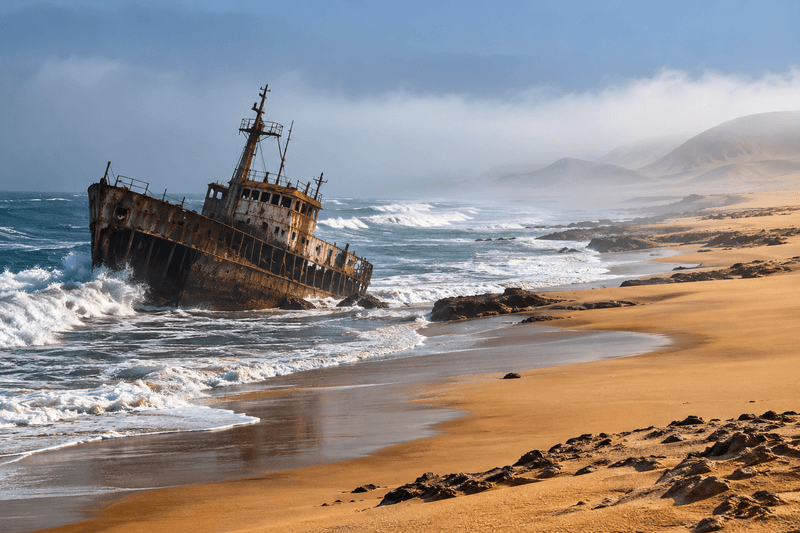
Skeleton Coast: Why Is This Namibian Shore So Ominous?
Imagine a place where an endless desert meets the cold Atlantic Ocean. Thick fog hangs above the water, waves crash against the shore, and rusting shipwrecks lie scattered across the sand. This is Namibia's Skeleton Coast, one of Africa's harshest and most unusual coastlines. The coast where ships disappeared The name sounds like a warning, and there are real reasons behind it. For centuries, ships faced dangerous conditions here. Dense fog concealed the shoreline, cold currents and heavy surf made navigation difficult, and safe natural harbors were scarce along many stretches of coast. A ship stranded on a sandbank could become a trap. Even if sailors managed to reach land, another danger awaited them: the arid Namib Desert. Finding water and reaching a settlement was far from easy. The coast gradually gained a reputation as a place where a shipwreck could mark the beginning of an even greater struggle for survival. Over time, stories of lost vessels accumulated. Some wrecks can still be seen along the shore. Their metal hulls rust in the wind while the sand slowly swallows what remains. The contrast between ocean and desert gives the landscape its unsettling character. Where the fog and gloomy atmosphere come from The main reason for the unusual weather is the cold Benguela Current, which flows along the southwestern coast of Africa. It cools the air above the ocean and helps create dense coastal fog. At times, the shoreline seems to disappear behind a gray curtain, leaving only nearby waves, dark rocks and silhouettes on the sand visible. Yet just a few kilometers inland, the dry desert begins. Familiar coastal greenery is scarce, and pale sand gives way to rocky plains and dunes. The cold, damp air above the water and the dry expanses of the Namib create a striking contrast. But the Skeleton Coast is more than a desert graveyard for ships. Despite the harsh climate, wildlife has adapted to these conditions. Large colonies of Cape fur seals gather along certain stretches of shore, while antelope and other desert animals inhabit inland areas. Fog brings moisture that plays an important role in the local ecosystem. All of this makes the landscape both gloomy and surprisingly alive. There are no bright resort beaches or familiar crowds of holidaymakers. There is wind, ocean, fog and nature following its own rules. Why this place attracts travelers People do not come to the Skeleton Coast for swimming or lounging beside the water. They come for the feeling of remoteness, unusual landscapes and the stories the ocean seems to have left behind. The wrecks are especially striking against the empty shoreline. A rusted hull half-buried in sand looks like a fragment of a long-forgotten expedition. In the fog, these places can seem almost unreal, even though every wreck may have a genuine story of human struggle against the sea. Access varies across the coastline. The southern part of the national park can be visited along permitted routes, subject to entry rules, while reaching remote northern areas often requires special arrangements. Before traveling, check current access conditions and prepare your vehicle, water supplies and navigation. The Skeleton Coast did not acquire its ominous name by accident. Shipwrecks, marine animal bones, dense fog and the harsh desert shaped its reputation over many years. Yet behind the eerie image lies a remarkable natural world where ocean and desert exist side by side. That contrast is what makes the place unforgettable.
0
0
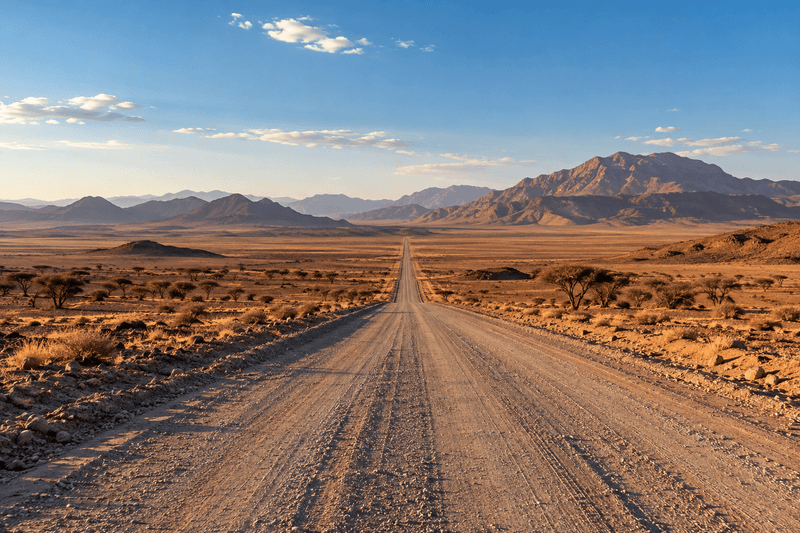
Driving Across Namibia: Hundreds of Kilometers With Almost No People
Some journeys are about the road itself rather than the attractions along the way. Namibia became that kind of place for me. I expected deserts, sand dunes and occasional wildlife, but I didn't expect to remember the endless stretches of road most vividly - with almost nothing around except land, sky and a thin line disappearing into the distance. When nothing changes outside the window for hours At first, the drive seemed ordinary. We left a small settlement, passed a few houses and soon entered wide-open country. The asphalt gave way to gravel, and dry hills, rocky plains and scattered shrubs stretched out beyond the windows. After a while, I realized I hadn't seen an oncoming vehicle for a long time. Mountains occasionally appeared on the horizon, and sometimes the road descended into a shallow valley. But there were hardly any people. Even familiar road signs were rare, and the nearest café or fuel station could be a long way away. In these conditions, distance feels different. A hundred kilometers looks insignificant on a map, but on a gravel road it becomes a long journey. You cannot simply speed up to reach your destination sooner. You have to watch the surface, avoid loose stones and be ready for unexpected bends. That was when I understood that in Namibia, the road itself becomes an attraction. You don't need to turn off somewhere all the time. Sometimes it is enough to keep driving and watch the immense landscape change. The desert turned out not to be empty at all When you think of a desert, you imagine endless sand and an absence of life. But Namibia's landscapes were much more varied. Some stretches were rocky plains; elsewhere, dry riverbeds, low mountains and scattered trees appeared. After rain, even arid areas can briefly turn green. Sometimes you can spot antelope or other wild animals beside the road. They do not appear on a schedule, which makes every sighting feel like an unexpected gift. You have to look around instead of focusing only on the road. Of course, stop only somewhere safe and never approach the animals. The changing light is another memorable part of the journey. In the morning, the ground looks cool and grayish. By midday it turns golden, and toward evening the hills and mountains take on reddish tones. Even a familiar stretch of road can look completely different on the return trip. Eventually, you stop expecting something famous to appear around every bend. In Namibia, beauty often lies in simple things: a lone tree, a long shadow, a cloud above a dry valley or a road disappearing beyond the horizon. Here you really understand how big the world is The strongest feeling came when I stopped in a safe place and stepped out of the car. The space around me was so vast that my eyes seemed to have nowhere to settle. There was no city noise, hardly any traffic, and the wind felt like the only sound in the enormous landscape. A journey like this quickly teaches you the importance of planning. Before a long drive, fill the tank, check your water supply, charge your phone and find out where the next fuel station is. Mobile coverage can be unreliable on some routes, so offline maps are useful. On gravel roads, you also need to consider the surface conditions and drive at a speed that is safe for them. Yet it is precisely this distance from everyday bustle that makes the journey special. You don't have to keep deciding where to go or what to see. Just follow the road, stop occasionally for a view and let the journey become part of the experience. I remember Namibia for more than its dunes and famous natural landmarks. What stayed with me were the long drives, dust trailing behind the car, the rare oncoming vehicle and the horizon that seemed to move farther away with every kilometer. Sometimes, all you need for a real adventure is to keep going.
0
0
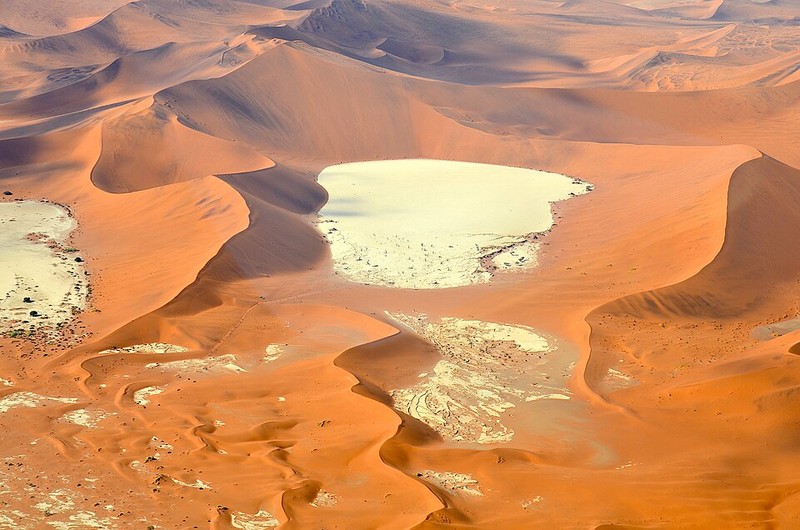
Namibia: The Trees Standing in the Middle of a Dead Desert
When I first saw photos of Deadvlei in Namibia, I thought they looked like a movie set from another planet. White ground, enormous orange dunes and black trees standing in the desert as if time had stopped. The most amazing part is that this place really exists. A valley where time seems to have stopped Deadvlei lies in Namib-Naukluft National Park, among some of the world's tallest sand dunes. Its name is often translated as “dead marsh” or “dead valley.” Water once reached this area, trees grew here and a very different ecosystem thrived. Then the climate changed, the river stopped feeding the valley, and it became a dry plain. The most striking feature is the old camel thorn trees. They died roughly 600-700 years ago, but the extremely dry climate has kept them from fully decomposing. Their trunks darkened under the sun and over time, while their branches still reach toward the sky. The result is a landscape unlike almost anywhere else on Earth. Against the bright dunes, the trees look almost black. There is no familiar green vegetation, and the ground is so pale that it appears white. The contrast is so strong that it is hard at first to believe you are looking at a real desert. Getting there means crossing the sand Deadvlei is not right beside the road. The journey starts in the Sossusvlei area, where visitors come to see Namibia's famous dunes. From there, the route crosses sandy terrain, with part of the journey completed on foot. Even a short walk can feel long in the heat, so it is best to arrive early, carry water and wear comfortable shoes. Along the way, enormous sand slopes rise around you. Some reach hundreds of metres in height. Their colors change with the light, from soft gold to deep red-orange. It can seem as if the dunes are moving, although what changes most visibly is the light and shadow. When Deadvlei finally comes into view, the scene is extraordinary: a flat, pale surface, scattered dark trees and giant walls of sand all around. Instead of rushing to take photos, you want to stop and look at every detail. Why these trees are so hard to forget Deadvlei has no waterfalls, dense forests or animals constantly appearing in front of the camera. Its main characters are silence, sand and trees that outlived the environment that once sustained them. They have stood in the same place for centuries while the wind slowly reshapes the surrounding dunes. The most striking thing is the sense of scale. Beside the huge sandy slopes, a person looks tiny, and the trees resemble silhouettes in an old photograph. Yet there are no artificial sets here: nature, climate and time created everything. Deadvlei is often described as one of Africa's most unusual landscapes, and it is easy to understand why. It shows how dramatically nature can change when water disappears, and how long the environment can preserve traces of the past. I would not limit the visit to a single photo with the dunes in the background. Walk across the valley, look at the cracked ground and study the branches of the old trees. Those details are what make the place unforgettable.
0
0
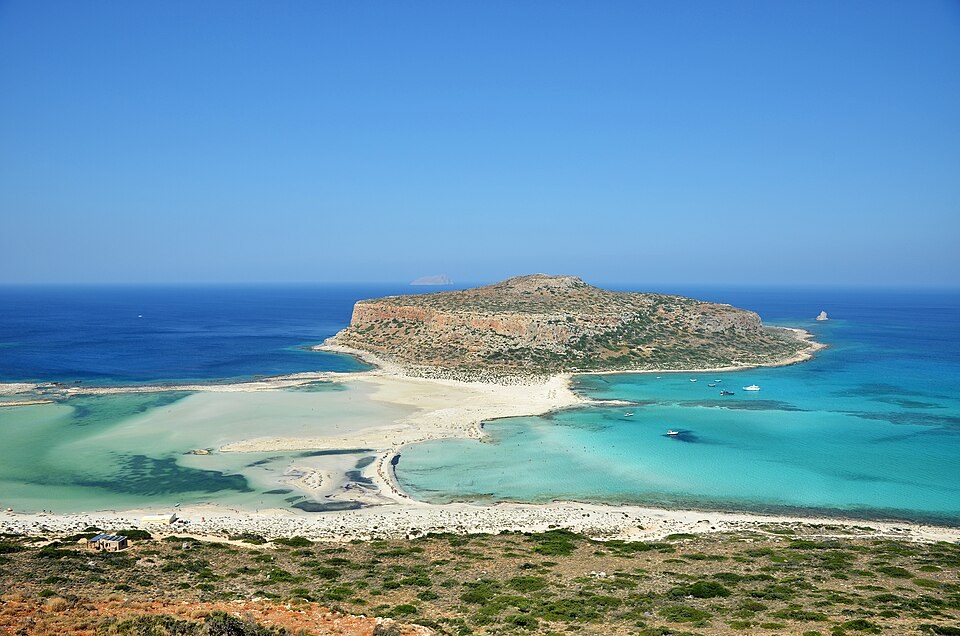
Last days in Crete - Balos and the way home
After Chania, Elafonisi, Rethymno and Knossos, I had my last days in Crete. I purposely didn't fill them with dozens of new points and decided to leave the most beautiful one for last - Balos Lagoon , and then just spend the last evening on the island without haste. Balos is the final point of the route In the morning, I set off towards Kissamos . The road gradually became more mountainous, fewer houses appeared around, and the usual urban landscapes were finally replaced by nature. The path itself was already perceived as part of the journey, because every turn opened up new views of the coast. Balos can be reached by car via a dirt road, after which it remains to walk or take a boat from the port of Kissamos. I chose the first option because I wanted to see the lagoon from above. It was for this kind of trip that it was worth all the effort. When Balos Lagoon finally appeared ahead, I just stopped for a few minutes. From a height, it looked completely unreal: light sand, shallow water in different shades of blue and green, small islands and mountains on the horizon. The official tourist portal of Greece calls Balos one of the most recognizable natural landscapes of Crete, and now I understand perfectly why. I went down to the water and spent several hours there. No plans, excursions, or attempts to get somewhere else -I just swam, sat on the shore, and looked out at the sea. After several days of constant travel, this was exactly the kind of rest I needed. Last night in Crete After returning to the city, I decided not to look for any special place and went back to a small Greek tavern . I ordered a few simple dishes that I had grown to love this week, took fresh bread and sat at the table for a long time, remembering the route. In seven days, I managed to see completely different Crete: old Chania, Elafonisi beach, Rethymno, Heraklion, ancient Knossos and Balos lagoon . At some point, it became clear that it was impossible to really see the island in one short trip. Each new area was distinguished by its nature, architecture and atmosphere, and between the famous attractions there were a huge number of places where I would like to return. Seven days was not enough The next morning, I packed up and went to the airport. Usually, at the end of a trip, you want to go home the most, but here it was a little different. I have already started building the following route in my head - mountain villages, the southern coast, new beaches and places that I did not have time to see this time. Crete turned out to be exactly the kind of island you want to return to. Not because I didn't have time to watch everything in seven days, but on the contrary, because I managed to understand how diverse it is. And if I ever find myself here again, I definitely won't try to see everything at once.
1
0
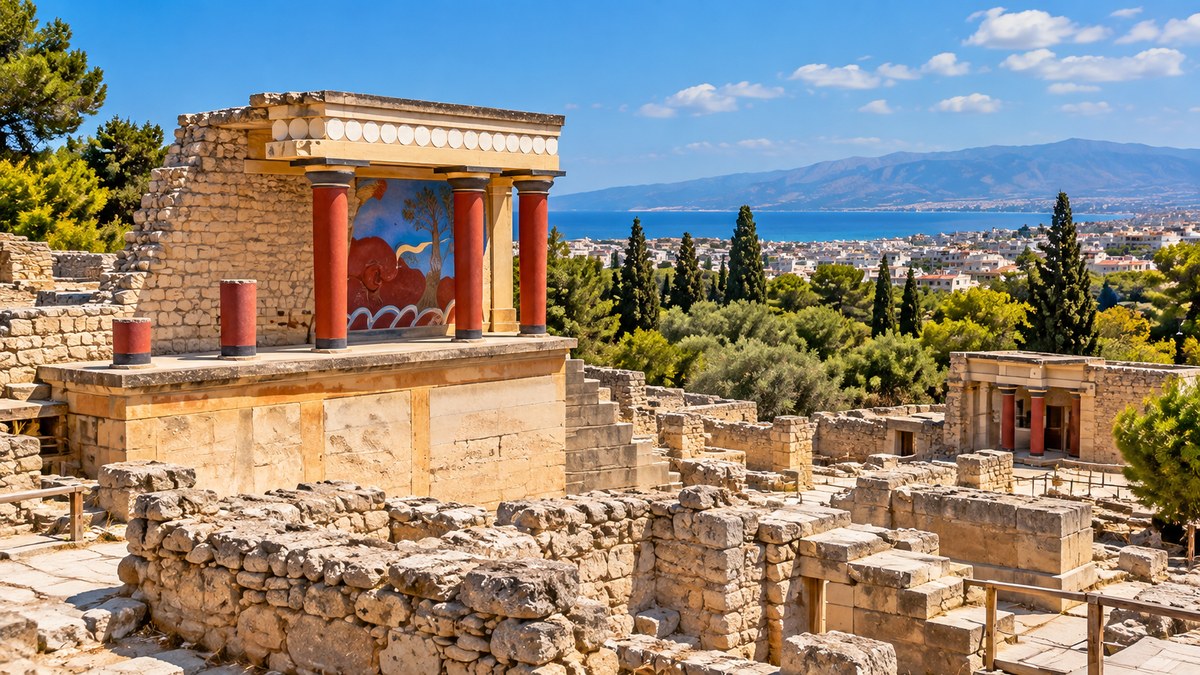
From Chania to Heraklion: Rethymno and Knossos
After the first three days in the west of Crete, it's time to move on. I left Chania and went east along the northern coast of the island. The plan for the next few days was completely different: fewer beaches, more old towns, fortresses and history. The main points were Rethymno, Heraklion and Knossos . Rethymno is a city where you want to stay. The first stop was Rethymno . After Chania, the city seemed to me a little quieter, but no less interesting. I left the car and just went for a walk through the old center, where narrow streets suddenly lead to a small square, then to an old house with balconies, then to a cozy tavern. I especially liked the combination of different eras. Nearby you can see Venetian buildings, Orthodox and Catholic churches, old Ottoman buildings , and the Fortezza fortress towers over the city. The historical center of Rethymno is considered one of the best preserved medieval cities in Greece. I went up to Fortezza , where I have a good view of the city and the sea. The fortress was built by the Venetians at the end of the XVI century, and today you can safely walk along its territory between the walls and bastions. After the walk, I returned to the embankment and had lunch in a small tavern. On this day, for the first time, I felt that Crete was no longer just an island with beautiful beaches for me. Literally every city tells its own story here. Heraklion is a completely different Crete The next day, I continued my journey to Heraklion . Everything was much more lively here: more cars, people, shops and city noise. After the small streets of Rethymno, the contrast was noticeable. I started my walk from the old port and reached the Kules fortress . It stands by the sea and once protected the entrance to the harbor. Then I just walked through the center, looking at the Venetian walls, squares and old buildings. Heraklion is interesting precisely because of the combination of modern life and traces of different eras. Knossos - meeting with the Minoan civilization But the main reason for stopping in Heraklion for me was not the city itself, but Knossos , which is very close by. The next day, I went there in the morning. Palaces, staircases, fragments of frescoes and intricate layout really bring to mind the legend of the Labyrinth and the Minotaur . Knossos was the center of the Minoan civilization and was located about 5 kilometers south of modern Heraklion. An archaeological complex has existed on this site for many centuries, and the palace itself was huge for its time - its area was about 20,000 square meters. What surprised me the most was not even the number of preserved ruins, but the thought of how developed this city was thousands of years ago. There were complex water supply and sewerage systems, large public spaces, living quarters and workshops. Then back to the sea After Rethymno, Heraklion and Knossos, I realized that the second part of the trip turned out to be completely different. The first days were about the sea, beaches and Chania , but now there are fortresses, ancient palaces and the history of Crete. But the last days of the trip were ahead, and I decided to end the trip the same way I started, by the water. The next point was to be Balos , one of the most famous beaches in Crete, and after that, my last evening on the island was waiting for me.
2
0
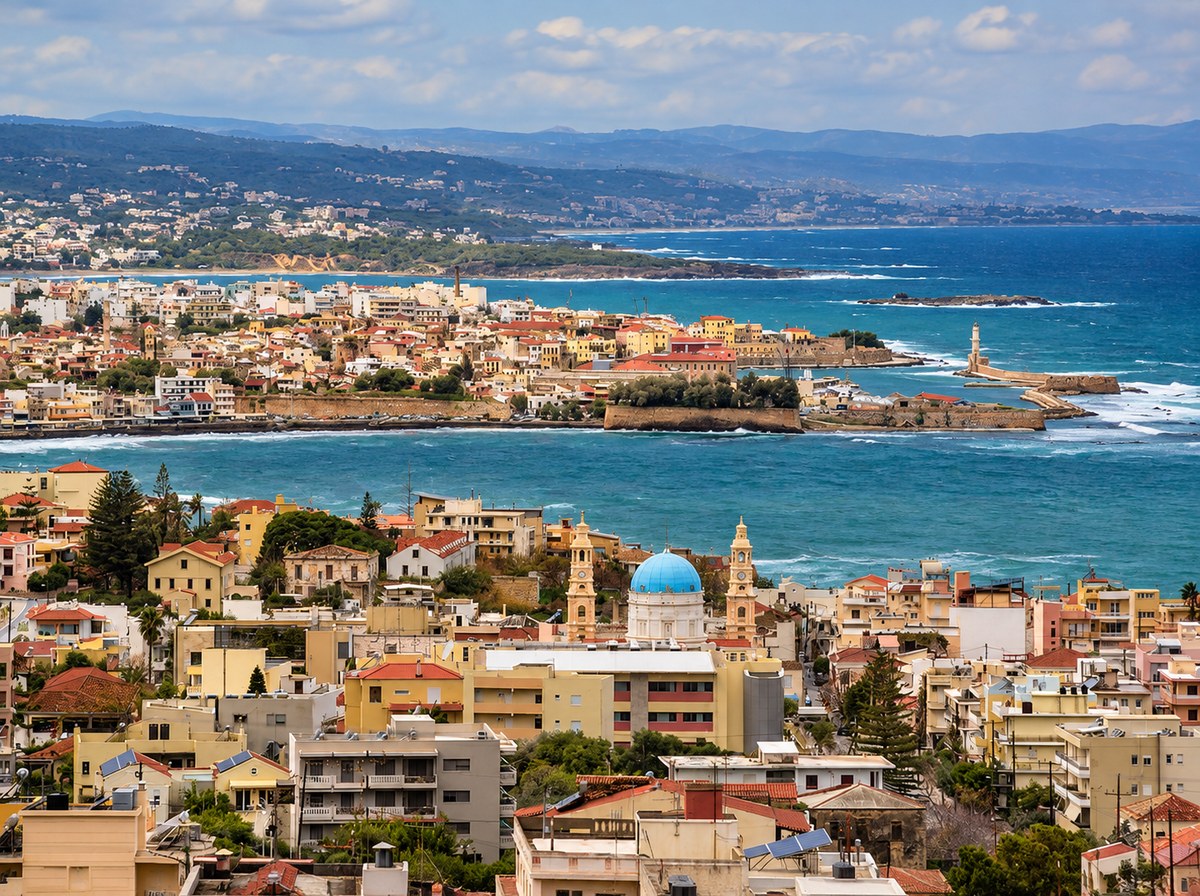
Crete. The first three days: Chania, the sea and first impressions
When I was planning seven days in Crete , at first I wanted to include as many places as possible in the itinerary. But in the early days it became clear that the island was too big and interesting to constantly rush. Therefore, I decided to spend the first three days in the west of Crete, staying in Chania and leaving enough time not only for sightseeing, but also for regular walks, the sea and local food. The first acquaintance with Chania After the trip, I went for a walk around the old town. Chania immediately liked the combination of Venetian buildings, narrow stone streets and the sea. I spent most of my time at the old harbor and the Egyptian lighthouse, and then I just went wherever I wanted. It was these walks that turned out to be more interesting here than a pre-compiled list of places. The historical center has preserved traces of different eras, including the Venetian and Ottoman, so you can see a completely different Greece around one corner. In the evening, I sat down at a small tavern and ordered some local dishes. Greek salad, zajiki, souvlaki and fresh bread turned out to be an excellent end to the first day. It was nice to just sit outside, look at people and realize that there was no need to rush anywhere for the next few days. The road to Elafonisi The next day, I decided to go to one of the most famous places in western Crete, Elafonisi beach . The road took a significant part of the day, but the trip itself turned out to be no less interesting than the final destination. Gradually, the urban landscapes were replaced by mountains, small settlements and open views of the coast. Elafonisi Beach Elafonisi really looks unusual. There are shallow waters, clear water and patches of sand with a characteristic pinkish tinge, which is associated with fragments of shells. The area has a conservation status, so I tried not to touch anything and just enjoy the scenery. The third day is without a clear plan After a busy trip to Elafonisi, I purposely left the third day almost free. I walked around Chania again, looked at the market, drank coffee and went to the coast. This particular day suddenly became one of the most enjoyable: without schedules, tickets, and mandatory points on the map. After three days, I realized the main thing - I don 't just want to take a quick look at Crete . Here you want to stay at least for a few days in one place, and then continue on your way. But ahead of me were Rethymno, Heraklion and a completely different side of the island.
2
0
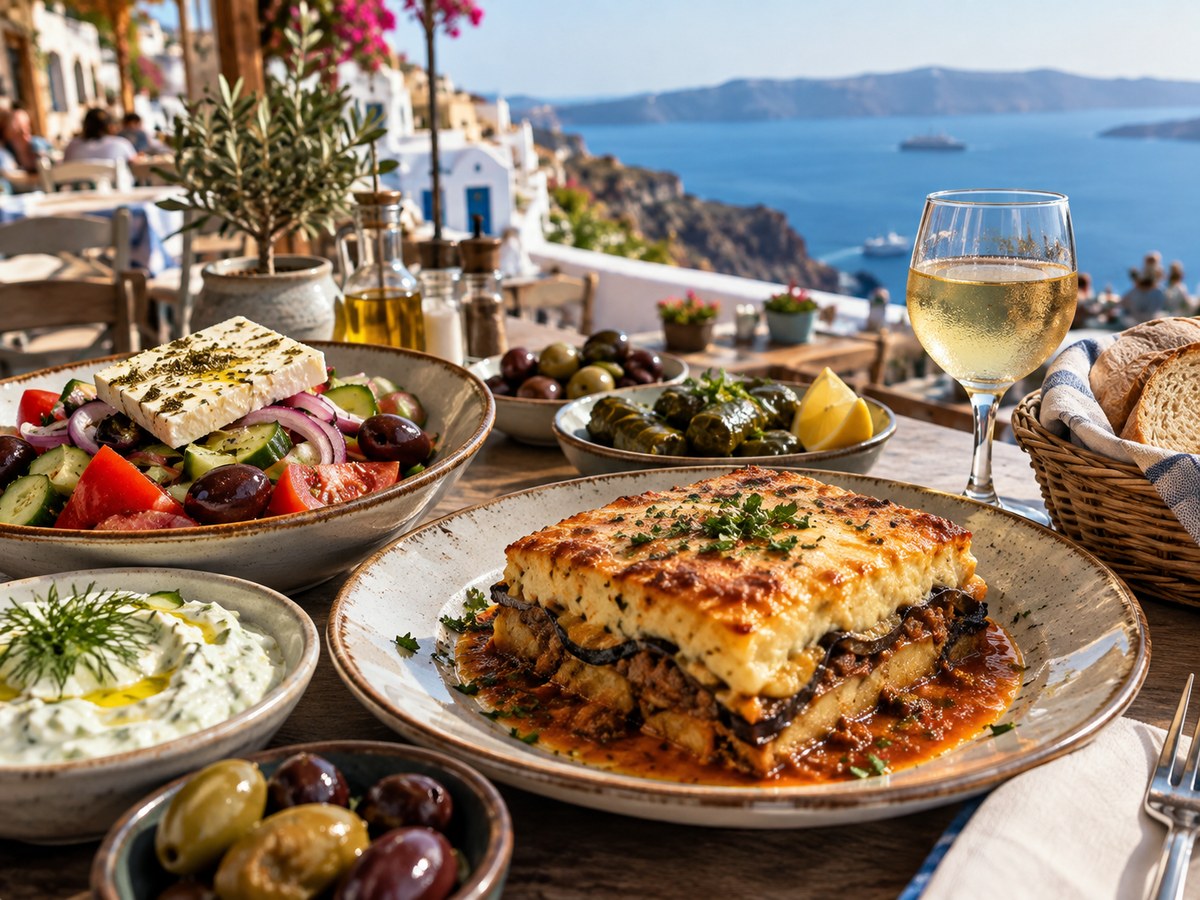
What I ate in Greece
Before my trip to Greece, I thought that everything would be quite predictable with the local cuisine: Greek salad, moussaka, souvlaki and some seafood . As a result, it turned out that even familiar dishes are perceived quite differently here, especially when you eat them in a small tavern after a few hours of walking around the city. Souvlaki with side dish The first thing I ordered in Greece I started with the classic Greek salad . Tomatoes, cucumbers, onions, olives, feta, oregano and plenty of olive oil. At first glance, nothing unusual, but it is the freshness of the products here that makes it completely different. The official travel portal of Greece also calls choriatiki one of the most famous dishes of the country. Greek salad Zajiki, a thick sauce made from Greek yogurt, cucumber and garlic, appeared almost immediately with the salad. I wanted to add it to literally everything, especially meat and fresh bread. Souvlaki, which turned out to be better than expected Souvlaki was next. I ordered the meat on a skewer, and then tried the pitta version with tomatoes, onions and zajiki. This is exactly the case when the dish looks as simple as possible, but after a whole day of walking it turns out to be exactly what you need. Pita with filling In general, meat in Greece is often cooked very simply - grilled, a little spices, oregano, lemon and olive oil. At the same time, the taste is saturated. Seafood, vegetables, legumes and various cheeses are also widely represented in traditional Greek cuisine. Moussaka is a dish that I remember Of course, I couldn't leave without trying moussaka . Layers of eggplant and potatoes, minced meat with tomato sauce and delicate bechamel sauce on top. The dish turned out to be much more satisfying than I expected, so after it I didn't want to walk anymore, but just sit quietly on the terrace with coffee. What else have I tried? In different places I came across dolmadakia, fried squid, grilled octopus and various Greek pies . I especially liked that the menu changed a lot depending on the location. There are more seafood on the islands, and in other regions you can find more meat dishes and local pies. fried squid I also realized one important thing: Greek cuisine is not just a few famous dishes for tourists . Each region has its own products and recipes, and many dishes are based on olive oil, herbs, vegetables, cheese, fish and meat. As a result, I went to Greece with the idea of trying some classic dishes, and left with a long list of things I would like to try next time. Perhaps this is one of the best signs of good cuisine - when, after returning home, you begin to remember not only the places you saw, but also what you ate at every table during the trip .
1
0
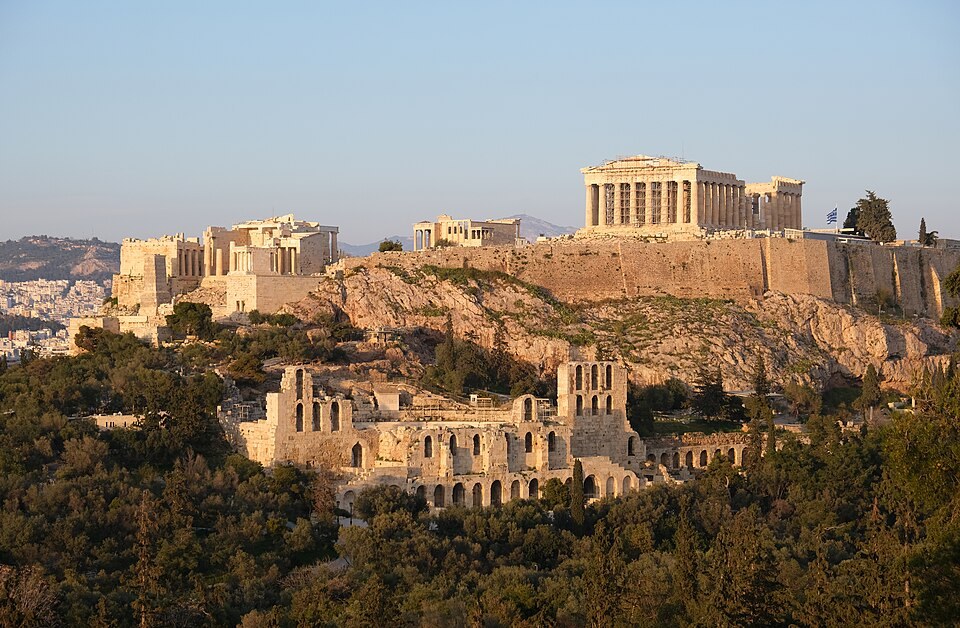
I climbed the Acropolis early in the morning and realized why it was recommended.
In Athens, I decided not to postpone the Acropolis until the middle of the day and set the alarm quite early. To be honest, getting up was the last thing I wanted, especially when the city was just beginning to light up outside, but after a few minutes after leaving, I realized that the decision was right. Athens in the morning without the crowds of tourists The streets around Plaka were almost empty. Cafes were just starting to open, rare passers-by were calmly going about their business, and there were practically no tourist groups. As they climbed, it became more and more noticeable how Athens was waking up: somewhere below there was the sound of cars, the sun was rising over the houses, and the ancient walls of the Acropolis were already visible ahead. When I got to the top, the first impression was completely different than I expected. Usually, photos of the Acropolis are associated with crowds of people, guides and constant movement, but in the early morning the space felt much calmer. You could stop near the Parthenon , examine the columns, the details of the stone and just stand for a few minutes looking at the city. View of Athens from the Acropolis I was particularly impressed by the view of the city. From a height, you can clearly understand the scale of Athens - white houses extend far in all directions, and traces of ancient history are constantly appearing among modern buildings. The Acropolis itself is located in the center of the historical part of the city and has remained the main symbol of Athens for centuries. The Parthenon , built in the 5th century BC, is one of the most famous monuments of ancient architecture and part of the UNESCO World Heritage Site. View of Athens from the Acropolis I wasn't in a hurry on purpose. I walked away from the main venues several times, looked at the city, took pictures and just watched the light change. At some point, I caught myself thinking that it was for the sake of such moments that it was sometimes worth getting up earlier than usual. Why do I recommend going to the Acropolis in the morning Gradually, there were more people. Groups of tourists appeared, it became more difficult to take a photo without people, and the calm atmosphere began to disappear. And it was then that I finally understood why they advise coming here in the morning. It wasn't just a matter of avoiding the crowd. In the early morning, the Acropolis is perceived in a completely different way. It doesn't feel like you just came to see a popular attraction and tick it off. There is time to stop, look around and imagine how many events took place here long before the appearance of modern Athens. If you find yourself in the city, I would also choose early morning. Even if you have to sacrifice a little sleep for this, a few hours of quiet walking around the Acropolis is really worth it.
1
0
One day in Rome
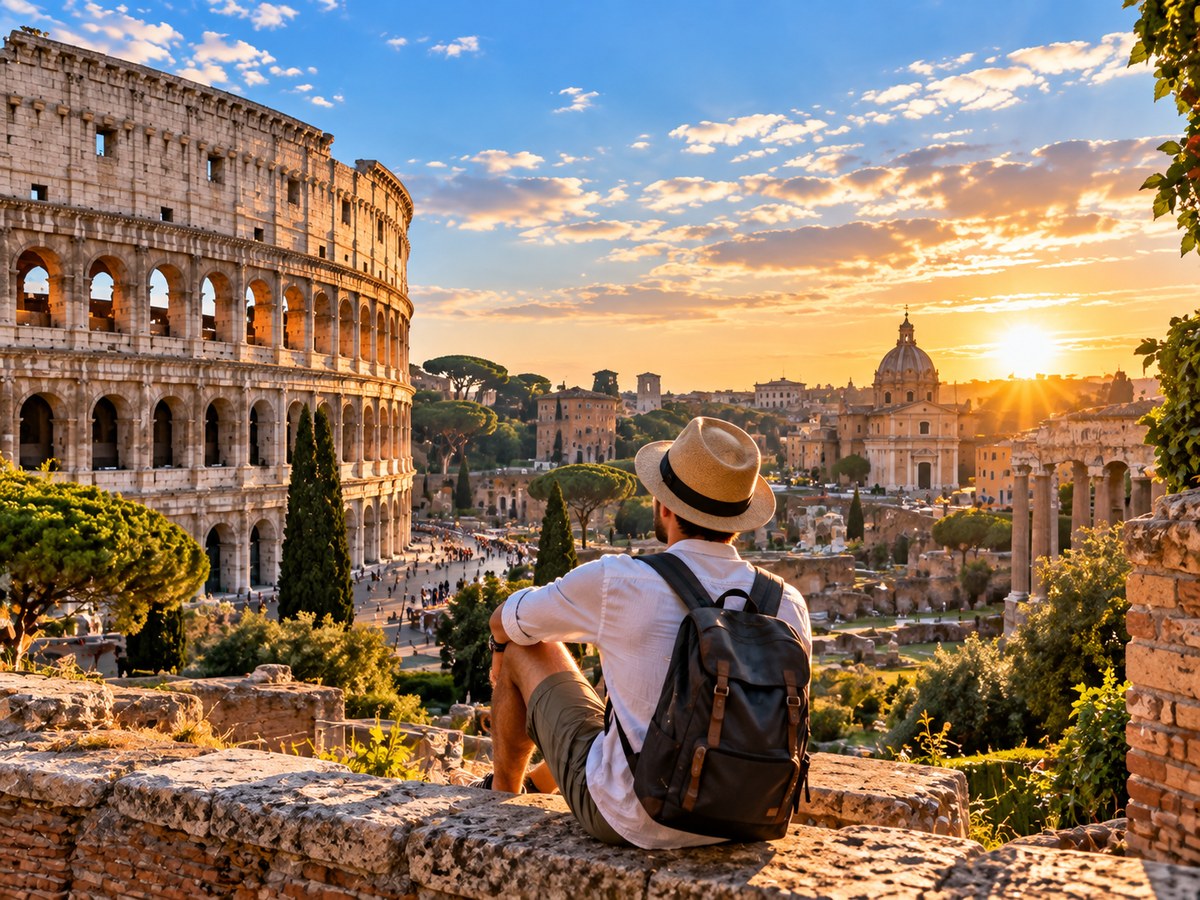
I came to Rome for just one day, and this morning I was sure that it was enough to get at least a little understanding of the city. By the evening, I realized how naive this thought was. Rome is not a city that you can "see" in a few hours. Rather, he's constantly giving you something new, forcing you to change your route. 8:00 - first coffee I started the morning with coffee and a regular walk without a clear plan. I just wanted to feel the city first, and not immediately run to the Colosseum. Rome is especially pleasant at this time. There are already a lot of people on the streets, but the tourist flow has not yet managed to completely capture the center. Small cafes are opening, someone is in a hurry to get to work, shopkeepers are raising the shutters. I took an espresso, looked at my watch and realized that I had already spent almost an hour of my only day. But for some reason, he wasn't upset at all. 9:30 a.m. - Colosseum I went to the Colosseum anyway. No matter how many times you see him in photographs, he makes a completely different impression in person. Probably because the brain does not perceive the age of such structures well. You stand next to it and realize that these stones are almost two thousand years old, and at the same time buses are driving around you, people are talking on phones and someone is trying to take the perfect selfie. Rome Colosseum I walked around the Colosseum, sat nearby for a while, and walked on. I wanted to see a lot more, but the day was already starting to end suspiciously quickly. 12:00 - the city instead of the sights Then I decided not to build a route and just walk towards the historical center. And that's when I liked Rome the most. Narrow streets, old buildings, small squares, laundry on balconies, scooters that somehow fit where it seems even a bicycle should not pass. Sometimes I stopped just because some courtyard looked more interesting than another landmark. At some point, I realized that I hadn't looked at the map for a long time. And that was a good sign. 14:00 - lunch I wasn't specifically looking for a high-rated restaurant for lunch. I just chose a small place where there were a lot of locals. I ordered pasta and for the first time that day I was in no hurry. It was probably one of the most enjoyable parts of the trip. I was sitting on the street, watching the passers-by and thinking that Rome doesn't really want to be examined according to the list. He rather suggests that you stay longer. Sit down. Watch. Take a wrong turn. Pasta 17:00 - The Pantheon and the Trevi Fountain After lunch, I walked to the Pantheon, and then went to the Trevi Fountain. The mood here was completely different. There are a lot of people, someone is taking pictures, someone is trying to squeeze closer to the water, someone is throwing a coin. The Pantheon Trevi Fountain I quit too. I don't know how well this tradition works, but I decided not to take any chances. If Rome really makes you come back, I wasn't going to argue. 20:00 - last evening By evening, I was so tired that I stopped trying to do anything. I just went where I wanted to go. As the sun began to set, the stone walls of the houses turned a warm golden color. Street musicians appeared in the squares, restaurants filled with people, and the city gradually moved into the evening rhythm. And that's when I realized the main thing. I didn't see Rome in one day. I've only seen a few pages of it. But that's probably why I wanted to come back. Because a good city is not one after which you put a check mark in front of all the attractions. This is the one that leaves you feeling like you haven't figured out a lot yet. So, there is a reason to come again.
1
0
5 things that Tourists Most Often Lose Money on
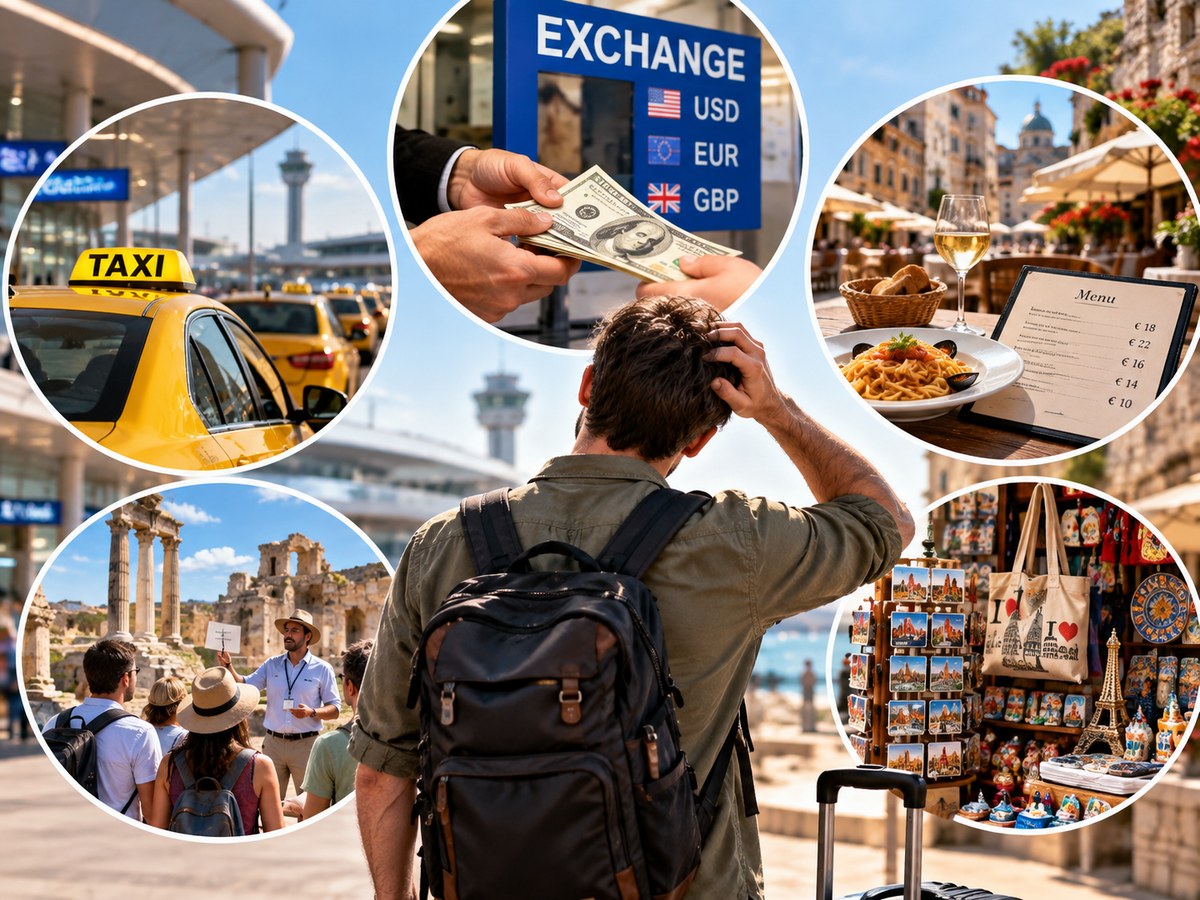
During my travels, I realized one unpleasant thing: you usually notice large expenses right away, but small overpayments gradually turn into a decent amount. And sometimes it's not about fraud, but just carelessness. 1. Taxi from the airport The airport is one of the most convenient places to overpay for a trip. After a few hours on the plane, you just want to get to the hotel, so you don't really want to figure out local transport anymore. Now I check the cost of the trip in advance and see which taxi services are operating in the city. If I use a regular taxi, I specify the price or payment rules before the trip. The difference is sometimes quite noticeable. 2. Currency exchange I also got caught with exchangers once. There was a beautiful exchange rate on the sign, which looked profitable, but after the exchange it turned out that the commission and additional conditions significantly changed the total amount. Now I'm looking not only at the number in large letters, but also at how much money I'll actually get my hands on. I also try not to change a large amount in the first place near the airport. 3. Tourist restaurants A beautiful restaurant right next to the main attraction seems like a great idea until the bill arrives. Sometimes the price of a dish is higher than in an establishment a few blocks from the tourist center. It is especially unpleasant when fees, service interest or expensive drinks are added to the cost, which no one discussed separately. Now, before I sit down, I at least take a quick look at the menu and prices. It takes a minute, but sometimes it saves a decent amount. 4. Guided tours and additional services The very low price of an excursion often looks tempting. But then it turns out that the transfer is included in the price, and entrance fees, lunch, boat or other services are paid separately. As a result, the "cheap tour" becomes not cheap at all. Now I always look not only at the initial price, but also at what exactly is included in it . 5. Shopping "for memory" I've been caught here many times myself. At the beginning of the trip, it seems that you definitely need to buy a souvenir, a T-shirt, a magnet, local sweets and a few more things that will remind you of the trip at home. And then you open your suitcase and realize that half of these purchases were made just for the mood. Now I try not to buy anything right away. If you really like the item, I can come back for it later. The main thing is that I understood The biggest overpayments are often not due to one expensive purchase. They consist of dozens of little things: I overpaid a little for a taxi, a little for currency exchange, a little for dinner, a little for souvenirs. Individually, it seems that this is nonsense. And when you start counting expenses at the end of the trip, you get a completely different picture. Therefore, now, before any unfamiliar purchase, I try to spend one minute checking the price. On a journey, this minute is sometimes much cheaper than a mistake.
0
0
I almost paid three times as much for a taxi.
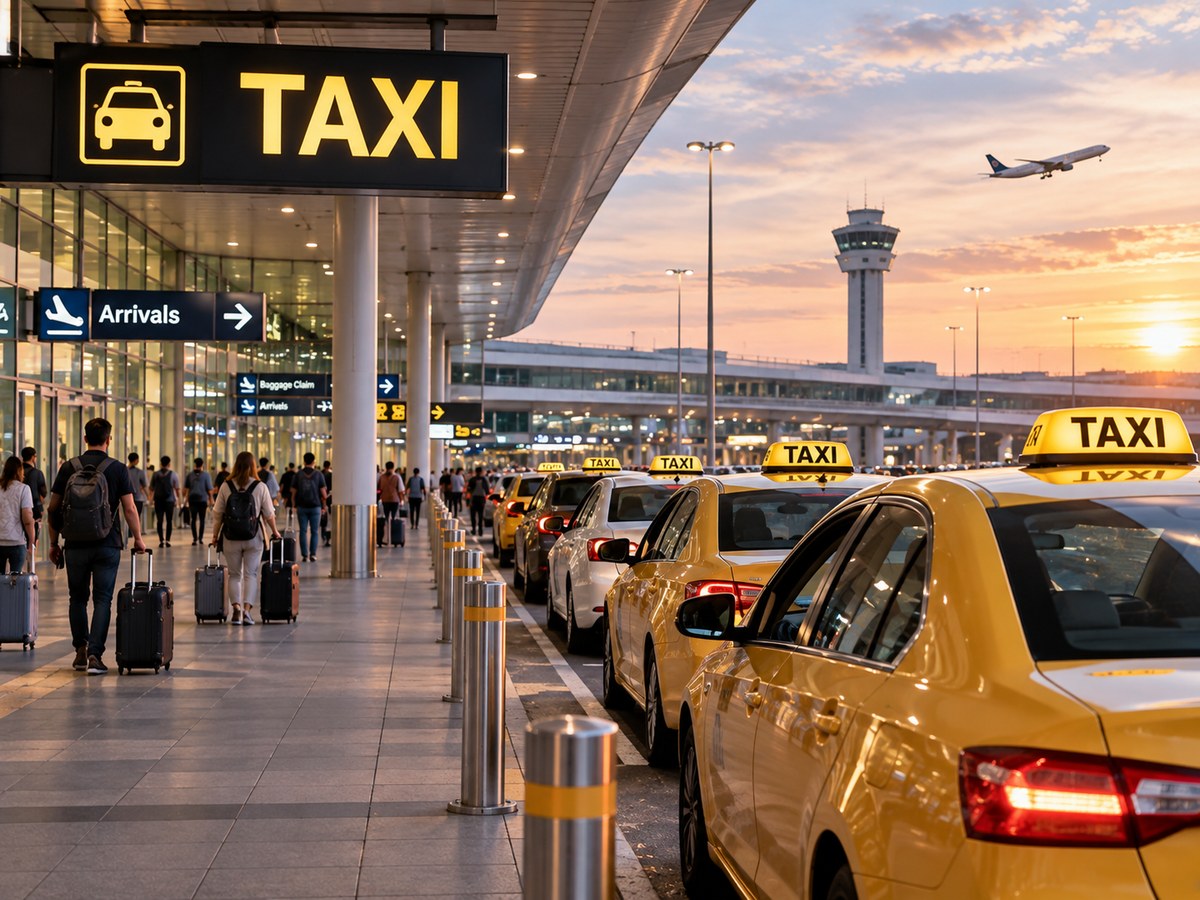
I almost paid three times as much for a taxi. After arriving, I left the airport with my backpack and immediately heard: "Taxi?" Where are you going? I gave the address of the hotel. The man confidently told me the price, which seemed quite normal to me. I was tired after the flight, so I didn't really figure it out and got into the car. On the way, the driver turned out to be very talkative. He talked about the city, showed me some buildings, and said several times that I was lucky to find a "good price." I even thought that I had made a really good deal. When we arrived, he mentioned an amount almost three times the amount we talked about at the beginning. At first I thought I had misunderstood him. He asked to see the calculation. The driver started explaining something about baggage, airport fees, travel, and several other surcharges that had never been discussed before. The most unpleasant thing wasn't even about the money. I was standing with a suitcase near an unfamiliar hotel and realized that arguing with the person who had already brought me to the place was not the most pleasant situation. In the end, I paid, but after that I decided never to get into a taxi again, simply because the driver looks convincing. Now, before traveling, I check in advance which taxis are official, install the local app and check the approximate cost of the route. If the price is announced in advance, I try to clarify whether this is the final amount and whether there are additional fees . And if the driver starts rushing, says "get in, we'll figure it out later" or offers a price that is noticeably different from the usual one, I simply refuse. Because when traveling, the most expensive mistake is not to overpay a few euros. The most expensive mistake is to realize that they are trying to deceive you, and still agree.
1
0
Mistakes I made during the trip
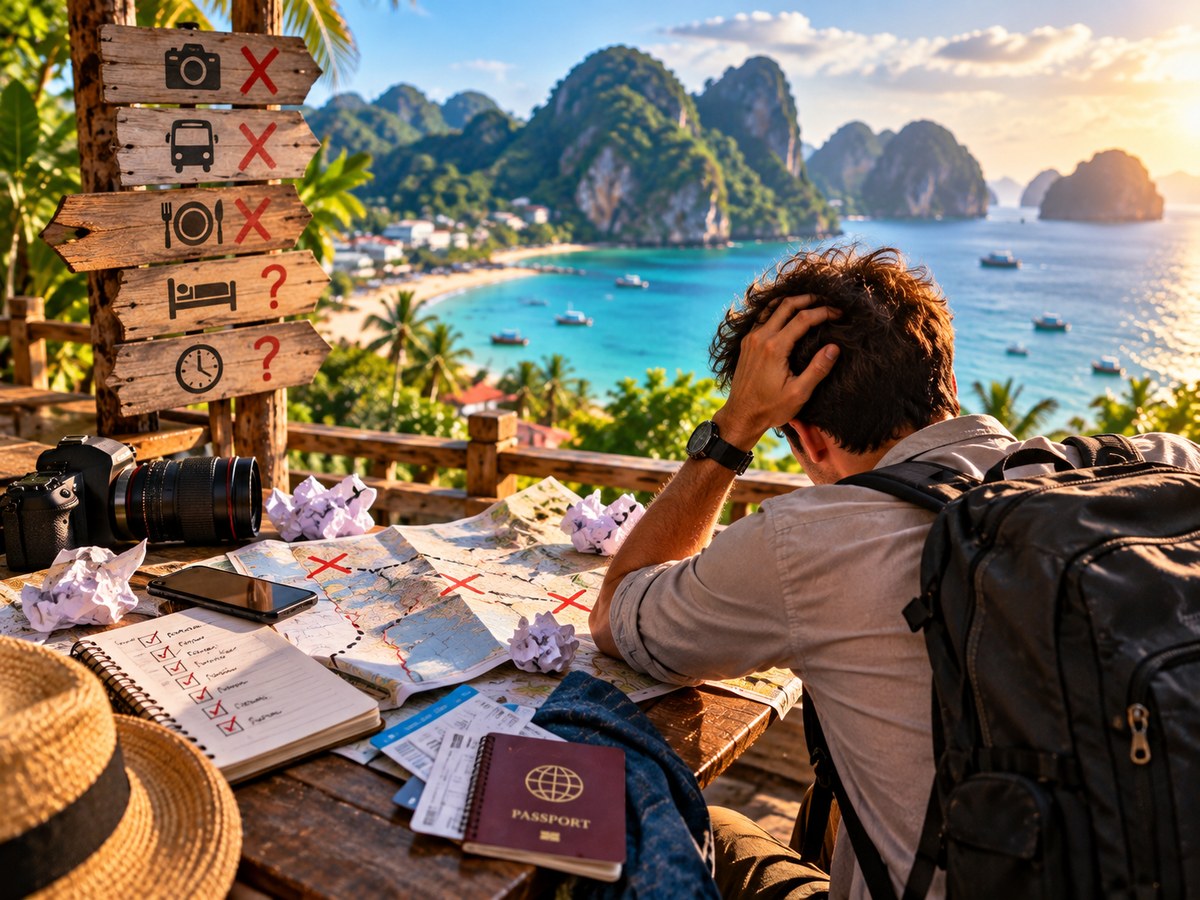
Mistakes I made during the trip After each trip, I realize one simple thing: most of all, I learn not from good moments, but from my own mistakes. Moreover, most of them could have been avoided if I had at least thought a little in advance. Mistake #1. The route is too dense The most common mistake is to try to see absolutely everything. I marked dozens of places on the map in advance, made up an approximate route, and was sure that everything would work out. It didn't work out. At some point, I no longer looked at the city, but simply moved between the points. I arrived, took a photo, looked at my watch, and ran on again. As a result, I almost didn't remember some of the places. Now I try to choose a few really interesting places for the day, and leave free time between them. If there's something interesting along the way, great. If you just want to sit in a cafe and look at people, that's great too. Error #2. I trusted the navigator too much. One day, the map showed me that it was only a twenty-minute walk to the right place. Twenty minutes later, I found myself roughly where I was before, only very tired. I forgot that the map shows the distance, but it doesn't always explain how convenient it is to walk it. Now, before walking, I look not only at the route, but also at the area itself. Sometimes ten minutes by taxi is much more reasonable than forty minutes on foot in the heat. Mistake number 3. I didn't leave any time left This applies to transportation. Several times, I planned everything almost minute by minute. If the train was supposed to arrive at 2:20 p.m., in my plan, the next part of the route would start at 2:35 p.m. It only sounds beautiful on paper. In practice, a delay in transport, a queue, or an accidentally closed entrance is enough, and the entire ideal plan begins to crumble. Now I always leave a reserve. It's better to arrive a little earlier and have a quiet coffee than to run around the airport with a backpack and mentally promise myself that I'll be smarter next time. Mistake number 4. I took too many things Before a trip, it always seems to me that I will definitely need everything. Three pairs of shoes. Clothes for different occasions. Some things will "suddenly come in handy." As a result, half of the suitcase returns home completely untouched. After several trips, I realized that if a thing is needed only in a very hypothetical situation, it can most likely be left at home. Mistake number 5. I took too many pictures Perhaps the strangest mistake. I was on my way to see a new place, but sometimes I found myself standing with my phone in front of my face and trying to take the perfect shot. And then I realized that I hadn't really looked at the place itself. Now I try to just stand and watch first, and only then I take out my phone. Photos are necessary, but they should not become the main purpose of the trip. And the main mistake Probably, my main mistake is constant haste. I kept thinking that I had to catch something, see it, and take a picture. It wasn't until near the end of the trip that I realized I wasn't particularly late for anything. Traveling is not a competition. Sometimes the best moment of the day is not on the list of attractions at all. It can be a random cafe, a conversation with a stranger, a small street that you turned into just out of curiosity, or an ordinary sunset that caught you without a phone in your hands. Now I try to leave room for such accidents in the route. Because they are the ones who most often turn an ordinary trip into a story that you want to tell later.
1
0
24 hours in Dubai - part two
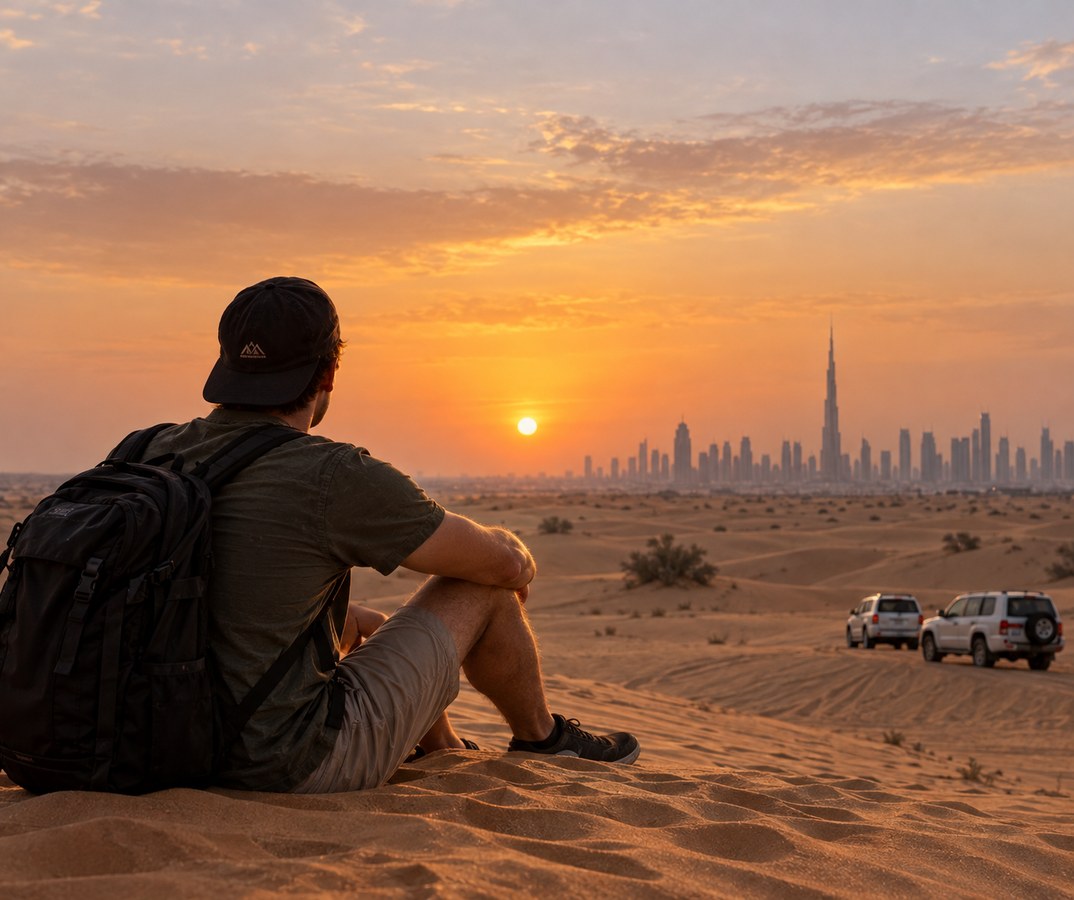
It doesn't matter anymore After two o'clock in the afternoon, I began the stage of the journey, which I usually call "it doesn't matter now." When you realize that there's not much time left, and you haven't seen half of the city yet, planning stops making sense. You can either accept it and go to the airport calmly, or start making decisions that will seem completely insane to you in a few hours. I chose the second option. Therefore, instead of calmly continuing to walk around Dubai, I decided to go to the desert. Desert The logic was ironclad: if you only have one day in the city, you definitely need to be in a place where the city is not visible at all. Perhaps a normal person in such a situation would have chosen the nearest beach or restaurant, but I left normality somewhere near the airport exit. After all, I only came to Dubai for a day, which meant I had to use those days as illogically as possible. Where the city ends The journey took some time. The skyscrapers gradually remained behind, and then disappeared completely. Empty spaces, sand, and sparse trees began to flash by the window. I looked at all this and thought about how strangely Dubai is arranged: until recently, I was standing near the Burj Khalifa among glass towers, shopping malls and thousands of people, and now there is practically nothing around. Just the desert. And for some reason it made me feel calm. Something is happening in the city all the time: cars are driving, people are in a hurry, screens are showing something, buildings are competing with each other in height. Nothing was happening here at all. You could just look out the window and not try to get somewhere else. A desert instead of skyscrapers On the spot, we were offered a ride through the dunes. Of course, I agreed, because the phrase "I only have 24 hours in Dubai" for some reason automatically turns an ordinary person into a person who is ready for anything. The car climbed onto a sand dune, stopped for a second at the very top, and then abruptly went down. At that moment, I realized that I had two pieces of news. A good one is really a lot of fun. The bad news is that I just voluntarily paid to be rolled around the desert for a few minutes like laundry in a washing machine. But when it was over, I was laughing along with the others. Apparently, a person has an amazing ability to quickly forget about fear if everything is beautiful and no one has yet managed to tell you how much it costs to repair a car. The sunset that I didn't want to photograph By evening, the heat began to gradually recede, and we stopped among the dunes. For the first time all day, I saw a real sunset – without the skyscrapers, advertising screens, and people who are sure to be in the frame right when you're about to take a photo. It was just that the sun was slowly sinking behind the sand. I took out my phone, took a few pictures, and put it away almost immediately. Because sometimes photography only gets in the way. You start thinking about how to set up the camera, where to take it from, and then where to put it all, and you completely forget that you actually came here to watch. I sat down right on the sand and was just silent for a while. I managed to see more contrasts in one day than I sometimes get to see in a week: skyscrapers in the morning, old neighborhoods and a bay in the afternoon, and now a desert. And there was still the Dubai evening ahead. The city wakes up in the evening When we returned to the city, it was already about eight o'clock in the evening, and Dubai seemed to have been turned on again. During the day, I was constantly looking for shade, but now the streets were filled with people, restaurants opened terraces, cars streamed along the roads, and skyscrapers lit up with thousands of windows. I went to the Dubai Marina and decided to just walk around aimlessly. After such a day, it was pointless to try to complete another item from the list. If I kept running from one landmark to another, after a few hours I wouldn't remember where I was. Marina turned out to be completely different from the city I saw in the morning. People were walking along the water, someone was sitting in a cafe, yachts were slowly passing along the canal, and high-rise buildings were reflected in the water. For a second, it even seemed to me that I was not looking at the real city, but at the scenery. But then a guy walked by with a bag of food, the kids ran after him, someone was swearing on the phone, and a woman at the next table was trying to take pictures of dinner. And I thought again that it is precisely such ordinary moments that for some reason make the place real. Abu Dhabi in the evening Finally, you can take your time I sat down to dinner and for the first time all day I looked at my watch without alarm. There were still a few hours left, but I didn't want to rush anywhere else. I realized that it is impossible to "see Dubai" in a day. You can only get to know it a little bit – to see it huge and small, modern and old, noisy and almost empty. And, probably, this turned out to be the main discovery of this trip. In the morning, I tried to create the perfect route and constantly thought about how many places I hadn't seen yet. By evening, it didn't matter at all how many ticks there were in front of the attractions. It was already interesting for me to just sit, look at the water and watch the people. Last meeting with Burj Khalifa With a few hours left before the plane, I decided to take another trip to the Burj Khalifa. This time – without a goal, without a list and without the desire to do something. Just to say goodbye to the city. In the morning, she seemed huge and a little unreal to me. Now I looked at her in a completely different way. There was already a whole day behind one building, dozens of kilometers of roads, old streets, a drive along the bay, a market, a desert and an evening walk. I realized that this is why travel cannot be measured by the number of sights seen. You can come to a city for a week and not feel anything, or you can spend one day there and take the whole story with you. What's left after 24 hours I came to Dubai with a very simple task – to see as much as possible in one day. As a result, I didn't see everything I had planned, got lost several times, overheated, tired, spent more money than I had intended, and at some point I stopped realizing what time it was. But perhaps that's why the trip was memorable. During these 24 hours, Dubai has managed to seem to me like a city of the future, an old trading port, a huge tourist area, a desert and just an ordinary city where people go to work, have dinner, walk and hurry about their business. And when I finally boarded the plane, I caught myself thinking that now I want to go back. Just not for 24 hours anymore. Abu Dhabi from an airplane
0
0
24 hours in Dubai - Part one
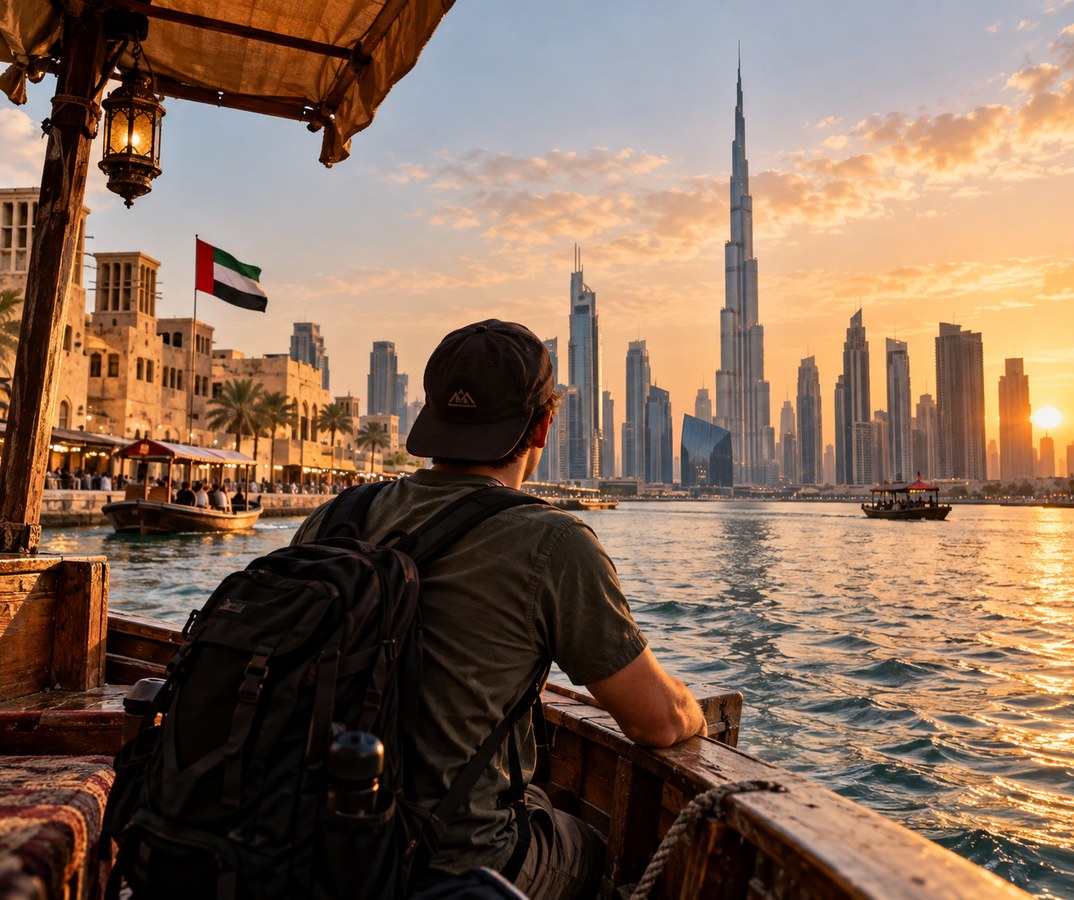
I ended up in Dubai for 24 hours. "How much time do I have?" – About a day. "In Dubai?" - Yes. – Well, then I'm lost. Because spending a day in Dubai and not going anywhere is like being in the fridge and deciding that you're going to eat buckwheat exclusively today. The plane arrived early in the morning. I left the airport with a backpack, a phone, and the completely idiotic belief that it was possible to see the city in 24 hours. I didn't know then that Dubai was a city that looked on the map as if all the interesting places were literally in neighboring blocks, but in reality there might be several kilometers of road, an interchange, another interchange, and, apparently, an interchange that was built specifically to You've never been able to get to the previous one. But I didn't have much time, so I decided not to talk about the scale of the city and went straight to the Burj Khalifa. Burj Khalifa The first time I saw her was from the car and at first I thought, "Well, tall and tall." But as it got closer, that feeling quickly disappeared. The photos do not convey the size of this structure at all: in the picture you see a skyscraper, but in real life you stand next to it and realize that someone seems to have forgotten to reduce the building before placing it in the real world. I tried to take a normal photo for about five minutes, but each time it turned out the same thing: either the tower was in the frame, or my feet were in the frame. She just couldn't fit the whole thing. At some point, I put my phone away and decided that sometimes it's better to just look through my eyes, rather than trying to immediately turn everything I see into a photo. However, I couldn't enjoy the walk for a long time – it was so hot outside that after a few minutes I began to perceive any shadow as a potential place for permanent residence. Burj Khalifa The walk I overestimated On the map, the next point looked very close. The navigator cheerfully informed me: "15 minutes on foot," and I, as a person who is clearly not familiar enough with the climate of Dubai, decided to take a walk. For the first ten minutes, I felt like a real traveler. Five minutes later, I started looking for the nearest air-conditioned room. After about twenty minutes, I began to treat cars with a whole new respect, and after a few minutes I realized that humanity had not spent so much effort on inventing air conditioners in vain. In the end, I hailed a taxi, got in, and when the cold air blew over me, I felt about the same emotions as a man who had just been rescued from the desert. Old Dubai It was after that that I found myself in Old Dubai, and the most interesting thing happened here. Until that moment, I was looking at the Dubai that is usually shown on the Internet: glass towers, huge shopping malls, expensive cars, perfectly clean streets and the feeling that the whole city is wiped every morning with a special napkin. And then I turned into small streets, and the scenery seemed to have changed. Narrow aisles, small shops, the smell of spices, old buildings, vendors who are calmly talking to customers, someone is in a hurry somewhere, someone is sitting at the store and just watching what is happening. There was no sense of a giant city of the future that was constantly trying to impress you with its scale. And it was here that I became really interested for the first time. Because I began to realize that Dubai is not just about what it has built over the past decades. It has another side, which is easy to overlook if you spend the entire journey between skyscrapers and shopping malls. Boat across the bay There was a bay nearby, and I saw small boats. I didn't have any special plans, so I just boarded one of them. The boat started moving, and after a few minutes I found myself in the middle of the water, looking at two completely different cities at the same time: on the one hand, there were old buildings and small marinas, on the other, modern Dubai was gradually growing, and somewhere far above it all, the Burj Khalifa still towered. Boat across the bay I was sitting there thinking about how strangely first impressions work. In the morning, it seemed to me that Dubai is a city of skyscrapers, where everything should be huge and expensive. And now I was sailing on a small boat along the old bay, and I realized that this simple moment might be more memorable to me than half the places I came here for. That's probably the point of traveling: the most memorable things don't always turn out to be the ones you've marked on the map in advance. Market After the boat, I decided to just go wherever I wanted. This is generally my favorite way to travel, because when you have every hour scheduled, you constantly think about the next point, and when there is no route, you can accidentally turn into an alley and discover a place you didn't know anything about. That's how I ended up on the market. I literally went to look, and after a few minutes they offered me sweets, showed me spices and told me something about the goods. At some point, I found myself talking to the seller, even though five minutes ago I wasn't going to buy anything here at all. Of course, I ended up buying something. It is still difficult to explain what exactly it is. When friends ask: – And why did you need it? I answer: — I don't know. And, perhaps, this is the most honest answer that can be given to the question of half of the things bought during travel. 14:00 When I finally looked at my watch, it was already two o'clock in the afternoon. And that's when it got a little unsettling. I had less than half a day left, and the list of things I wanted to see hadn't decreased much. The desert, the sea, Dubai at night, the Marina, the observation deck – and about twenty-seven other places that a normal person would never try to cram into one day. I opened the map, looked at the distances, closed the map, opened it again, and even for a second hoped that the distances had somehow decreased during this time. They have not decreased. And then I decided to do what any reasonable person would do in such a situation. Go to the desert. Because if you have ten hours left in Dubai, it's obvious that you need to get even further away from Dubai. It was from that moment on that my relatively calm one-day itinerary finally stopped being calm. But this is already in the second part.
2
0

Burj Khalifa
The Burj Khalifa is impressive by its very scale - the 828-meter-high building is really difficult to assess until you find yourself nearby. I went up to the observation deck and what I remember most of all was the view of Dubai from above: skyscrapers, roads, sea and desert form a completely unusual picture. On floors 124 and 125, the observation deck is located at an altitude of 456 meters. The climb itself is fast, but you want to stay longer at the top. A great place to see Dubai from a completely different perspective.
Nothing saved yet
No trips yet
No scheduled stories
