


Meerkats in the Desert: One Keeps Watch While the Others Forage
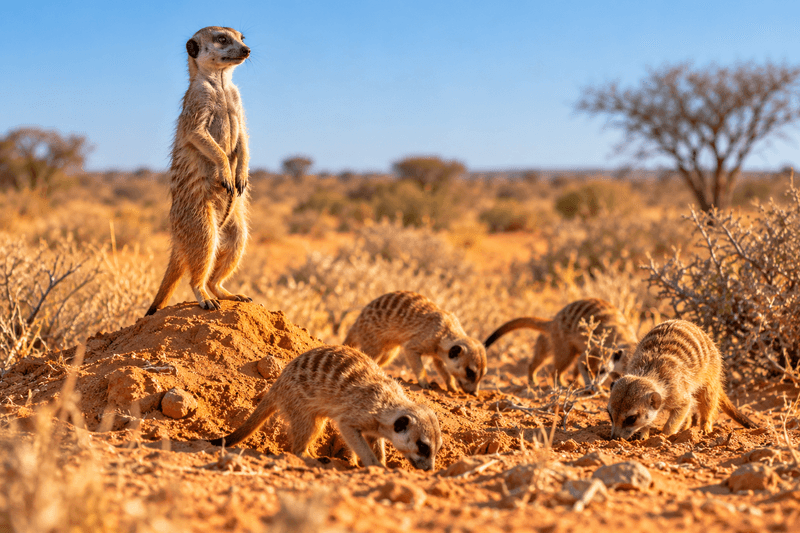
Morning in the Kalahari Desert begins with movement. One by one, small meerkats emerge from their burrow, look around and spread across the sandy ground. Some dig in the dry soil, while others turn over stones and investigate shrubs. One climbs onto a small mound, rises on its hind legs and carefully scans the surroundings. While the group searches for breakfast, this little sentinel seems to be on duty.
Meerkats live in the arid regions of southern Africa, including the Kalahari. These small members of the mongoose family are adapted to heat and open landscapes. Their long claws help them dig, while dark patches around their eyes reduce glare from the sun. Underground burrows protect them from heat, predators and chilly nights. 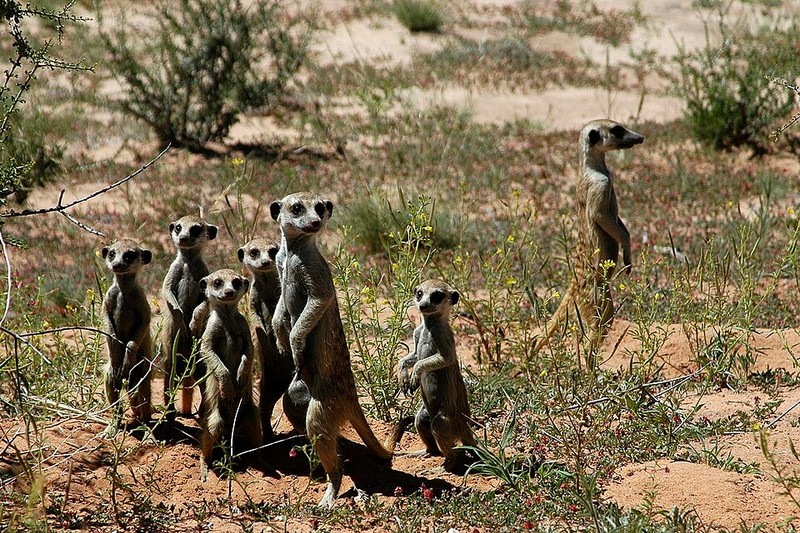
Why does one meerkat stand guard?
Life on an open plain can be dangerous. Birds of prey may attack from above, while snakes and other predators move along the ground. When the group is foraging, one meerkat often takes a raised position, stands upright and watches the sky and nearby terrain.
If the lookout detects danger, it gives an alarm call. The others respond by rushing towards shelter or seeking a safer place. Different threats can trigger different calls, helping the group react quickly. The lookout does not necessarily stay in position for long; meerkats may take turns, and sometimes several animals watch the surroundings at once.
It may look as though one tiny animal has a formal shift protecting everyone else. In reality, this behaviour helps the whole group survive in a place where danger can appear without warning. 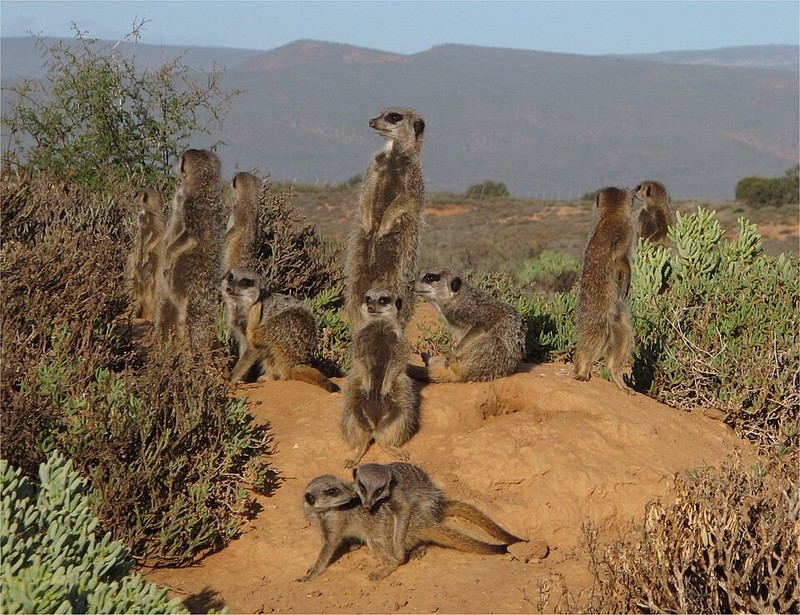
What do meerkats find in the sand?
While one animal watches, the others search for food. They dig through sand, inspect spaces beneath stones and explore dry plants. Their diet includes insects, larvae, spiders, scorpions and other small animals. They may also find tiny lizards or plant matter. A strong sense of smell and nimble front paws help them uncover prey hidden below the surface.
Despite their cute appearance, meerkats are not helpless. They can tackle some dangerous prey, although hunting still requires care. During the hottest hours, they tend to reduce their activity and forage more in the morning and late afternoon. Water is important too, and they obtain it not only from drinking sources but also from their food.
Life in a close-knit family
Meerkats usually live in groups, interacting with one another, caring for young and sharing a network of burrows. Young animals learn by watching adults: they explore the ground, practise finding food and gradually learn how to respond to alarm calls.
Watch quietly from a distance and you may notice a whole series of small scenes: one meerkat digging a hole, another standing upright, and young ones clumsily copying the adults. Avoid approaching burrows, feeding the animals or interrupting their foraging. They are wild animals, and human interference can alter their natural behaviour.
Meeting meerkats is a reminder that survival in the desert depends on more than strength. Awareness, cooperation and warning one another in time are essential. One keeps watch while the others forage, and the whole group carries on beneath the hot African sun. 





Comments