


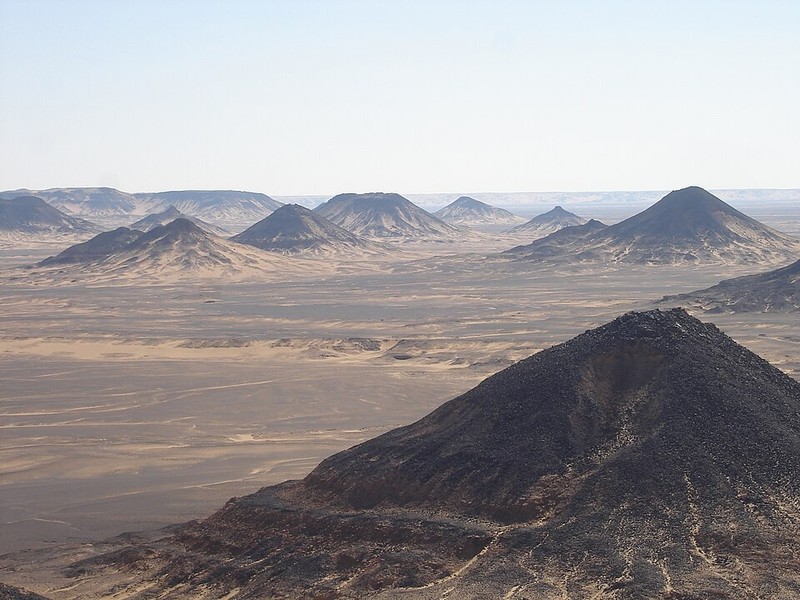
The Black Desert: Hills and Mountains Among the Sands
When I first saw Egypt's Black Desert, it looked as if fragments of ancient volcanoes had been scattered across endless sand. Dark hills rise along the horizon, their slopes contrasting sharply with the golden ground. The landscape feels almost otherworldly, even though it is only a few hours from Cairo.
The Black Desert lies in Egypt's Western Desert, not far from Bahariya Oasis. It is one of the Sahara's most unusual landscapes: instead of towering dunes, there are low mountains, rocky plains and scattered dark stones.
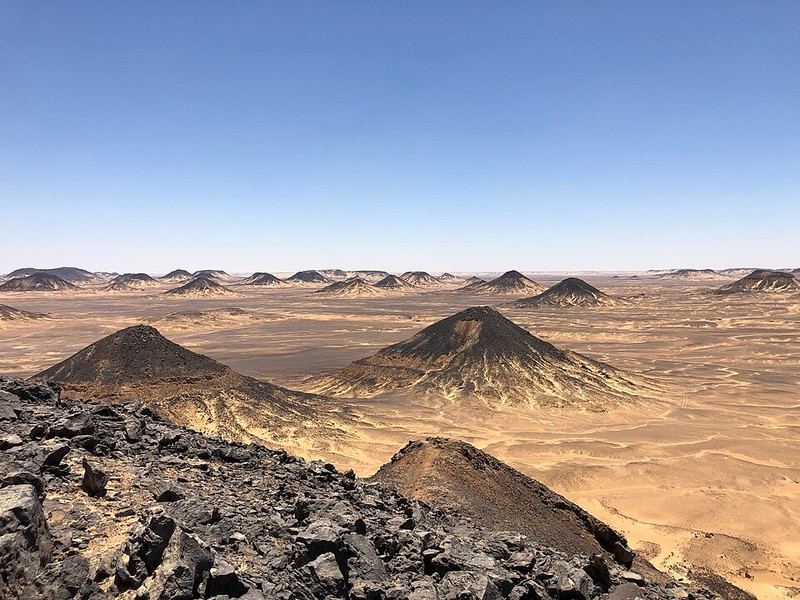
Why is it called the Black Desert?
The defining feature is the dark stone covering the hillsides and, in places, almost hiding the sand beneath it. The colour is associated with volcanic rocks, including basalt, as well as dark material that has accumulated on the surface over long periods. Against the pale desert floor, the hills look as though they have been dusted with charcoal.
Some of the hills have a cone-like shape. Their summits offer wide views across the desert, where dozens of dark mounds gradually fade into the haze. The landscape is especially beautiful in the morning and near sunset, when soft light brings out the contours and long shadows make the hills appear even more dramatic.
One well-known viewpoint is El Marsous Mountain, often included in Black Desert excursions. Climbing up gives you a chance to see the surrounding hills from above and appreciate the unusual geology of this part of the Sahara.
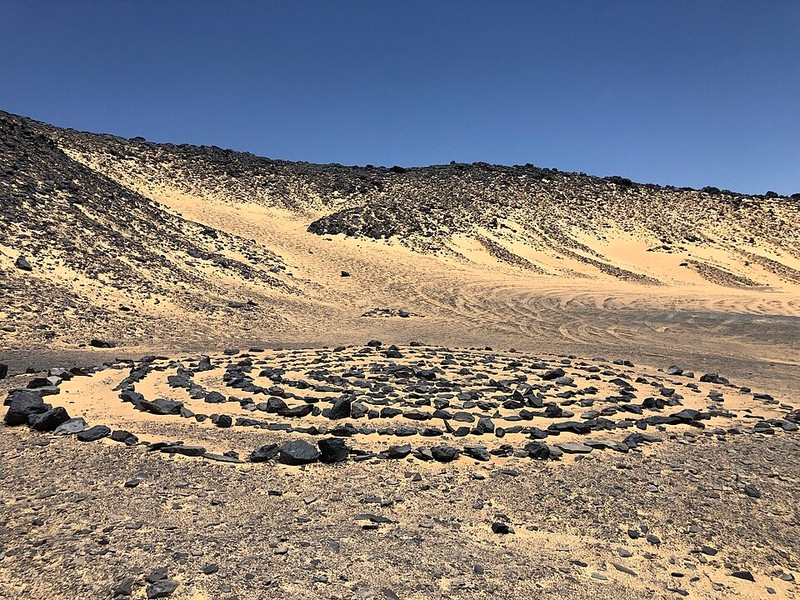
Exploring the rocky Sahara
The Black Desert is usually visited on a trip from Bahariya Oasis. The route crosses open country where sandy plains, rocky stretches and dark hills alternate outside the window. With few familiar landmarks, the vastness of the desert becomes especially apparent.
This landscape is interesting for more than photography. It reveals a different side of the Sahara: not a sea of dunes, but an ancient geological region shaped by natural processes over immense periods of time. The contrast between black hills and pale sand creates constantly changing views from different angles.
Travellers often combine the Black Desert with a visit to the White Desert, famous for its pale chalk formations sculpted into unusual shapes. The two places offer very different scenery and show just how varied Egypt's Sahara can be.
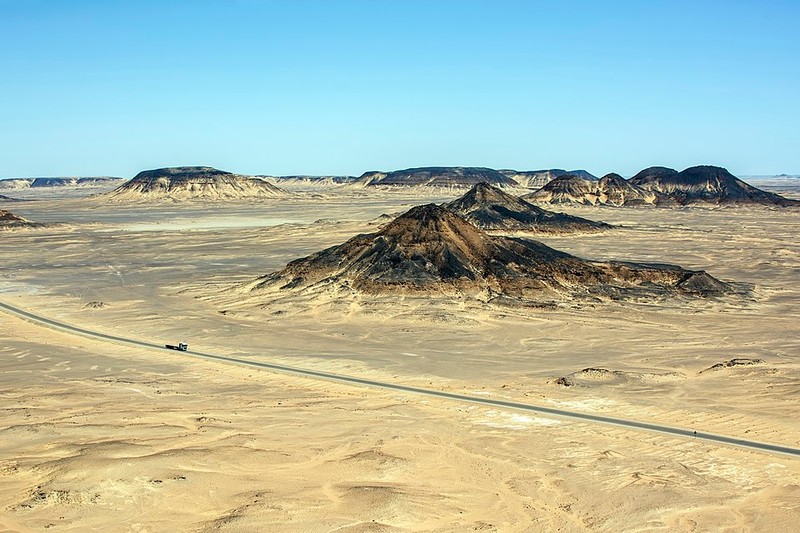
What to know before you go
The best way to visit is with a local guide or an organised tour using a suitable four-wheel-drive vehicle. Some areas are far from settlements, and mobile coverage can be unreliable. Avoid leaving established routes on your own.
The cooler months are most comfortable, as are early mornings and late afternoons. Summer heat can be intense. Bring plenty of water, sun protection, a hat and shoes with good grip, since loose stones can be slippery underfoot.
The Black Desert is memorable less for a single landmark than for its atmosphere. You can pause in the silence, watch dark hills stretching towards the horizon and appreciate the many faces of the Sahara. It is an ideal destination for travellers who want to discover Egypt beyond the pyramids and beach resorts.


Comments