


Dendera Temple: The Zodiac on an Ancient Egyptian Ceiling
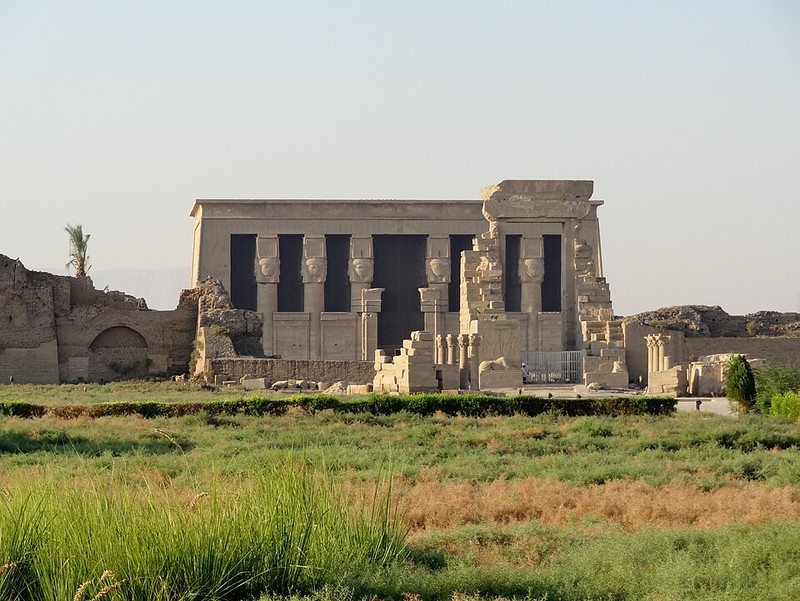
I had long wanted to visit a place where ancient Egyptian religion meets the history of astronomy. The Temple of Hathor at Dendera turned out to be exactly that. It lies about 60 kilometres north of Luxor and is considered one of Egypt's best-preserved temple complexes.
The temple looks imposing from the outside, but its greatest treasures are inside. The ceilings preserve images of gods, constellations and celestial symbols. Looking up, I could imagine how the ancient Egyptians pictured the world above them.
The famous Dendera Zodiac
The temple's best-known feature is the circular zodiac, depicting a celestial sphere with constellations and figures associated with the movements of heavenly bodies. It was created during the later period of ancient Egyptian history, under Greek and Roman rule, probably in the first century BCE.
The composition combines Egyptian religious imagery with astronomical ideas circulating around the ancient Mediterranean. Some figures are associated by researchers with zodiac signs that are still familiar today. Yet this is more than an ancient horoscope: it reflects complex ideas about time, celestial cycles and the religious order of the universe.
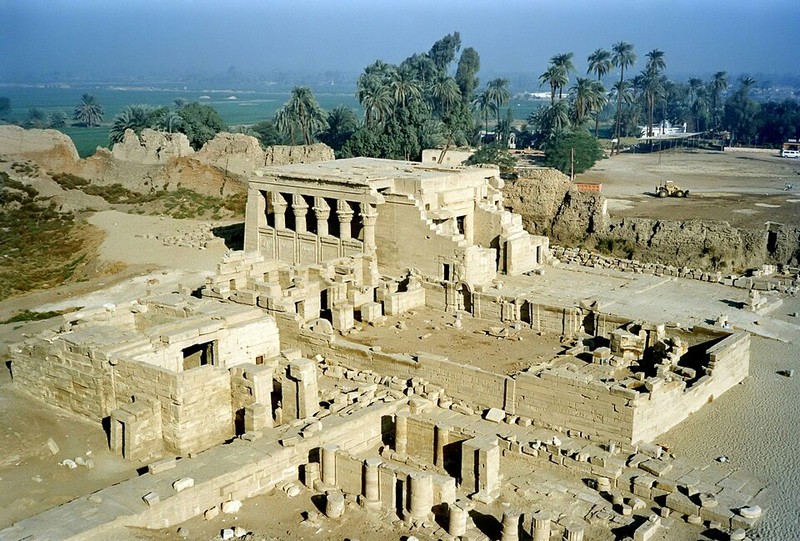
The original circular zodiac is now in the Louvre in Paris. At Dendera, a replica can be seen on the ceiling of the Chapel of Osiris on the temple roof. It is worth going upstairs and taking time to examine the details.
The Temple of Hathor
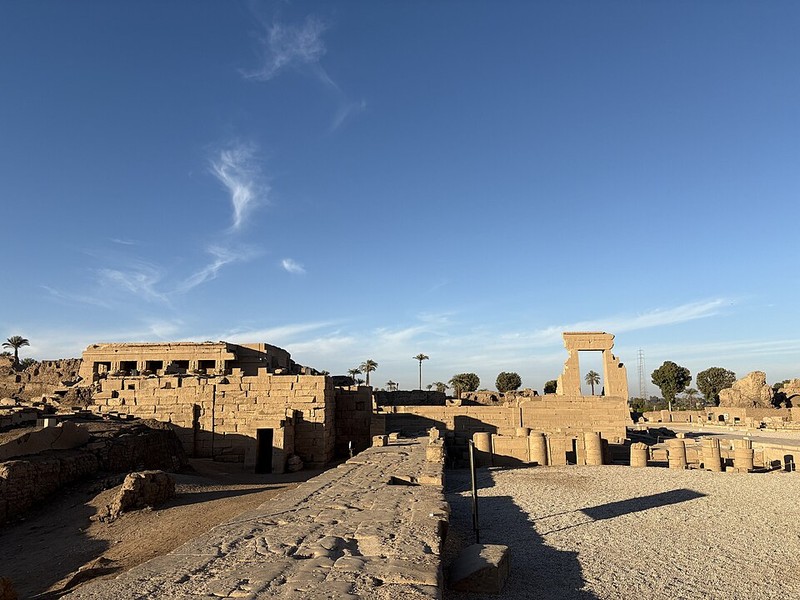
The temple is dedicated to Hathor, the goddess of love, music, joy and motherhood, often depicted with cow horns and a sun disk. Most of the surviving building dates to the Ptolemaic period and the era of the Roman emperors, although this was a sacred site long before then.
Inside, I found massive columns bearing Hathor's face, reliefs of rulers, scenes of offerings to the gods and ceilings with traces of ancient blue, ochre and red paint. In some places, the colours have survived remarkably well. The contrast between the shadowy halls and the bright celestial motifs overhead is especially striking.
Dendera is best explored slowly. Beyond the famous zodiac, look for smaller details: hieroglyphs, winged figures, stars and images of gods that seem to hold up the heavens.
What to know before visiting
Dendera is a convenient excursion from Luxor. Allow several hours to explore the complex, especially if you want to study the reliefs and rooftop chapels. Check current access rules before visiting, as some rooms may be closed or require an additional ticket.
Arrive in the morning to avoid the worst heat, and bring water, a hat and comfortable shoes. Look up often, and avoid using flash where photography is restricted.
Dendera leaves a lasting impression. It is not only an ancient sanctuary but also a stone record of how people imagined the universe. Standing beneath its painted ceiling, it is easy to understand why the Dendera Zodiac has fascinated historians, archaeologists and travellers for generations.




Comments