

Elephants on the Chobe River: A Safari from the Water
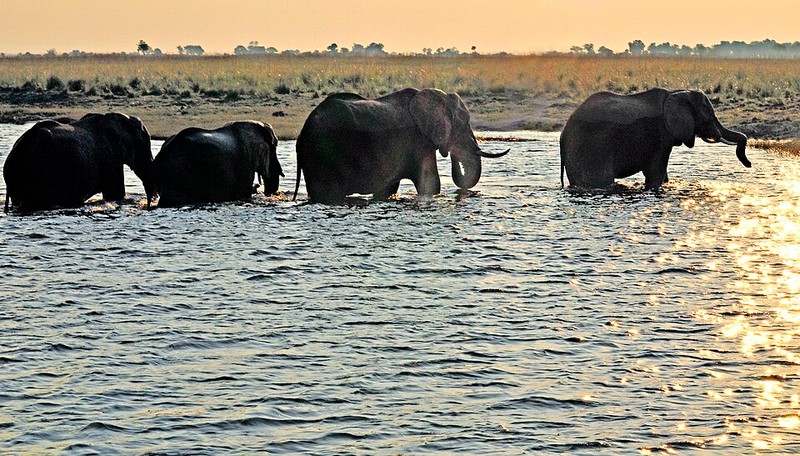
I used to imagine an African safari as a dusty jeep ride across the savanna, searching for animals hidden in tall grass. But along Botswana's Chobe River, the experience is different. You can travel by boat and watch elephants almost at water level. Huge silhouettes emerge from the vegetation, slowly descend to the river and step into the shallows while trees and clouds shimmer on the surface.
The Chobe River flows through northern Botswana and gives its name to Chobe National Park, one of the country's best-known wildlife destinations. Its banks include open floodplains, sandy stretches and dense vegetation. During the dry season, water becomes especially important, drawing elephants, buffalo, antelope and other savanna animals to the river.
Why are there so many elephants here?
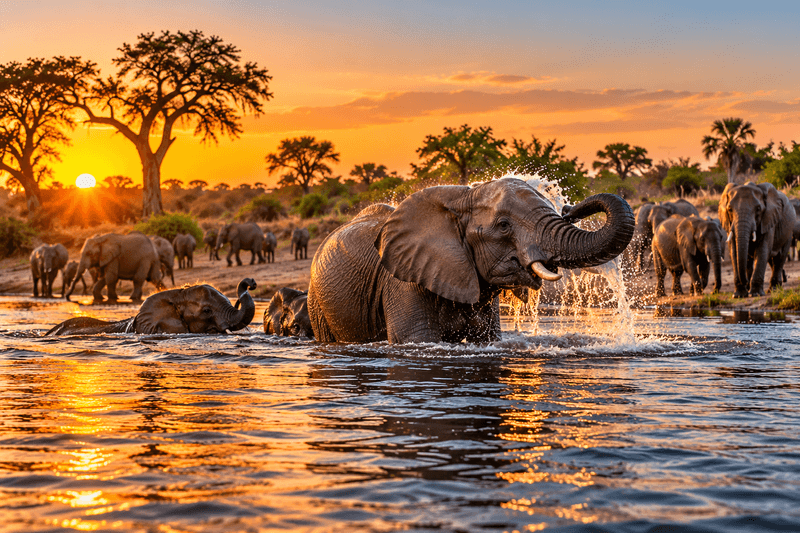
Chobe National Park is famous for its large herds of African elephants. In dry months, many animals stay close to the river to drink, cool off and find vegetation. Sometimes an entire family group appears on the bank. Adult females remain close to their calves while younger elephants splash and play in the shallows.
Watching them from a boat is fascinating. You can see elephants carefully descend a sandy slope, draw water with their trunks, spray themselves and cross the river. Some become almost completely submerged, leaving only their heads and trunks above the surface. Their movements are unpredictable, however: large herds may arrive together, while on other days the riverbank seems empty.
This is not a zoo or a performance for visitors. Elephants decide for themselves when to approach the water, so patience matters more than getting a photograph at any cost. 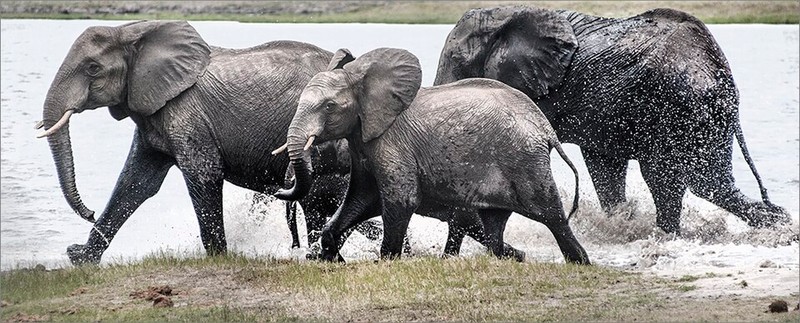
A river safari: a different view of Africa
River safaris usually take place in a motorboat with a local guide. The guide helps spot animals, explains their behaviour and maintains a safe distance. Besides elephants, you may see hippos, crocodiles, waterbuck and many bird species. Buffalo sometimes rest in the shallows, while fish eagles and kingfishers perch in nearby trees.
Late afternoon can be especially beautiful, when the sun sits lower and casts warm light across the water. Animals are reflected on the river's surface, and the banks turn golden. Morning trips are rewarding too: the air is cooler, and some animals remain active after the night. Exact departure times and trip lengths depend on the operator, weather and water levels.
When to go and what to know
The dry season, roughly May to October, is often chosen for river wildlife viewing because animals tend to gather around available water. Conditions vary from year to year, while the rainy season brings greener landscapes and different wildlife experiences. Before travelling, check road conditions, boat schedules and accommodation availability.
Bring binoculars, sunglasses, a hat and a camera lens suitable for photographing animals from a distance. Follow the guide's instructions, do not stand up without permission and never try to attract an animal's attention. Even an apparently calm elephant is a powerful wild animal that needs room.
A Chobe safari is memorable for more than close encounters with elephants. Africa reveals a quieter side here: water splashes against the boat, birds call from the vegetation, and enormous animals arrive to drink on their own schedule. The chance to watch them without disrupting their lives is what makes this journey special. 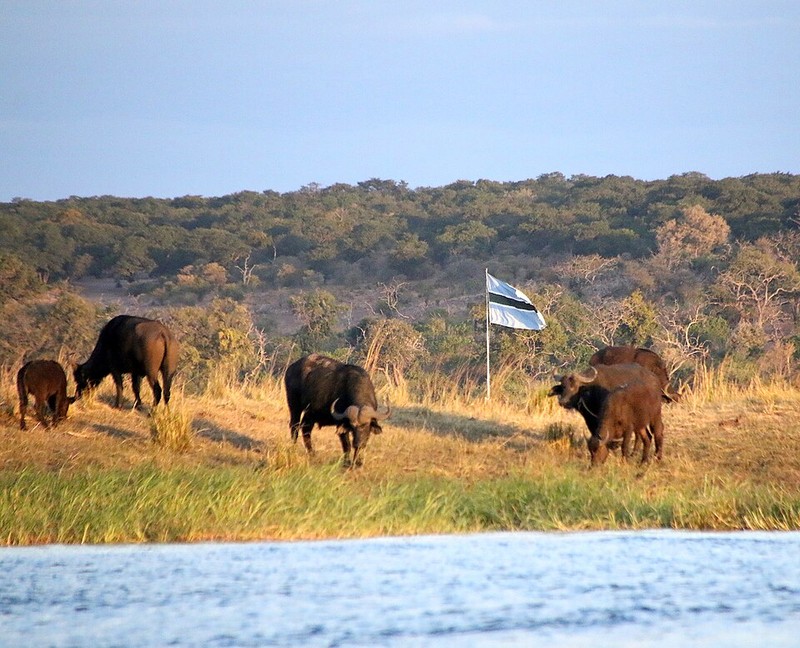

Comments