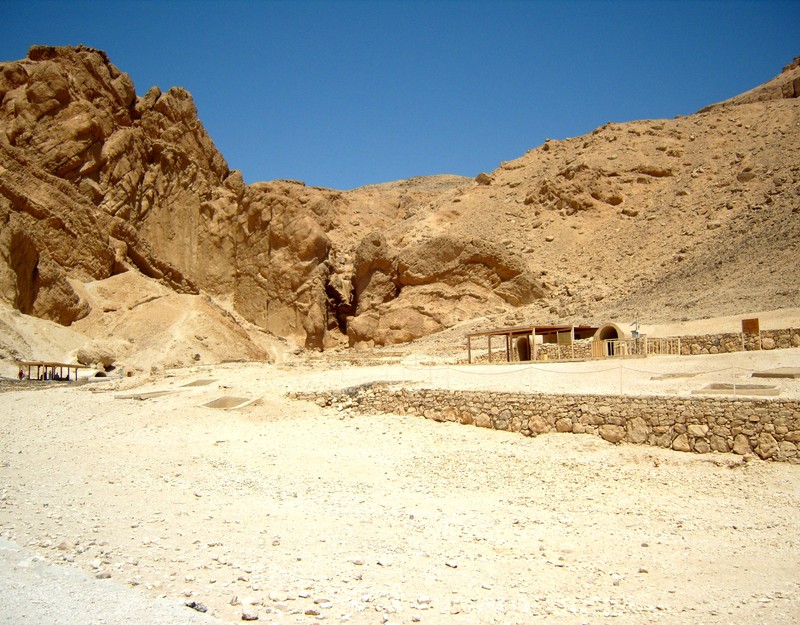
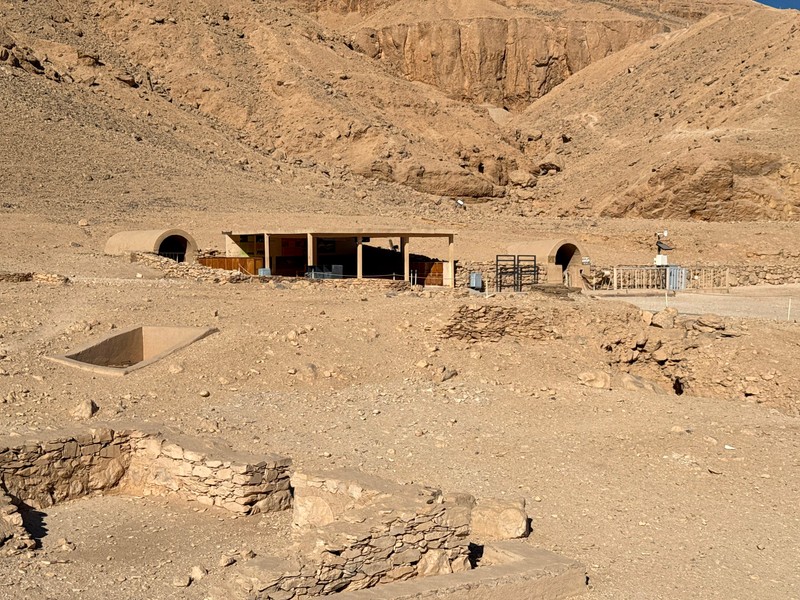
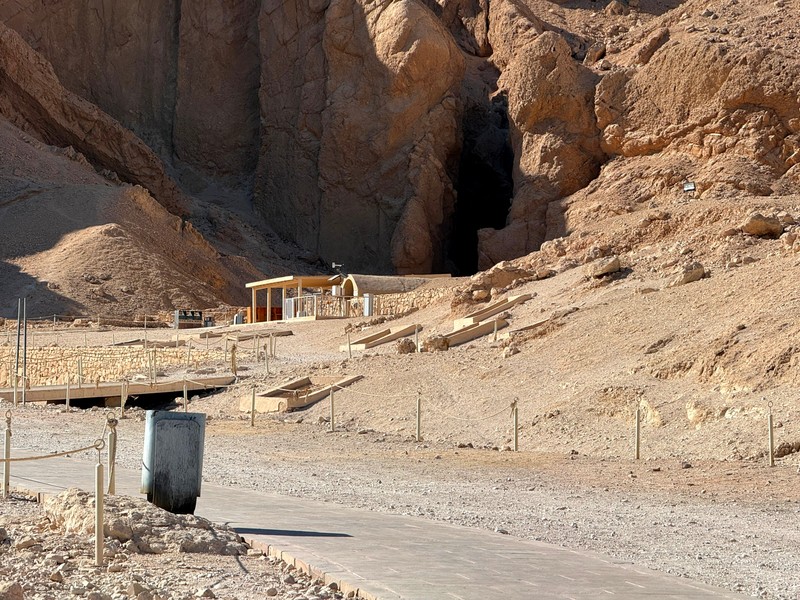
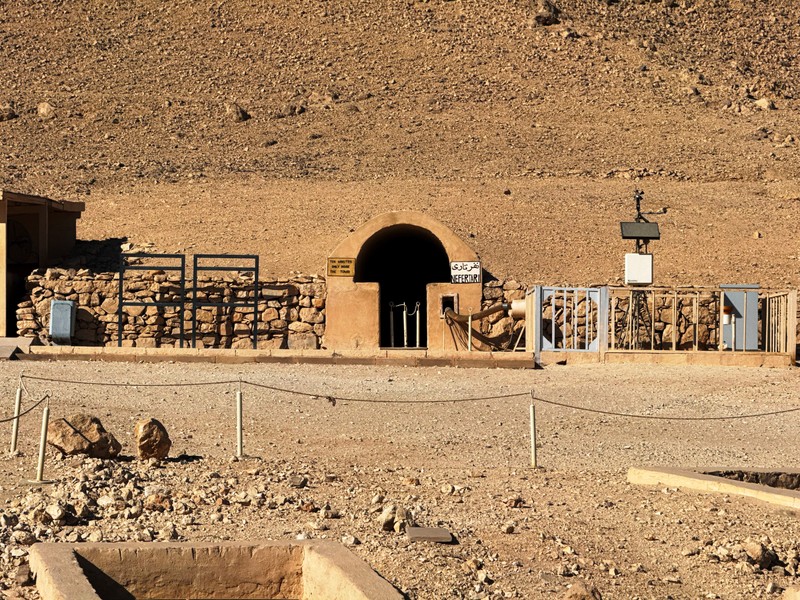
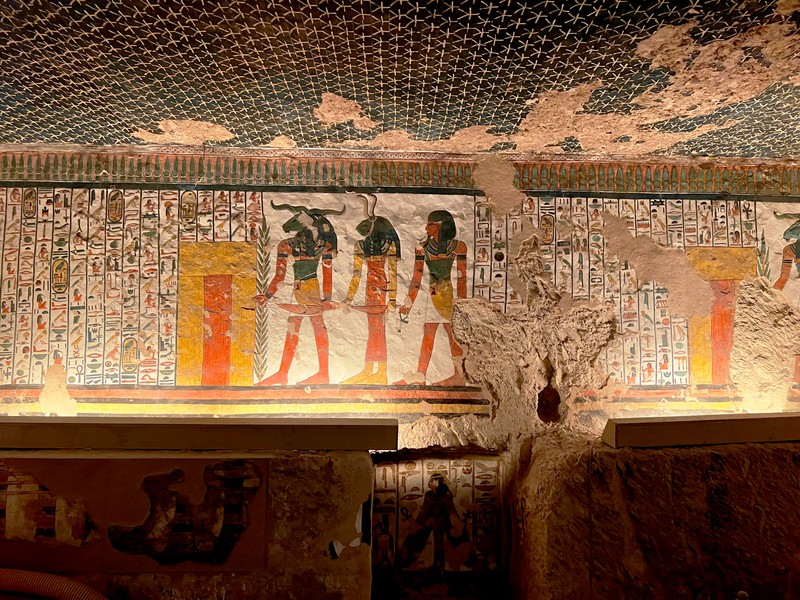
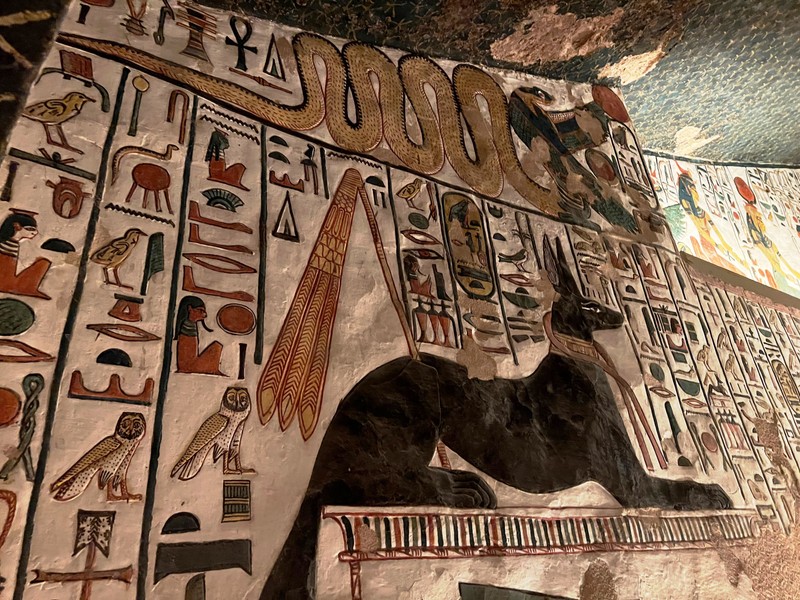
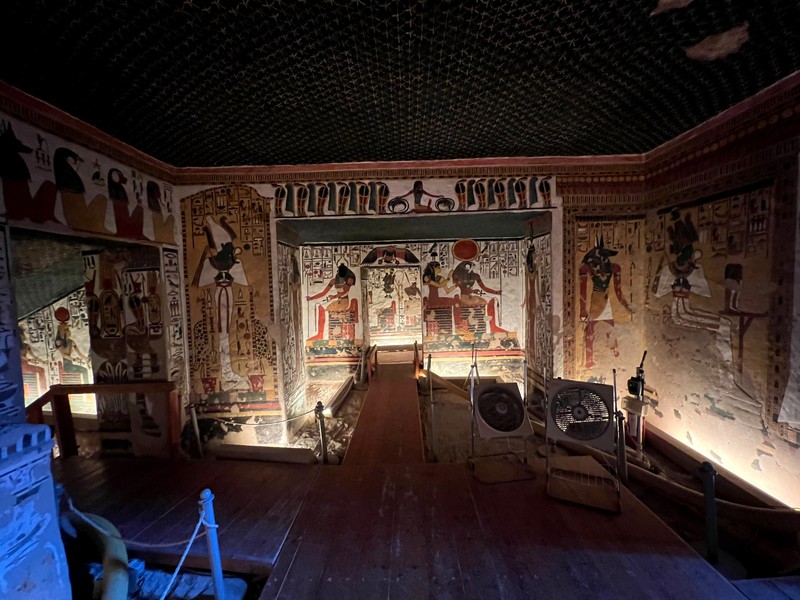
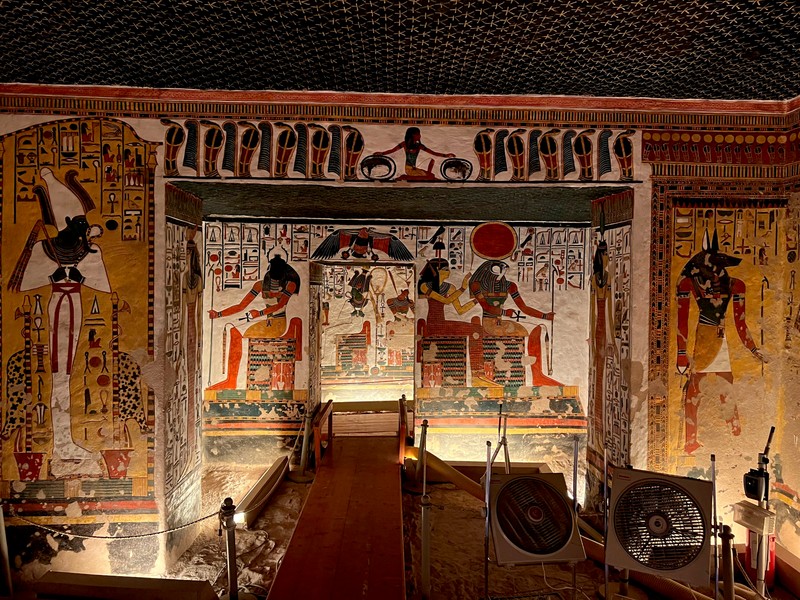
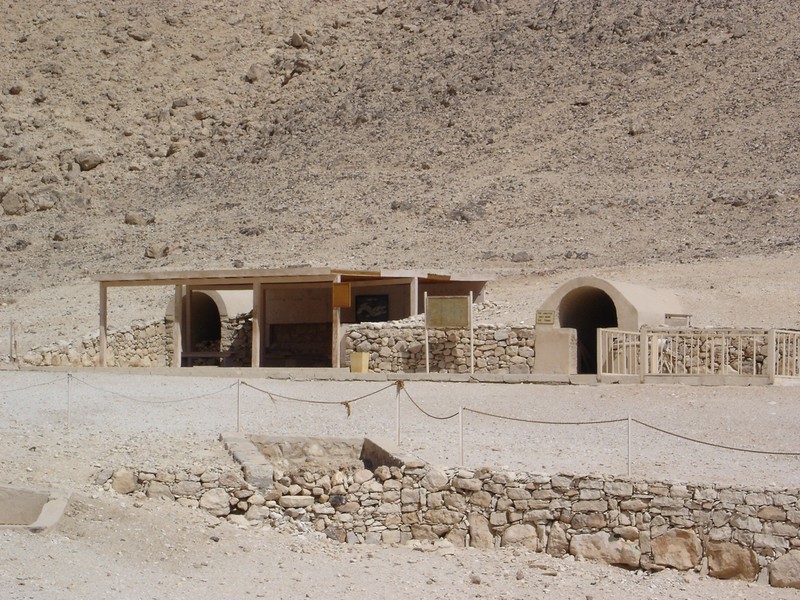
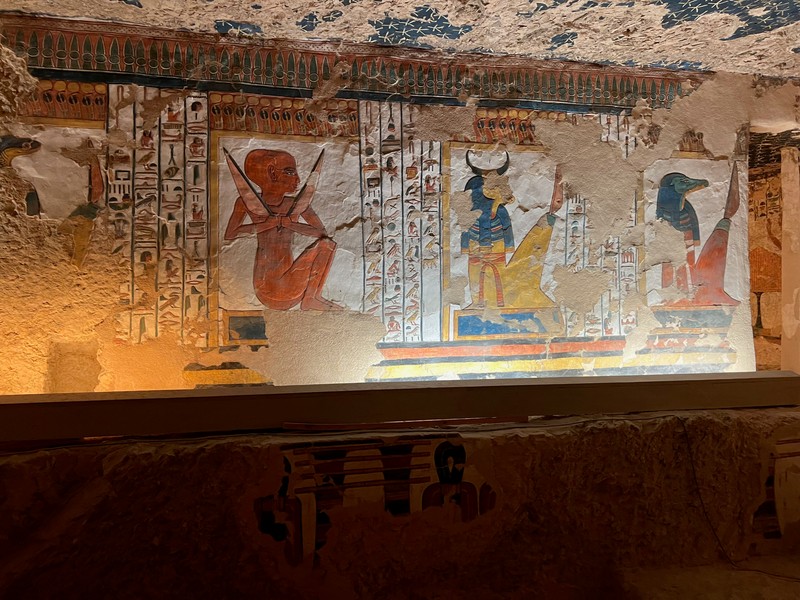
The Tomb of Nefertari is one of the most celebrated monuments of ancient Egyptian funerary art. Located in the Valley of the Queens on the west bank of the Nile near Luxor, it is renowned for its vividly painted walls depicting deities and the queen’s journey into the afterlife. Known by its archaeological designation QV66, the tomb dates to the 19th Dynasty, during the reign of Ramesses II.
Who was Queen Nefertari?
Nefertari Merytmut was the Great Royal Wife of Ramesses II, one of the most powerful rulers of the New Kingdom. She held a prominent position at court and appears to have played a role in Egypt’s diplomatic life. Her name is often interpreted as “the most beautiful of them.” Ramesses II commemorated her in inscriptions and monuments, and a separate temple was dedicated to her at Abu Simbel.
Discovery of the tomb
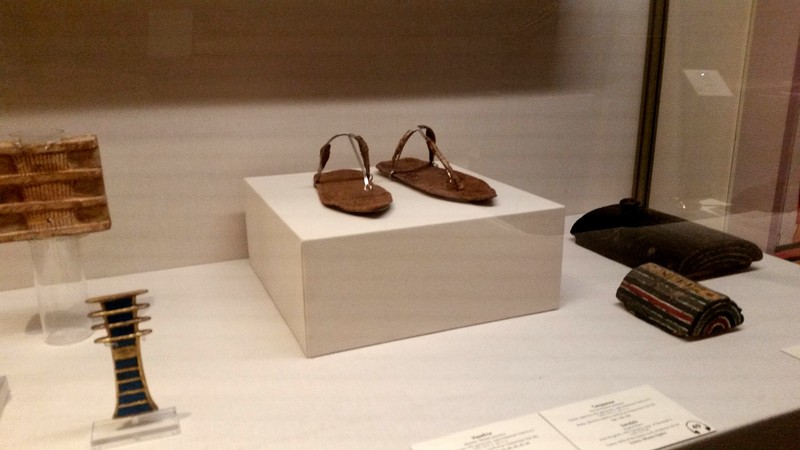
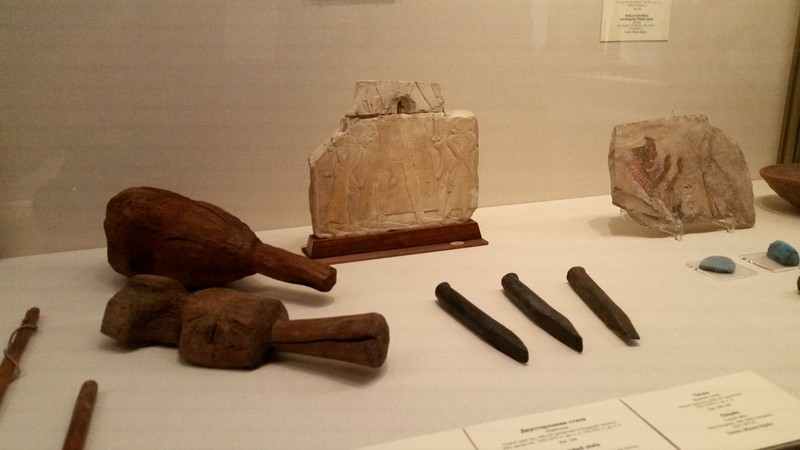
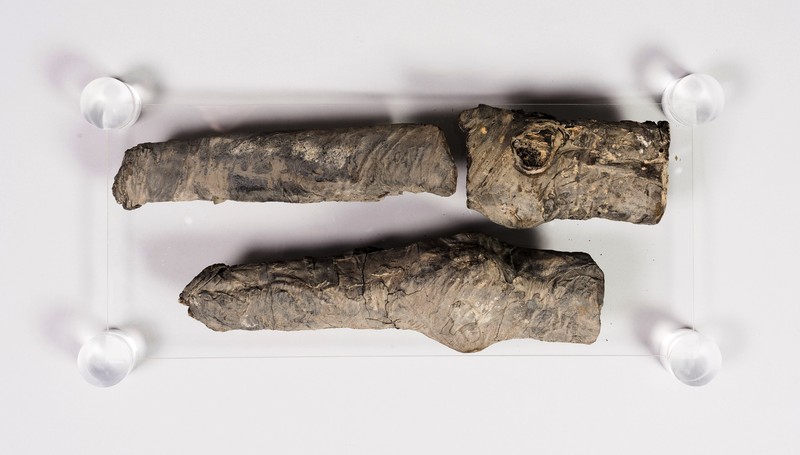
The tomb was discovered in 1904 by an Italian archaeological expedition led by Egyptologist Ernesto Schiaparelli. It had already been plundered in antiquity. Excavators recovered fragments of a pink-granite sarcophagus, shabtis bearing Nefertari’s name, broken furniture, vessels and other burial objects. Fragments of mummified legs were also found and are considered possible remains of the queen, although their identification cannot be regarded as absolutely certain.
Architecture and wall paintings
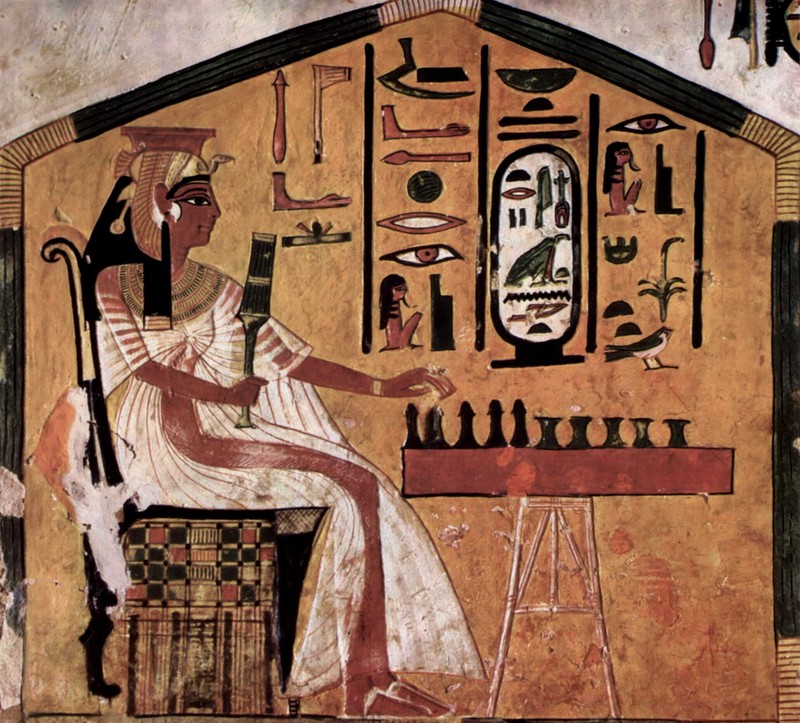
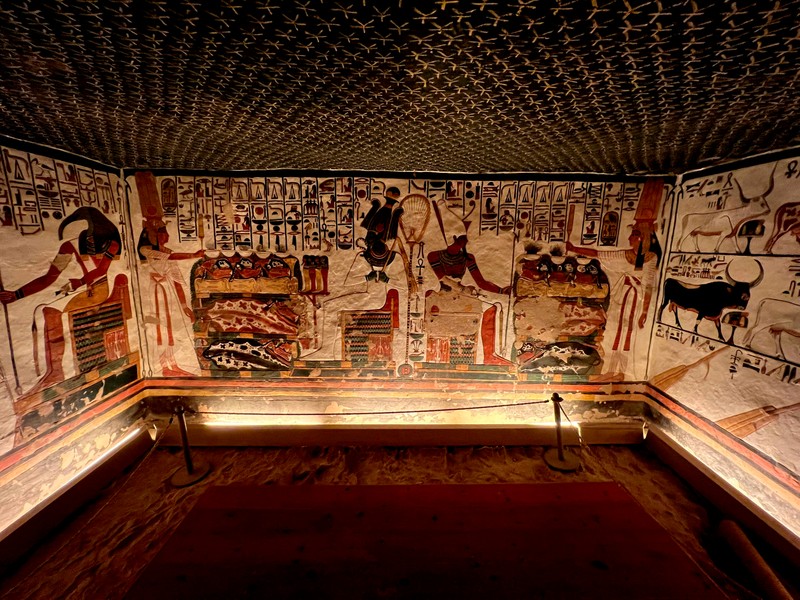
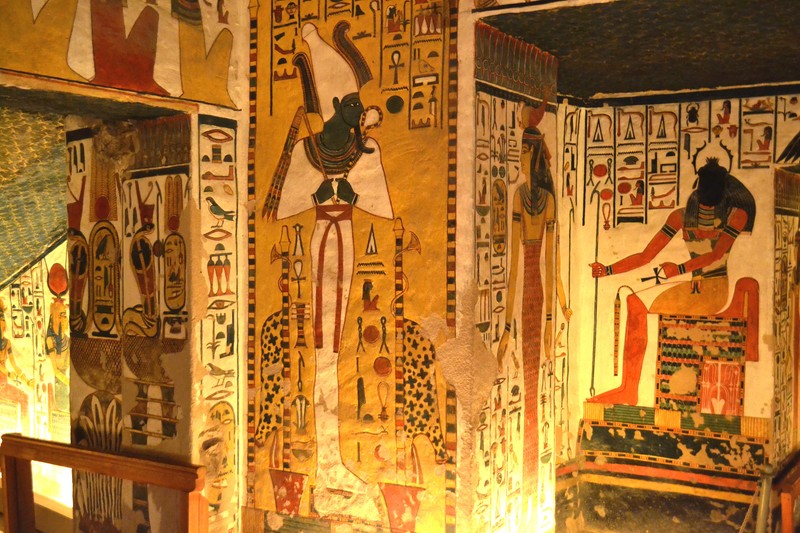
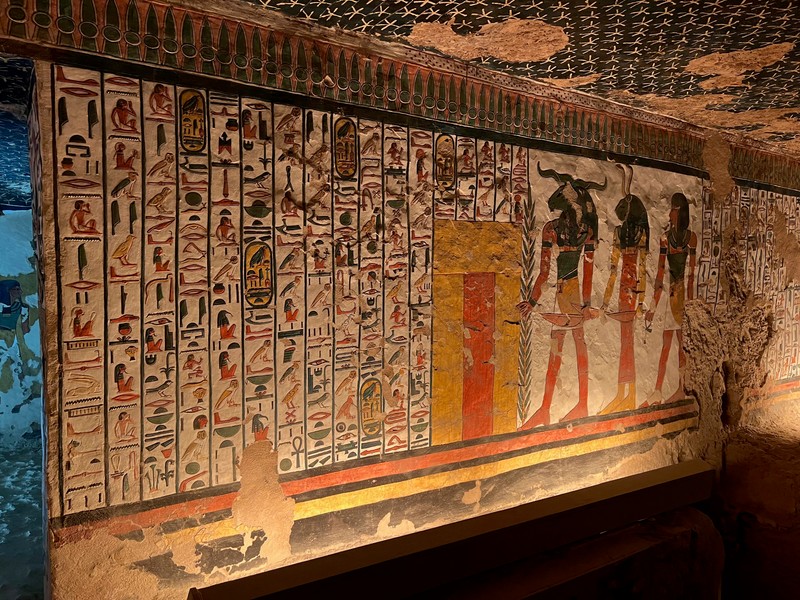
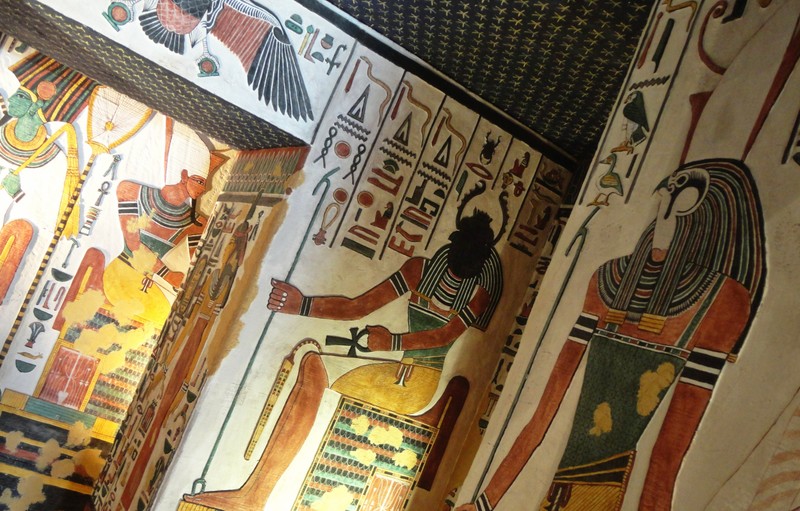
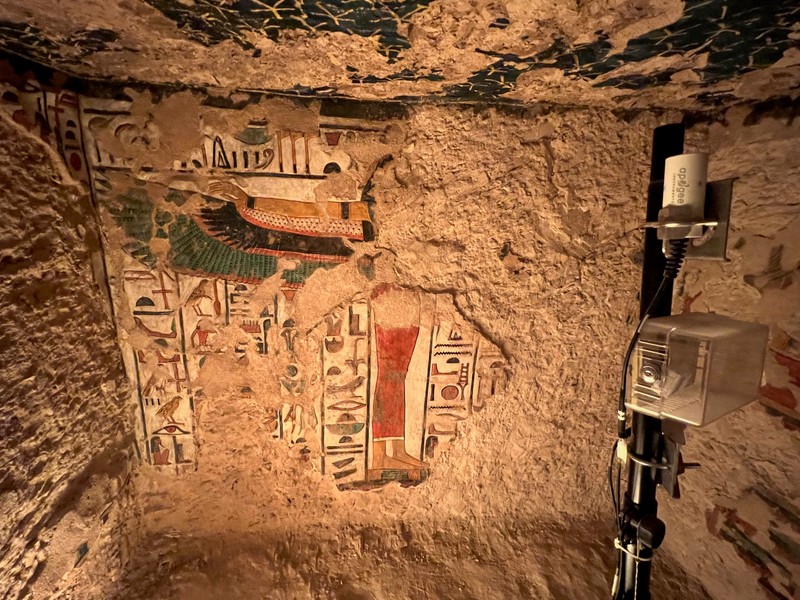
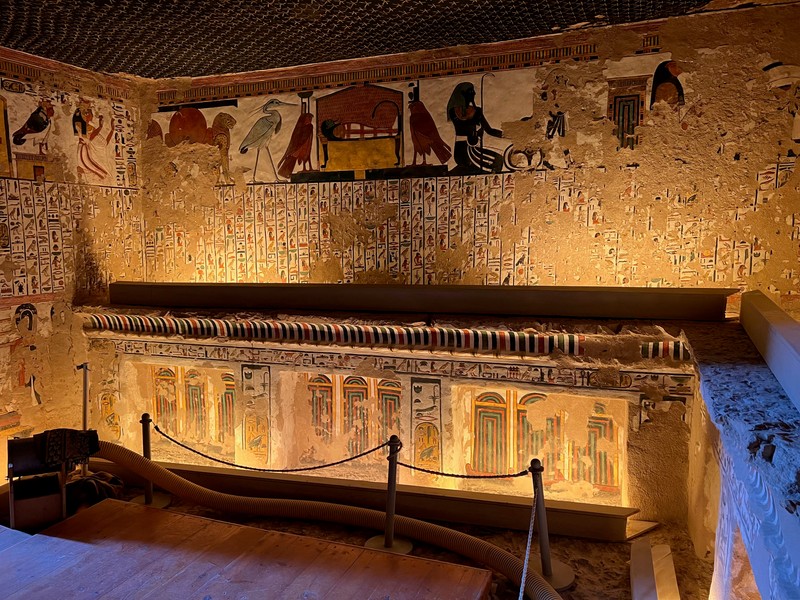
Cut into the bedrock, the tomb consists of descending stairs, corridors, chambers and a principal burial chamber. Four pillars divide the burial chamber into sections, and their decoration includes symbols associated with stability and Osiris. The walls show Nefertari in the presence of deities such as Isis, Hathor and Anubis. Hieroglyphic inscriptions accompany carefully painted figures, clothing and jewellery, creating a richly detailed religious programme.
The Book of the Dead and the afterlife
The decoration draws on ancient Egyptian funerary beliefs and passages from the Book of the Dead. These texts and images were intended to help the deceased overcome dangers in the underworld, receive divine protection and achieve rebirth. The tomb brings together ideas associated with the solar cycle and the resurrection of Osiris. A deep-blue ceiling scattered with yellow stars evokes the heavens and the cosmic order.
Conservation and visiting
The tomb suffered from ancient looting, water intrusion, salt deposits and changes in humidity. In 1986, the Getty Conservation Institute and Egyptian specialists began a major conservation programme to study and protect the paintings. Access to QV66 is restricted to safeguard the fragile decoration from moisture and heat generated by visitors. Opening arrangements can change, so check current information from official Egyptian tourism and antiquities authorities before planning a visit.
Historical importance
The Tomb of Nefertari is both a royal burial place and an exceptional source of information about Egyptian art, religion and beliefs about eternal life during the reign of Ramesses II. Its paintings preserve details of divine imagery, ceremonial dress, jewellery and funerary rituals. The tomb remains one of the most remarkable monuments in the Valley of the Queens.
Gallery