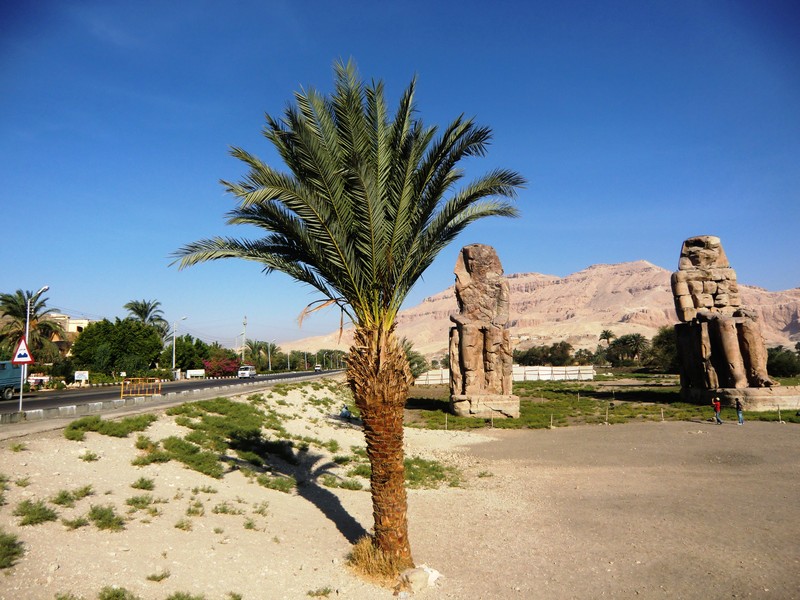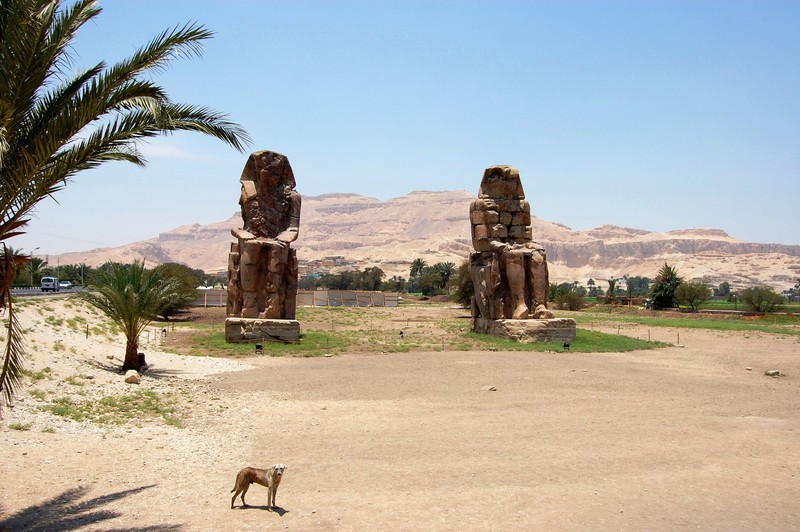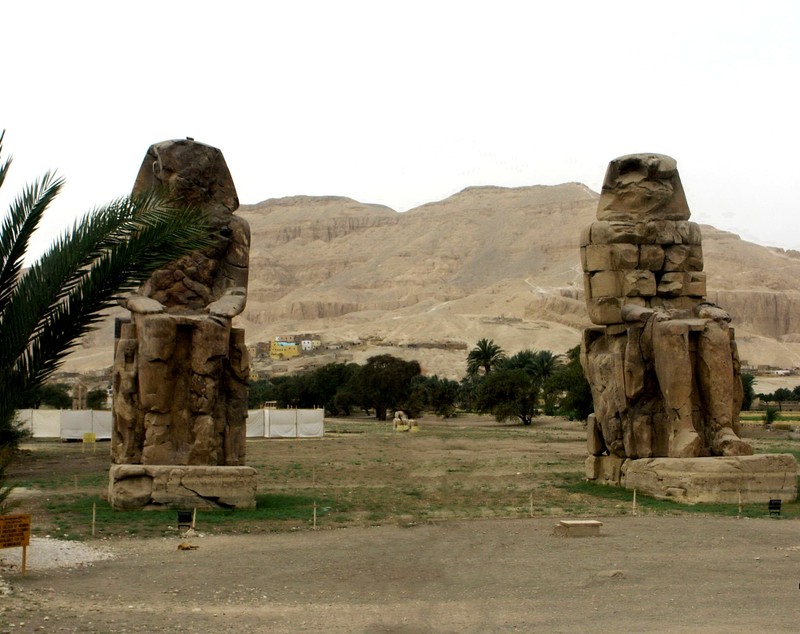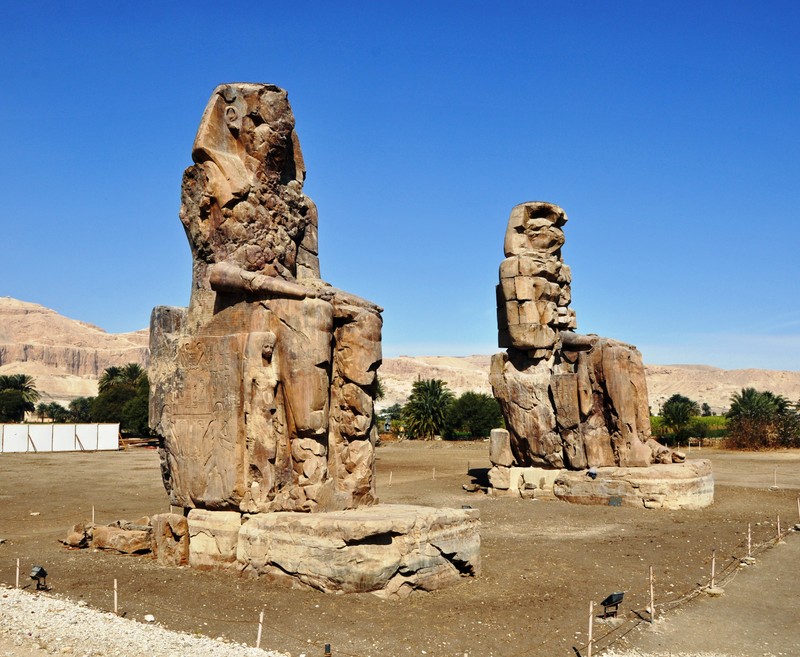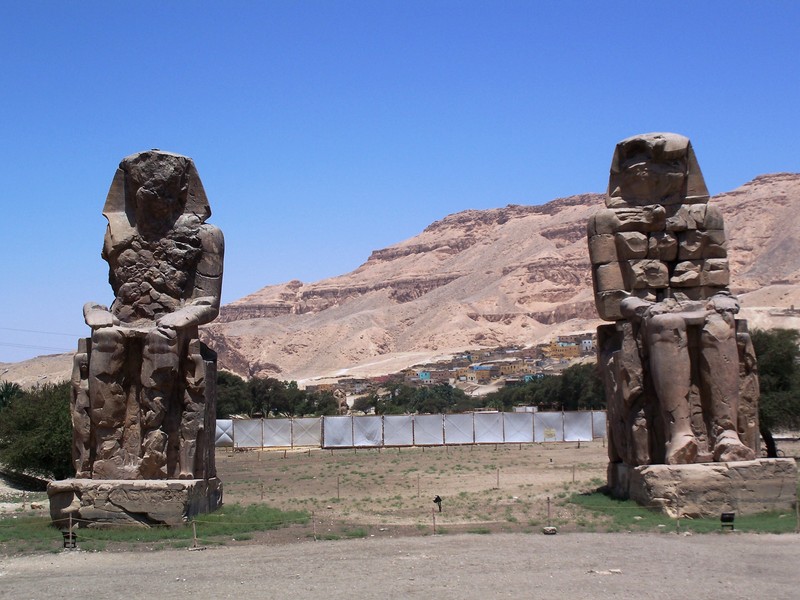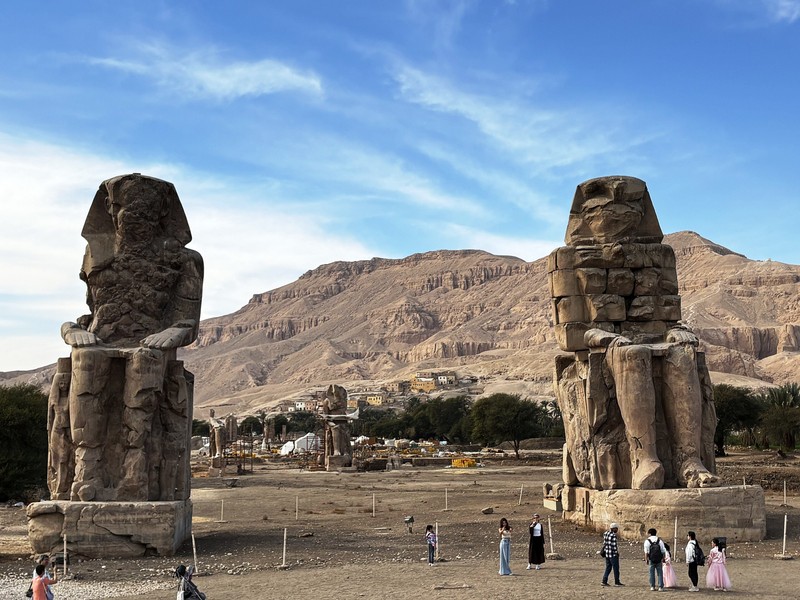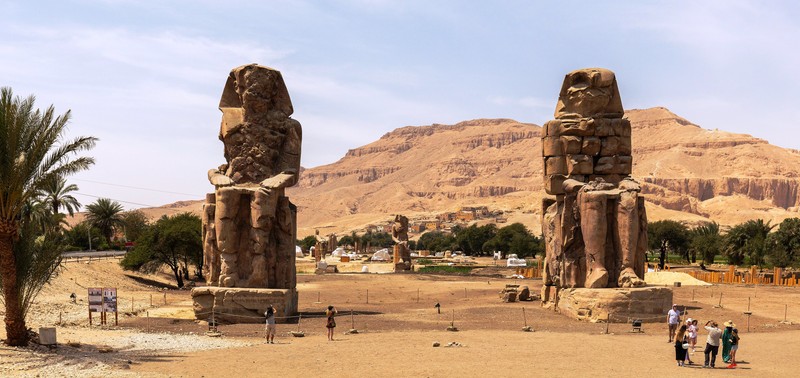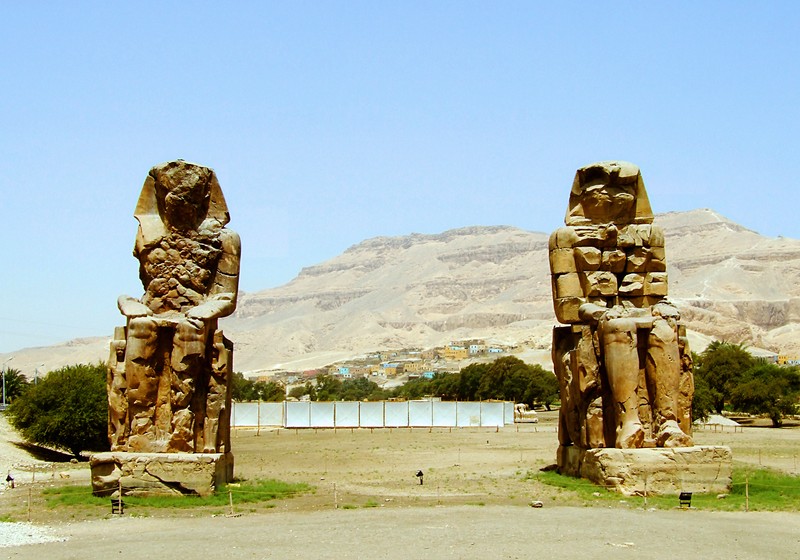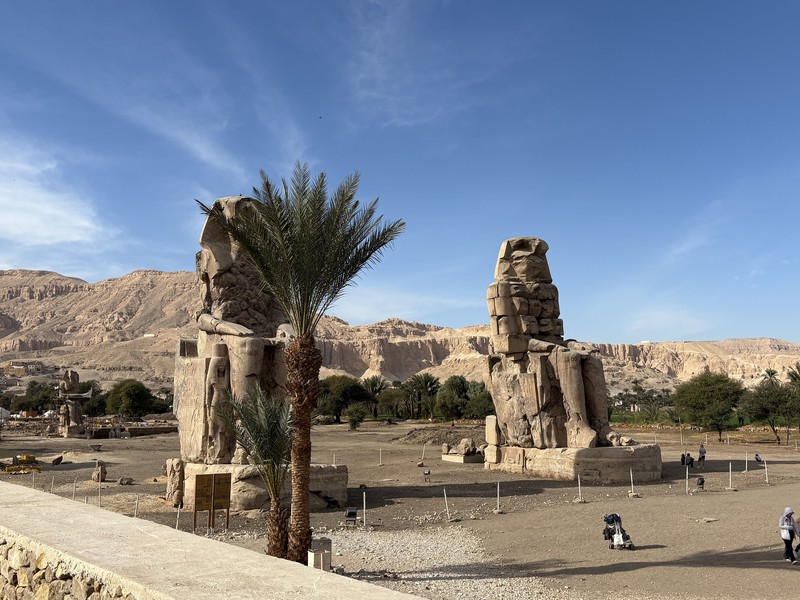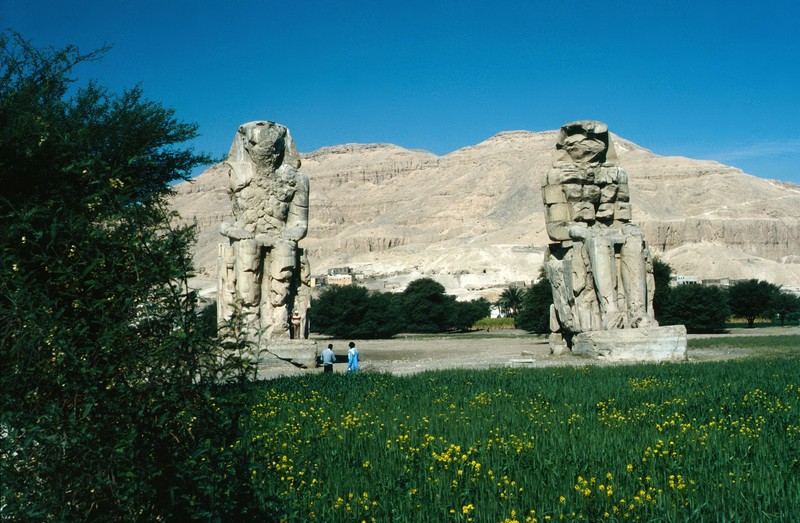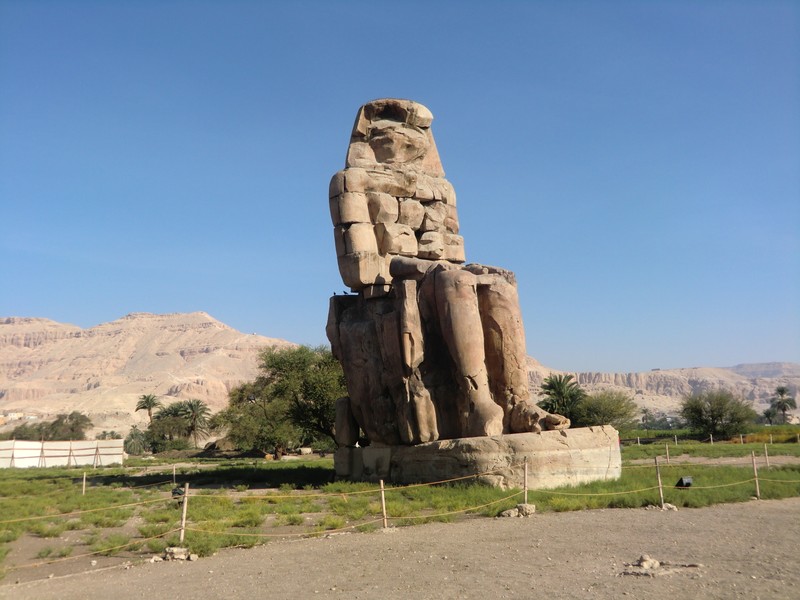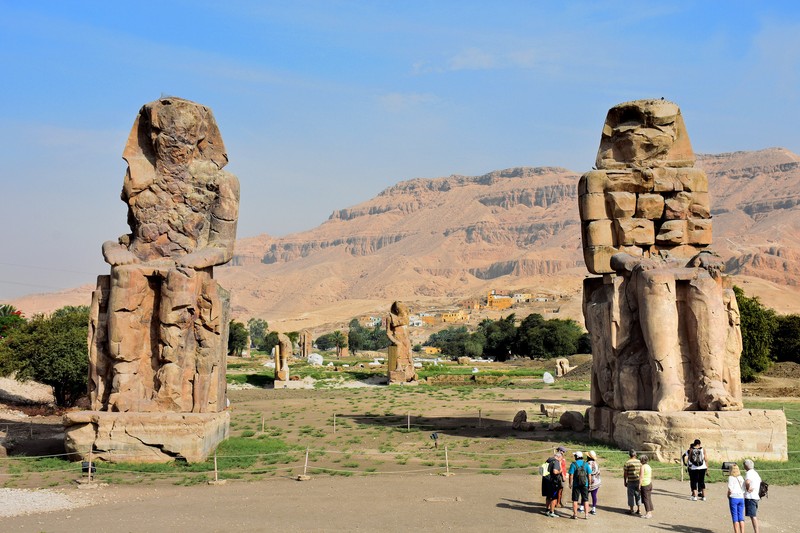

The Colossi of Memnon are two enormous stone statues of Pharaoh Amenhotep III on the west bank of the Nile near Luxor, Egypt. Created in the 14th century BCE, they originally stood beside the main entrance to the ruler’s vast mortuary temple. Today, the monumental figures rise from an open plain, recalling the grandeur of ancient Thebes and the skill of Egyptian builders.
History of the Colossi
The statues were erected during the reign of Amenhotep III of the Eighteenth Dynasty, a period when Egypt enjoyed considerable political influence, economic prosperity and cultural achievement. His reign, approximately 1390–1353 BCE, is associated with major construction projects, temples and colossal royal sculptures.
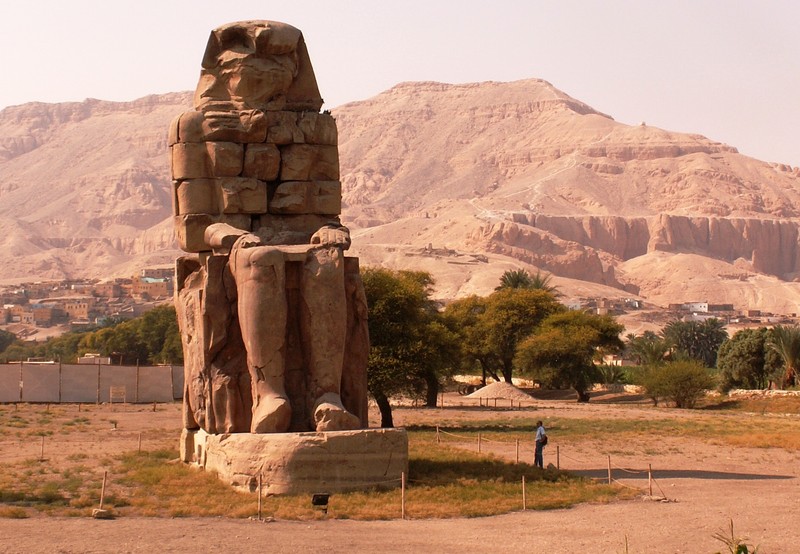
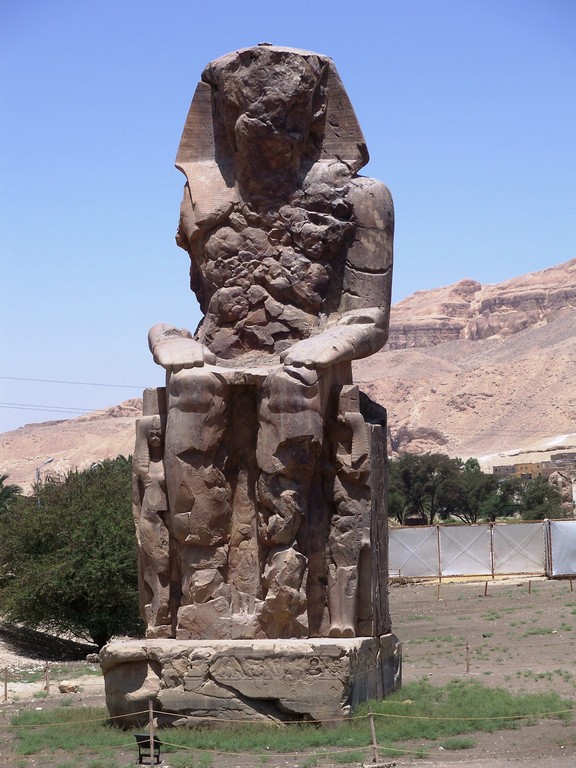
The two seated figures portray the pharaoh in a traditional royal pose, with his hands resting on his knees and his gaze directed east toward the Nile and the rising sun. They were carved from quartzite sandstone and set on massive bases. Including their pedestals, they stand about 18 metres tall. Their enormous weight made transporting the stone and erecting the statues a major logistical and engineering undertaking.
The Mortuary Temple of Amenhotep III
The Colossi formed part of a much larger architectural complex: the mortuary temple of Amenhotep III at Kom el-Hettan. The temple was designed for royal funerary worship and the continued veneration of the pharaoh after death. In antiquity, it was one of Egypt’s largest temple complexes, with courtyards, pylons, colonnades and numerous statues of the king and gods.
The complex stood on the west bank of the Nile, a region associated in ancient Egyptian belief with the dead and renewal in the afterlife. The temple served religious purposes while also demonstrating the ruler’s power. The statues at its entrance emphasized the scale of the sanctuary and greeted those approaching the sacred precinct.
Over time, the temple suffered extensive damage from earthquakes, flooding and changes in groundwater. Its stone blocks were reused in other buildings, and many statues were destroyed or broken into fragments. The two famous Colossi of Memnon are therefore only the best-known surviving part of a much larger archaeological site.
Why Are They Called the Colossi of Memnon?
The name refers not to the pharaoh depicted but to Greek mythology. Ancient Greek visitors associated the northern statue with Memnon, a legendary king of the Ethiopians and son of Eos, the goddess of the dawn, who died in the Trojan War. The name became established in antiquity and survives today, although both statues actually represent Amenhotep III.
The northern colossus became especially famous after it was damaged by an earthquake in antiquity. According to ancient travellers, the statue sometimes produced a sound at sunrise, described as a whistle, ringing tone or faint melody. People connected the phenomenon with Memnon supposedly greeting his mother Eos as the sun rose.
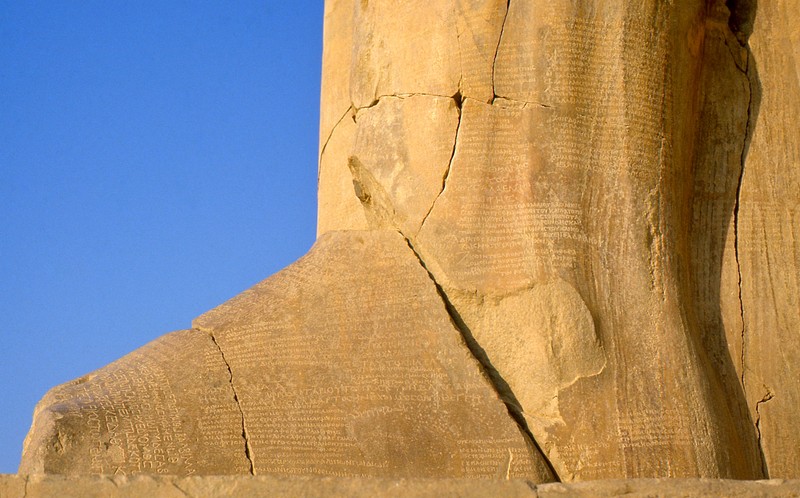
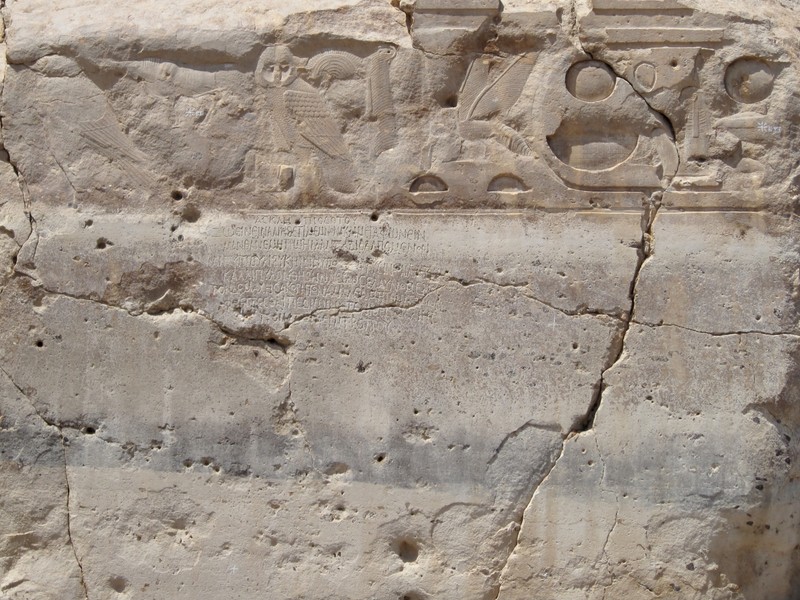
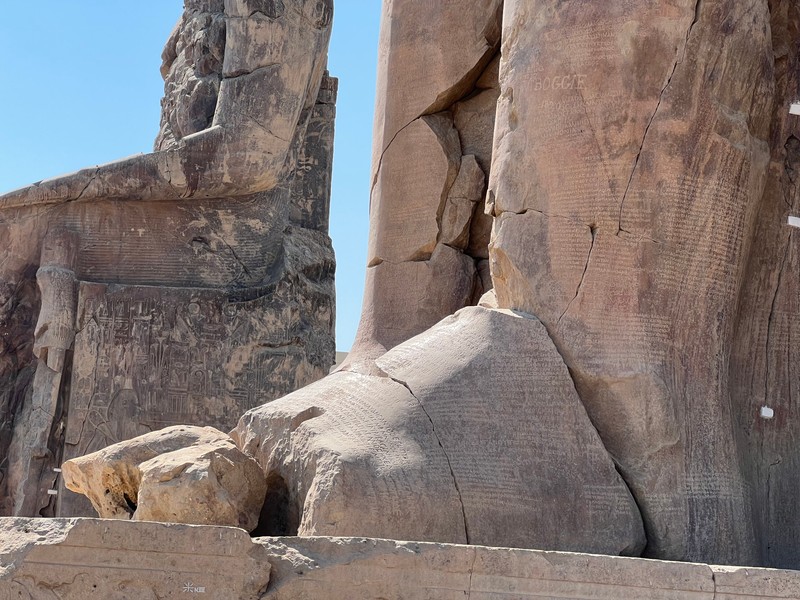
The sound was most likely caused by physical changes in the damaged stone as temperatures shifted and moisture affected its surface. In the early third century CE, the statue was repaired under the Roman emperor Septimius Severus, after which the mysterious sound was no longer reported. In antiquity, the site became a popular destination, and visitors left inscriptions in Greek and Latin on the monument.
What the Statues Depict
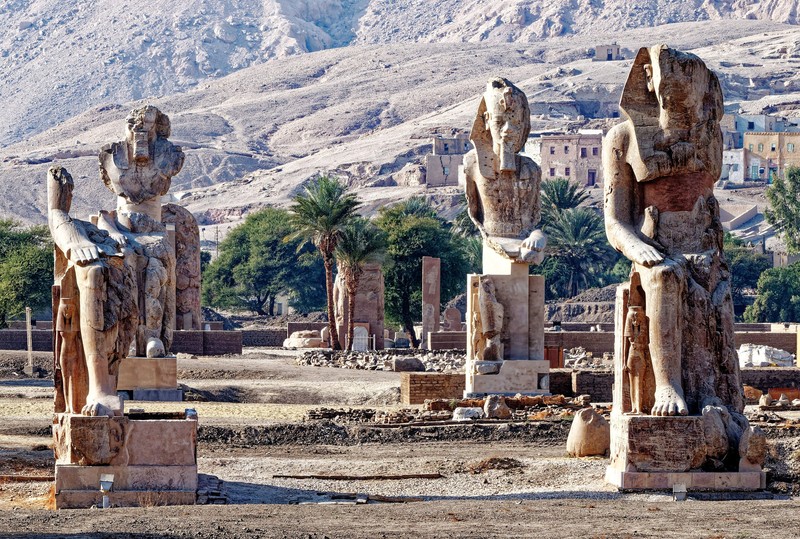
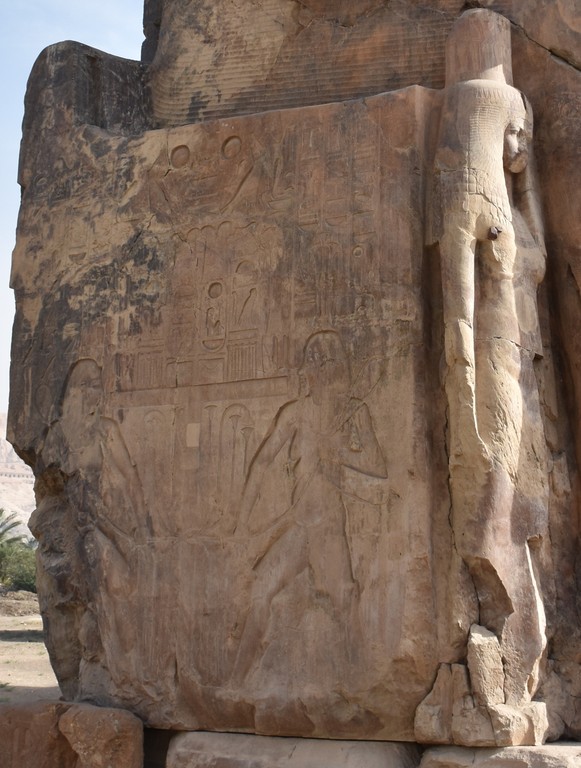
Both colossi portray Amenhotep III seated on a throne. Despite erosion and damage, details of the royal clothing, headdress and monumental composition remain visible. Smaller figures are carved beside the pharaoh’s legs, including members of the royal family traditionally identified as his mother, Mutemwiya, and his wife, Tiye.
The sides of the thrones were decorated with symbolic reliefs. One familiar motif in ancient Egyptian art is Hapy, the god associated with the Nile, fertility and the annual renewal of the land through the river’s inundation. Such imagery connected royal power with order, prosperity and the well-being of Egypt.
The extraordinary size of the figures was central to their meaning. The statues did more than portray a ruler: they conveyed an impression of superhuman authority and the permanence of kingship. Their eastward orientation linked the temple with the Nile, sunrise and religious ideas of renewal.
Archaeological Research and Restoration
Archaeologists continue to study the remains of Amenhotep III’s mortuary temple. Since the late twentieth century, Egyptian and international specialists have documented the site, conserved sculptures and restored selected monuments. Numerous fragments of colossal statues, architectural elements and reliefs have been found, helping researchers understand the original scale of the complex.
Research has clarified the layout of the temple, its courtyards and pylons, and its decorative programme. Reassembled and re-erected fragments give an impression of how densely the complex was filled with sculpture during Amenhotep III’s reign. Conservators also document the positions of finds to preserve their archaeological value.
It is important to distinguish the famous pair of Colossi beside the road from other enormous statues whose fragments have been found within the temple precinct during modern restoration projects. Research into the wider complex is gradually revealing its history beyond that of the two best-known monuments.
The Colossi of Memnon Today
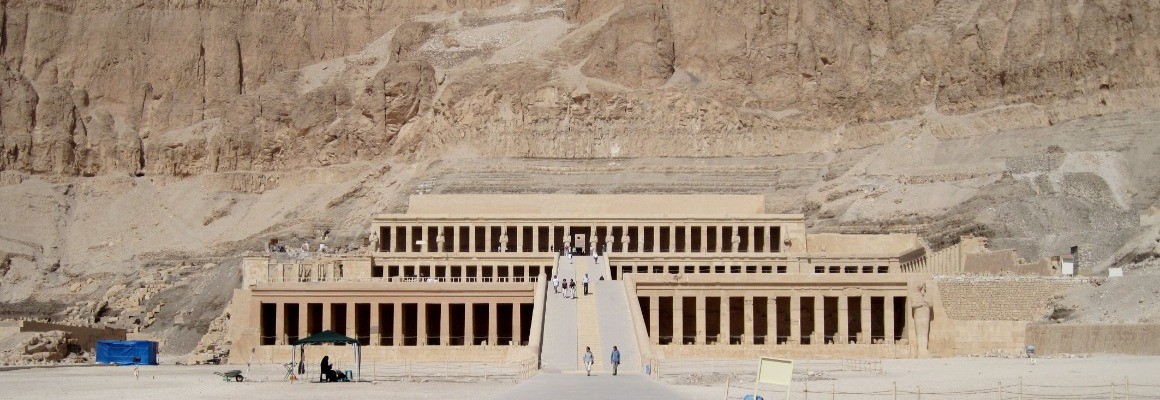
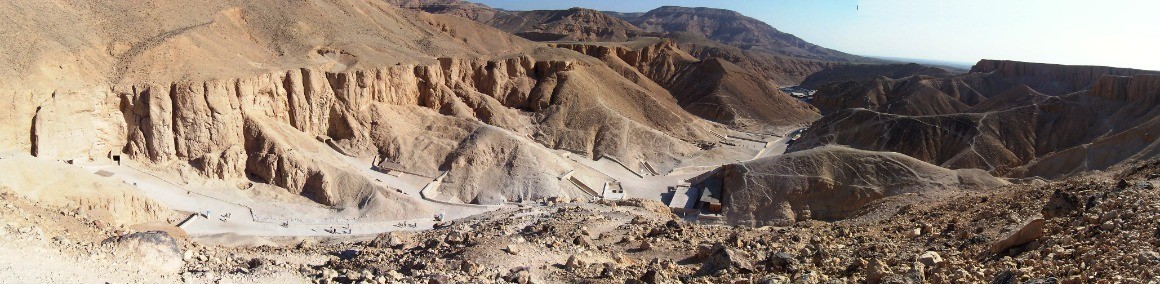
Today, the statues are among the best-known attractions on Luxor’s west bank. They form part of the UNESCO World Heritage property Ancient Thebes with its Necropolis, inscribed in 1979. Together with the Temple of Hatshepsut, the Valley of the Kings, the Valley of the Queens and other monuments, they help explain the religious and political importance of ancient Thebes.
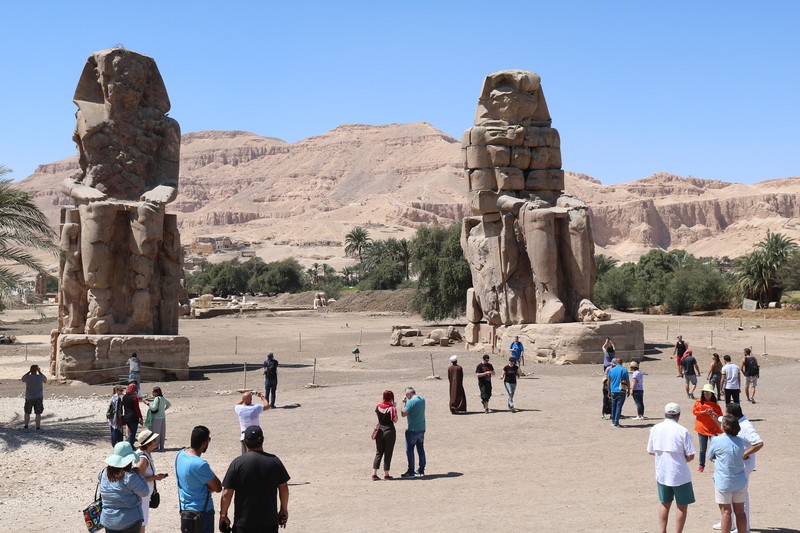
Visitors can view the colossal figures at close range, examine surviving details of the thrones and appreciate the scale of the stone blocks. The statues look especially striking against the desert hills and open plain. Although little of the original temple remains visibly standing, the archaeological landscape helps visitors imagine how vast the complex once was.
Getting There and Visiting Tips
The Colossi stand on the west bank of the Nile, roughly opposite central Luxor. They can be reached by taxi, private car or an organised tour of the west bank. Visits are often combined with the Temple of Hatshepsut, the Valley of the Kings and other sites in the Theban necropolis.
The statues themselves do not require a long visit, but they fit easily into a longer itinerary of ancient monuments. Early morning is useful for photography and helps avoid some of the daytime heat. During summer, bring water, a hat, sunscreen and comfortable shoes.
Check current access rules, visiting hours and ticket requirements before travelling, as arrangements can change. The Colossi of Memnon are especially rewarding for visitors interested in royal architecture of the New Kingdom and in the way real monuments acquire legends over time.
Gallery