Medinet Habu is one of the best-preserved temple complexes of ancient Egypt, located on the west bank of the Nile at Luxor. Its principal monument is the mortuary temple of Pharaoh Ramesses III, who ruled around 1184–1153 BCE. Monumental pylons, spacious courtyards, columned halls and numerous reliefs offer an unusually clear picture of royal temple architecture during the New Kingdom.
History of the Complex
The area was used for religious and funerary buildings over many centuries. Before the main temple was built, a sanctuary associated with the god Amun already stood here. During the Eighteenth Dynasty, Queen Hatshepsut and Pharaoh Thutmose III built a temple dedicated to a local form of the deity.
The complex’s most famous monument was commissioned by Ramesses III, the second ruler of the Twentieth Dynasty. It served his funerary cult and the worship of Amun. After the New Kingdom, the area continued to have religious and administrative functions. Its massive enclosure helped preserve parts of the site.
The Temple of Ramesses III
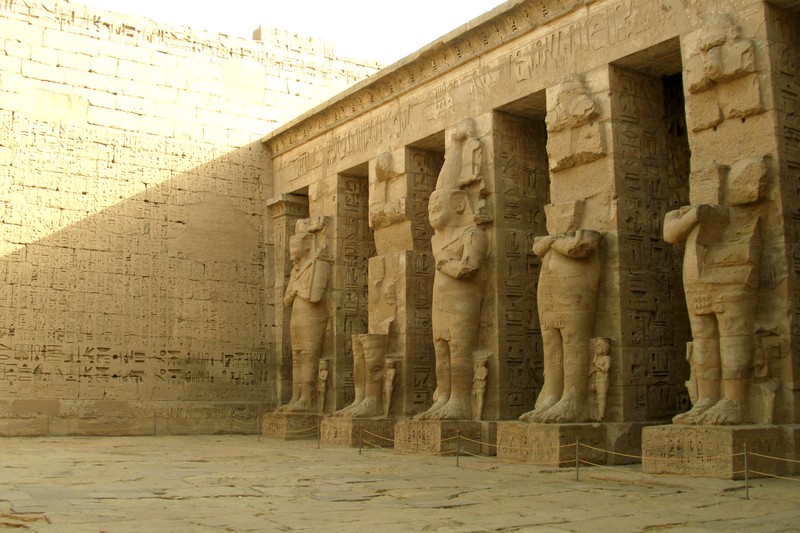
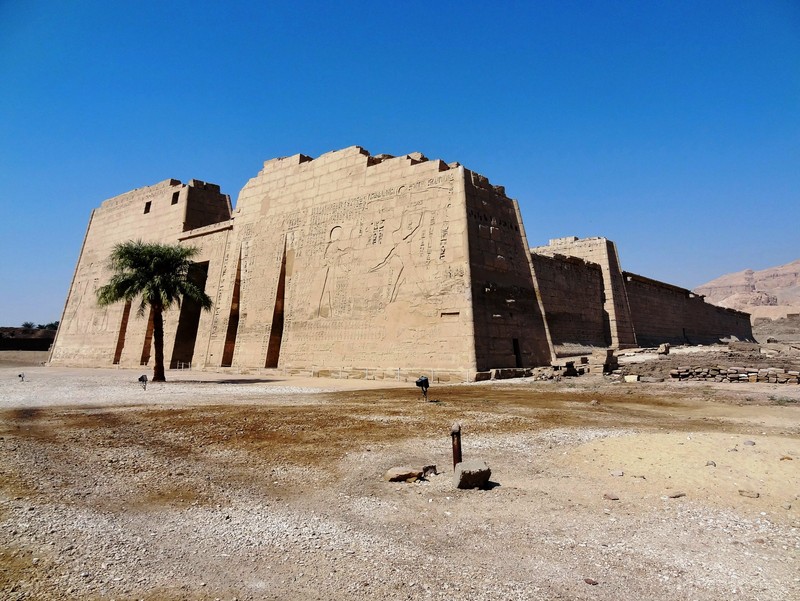
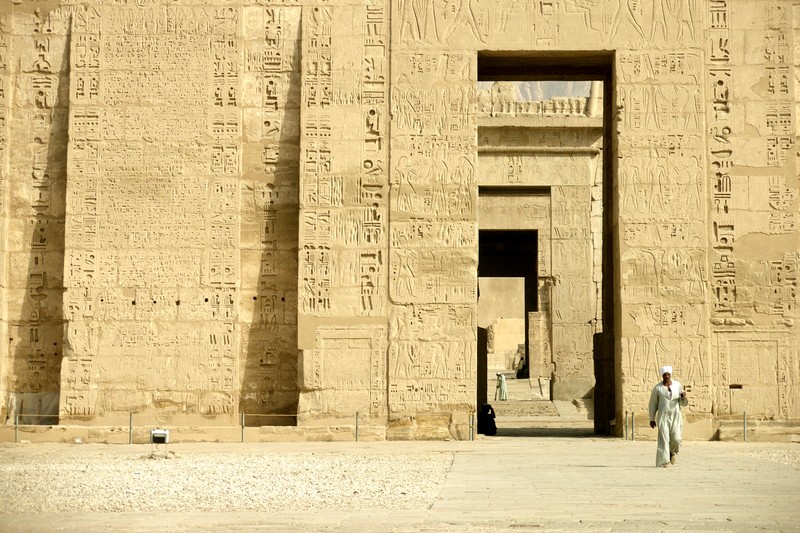
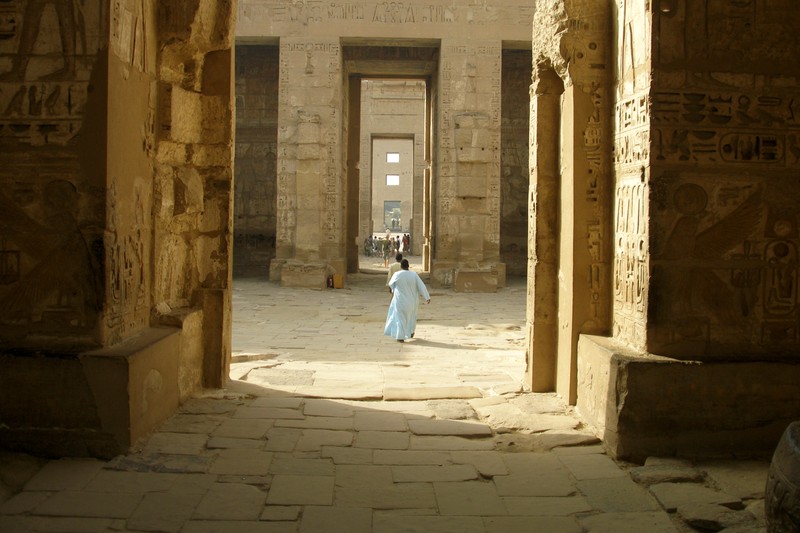
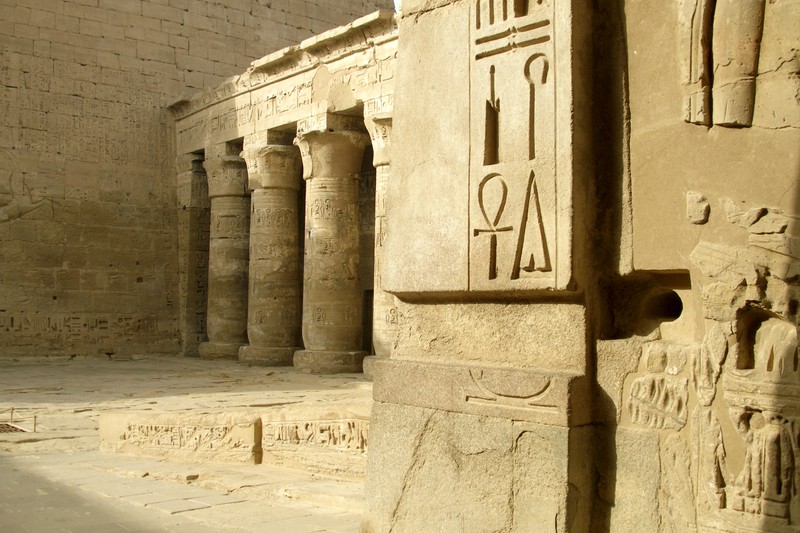
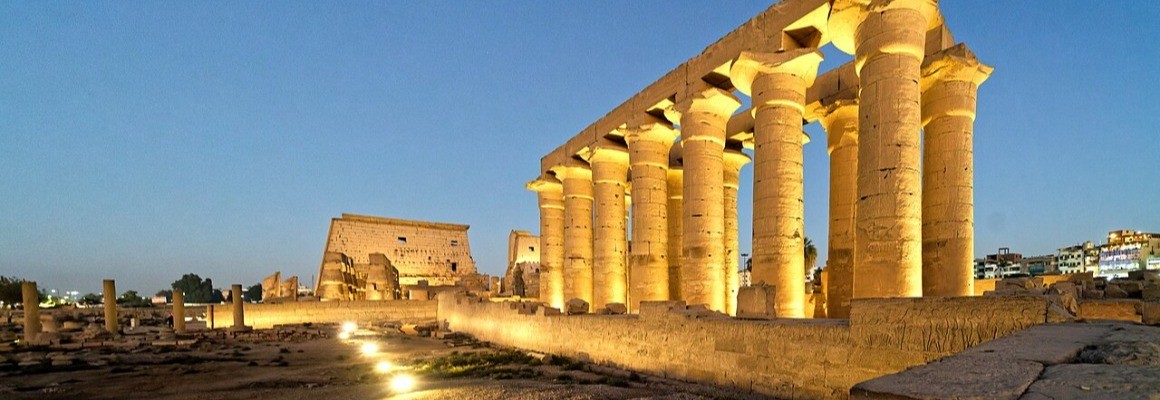
The main temple follows the traditional Egyptian layout: an entrance pylon leads to a courtyard, followed by further courts, columned halls, sanctuaries and inner rooms. The huge pylons, tall walls and columns with papyrus-shaped capitals are especially striking. Some columns depict the king in the form of Osiris.
The temple was more than a place of worship. The complex included storage rooms, administrative buildings and service facilities. Priests, scribes and officials managed the resources and daily activities required by a large temple institution.
The High Gate and Defensive Architecture
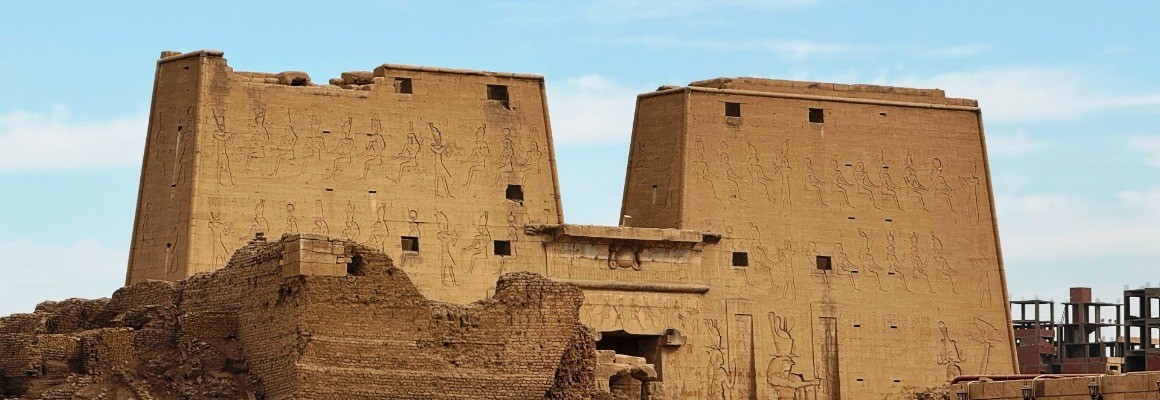
The eastern entrance is known as the High Gate of Ramesses III. Its massive towers and terraces resemble a fortified structure. A strong mudbrick enclosure surrounded the sacred precinct. In antiquity, a canal connected to the Nile approached the complex, with a landing place that allowed boats to deliver people and supplies.
Reliefs and Military Campaigns
Medinet Habu is particularly famous for reliefs depicting the campaigns of Ramesses III. The walls show battles against Libyans and the Sea Peoples, groups involved in major conflicts and movements at the end of the Bronze Age. Scenes depict the pharaoh in his chariot, soldiers and captives, while inscriptions present the king as Egypt’s defender.
These reliefs are important historical sources, but they are also official royal statements celebrating the pharaoh’s victories. Researchers therefore compare them with other inscriptions and evidence about the wider crisis of the late Bronze Age.
Religious Scenes and Temple Administration
The walls also contain scenes of offerings, worship and religious festivals. Ramesses III appears before Amun and other deities, performing rituals intended to maintain cosmic order and the prosperity of the country.
Archaeologists have identified remains of a royal palace, storehouses and administrative buildings. These finds show that Medinet Habu was not only a sacred monument but also an important organisational centre with staff, supplies and administrative systems.
Other Monuments and UNESCO Heritage
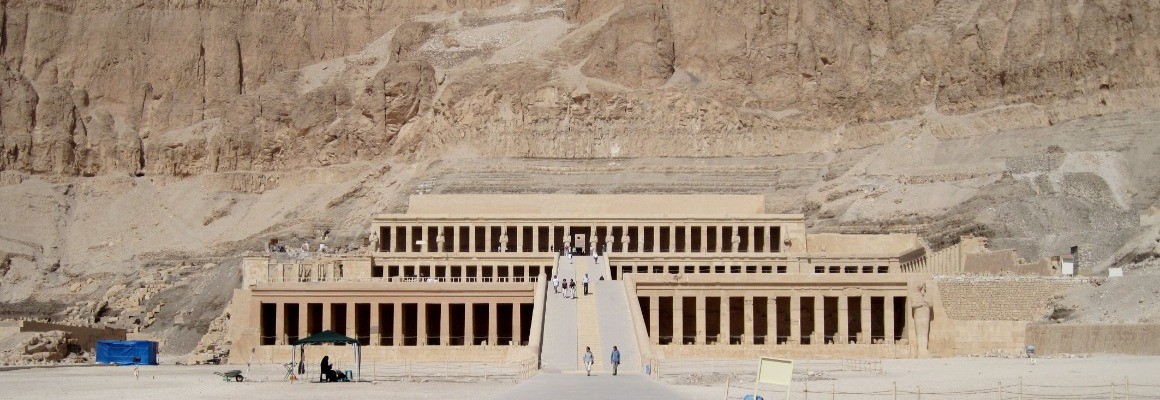
The precinct contains an earlier temple associated with Hatshepsut and Thutmose III. Nearby are funerary chapels of the Divine Wives of Amun, dating to later periods. Medinet Habu forms part of Ancient Thebes and its Necropolis, inscribed on the UNESCO World Heritage List in 1979.
Visiting Medinet Habu
The complex lies on Luxor’s west bank, near the Ramesseum and Hatshepsut’s temple at Deir el-Bahari. Check current opening arrangements before travelling. Comfortable shoes, drinking water and a hat are useful because the site is extensive and many areas offer little shade.
Medinet Habu is an excellent destination for visitors interested in well-preserved royal architecture, Egyptian religion, military history and the administration of the ancient state.
Gallery