Luxor Temple is one of the most remarkable monuments of ancient Egyptian architecture. It stands on the east bank of the Nile in the centre of modern Luxor. In antiquity, the city was known as Thebes and served as a major political and religious centre during the Middle and New Kingdoms. The temple was closely associated with Amun-Ra and played an important role in ceremonies connected with the divine nature and renewal of kingship.
History of the temple
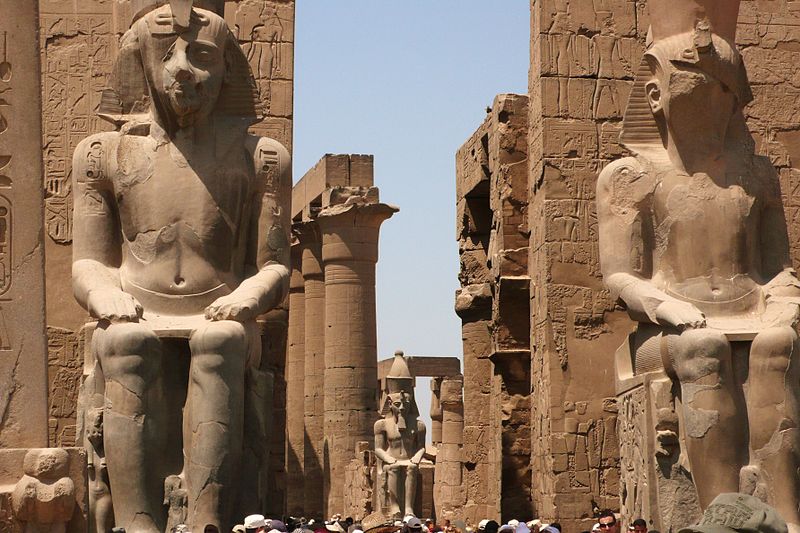
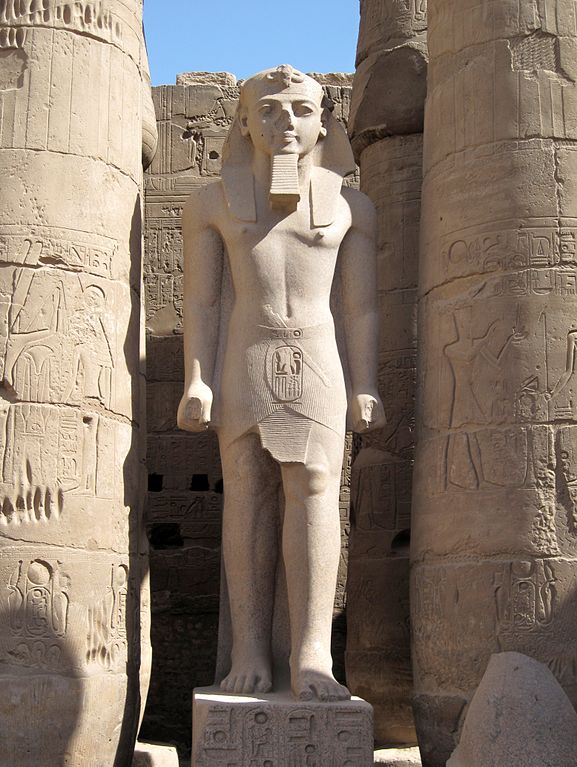
One of the oldest surviving elements of the sanctuary is associated with the reign of Hatshepsut, who ruled around 1473–1458 BCE. The main core of the temple was built under Amenhotep III, approximately 1390–1352 BCE. Ramesses II, who ruled around 1279–1213 BCE, later expanded the complex with a monumental entrance pylon, a large courtyard and colossal royal statues. Tutankhamun and Horemheb contributed to the decoration of the famous colonnade.
The entrance pylon and obelisk
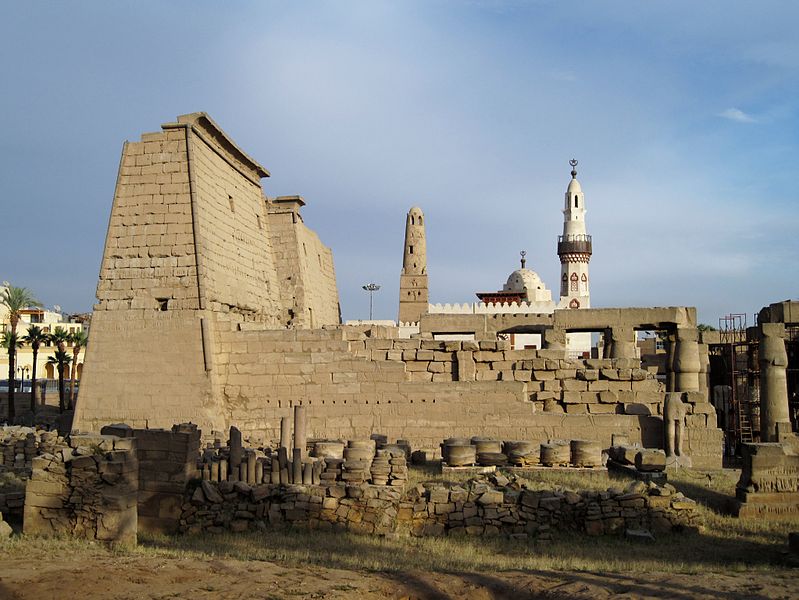
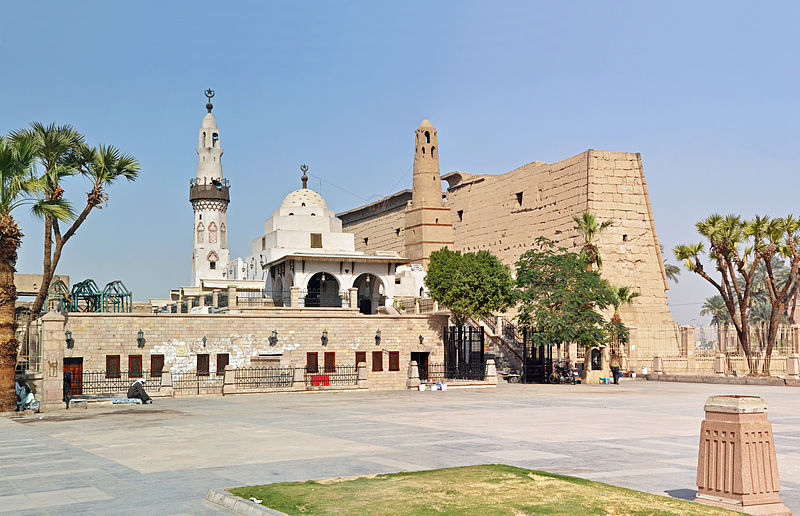
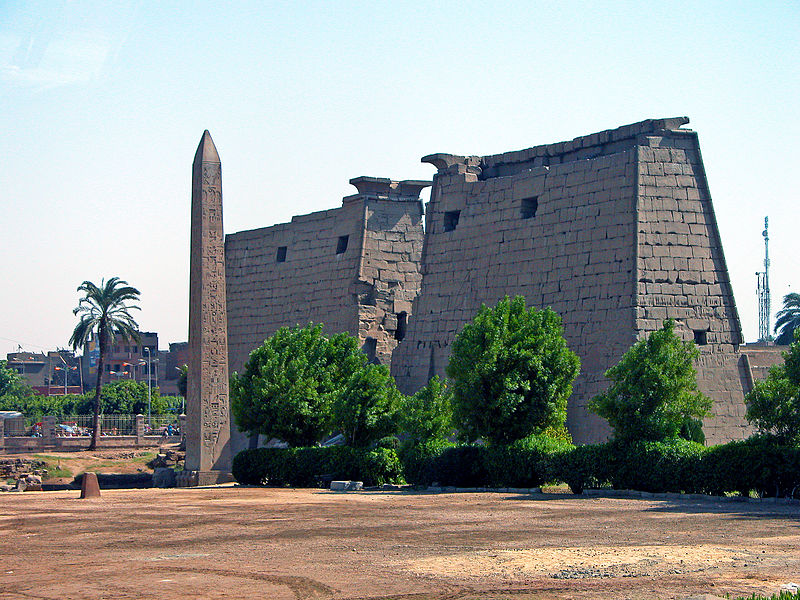
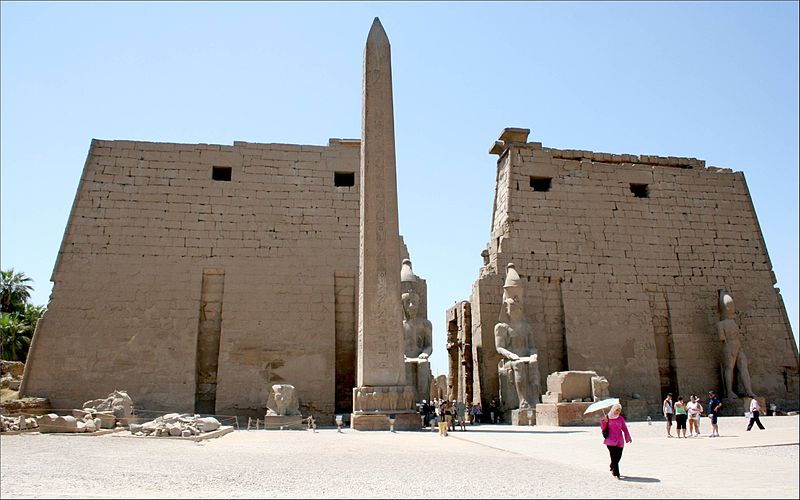
The monumental entrance is formed by the pylon of Ramesses II, decorated with reliefs depicting the king and his military victories. Two obelisks and several colossal statues once stood in front of it. One obelisk remains at Luxor, while the other has stood in Paris’s Place de la Concorde since 1836. Obelisks symbolised solar power and royal authority, and their surfaces were covered with hieroglyphic inscriptions.
The courtyard of Ramesses II and the Great Colonnade
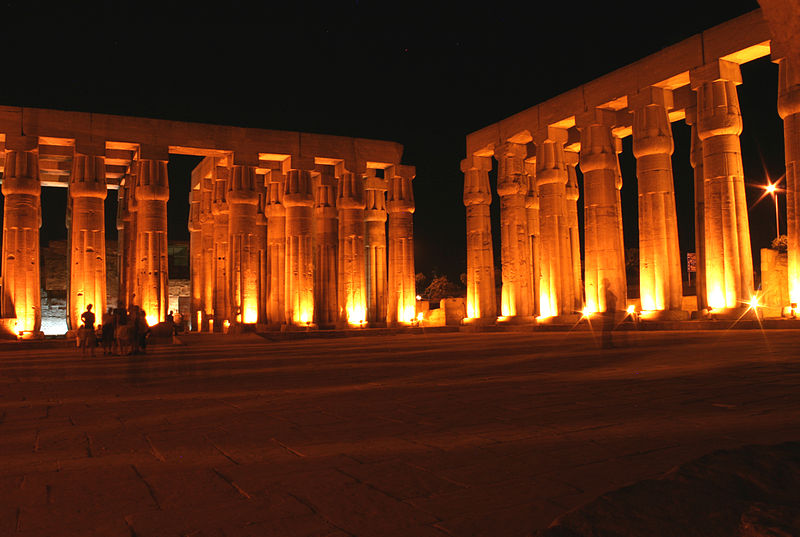
Beyond the pylon lies a large courtyard surrounded by columns and royal statues. The Great Colonnade of Amenhotep III follows, with two rows of seven massive columns topped by papyrus-shaped capitals. Reliefs depict the Opet Festival, an important religious celebration involving processions and sacred ceremonies. The decoration of this part of the temple was completed under Tutankhamun and Horemheb.
The Opet Festival and the Avenue of Sphinxes
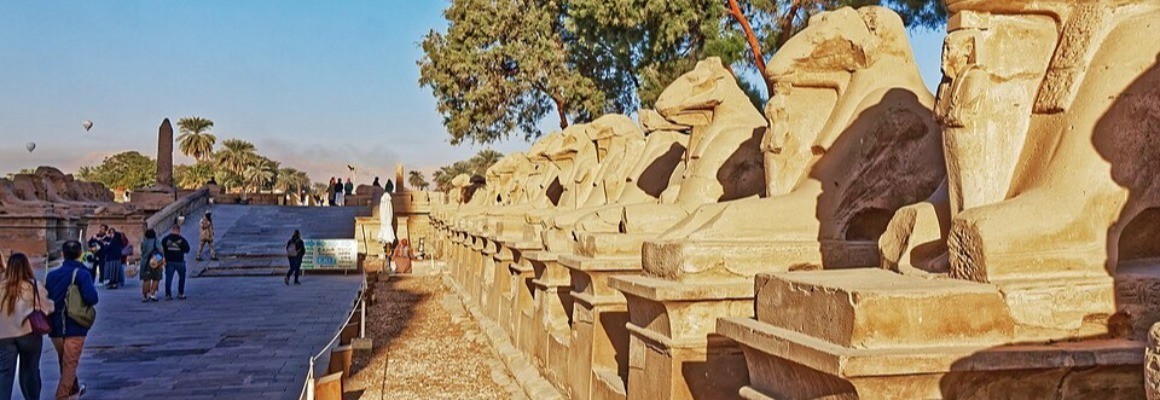
Luxor Temple was connected to the Karnak Temple Complex by an ancient processional route about 2.7 kilometres long, now known as the Avenue of Sphinxes. During the Opet Festival, sacred boats carrying the statues of Amun, Mut and Khonsu travelled from Karnak to Luxor Temple. The ceremonies symbolised the renewal of divine power and kingship. The restored avenue now allows visitors to walk between the two major temple complexes and appreciate the historical landscape of Thebes.
Sanctuaries and reliefs
The inner rooms preserve reliefs, hieroglyphic inscriptions and images of gods and rulers. Particularly interesting are the scenes known as the Divine Birth, which tell a mythological story of the king’s divine origin through Amun-Ra. Such images reinforced the sacred legitimacy of pharaonic rule. They also provide valuable evidence for understanding Egyptian religious beliefs and royal ceremonies.
The temple in the Roman period
After Egypt came under Roman rule, the temple continued to be used, although its function changed. In the late third century CE, the Romans built a military enclosure around the complex. Some rooms were adapted for Roman imperial worship, and ancient reliefs were covered with plaster and painted with images of Emperor Diocletian and his co-rulers. These later layers show how the site remained in use long after the age of the pharaohs.
Luxor Temple and UNESCO
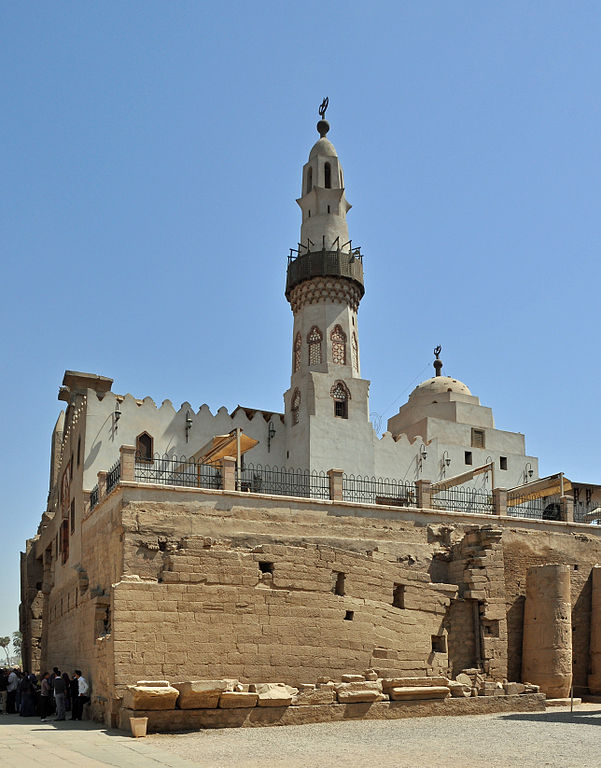
In 1979, Luxor Temple became part of the UNESCO World Heritage property Ancient Thebes with its Necropolis. The property also includes Karnak, the Valley of the Kings, the Valley of the Queens and other monuments on the west bank of the Nile. Luxor Temple is unusual because its ancient architecture stands directly within the modern city rather than in an isolated archaeological landscape.
What to see and how to visit
Visitors should look for the pylon of Ramesses II, the surviving obelisk, colossal royal statues, the courtyard and the Great Colonnade of Amenhotep III. Take time to examine the reliefs and inscriptions in the inner rooms. The temple is particularly atmospheric after dark when illuminated, but visits should be planned around the official schedule. It is within walking distance of many central hotels and can also be reached by taxi. In hot weather, bring water, a hat, sun protection and comfortable shoes. Check the official Egyptian Ministry of Tourism and Antiquities website for current opening hours and ticket prices.
Luxor Temple reveals how ancient Egyptians connected religion, architecture and royal authority. Together with Karnak, it forms part of the historic landscape of Thebes, one of the most important spiritual centres of the ancient world.
Gallery