The Pyramid of the Sun is one of the best-known monuments of ancient Mesoamerica. It stands in the archaeological zone of Teotihuacan, about 50 kilometers northeast of Mexico City. This enormous structure rises above an ancient city that, during the first centuries CE, was one of the largest cultural and political centers in Central America.
History of Construction
The pyramid was built around the second century CE, during Teotihuacan’s period of growth. The identities of the rulers and architects who directed its construction remain unknown. No reliable written records explaining the structure’s original name have survived either. The name “Pyramid of the Sun” appeared much later and reflects researchers’ interpretations of the monument’s religious significance.
Construction required enormous effort and carefully organized labor. Builders used earth, stone, and other local materials to create a massive stepped base. The pyramid formed part of a carefully planned urban landscape in which broad avenues, plazas, temples, and residential districts belonged to a coordinated system.
Architecture and Dimensions
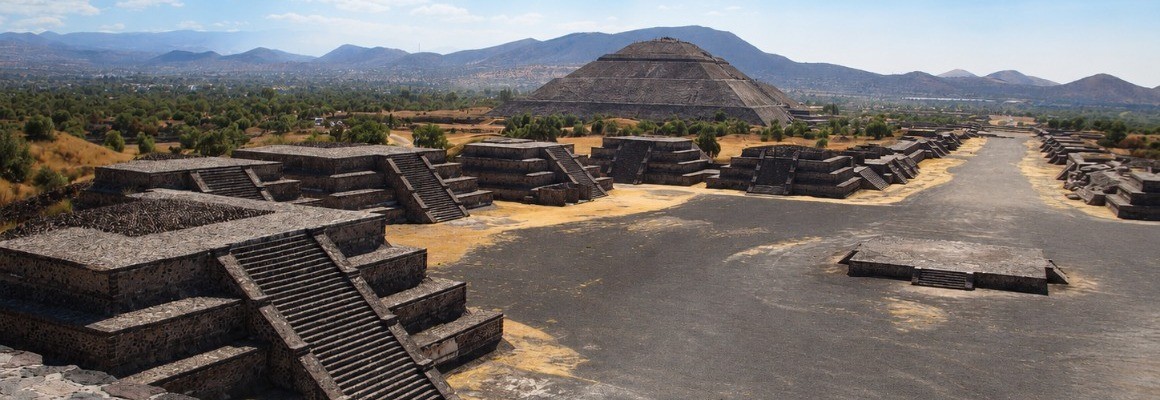
The Pyramid of the Sun stands about 65 meters tall, and each side of its base measures approximately 225 meters. These dimensions make it one of the largest pyramids of the ancient world by volume. Its shape resembles a stepped mountain made up of several levels. A temple structure originally stood at the summit, but it has not survived.
The monument lies near the central section of the Avenue of the Dead, the principal axis of Teotihuacan. Its position emphasizes the relationship between architecture, urban planning, and probably the religious ideas of the city’s inhabitants. Visitors can now see restored sections of steps and terraces, although the pyramid’s appearance has changed through damage, excavation, and restoration.
Religious and Cultural Significance
The Pyramid of the Sun’s precise purpose has not been conclusively established. Researchers believe it held major religious and public importance and may have been associated with the forces of nature, ideas about the universe, and ritual ceremonies. However, there is no firm evidence that it was dedicated exclusively to a Sun deity: the monument’s original name is unknown.
Teotihuacan flourished long before the rise of the Aztec Empire. When the Aztecs arrived in the region centuries after the ancient city’s decline, they encountered monumental ruins and incorporated them into their own mythological traditions. The name Teotihuacan is commonly translated from Nahuatl as “the place where the gods were born,” although this name belongs to a later tradition and may not reflect what the ancient city’s own inhabitants called it.
Underground Investigations
Archaeological research has revealed an artificial tunnel beneath the pyramid leading to a system of underground spaces. Excavations have also uncovered ritual objects and burials associated with the ceremonial life of the ancient city. These discoveries help scholars investigate the religious practices, symbolism, and social organization of Teotihuacan.
In the early twenty-first century, modern survey techniques made it possible to examine underground areas in greater detail without dismantling the pyramid’s massive structure. Archaeologists continue to investigate the purpose of individual spaces and their possible relationship to ceremonies. Despite extensive research, many questions about the pyramid’s construction and use remain unanswered.
Teotihuacan and the Legacy of an Ancient Civilization
The Pyramid of the Sun is part of the extensive archaeological complex of Teotihuacan, which also includes the Pyramid of the Moon, the Avenue of the Dead, temple compounds, and palace structures. The city reached its greatest power during the first centuries CE but experienced a major decline around the seventh and eighth centuries. The causes remain debated; possible factors include internal conflict, environmental changes, and political transformations.
In 1987, Teotihuacan was inscribed on the UNESCO World Heritage List. Today it is one of Mexico’s most important archaeological attractions. The Pyramid of the Sun offers a glimpse into the engineering knowledge, religious beliefs, and social organization of a civilization that created one of the most impressive urban complexes in ancient America.
Visiting the Monument
The Teotihuacan archaeological zone is open to visitors and makes a suitable day trip from Mexico City. Visitors can walk along the Avenue of the Dead, explore the Pyramid of the Moon and other monuments, and learn about archaeological discoveries in local museum displays. Before traveling, check the latest visitor regulations, as access to particular areas and permission to climb pyramids may change.
The Pyramid of the Sun is impressive not only because of its size but also because of its close connection to the history of an entire city. Its massive steps recall a civilization that created a sophisticated architectural complex long before Europeans arrived in the Americas.
Gallery