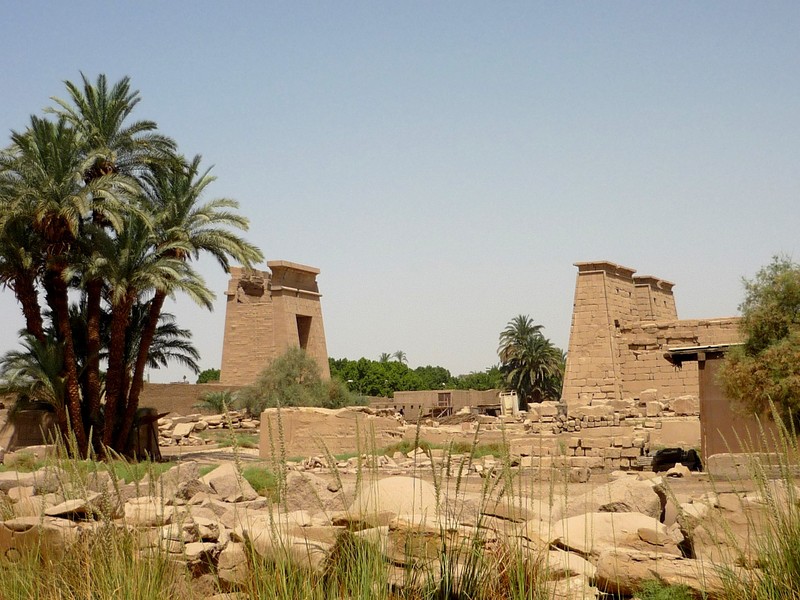
The Temple of Khonsu stands in the southwestern part of the Karnak temple complex in modern Luxor. It was dedicated to Khonsu, the moon god and son of Amun-Ra and the goddess Mut. The monument is one of the better-preserved examples of New Kingdom religious architecture and offers a clear impression of how an ancient Egyptian temple was organised.
History of construction
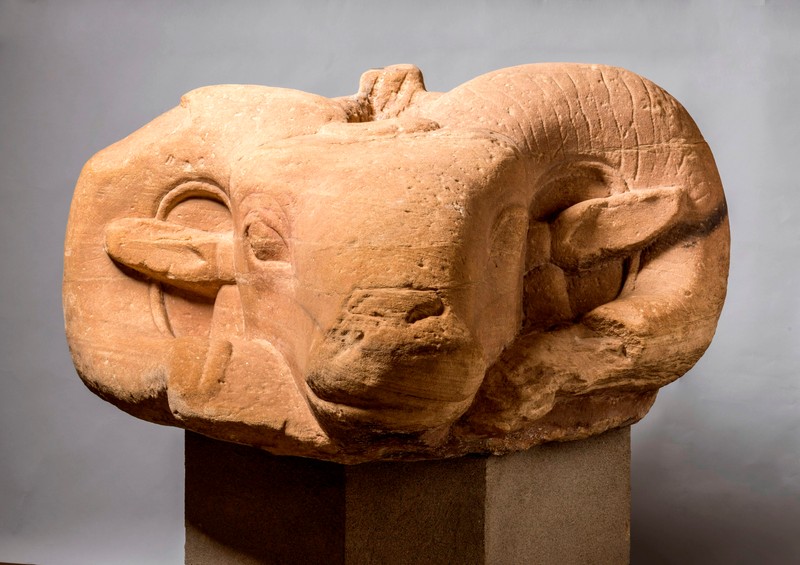
Construction began under Ramesses III of the 20th Dynasty, around the 12th century BCE. The temple occupied the site of an earlier sanctuary, and blocks from older buildings were reused in its construction. Later rulers continued to modify and decorate the complex, including Nectanebo II and Ptolemaic kings. Its architecture and inscriptions therefore reflect several centuries of religious and building activity.
The god Khonsu
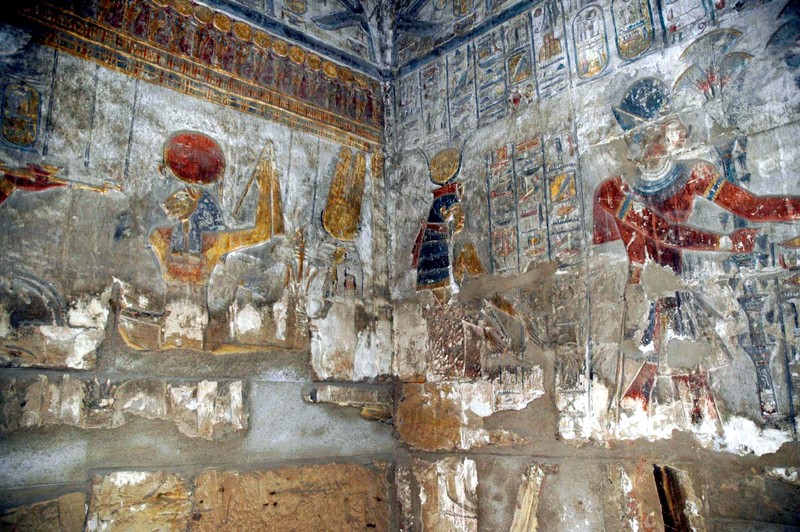
Khonsu was an important deity in the religious traditions of Thebes. Together with Amun-Ra and Mut, he formed the Theban Triad. He was associated with the Moon, the passage of time, renewal and protection. Khonsu was often represented as a youthful figure with a side-lock of hair or with lunar symbols on his head. He was also regarded in some traditions as a healer and protector.
Pylon, courtyard and columns
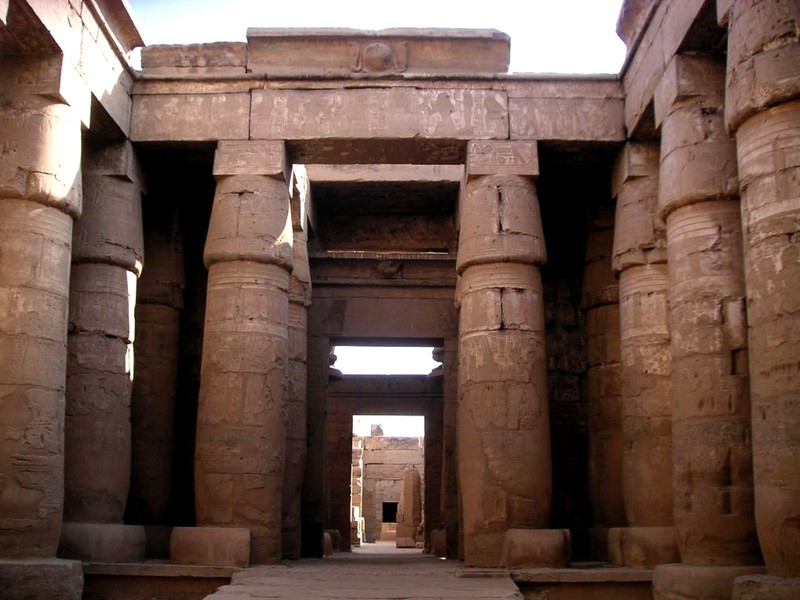
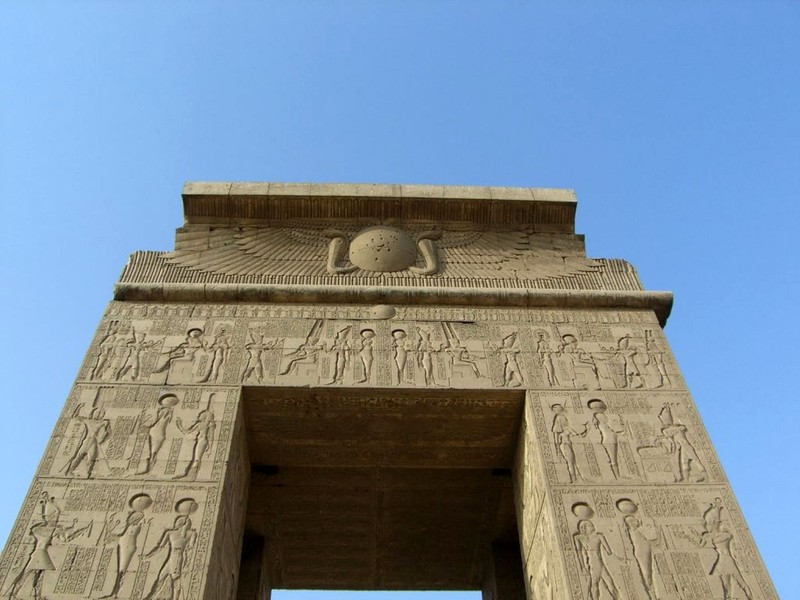
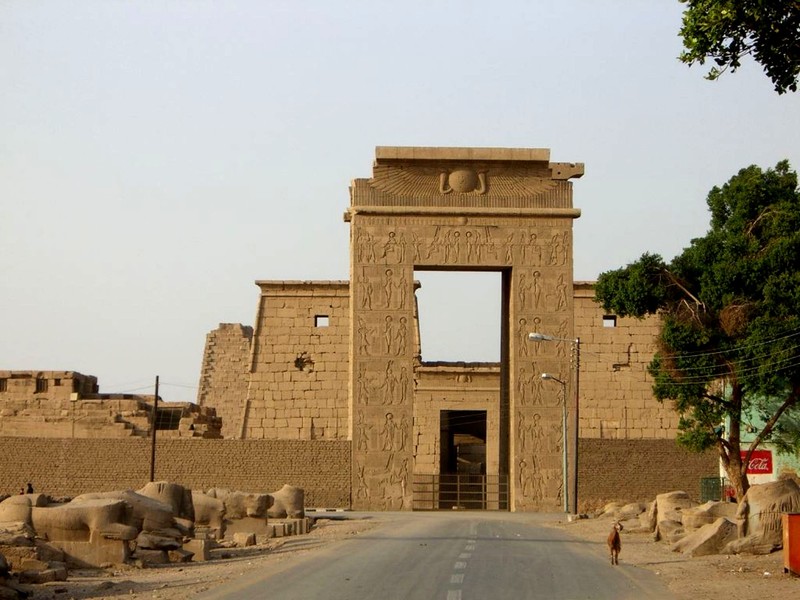
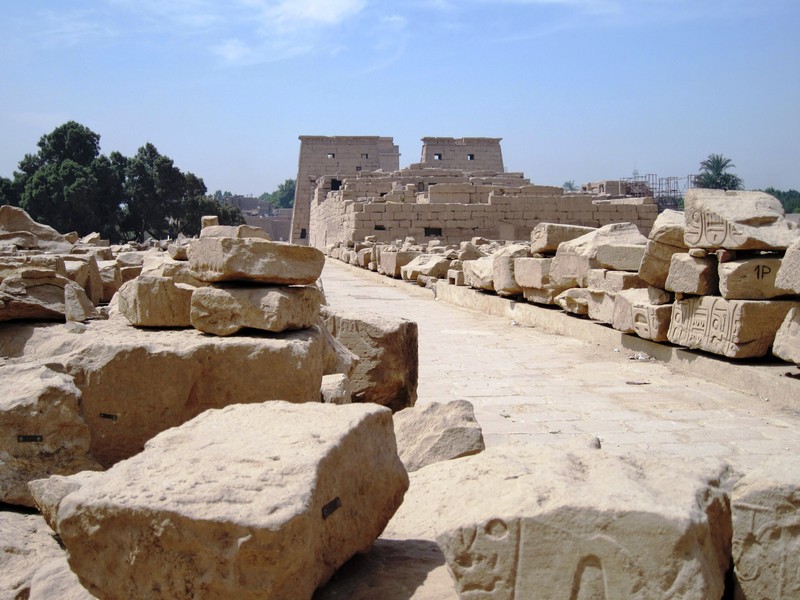
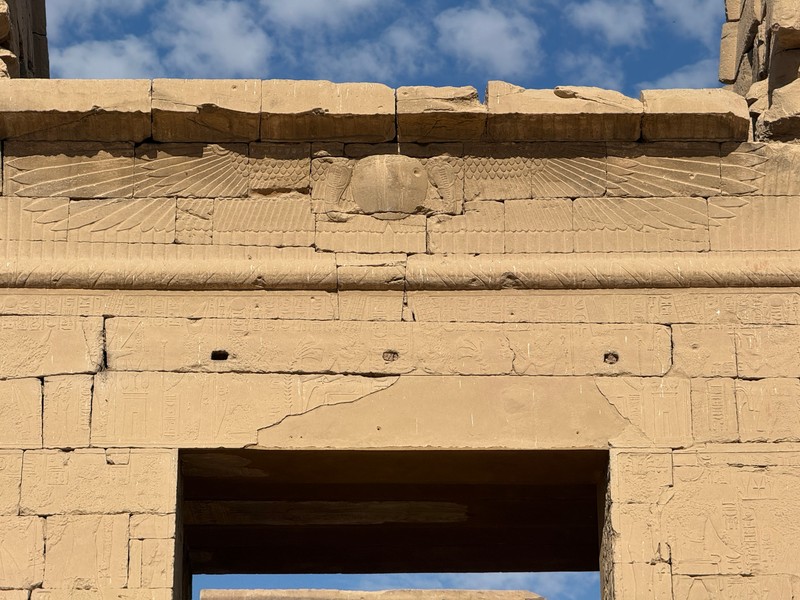
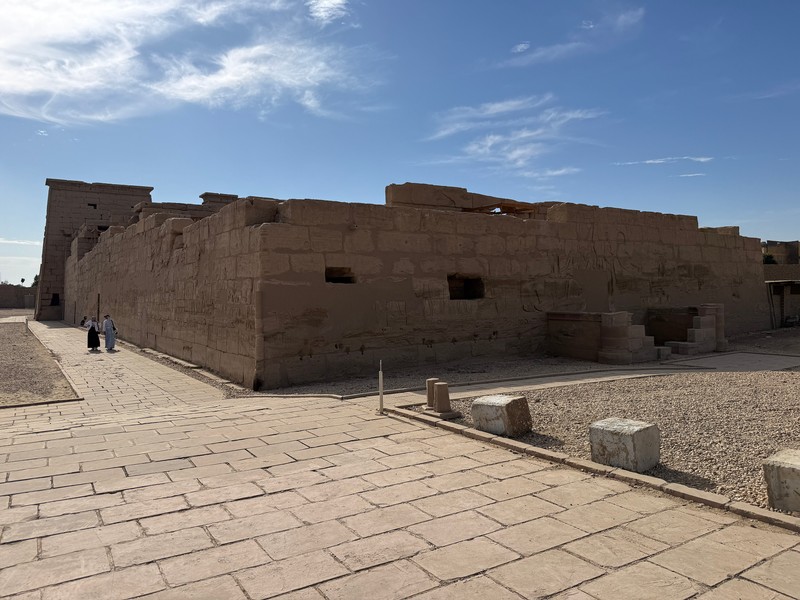
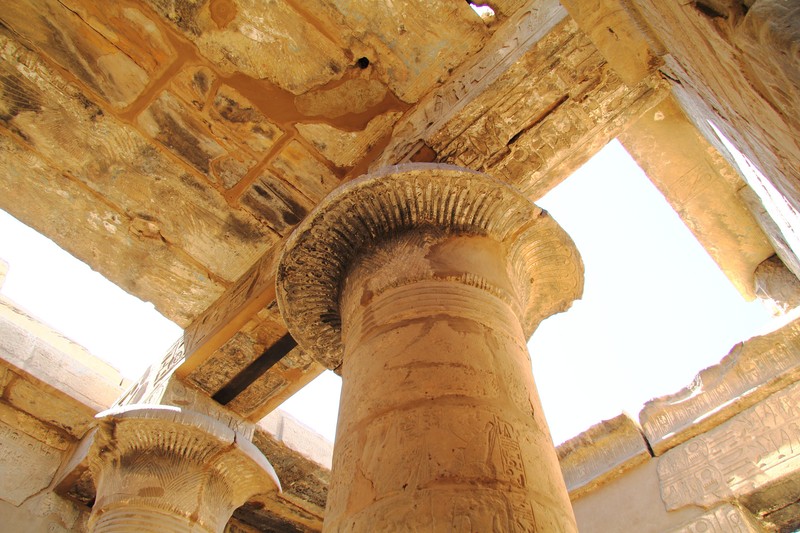
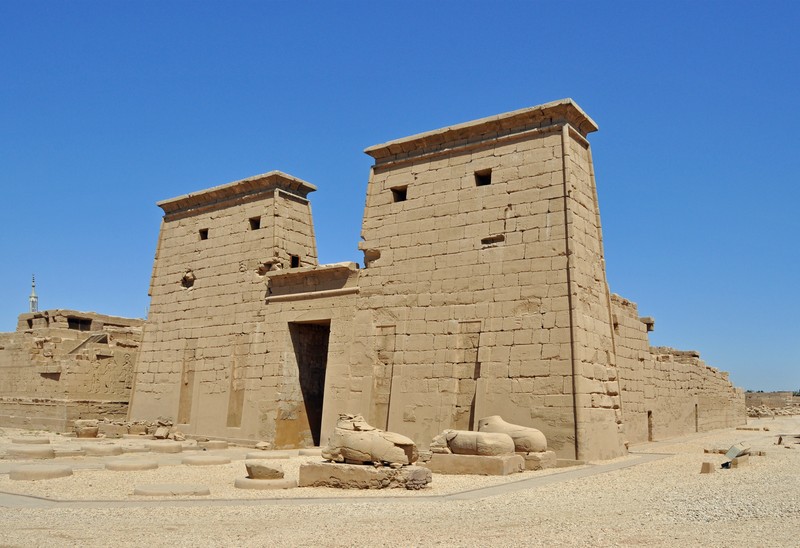
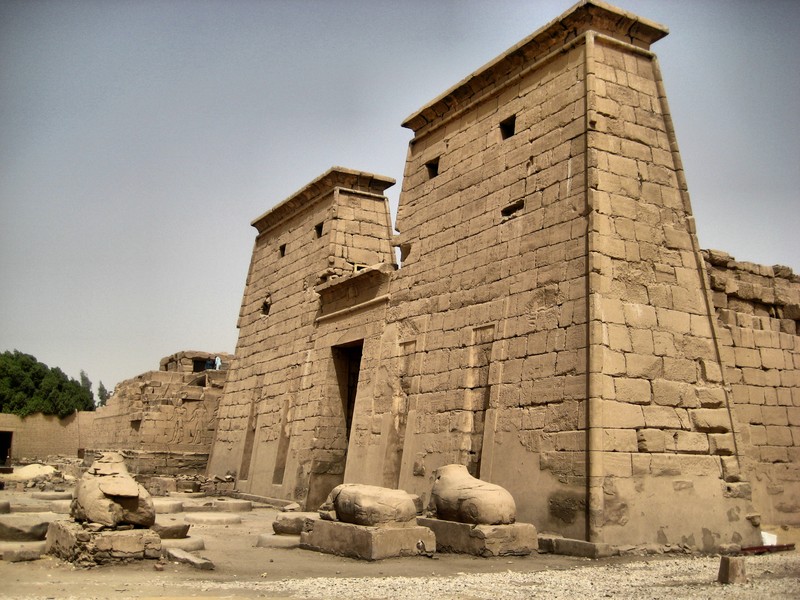
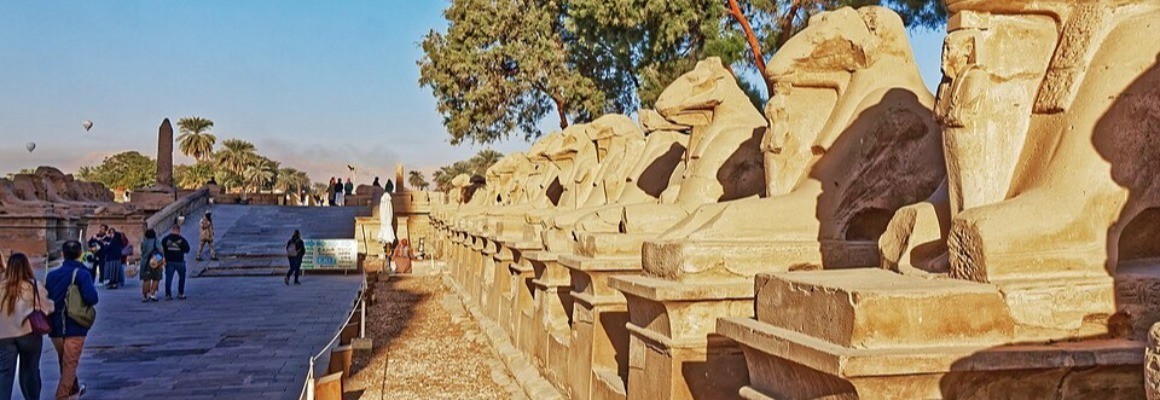
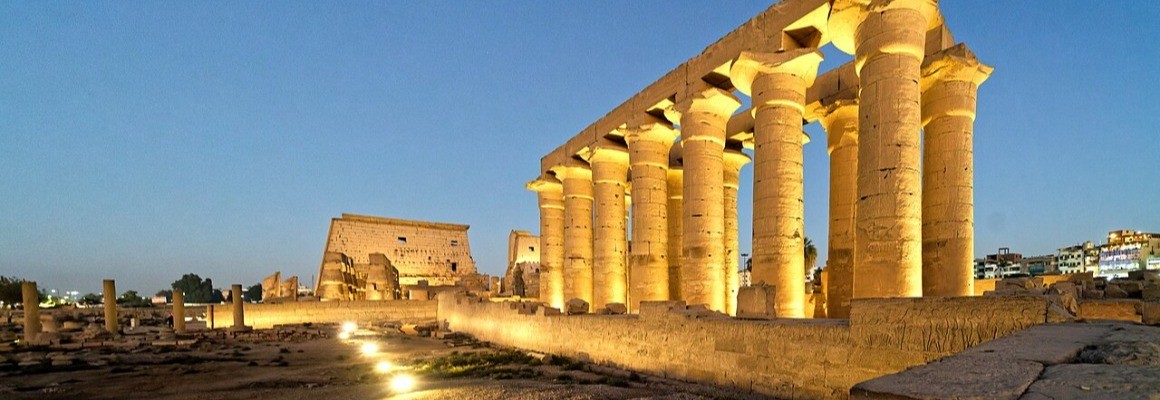
The entrance is marked by a monumental pylon, which symbolically separated the outside world from the sacred precinct. A processional route in front of the temple was associated with religious festivals and the movement of divine images or sacred boats. Beyond the entrance lies an open courtyard bordered by columns. Their papyrus-bud capitals evoke plant life, renewal and the idea of creation.
Hypostyle hall and barque shrine
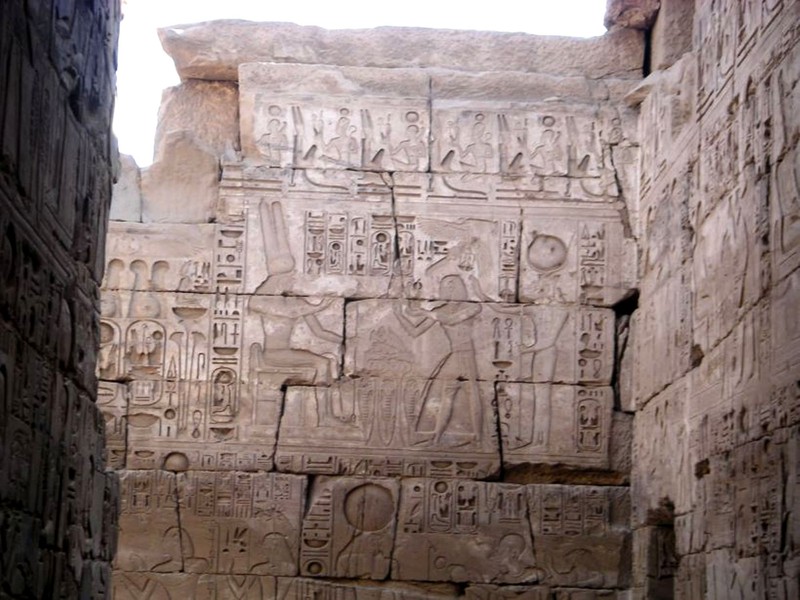
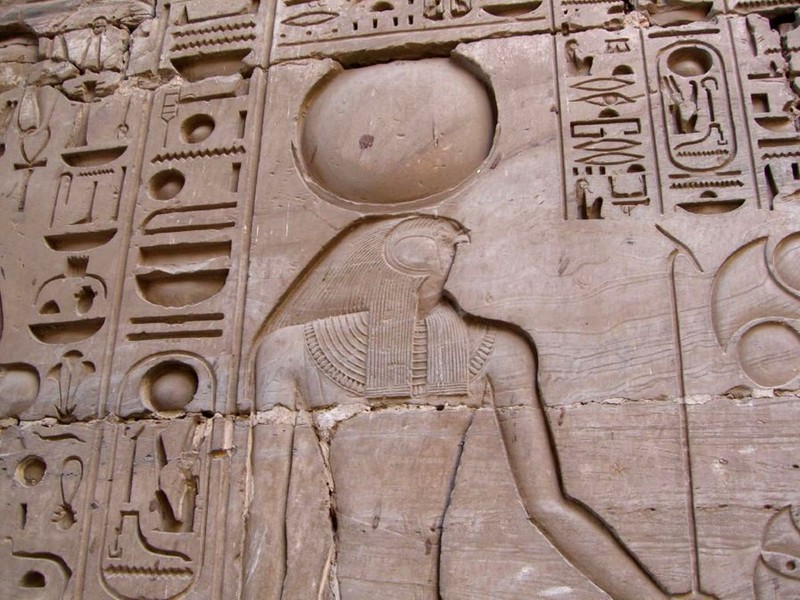
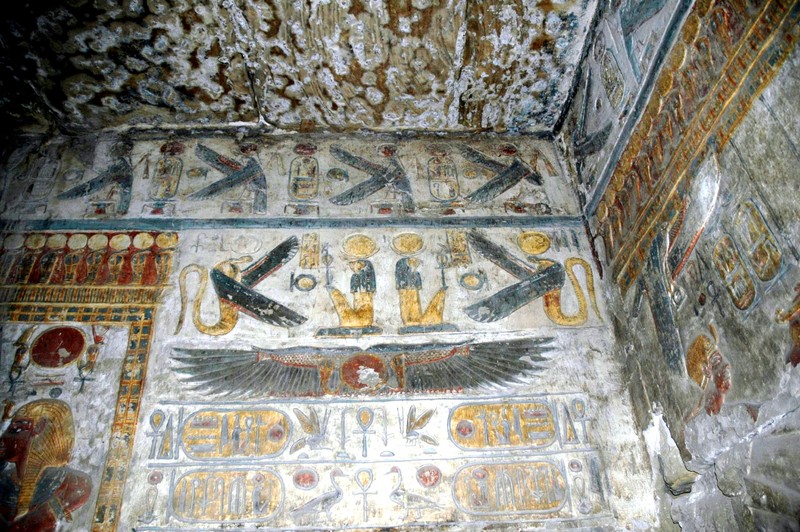
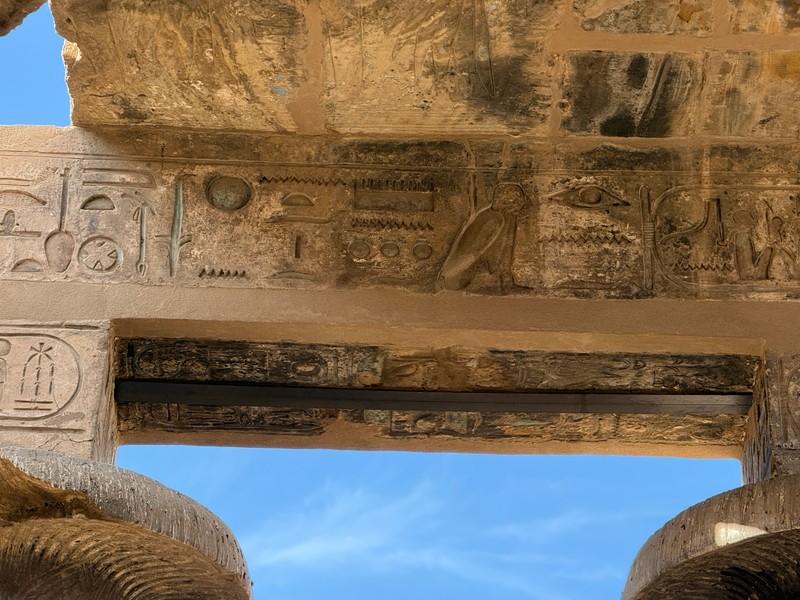
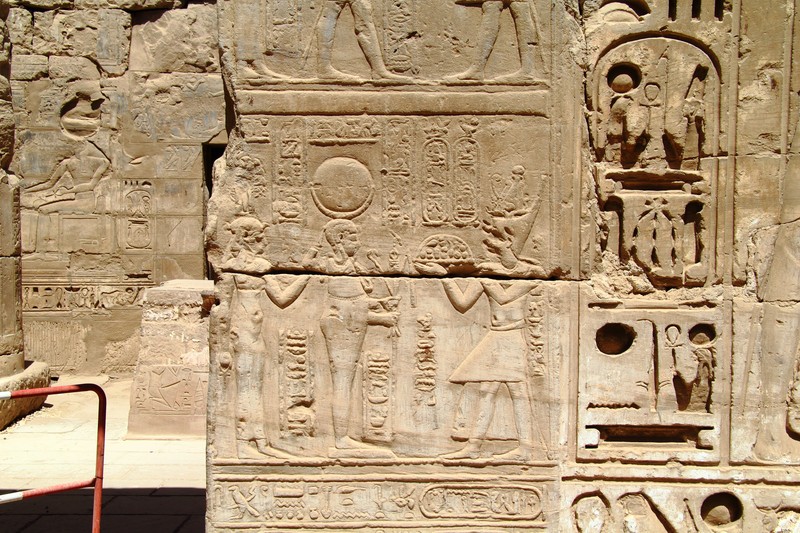
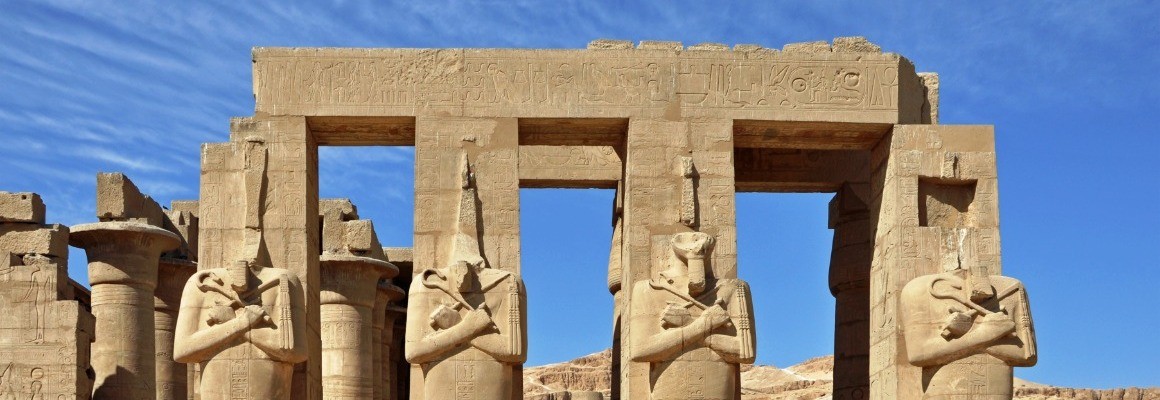
The hypostyle hall, supported by rows of columns, leads towards the temple’s inner rooms. Its walls and architectural surfaces carry reliefs and hieroglyphic inscriptions depicting ritual scenes. Deeper inside stood the sanctuary associated with the sacred barque of the god. Such boats were used in ceremonial processions, when a divine image was symbolically carried beyond its usual sanctuary.
Reliefs and conservation
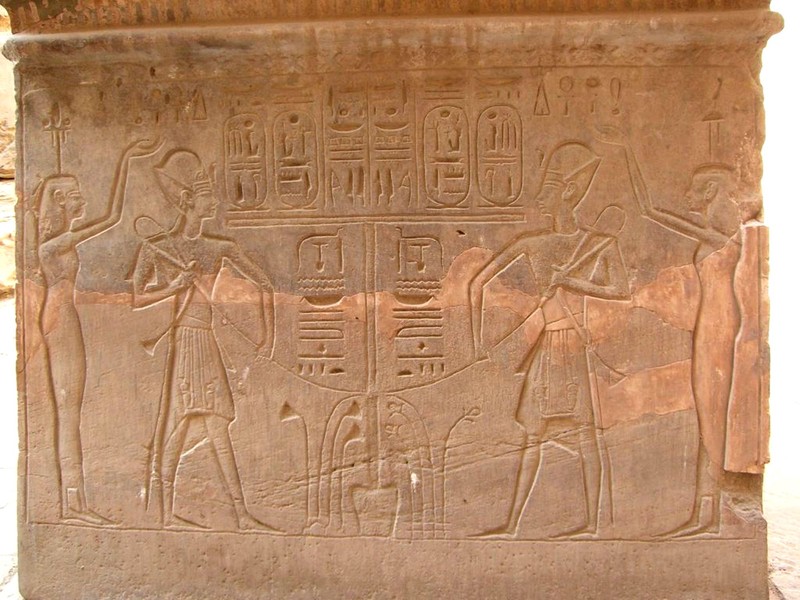
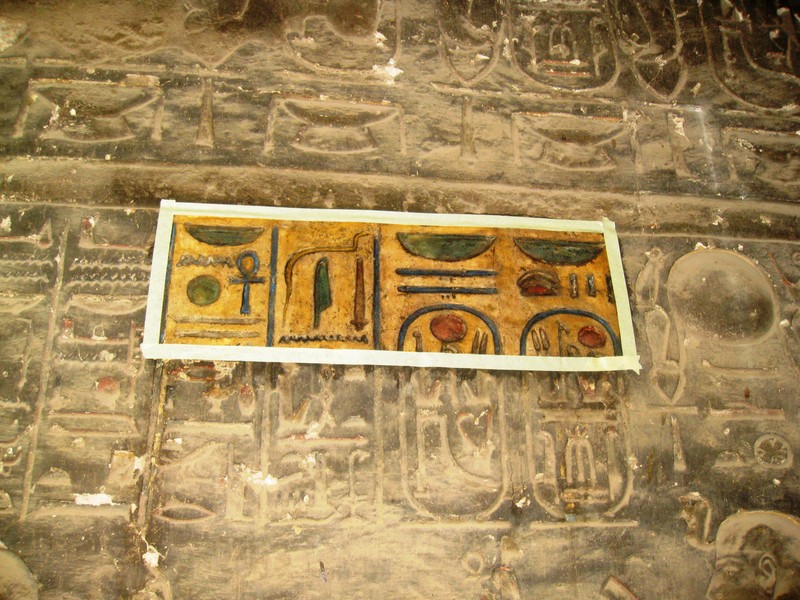
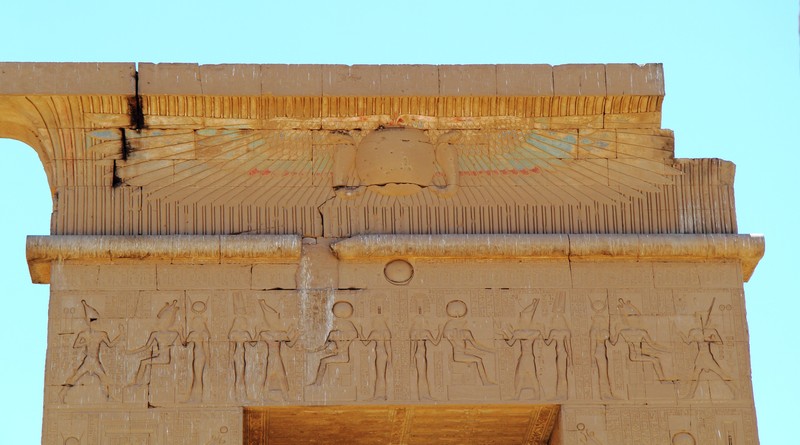
The temple’s decoration shows kings, deities and religious offerings. Some reliefs in the inner chapels retain traces of their original colours. Conservation and documentation projects in the 21st century, involving Egyptian specialists and the American Research Center in Egypt, helped stabilise the structure and protect its carved and painted surfaces.
Visiting the temple
The Temple of Khonsu lies within the Karnak complex on the east bank of the Nile in Luxor. It can be included in a visit alongside the Great Temple of Amun-Ra and other Karnak monuments. Check current access rules before travelling, as some interior spaces may have restrictions to protect the decoration. The temple is especially valuable for its relatively complete layout, reliefs and evidence of the long religious history of Thebes.
Gallery