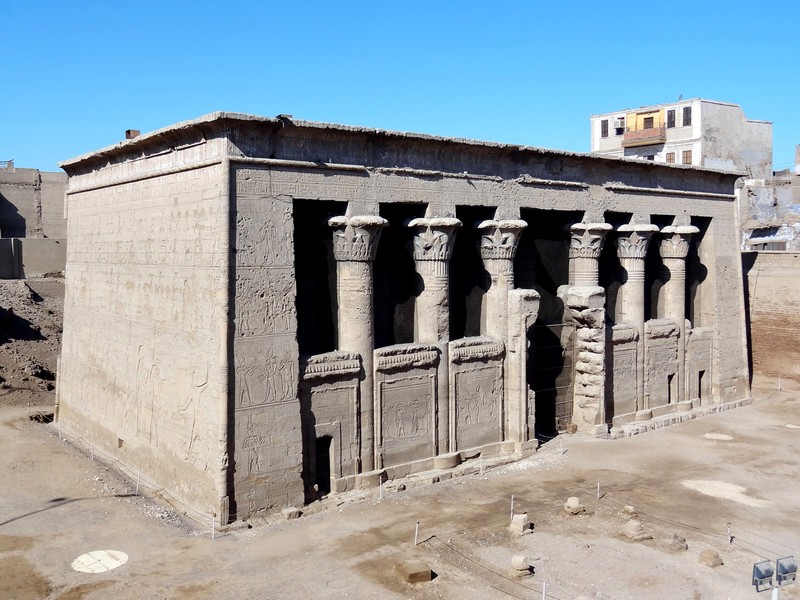
The Temple of Esna is one of the most remarkable monuments of ancient Egyptian architecture from the Greco-Roman period. It stands in the town of Esna on the west bank of the Nile, about 50 km south of Luxor. The sanctuary was dedicated to Khnum, a ram-headed god associated with the creation of living beings. The temple is famous for its monumental columned hall, elaborate hieroglyphic inscriptions and astronomical decorations on the ceiling. Restoration work has revealed the original colours of reliefs that had been concealed beneath centuries of soot and dust.
History of the Temple of Esna
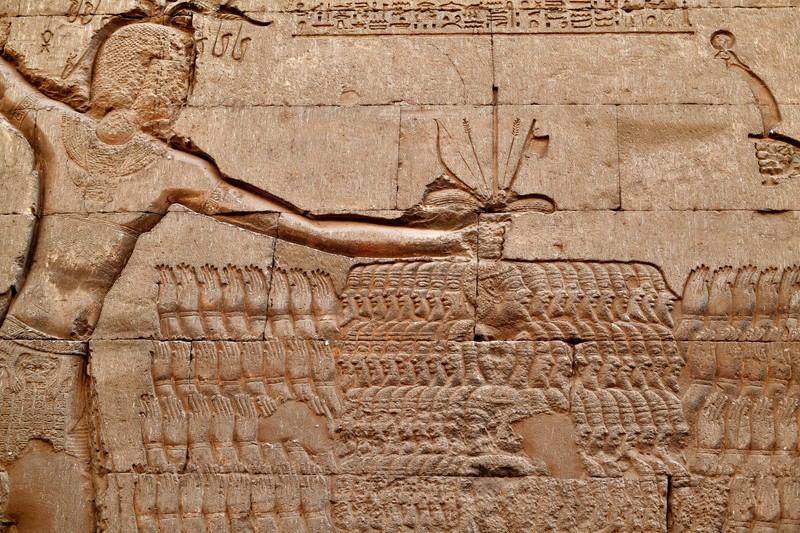
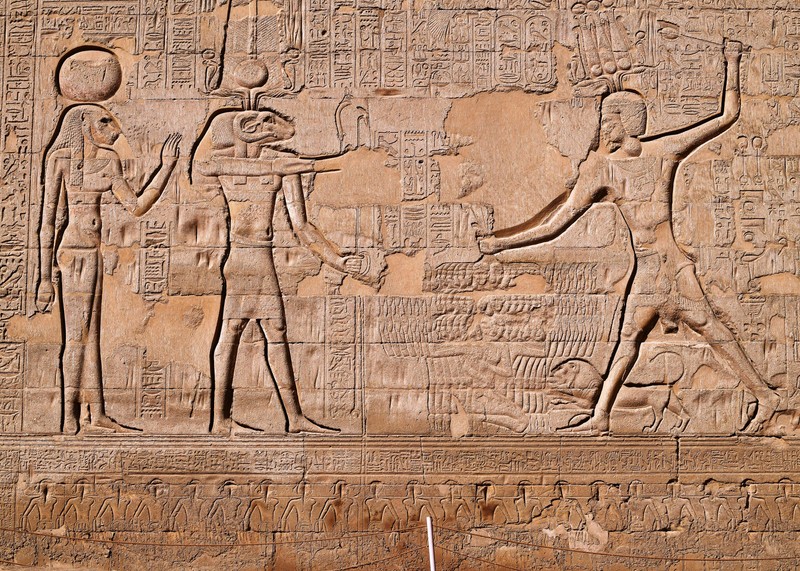
The sacred site has roots in earlier periods, but the surviving part of the temple dates mainly from the Greco-Roman era. Construction and decoration continued over several centuries. Most of the preserved columned hall was created during Roman rule, and its decoration continued into the third century CE. The inscriptions include cartouches of Roman emperors depicted in the traditional role of Egyptian rulers paying homage to local deities.
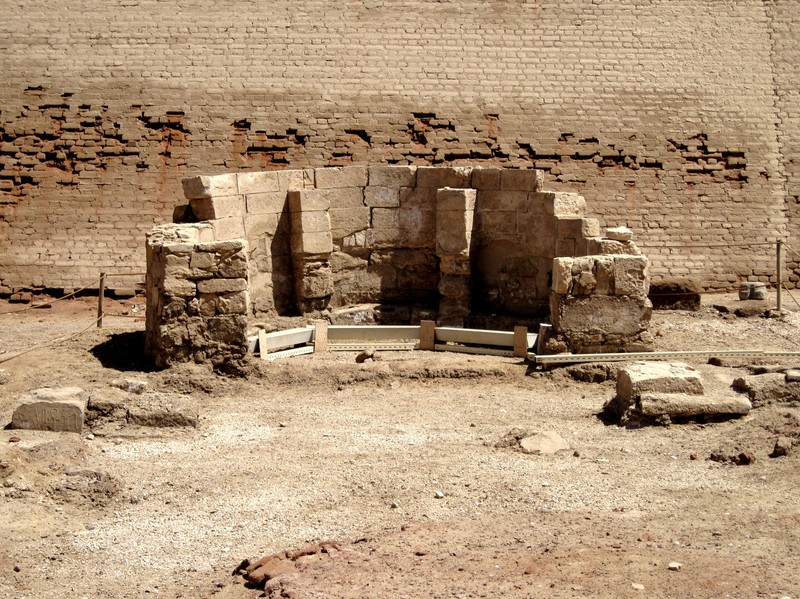
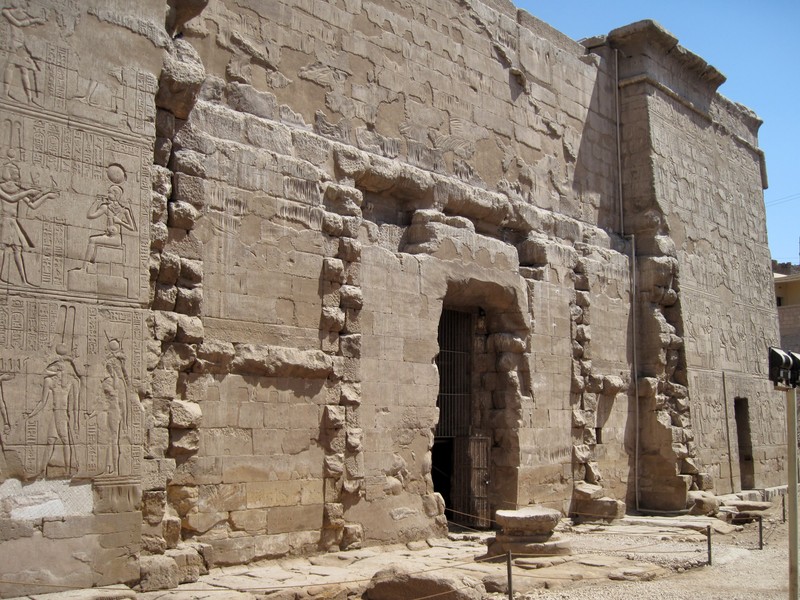
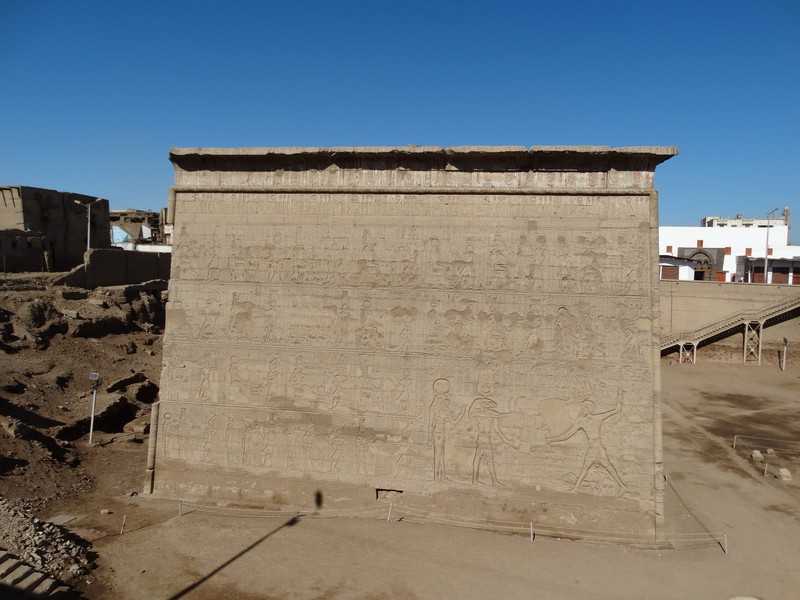
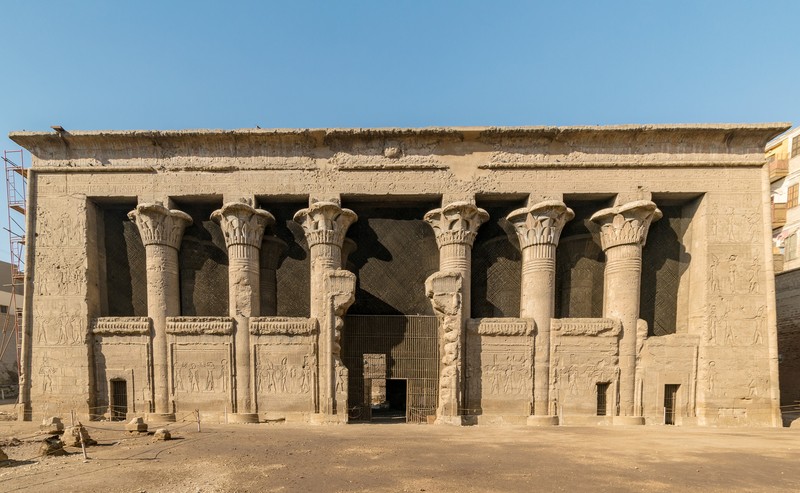
In antiquity, Esna was known by its Greek name, Latopolis, and served as an important religious centre associated with the cult of Khnum. During the nineteenth century, the temple became surrounded by urban buildings and its interior was used to store cotton. Much of the original complex was eventually lost. Today, visitors mainly see the surviving front columned hall, the most impressive remnant of what was once a larger sanctuary.
Architecture and the columned hall
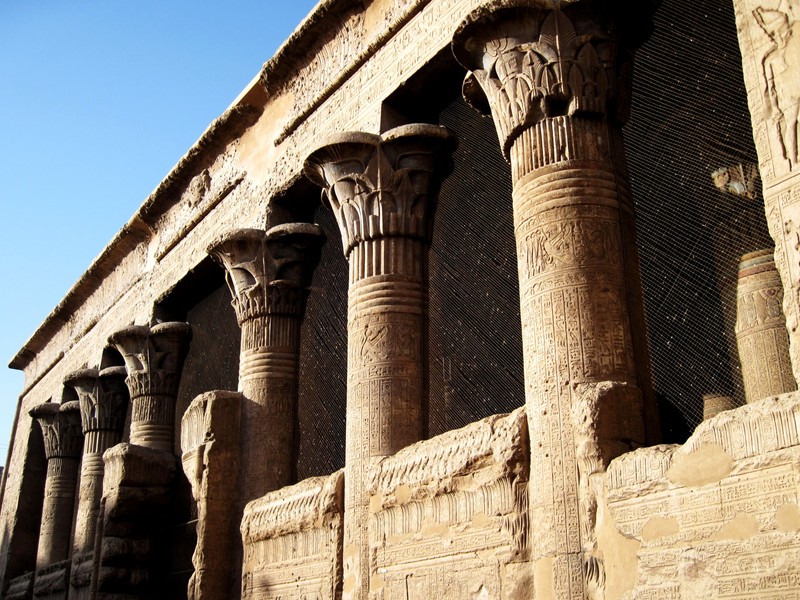
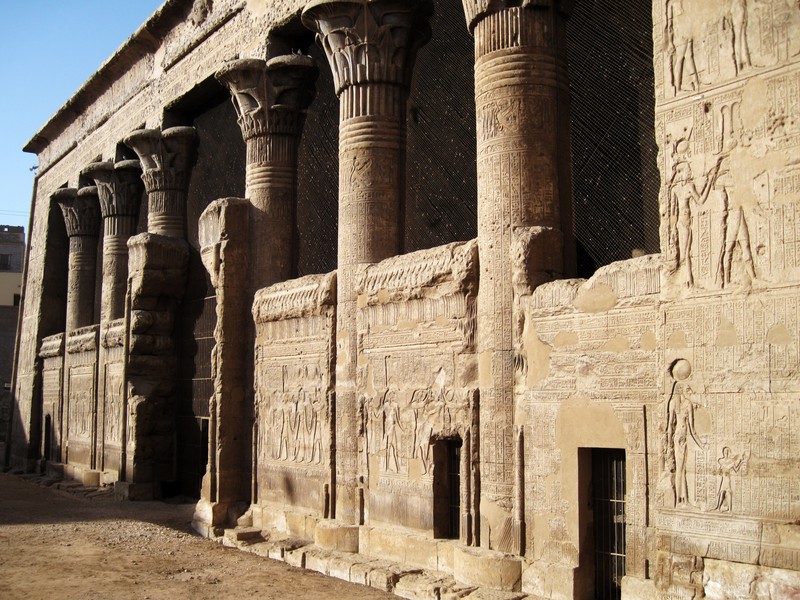
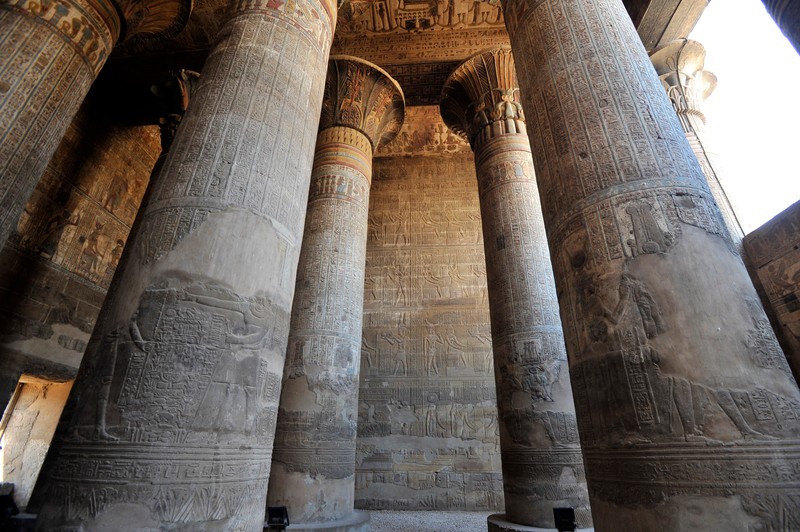
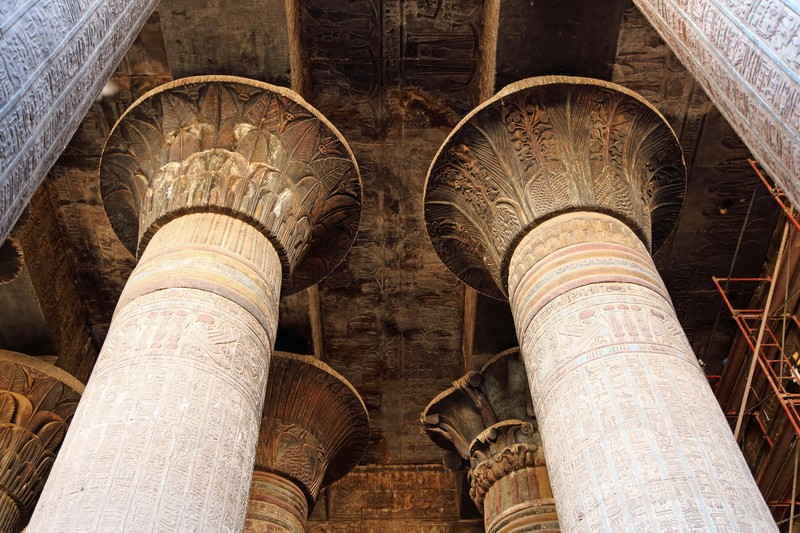
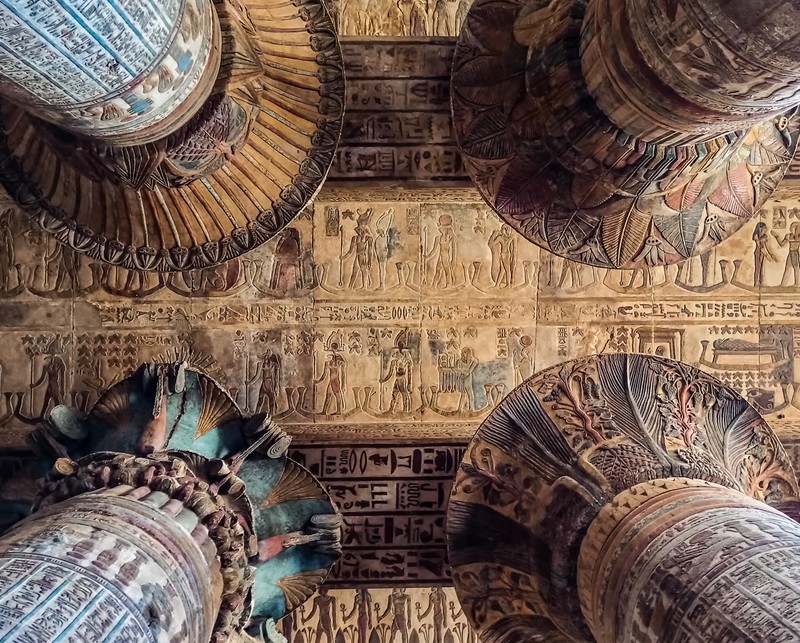
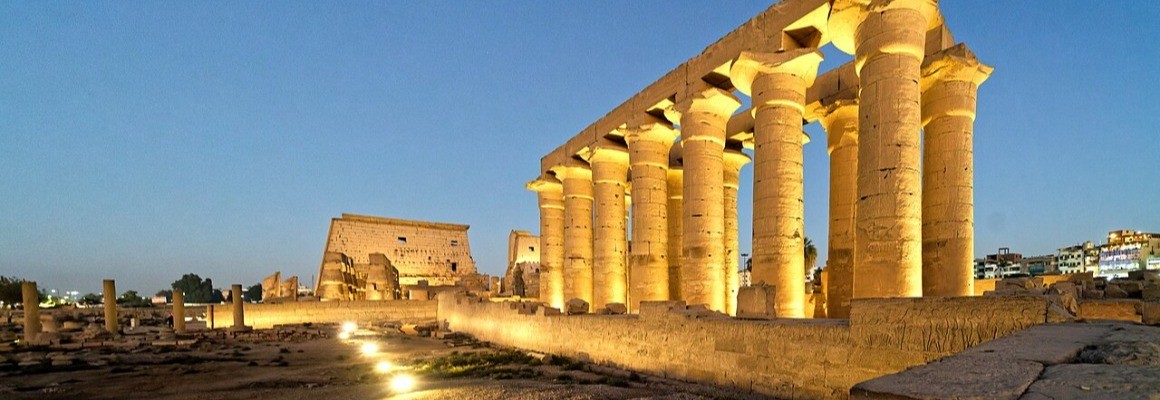
The main attraction is a spacious hypostyle hall with a stone roof supported by 24 columns arranged in six rows of four. Their capitals feature botanical designs resembling lotus leaves and other plants of the Nile Valley. Although the surviving structure was built and decorated during the Roman period, it retains traditional Egyptian temple features: massive stone supports, offering scenes in relief and hieroglyphic texts covering the walls and columns.
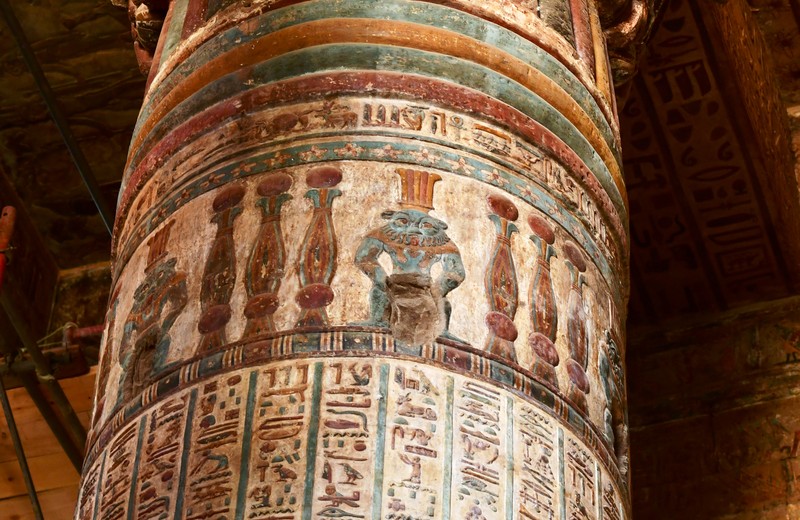
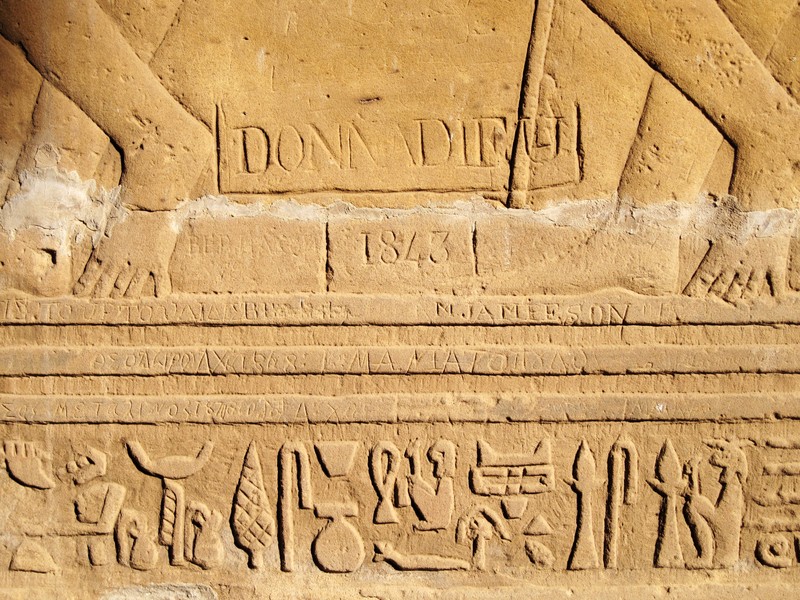
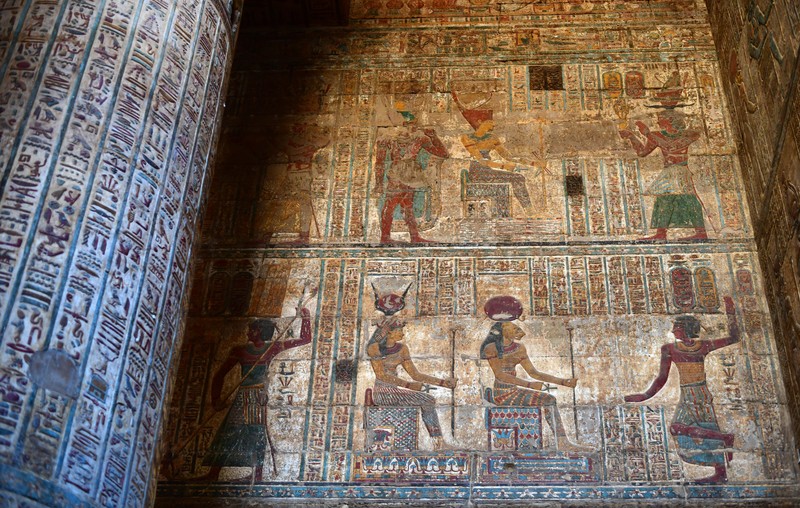
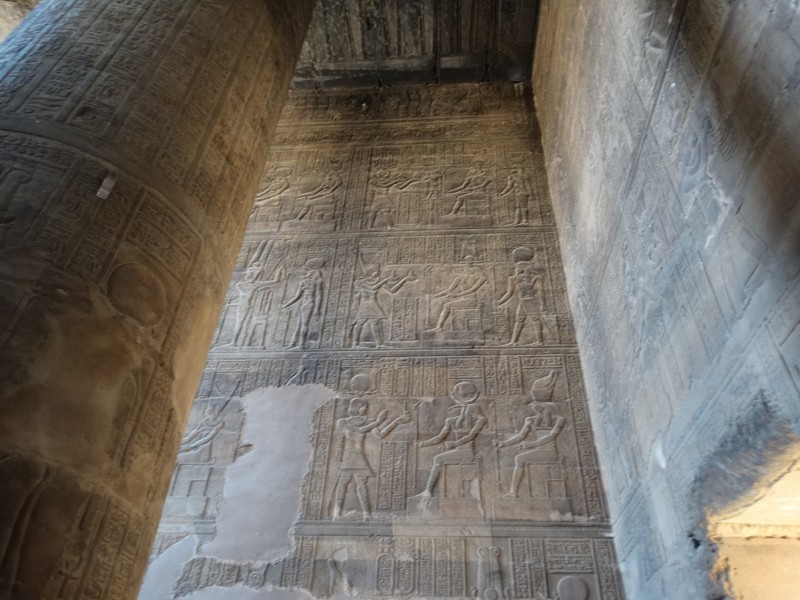
The columns are rich in detail. Their surfaces display gods, royal cartouches, ritual scenes and lengthy inscriptions. These works reflect local religious beliefs, temple ceremonies and the theology of late ancient Egypt. Some texts use unusual symbolic techniques, including hieroglyphic compositions featuring animal figures. The temple is therefore valuable not only to travellers but also to researchers studying Egyptian religion and writing.
Khnum and the other deities
The principal deity of the sanctuary was Khnum, a ram-headed god whom the ancient Egyptians regarded as a creator of living beings. According to mythological traditions, he fashioned people on a potter’s wheel before they entered the world. His image was associated with fertility, vitality and human origins, and his cult played a central role in Esna’s religious life.
The temple also honoured the goddesses Menhit and Nebtu, the deity Heka and the goddess Neith. Neith was associated with primordial creation and ancient ideas about the origins of the universe. The depictions of these deities help explain how local traditions survived and evolved under Greek dynasties and Roman emperors.
Astronomical decorations on the ceiling
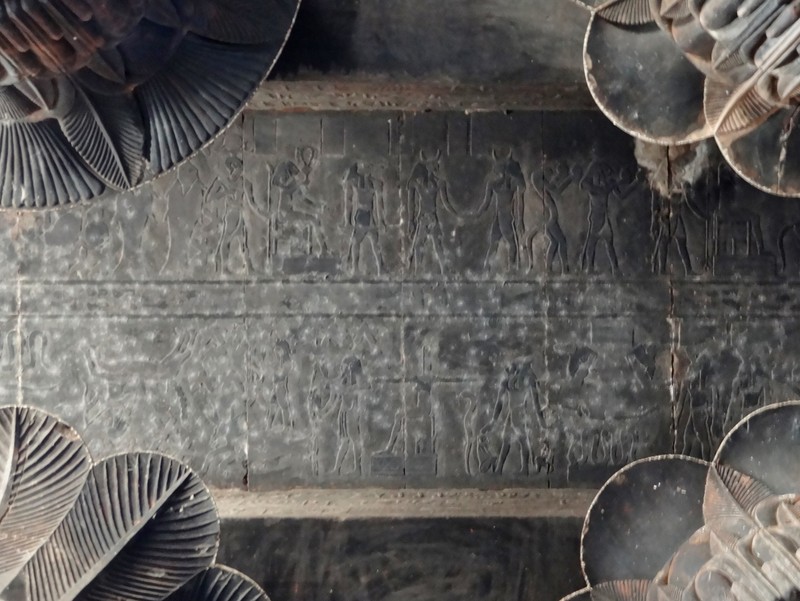
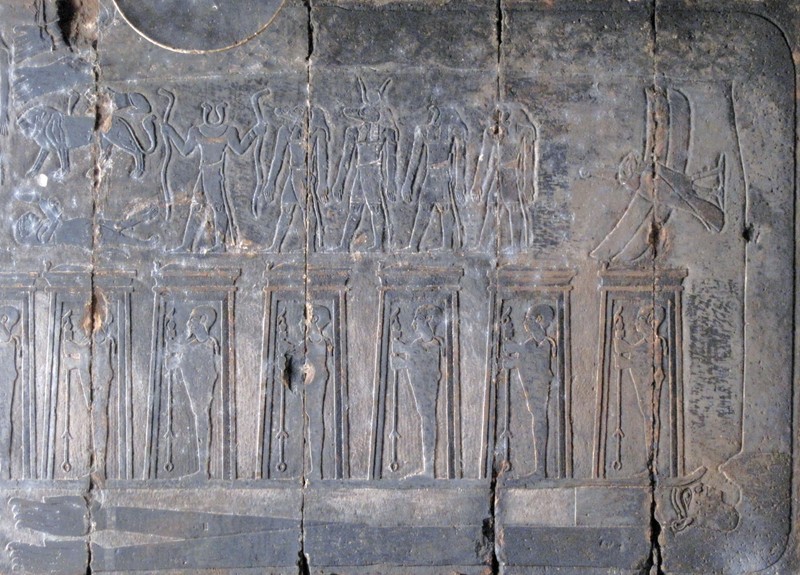
One of the temple’s most distinctive features is the decorated ceiling of its columned hall. It depicts celestial deities, constellations, planets and other elements of the ancient Egyptian view of the cosmos. A notable feature is the zodiacal composition known as the Latopolitan Zodiac. Similar images survive in only a small number of ancient Egyptian temples and offer insight into the relationship between religious beliefs and the astronomical and astrological knowledge of the Greco-Roman world.
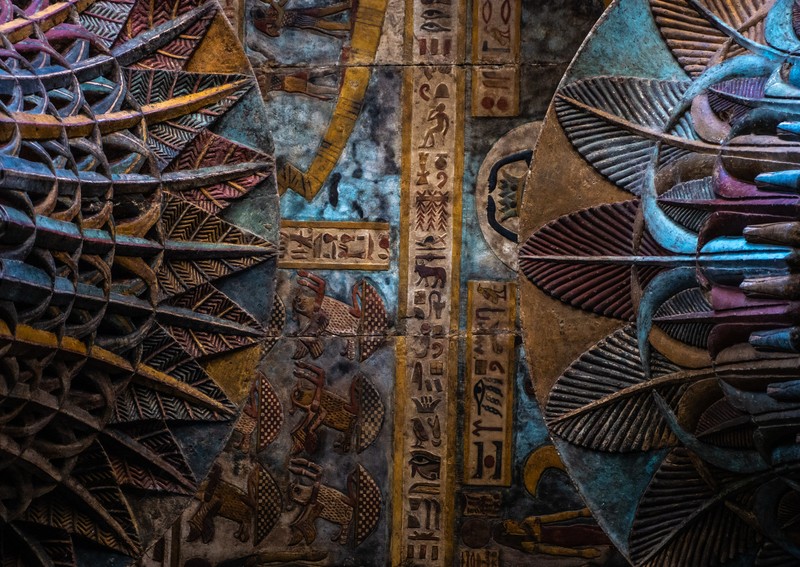
The reliefs combine mythological scenes with symbols of celestial cycles. They express the Egyptian understanding of the relationship between earthly life, the gods and the ordered movement of heavenly bodies. After the ceiling was cleaned, specialists identified additional details, original colour combinations and features that had long remained hidden beneath accumulated grime.
Restoration and the return of ancient colours
Over many centuries, soot, dust and other deposits accumulated on the temple surfaces. Moisture, salt deposits, bird droppings and insect nests also threatened the reliefs and inscriptions. In 2018, a joint Egyptian-German project began documenting, cleaning and conserving the monument, involving the University of Tübingen and Egyptian antiquities authorities.
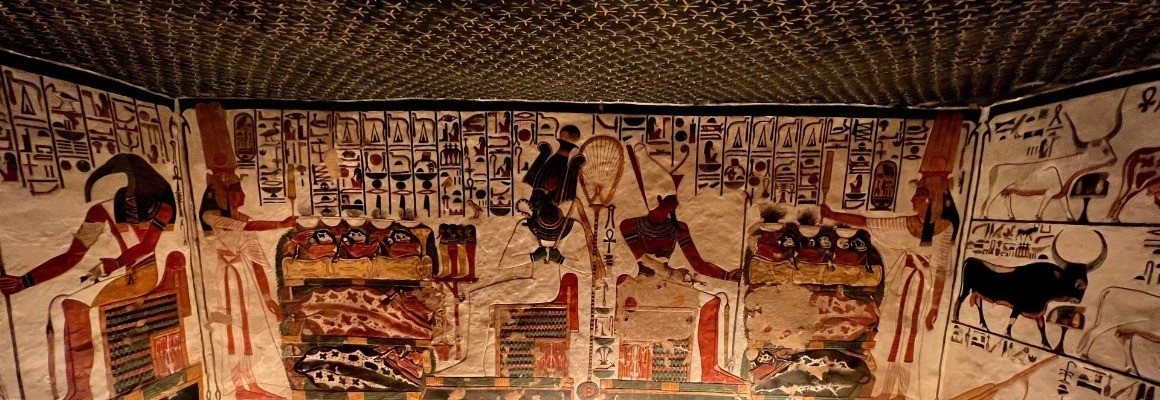
Conservators carefully removed deposits from the stone, revealing colourful images preserved beneath the layers of grime. Special attention was given to the ceiling compositions and column decorations. The work has brought the carefully organised colours of ancient Egyptian art back into view and improved opportunities for scholarly study. In 2025, Egyptian official sources reported further conservation work and the discovery of additional decorative details.
Visiting the Temple of Esna
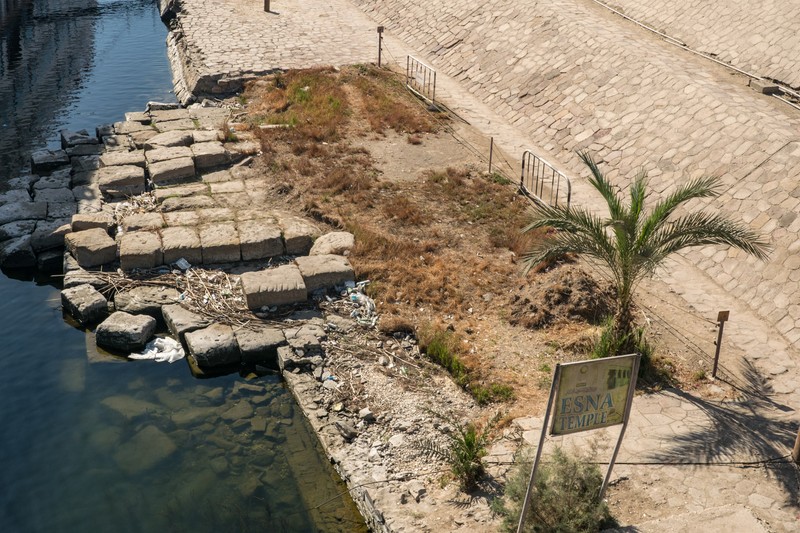
The temple is located in central Esna, on the west bank of the Nile, approximately 45–50 km south of Luxor. It can be included in a trip through the monuments of Upper Egypt alongside the temples of Edfu and Kom Ombo. Visitors can travel from Luxor by car or as part of an organised excursion. Before travelling, check the current opening hours and visitor regulations through Egypt’s official tourism resources, as schedules and access arrangements can change.
During a visit, look beyond the overall appearance of the columned hall and examine the capitals, hieroglyphic inscriptions and ceiling reliefs. Esna is less widely known than Karnak or Luxor Temple, but its surviving painted decoration and unusual texts make it an especially valuable place to discover the art and beliefs of ancient Egypt.
Gallery