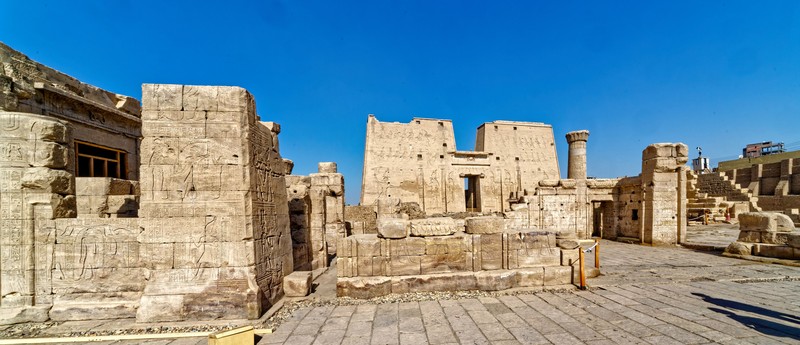
The Temple of Edfu is one of the best-preserved temples of ancient Egypt. Located on the west bank of the Nile between Luxor and Aswan, it is dedicated to Horus, the falcon god associated with kingship and protection. Buried under sand for centuries, the complex has preserved its monumental pylons, columned halls, sanctuary and extensive reliefs.
History of Construction
Construction began on 23 August 237 BCE under Ptolemy III Euergetes I and continued for about 180 years, reaching completion in 57 BCE during the reign of Ptolemy XII. Several generations of rulers contributed to the building and its decoration, leaving inscriptions and royal images from different periods.
The sacred site at Edfu was older than the surviving temple, which replaced earlier religious structures. Although the Ptolemaic dynasty was of Greek origin, the temple followed traditional Egyptian architectural and religious conventions. Its purpose was to honour Horus and reinforce the sacred nature of kingship.
The Monumental Entrance and Statues of Horus
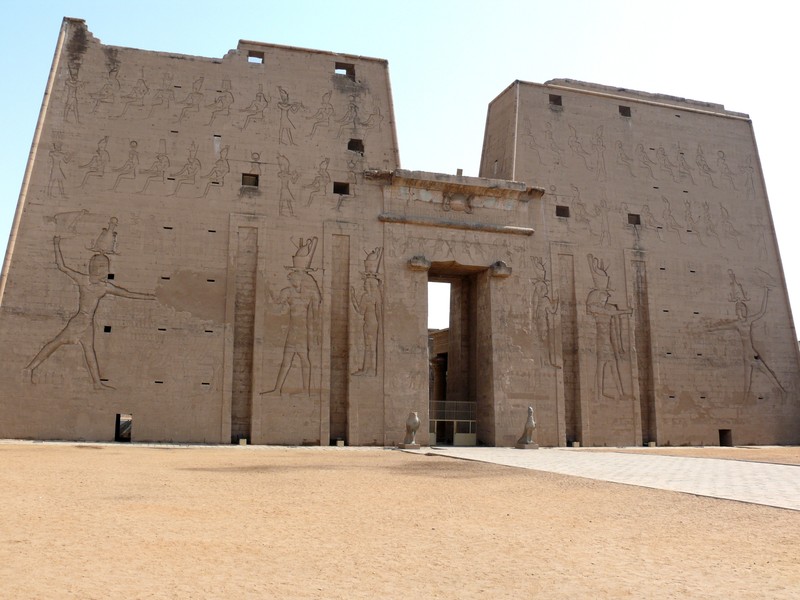
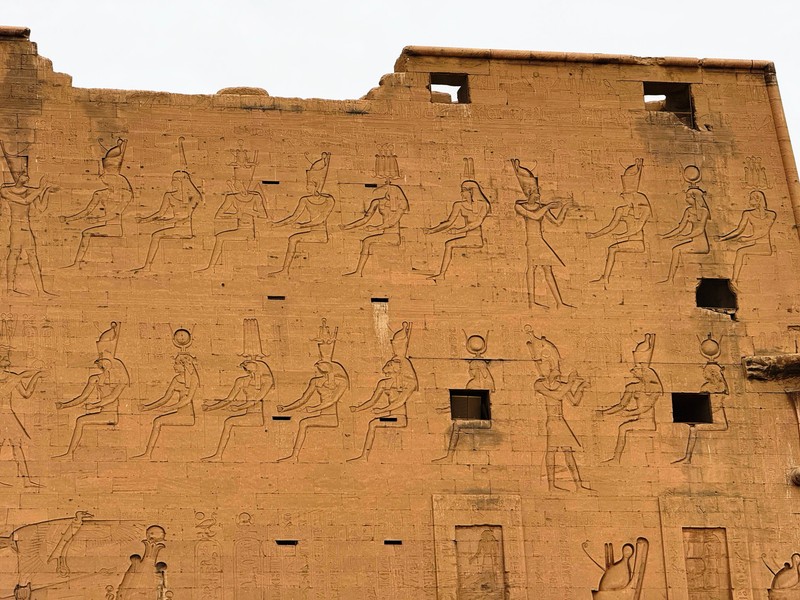
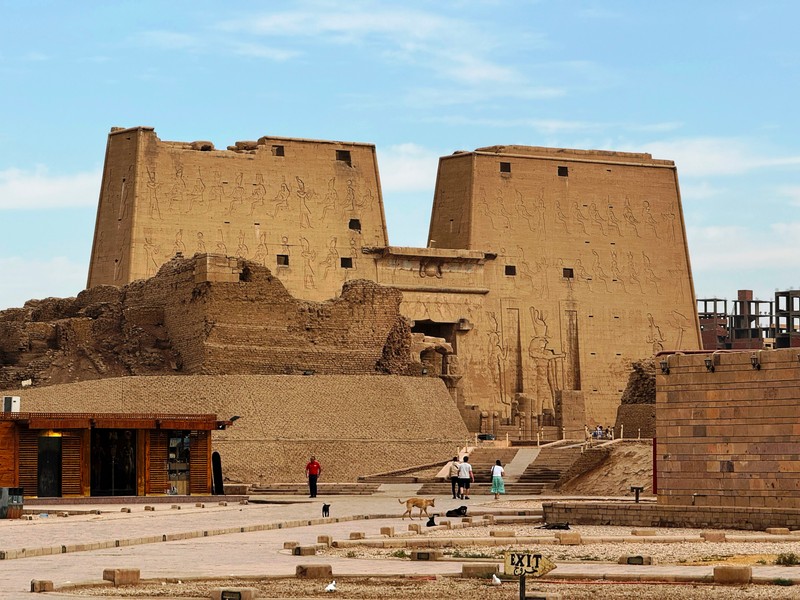
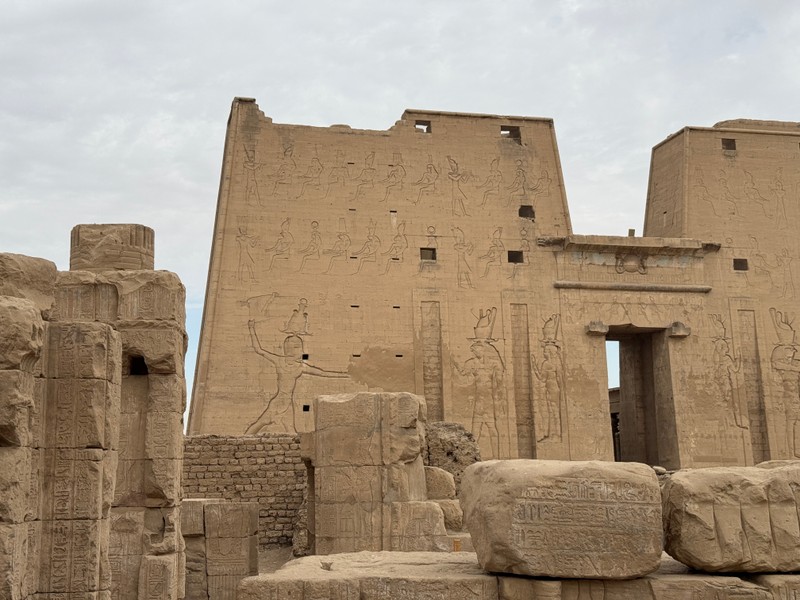
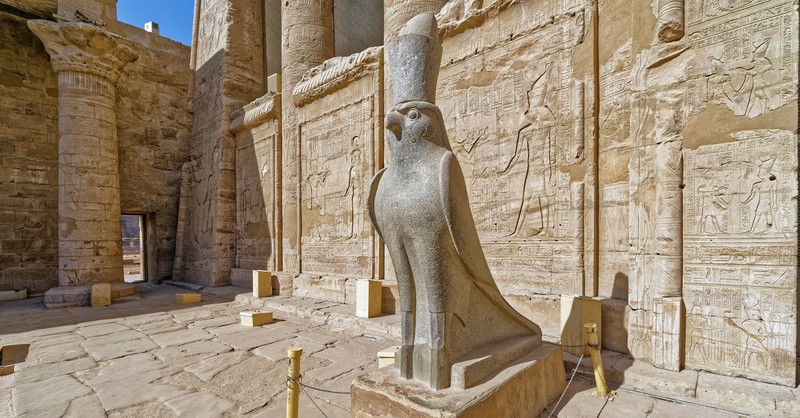
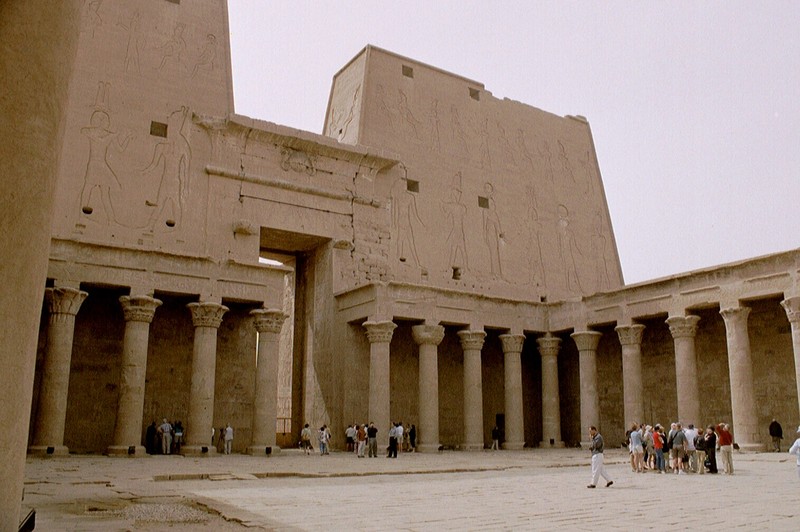
The main entrance is formed by two massive pylons decorated with reliefs showing Ptolemy XII before the gods and defeating his enemies. These scenes symbolized the restoration of order and the triumph over chaos. Two large granite statues of Horus in the form of a falcon stand in front of the entrance. The god wears the Double Crown of Upper and Lower Egypt.
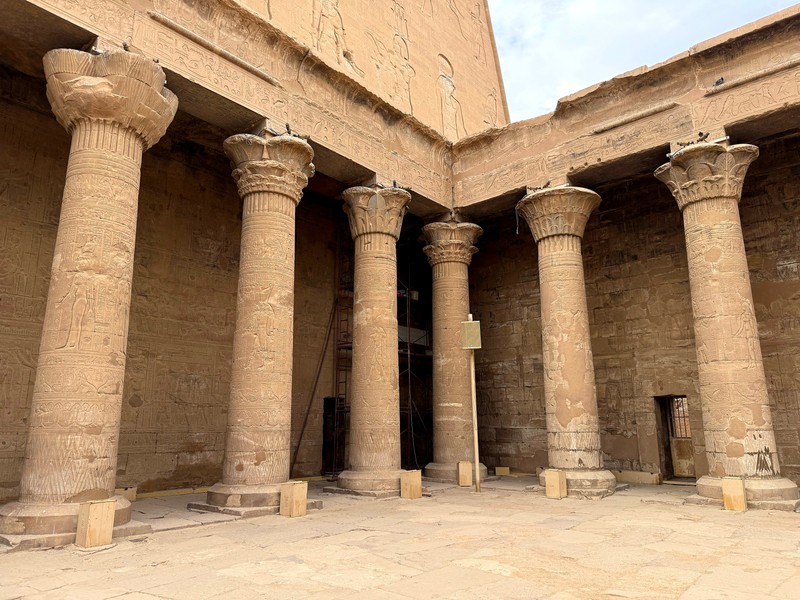
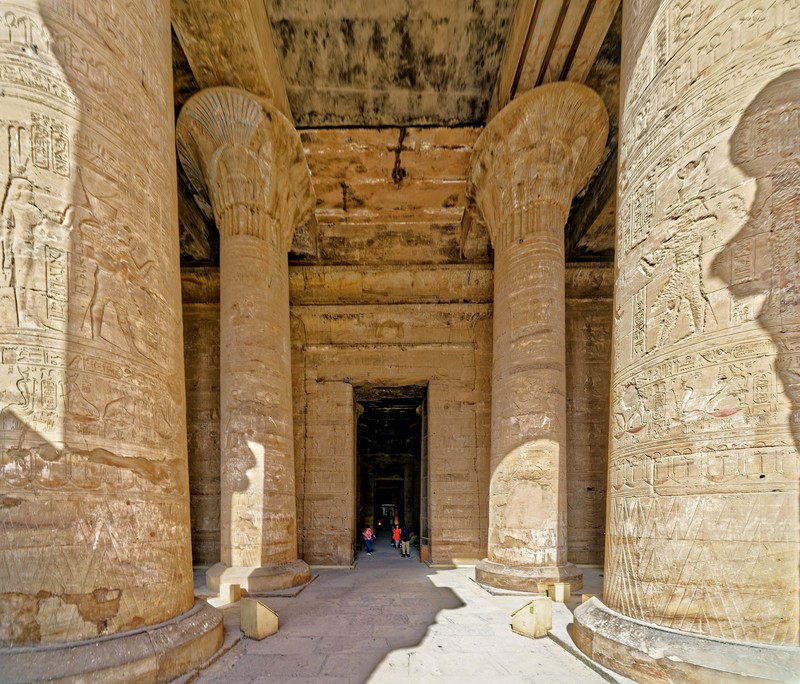
Beyond the pylons lies an open courtyard surrounded by columns with plant-shaped capitals. Its walls feature reliefs and inscriptions about ceremonies, offerings to the gods and the king’s role in maintaining cosmic order.
Columned Halls and the Sanctuary
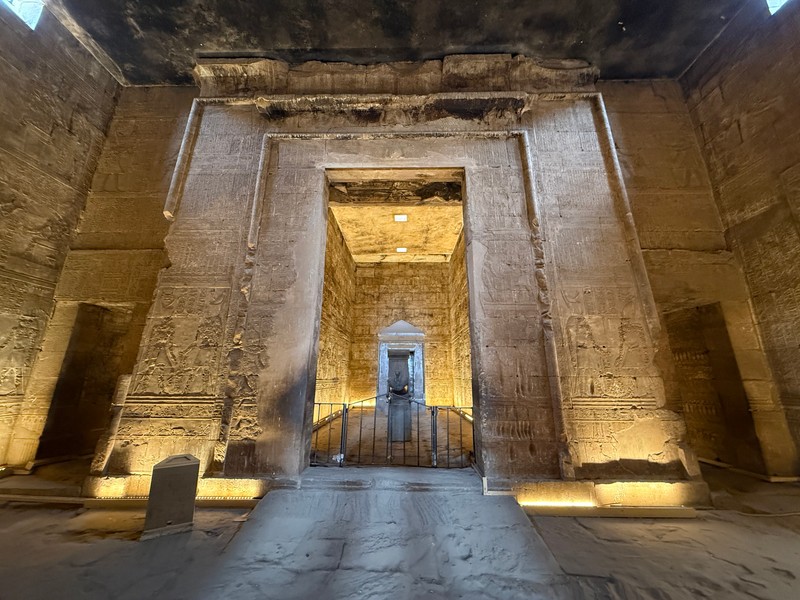
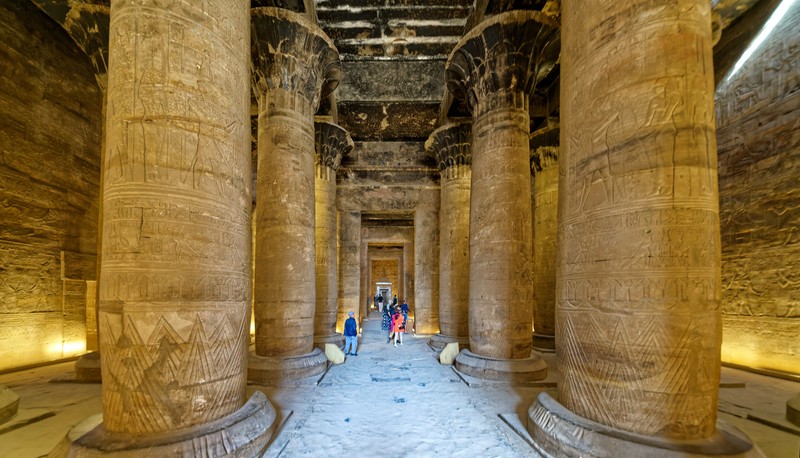
The interior consists of a sequence of rooms that become increasingly restricted and sacred toward the centre. After the courtyard comes a large hypostyle hall supported by massive columns, followed by a smaller hall, a transverse chamber and rooms used for ritual purposes. This layout reflects the Egyptian idea of moving gradually from the public world toward the divine sanctuary.
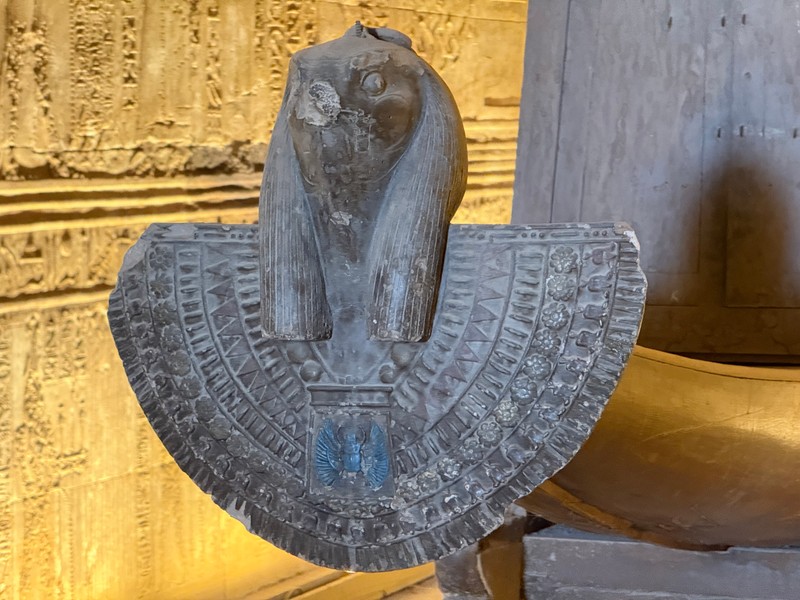
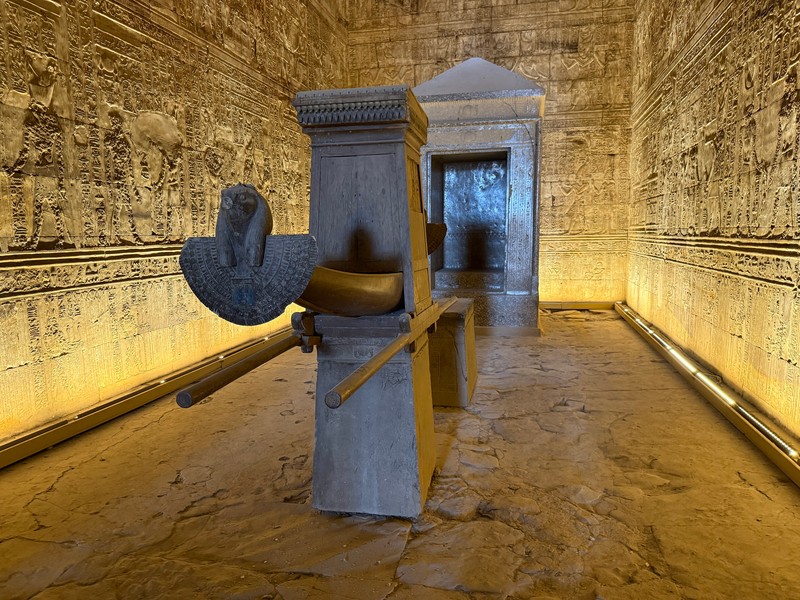
The main sanctuary preserves a granite naos, a stone shrine that once housed the cult statue of Horus. A sacred bark was also used in religious ceremonies, when the god’s image was carried outside the sanctuary during processions.
Horus and the Myth of Seth
One of the main themes of the temple reliefs is the conflict between Horus and Seth. According to Egyptian mythology, Seth killed his brother Osiris, and Osiris’s son Horus fought to restore justice and claim his rightful kingship. Their struggle symbolized the triumph of order over chaos.
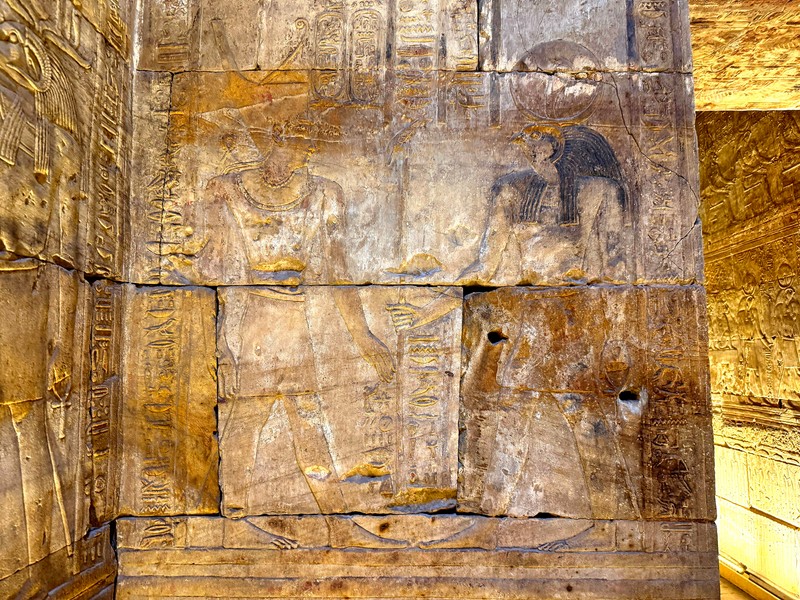
Reliefs show ritual scenes of Seth’s defeat, sometimes depicting him as a hippopotamus. Horus and the king appear as defenders of the order established by the gods. These images were part of the temple’s religious programme and reinforced the legitimacy of royal rule.
The Festival of Horus and Hathor
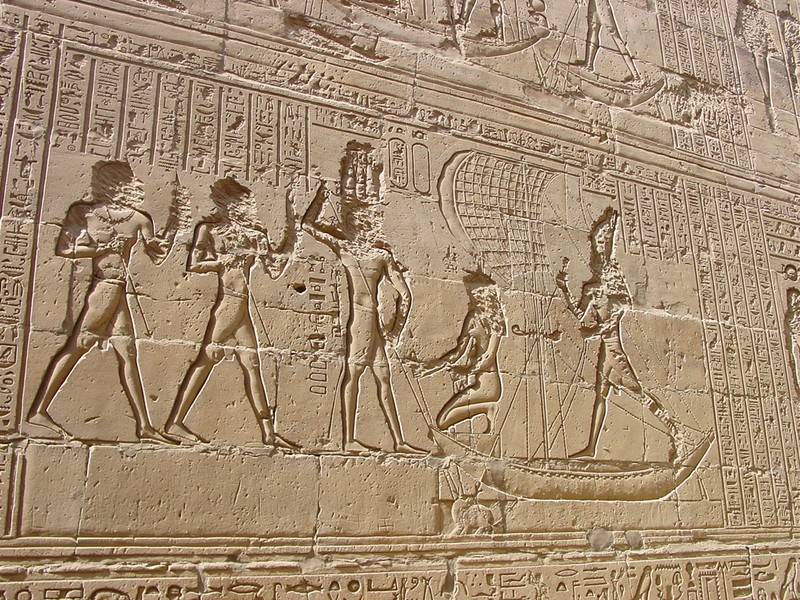
Edfu was closely connected with the temple of Hathor at Dendera. According to local religious tradition, Hathor travelled from Dendera to Edfu each year to meet Horus. Her cult statue was carried along the Nile in a sacred boat, and the meeting was marked by ceremonies and processions.
The festival symbolized renewal, fertility and the well-being of the country. Reliefs preserve scenes of the sacred journey and its rituals. Horus and Hathor were also regarded as the parents of the divine child Harsomtus, whose birth was associated with renewal and the continuation of royal power.
The Mammisi, or Divine Birth House
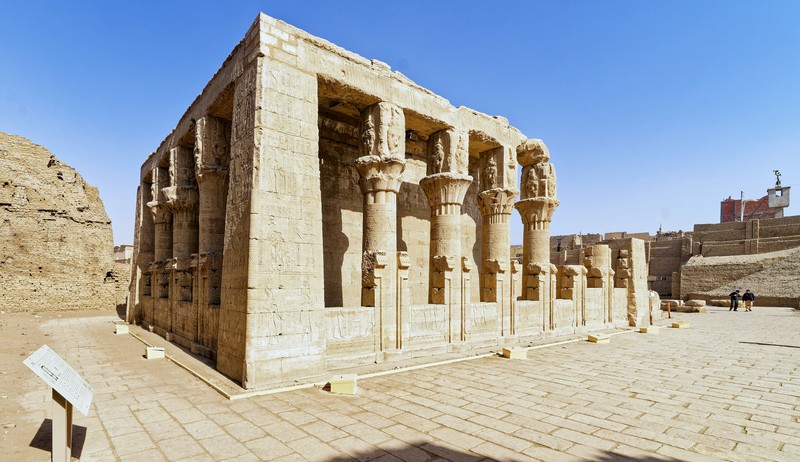
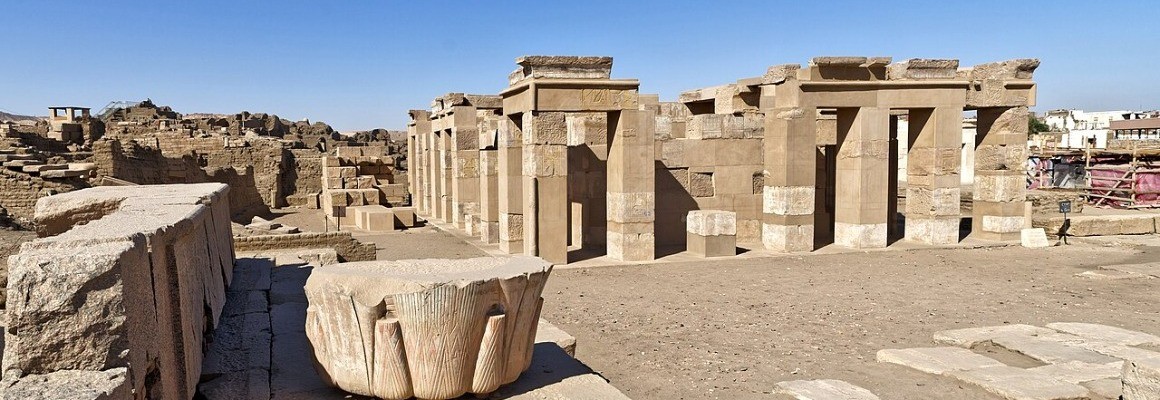
In front of the main temple stands a mammisi, a smaller sacred building associated with the ritual celebration of the divine child’s birth. Such structures became common in the later periods of Egyptian history and under the Ptolemies. Edfu’s mammisi is decorated with columns with plant-shaped capitals and reliefs related to divine childhood and religious festivals.
Inscriptions and Priestly Knowledge
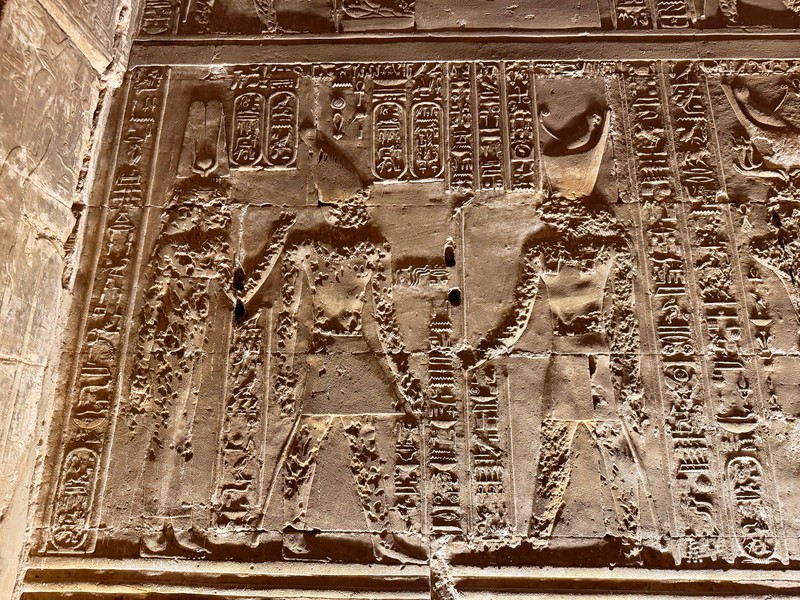
The temple walls preserve religious hymns, descriptions of ceremonies, mythological narratives and calendar information. The inscriptions explain the purposes of different rooms, the daily worship of Horus and the meaning of sacred objects. Edfu is therefore an important source for understanding ancient Egyptian religion.
The texts reveal that the temple was also a centre of specialized priestly knowledge. Priests conducted rituals, cared for sacred objects, followed the religious calendar and maintained traditions that connected earthly kingship with the divine world.
How the Temple Was Buried in Sand
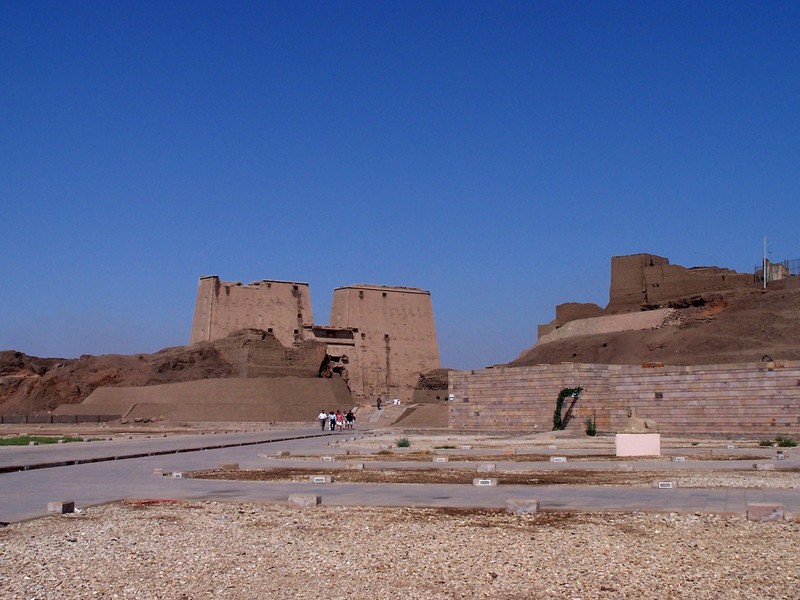
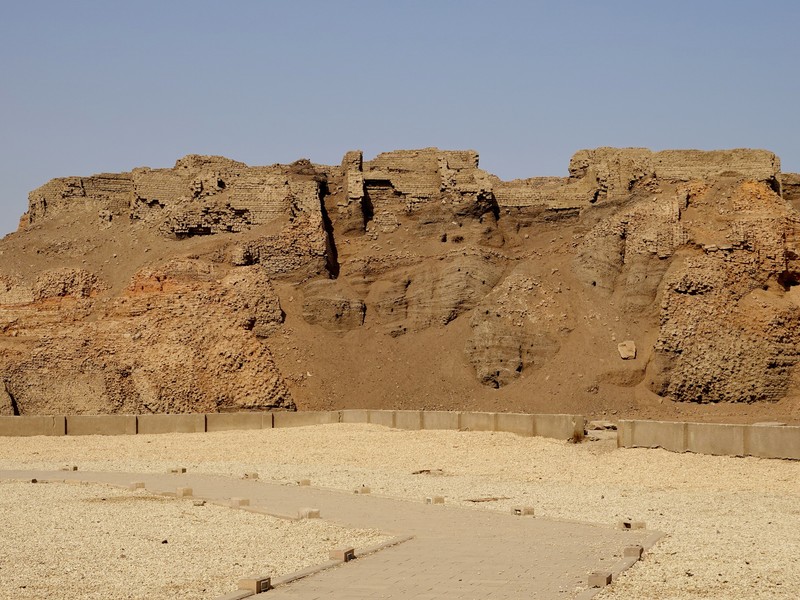
After the ancient cults declined, the temple gradually lost its original function. Settlements developed around it, while sand and accumulated debris buried its lower sections. This process unexpectedly protected many rooms, reliefs and inscriptions from prolonged exposure to weather.
In the nineteenth century, French Egyptologist Auguste Mariette organized the clearance of the site. By around 1860, much of the temple had been uncovered, allowing researchers to study the complex and restore selected features.
The Temple of Edfu Today
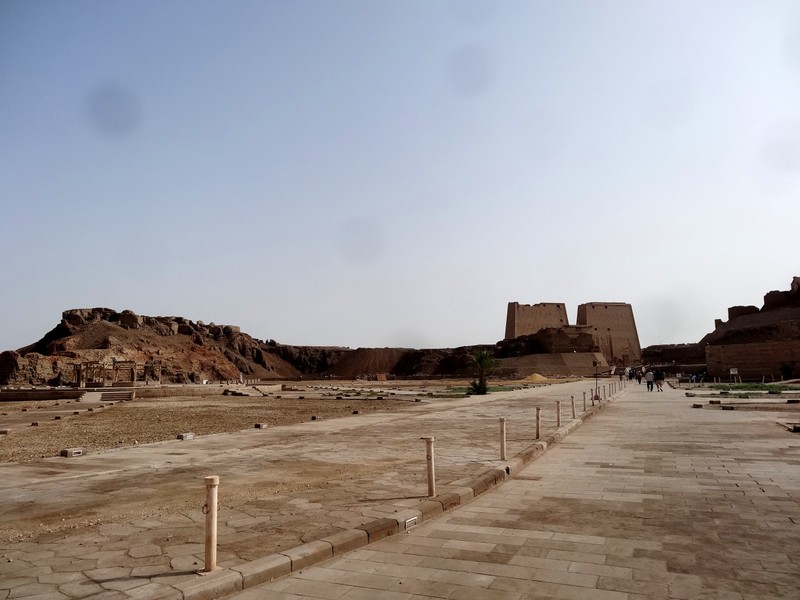
Today, Edfu is regarded as one of the most complete ancient Egyptian temple complexes. Visitors can pass through the monumental pylons, explore the colonnaded courtyard, enter the inner halls and view numerous reliefs. The site demonstrates how traditional Egyptian religious architecture continued under rulers of Greek origin.
Getting There and Visiting Tips
Edfu lies between Luxor and Aswan and is often included in Nile travel itineraries. The town can be reached by train or car, while river-cruise passengers commonly visit the temple during a stop.
Allow one to two hours to explore the complex. Morning visits are often more comfortable because temperatures are lower. Bring water, a hat, sunscreen and comfortable shoes. Check current opening hours and ticket prices before travelling. The temple is especially rewarding for visitors interested in well-preserved Egyptian architecture and the myths of Horus and Seth.
Gallery