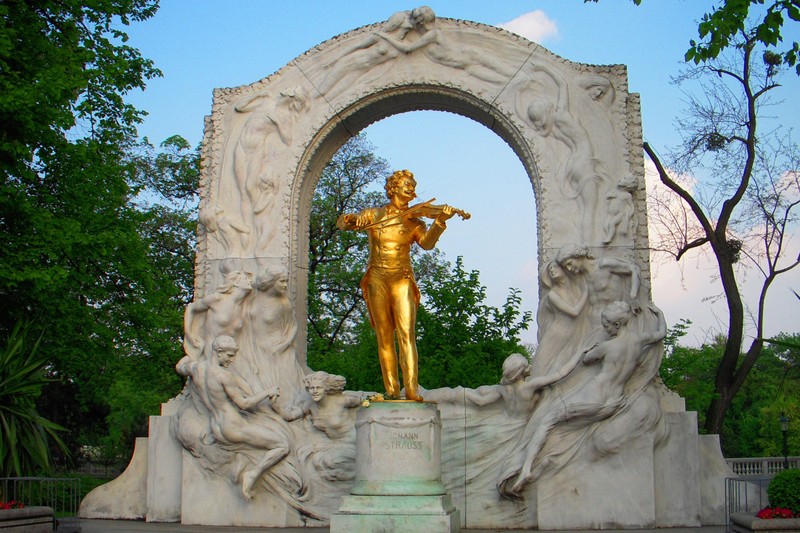
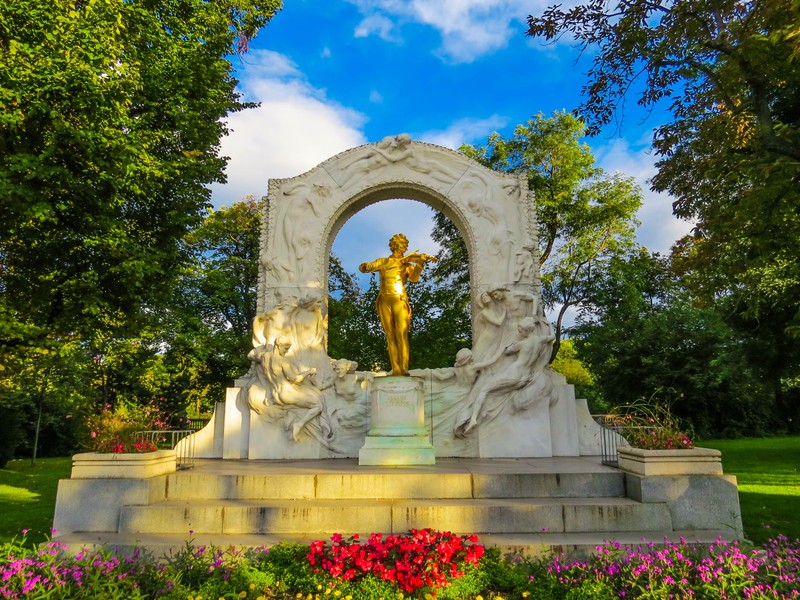
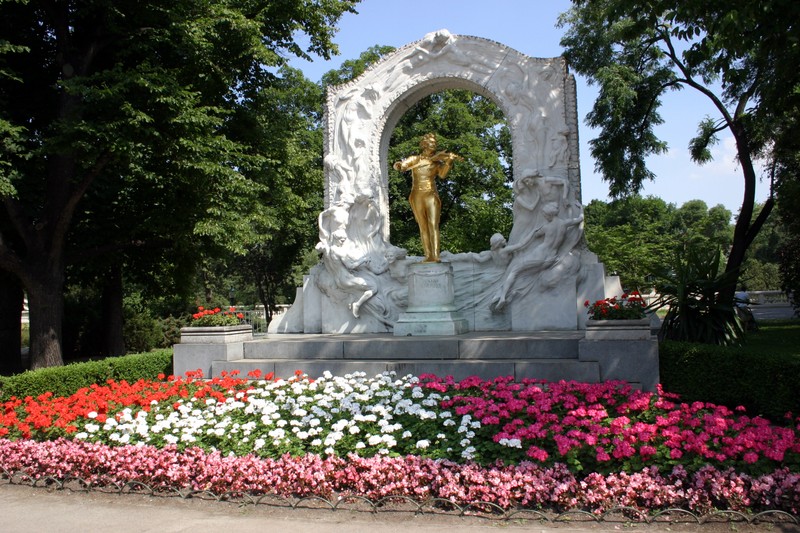
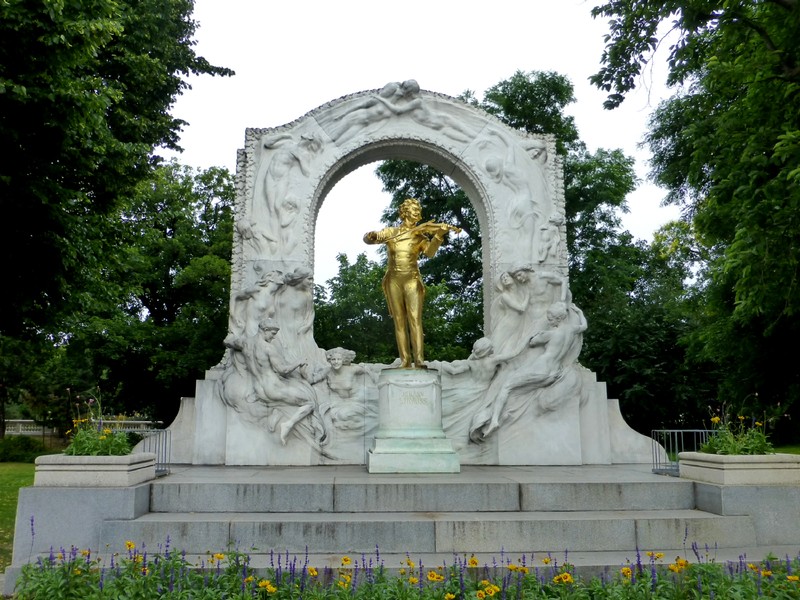
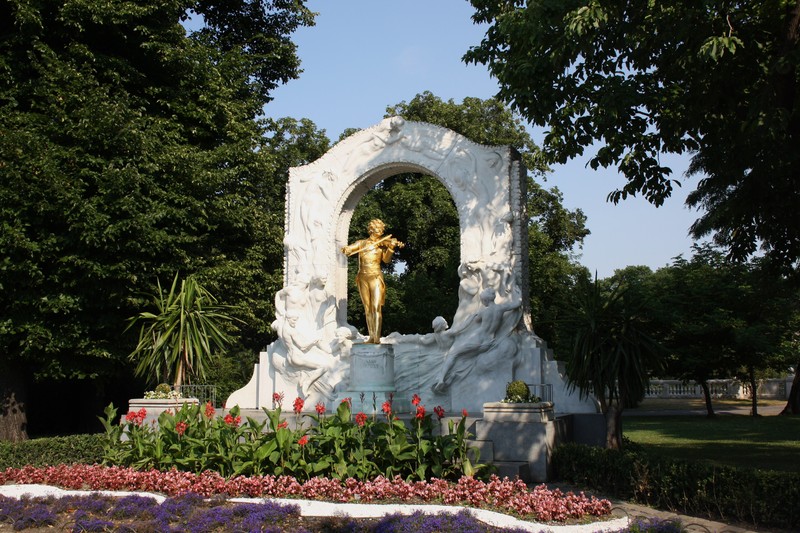
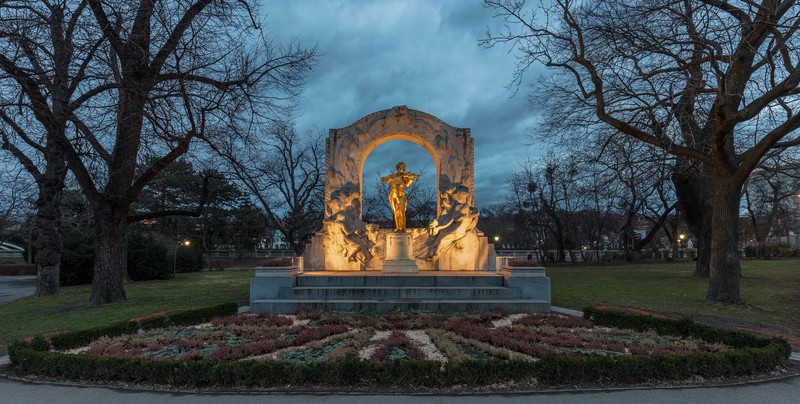
The Johann Strauss II Monument is one of Vienna’s most recognizable landmarks and a symbol of Austria’s musical culture. The composer’s gilded bronze statue stands in Stadtpark, the city park, surrounded by lawns and seasonal flowerbeds. Its striking composition and golden shine make it a popular place for walks, photographs and discovering the history of the Viennese waltz.
Johann Strauss II is often called the King of the Waltz. His compositions became internationally famous, and “The Blue Danube” remains one of Austria’s most recognizable musical symbols. The monument commemorates a composer whose melodies continue to be performed in concert halls and theatres and used in films around the world.
History of the Strauss Monument
After Johann Strauss II died in 1899, the idea emerged in Vienna to honour the composer with a dedicated monument. A committee was formed to organize fundraising and select an artistic design. Money was collected through concerts and donations from admirers of Strauss’s music.
A design competition was held in 1906, and the winning proposal came from Austrian sculptor Edmund von Hellmer. Stadtpark, a public park popular with residents and visitors, was chosen as the location. The monument was unveiled in 1921 and soon became one of Vienna’s best-known landmarks and an important symbol of its musical heritage.
The park proved to be an ideal setting: visitors can see the monument during an ordinary walk without entering a museum or concert hall. Trees, lawns and flowerbeds create a dignified setting while preserving the open and accessible character of the public space.
Description and Artistic Design
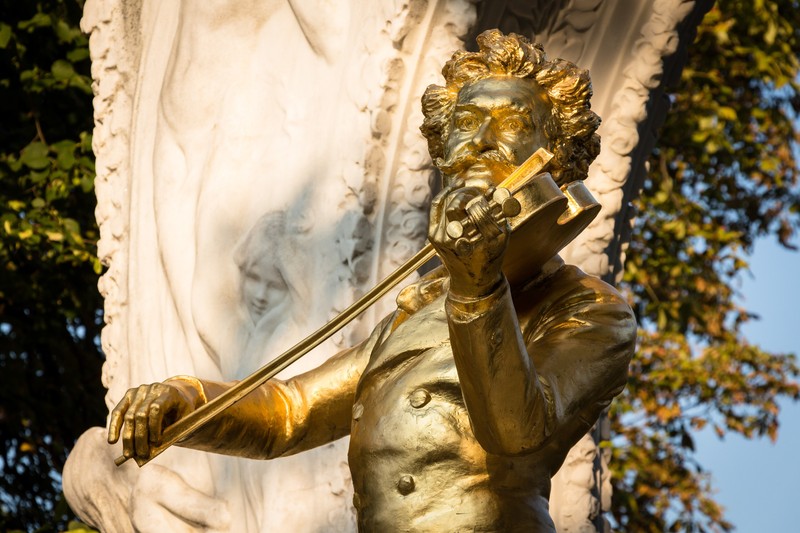
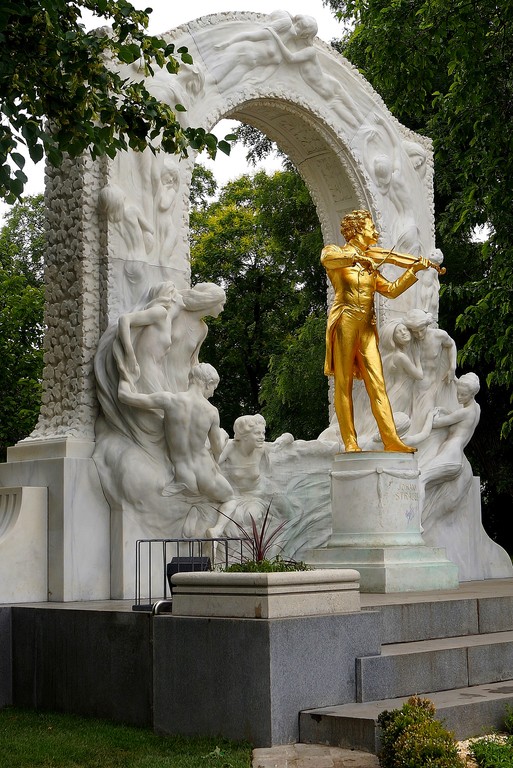
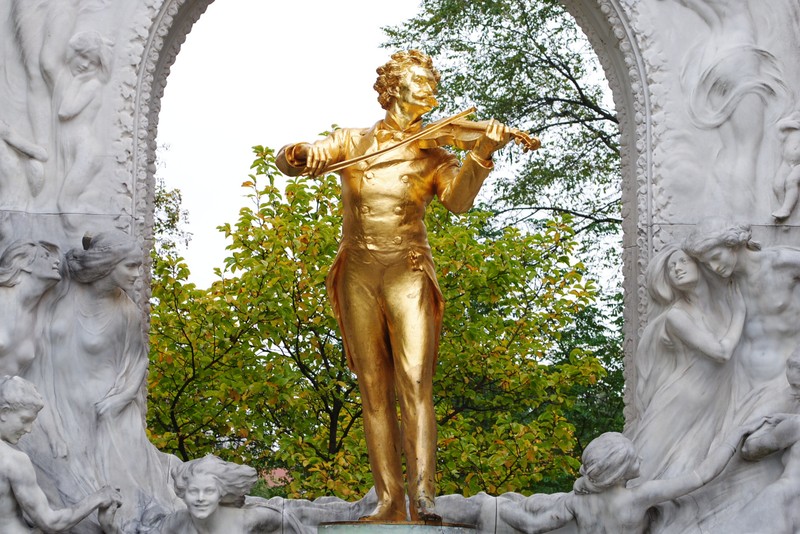
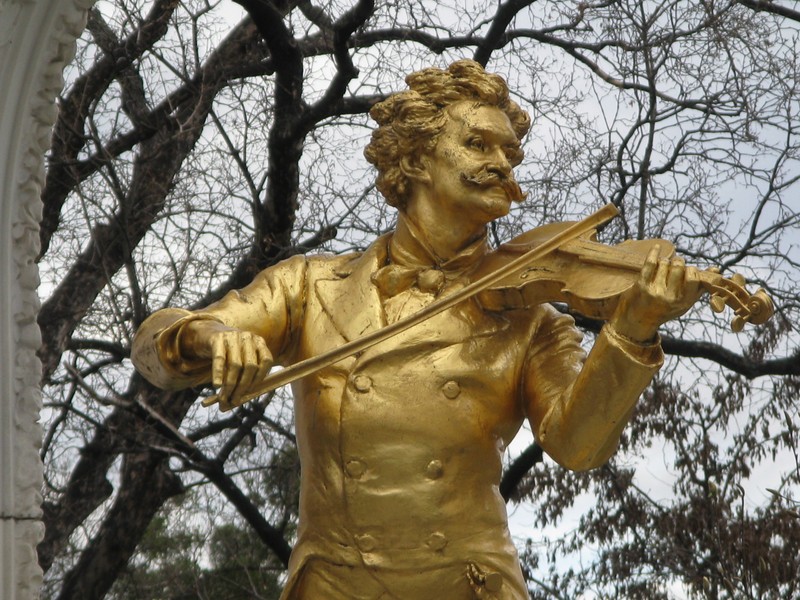
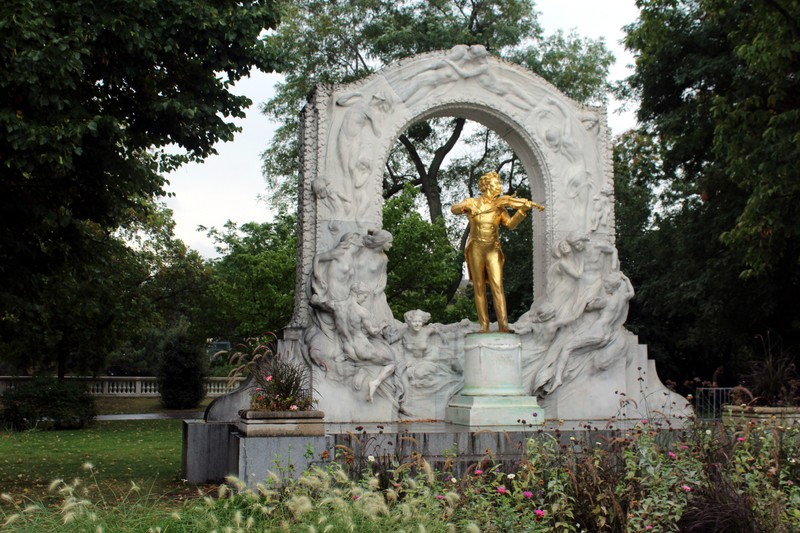
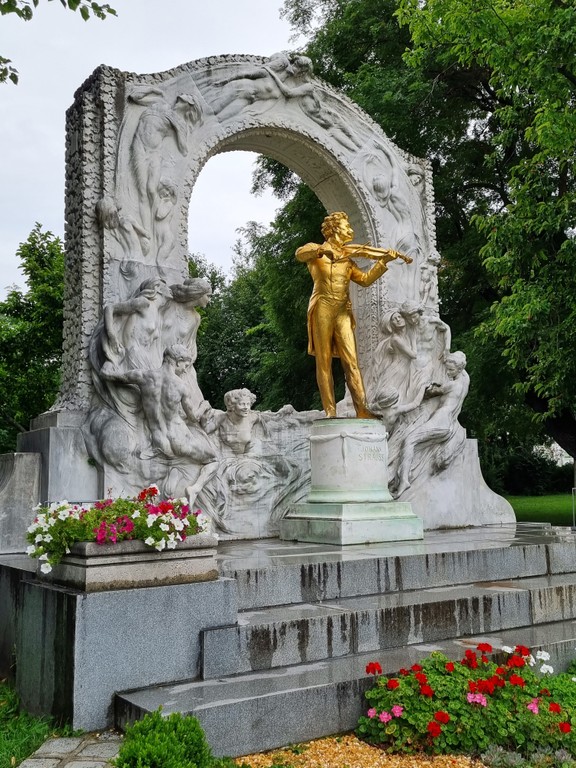
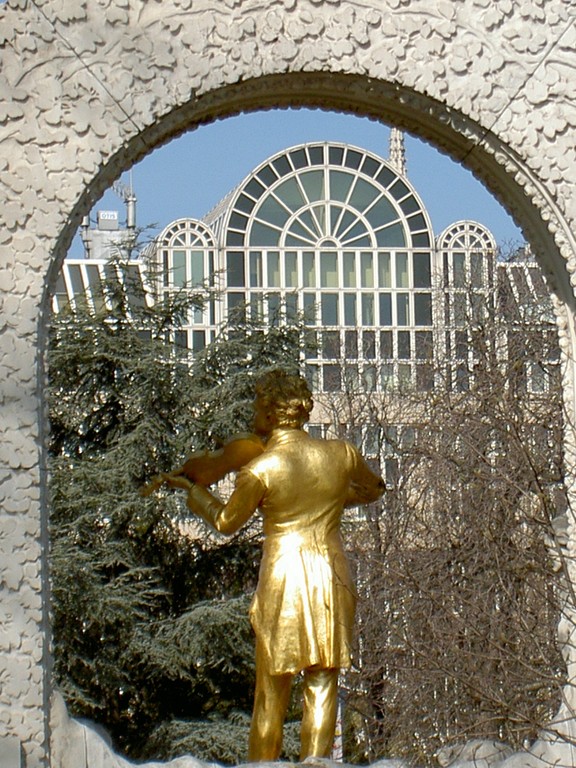
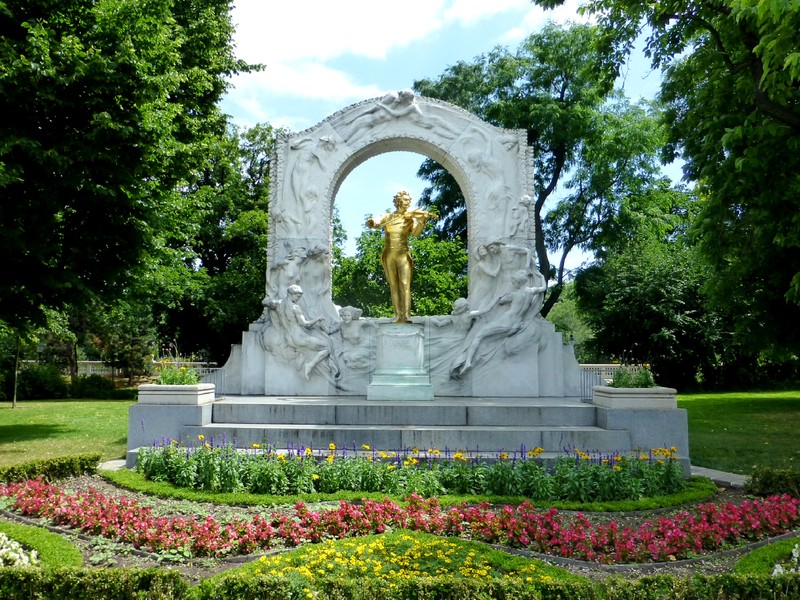
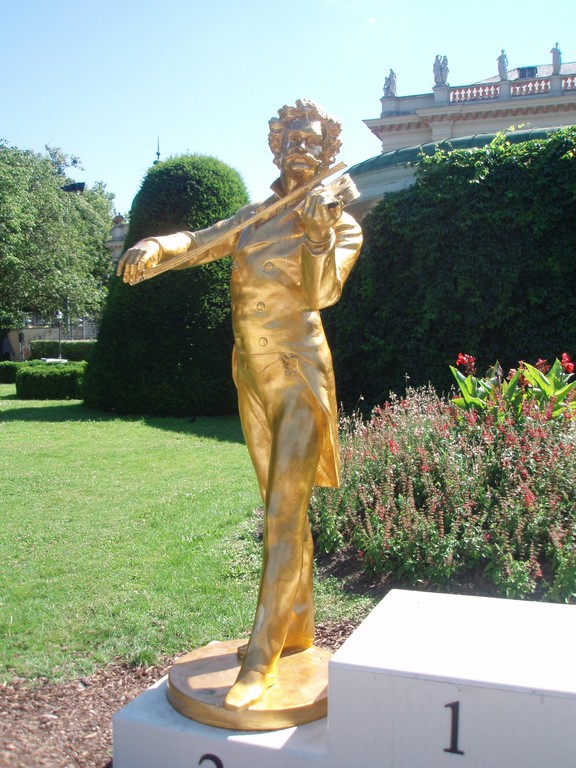
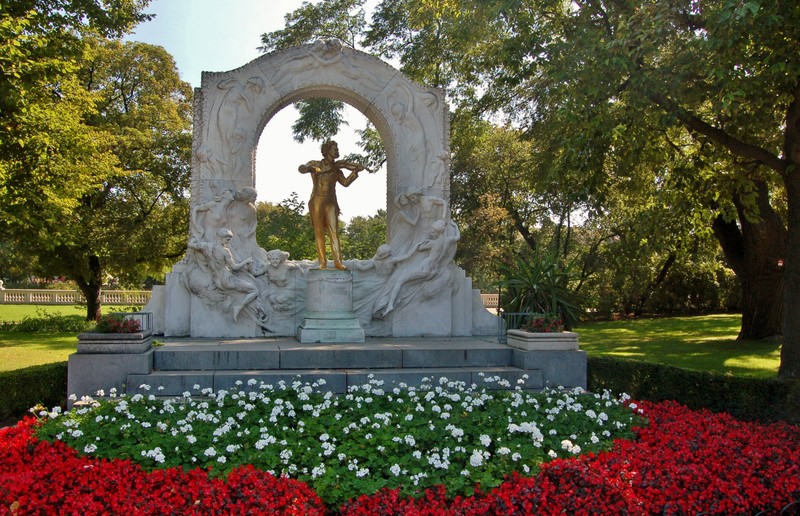
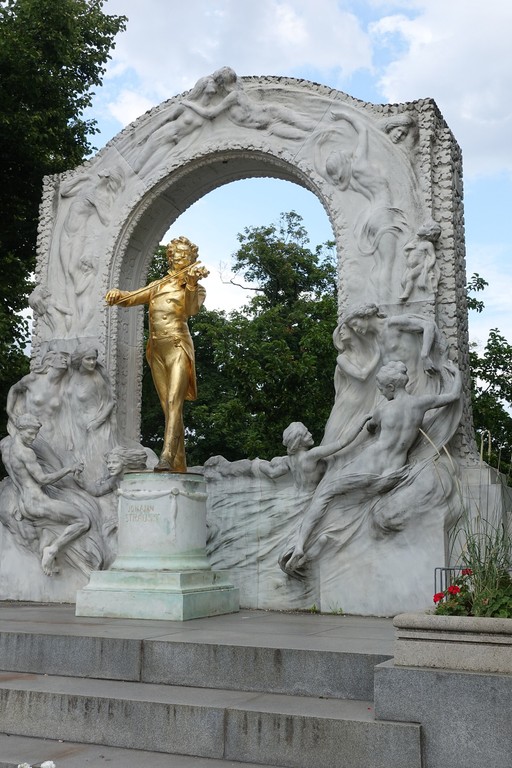
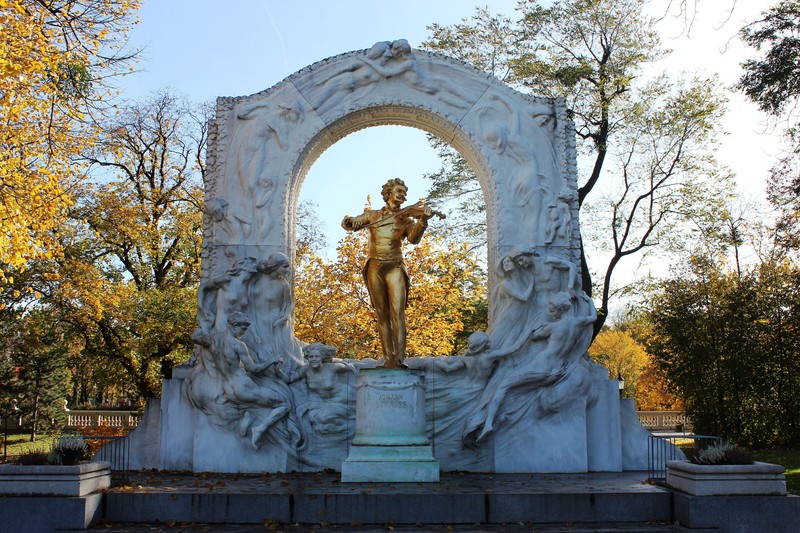
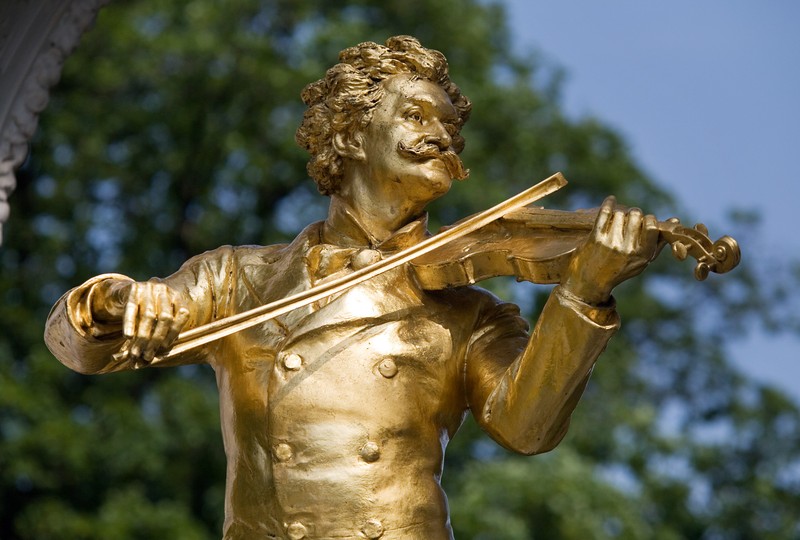
The centrepiece is a gilded bronze figure of Johann Strauss II holding a violin. The sculptor portrayed the musician performing, capturing a sense of movement and artistic expression. The golden surface stands out against the pale marble and the surrounding greenery, making the statue visible from a distance.
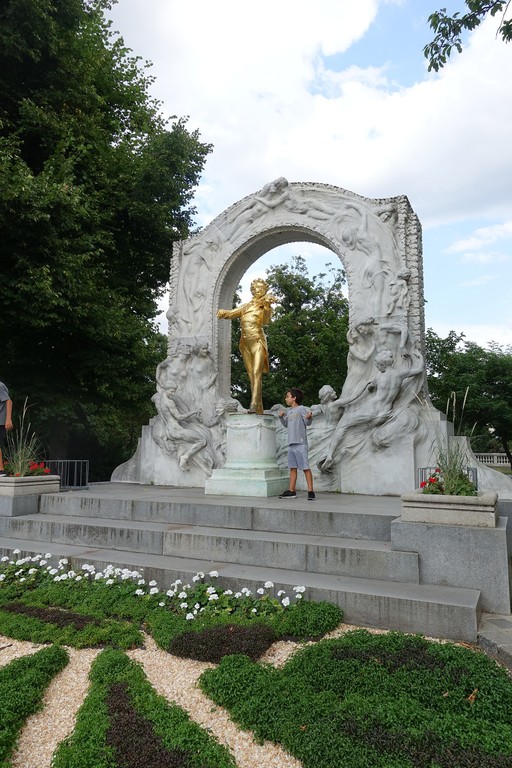
The bronze figure is framed by a white marble arch resembling a theatre or concert curtain. Decorative elements reinforce the musical theme: sculpted dancers and mythological figures create an impression of movement, as though the rhythm of the waltz were coming alive in stone and metal.
The monument is considered a characteristic example of Vienna’s early twentieth-century commemorative sculpture. It combines a portrait of a celebrated composer with decorative architecture and symbolic details related to dance and music. This makes it interesting not only to Strauss admirers but also to visitors interested in sculpture and urban architecture.
Gilding and Restoration
The monument’s appearance has changed several times over the years. In 1935, the gilded surface was covered with black lacquer, removing the statue’s familiar golden shine. In the 1990s, the figure was gilded again, restoring the appearance visitors recognize today.
A major restoration took place in 2011. Workers renewed the gold finish on the bronze figure and cleaned the marble elements. Maintenance is necessary because of rain, temperature changes and air pollution. The restoration helped preserve the sculptural group’s distinctive appearance and expressive details.
Johann Strauss II, the King of the Viennese Waltz
Johann Baptist Strauss II was born in Vienna in 1825 into a musical family. His father, Johann Strauss I, did not want his son to become a professional musician and hoped he would pursue a more practical career. Nevertheless, the younger Strauss secretly learned the violin and continued his musical education despite family disagreements.
In 1844, Strauss II made his conducting debut and formed his own orchestra. He later became one of the leading figures in Viennese dance music. After his father’s death in 1849, he combined musical ensembles and expanded his concert activities. Performances and tours brought him fame far beyond Austria.
He composed numerous waltzes, polkas, quadrilles and other dance works. His best-known pieces include “The Blue Danube,” “Tales from the Vienna Woods,” the “Emperor Waltz” and the operetta Die Fledermaus. His music became an essential part of Vienna’s image as a city of balls, orchestras and elegant dance traditions.
“The Blue Danube,” written in the nineteenth century, occupies a special place in Strauss’s legacy. Today, the waltz is closely associated with Austria and the annual Vienna New Year’s Concert. Professional orchestras around the world continue to perform his music, which remains one of the country’s most recognizable cultural signatures.
Where Is the Strauss Monument?
The monument stands in Stadtpark, a public park in central Vienna near the Ringstrasse boulevard. The park is known for its green paths and flowerbeds as well as monuments to musicians and other notable figures. A visit to the Strauss statue can easily be combined with a walk through the park and a look at its other sculptures.
The gilded figure looks particularly striking against the greenery in warmer months, when seasonal flowers bloom around it. On sunny days, light reflects from the bronze surface, creating its characteristic golden colour. Mornings and weekdays are often more convenient for photography if you want to avoid crowds.
How to Get to the Strauss Monument
Stadtpark is easy to reach by public transport. The nearest underground station is Stadtpark on line U4, from which the monument is only a few minutes’ walk. Tram and bus routes also serve the surrounding area; check current stops and timetables on Vienna’s official transport map before travelling.
The monument is in an open public park, so no separate admission ticket is required. It fits easily into a walking route through central Vienna, together with the Ringstrasse, concert venues and other places connected with the Austrian capital’s musical history.
The Johann Strauss II Monument is more than a popular photo spot. It celebrates the musical tradition that helped make Vienna famous around the world. Its golden statue, marble frame and connection to the history of the waltz make it a memorable stop on a visit to the city.
Gallery