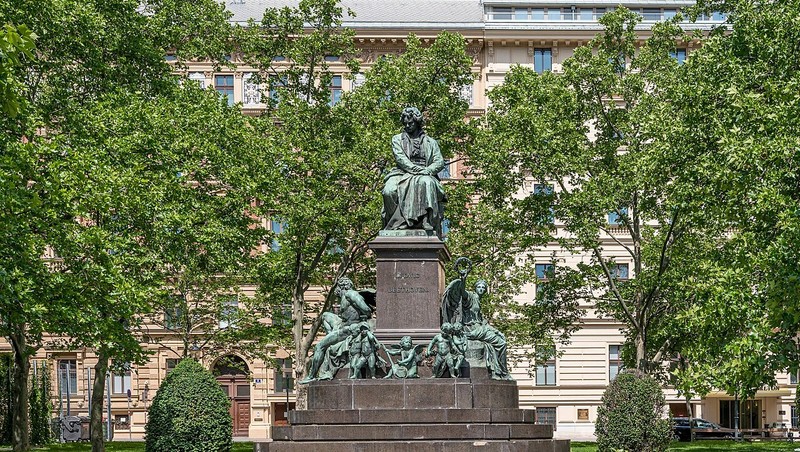
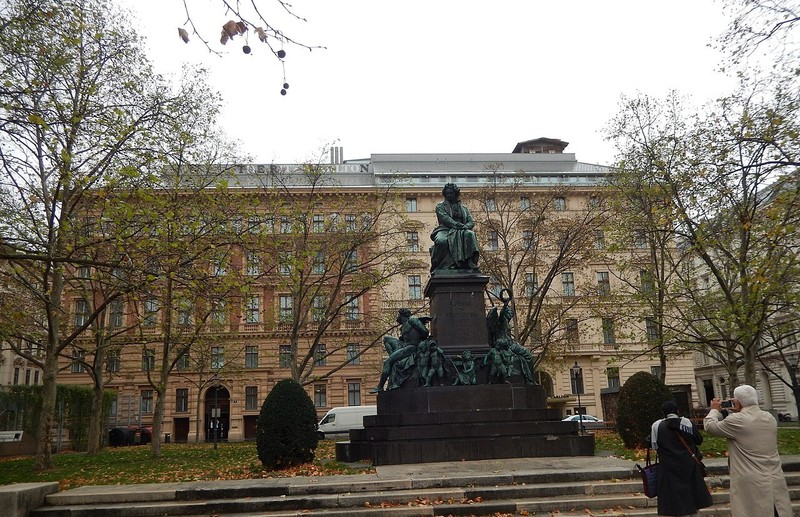
The Beethoven Monument is one of Vienna’s notable musical landmarks, dedicated to the great German composer whose life and work were closely connected with the Austrian capital. The monument stands on Beethovenplatz, near Vienna’s Stadtpark and the famous Ringstrasse boulevard. Its sculptural details commemorate not only the composer’s historical importance but also the dramatic challenges of his life.
The monument was created by German sculptor Caspar von Zumbusch. Funding came from public donations, with additional financial support from composer and pianist Franz Liszt. The monument was unveiled in 1880. Today, it remains an important part of Vienna’s musical heritage and a worthwhile stop for visitors interested in the history of classical music.
History of the Beethoven Monument
The idea of commemorating Ludwig van Beethoven emerged in Vienna during the nineteenth century. In the 1870s, the Society of Friends of Music established a committee to organize a monument for the centenary of the composer’s birth. A public fundraising campaign was launched, and when the donations proved insufficient, Franz Liszt contributed the remaining funds in recognition of Beethoven’s music.
Although Beethoven was born in Bonn, Germany, much of his professional life unfolded in Vienna. He developed his musical style here, composed major works, performed for audiences and established himself as one of the leading composers of his era. He died in Vienna in 1827 and was buried in the city. This close connection explains why the Austrian capital became one of the principal places commemorating his legacy.
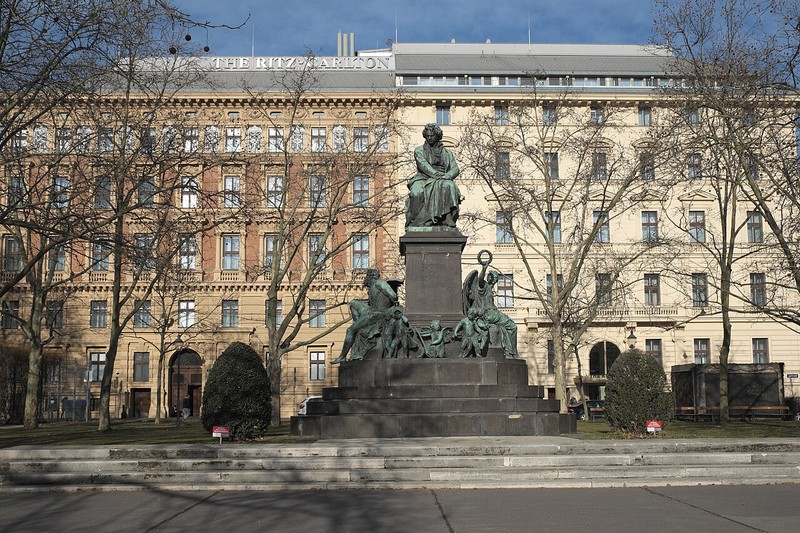
The monument was unveiled in 1880, but its position and orientation later changed. The bronze figure originally faced the Gutmann Palace, where the Ritz-Carlton hotel was subsequently built. During a flood, the monument toppled and damaged the rear of its pedestal. In the 1960s, when an underground car park was constructed beneath the square, the monument was turned toward the city park. After the rear wall of the pedestal was restored in 1971, the monument was returned to its former position.
Description and Sculptural Design
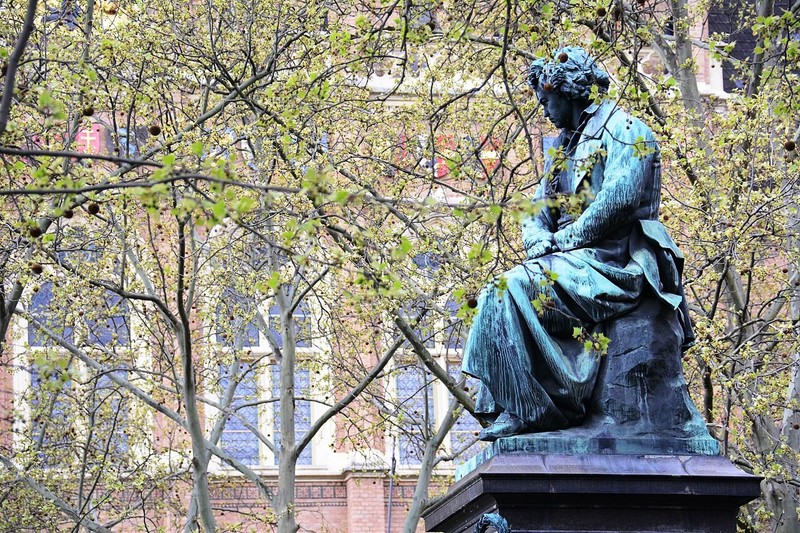
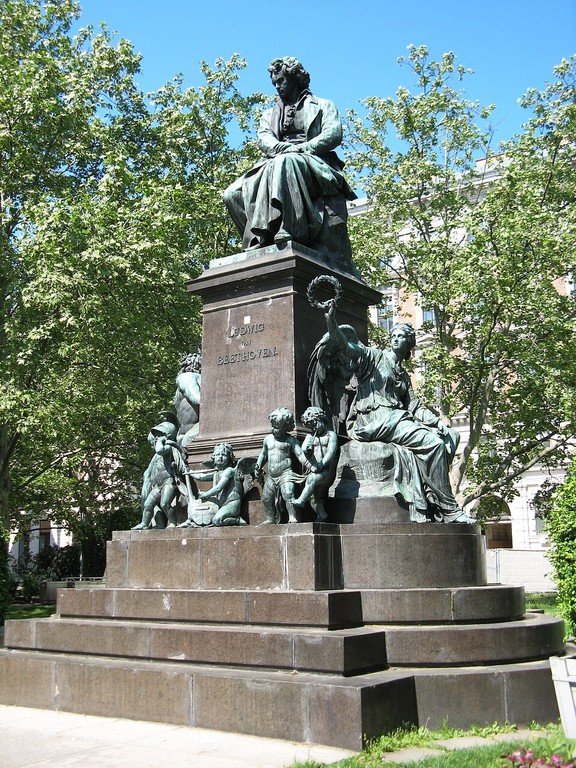
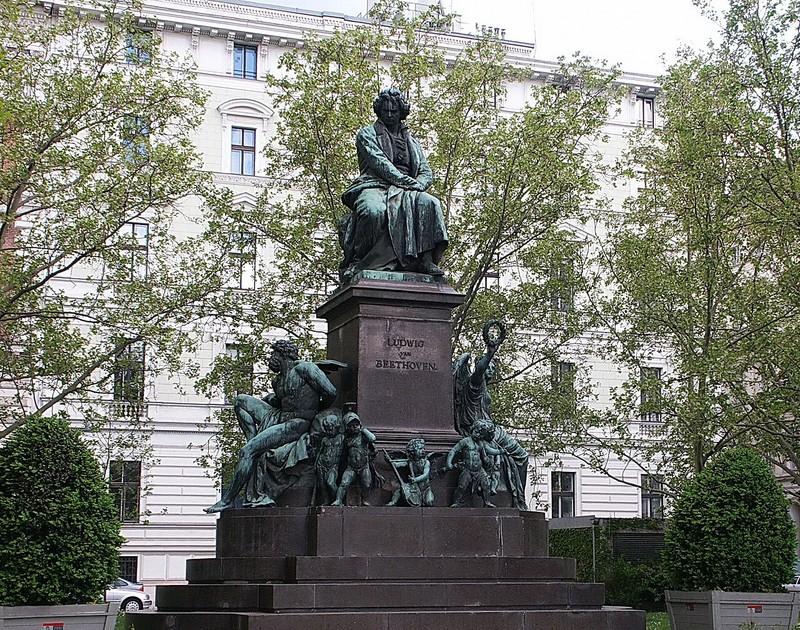
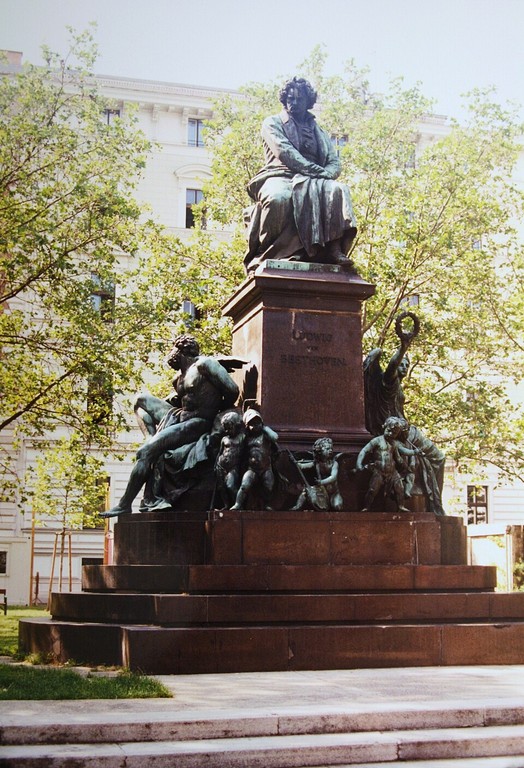
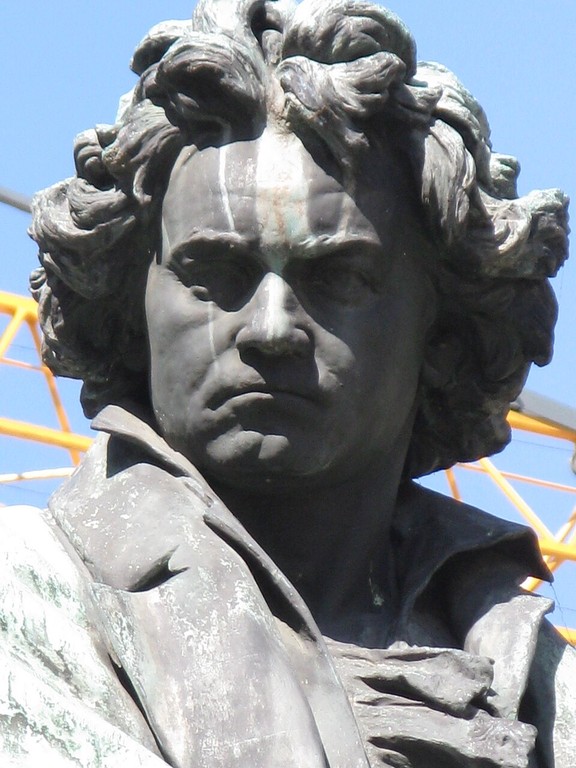
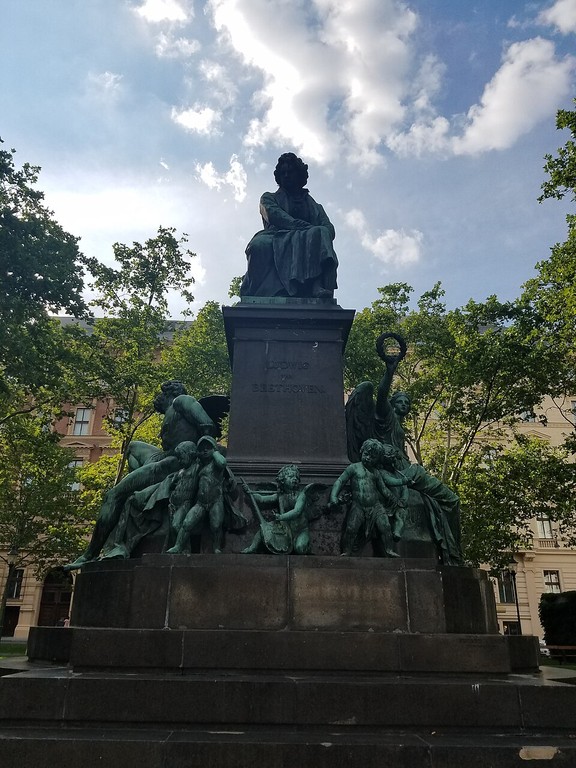
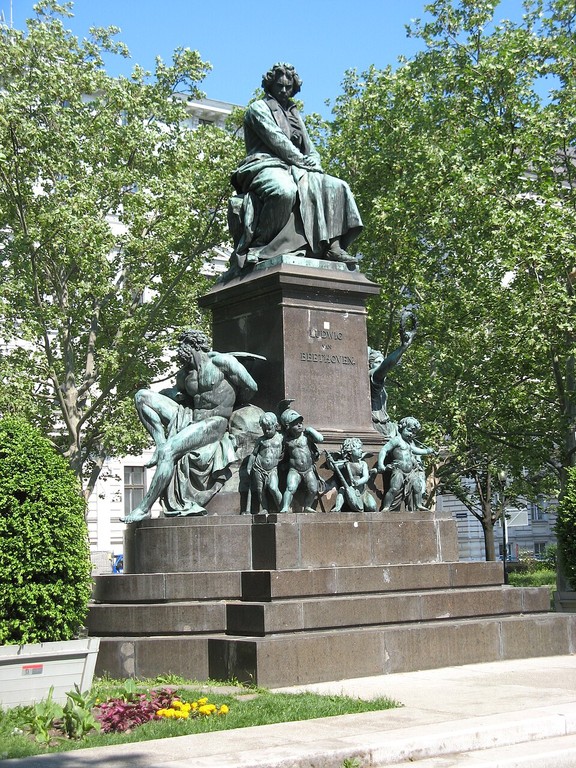
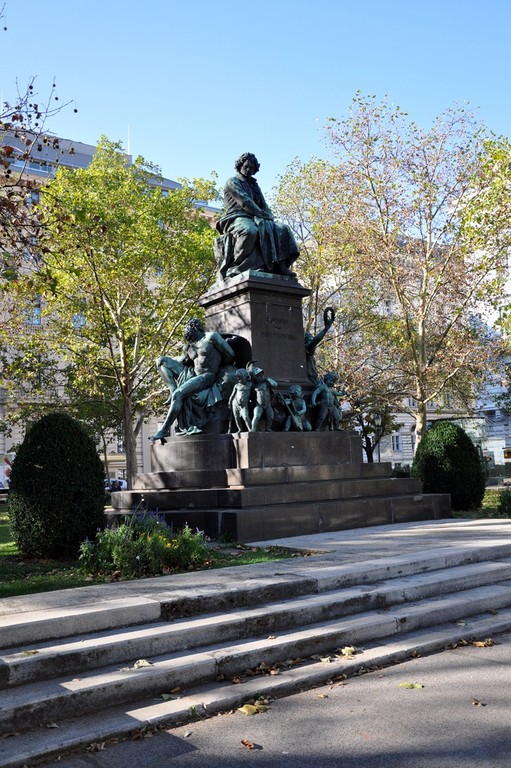
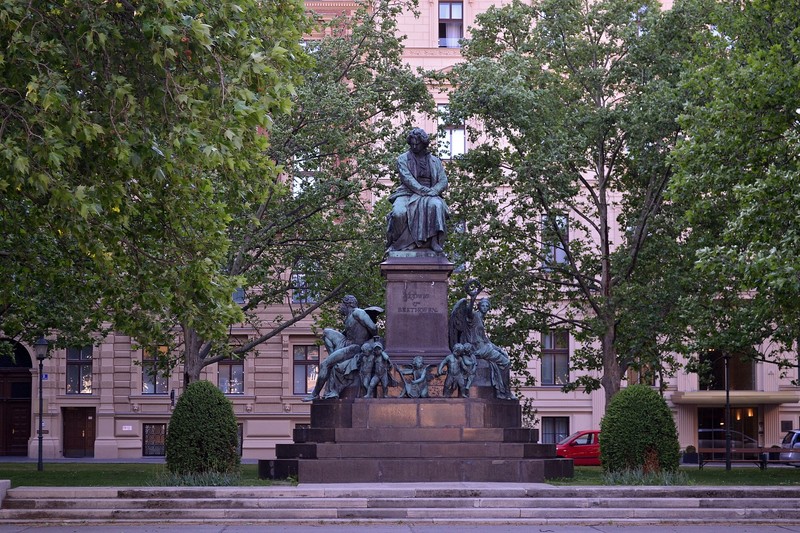
The monument consists of a multi-tiered pedestal made of grey-brown porphyry and bronze figures. Beethoven sits on the tall plinth, his thoughtful expression and composed posture suggesting the intense concentration with which he continued to create music despite serious personal difficulties.
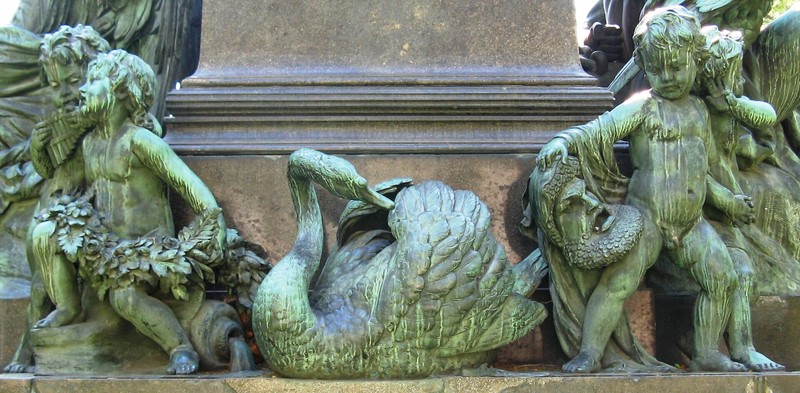
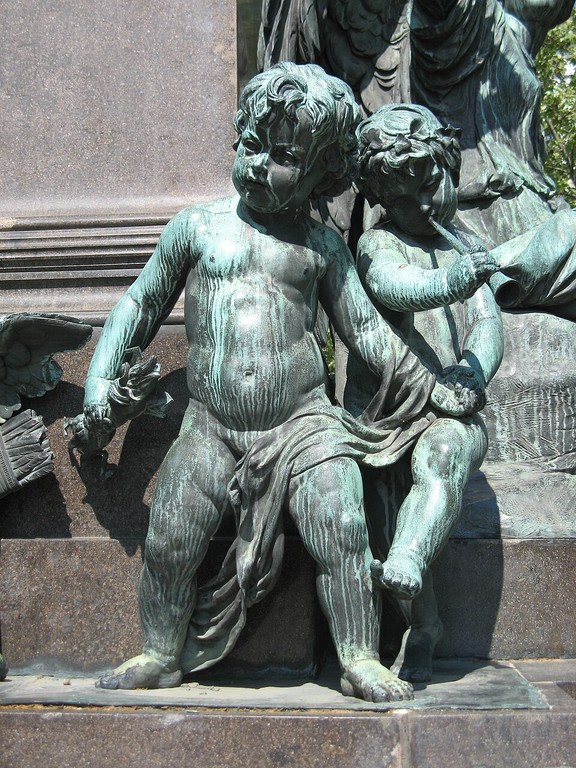
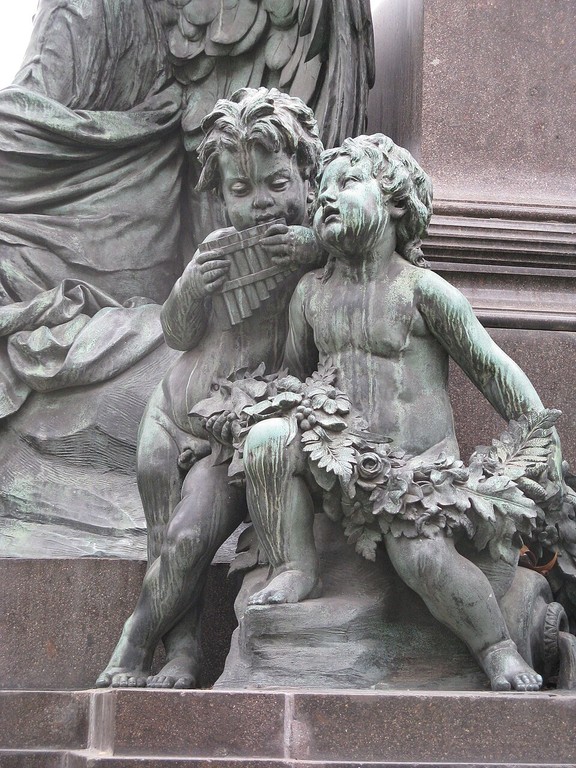
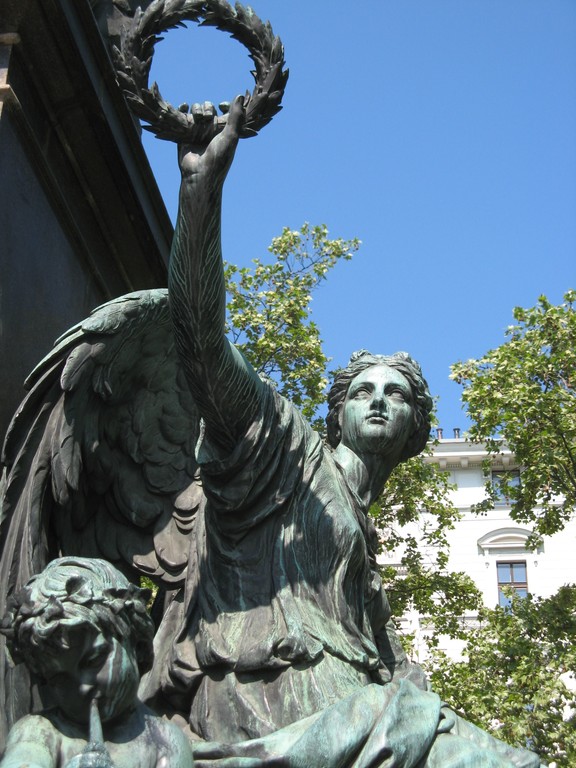
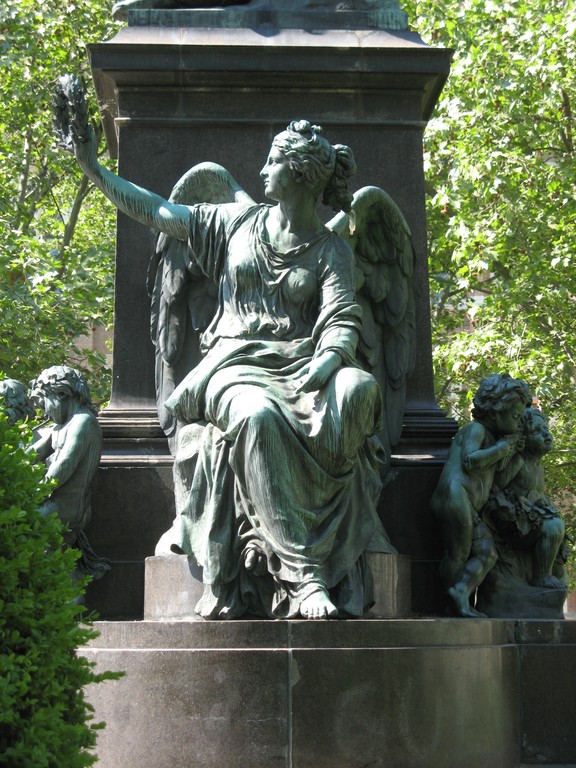
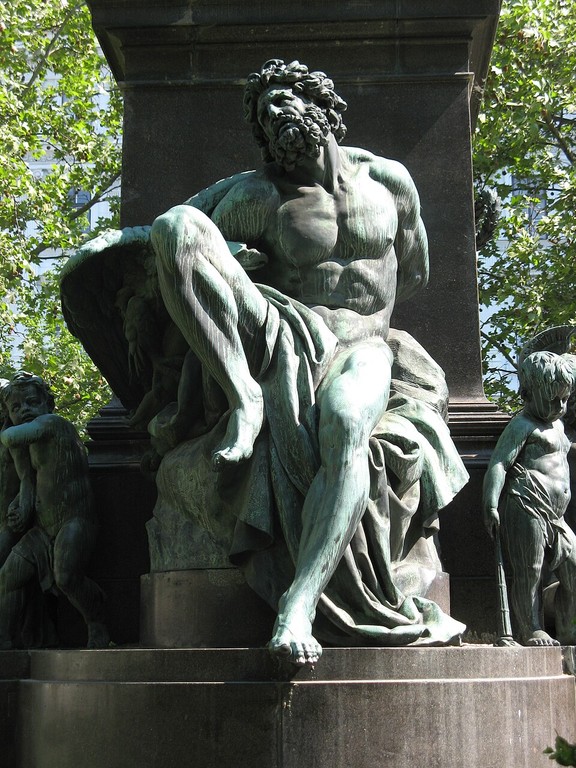
The sculptural group includes allegorical figures connected with Beethoven’s music and intellectual world. Nine putti at the base refer symbolically to his Ninth Symphony. On one side is Prometheus, chained to a rock, the mythological figure who brought fire to humanity. His image is traditionally associated with struggle, sacrifice and the desire to benefit humankind. On the other side stands Nike, the ancient Greek goddess of victory, raising a laurel wreath.
Together, these figures turn the monument into more than a portrait of a famous musician. They suggest artistic achievement, inner strength and the power of art to influence society. The composition presents Beethoven as a creator whose music transcended his own era and became part of world culture.
Ludwig van Beethoven and His Musical Legacy
Ludwig van Beethoven lived from 1770 to 1827 and is considered a key figure in the transition from Classicism to Romanticism in European music. He composed symphonies, piano sonatas, chamber works, concertos, an opera and music for theatrical productions. His work is known for its dramatic intensity, expressive contrasts and innovative treatment of musical form.
Among his best-known compositions are the Ninth Symphony, whose finale sets the text of the “Ode to Joy,” the Fifth Symphony, the “Moonlight Sonata” and the piano piece “Für Elise.” The Ninth Symphony is especially associated with the idea of human unity and has become one of the most recognizable works in classical music.
One of Beethoven’s greatest personal challenges was progressive hearing loss, which began when he was still relatively young. Despite his declining hearing, he continued composing and produced some of the most celebrated works in his catalogue. His private life also remains a subject of biographical research, particularly the mystery surrounding his letter to the unidentified “Immortal Beloved.”
Where Is the Beethoven Monument?
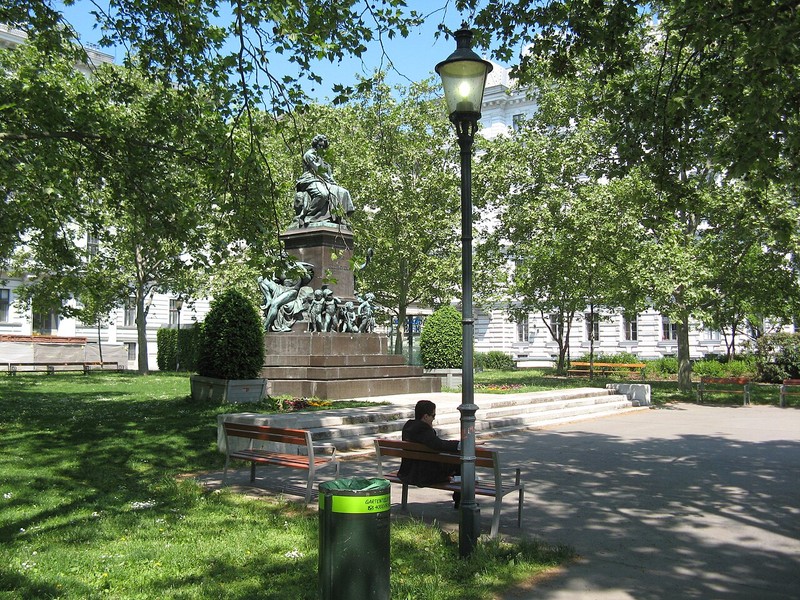
The monument stands on Beethovenplatz in central Vienna, close to the Ringstrasse and Stadtpark. The surrounding area contains historic architecture, concert venues and other places connected with the city’s musical heritage. A visit to the monument fits easily into a walking tour of central Vienna.
The nearby Ritz-Carlton building can make the monument difficult to spot from the main boulevard. To find the square, walk around the building toward Christinengasse and continue to a small green square. The monument stands in the middle and becomes easy to recognize once you arrive.
How to Get to the Beethoven Monument
Beethovenplatz can be reached by public transport or on foot from central Vienna. One option is to take metro line U4 to Stadtpark station and continue on foot. Check the current transport map before travelling and choose a route from your starting point.
The monument stands in an open public space and can be viewed during a walk across the square. No admission ticket is required. To explore Vienna’s musical heritage further, combine the stop with the Vienna State Opera, the House of Music and other landmarks associated with classical music.
Gallery