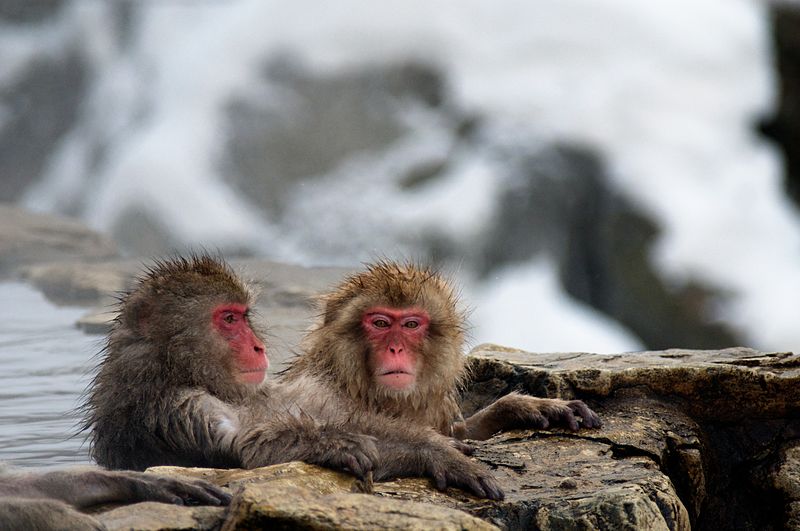
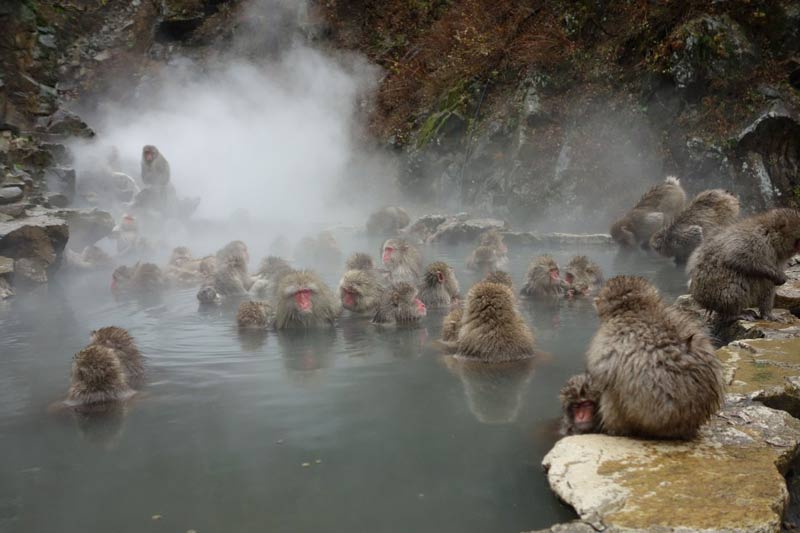
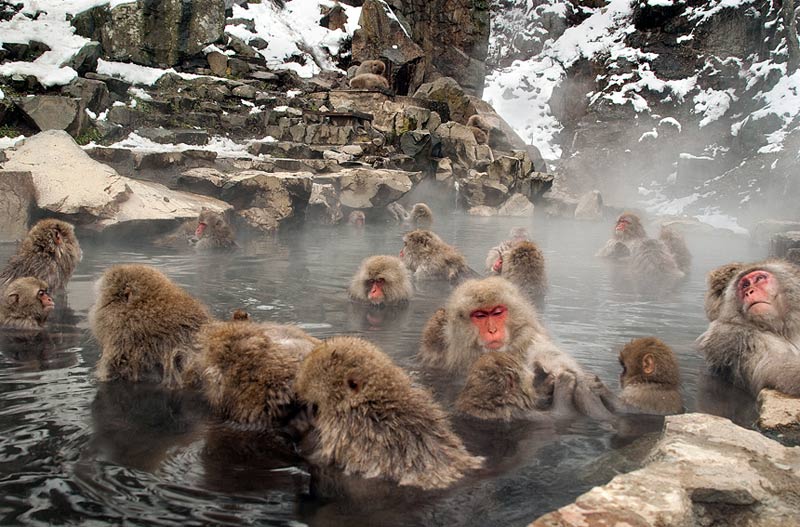
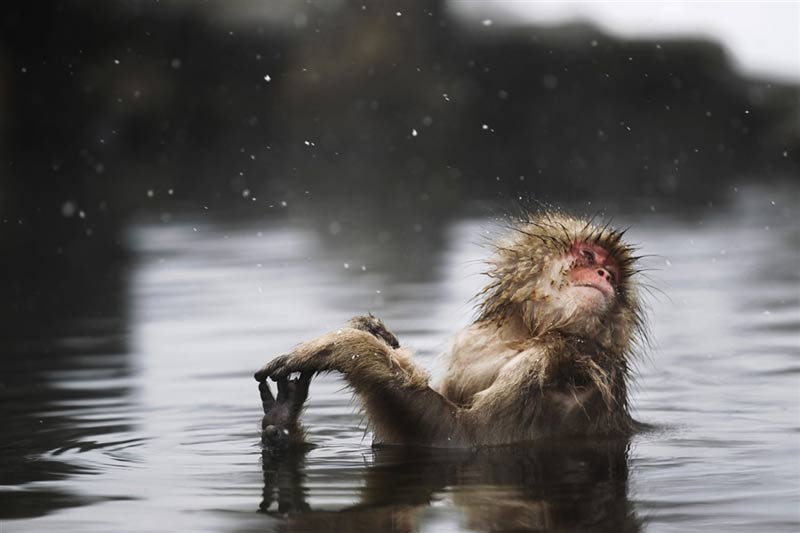
Jigokudani is a mountain valley in Nagano Prefecture, Japan, famous for its hot springs and Japanese macaques that often warm themselves in hot water during winter. The area became internationally known through photographs of so-called snow monkeys sitting in steaming pools surrounded by snow.
Why it is called Jigokudani
The name Jigokudani is commonly translated as “Hell Valley.” It refers to the steep cliffs, rugged landscape and steaming hot springs. The valley lies at an elevation of about 850 metres in the Yokoyu River valley. Winters are severe, with heavy snowfall and temperatures that can fall below −10°C.
Wild Snow Monkey Park
The main attraction is Jigokudani Yaen-Koen, a park established in 1964 to allow close observation of Japanese macaques in a largely natural setting. Unlike animals in a conventional zoo, the macaques can move freely around the area and come and go on their own. Visitors can watch them at close range without conventional separating fences.
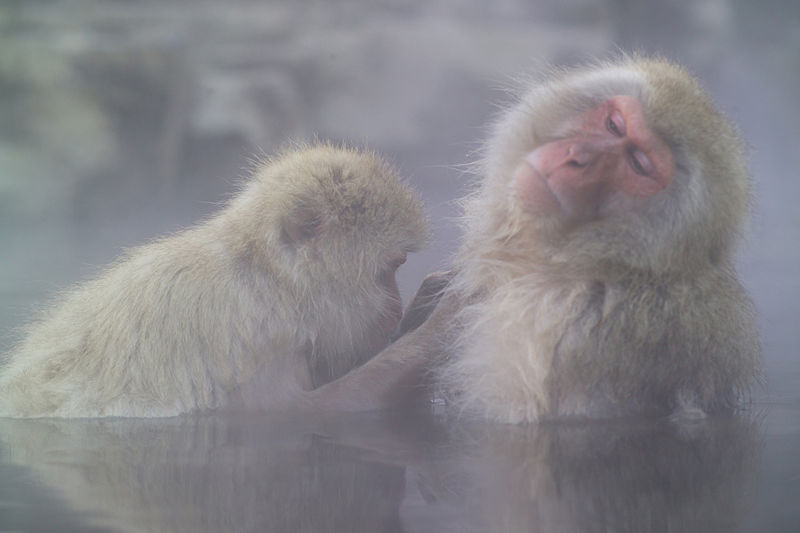
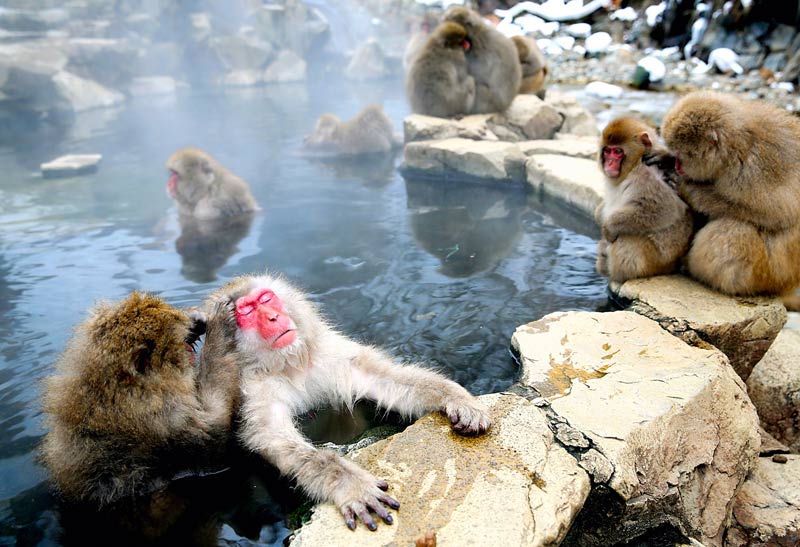
Japanese macaques live in groups in Japan's mountain forests. Their thick fur helps them survive cold winters. They groom one another, communicate, search for food and raise their young as part of complex social groups.
Why the monkeys bathe in hot springs
The most famous sight in Jigokudani is macaques sitting in a hot pool while snow falls around them. The warm water helps them cope with winter cold. However, not every monkey bathes, and they do not stay in the pool all day. During warmer months, they use it much less frequently.
According to the park's management, the behaviour began relatively recently when a young monkey entered a hot spring at a nearby traditional inn. Other monkeys gradually copied it. A separate outdoor pool was later built for the macaques.
When to visit
Winter, especially from December to March, is the most popular season for photographing monkeys in steaming water surrounded by snow. Young macaques are often seen in spring and summer; births usually occur between April and June. Autumn brings colourful foliage, although monkey visits to the park may be less regular. Their appearance is never guaranteed on a particular day.
How to get there
A common route begins at Nagano Station, which is connected to Tokyo by the Hokuriku Shinkansen. From Nagano, visitors can take a train or bus towards Yudanaka, or use a bus service to the Snow Monkey Park stop. The final section is a forest walk of approximately 30–40 minutes, depending on the starting point and conditions. Winter paths can be slippery, so sturdy footwear is recommended.
Visitor rules
Jigokudani is a place to observe wild animals, not a petting zoo. Do not touch the macaques, feed them, stare at them from close range or approach their young. Follow staff instructions and keep children close. The paths are unpaved, which limits access for wheelchairs and visitors with reduced mobility. Pets are not permitted.
Nearby attractions
A visit can be combined with the hot-spring towns of Yudanaka and Shibu Onsen, where traditional ryokan inns, public baths and old streets offer a glimpse of Japanese onsen culture. Jigokudani is memorable not only for its photographs but also for the chance to observe macaque social behaviour and their adaptation to a cold mountain environment.
Gallery