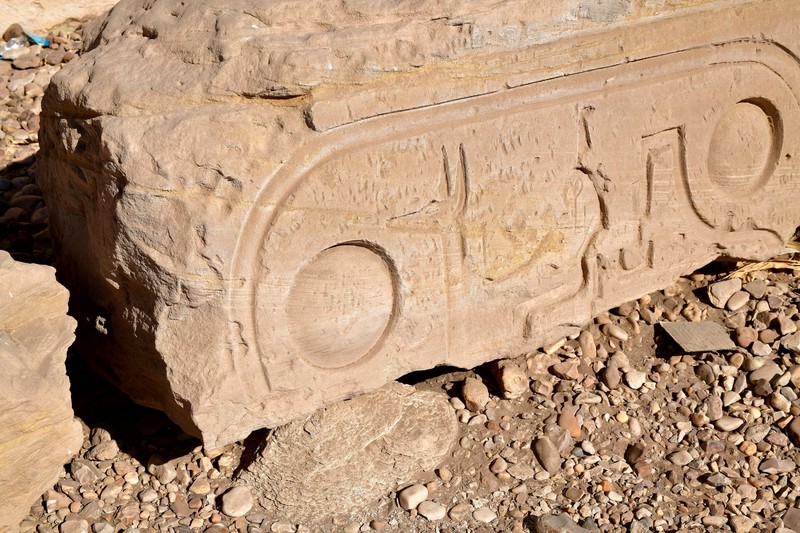
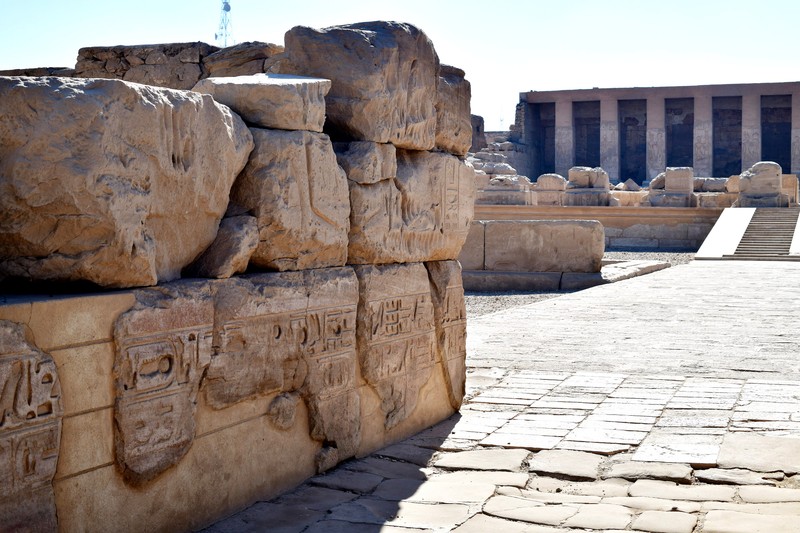
The Temple of Abydos, best known as the Temple of Seti I, is one of the most remarkable religious monuments of ancient Egypt. Located in Upper Egypt, it was dedicated to several major deities, especially Osiris, ruler of the afterlife. The temple is renowned for its unusual layout, finely carved reliefs, seven sacred chapels and the famous Abydos King List, an important source for the study of Egyptian dynasties.
Abydos, a sacred city
Abydos was one of ancient Egypt’s most important religious centres. The surrounding area contains burials of early rulers, including the royal necropolis of Umm el-Qa'ab. The city later became a major centre of the cult of Osiris, associated with death, resurrection and eternal life. Pilgrims came here for religious ceremonies, and many Egyptians sought to associate their burials symbolically with this sacred landscape.
History of the temple
The temple was begun under Seti I of the 19th Dynasty, in the late 13th century BCE, and completed and decorated further by his son Ramesses II. The reliefs associated with Seti I are noted for their fine detail, while later work shows a different artistic style. The complex served both as a place of worship and as a monument expressing royal authority and the pharaoh’s relationship with the gods.
An unusual architectural plan
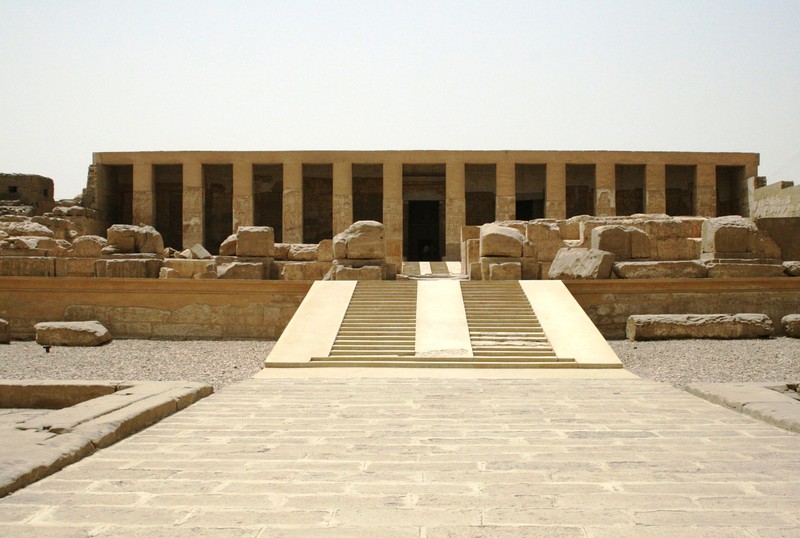
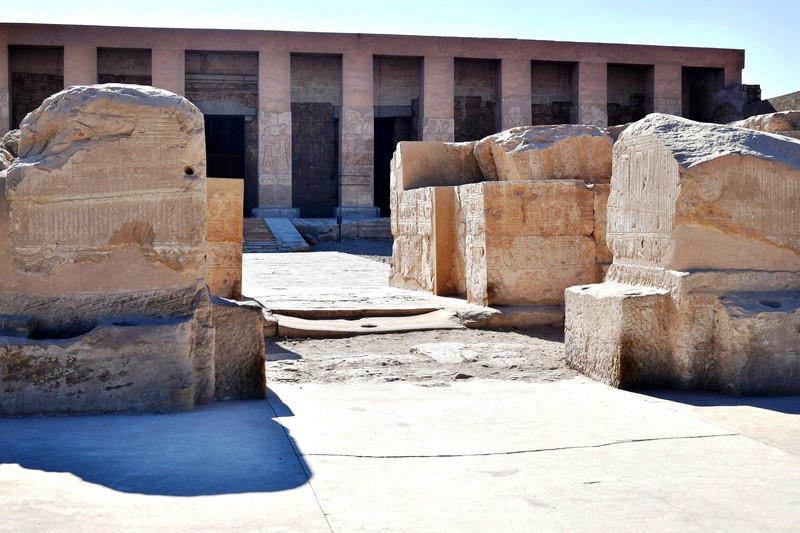
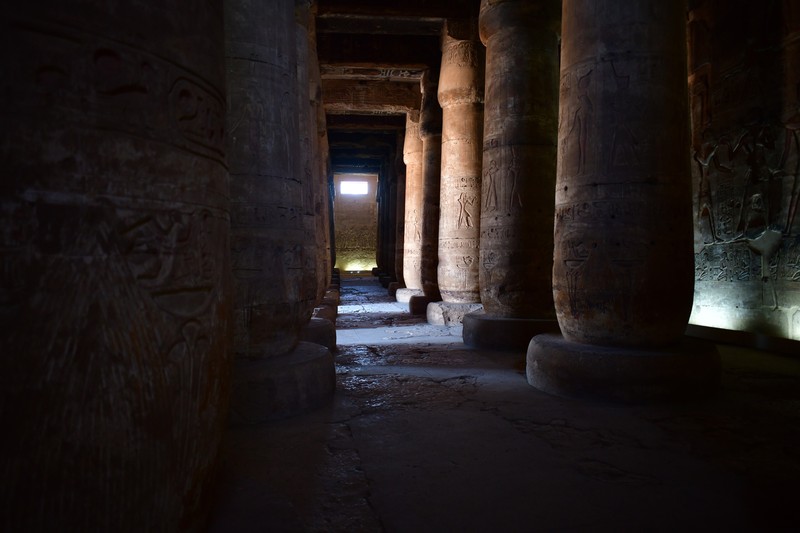
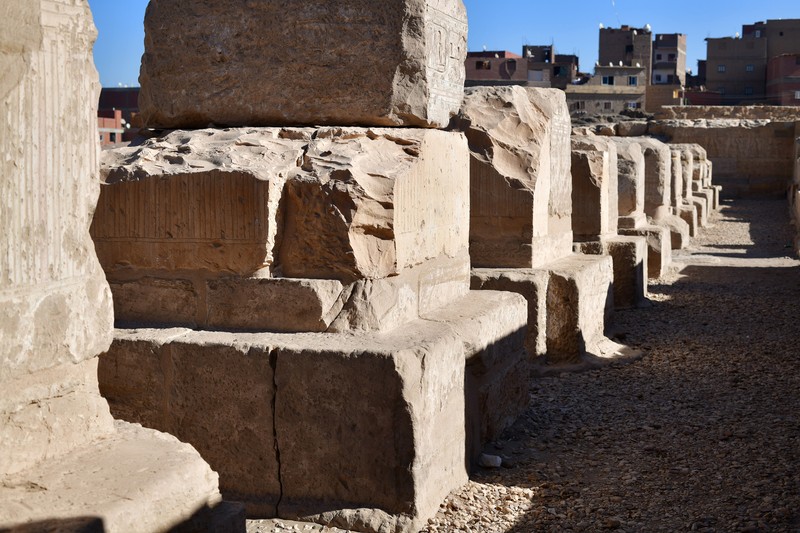
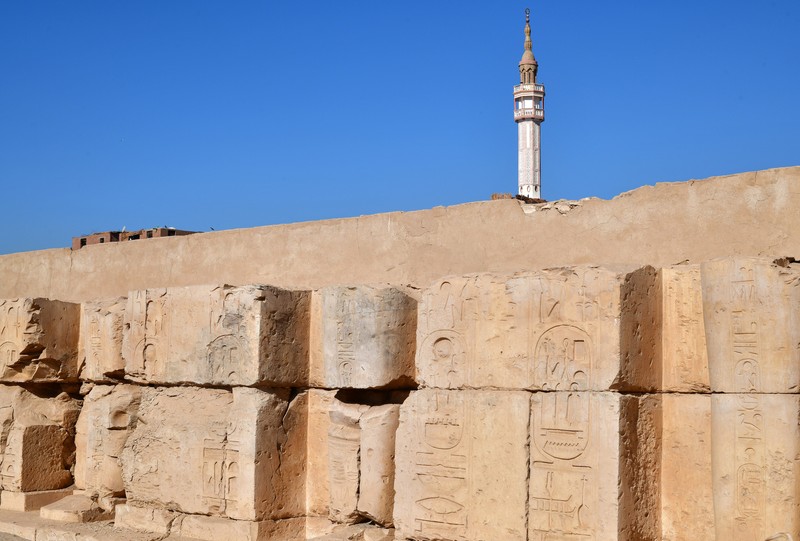
The temple has an L-shaped ground plan, unlike the more regular axial layouts of many Egyptian sanctuaries. Built mainly of pale limestone, it includes courtyards, columned halls, corridors and inner chambers. At the rear are seven parallel sacred chapels, dedicated to different deities and to Seti I himself. The arrangement brought several cults together within one carefully organised complex.
The seven chapels
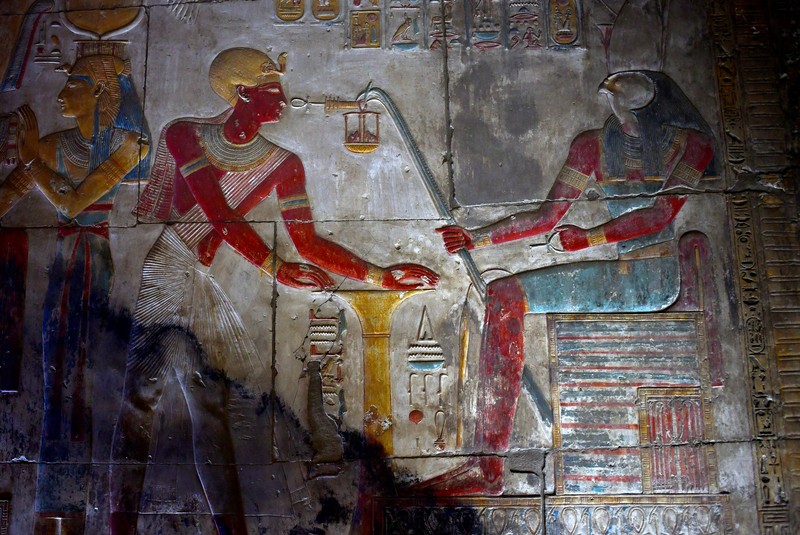
The chapels were associated with Osiris, Isis, Horus, Amun-Ra, Ra-Horakhty and Ptah, while the seventh was dedicated to Seti I. After death, the king was associated with Osiris, whose mythology represented renewal and eternal life. Each chapel had its own inscriptions, images and ritual purpose, reflecting the distinctive traditions of the deity worshipped there.
Reliefs and the myth of Osiris
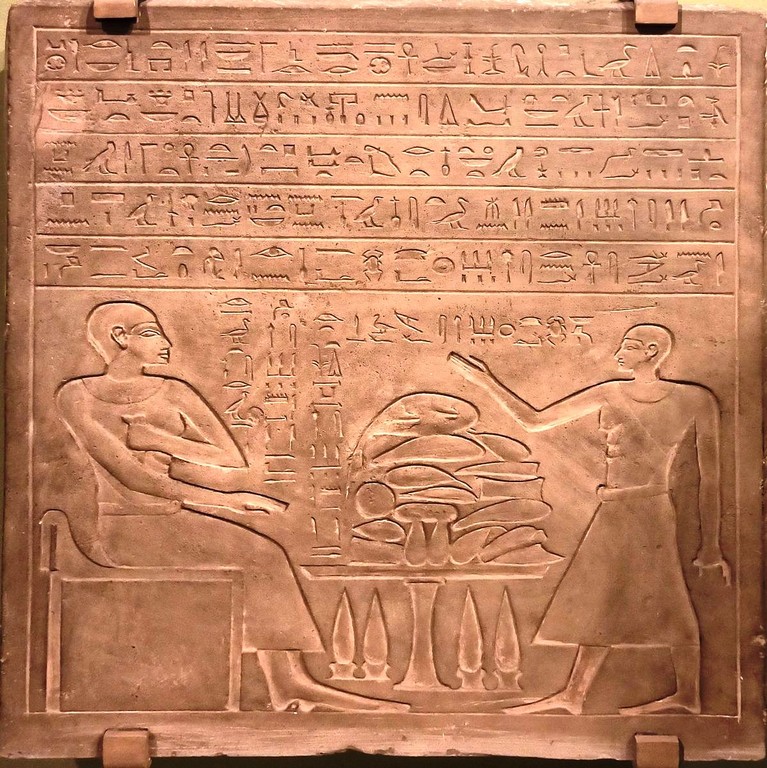
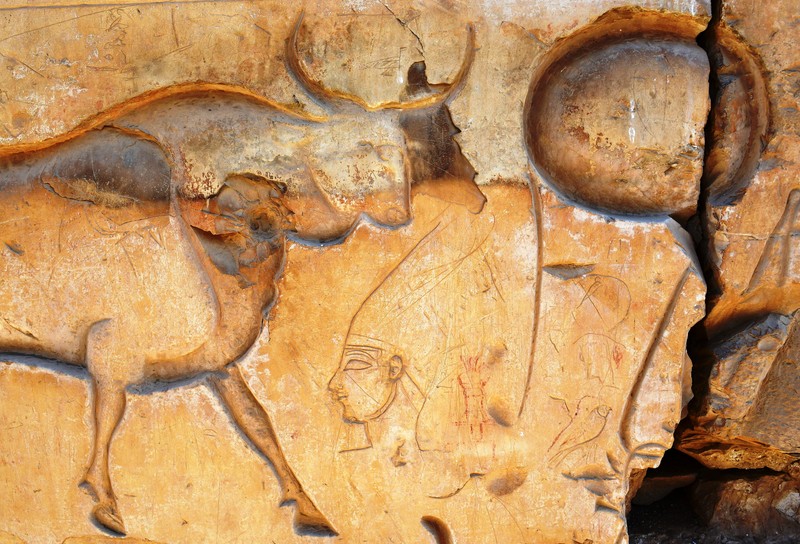
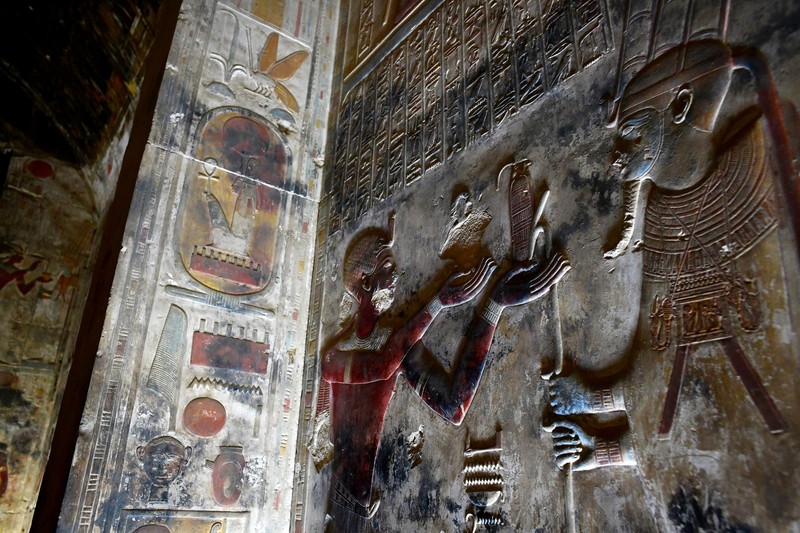
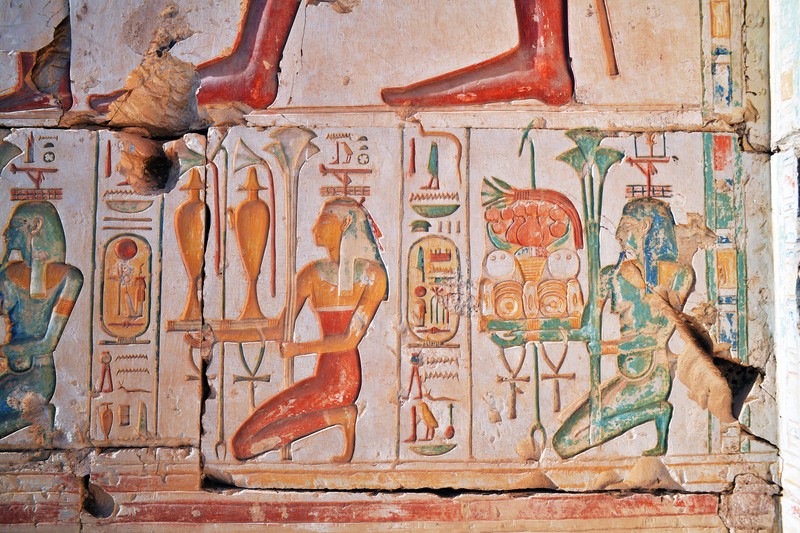
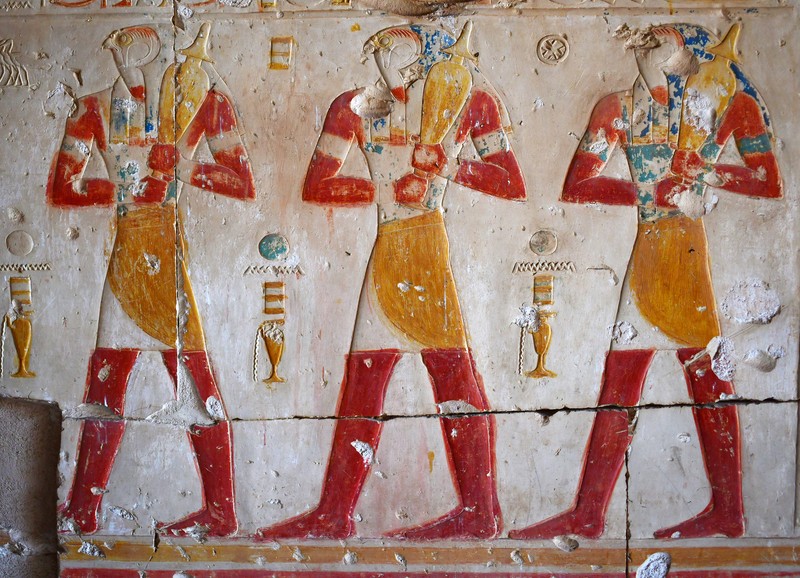
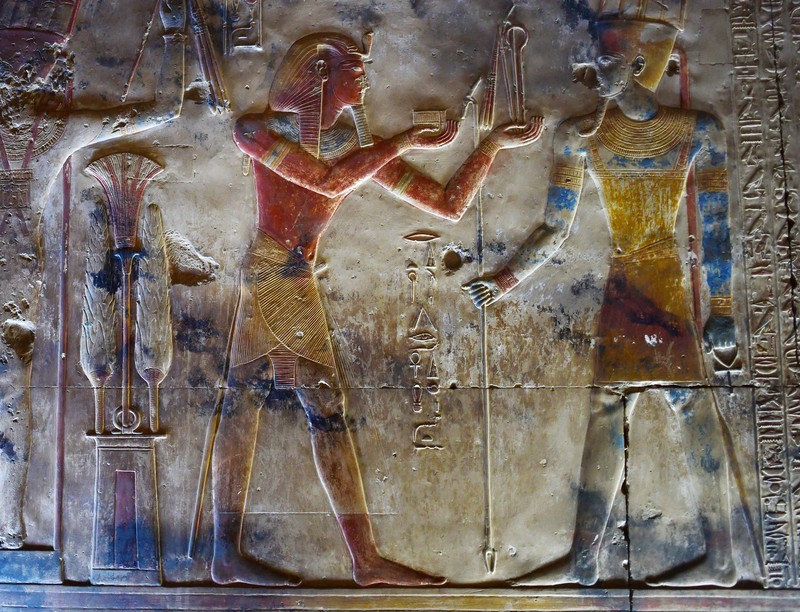
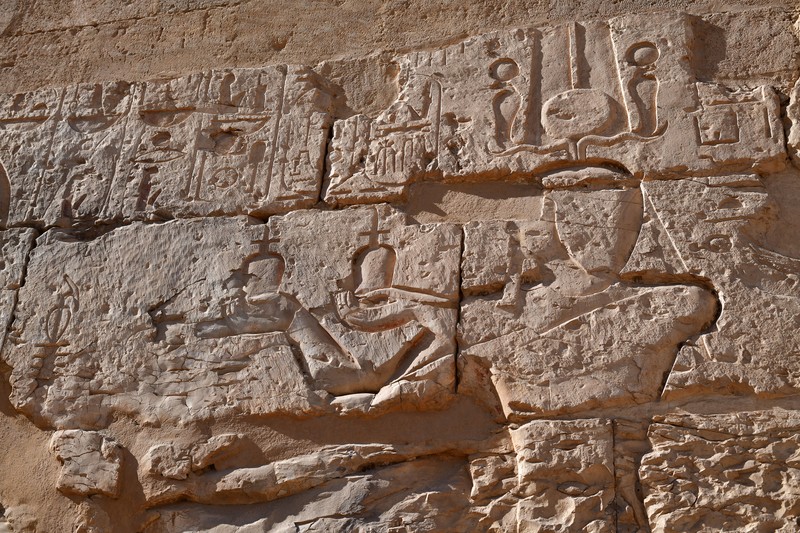
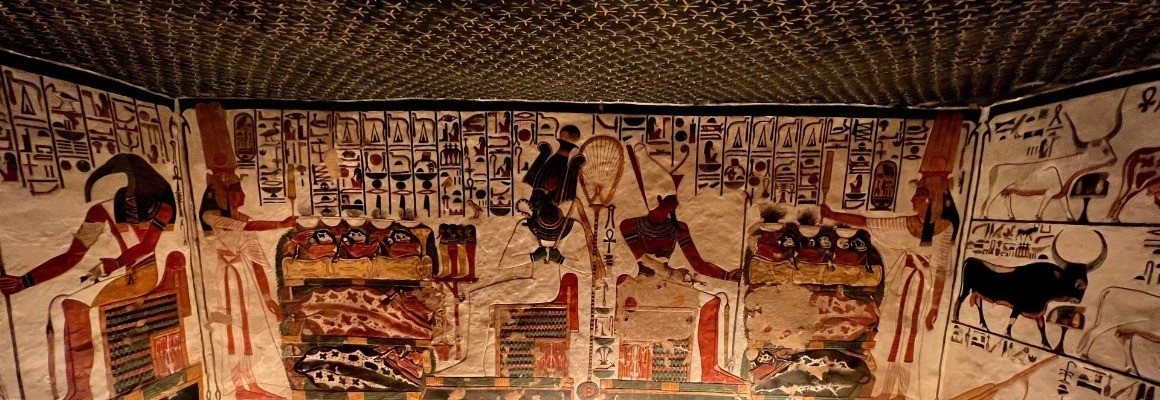
The temple is famous for elegant reliefs depicting the pharaoh presenting offerings and participating in sacred ceremonies. Traces of the original colours survive in some areas. Scenes connected with the myth of Osiris, Isis and Horus were especially important. The myth explained the relationship between death, rebirth and legitimate kingship. Temple imagery was not merely decorative: it formed part of the religious system intended to maintain divine order.
The Abydos King List
One of the temple’s most important features is the Abydos King List, which records 76 royal names, from early rulers traditionally associated with Egypt’s unification to Seti I. It is a valuable reference for reconstructing the sequence of Egyptian dynasties. However, the list is selective. Several rulers, including Hatshepsut, Akhenaten and Tutankhamun, were omitted from the official tradition represented at the temple. The list therefore reveals both historical information and the political interpretation of Egypt’s past.
The Osireion and the Temple of Ramesses II
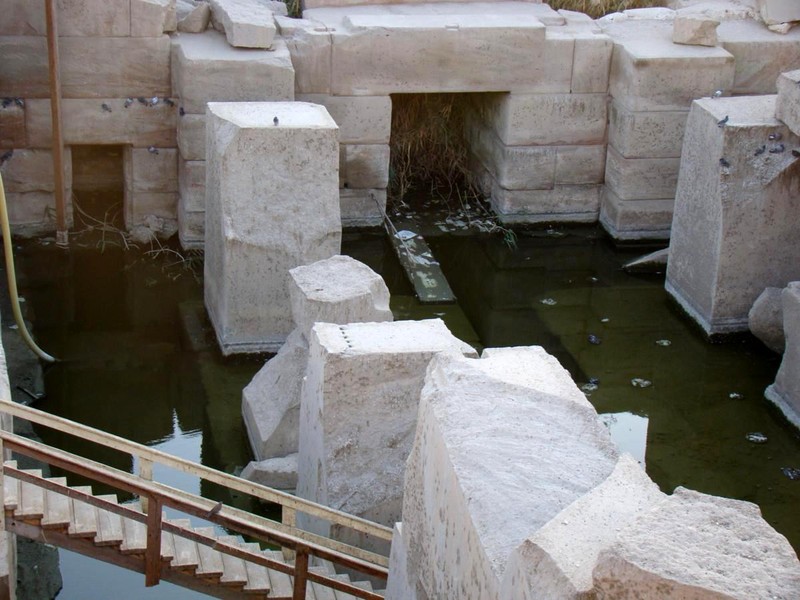
Behind the temple lies the Osireion, an unusual stone structure associated with Osiris and ideas of renewal. Its precise function and some aspects of its construction remain subjects of research. Abydos also contains a separate temple built by Ramesses II to commemorate his kingship. Although it is less well preserved, important decorative remains survive, including scenes associated with the Battle of Kadesh.
Visiting the temple
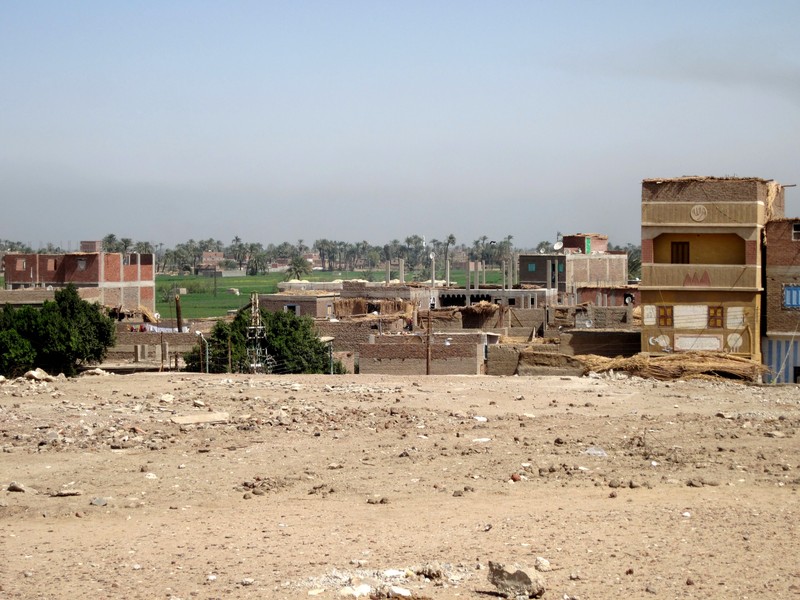
The Temple of Seti I lies near the modern settlement of El-Araba el-Madfuna in Sohag Governorate. It is far from central Luxor and is usually visited on a separate trip or organised excursion. Visitors should allow time to examine the seven chapels, reliefs, king list and unusual architectural plan. Check current opening hours, ticket prices and access arrangements for the Osireion before travelling.
Historical importance
The Temple of Abydos is an essential source for understanding ancient Egyptian religion, art and royal ideology. The king list records an official view of the past, the reliefs display the artistic achievement of the New Kingdom, and the chapels reveal the range of cults brought together in the sanctuary. Along with the Osireion and other monuments, the temple explains why Abydos remained one of Egypt’s most sacred places for millennia.
Gallery