Sultan Hassan Mosque – a masterpiece of Mamluk architecture
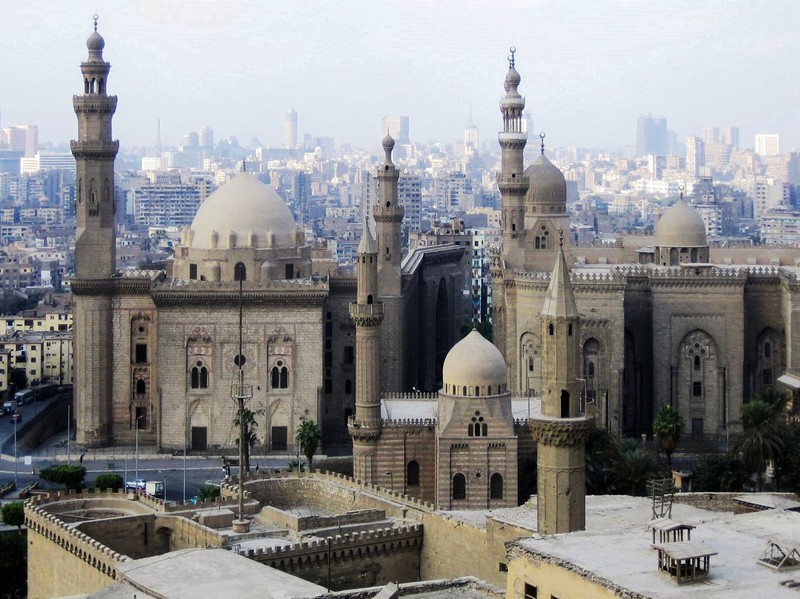
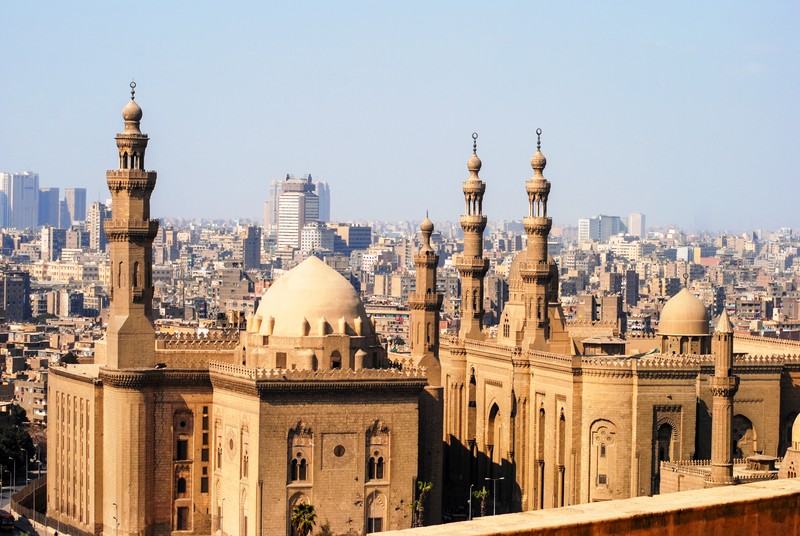
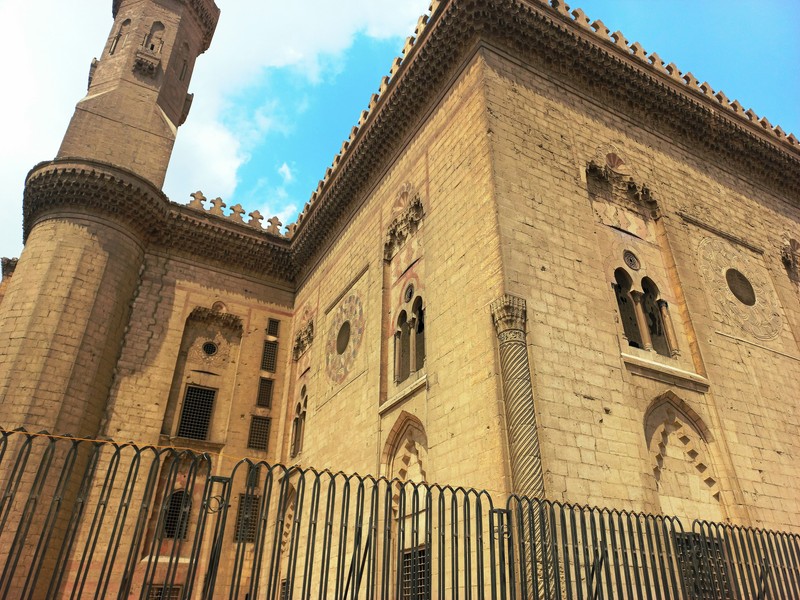
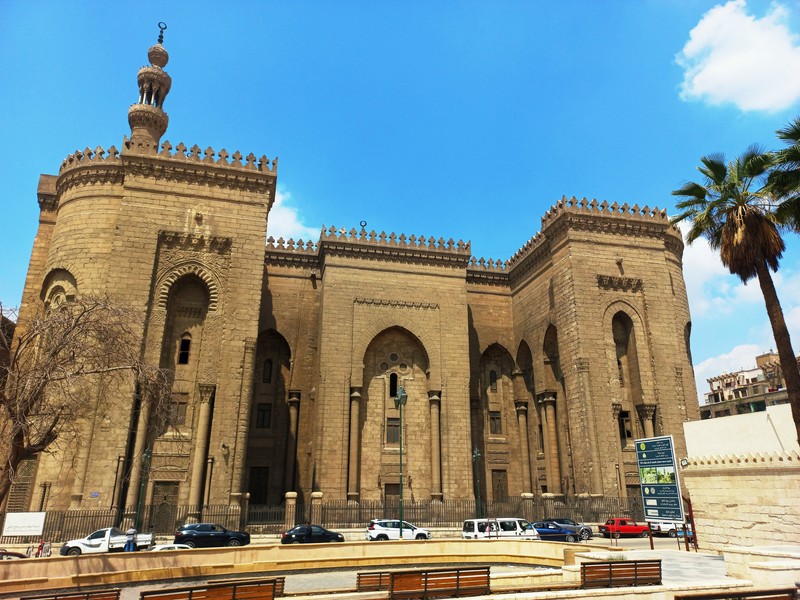
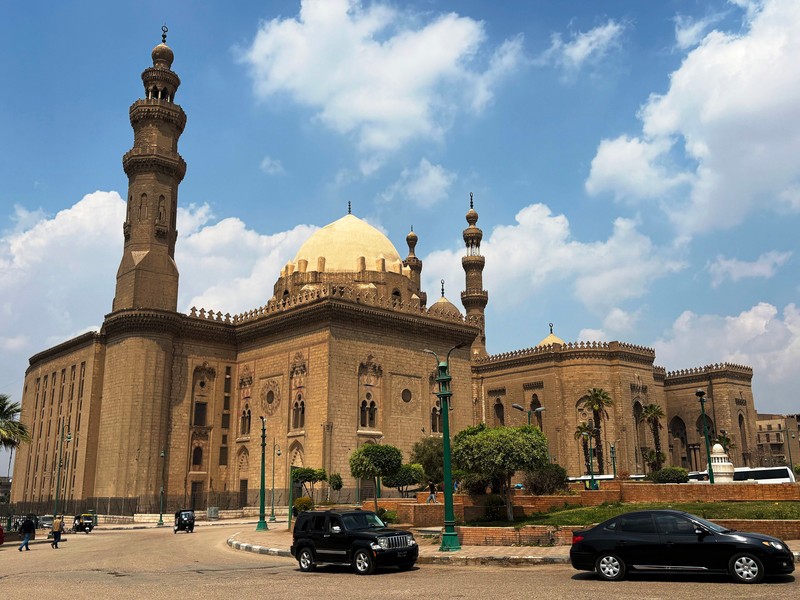
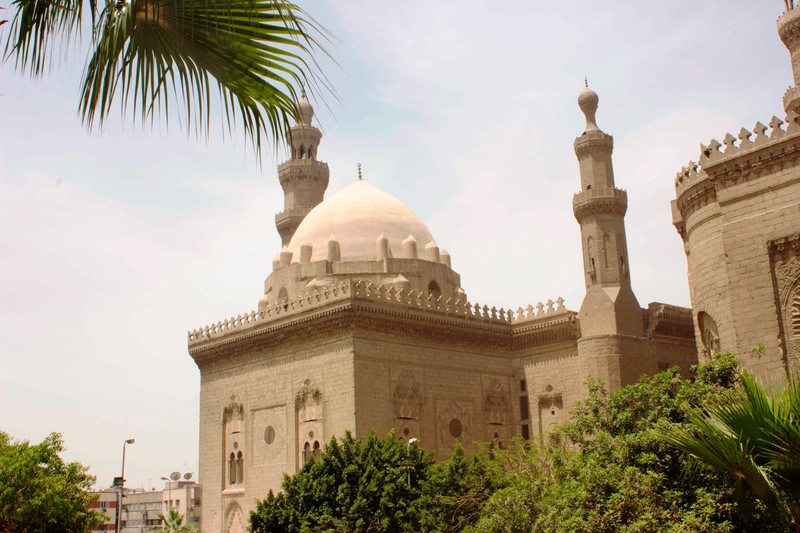
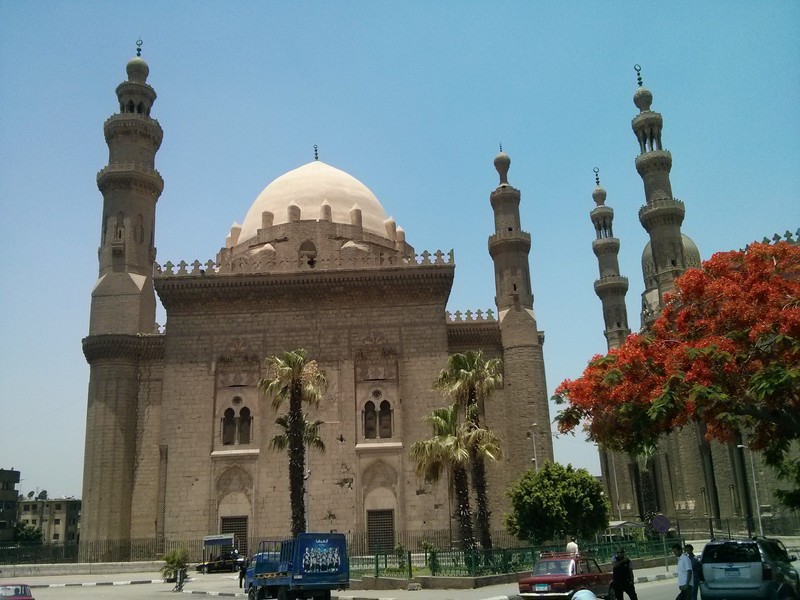
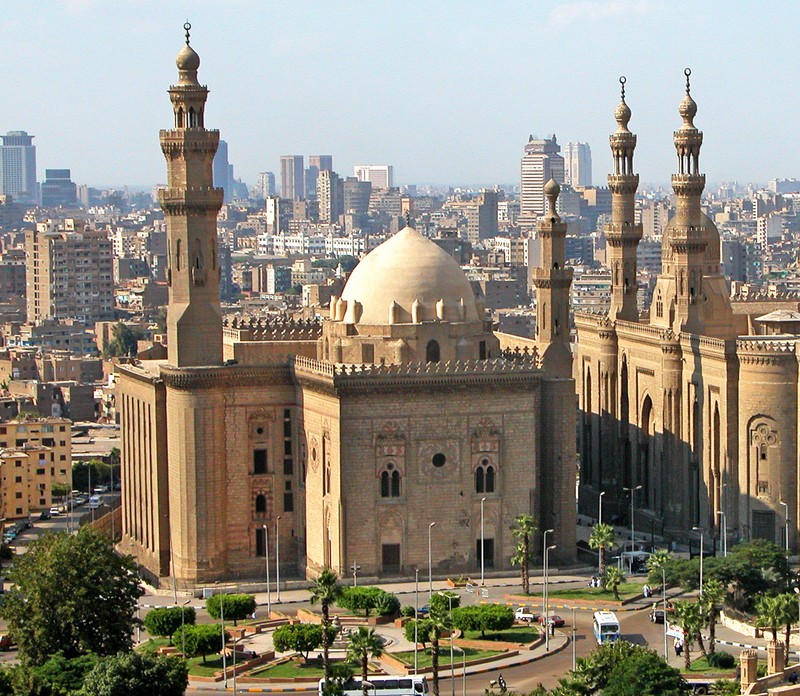
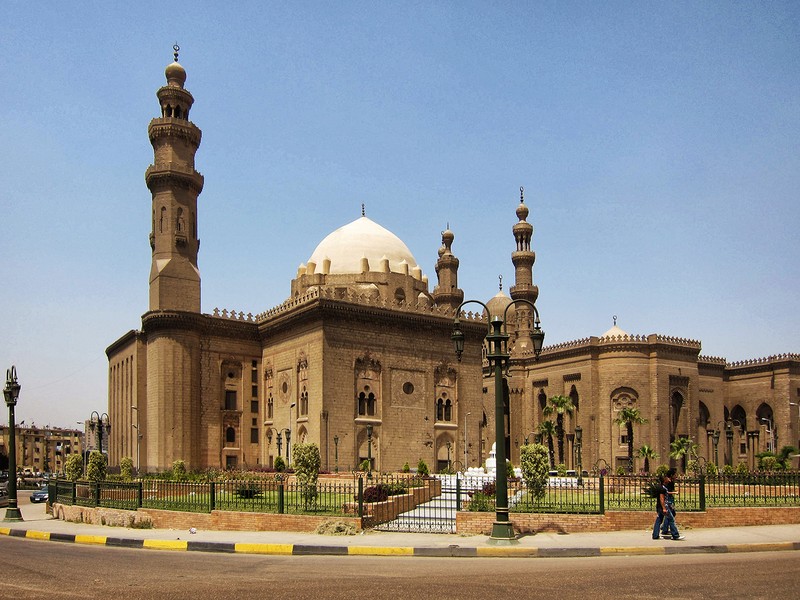
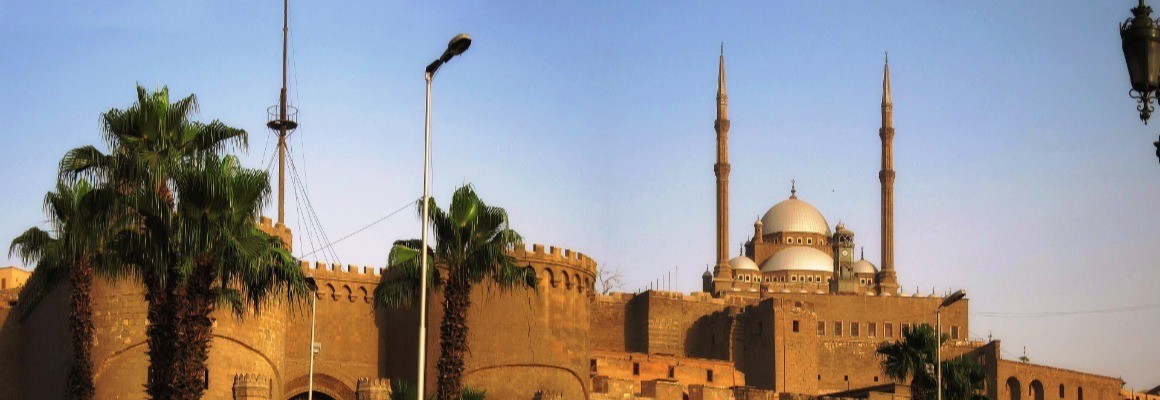
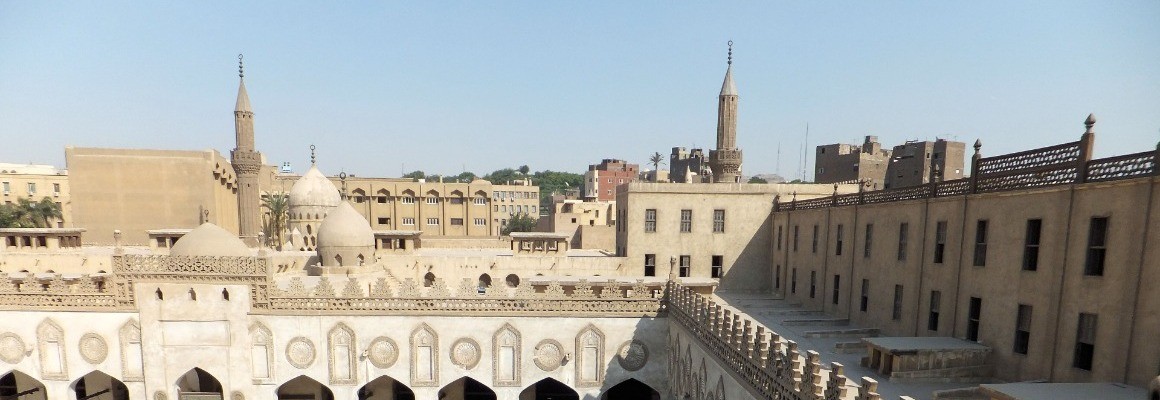
The Mosque and Madrasa of Sultan Hassan is one of Cairo’s most remarkable historic monuments and a major example of 14th-century Islamic architecture. The vast complex combines a mosque with four educational institutions devoted to Islamic law. Its monumental walls, towering entrance, spacious courtyard and elaborate decoration reflect the height of Mamluk architecture in Egypt.
History of construction
Construction began in 1356 under Sultan an-Nasir Hasan and continued for several years. The project was intended to create a major religious and educational centre that would demonstrate the ruler’s power. Craftsmen from different regions of the Mamluk state contributed to the work. Despite political turmoil, damage and repeated restoration, the complex remained one of Cairo’s most important monuments.
Architecture and courtyard
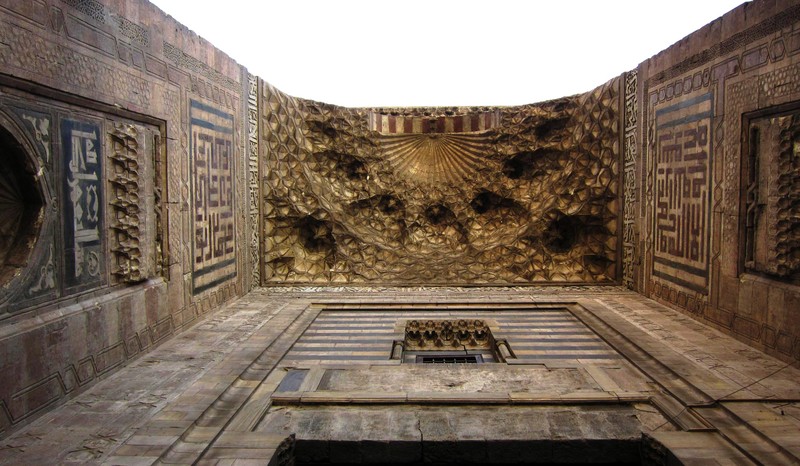
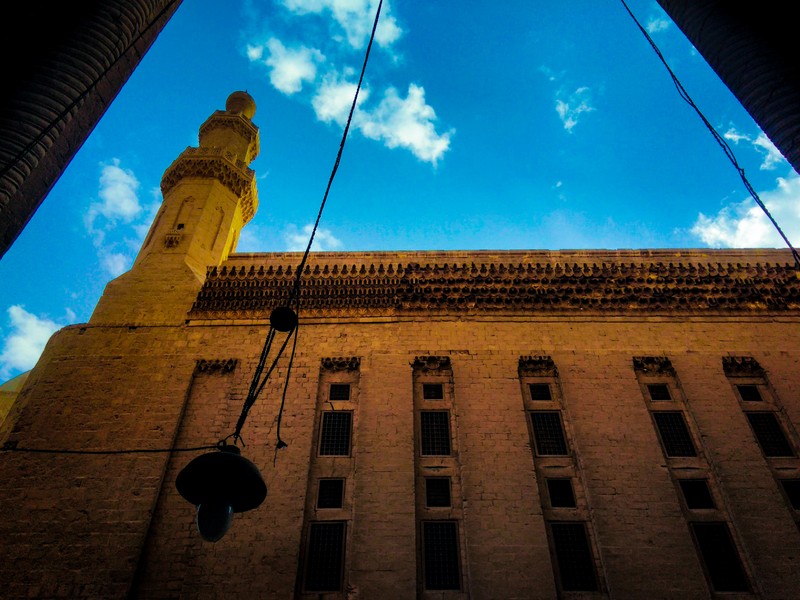
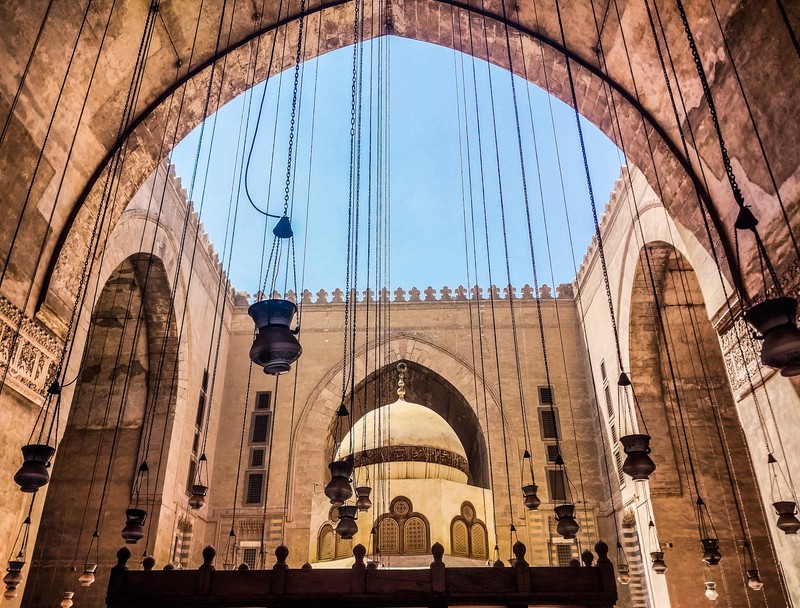
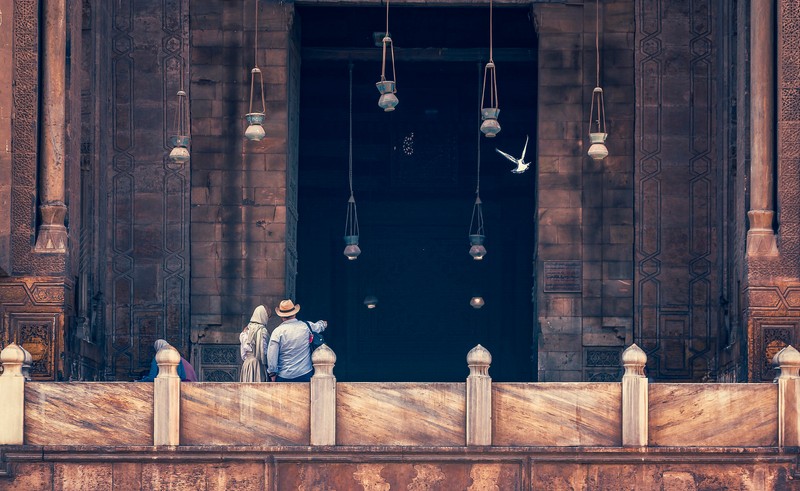
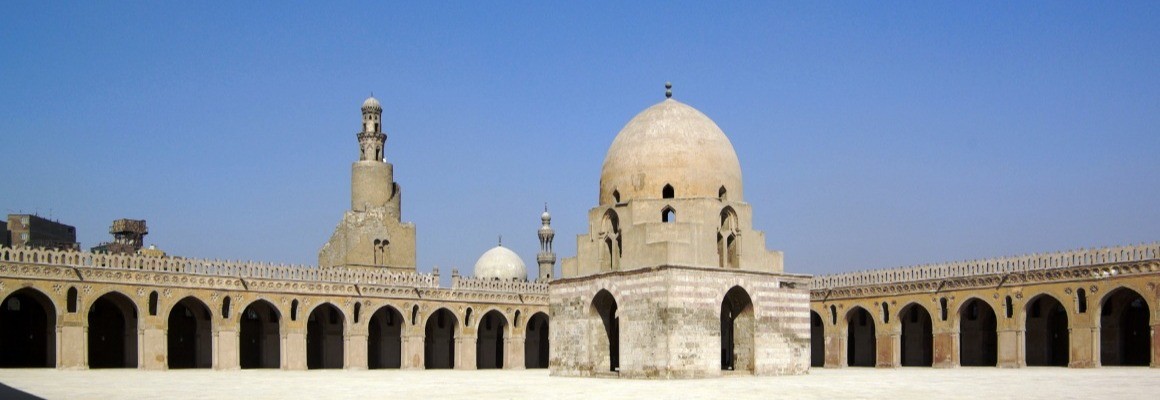
The monumental façade features high stone walls and a grand entrance portal. At the centre is an open courtyard with a fountain for ablutions. Four large vaulted iwans open onto the courtyard. The most important iwan stands on the qibla side, facing the direction of Mecca.
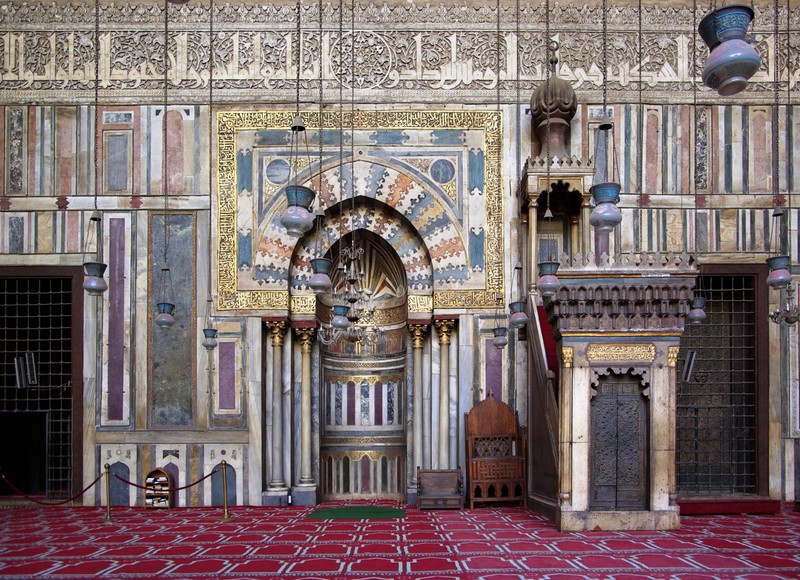
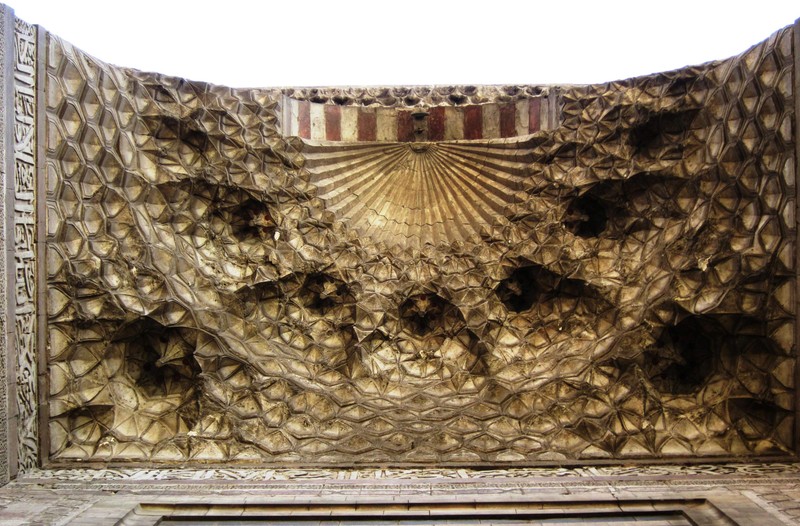
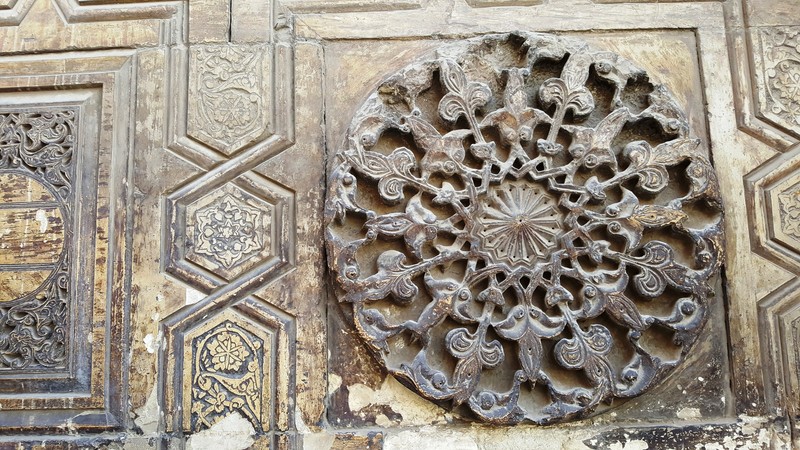
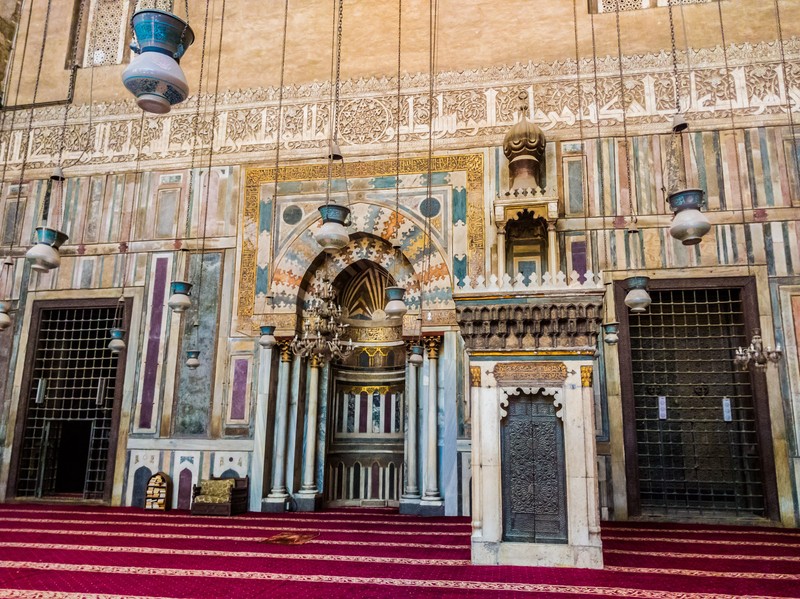
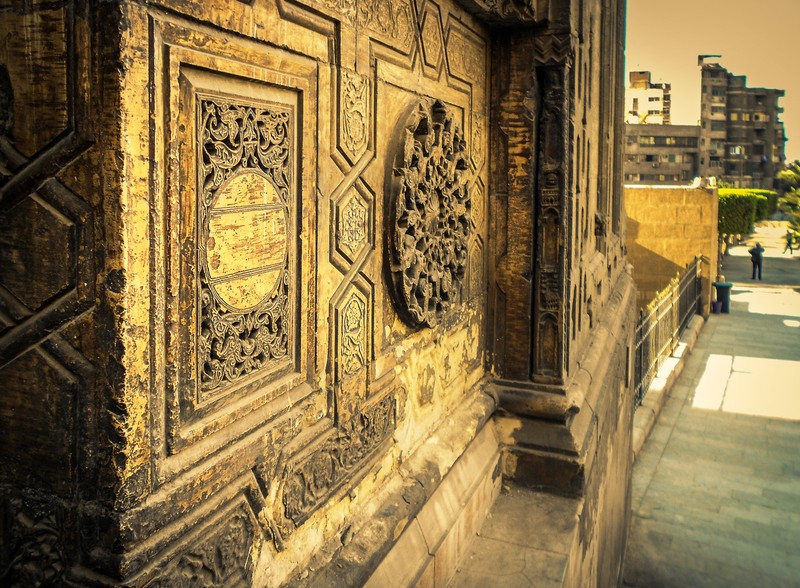
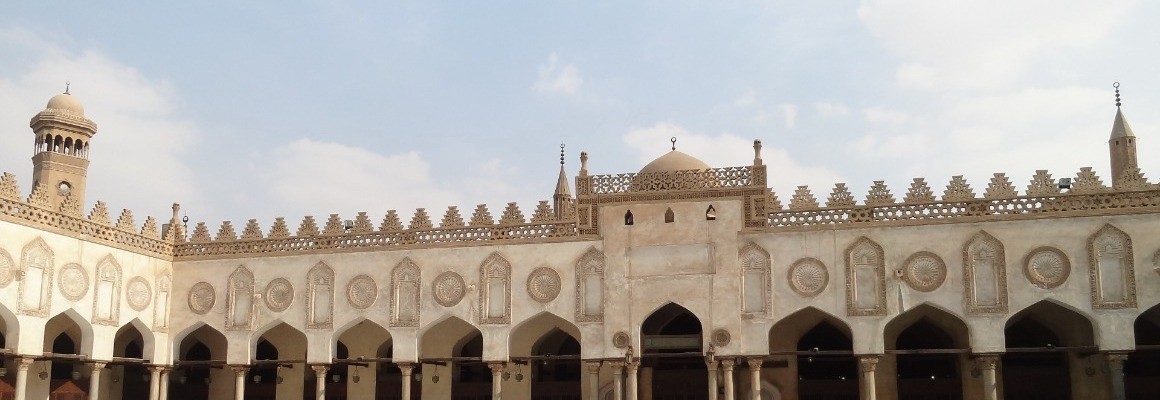
The decoration includes carved stone, plasterwork, marble and calligraphic inscriptions. The mihrab, which marks the direction of prayer, is among the most striking features of the interior.
The four madrasas
Entrances at the courtyard’s corners lead to four madrasas associated with the main Sunni schools of Islamic law: Hanafi, Maliki, Shafi'i and Hanbali. Each had its own courtyard, iwan, student rooms and service spaces. Students studied Islamic jurisprudence, religious texts and related disciplines.
Minarets and historical importance
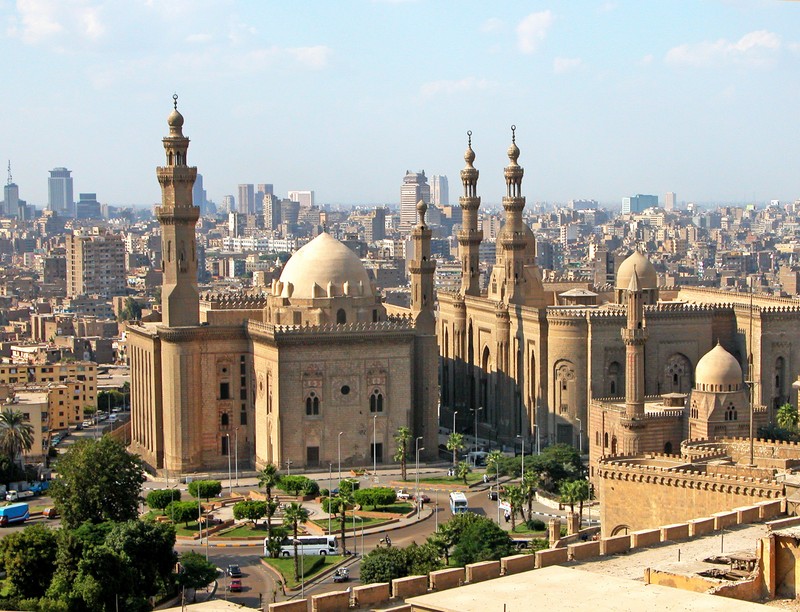
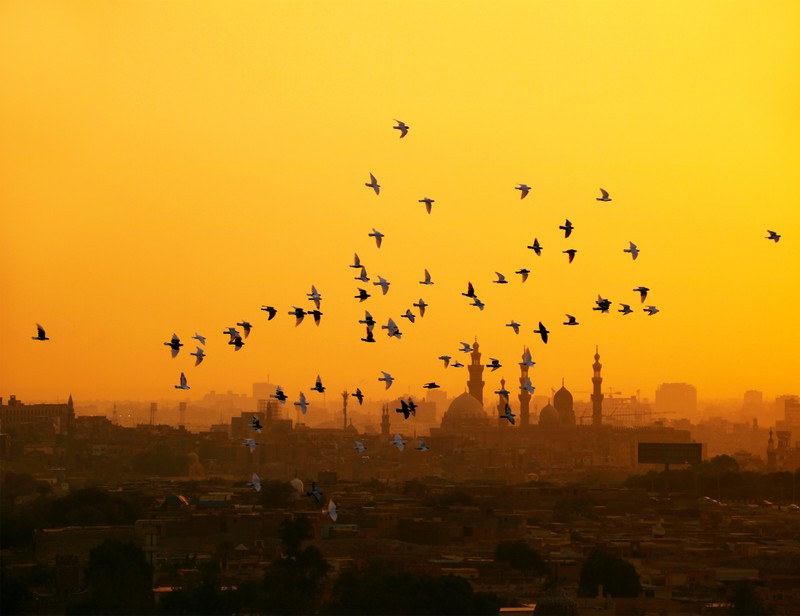
The minarets contribute to the building’s distinctive vertical silhouette. Because the complex stands close to the Citadel of Saladin, it was sometimes used as a fortified position during conflicts. Some rulers even considered demolishing it. Despite its turbulent history, the mosque remains one of the defining monuments of Mamluk Cairo.
Al-Rifa'i Mosque and nearby landmarks
Opposite Sultan Hassan Mosque stands Al-Rifa'i Mosque, built several centuries later. Visiting both monuments offers a useful comparison of Islamic architecture from different periods. The Citadel of Saladin and the Mosque of Muhammad Ali are also nearby. Historic Cairo is a UNESCO World Heritage site.
Visiting the mosque
The mosque is located in Salah al-Din Square in historic Cairo. Visitors should dress modestly, remain quiet during prayers and follow staff instructions. Visiting hours and access to particular areas may change, so check current information before travelling.
Why visit Sultan Hassan Mosque?
Sultan Hassan Mosque combines monumental architecture, the history of education and the religious life of medieval Egypt. It is an essential landmark for anyone interested in Islamic art and Cairo’s historic heritage.
Gallery