Grand Egyptian Museum – a landmark of ancient Egyptian heritage
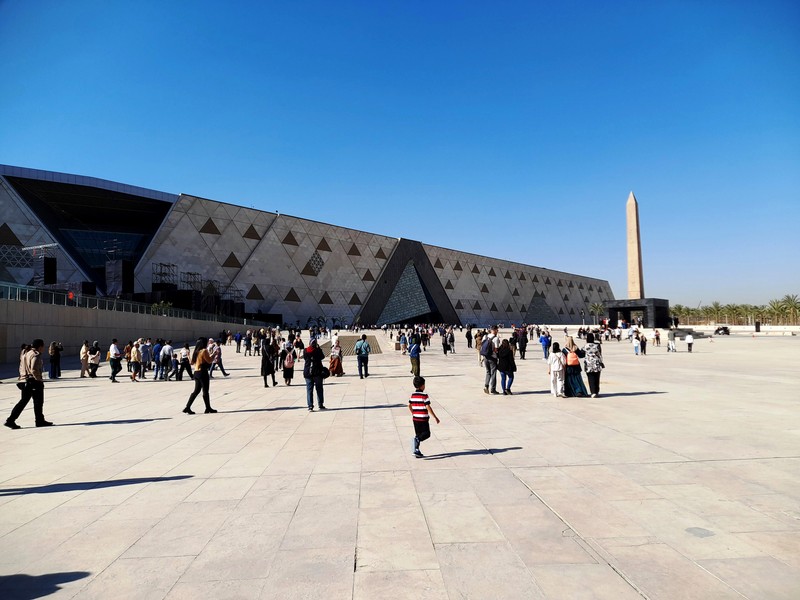
The Grand Egyptian Museum (GEM) stands in Giza, close to the famous pyramids and the Great Sphinx. This vast museum complex is dedicated to the history, culture and art of ancient Egypt. Its collection contains more than 100,000 objects spanning a period from prehistoric times to the Greco-Roman era. Archaeological discoveries, monumental sculptures, everyday objects, royal treasures and modern exhibition technologies come together in one place.
The museum's history
The project was conceived to provide space for Egypt's enormous collection of antiquities, which had outgrown the exhibition capacity of the historic Egyptian Museum in Cairo's Tahrir Square. Construction and preparation took many years. After a phased opening in 2024, the museum fully opened to the public in November 2025.
Architecture and location
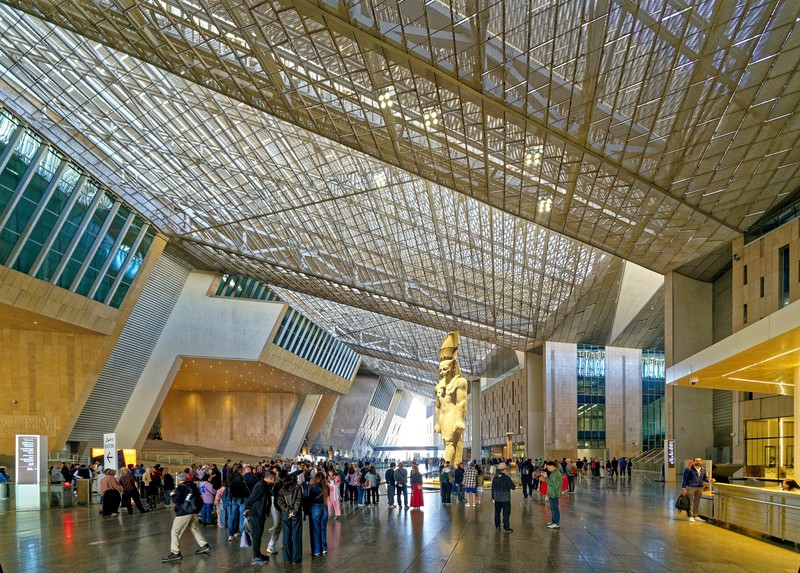
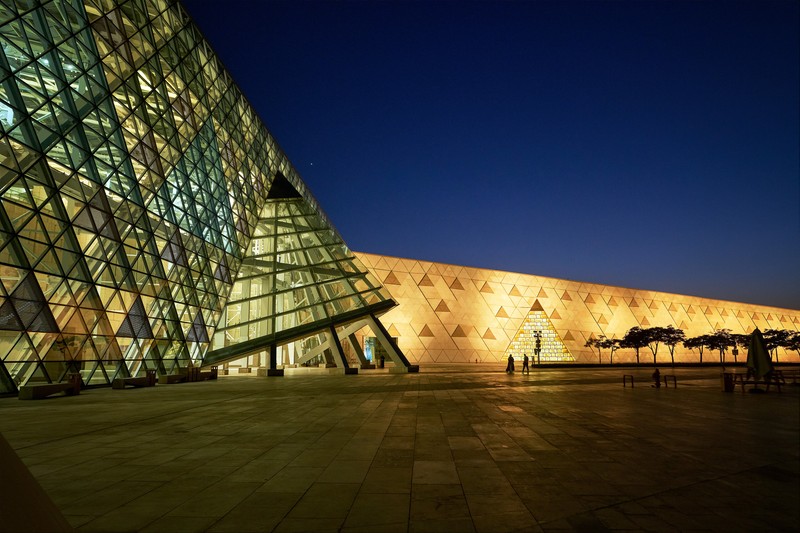
The complex is located near El Remaya Square on the Cairo–Alexandria Desert Road. Its contemporary architecture combines geometric forms, spacious galleries and broad open areas. The site covers approximately 500,000 square metres and was designed to connect the museum experience with the nearby Giza Plateau and its archaeological landscape.
The colossal statue of Ramesses II
Visitors are welcomed into the Grand Hall by a monumental statue of Pharaoh Ramesses II, who ruled in the 13th century BCE. The statue is about 11 metres tall and weighs roughly 80 tonnes. It was discovered at Memphis, the ancient capital of Egypt, and illustrates the grandeur of royal sculpture during the New Kingdom.
The Tutankhamun galleries
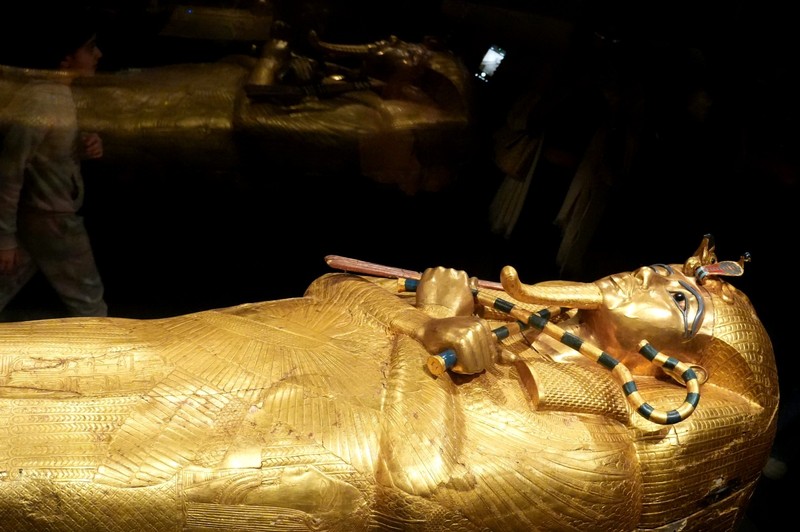
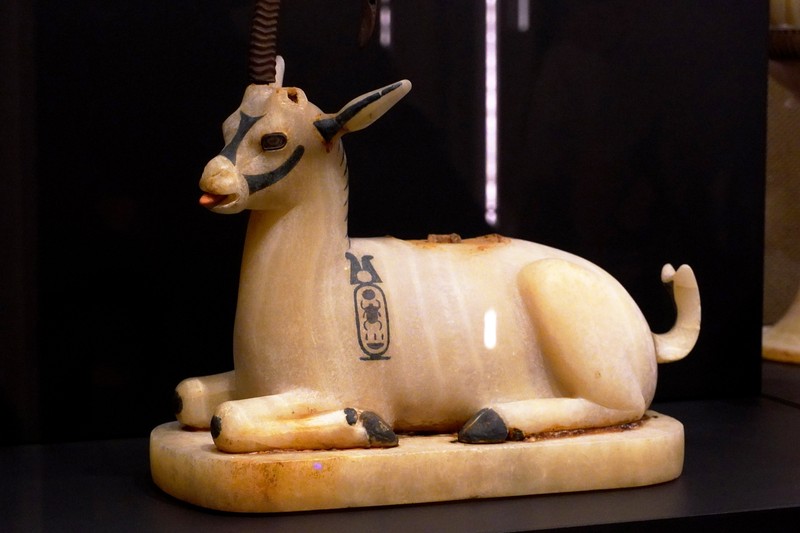
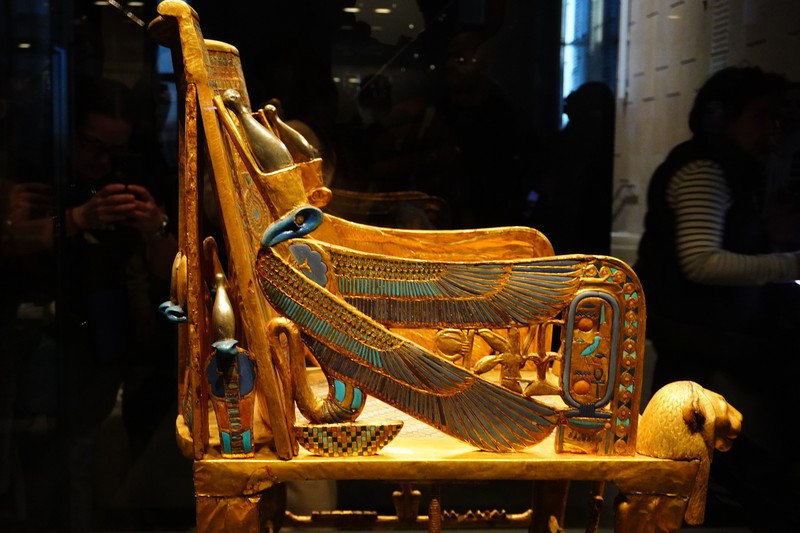
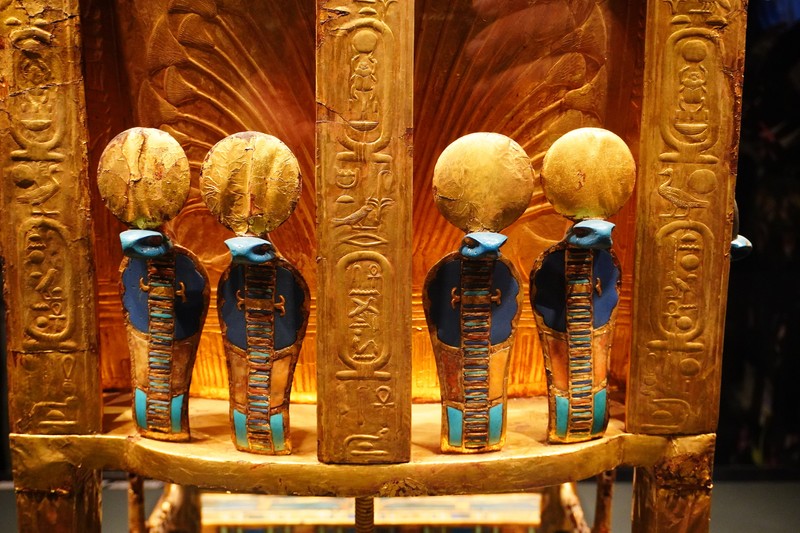
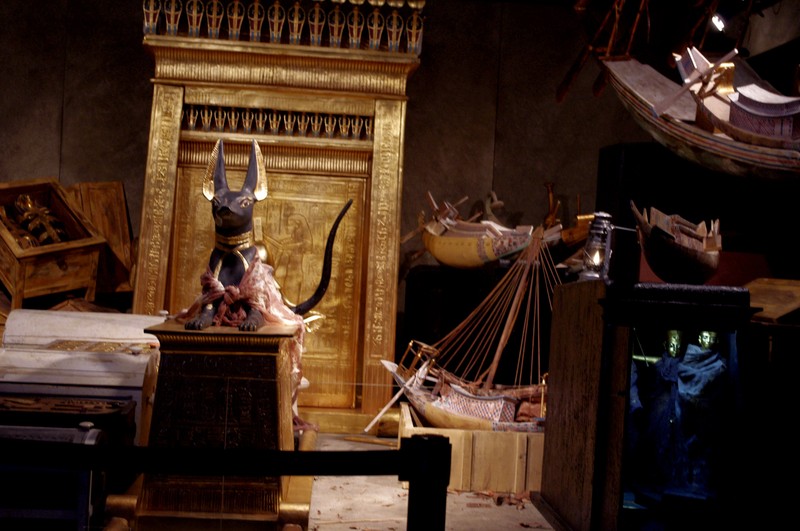
One of the museum's major highlights is the collection associated with Pharaoh Tutankhamun. His tomb was discovered in the Valley of the Kings in 1922 by an expedition led by Howard Carter. The collection contains more than 5,000 objects, including the famous golden funerary mask, jewellery, ritual objects, furniture and chariots. Together, these finds offer insight into royal burial customs and ancient Egyptian beliefs about the afterlife.
King Khufu's solar boat
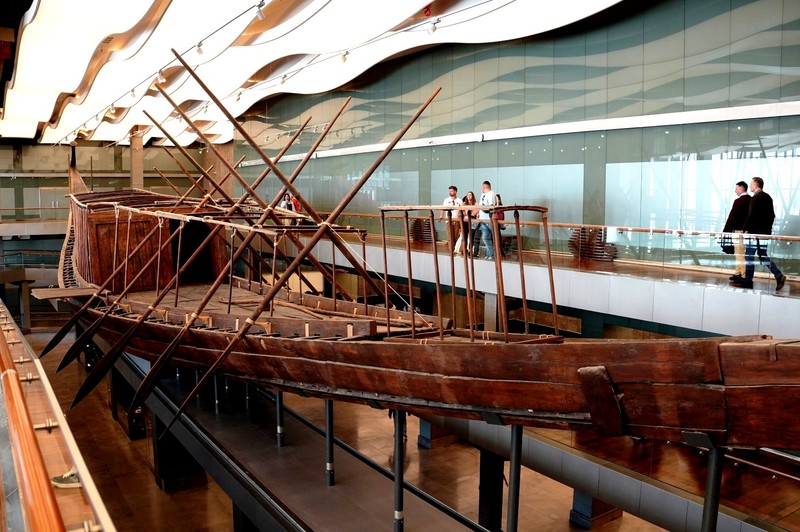
The museum also houses the solar boat associated with King Khufu, known in Greek tradition as Cheops. The vessel was discovered in 1954 in a sealed pit beside his pyramid. Its wooden components were carefully reconstructed, and the boat measures about 43 metres in length. It is an extraordinary source for understanding ancient shipbuilding, royal funerary practices and religious symbolism.
Main galleries and archaeological collections
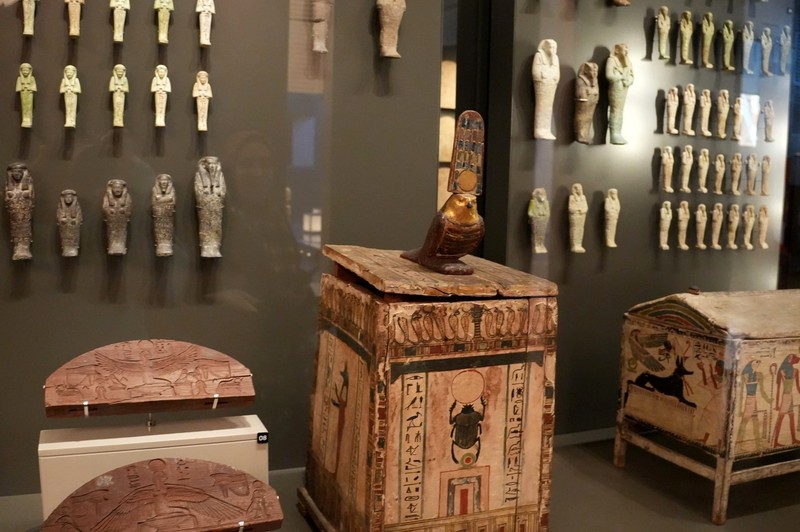
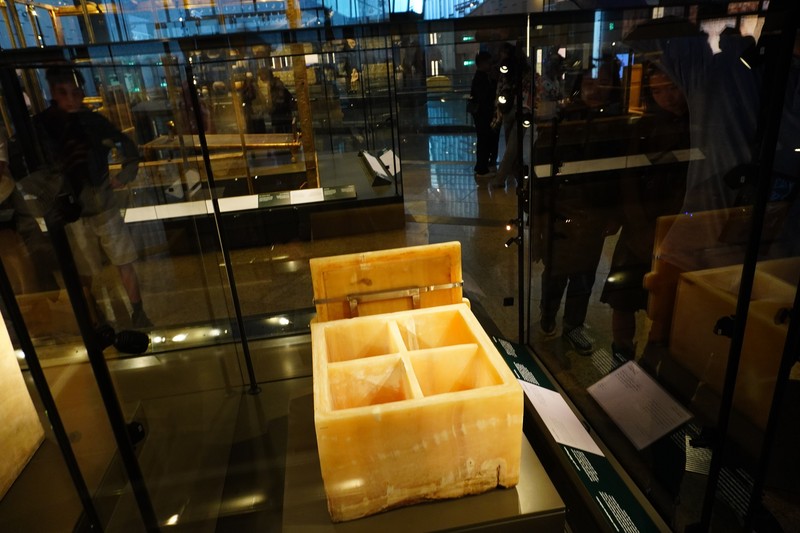
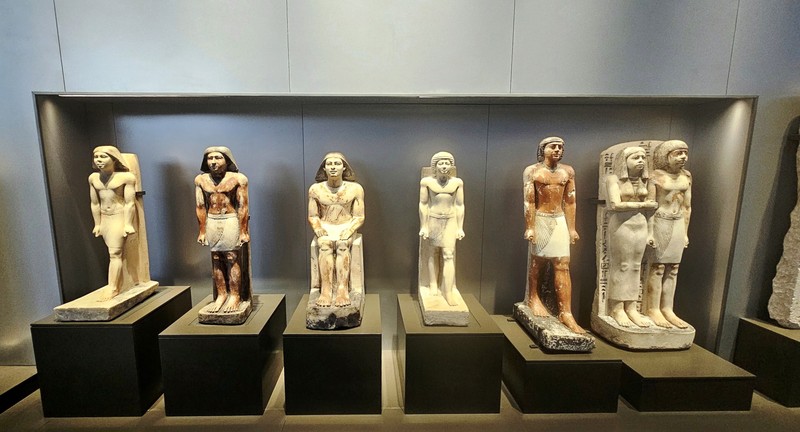
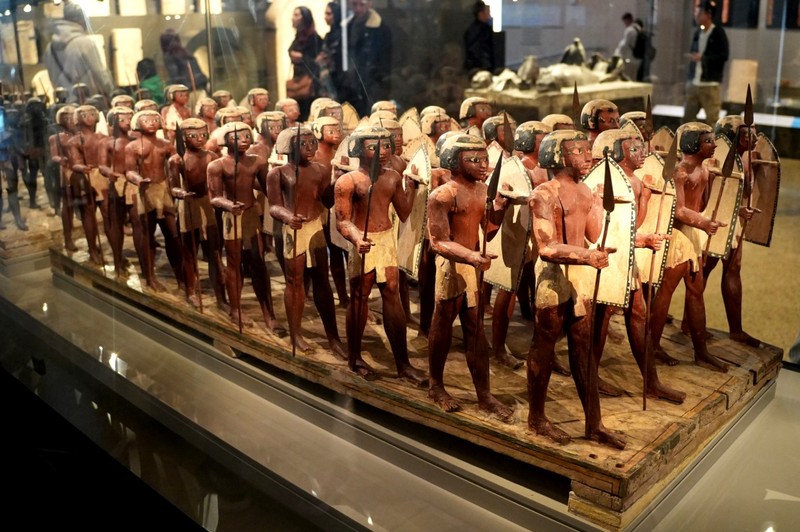
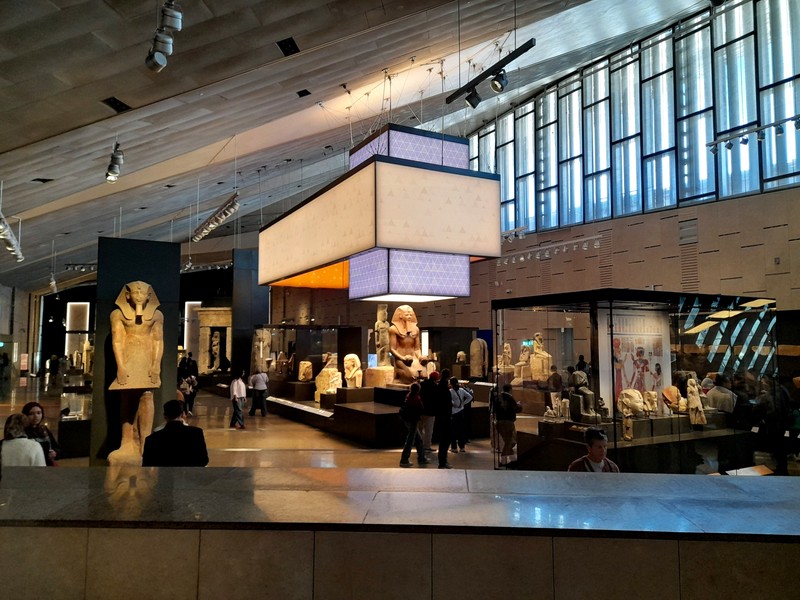
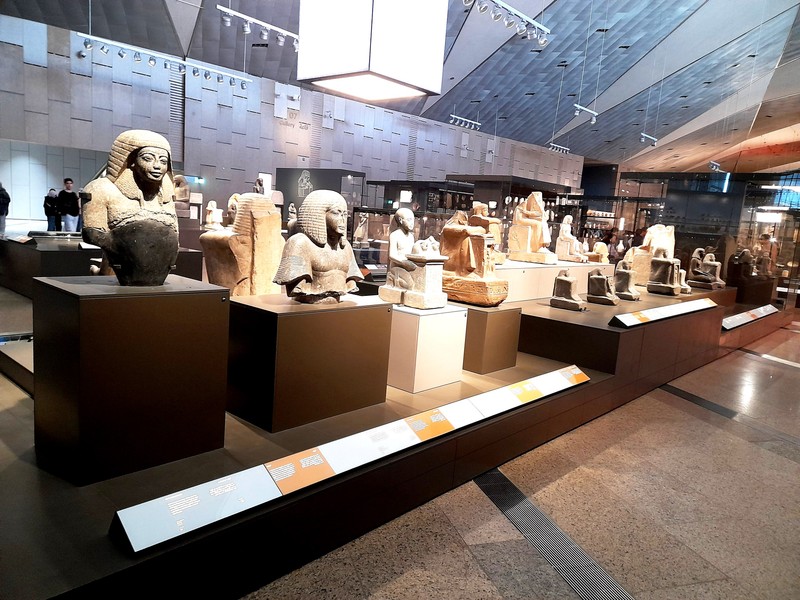
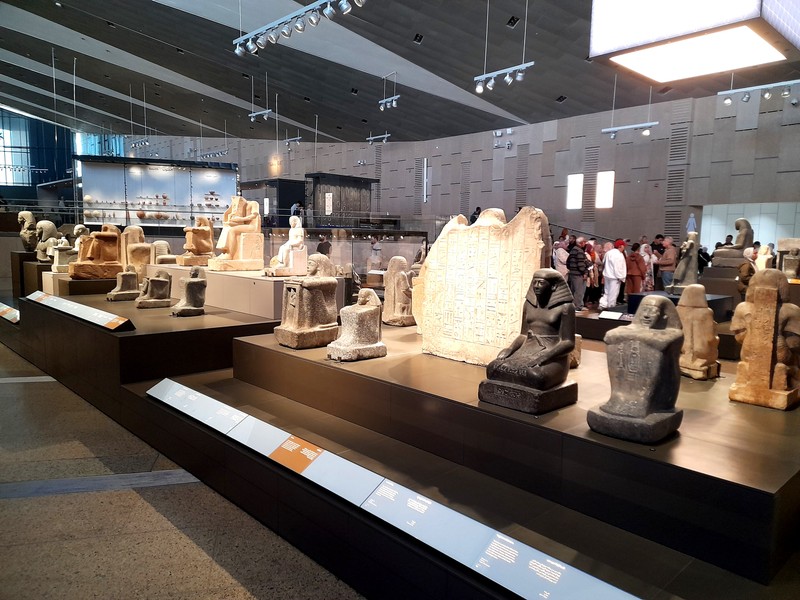
The main galleries explore Egyptian history from early periods through the Greco-Roman era. Visitors can see statues of rulers and deities, stone reliefs, sarcophagi, jewellery, pottery, tools and household objects. These artefacts reveal changes in artistic styles, technologies, trade and social life across thousands of years.
The Grand Staircase
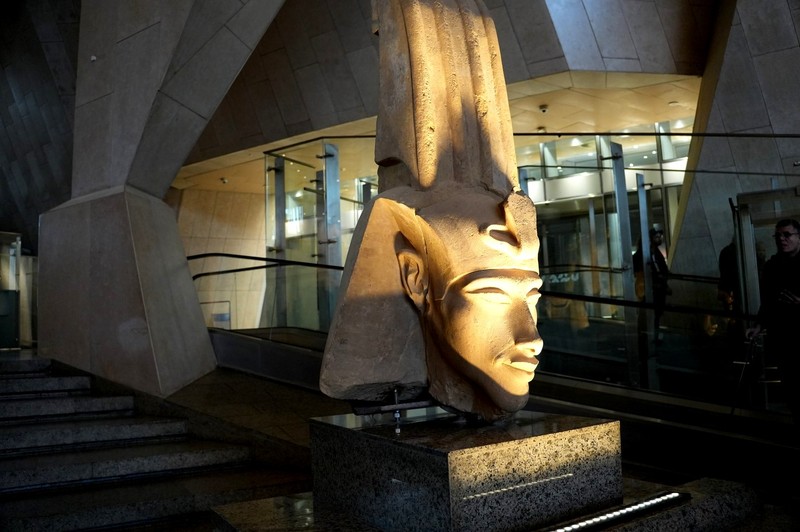
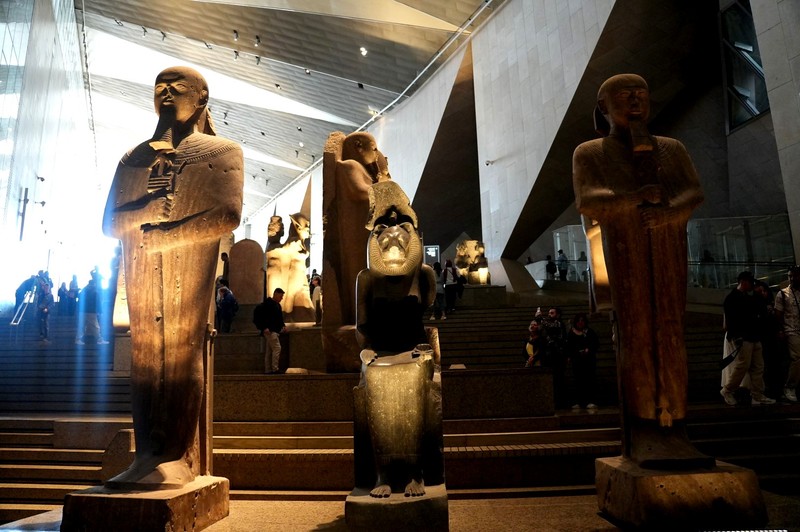
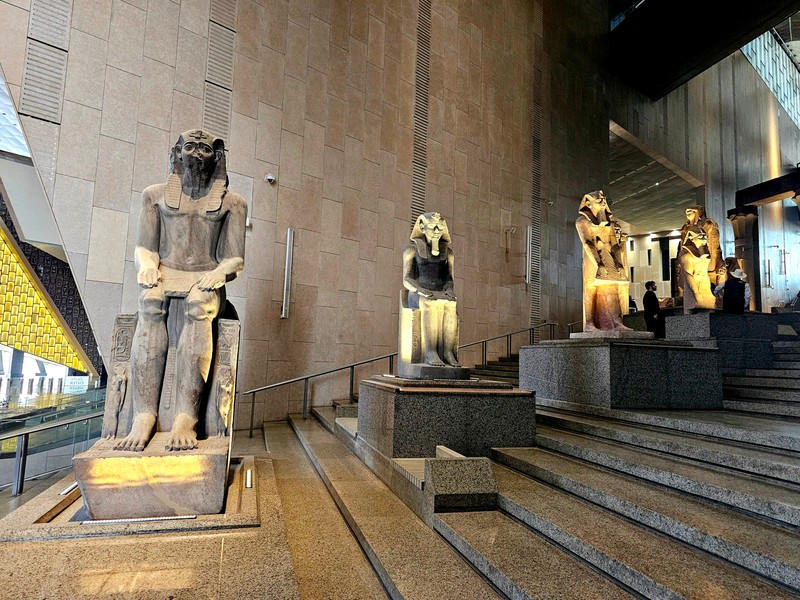
The Grand Staircase is lined with large statues, sarcophagi and other monumental objects. Its open design allows visitors to view the artefacts from different levels and appreciate the scale of ancient Egyptian sculpture. The ascent creates a visual journey through different periods of Egyptian history.
Research and conservation
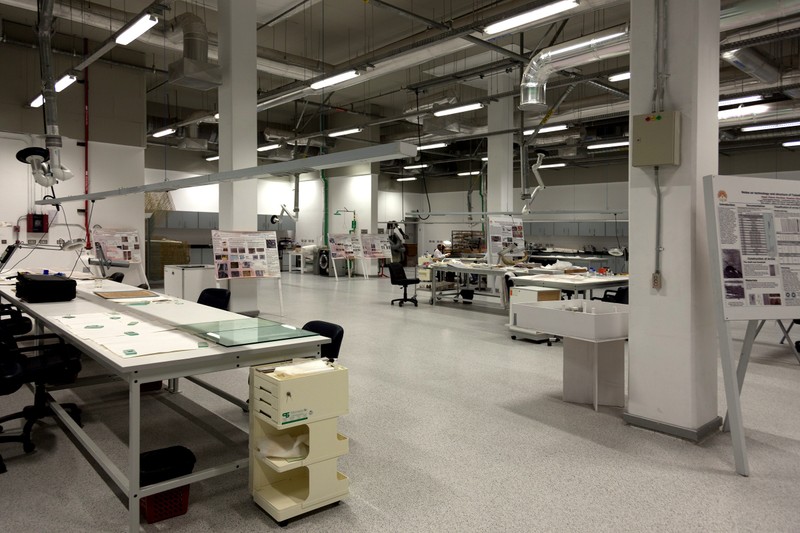
GEM is not only an exhibition venue but also a centre for archaeological research and conservation. Specialised facilities support the study, documentation and restoration of objects. Carefully controlled storage conditions are particularly important for fragile materials such as wood, textiles and papyrus.
Planning a visit
The museum is in Giza and can be reached from Cairo by car, taxi or organised tour. Allow several hours to see the main highlights; visitors who want to explore the collections in depth may wish to spend most of a day. Tickets should be booked through the official museum website in advance. Check current prices, opening times and access to specific galleries before travelling.
Nearby attractions
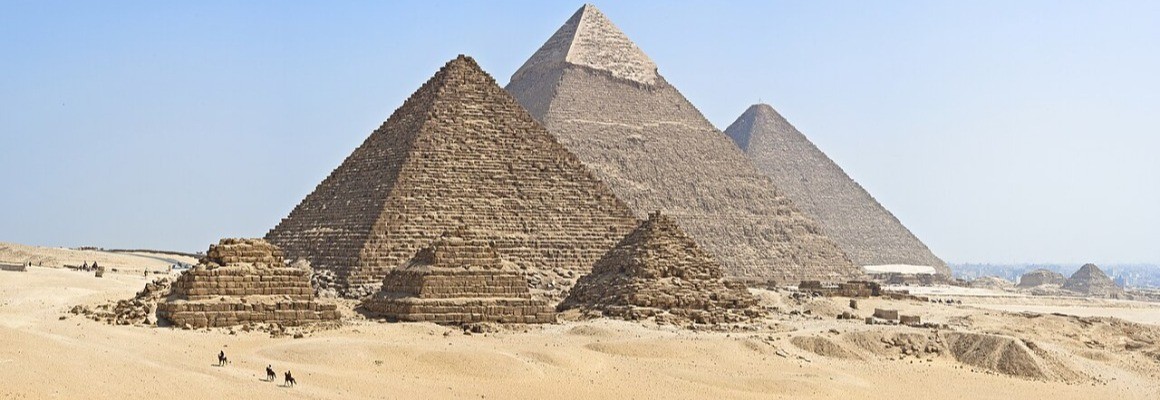
The Giza Plateau, home to the pyramids of Khufu, Khafre and Menkaure and the Great Sphinx, is nearby. Visiting the museum and the plateau together provides complementary experiences: the galleries explain the artefacts and their historical context, while the pyramids reveal the scale of ancient Egyptian architecture in its original landscape.
Why visit the Grand Egyptian Museum?
The Grand Egyptian Museum brings together Tutankhamun's treasures, the statue of Ramesses II, Khufu's solar boat and thousands of objects illustrating everyday life in ancient Egypt. Its location near the pyramids makes it one of the country's most important cultural destinations.
Gallery