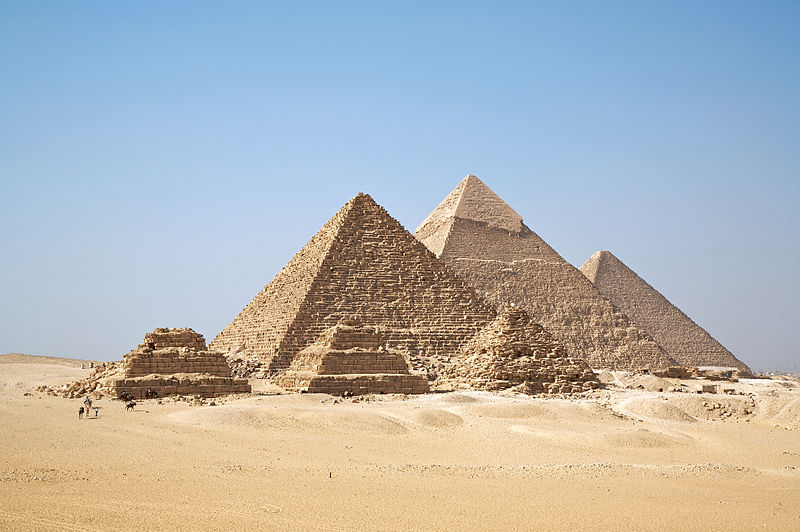
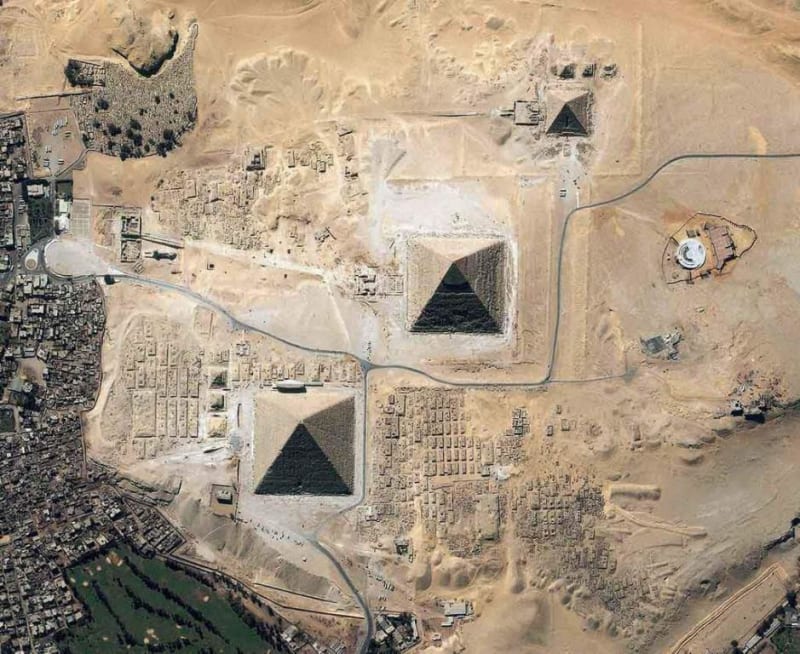
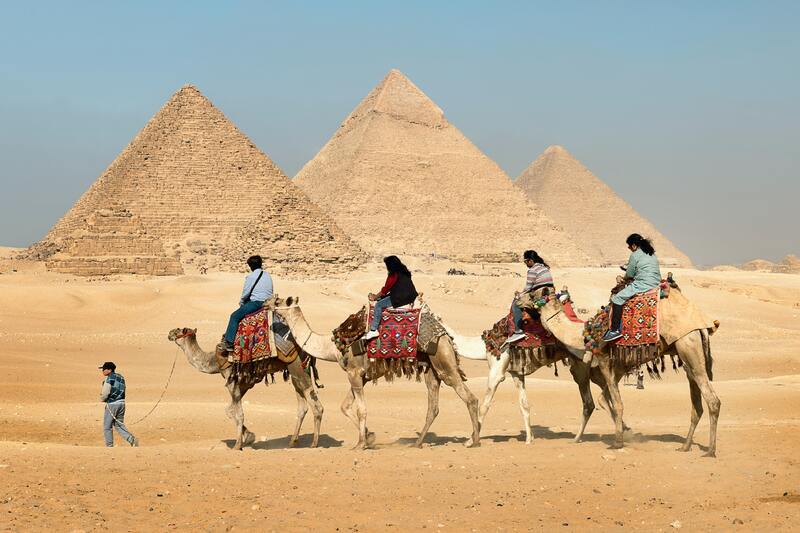
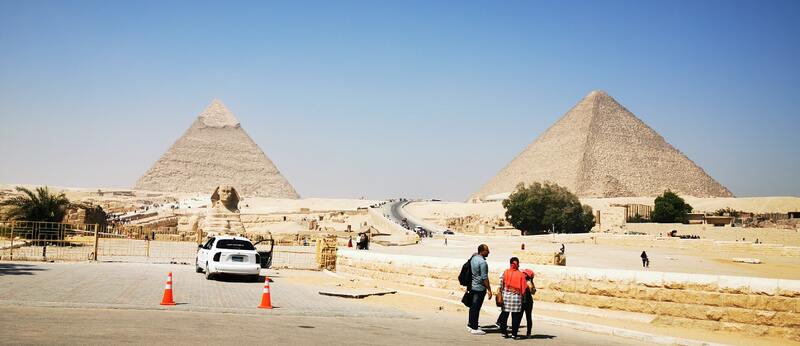
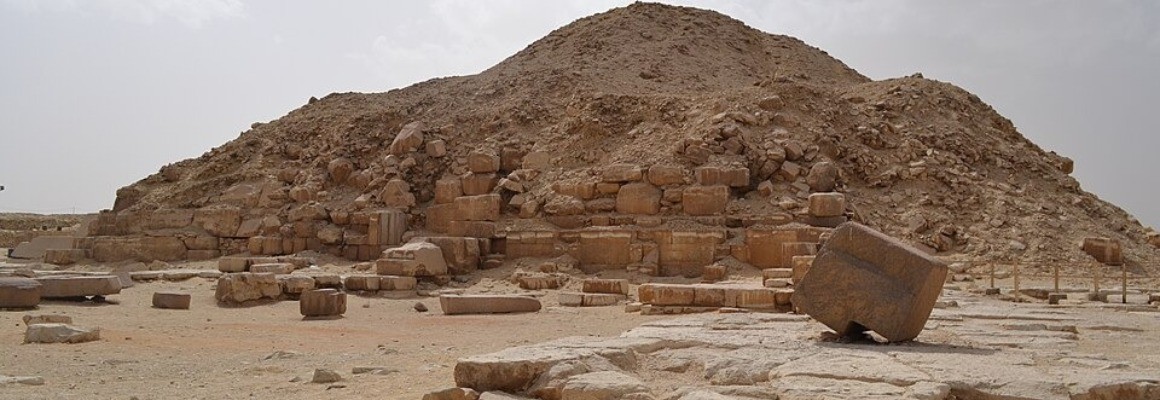
The Pyramids of Giza are among the world's best-known archaeological monuments. They stand on a limestone plateau on the western side of the Nile, on the outskirts of modern Cairo, Egypt. The three great pyramids, the Great Sphinx, ancient temples and numerous tombs form part of a vast royal necropolis created during the Old Kingdom. Together, they offer remarkable evidence of Egyptian civilization more than 4,500 years ago.
The principal pyramids were built for Fourth Dynasty pharaohs: Khufu, known by his Greek name Cheops; his son Khafre; and his grandson Menkaure. The largest, the Great Pyramid of Khufu, is the only surviving monument from the traditional list of the Seven Wonders of the Ancient World. Giza forms part of the UNESCO World Heritage property Memphis and its Necropolis – the Pyramid Fields from Giza to Dahshur, inscribed in 1979.
Where are the Pyramids of Giza?
The complex lies on the Giza Plateau, roughly 15–20 km from central Cairo, depending on the route. In antiquity, the area was associated with Memphis, one of Egypt's major political and religious centres. The plateau offered suitable limestone bedrock, while its position west of the Nile reflected ancient Egyptian associations between the western horizon, death and the afterlife.
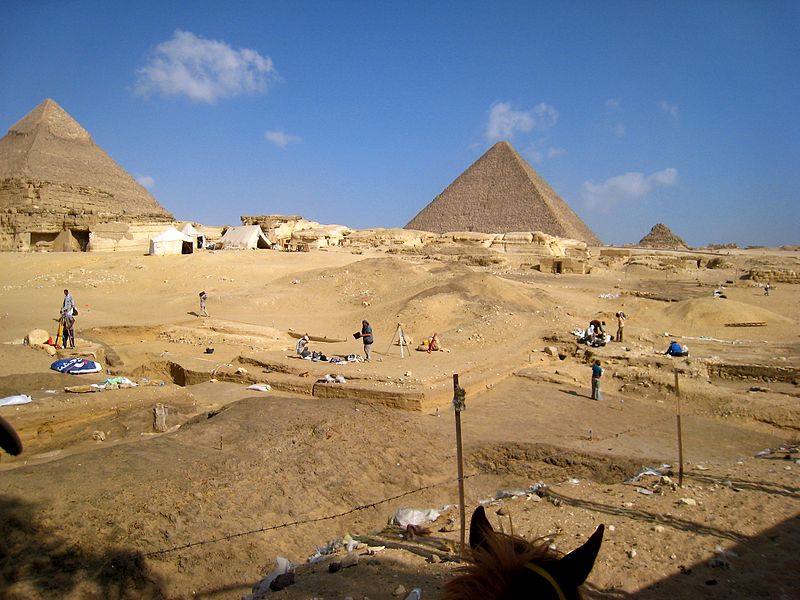
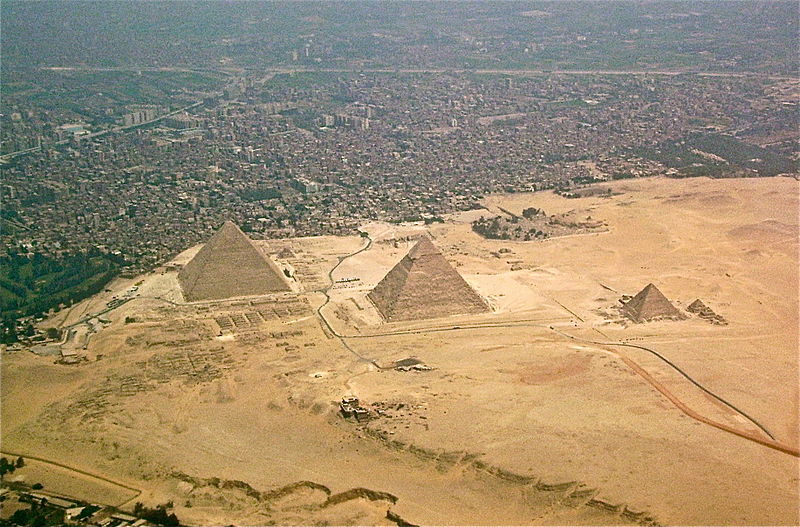
The pyramids do not stand alone. Their surroundings include smaller pyramids associated with royal women, mastaba tombs belonging to officials and nobles, temple remains, ceremonial causeways and other burial structures. Giza is therefore a complete funerary landscape rather than simply three isolated monuments.
The Great Pyramid of Khufu
The Great Pyramid was built for Pharaoh Khufu, called Cheops by Greek writers. His reign is generally dated to the 26th century BCE. The pyramid originally stood about 146.6 metres high, with each side of its square base measuring approximately 230 metres. After losing its outer casing and uppermost section, it now stands around 138.5 metres high.
For roughly 3,800 years, it remained the tallest human-made structure in the world. Its core consists mainly of local limestone, while its exterior was once covered with fine, pale limestone, some of it transported from Tura. The original summit stone, or pyramidion, has not survived, and its exact appearance remains uncertain.
The interior contains several chambers and passageways. An unfinished subterranean chamber was cut into the bedrock below the pyramid, while higher up are the so-called Queen's Chamber and King's Chamber. The latter is lined with granite and contains a stone sarcophagus. It is reached through the Grand Gallery, a tall ascending passage with distinctive corbelled masonry. The chamber names are conventional labels and do not establish who was intended to be buried in each space.
The pyramid served a royal funerary purpose and was connected with beliefs about the king's continued existence after death. Khufu's mummy has not been found inside, and burial equipment may have disappeared in antiquity. The absence of a surviving mummy does not mean the monument was not a tomb.
The Pyramid of Khafre
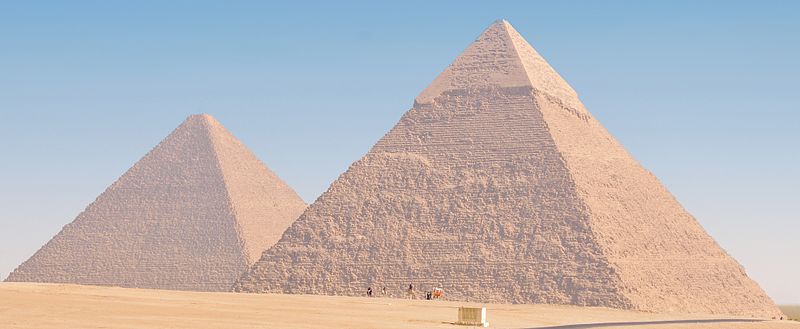
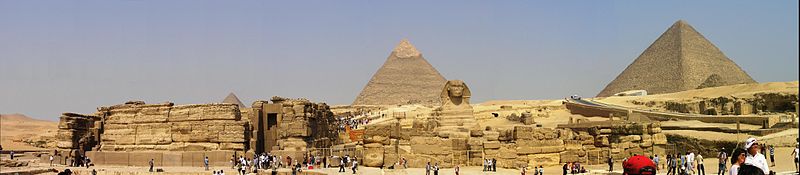
The second-largest pyramid belongs to Khafre, Khufu's son. It originally reached about 143.5 metres and now stands around 136 metres high. Because it occupies a higher part of the plateau, it can appear taller than the Great Pyramid, although it is actually slightly lower.
Patches of the original white limestone casing survive near the summit. They give visitors an idea of the pyramids' ancient appearance, when their smooth, pale surfaces reflected sunlight rather than showing the exposed, stepped masonry seen today.
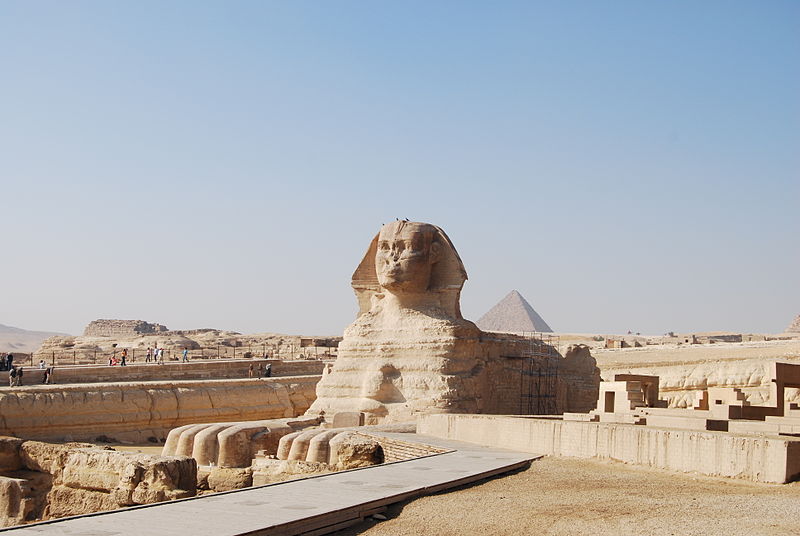
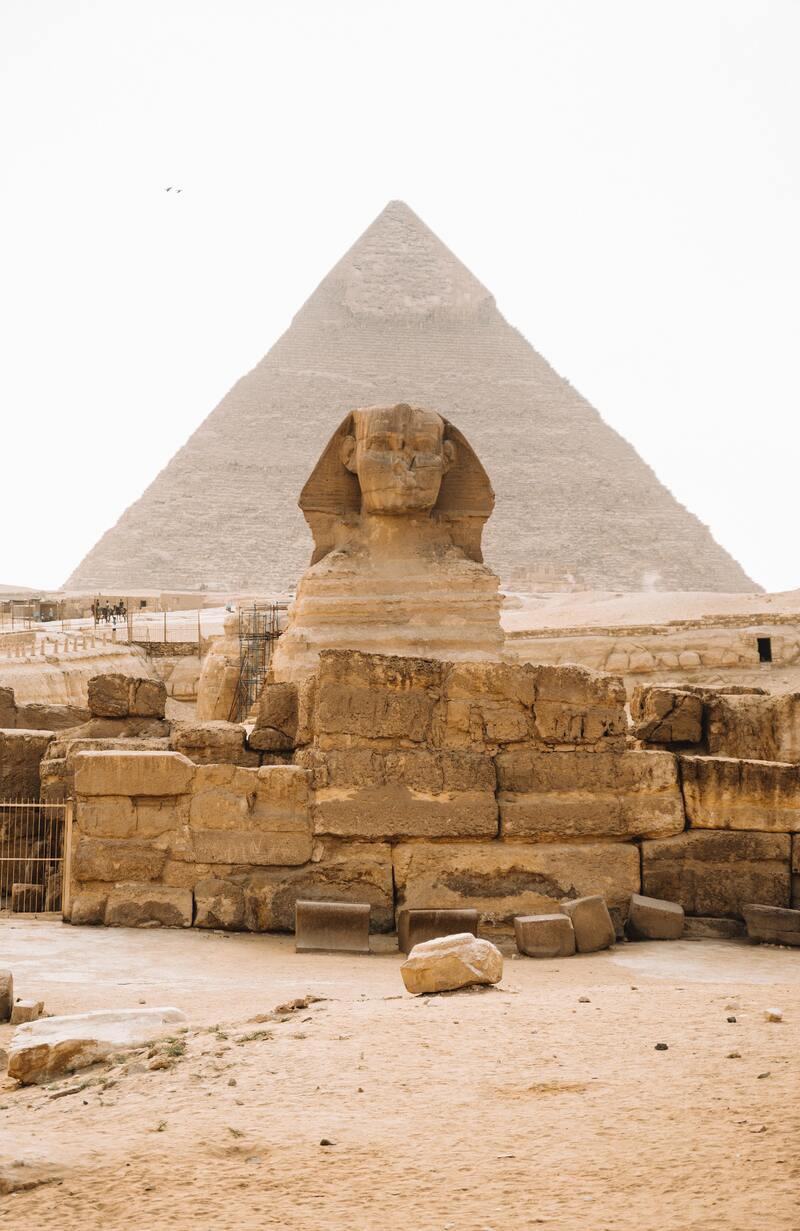
Khafre's funerary complex included a mortuary temple, a long processional causeway and a valley temple. The Great Sphinx is traditionally associated with this complex, although aspects of its construction and original appearance continue to be studied.
The Pyramid of Menkaure
The smallest of the three major pyramids was built for Menkaure, Khufu's grandson. It originally stood about 65 metres high and is now approximately 61 metres tall. Its complex also included temples and subsidiary burials.
The lower sections were partly faced with reddish granite, while limestone was used higher up. The surviving materials reveal the skill required to quarry, shape and transport heavy stone blocks. Some construction work at Menkaure's complex may have continued after the pharaoh's death.
Three smaller pyramids stand nearby and are traditionally known as the Queens' Pyramids. Their history is connected with royal family burials and funerary practices. Together, the structures show that Giza was a dynastic memorial landscape, not simply the burial place of a single ruler.
The Great Sphinx
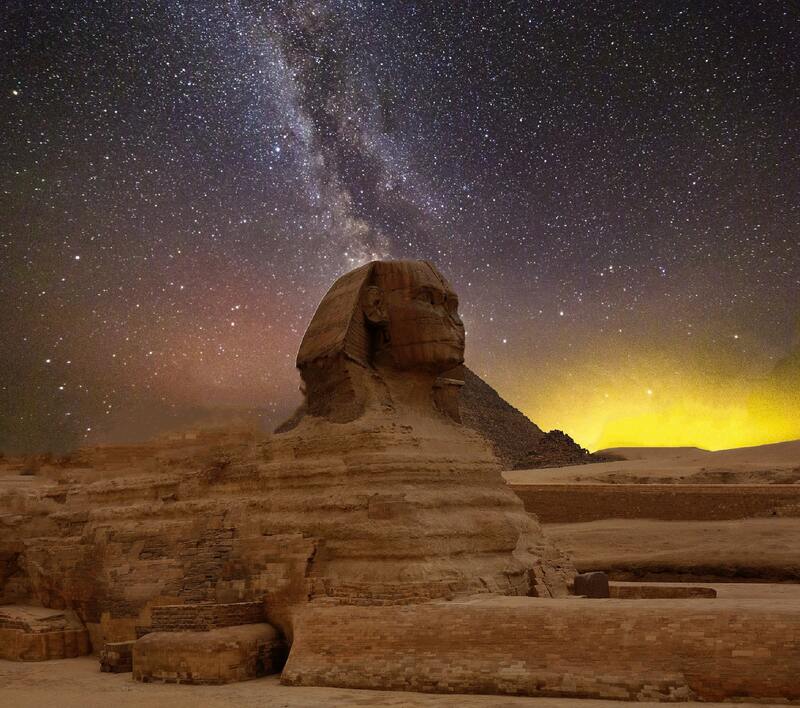
The Great Sphinx is a monumental sculpture with a lion's body and a human head, carved directly from the limestone bedrock of the plateau. It lies close to Khafre's pyramid. The sculpture is about 73 metres long and approximately 20 metres high, making it one of ancient Egypt's most recognizable monuments.
Most researchers associate its creation with the Fourth Dynasty, probably the reign of Khafre. The face is often interpreted as a royal portrait, but details of the original appearance and construction remain subjects of research. The Sphinx was carved from layers of limestone that weather at different rates.
A temple area lies in front of the monument, and sand has buried parts of the Sphinx at various times throughout history. Its nose is missing, but the popular claim that Napoleon's troops destroyed it is contradicted by drawings made before the French expedition to Egypt.
How and why were the pyramids built?
The pyramids were constructed during the Old Kingdom, when the Egyptian state could organize enormous building projects. A royal tomb was more than a display of wealth: it formed part of a religious system in which the deceased king was expected to continue his existence in the afterlife. Temples and associated buildings provided settings for offerings and commemorative rituals.
Most blocks were quarried near the plateau, while other materials travelled much farther. Fine casing limestone came from Tura, and granite used in certain internal spaces was brought from the Aswan region in southern Egypt. River transport and canals likely played an important role in moving heavy loads.
Researchers have proposed straight, zigzagging and combined ramps, as well as levers and wooden equipment, to explain how blocks were raised. There is still no universally accepted reconstruction of every stage of the Great Pyramid's construction. Claims that its construction method is completely understood–or that it required unknown technology–go beyond the evidence.
The work required skilled craftspeople, labour teams, supplies and detailed organization. Archaeological remains around Giza point to settlements and infrastructure connected with construction. The old image of pyramids built exclusively by enslaved people is an oversimplification: evidence indicates organized workforces and specialists, although exact working conditions and labour arrangements remain topics of study.
Who built the pyramids, and how long did it take?
The precise construction schedules of the pyramids are unknown. The Great Pyramid is often estimated to have taken roughly 10 to 20 years, but this is a scholarly estimate rather than a surviving construction record. The work involved preparing the site, quarrying and transporting stone, building the core, creating internal chambers, fitting casing blocks and constructing surrounding temples.
The builders demonstrated advanced skills in measurement, geometry, stoneworking and logistics. The carefully levelled base and orientation toward the cardinal directions reveal sophisticated surveying knowledge. However, the exact methods used for every measurement and each stage of construction are reconstructed from indirect evidence.
Why do pyramids have this shape?
Pyramidal architecture developed from earlier Egyptian tombs known as mastabas, which had flat tops and sloping sides. The Step Pyramid of Djoser at Saqqara was a major stage in the evolution of monumental stone construction. Later builders developed the smooth-sided form seen at Giza.
The shape may have carried religious meaning, possibly associated with solar worship and the king's ascent to the heavens. Scholars continue to discuss the symbolism, and not every modern interpretation can be confirmed with certainty.
What lies inside and around the complex?
Each great pyramid was the centre of a larger funerary ensemble that could include temples, causeways, smaller pyramids, mastabas and other tombs. Priests performed rituals and presented food and drink offerings to maintain the cult of the deceased ruler.
The Great Pyramid's interior is notable for its Grand Gallery, several chambers and narrow passages. Modern non-invasive studies, including muon tomography, have identified previously unknown voids inside the structure. Their purpose has not yet been established, so they should not automatically be described as hidden treasure rooms.
Special pits near Khufu's pyramid contained dismantled wooden boats. The best-known vessels are associated with the king's funerary traditions. They may have been used in ceremonies or symbolically provided transport for the king in the afterlife. Their construction also demonstrates the sophistication of ancient Egyptian shipbuilding.
Interesting facts about the Pyramids of Giza
- The Great Pyramid is the only surviving monument from the traditional Seven Wonders of the Ancient World.
- The pyramids originally had smooth, pale limestone casing that gave them a very different appearance from today.
- The three main pyramids were built for three generations of one royal family: Khufu, Khafre and Menkaure.
- Khafre's pyramid can look taller because it stands on higher ground, although the Great Pyramid is taller.
- Giza forms part of the wider archaeological landscape of Memphis and the pyramid fields extending to Dahshur.
- The pyramids are carefully aligned with the cardinal directions, although the exact surveying methods remain under investigation.
- The Great Sphinx was carved from natural limestone bedrock rather than assembled entirely from separate blocks.
- Archaeologists continue to investigate the complex using excavations, geophysical surveys and ancient records.
Giza and UNESCO World Heritage
In 1979, Giza became part of the UNESCO World Heritage property Memphis and its Necropolis – the Pyramid Fields from Giza to Dahshur. The property covers a broad chain of ancient sites that documents the development of royal tombs from early mastabas to monumental pyramids, alongside temples, tombs and other archaeological remains.
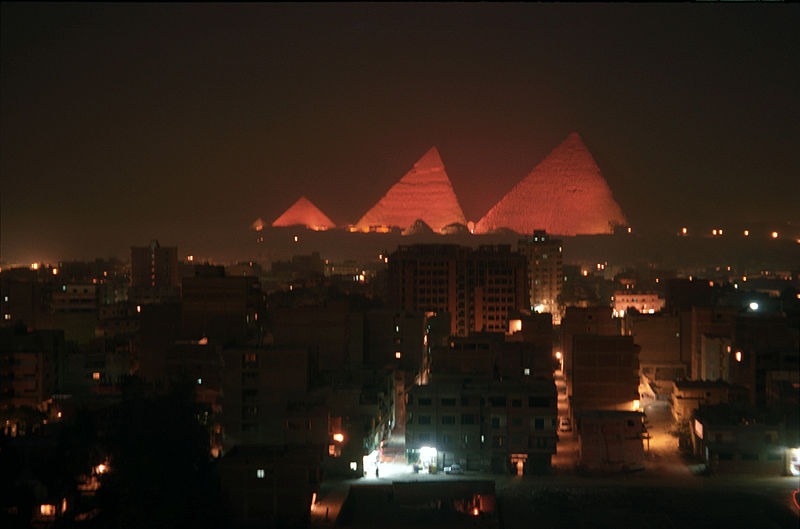
The site's value extends beyond the size of its monuments. It helps researchers understand ancient Egyptian government, religion, engineering, trade and the lives of people who supported royal funerary institutions. Preservation requires attention to urban development, pollution, erosion and the effects of large visitor numbers.
How to visit the Pyramids of Giza
Most visits begin in Cairo or Giza. The plateau can be reached by taxi, private tour or organized transfer. Journey times depend on the starting point and traffic. Allow several hours to see the main pyramids, the Sphinx and panoramic viewpoints; visitors with a strong interest in archaeology may want most of a day.
Tickets and access rules can vary. Entry to the plateau does not necessarily include admission inside the Great Pyramid or other pyramids. Check current conditions through official Egyptian tourism resources before travelling. Interior passages can be narrow, hot and difficult for people with limited mobility.
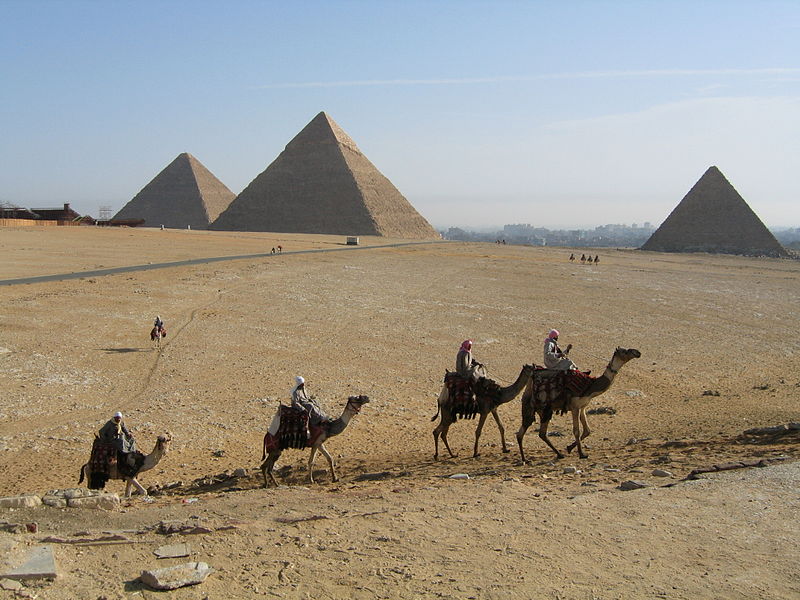
The plateau often has intense sun and little shade, so bring water, a hat and sun protection. Comfortable shoes are useful on sandy and rocky surfaces. Viewpoints offer broad photographs of all three pyramids. If considering camel or horse rides, agree on the price and terms before accepting the service.
Morning visits are often more comfortable, and the light can bring out the texture of the stone. Opening hours, routes and photography rules may change, so check the latest information before arrival.
What to see nearby
The Great Sphinx and its temple area are essential stops. Smaller pyramids, noble tombs and temple remains help explain how the wider necropolis worked. Visitors can also consider the Grand Egyptian Museum, checking its official website for current access and exhibitions.
For a broader understanding of pyramid development, continue to Saqqara and Dahshur. These sites preserve monuments from different stages of Egyptian architecture, including Djoser's Step Pyramid. Together, they show that the Giza pyramids were the culmination of a long process of experimentation and architectural change.
Why the Pyramids of Giza still amaze us
The Pyramids of Giza combine extraordinary engineering, royal history and ancient Egyptian beliefs about death and the afterlife. Built more than four millennia ago, they still provide new evidence about construction, labour organization and society. Their achievement is best understood through human skill, planning and state organization rather than unsupported stories about supernatural technology.
A visit to Giza reveals more than a famous silhouette against the desert. It introduces a complex archaeological landscape in which each pyramid formed part of a wider ritual setting. The combination of historical importance, architectural ambition and ongoing research makes Giza one of the world's most significant cultural heritage sites.
Gallery