Dambulla is a historic town in central Sri Lanka, best known for its ancient Buddhist shrines and cave temples. Its main attraction is the Golden Temple of Dambulla, also called the Rangiri Dambulla Cave Temple, set among rocky outcrops above the surrounding plain. The natural caves contain numerous Buddha statues and extensive murals created and renewed over many centuries.
History of Dambulla
The cave complex has a history spanning more than two thousand years. Buddhist monks were using the caves by the third century BCE. According to tradition, King Valagamba took refuge here while in exile and later supported the transformation of the caves into a place of worship after regaining his throne. Successive rulers expanded the shrines, added statues and renewed the paintings. Important additions took place under King Nissanka Malla in the twelfth century, while many interiors acquired their present appearance in the eighteenth century.
In 1991, the cave temple was inscribed on the UNESCO World Heritage List for the exceptional value of its Buddhist art, sculpture and mural paintings.
The five cave shrines
The complex consists of five principal caves, each with its own arrangement and collection of religious images. Cave One, Devaraja Viharaya, is known for a reclining Buddha carved into the rock and measuring about 14 metres long. Cave Two, Maharaja Viharaya, is the largest and features extensive paintings across its walls and ceiling. Cave Three, Maha Alut Viharaya, received much of its decoration in the eighteenth century. The fourth and fifth caves are smaller but also contain statues and religious imagery.
Buddha statues and murals
UNESCO records 157 statues at the site and approximately 2,100 square metres of Buddhist mural paintings. The walls and ceilings depict episodes from the Buddha's life, Jataka stories about his previous births, religious symbols and events from Sri Lankan history. The paintings were renewed during different periods, making the exact dating of some layers difficult.
The Golden Temple of Dambulla
Near the foot of the rock stands a more modern temple complex featuring a large golden-coloured Buddha statue, now one of the town's recognisable landmarks. The greatest historical treasures, however, are higher up inside the ancient cave shrines. Visiting both areas reveals the contrast between modern religious architecture and centuries-old cave art.
The rock and panoramic views
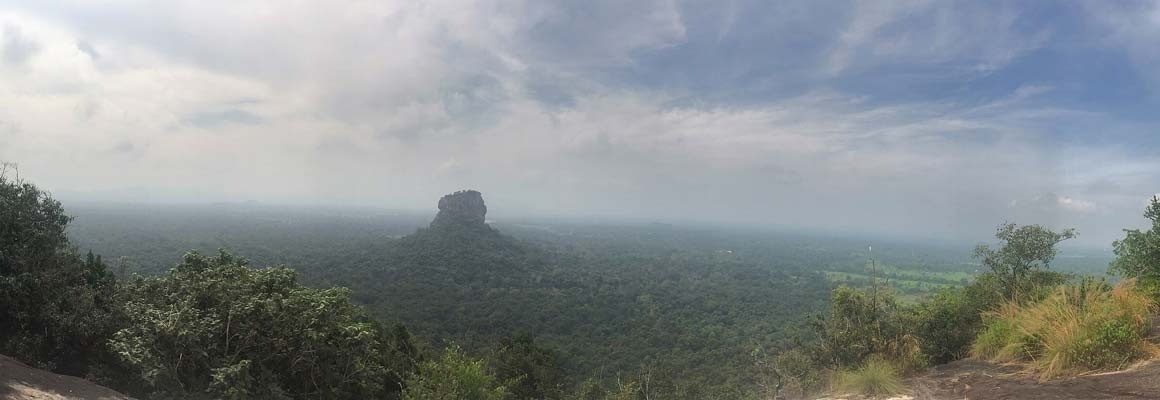
Stone steps and paths climb from the plain to the caves. Along the way, visitors can enjoy views of green countryside, cultivated land and distant hills. On clear days, the famous rock fortress of Sigiriya can be seen in the distance. Early morning or late afternoon is generally more comfortable for the climb, as the heat is less intense.
Dambulla and Sri Lanka's Cultural Triangle
Dambulla is an important stop for exploring the historical heritage of central Sri Lanka. It is a convenient base for trips to Sigiriya, ancient cities and other Buddhist monuments. Local markets and streets also offer a glimpse of everyday life beyond the island's beach resorts.
When to visit
Dambulla can be visited throughout the year, but it is best to climb during the cooler morning or late-afternoon hours. Take care on the steps, especially after rain. As this is an active Buddhist sanctuary, visitors should dress modestly and remove their shoes before entering sacred areas. Check current visitor rules before travelling.
How to get to Dambulla
Dambulla lies about 72 kilometres north of Kandy and roughly 150 kilometres from Colombo by road, depending on the route. It can be reached by bus, private car or organised tour. Local transport or a taxi can take visitors from town to the temple entrance, followed by a walk up to the caves. Dambulla is especially rewarding for travellers interested in Buddhist culture, ancient art and Sri Lankan history.
Gallery