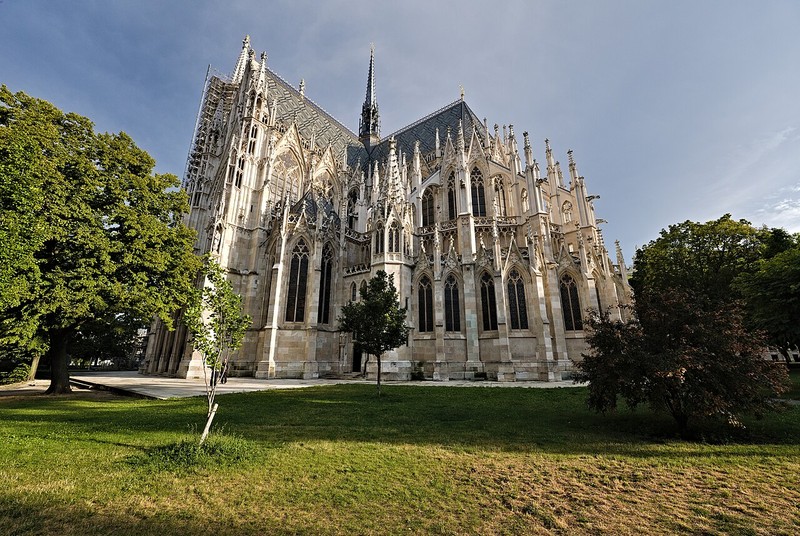
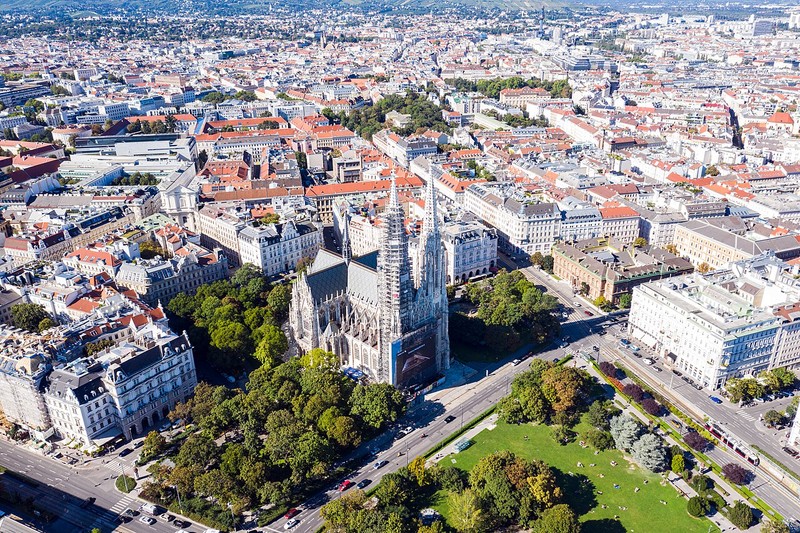
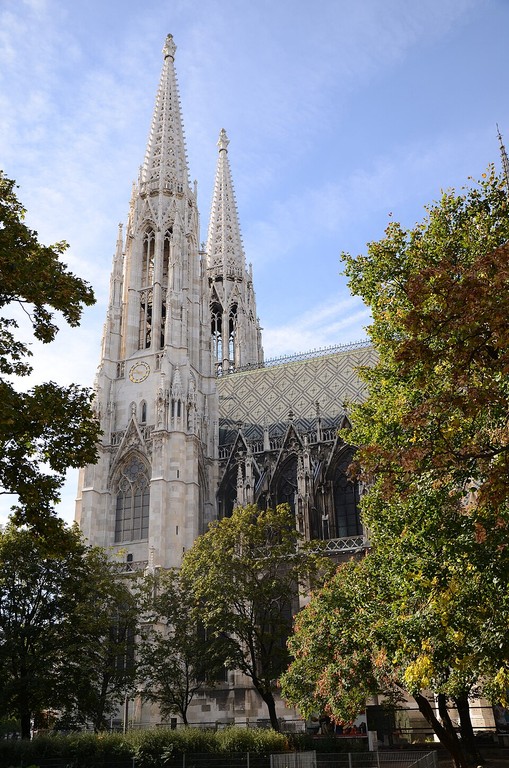
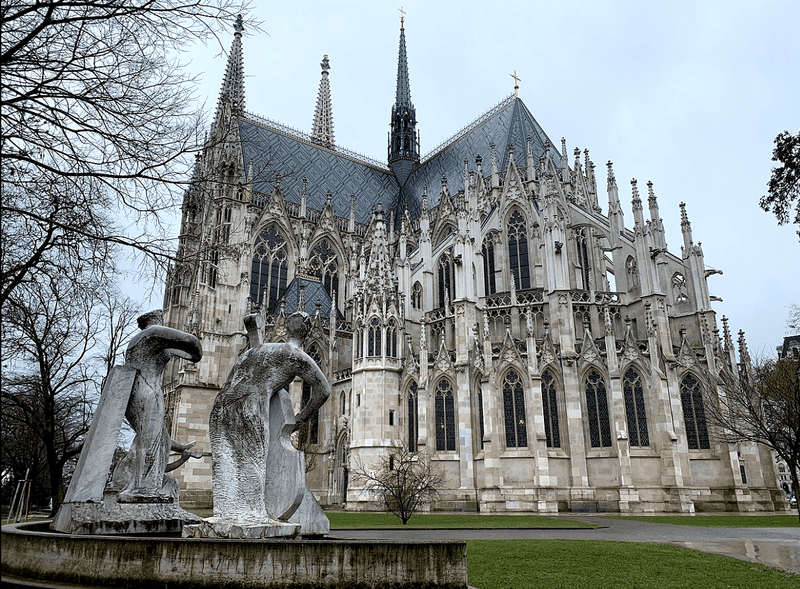
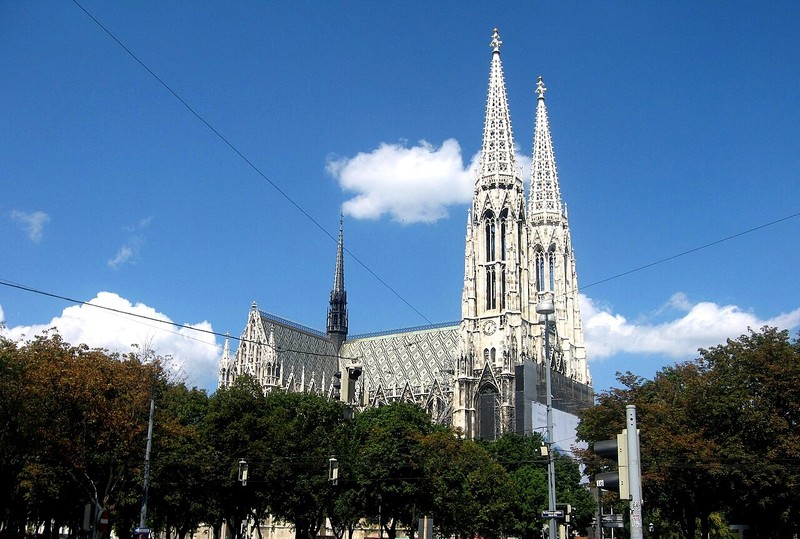
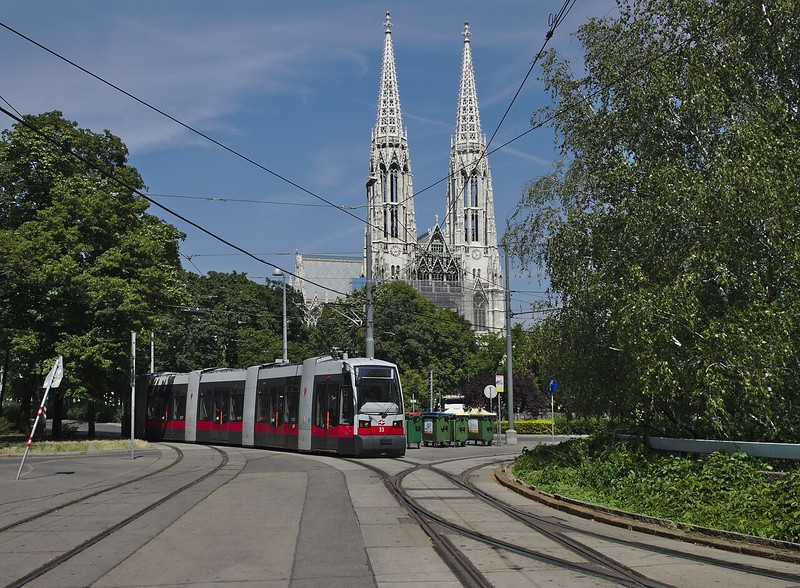
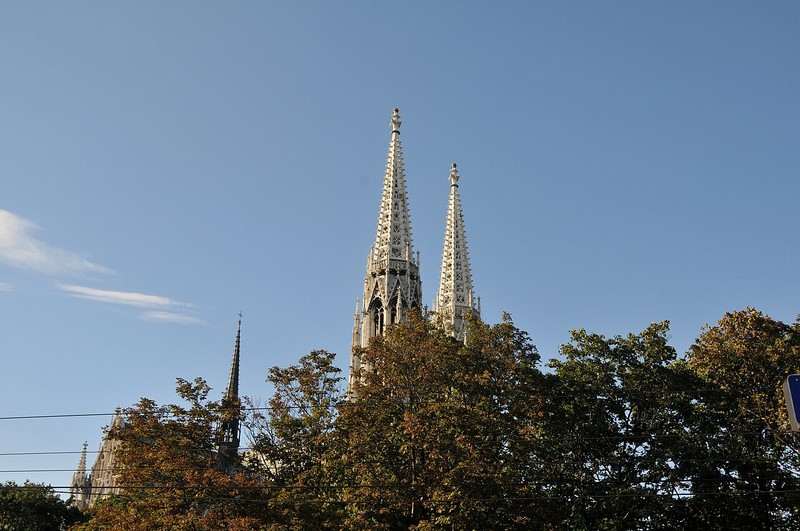
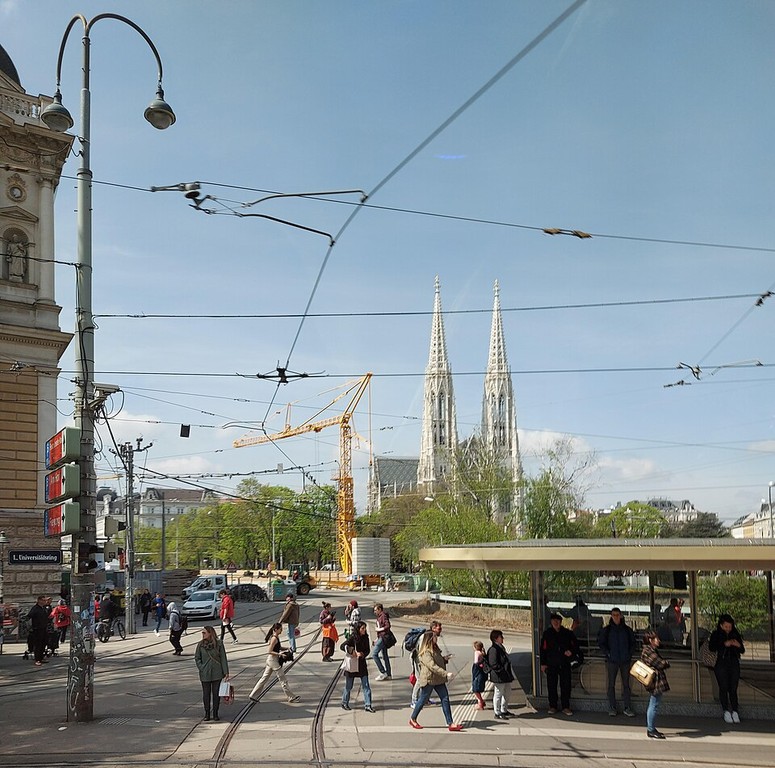
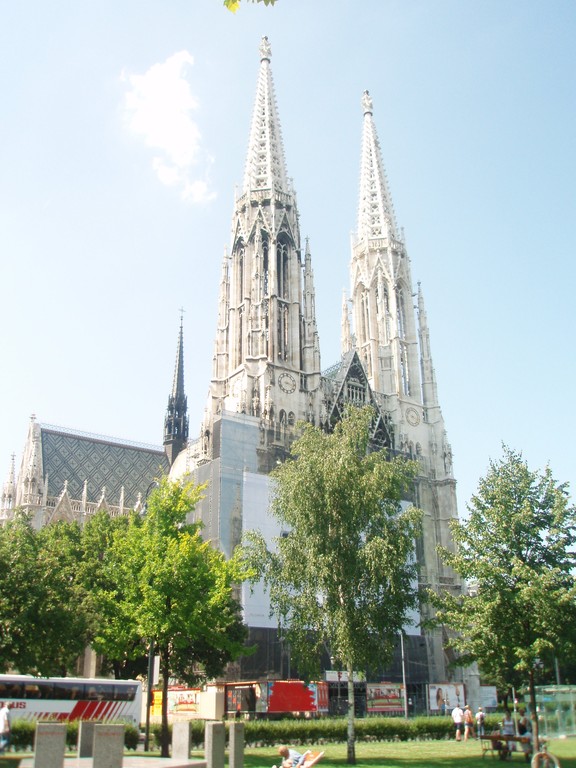
The Votive Church (Votivkirche) is one of Vienna’s best-known Neo-Gothic landmarks. This Roman Catholic church stands in the Alsergrund district, close to the main building of the University of Vienna and the Ringstrasse boulevard. Its twin towers, pointed arches and intricate stonework evoke medieval French cathedrals, although the church was built in the 19th century.
The Votive Church is notable for more than its architecture. Its history is linked to the survival of Emperor Franz Joseph I after an assassination attempt in 1853. Inside, visitors can see stained-glass windows, richly decorated chapels and religious artworks. The church also houses a museum featuring the celebrated 15th-century Antwerp Altarpiece.
History of the Votive Church
On 18 February 1853, the young Emperor Franz Joseph I was attacked by János Libényi, a Hungarian tailor. The emperor was wounded but survived. In gratitude for his escape, his brother Archduke Ferdinand Maximilian, the future Emperor of Mexico, called for donations to build a church commemorating the event.
An architectural competition was announced in 1854 and attracted 75 designs. The winning proposal came from the young architect Heinrich von Ferstel. His Neo-Gothic design drew inspiration from French cathedrals. Construction began in 1856 and continued for more than two decades.
The church was consecrated on 24 April 1879, the silver wedding anniversary of Emperor Franz Joseph I and Empress Elisabeth of Bavaria, widely known as Sisi. It became one of the first major buildings on the developing Ringstrasse and an important part of Vienna’s changing cityscape.
Architecture and exterior
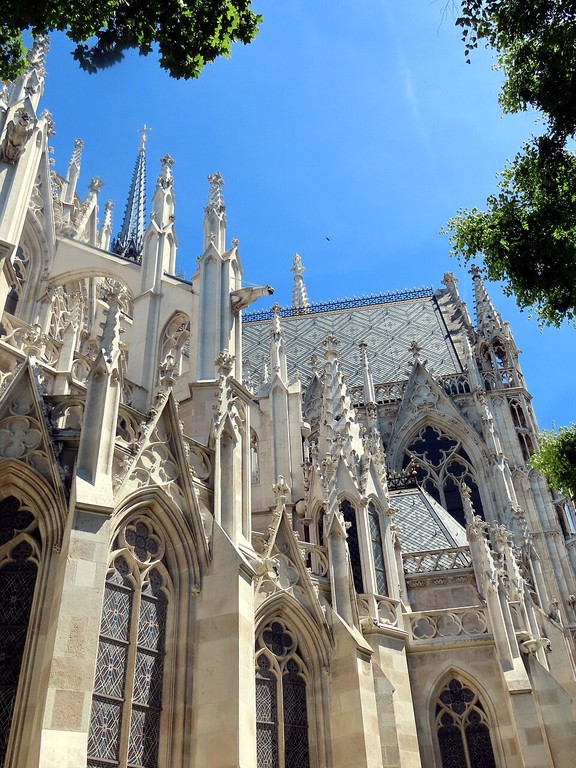
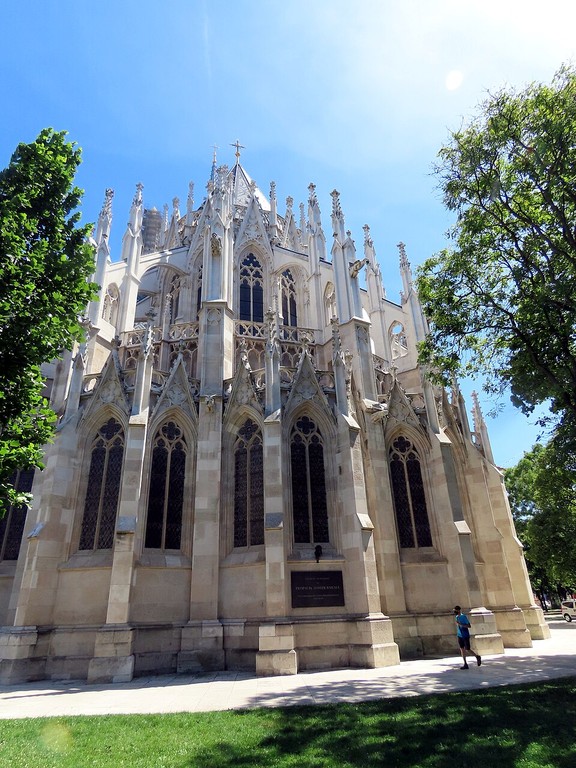
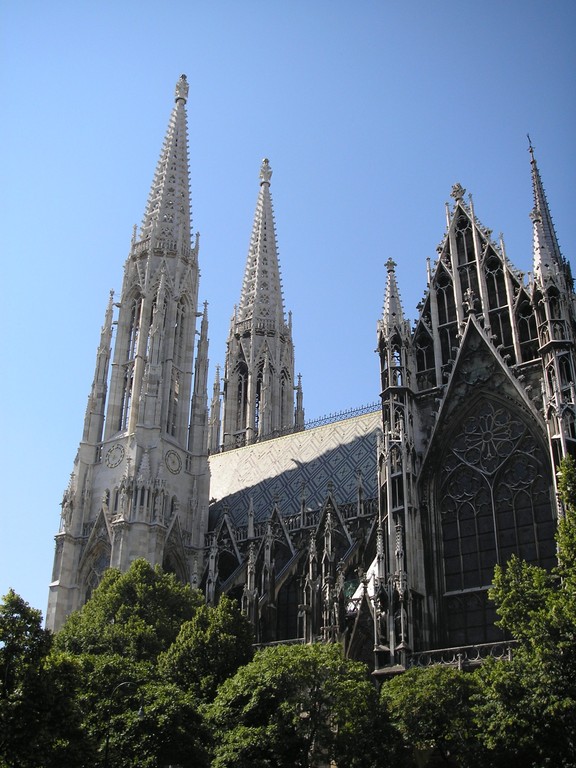
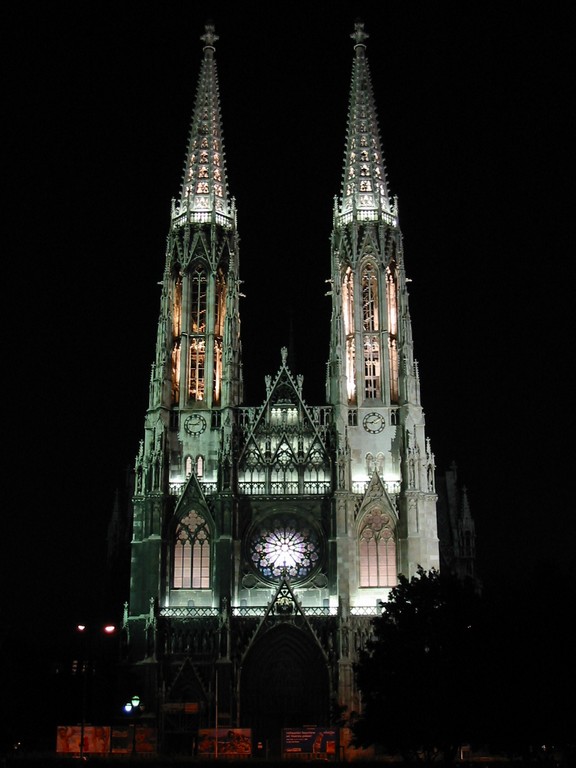
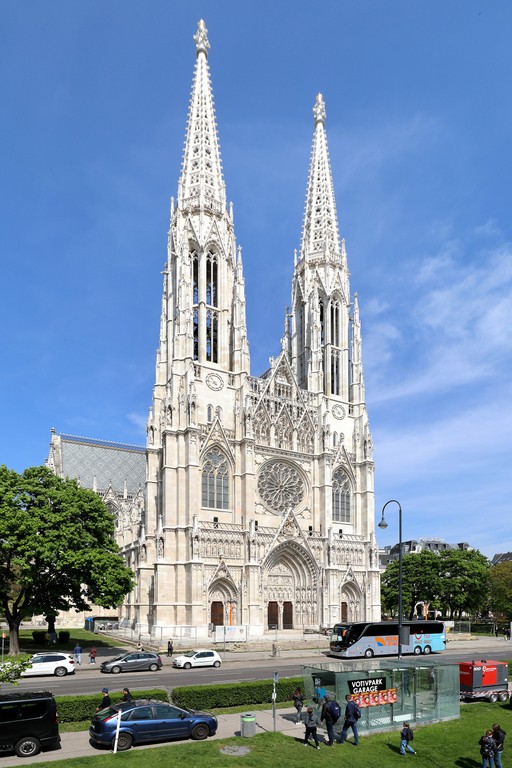
The Votive Church is a three-aisled Neo-Gothic basilica modelled on French cathedrals. Its defining features include a symmetrical layout, pointed windows, decorative gables, stone sculptures and two tall towers. Its striking silhouette makes it one of the architectural landmarks of the district.
The church stands about 99 metres high, making it the second-tallest church in Vienna after St. Stephen’s Cathedral. Despite its medieval appearance, the building belongs to the 19th-century Historicist movement. Rather than simply copying old forms, Ferstel reinterpreted them for the artistic tastes of his time.
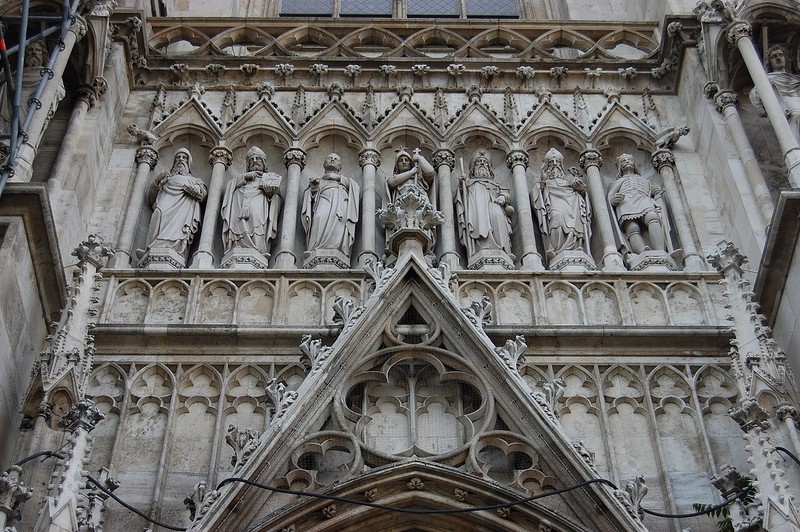
Built from light-coloured stone, the church has facades decorated with numerous sculptures of saints and biblical figures. The towers’ delicate details and the carefully carved stonework are especially striking.
Interior, stained glass and chapels
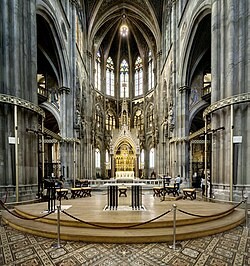
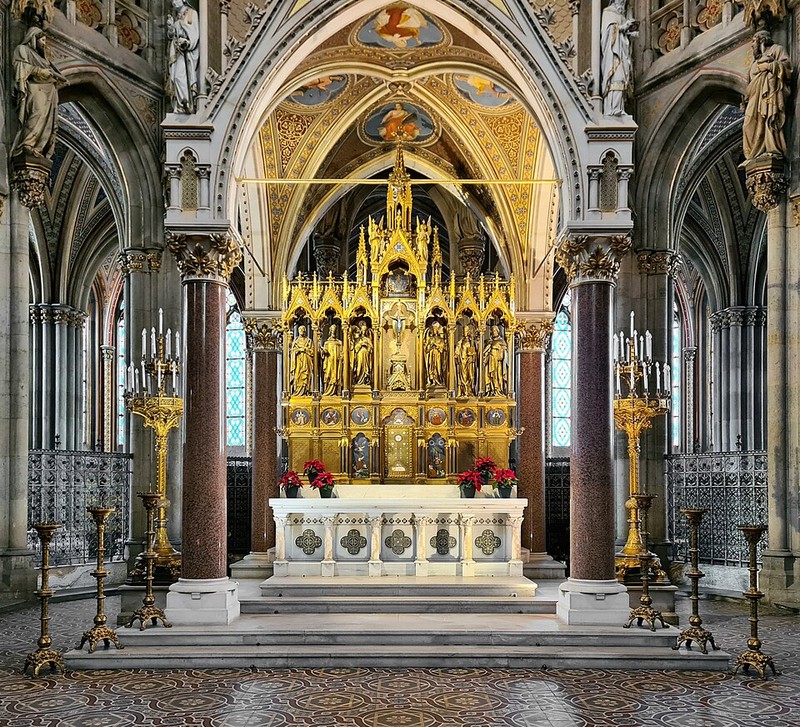
Inside, high vaults, soaring columns and coloured light create a dramatic atmosphere. The Votive Church is known for its 78 stained-glass windows. Their designs combine traditional religious subjects with later artistic elements introduced through restoration work.
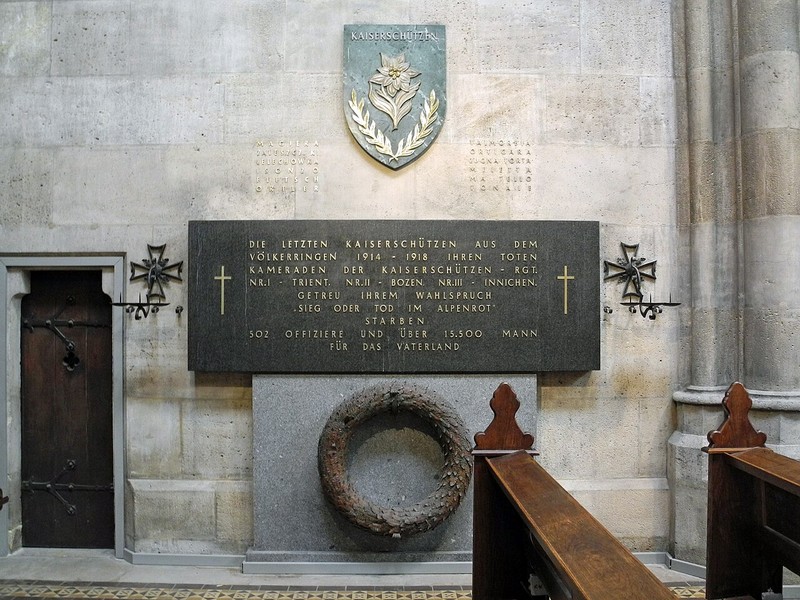
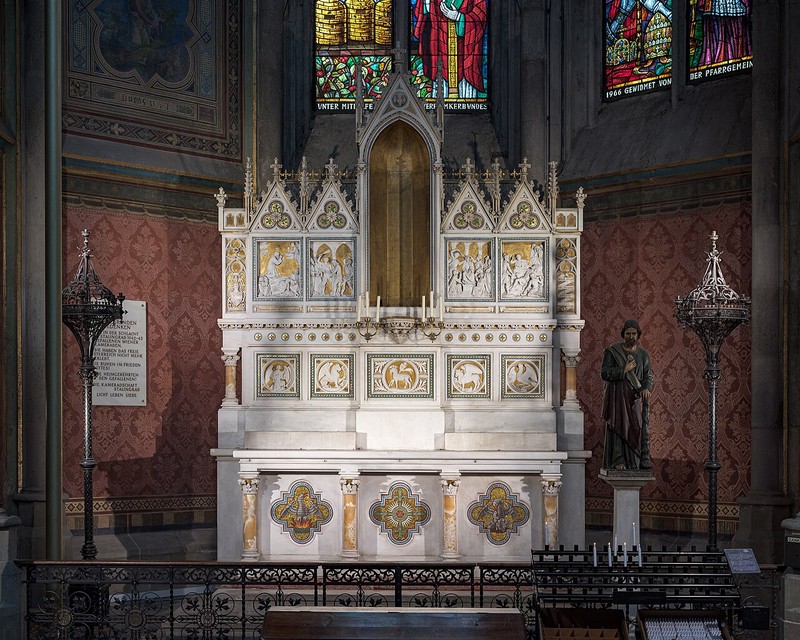
The church contains several chapels with altars, sculptures and religious artworks. One of its historical monuments is the tomb of Niklas Salm, a military commander who helped defend Vienna during the Ottoman siege of 1529. The monument connects the church with the city’s military history.
The Votive Church Museum
A museum is housed in the former imperial oratory above the altar area. Once reserved for the imperial family, this space now displays ecclesiastical art and historical objects.
The collection’s highlight is the 15th-century Antwerp Altarpiece, an outstanding example of late-medieval altarpiece art. The museum has separate opening hours, so visitors should check the church’s official website for current times and admission arrangements before visiting.
The Votive Church today
The church remains an active Catholic place of worship as well as an important architectural monument in Vienna. Religious services and cultural events take place here. The interior also hosts Light of Creation, a multimedia light show combining illumination and music. Show times may change, so it is best to check the schedule in advance.
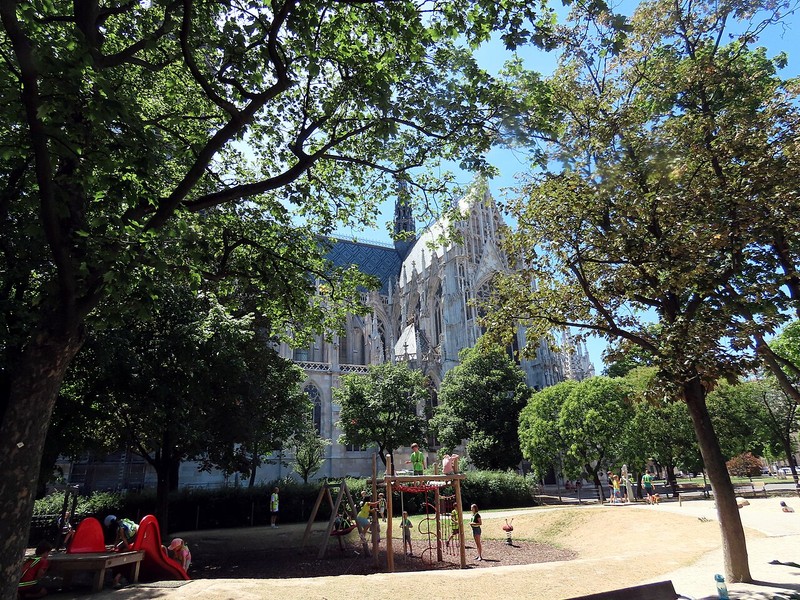
The Votive Church is a rewarding stop for anyone interested in Ringstrasse architecture, Habsburg history and religious art. It can easily be included in a walk with the University of Vienna, Sigmund Freud Park and other nearby sights.
How to get to the Votive Church
The Votive Church is on Straße des 8. Mai, near Rooseveltplatz and the University of Vienna. The easiest public transport option is the U2 underground line to Schottentor station, followed by a short walk. Several tram routes also serve the surrounding area.
Before visiting, check the church’s current opening hours, service times and access to the museum or light show. As the Votive Church remains an active place of worship, visitors should keep quiet during services and follow the rules for visitors.
Gallery