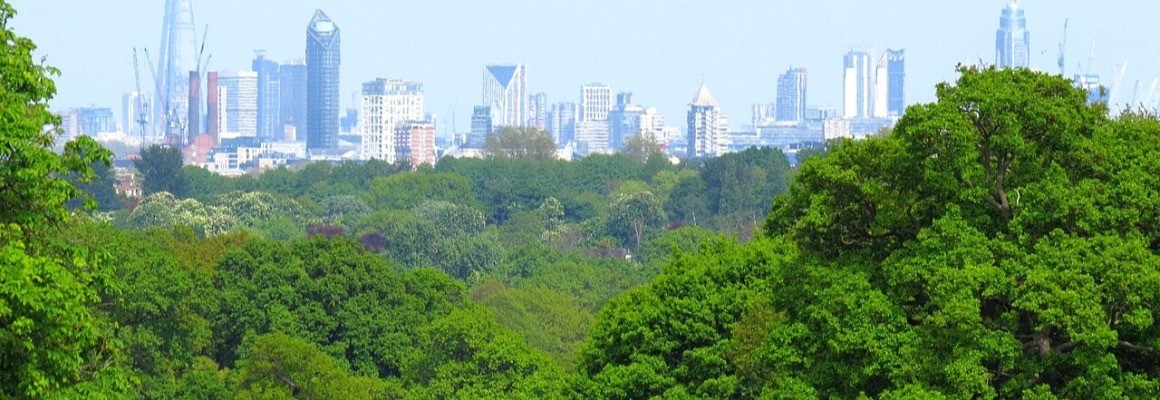
Bushy Park is a historic royal park in southwest London, in the borough of Richmond upon Thames, near Hampton Court Palace. It covers approximately 445 hectares, or 4.45 km², making it the second-largest of London's Royal Parks. Its landscape combines open grasslands, historic avenues, ponds, woodland, and habitats for wildlife.
History of Bushy Park
The area's history reaches far back: archaeological discoveries indicate human activity here during the Bronze Age. In the late 15th and early 16th centuries, the land was gradually enclosed and used for farming and hunting. After King Henry VIII acquired Hampton Court Palace, the park became part of the royal hunting grounds, where deer were kept for aristocratic hunts.
During the 17th century, canals, ponds, and long avenues helped shape the park's distinctive landscape. In 1638, King Charles I ordered the construction of the Longford River to supply water to Hampton Court Palace. The park later became a place for recreation and is now managed by The Royal Parks.
Chestnut Avenue
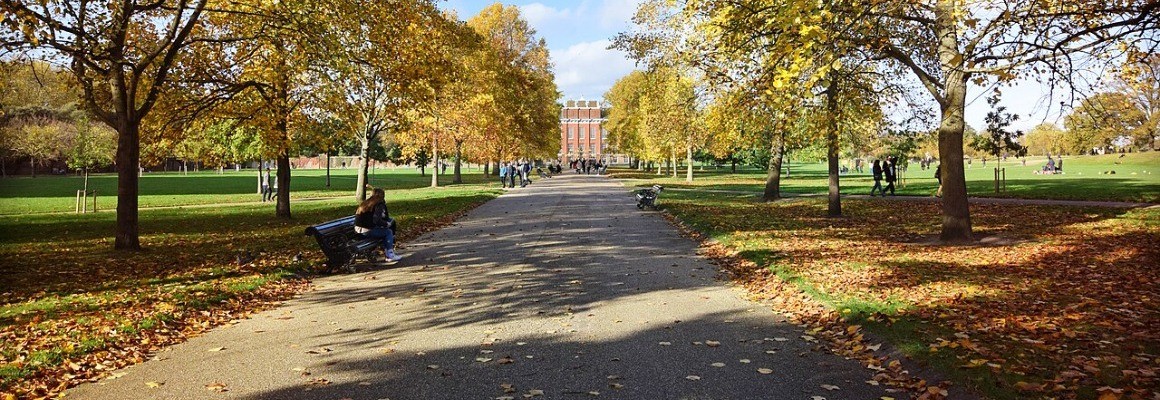
One of the park's main landmarks is Chestnut Avenue, created in the late 17th century as a grand approach to Hampton Court Palace. The long, straight avenue is lined with horse chestnut and lime trees and forms a striking axis through the historic landscape. In spring, the flowering trees attract visitors, while autumn brings golden foliage and beautiful views.
The Diana Fountain
The famous Diana Fountain stands at the intersection of the park's main avenues. Its history dates back to the 17th century, and it was moved to its present location in 1713. Despite its common name, the gilded bronze figure at the top represents Arethusa, a nymph from Greek mythology, rather than the Roman goddess Diana. The sculpture rises above an ornamental pedestal in the centre of a circular basin and is one of Bushy Park's best-known landmarks.
Deer and wildlife
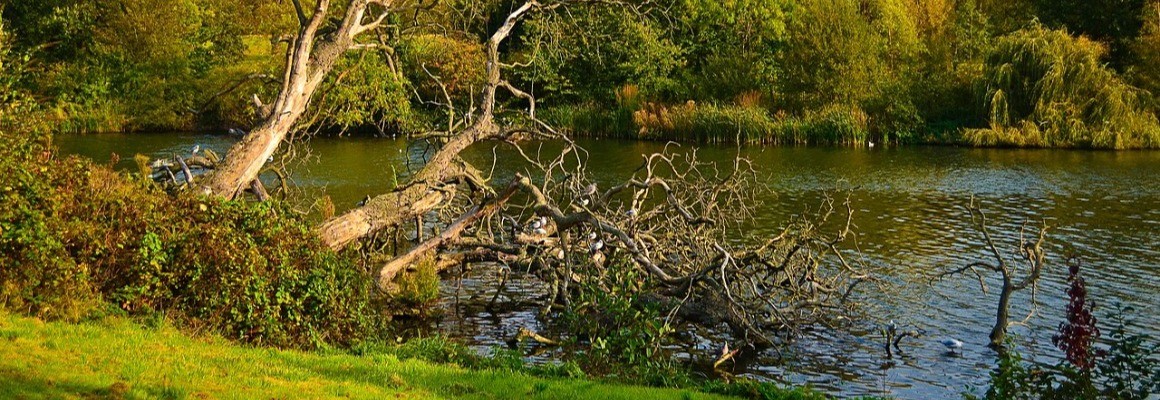
Bushy Park is famous for its free-roaming herds of deer. Both red deer and fallow deer can be seen grazing on the grasslands and among the trees. The park also provides habitats for birds, insects, and other native wildlife. Open areas contain numerous anthills, while mature trees and ponds support a variety of species. Visitors should observe animals from a distance and never approach deer, especially during the rutting season or when young are present.
Gardens and waterways
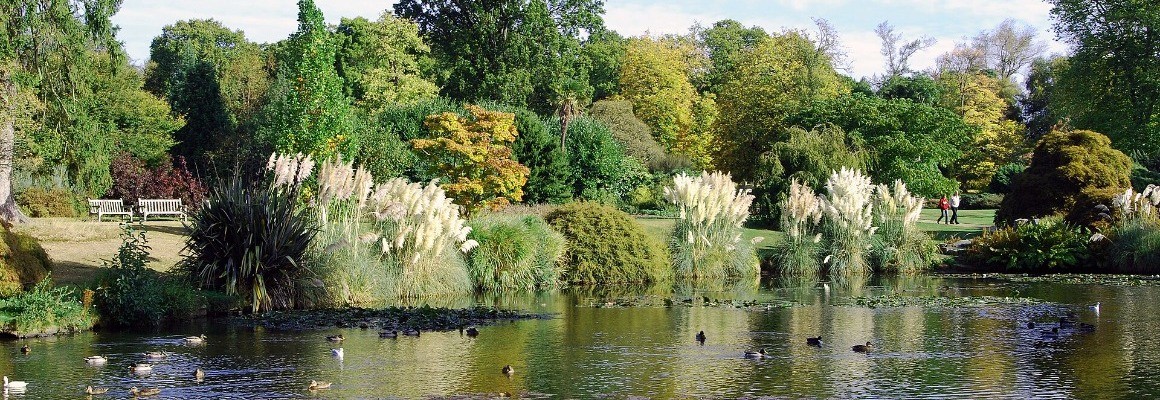
Waterhouse Woodland Gardens lie in the western part of the park. These woodland gardens feature shaded paths, waterways, and varied vegetation. Elsewhere, visitors can find ponds, small streams, open glades, and mature trees. The variety of habitats makes the park attractive throughout the year: flowers appear in spring, shaded walks are welcome in summer, and the trees and grasslands are especially colourful in autumn.
Bushy Park during the Second World War
During the Second World War, Bushy Park served as an Allied military base. In 1944, General Dwight D. Eisenhower moved the Supreme Headquarters Allied Expeditionary Force here. The headquarters played a major role in planning Operation Overlord, the Allied invasion of Normandy in June 1944. Memorial plaques commemorate this military history, including the presence of Eisenhower and American service personnel.
Walking and visiting
Bushy Park is ideal for walking, cycling, wildlife watching, picnics, and relaxing outdoors. Wide paths and open spaces provide room for exercise and family activities. A visit can easily be combined with a trip to nearby Hampton Court Palace. Entry to the park is free. Pedestrian gates are generally open around the clock, while vehicle access is restricted to set hours that may change. Check the official Royal Parks website before visiting.
Bushy Park combines royal history, landscape design, and rich wildlife. It is a place to see free-roaming deer, explore historic avenues, and discover the events that helped shape the course of the Second World War.
Gallery