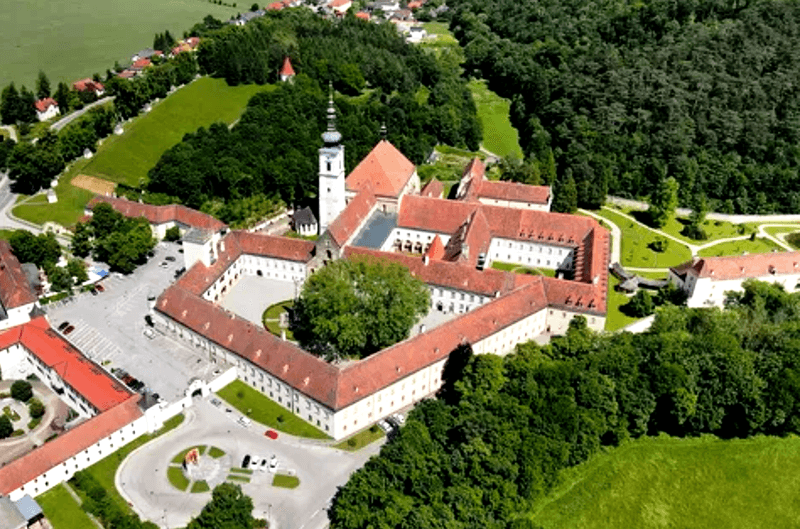
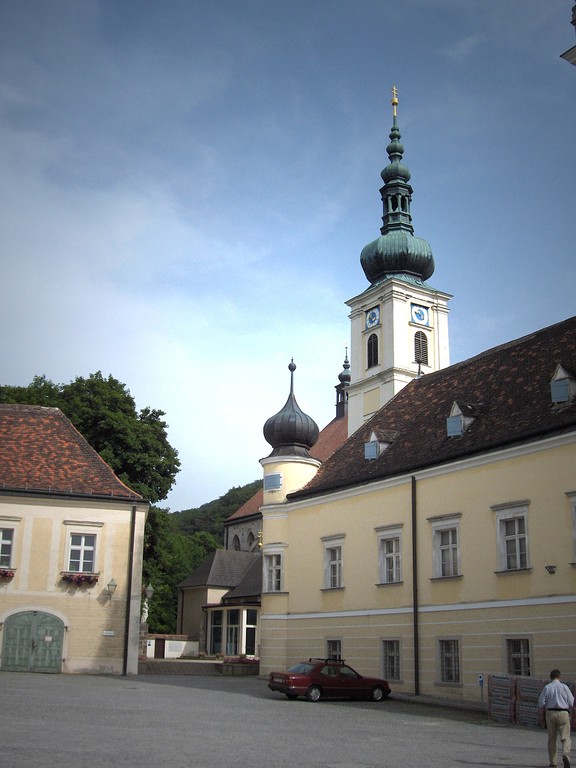
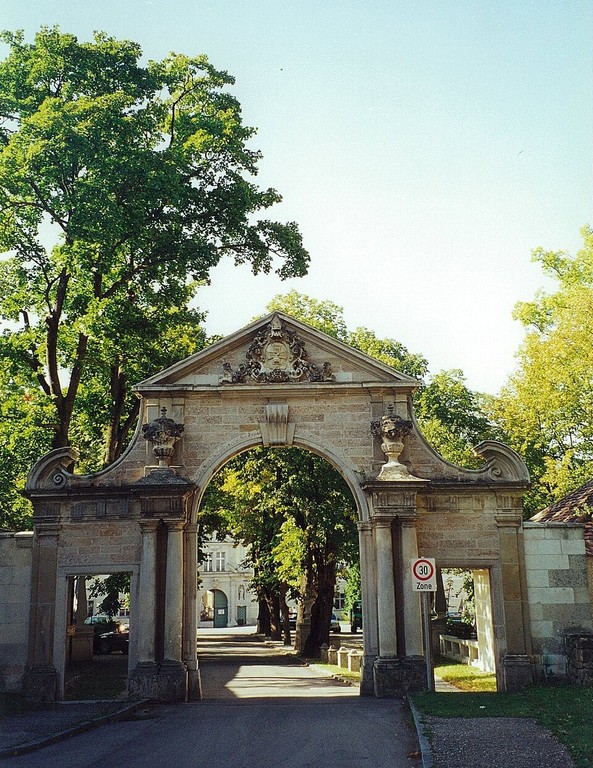
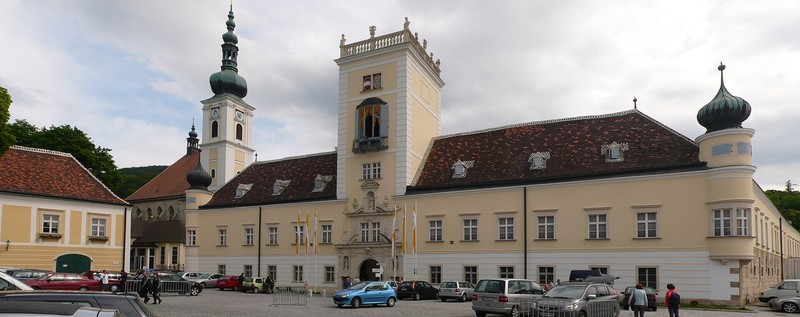
Heiligenkreuz Abbey is an active Cistercian monastery in Lower Austria, set among the wooded hills of the Vienna Woods. Founded in the 12th century, it is one of the world's oldest continuously operating Cistercian monasteries. The complex is known for its Romanesque church, Early Gothic choir, medieval cloister and centuries-old monastic traditions. Monks still live here, religious services take place, and Gregorian chant remains part of daily life.
Foundation and history
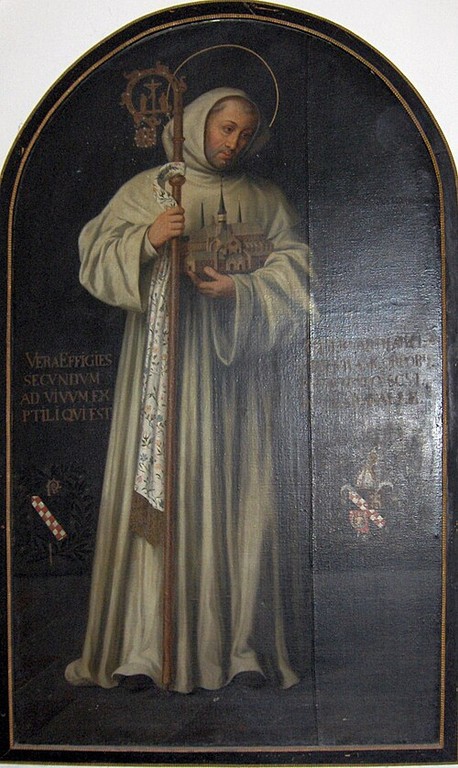
The history of Heiligenkreuz began in 1133, when Margrave Leopold III of the Babenberg dynasty founded the monastery at the request of his son Otto. Otto had encountered the Cistercian order during his education and decided to become a monk. The first monks arrived from Morimond Abbey in France. The new monastery gradually became an important religious centre in the region.
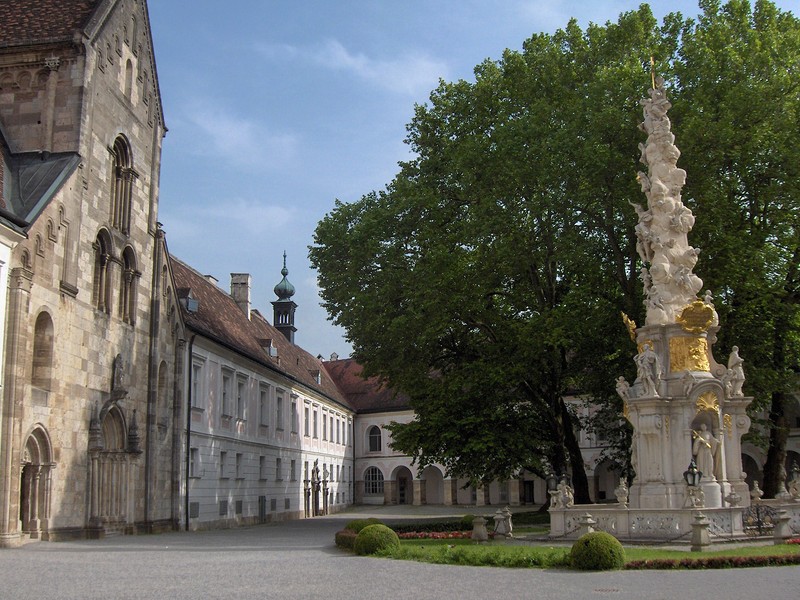
The Romanesque abbey church was consecrated in 1187. During the 13th century, the complex expanded: the cloister was rebuilt between 1220 and 1240, and the Gothic choir was completed in 1295. The abbey faced difficulties in the 16th century because of military conflicts, economic problems and religious change. It suffered damage in 1683 and was later restored. Baroque buildings and decorations were added during the 17th and 18th centuries. At the end of the 18th century, Heiligenkreuz escaped closure under the reforms of Emperor Joseph II because the monks carried out important pastoral and educational work.
The Romanesque church and Gothic choir
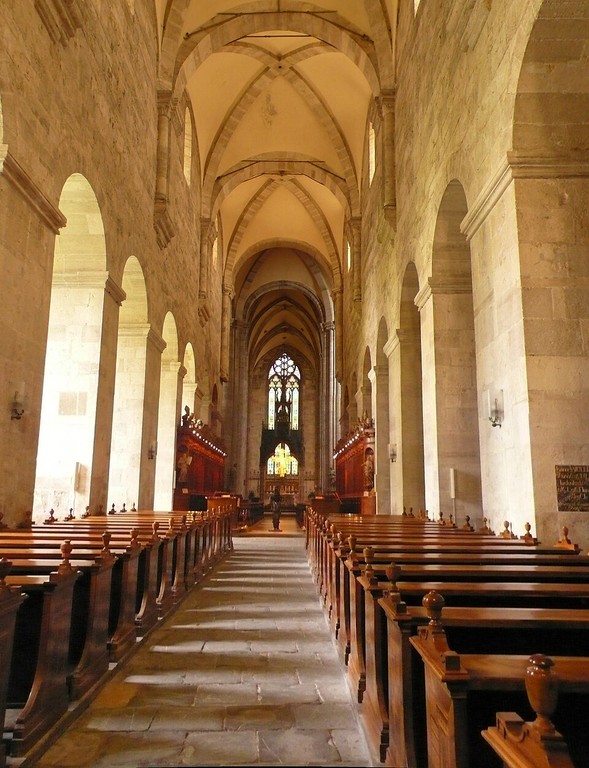
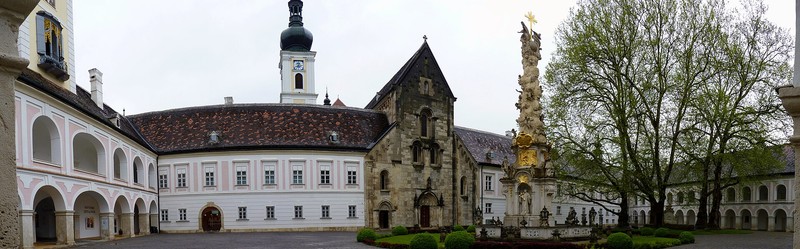
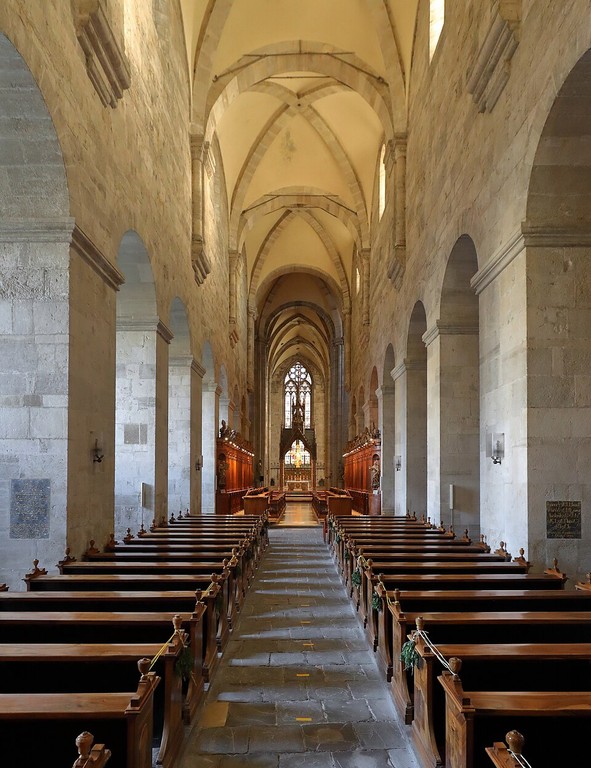
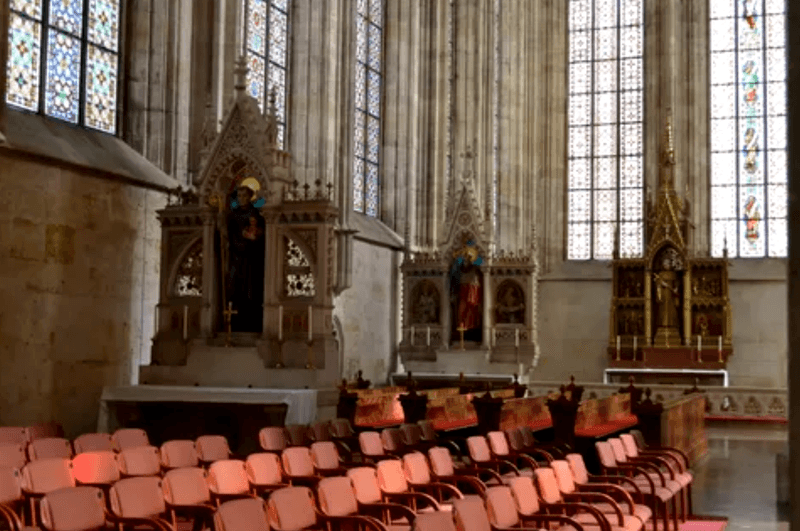
The abbey church combines several architectural periods. Its Romanesque basilica has three naves, restrained forms, massive supports and a clear layout typical of Cistercian architecture. In the 13th century, a tall Gothic choir with large windows and soaring vaults was added. Consecrated in 1295, it is one of Austria's notable examples of Early Gothic architecture.
The interior also reflects later alterations. Baroque altars and artworks were introduced in the 17th and 18th centuries, while parts of the decoration were changed during a Neo-Gothic restoration in the 19th century. The combination of a Romanesque nave and Gothic choir illustrates the development of medieval architecture in Central Europe.
The cloister and courtyard
The cloister, a covered walkway surrounding an inner courtyard, is one of the most interesting parts of the complex. Its arcades and columns create a quiet space for walking and contemplation. Medieval features remain in the galleries, while carved capitals and vaults demonstrate the skill of 13th-century stonemasons. A carefully maintained garden lies in the centre of the courtyard.
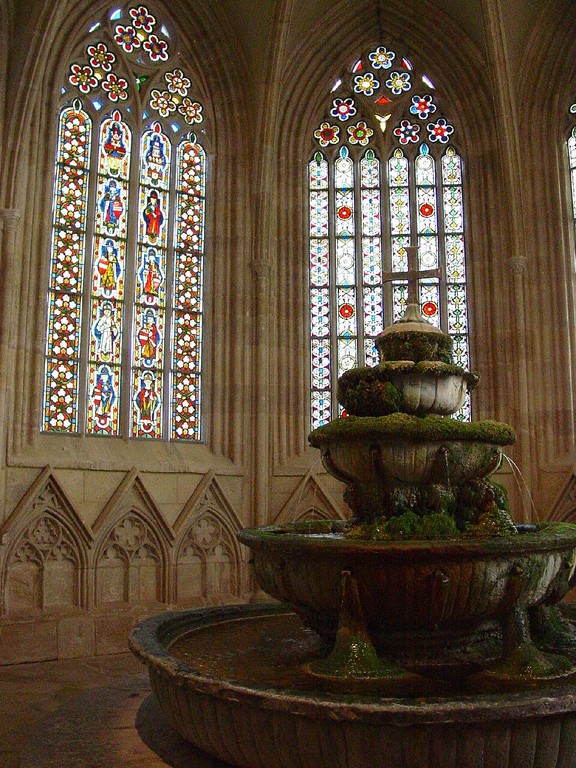
Another notable feature is the octagonal fountain house, completed in the late 13th century. Its windows contain stained glass depicting members of the Babenberg dynasty. The fountain and surrounding galleries formed an important part of the monks' daily routine.
The chapter house and historic tombs
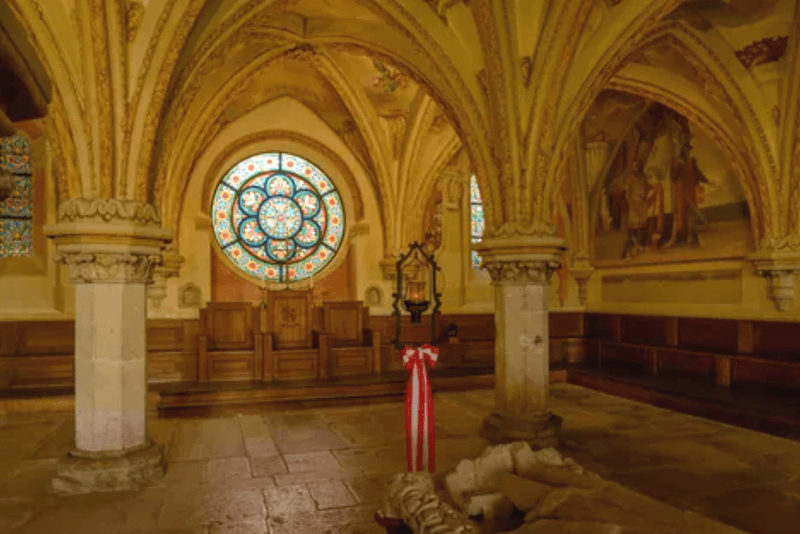
The chapter house was used for meetings of the monastic community and discussions about important matters. It contains the tombs of members of the Babenberg dynasty, which ruled Austria during the Middle Ages. Those buried here include Leopold IV, Leopold V, Frederick I and Frederick II. Their tombs highlight the monastery's close historical relationship with the ruling dynasty.
Leopold V is associated with a well-known episode in European history: following the Third Crusade, he took part in the capture of the English king Richard I, known as Richard the Lionheart.
The relic of the True Cross and monastic traditions
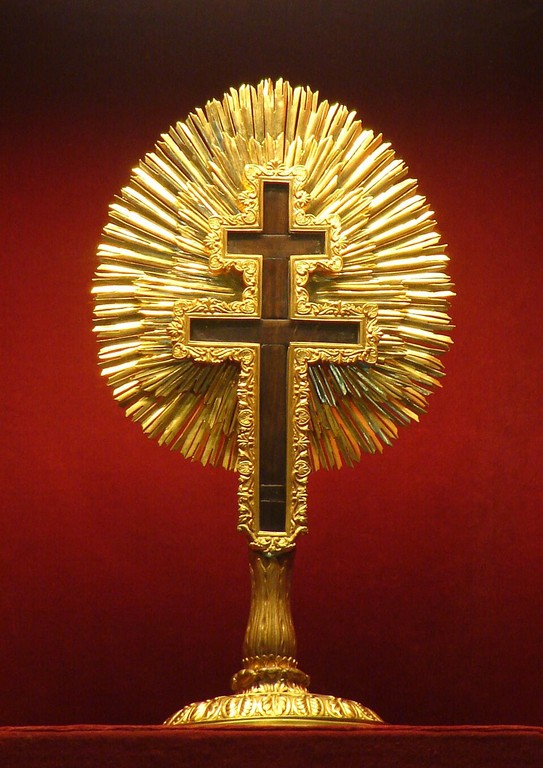
The name Heiligenkreuz means “Holy Cross.” In 1188, Duke Leopold V gave the monastery a relic associated with the True Cross, on which Jesus Christ was crucified according to Christian tradition. The relic became one of the abbey's most important spiritual treasures.
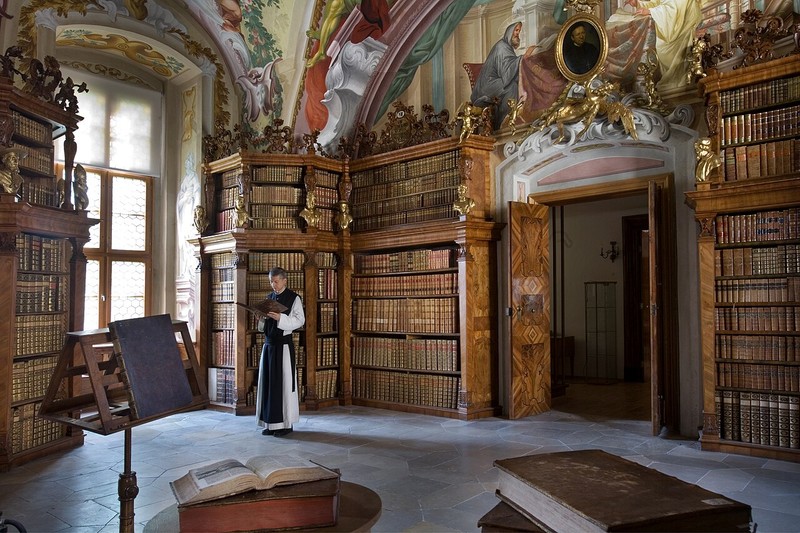
Heiligenkreuz remains an active religious centre. The monks take part in daily services, follow Cistercian traditions and sing Gregorian chant. The abbey also houses a theological institution whose history goes back to an institute founded in 1802.
Visiting Heiligenkreuz Abbey
The abbey is located in the municipality of Heiligenkreuz in Lower Austria, about 15 kilometres from Vienna. Visitors can reach it by car via the A21 motorway or by public transport, with connections through nearby towns such as Baden or Mödling. It is advisable to check current routes and bus timetables before travelling.
The church and other parts of the complex can be visited according to the abbey's rules, and guided tours may be available for certain areas. As this is an active monastery, visitors should respect prayer times and the community's regulations. Heiligenkreuz is an appealing destination for anyone interested in medieval architecture, Cistercian history and Austria's monastic heritage.
Gallery