Egypt's first step pyramid
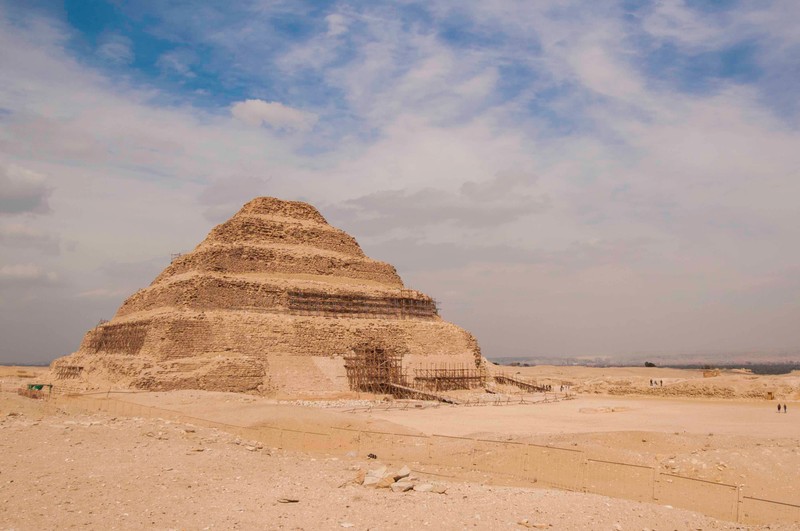
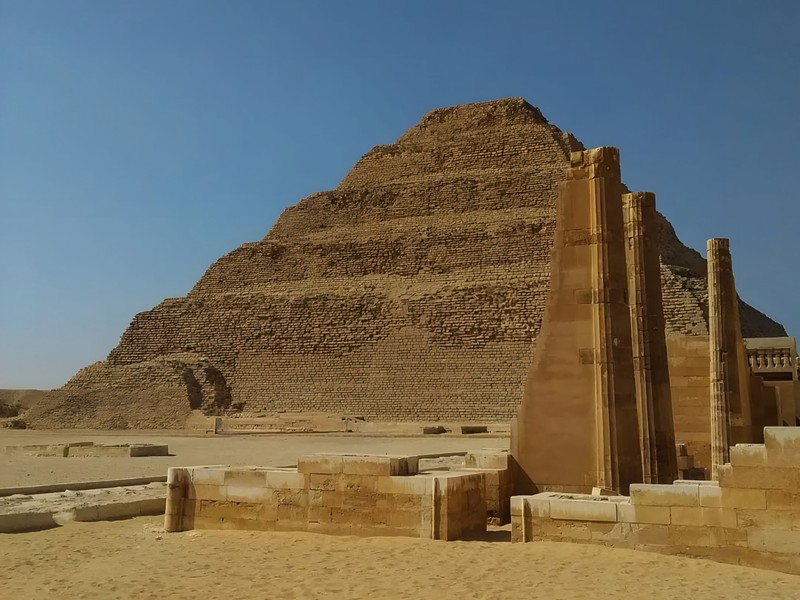
The Pyramid of Djoser is a landmark of ancient Egyptian architecture in the Saqqara necropolis, about 40 kilometres southwest of Cairo. It is considered the earliest known Egyptian pyramid and one of the oldest monumental stone structures of its scale in the country. Its unusual stepped form marked an important stage in the development of royal tombs and preceded the smooth-sided pyramids of Giza.
The pyramid was built during the Third Dynasty of the Old Kingdom, around the 27th century BCE, for Pharaoh Djoser, also known as Netjerikhet. It became the centre of a vast funerary complex surrounded by an enclosure wall and containing courtyards, ritual buildings, shrines and underground chambers.
Imhotep and the construction
The pyramid is traditionally associated with Imhotep, a high-ranking official, priest and architect at Djoser's court. He is considered one of the earliest architects known by name from written sources. In later periods, Imhotep was revered as a sage and eventually as a deity associated with medicine and knowledge.
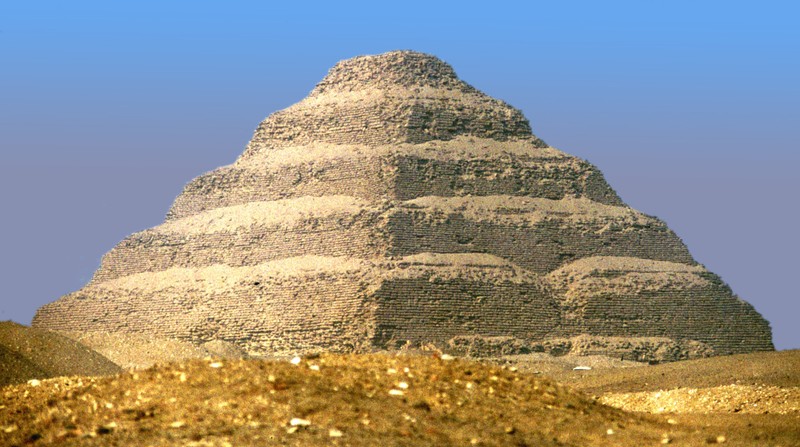
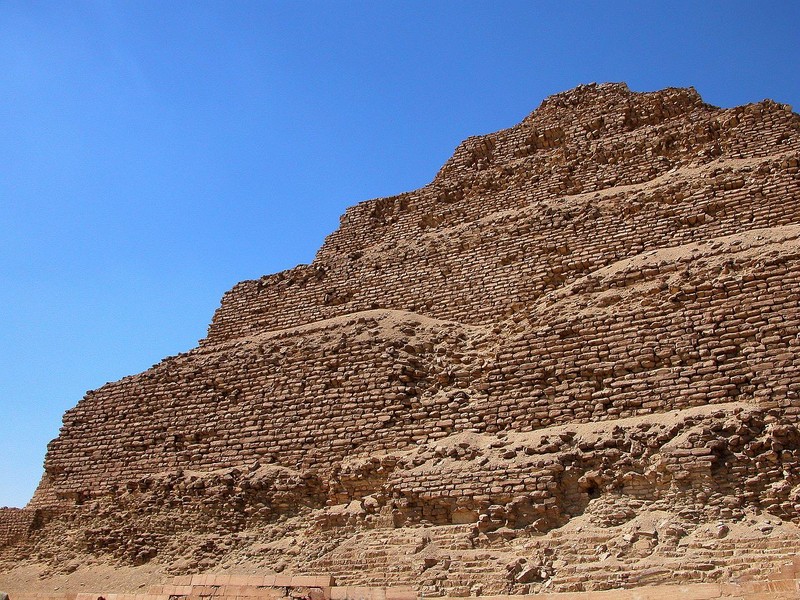
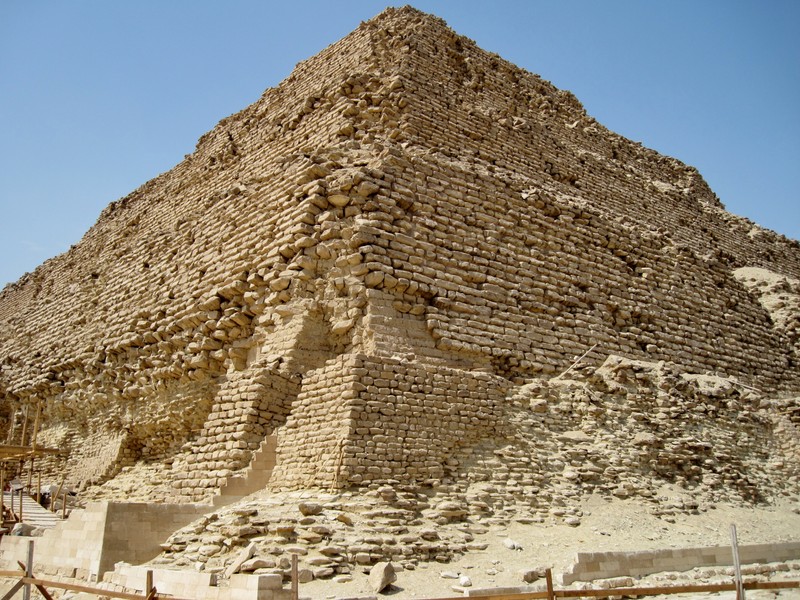
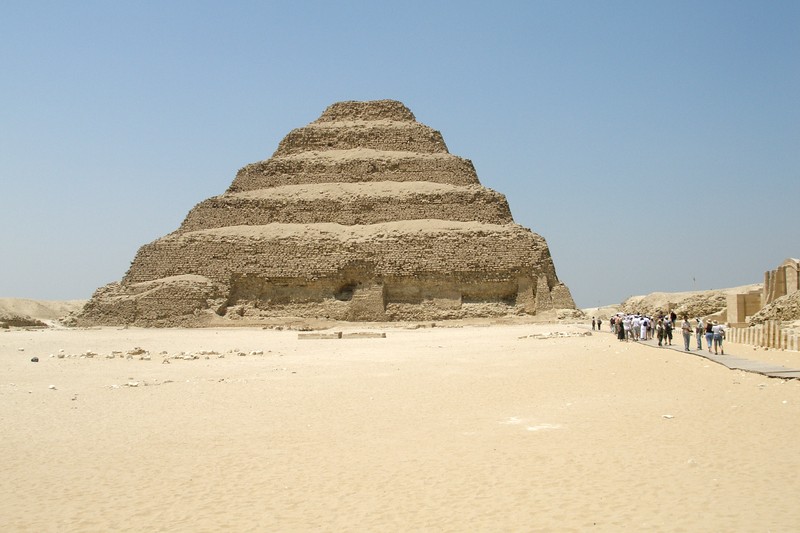
Before the pyramid was built, royal and elite Egyptians were often buried in mastabas, rectangular structures with flat tops and underground burial chambers. Djoser's monument developed from this tradition. An initial structure was enlarged and altered in several stages until it became a pyramid of six receding steps.
The pyramid stands about 60 metres high. Its construction illustrates the transition from earlier burial monuments to large-scale stone architecture and opened a new chapter in Egyptian building history.
Why the pyramid has steps
The structure originally began as a mastaba and was expanded and raised during successive building phases. Its dimensions and design changed over time, eventually producing six stacked levels that resemble mastabas of decreasing size.
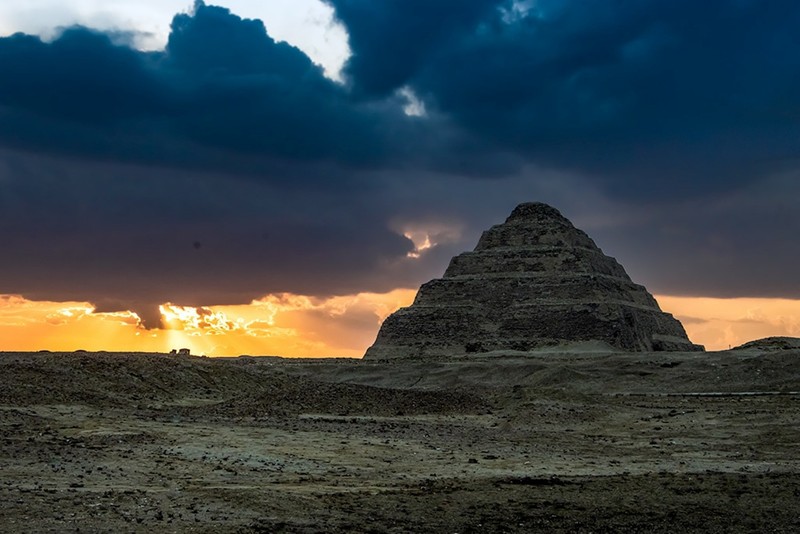
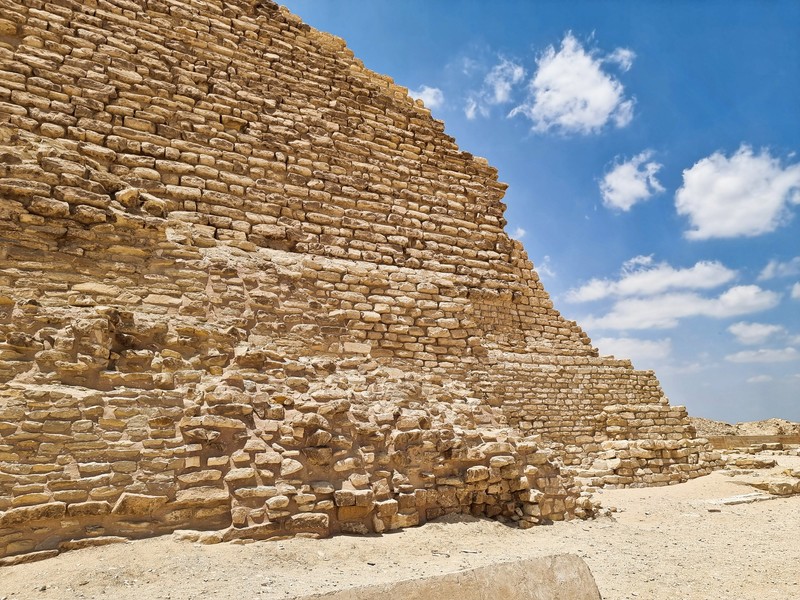
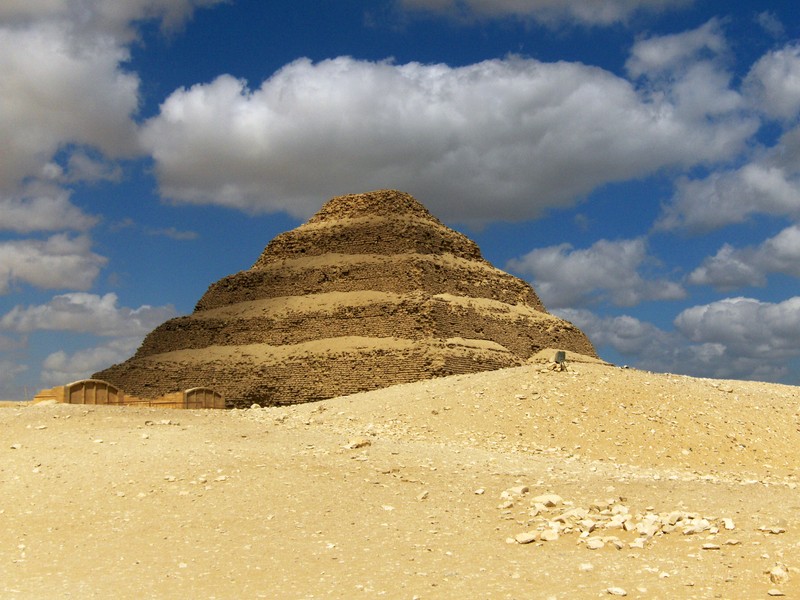
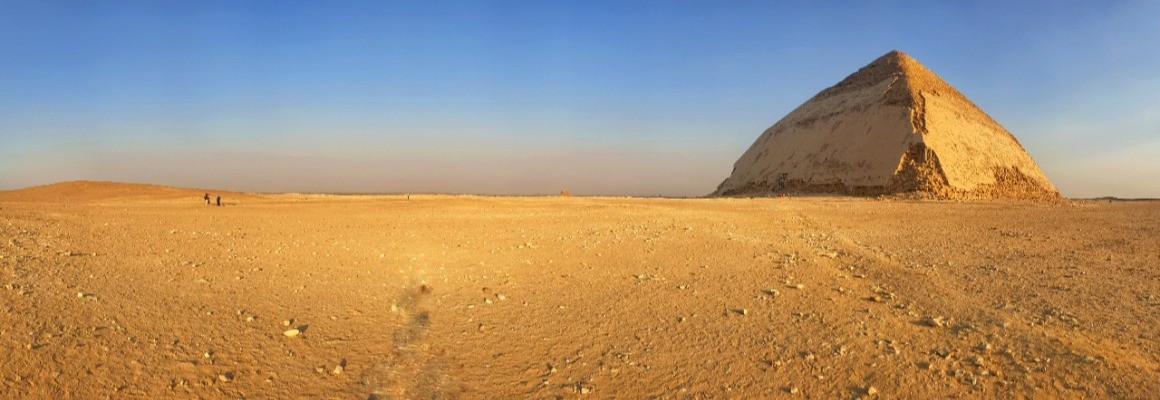
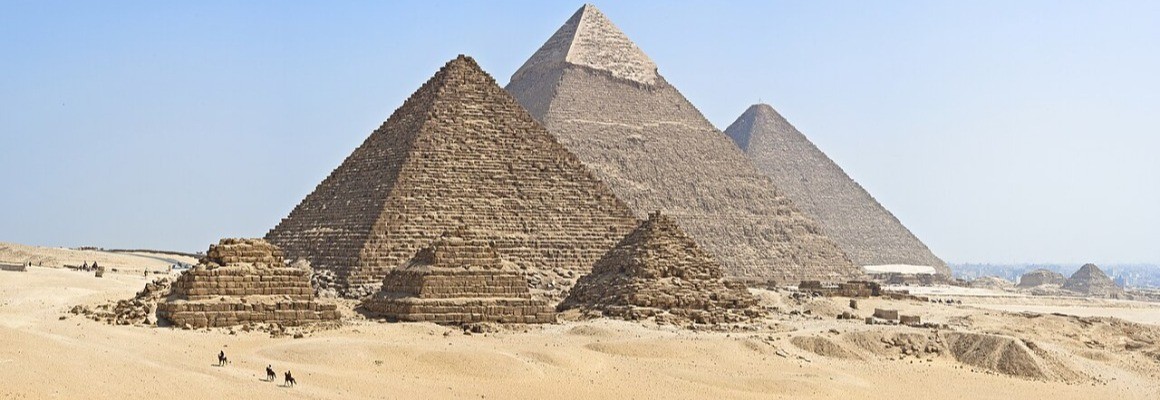
This stepped silhouette distinguishes Djoser's pyramid from the smooth-sided pyramids of Giza. It shows how ancient Egyptian builders experimented with royal tomb design and gradually developed monumental stone construction. Later pyramids continued this architectural evolution, with important transitional examples built at Dahshur.
Burial chambers and underground passages
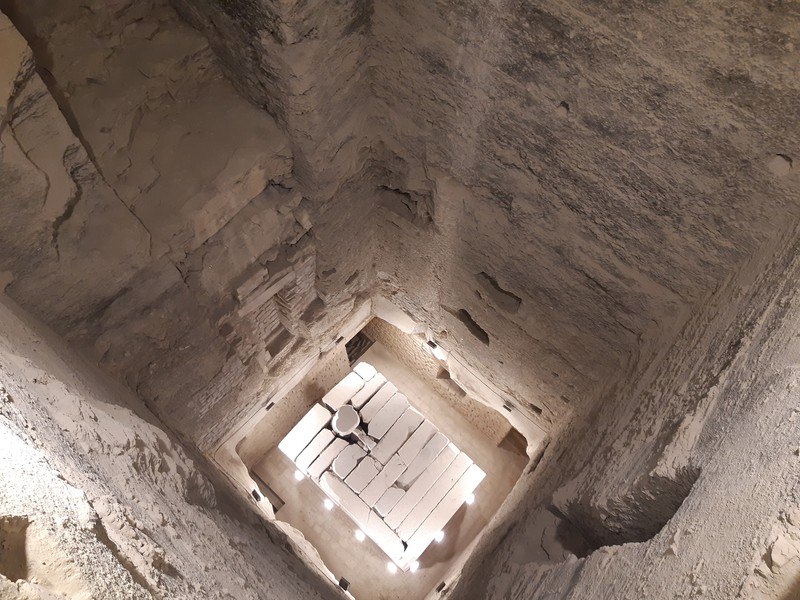
Below the pyramid lies a complex system of shafts, corridors and chambers. A central burial shaft descends into the bedrock, while a network of passages creates an extensive underground structure intended for the king's burial and related rituals.
Some chambers were decorated with blue faience tiles that imitated features of royal palace interiors. Surviving fragments provide a glimpse of the original decorative scheme. The underground architecture also reveals the scale of the work required to construct and protect the royal tomb.
A vast funerary complex
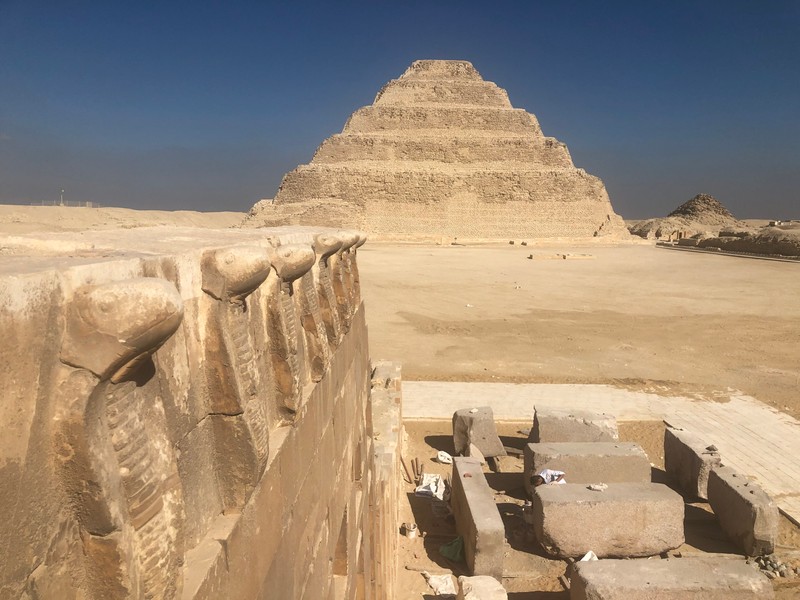
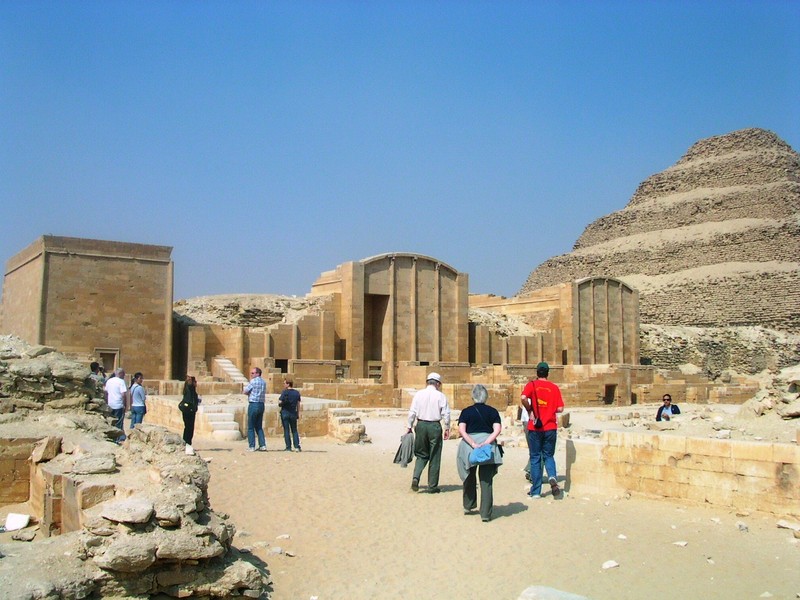
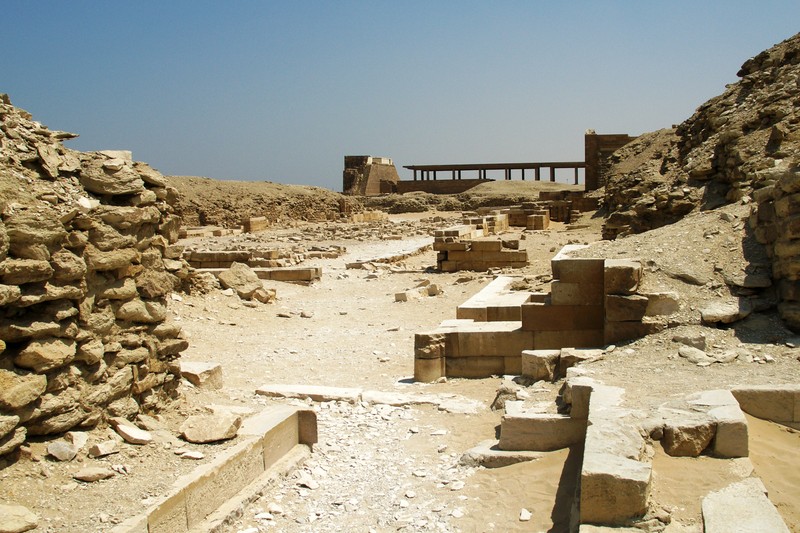
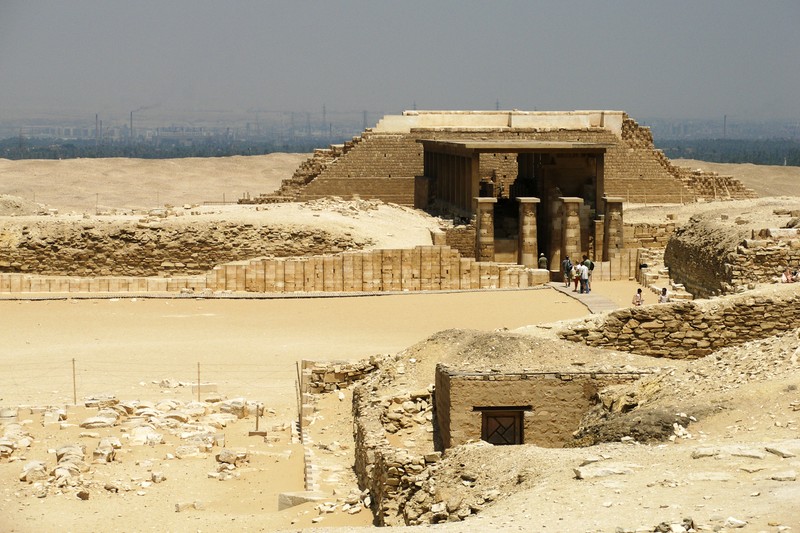
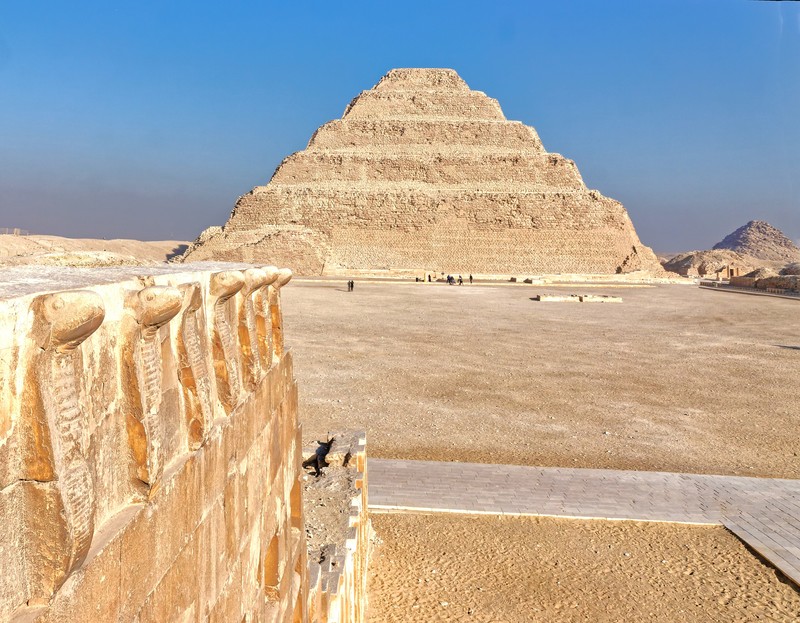
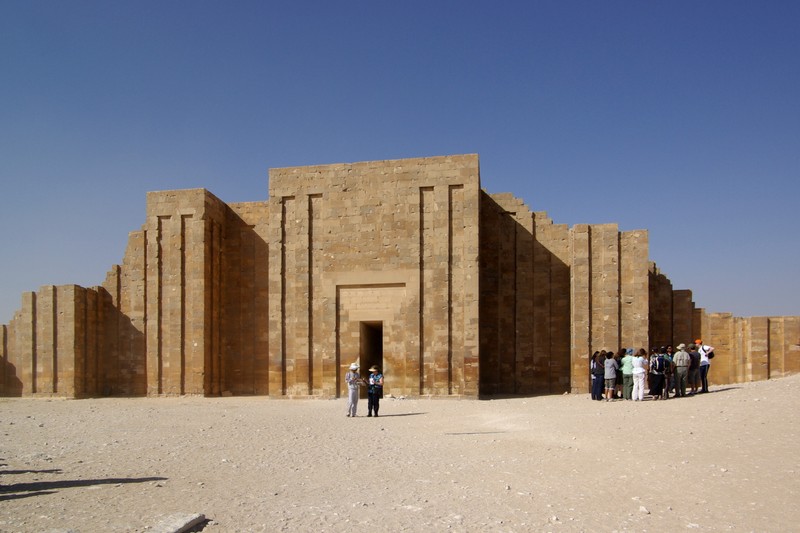
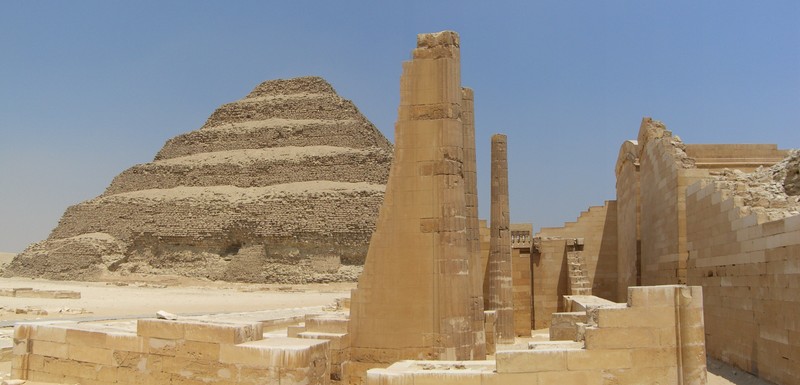
The pyramid is only the central element of a much larger architectural ensemble. A high stone enclosure wall surrounded courtyards, cult buildings, symbolic shrines and structures used for royal ceremonies.
One important area was the court associated with the Sed Festival, a ceremony intended to renew the king's strength and reaffirm his authority. Architectural features reproduced the forms of traditional shrines from Upper and Lower Egypt. Their stone replicas symbolically preserved the ritual setting for the king in the afterlife.
The complex also contains the South Tomb, whose precise purpose remains uncertain. It is often interpreted as a symbolic funerary structure connected with the pharaoh's role as ruler of a united Egypt. The ensemble shows that royal burial was understood as an entire ritual landscape rather than simply a place for a body.
Religious significance
For ancient Egyptians, a tomb was closely connected with beliefs about existence after death. The funerary complex provided space for rituals, offerings and the symbolic renewal of the deceased ruler. Its architecture reflected ideas about kingship, cosmic order and the relationship between the pharaoh and the gods.
The Sed Festival represented the renewal of the king's vitality. The courts and shrines of Djoser's complex reproduced elements of the ceremony, expressing the belief that royal power could endure beyond death.
Archaeological research and restoration
The Pyramid of Djoser attracted travellers and researchers for centuries. Archaeological investigations have helped clarify its construction phases, underground layout and surrounding buildings.
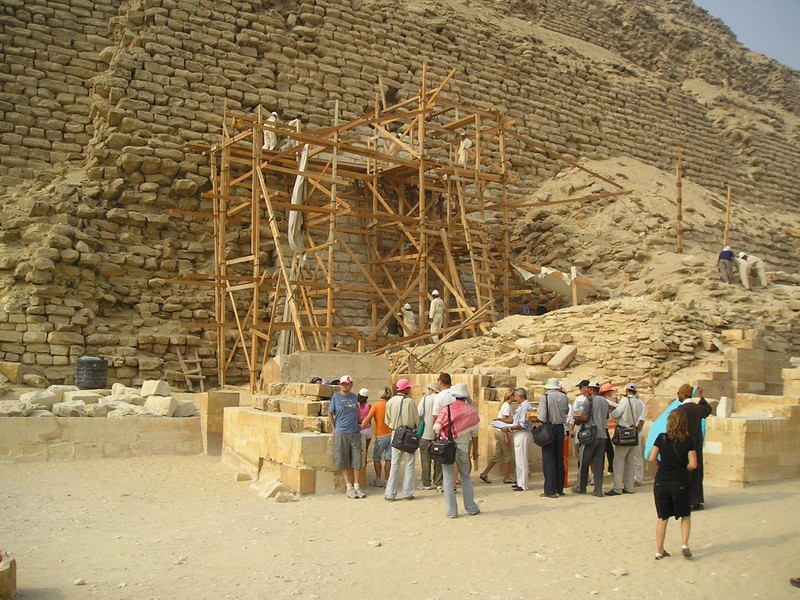
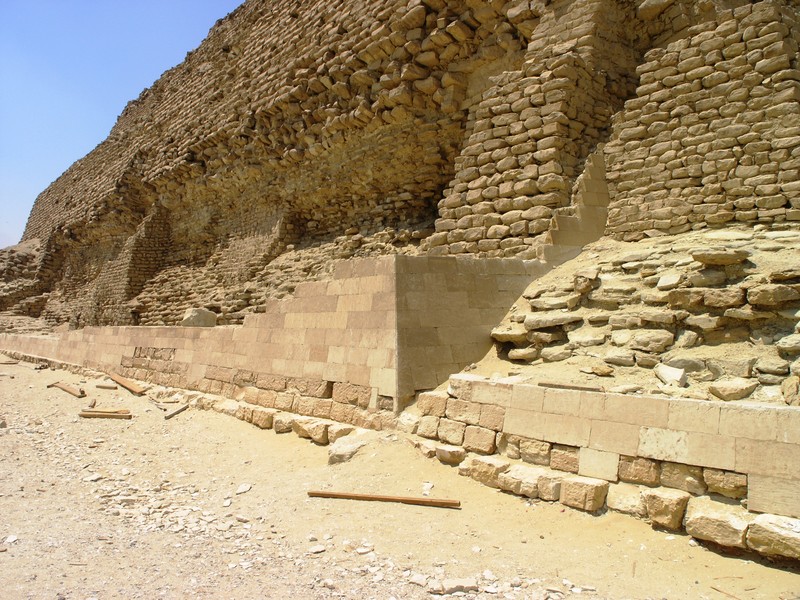
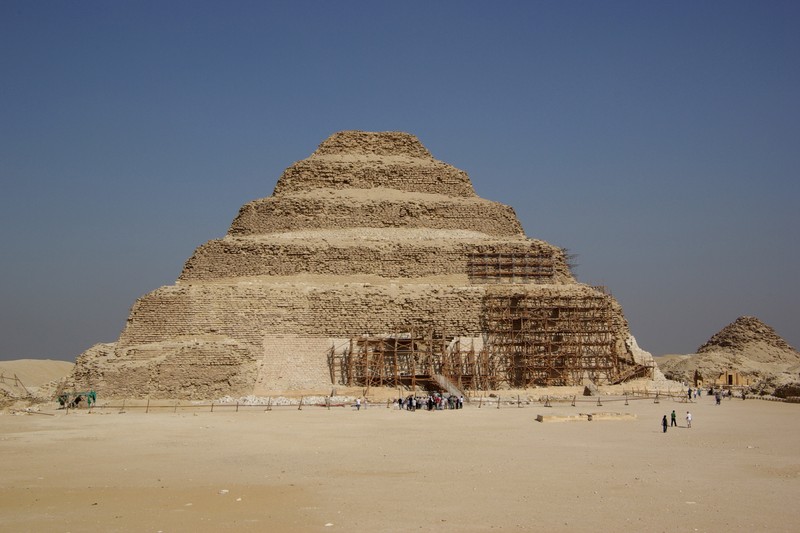
In modern times, the monument underwent extensive restoration to strengthen its structure and preserve its interior spaces. In 2020, Egyptian authorities announced the completion of a major restoration phase and the reopening of the pyramid to visitors.
Saqqara and UNESCO World Heritage
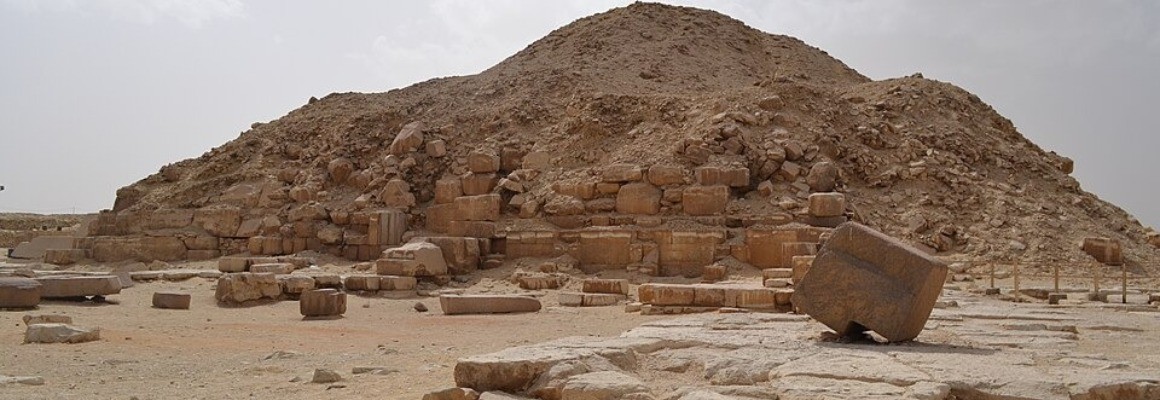
The Pyramid of Djoser forms part of the Memphis and its Necropolis World Heritage property, inscribed by UNESCO in 1979. The area includes pyramids, tombs, temples and other monuments that document the development of Egyptian funerary architecture over many centuries.
Saqqara is especially important for understanding the transition from early mastaba tombs to step pyramids and later designs. Djoser's pyramid occupies a central place in this history as one of the earliest known examples of monumental stone construction.
Nearby attractions
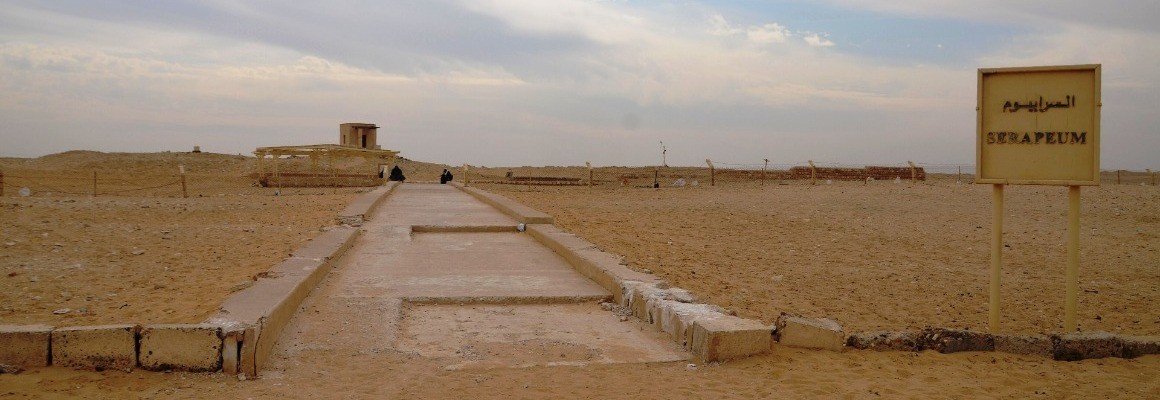
A visit to the pyramid can be combined with other sites at Saqqara, including the Serapeum, an underground necropolis for sacred Apis bulls, elite tombs decorated with reliefs and paintings, and pyramids of other Old Kingdom rulers. The Imhotep Museum displays archaeological discoveries from the area.
Visiting the Pyramid of Djoser
Saqqara is usually reached from Cairo by car, private driver or organised tour. Before travelling, check current opening hours, entry arrangements and whether the interior chambers are accessible, as visitor access can change.
Much of the archaeological site is exposed to the sun, so bring water, a hat, sun protection and comfortable footwear. Follow staff instructions, avoid touching ancient surfaces and take all rubbish with you.
The Pyramid of Djoser is more than an ancient tomb: it is a monument that changed architectural history. Its stepped silhouette recalls the period when Egyptian builders began creating monumental stone structures that would shape the civilisation's image for millennia.
Gallery