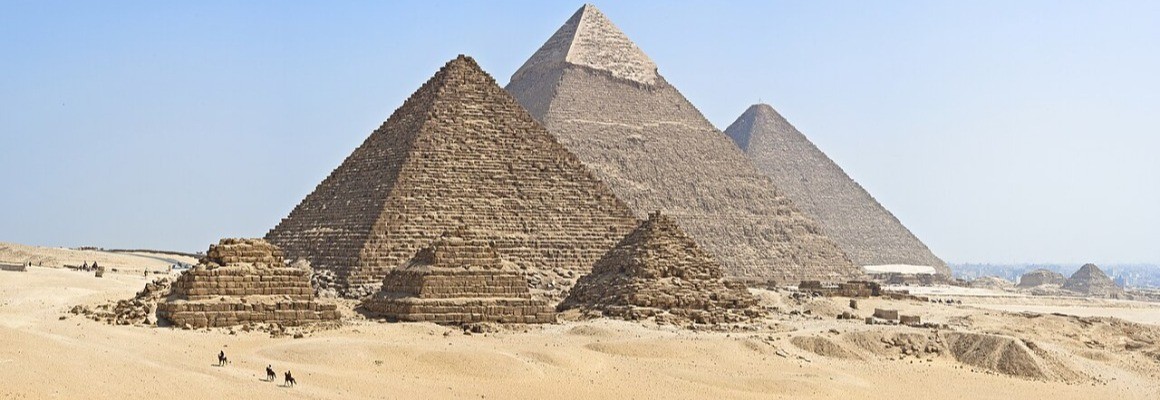
Saqqara is one of Egypt’s most important archaeological sites, located approximately 30–40 km south of Cairo along the western edge of the Nile Valley. In antiquity, this extensive area served as the necropolis of Memphis, one of Egypt’s earliest capitals. Pharaohs, royal family members, priests and senior officials were buried here over thousands of years. Saqqara is best known for the Step Pyramid of Djoser, a landmark in the development of monumental stone architecture.
History of Saqqara
The necropolis began to develop during the early stages of Egyptian civilization. Archaeologists have found burials dating to the first dynasties, and the area later grew into a vast landscape of royal pyramids, private tombs and religious structures. Saqqara remained in use for several millennia, making it an exceptional record of changing religious beliefs, burial customs and artistic traditions.
The Step Pyramid of Djoser
The most famous monument at Saqqara is the Step Pyramid of Pharaoh Djoser, built during the Third Dynasty, around the 27th century BCE. Its construction is traditionally associated with the architect Imhotep. The pyramid is regarded as the oldest surviving large-scale stone structure in Egypt and a turning point in the history of pyramid building.
Earlier royal tombs often took the form of mastabas, rectangular structures built above underground burial chambers. Djoser’s pyramid developed from this earlier form and eventually acquired six stepped levels. It originally stood about 60 metres high. The surrounding funerary complex was enclosed by a stone wall and included ceremonial courtyards, symbolic shrines, corridors and underground chambers. Some of its stone buildings imitate architectural forms that had previously been made from less durable materials.
The Pyramid of Unas and the Pyramid Texts
The Pyramid of Unas, built for the last ruler of the Fifth Dynasty, is particularly important because its burial chambers contain the earliest known examples of the Pyramid Texts. These religious spells and formulas were carved into the walls to help the deceased king in the afterlife. They are among the most valuable sources for understanding ancient Egyptian religion and beliefs about life after death.
Noble tombs and mastabas
Saqqara also contains numerous tombs belonging to officials, priests and other members of the Egyptian elite. Their reliefs and paintings depict farming, harvesting, hunting, fishing, craft production, food preparation, music and religious ceremonies. These scenes offer detailed evidence of everyday life in ancient Egypt. One of the best-known examples is the tomb of Mereruka, a senior official of the Sixth Dynasty, which contains many rooms and finely carved reliefs.
The Serapeum and the sacred Apis bulls
The Serapeum is an unusual underground complex of galleries and burial chambers associated with the cult of the sacred Apis bulls. In ancient Egyptian religion, the Apis bull was connected with the god Ptah and received special funerary rites after death. The underground chambers contain massive stone sarcophagi designed for the burial of these animals. Their scale demonstrates the engineering skills of ancient builders and the importance of religious ceremonies beyond royal funerals.
The Imhotep Museum
The Imhotep Museum is named after the architect traditionally associated with Djoser’s pyramid. Its collection includes archaeological finds from Saqqara and objects that help explain the history of the necropolis and its excavation. A museum visit provides useful context for exploring the monuments outdoors.
Saqqara and UNESCO World Heritage
Saqqara forms part of the UNESCO World Heritage property Memphis and its Necropolis – the Pyramid Fields from Giza to Dahshur, inscribed in 1979. This extensive heritage landscape brings together major monuments of ancient Egyptian civilization and illustrates the development of funerary architecture, from early royal tombs to the great pyramid complexes.
Archaeological discoveries today
Excavations at Saqqara continue to reveal new information. In 2026, Egyptian archaeological missions reported new tombs, burial shafts, sarcophagi and objects associated with funerary practices. These finds show that large parts of the necropolis remain to be fully understood. Egyptian authorities are also upgrading visitor infrastructure while seeking to protect the archaeological landscape.
Visiting Saqqara
Saqqara is usually visited on a trip from Cairo or Giza. Because the monuments are spread across a large area, it is worth allowing much of a day for the visit. Check in advance which pyramids, tombs and underground structures are open, as access can change during restoration work. An early start is advisable, especially in hot weather. Bring water, a hat, sun protection and comfortable shoes, and follow the rules for protecting ancient surfaces. Ticket prices and opening arrangements can change, so consult the official Egyptian Ministry of Tourism and Antiquities website before travelling.
Saqqara is much more than the site of one famous pyramid. It preserves thousands of years of Egyptian funerary traditions, architectural innovation and evidence of religious life. For anyone interested in the origins of pyramid construction and the organization of ancient Egyptian society, it is one of the country’s most rewarding archaeological destinations.
Gallery