
Traveler Stories — page 3

Jimmy Smith Newbie
Mexico · September 28, 2026
Chichen Itza: I finally saw a Mayan pyramid with my own eyes

Chichen Itza: I finally saw a Mayan pyramid with my own eyes

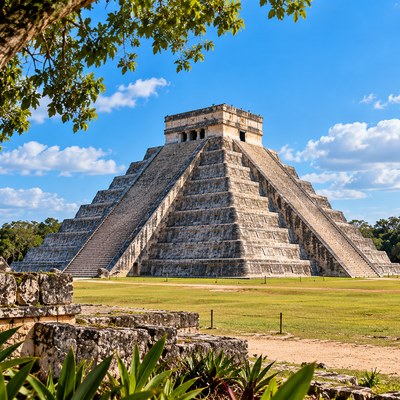
I had seen photos of Chichen Itza dozens of times before coming to Mexico. The pyramid was familiar even before I arrived - one of those places you recognize instantly. But standing in front of it in real life was completely different. The first view of El Castillo I entered the archaeological site in the morning and walked along the paths surrounded by trees. There were ruins and stone structures everywhere, but I was looking for one particular building. Then the trees opened up and I saw it. El Castillo, the Temple of Kukulcán. For a few seconds I just stood there. The pyramid looked much larger than I had imagined from photographs. Its perfectly symmetrical shape, enormous staircase and rows of stone steps were incredibly impressive. The structure is about 30 meters high and was built as the main monument of Chichén Itzá. What struck me most was the feeling of being in a place that had existed for centuries before any modern city around me. Chichén Itzá was one of the major centers of the Maya world and developed over almost a thousand years. The city also shows a mixture of Maya and Toltec architectural traditions. More than just a pyramid After spending some time near El Castillo, I continued deeper into the archaeological zone. That was when I realized that the pyramid was only one part of a much larger city. I walked past the Great Ball Court , where ancient ceremonial games were played, and then reached the Temple of the Warriors with its rows of columns. I also saw El Caracol, the famous circular structure traditionally associated with astronomical observations. Everywhere there were details carved into the stone - serpents, warriors, animals and geometric patterns. The longer I walked, the more difficult it became to imagine that these were once parts of a living city rather than simply archaeological ruins. A city built around water There was another interesting connection with the previous part of my trip. The name Chichén Itzá is associated with the cenotes of the area. The ancient city was established near natural water-filled cavities, which provided access to underground water. One of them, the Sacred Cenote, also had an important ritual role. After visiting the cenote a few days earlier, this made the history of Chichén Itzá feel even more connected to the landscape around it. By the time I left, I understood why this place had been on my list for so long. Photos can show you the pyramid, but they cannot show its scale, the heat, the silence between the ruins or the feeling of walking through a city that was already ancient long before our time. Chichén Itzá was not just a place I came to photograph. It became one of the moments of my trip that I knew I would remember long after leaving Mexico.

Read more →
0 0
Adam Traveler
Italy · September 28, 2026
How to save money on traveling in Italy

How to save money on traveling in Italy

I've wanted to go to Italy for a long time, but every time I started counting the cost of the trip, the numbers looked like I wasn't going on vacation, but to buy a small villa in Tuscany. What scared me the most was not even the accommodation or the flight, but how quickly the money disappears on the spot: I drank coffee, had a snack, bought a ticket, drove somewhere, decided to just sit on the square in the evening - and now the wallet has noticeably lost weight. On this trip, I decided to test on my own experience whether it is possible to see Italy, eat a balanced diet, live in a decent place and at the same time not return home with the feeling that, together with the Colosseum, I accidentally financed half of Rome. I started saving before the trip. The first thing I did was stop looking for a trip based on the principle of "where I want to go right now." Usually, I first imagined myself with a glass of wine somewhere in a beautiful square, and only then I opened the prices and began to suffer quietly. This time I did the opposite: first I looked at the dates, the cost of the flight and accommodation, and only then I decided which route would be more convenient for me, because Italy is beautiful in almost any direction, but I absolutely did not want to overpay for the right to be there three hours earlier. I also took my time with the tickets, because sometimes the difference between neighboring dates turns out to be quite noticeable. If it is possible to move the vacation a little, I would definitely check several departure and arrival options, and also look not only at the direct route to the main city of the route, but also at neighboring airports. However, it is important here not to fall into your own savings trap: if a cheap ticket takes you to the airport, from where you then need to get to the city for half the cost of the flight itself, there is no special victory. I didn't choose a place to live in the very center In Italy, I quickly realized one simple thing: the word "center" can sometimes add a completely obscene amount to the cost of living. Of course, it's convenient to live near the main square, especially when you can leave the hotel in the evening and find yourself among the beautiful streets in five minutes, but sometimes you pay for this walk even before you put on your shoes. Therefore, I began to look at areas a little further from the most touristic places, but near the metro, train station or a good bus stop. As a result, sometimes it took ten to fifteen minutes to walk, but the room rate was noticeably more pleasant, and at the same time I saw ordinary Italian streets, small shops, locals, and cafes where no one tried to sell me pasta for the price of a good lunch. It turned out to be a pleasant discovery for me: sometimes a place that is a little further from the tourist center leaves much more impressions. I almost stopped buying breakfast at the cafe. I started my first morning in Italy beautifully: I left the hotel, sat down at a table outside, ordered coffee and something to go with it, looked around and felt like a hero in a movie. The second morning, I did about the same thing, but I was already beginning to wonder why a few minutes of a beautiful life were so confidently reducing my budget. After that, I began to alternate the options. If breakfast was included in the room rate, I used it calmly, and if not, I bought something from a supermarket or a small bakery and made my own breakfast. At the same time, I did not give up Italian coffee and pastries at all, because savings should have reasonable limits, and depriving me of the opportunity to drink a normal espresso in the morning would be some kind of wrong punishment. I had to rethink the relationship with the restaurants a bit The most dangerous phrase in Italy for my wallet sounded like this: "Well, since we're here, let's go to a beautiful place." Usually, a menu appeared after it, followed by several dishes, drinks, dessert, and at the end a bill that made me study the ceiling very carefully and remember all my life decisions. Therefore, I began to pay attention to the places where Italians themselves eat, and did not strive to have dinner next to the main attraction every evening. For a full meal, it was often enough to choose a simple local place a little away from the tourist square, and sometimes I took pizza, panini or other takeaway food and went to the park or square with it. It turned out to be cheaper, but the atmosphere didn't suffer at all, because sitting with a slice of pizza somewhere in Italy is, in my opinion, a completely independent cultural experience. I stopped buying water and snacks on every corner. This is where I realized how imperceptibly money can disappear. When you walk all day, you're constantly thirsty, then suddenly hungry, then more coffee, then ice cream, and every time it feels like a few euros is just a small thing. And in the evening, you put everything together and realize that your little "trifle" has quietly turned into the cost of a decent dinner. That's why I carried a bottle of water with me and bought small snacks in the store in advance. In Italy, drinking fountains or public water sources can be found in many cities, so a bottle becomes quite a useful thing, especially in summer. But I bought ice cream anyway, because I came to Italy, not to attend a financial seminar. I compared the train and the bus between the cities. If the route involves several cities, I would not automatically buy the first ticket I see. There are different transportation options in Italy, and the cost of a trip can greatly depend on the time, type of train, and how much the ticket is purchased in advance. Sometimes a fast train is the most convenient solution, especially when it comes to popular destinations between major cities, but sometimes a slower option or a bus can significantly reduce costs. I was just comparing several options before buying, because an extra couple of hours on the road for me was a perfectly acceptable payment for the opportunity to leave money for a normal dinner, and not for transportation. In museums, I looked at the conditions of my visit in advance Previously, I could come to the attraction and only find out the ticket price on the spot, after which I stood in front of the ticket office with the face of a man who suddenly realized that he had already seen the architecture from the outside today and maybe that was enough. In Italy, this approach is especially dangerous because there are many attractions, and the desire to see absolutely everything can very quickly turn a vacation into an expensive marathon through museums. The Colosseum Therefore, before the trip, I checked the official websites of the places I was interested in and saw if there were free hours, special days, or combined tickets. As part of a government initiative by the Italian Ministry of Culture, admission to some museums is free. There are certain hours when you can view the exhibition or other exhibits for free. Among the participants are the Colosseum in Rome, the Capitoline Museums, the Uffizi Museum in Florence and other objects . However, I would not rely solely on free days, because sometimes so many people gather there that saving turns into queuing training. I stopped trying to see absolutely everything. Probably, this solution turned out to be the most economical. When I first made up the route, I wanted to be everywhere in a few days: Rome, Florence, Venice, somewhere else along the way, preferably to capture the sea and somehow accidentally end up in Tuscany at sunset. Then I looked at the map and realized that I was going to spend a significant part of my vacation on trains and at train stations. Therefore, I chose several places and left a normal amount of time between them, so as not to run around Italy with a suitcase and the expression on the face of a person who is late for his own life. As a result, I not only spent less on moving, but also felt for the first time that I was really resting, and not fulfilling the tourist standard. How much can you save in the end I would not promise any universal amount, because the budget for a trip to Italy depends very much on the city, the season, the duration of the trip, the level of accommodation and how much a person likes restaurants with a view of the main attraction. But even without extreme savings, it is quite possible to reduce costs by doing a few simple things: looking for flights and accommodation in advance, looking at areas a little further from the center, using public transport, comparing options for moving between cities, buying some food in regular stores and checking prices for attractions in advance. At the same time, I realized one important thing: saving money on a trip does not mean constantly denying yourself everything. I quietly drank Italian coffee, ate pasta, bought ice cream, went to museums and sometimes chose a beautiful cafe just because I liked it there. It was just that now I understood how I could avoid paying too much, so that I wouldn't have to stand in front of the last pizza on vacation and not count in my mind whether I still had enough money for the return train. Italy has generally turned out to be a country where reasonable savings do not prevent you from having fun, if you do not try to turn the trip into a competition "who will spend the least". You can live not two steps away from the Colosseum, but go out for a walk around Rome every morning, you can have dinner at a beautiful restaurant once, and take a pizza to take away another evening, you can travel between cities in a way that is not the most expensive way and at the same time not feel like a second-class tourist at all. After all, I went to Italy not to proudly show my friends a photo of my empty wallet, but to return home with photos, memories, and at least a small amount of money for my next trip.

Read more →
0 0
Stanislav Newbie
France · September 28, 2026
How much does a trip to Paris really cost?

How much does a trip to Paris really cost?

When I first started calculating how much a trip to Paris would cost, it seemed to me that the most expensive thing here was Paris itself. The city is beautiful, romantic, with the Eiffel Tower, croissants and so many beautiful cafes that the wallet starts to get nervous even before boarding the plane. As a result, it turned out that the main problem is not how much Paris costs, but how quickly I can spend money myself when I see another cafe with beautiful tables on the street. I decided to count the entire trip so that there would be no classic tourist surprise in the style of: "How did it happen that I spent so much when I didn't seem to buy much?" I got a week-long trip, and I tried not to turn it into either a budget marathon with supermarket sandwiches or a vacation for a person who eats breakfast exclusively in restaurants with white tablecloths. It turned out to be quite a common option when you want to see Paris, eat normally, use transport and sometimes indulge in something pleasant. Flight and journey to Paris Of course, the price of tickets affected the cost of the trip the most. I bought them in advance and chose a regular economy class, because I am not yet mentally ready to pay for business class as much as half of my trip costs. Depending on the departure city and dates, the cost may vary greatly, so I would not focus on one specific figure here, but I put about 150-250 euros on a round-trip flight. You also need to get from the airport to the city, and that's when I first remembered that Paris knows how to collect money for literally every move a tourist makes. You can take public transport and spend relatively little, or you can see the queue for the train after a long flight, look at your suitcase and decide that a taxi is a great idea. I chose a more economical option and put about 25-40 euros on the way from the airport and back. Housing: the most serious expense item With housing, everything is a little more complicated, because Paris knows how to surprise. And sometimes it's not the beauty, but the size of the room, when you open the door and realize that you can only put your suitcase in one place, and you'll have to negotiate with him about living together. I was looking for a small hotel or apartment in a convenient area, but not necessarily right next to the Eiffel Tower, because I'm not ready to sell a car for the opportunity to see it from the window every morning. During the week of my stay, I got about 700-1000 euros , and with early booking, you can find cheaper options, especially if you move a little away from the most touristic areas. As a result, housing turned out to be the part of the budget that is the most difficult to save on. You can reduce the cost of food, transportation or entertainment, but if you want a private room in a good area and without adventures with plumbing, you will have to accept that Paris will regularly look into your wallet. Food: here I realized that I don't have the willpower I originally planned to save money on food. In the morning, coffee and a croissant, in the afternoon something simple, in the evening a regular dinner, and no spontaneous restaurants just because they have beautiful chairs. It was a great plan, but it lasted until about the first morning, when I saw a display case with pastries and realized that my financial strategies were over. On average, I spent about 35-50 euros a day on food and coffee, if without any special restaurant frills. This is about 250-350 euros per week, although it can be cheaper if desired, especially if you buy some of the food in the supermarket and do not turn every meal into a gastronomic event. At the same time, I would not recommend coming to Paris and trying to save on everything. Sometimes it's much more pleasant to buy an ordinary baguette, cheese, fruit and a bottle of water, have a small snack in the park and just look at the people around, than to spend all day looking for the cheapest menu and end up spending more effort than money. Subway and walking I mostly explored Paris on foot, because otherwise, it seems to me, it is impossible to feel the city. You can take several metro stops, or you can walk the same couple of kilometers and quite accidentally discover a small street, a beautiful courtyard or a cafe, which for some reason you remember more often than the main attraction of the day. Paris Metro I have allocated about 30-50 euros per week for public transport, depending on the number of trips and selected tickets. But I walked a significant part of the route, so my transport budget did not inflate. Traffic on the Champs-Elysees For me, a taxi is expensive, but I decided to go by car and see the Champs-Elysees. It is one of the most famous and iconic streets in Paris. The avenue is 71 meters wide. After paying the taxi driver 20 euros, I realized that walking around Paris can be a great workout. After a few days, I stopped wondering why my legs reminded me of themselves in the evening, but I could calmly say: "Yes, it's only twenty minutes on foot." Then I would open the map and discover that twenty minutes had somehow turned into seven kilometers. Tickets and attractions You can count on free Paris too, but I still wanted to see more than just the streets. Therefore, I invested money in advance for museums and several paid attractions, including those places where I really wanted to go. Fondation Louis Vuitton Museum It took me about 100-180 euros per week for tickets, museums and entertainment. Everything depends on the program here: if you only go to free places and walk around the city areas, the costs will be small, but if you buy tickets somewhere every day, the budget will start to grow quite quickly. I made a list of places I really wanted to see in advance, and it turned out to be the right decision. Otherwise, in Paris it's easy to fall into the trap of "well, since I'm here," after which the banking app starts looking at you with condemnation. Souvenirs and small purchases At first, I didn't consider this expense item at all, because I sincerely believed that I would not buy anything. Paris, as it turned out, was also aware of my plan and just calmly waited until I entered the first store. As a result, I spent about 50-100 euros on small purchases, souvenirs, postcards, some small things and gifts. And it's also quite modest, because Paris knows how to explain very convincingly why you absolutely need this cup, notebook, box of sweets or magnet, even though there is already a collection of things at home that I once also intended not to buy. How much does a week in Paris cost in the end? If you put all the expenses together, my trip for the week turned out to be something like this: 150-250 euros for flights, 25-40 euros for travel from the airport, 700-1000 euros for housing, 250-350 euros for food, 30-50 euros for transport, 100-180 euros for sightseeing and about 50-100 euros for small purchases. As a result, I would focus on about 1300 to 1900 euros per person per week, if traveling is comfortable, but without luxury. With a very economical approach, the amount can be reduced, especially due to housing, food and flight costs, and if you choose a good hotel in the center, often go to restaurants and do not look at the prices for excursions, the budget will easily go much higher. Is it possible to travel to Paris cheaper? Of course it is possible, and I would even say that Paris does not require a huge fortune if you think about the route a little in advance. The most tangible ways to save money are to buy tickets in advance, choose accommodation not in the very center, walk more, use public transport, buy some food in stores and book popular attractions in advance. Eiffel tower But personally, I realized one thing.: Don't turn your trip into a competition to save money. If I came to Paris, walked twenty thousand steps, looked at the Eiffel Tower, looked into the Louvre, sat with coffee in the evening somewhere on a cozy street and ate a normal croissant, I want to remember that, not that I saved three euros for breakfast. My advice is very simple: before traveling, it is better to determine the amount that you are really willing to spend, add to it a small reserve for unforeseen expenses, and only then go quietly. Because Paris is beautiful precisely when you can walk through its streets and not count every five minutes how much is left on the map, and if there is still money left after the trip, consider that you have completed a separate Parisian quest.

Read more →
3 0
Svetlana Photo Hunter
Georgia · September 28, 2026
Kutaisi: a place I didn't know anything about before the trip

Kutaisi: a place I didn't know anything about before the trip

If someone had told me a few years ago that one day I would end up in Georgia thanks to a friend's bachelorette party and would accidentally fall in love with Kutaisi, I would probably have just laughed. I knew about Tbilisi, I had heard about Batumi, I imagined Georgian mountains, wine, khachapuri and feasts, but Kutaisi was practically absent from my tourist dictionary. So when a friend wrote to our shared chat one day: "Girls, I've thought of everything, we're going to Georgia for a bachelorette party," I immediately imagined a beautiful hotel, glasses of wine, photos in dresses, and an obligatory table that would look like we hadn't come for three days, but decided to feed the whole area. To the question "Where exactly?" My friend replied quite calmly: "In Kutaisi." I honestly started looking for it on the map right away, because I didn't want to pretend once again that I knew the geography perfectly well, and then it turned out that I couldn't tell anything about it except the name of the city. However, it didn't upset me at all at the time, because I had a feeling that the main thing in a bachelorette party was company, and the place could be opened on the spot. Kutaisi turned out to be completely different from how I imagined it. The first impression was very pleasant, but I still waited for some time for that Georgia of my expectations to begin, with endless feasts, noisy streets and the feeling that now someone would definitely invite us to drink wine. Kutaisi turned out to be much calmer than I imagined, and that's what surprised me a little at first. There was no sense of a large tourist city, where every second person was in a hurry, and every first person was trying to sell you a magnet with a local landmark. We walked through the streets, talked about everything, took pictures literally near every beautiful building and periodically stopped to eat, because in Georgia it is generally difficult to pretend that you are not hungry. At some point, I realized that while we were talking, I had completely stopped looking at my phone and checking what was interesting nearby, because the city itself turned out to be interesting enough to just walk wherever my eyes looked. However, after a while it became clear that "where your eyes are looking" is not always the best way to navigate, especially when your eyes are busy photographing. The bachelorette party almost turned into an excursion The next day, we decided that one city wasn't enough for us, and we started discussing where we could go. The friend who organized all this had already found several places in advance, and we all pretended to be listening attentively, although each of us was thinking mainly about breakfast at that moment. As a result, the conversation ended with the fact that we decided to see the surroundings of Kutaisi, and I still believe that it was then that our usual bachelorette party finally turned into a small trip. We saw a completely different Georgia – green, mountainous, a little wild and very photogenic, and so much so that the phone gradually began to turn into the main participant in our company. We stopped every now and then to take pictures, then returned because "the view was even more beautiful there," and then got back in the car and promised ourselves that we would definitely make the next stop the last. Of course, she has never been the last one. I finally understood why it's worth coming here. What surprised me the most was that before this trip I did not perceive Kutaisi as an independent tourist destination at all. In my head, it was just some kind of Georgian city that exists on the map and is probably needed by someone, but why exactly to go there, I did not understand at all. And then I found myself there myself, and suddenly I found myself thinking that I liked the lack of a sense of a "mandatory program." I liked walking through the streets without a clear plan, looking into small cafes, sitting at a table with my friends and discussing everything in the world, and then suddenly discovering a beautiful old house or a cozy courtyard nearby. In Kutaisi, for the first time in a long time, I felt that a trip does not necessarily have to consist of ten sights a day to be remembered, sometimes just good company, a beautiful city and the feeling that you are not in a hurry are enough. And, of course, there was a small failure. Our bachelorette party wouldn't be our bachelorette party if at least once things didn't go a little wrong. One evening, we decided to walk to the right place on our own, because, of course, why would we need a taxi if we have legs, a phone and the collective mind of four women. The collective mind lasted for 15 minutes, after which it turned out that each of us was sure that someone else knew the way. We walked for quite a long time around the Chain Bridge spanning the river Rioni. By the way, we found out later that archaeologists found the remains of a 5th-century stone bridge in this area. Chain Bridge We took a few wrong turns, then started arguing with the map, and then we just stopped and started laughing, because it was too late to go back, and no one could explain exactly how we managed to get lost on a fairly simple street. As a result, we were saved by a local woman, who seemed to understand from our confused appearance that tourist navigation had officially failed today, and showed the way. I left Kutaisi with an unexpected thought. When it was time to return home, I caught myself in a completely unexpected feeling.: I was a little sorry to leave. I was on my way to Georgia for a bachelorette party, thinking mostly about my friends, beautiful photos, delicious food and a few fun evenings, but in the end I took with me the memories of a city that I didn't know much about until recently. It's probably these trips that you remember the most, because you don't have time to figure out in advance what the place should be. Kutaisi didn't have to meet my expectations, because I had almost no expectations, and perhaps that's why he surprised me so easily. The Rioni River Now, if someone asks me what I know about Kutaisi, I won't silently open the map like the first time. I'll tell you about our endless walks, Georgian food, green surroundings, the Rioni River and our attempts to navigate on the phone, and the very bachelorette party that was supposed to be just a fun trip with friends, but in the end introduced me to a place that I had hardly thought about before. And, perhaps, this is one of the best things that can happen on a trip: to arrive there, which you know nothing about, and leave with the feeling that you have found a small piece of the world, which now for some reason has become yours.

Read more →
2 0
Gilyana Discoverer
Morocco · September 27, 2026
Marrakech: How I got lost in an unfamiliar city

Marrakech: How I got lost in an unfamiliar city

I got lost in Marrakech by accident, although now, remembering this story, I realize that the word "accidental" here describes my actions too affectionately. I decided to turn off the usual tourist route myself, because it seemed to me that if everyone goes in one direction, then the real life of the city is probably somewhere in the opposite direction. At that time, it seemed to me that this was a great idea, because I was walking with my phone in my hand, the card was open, the charge was almost full, and my confidence in my own abilities to navigate the terrain was off the charts. For the first twenty minutes, everything was really going great, and I even managed to praise myself several times for not just walking along the central streets with a crowd of tourists. There were narrow alleys of the medina, small shops, doors behind which some completely different life was taking place, the smell of spices, fresh bread and something fried, which I could not come up with a name for. I took pictures of everything and thought that it was for such moments that you came to an unfamiliar country, and then I took another turn, then another, and at some point I realized that I had no idea where I was. The map decided to confuse me completely The funny thing started when I took out my phone and opened the card with the expression on the face of a person who can easily solve any problem now. The map showed that the street I needed was literally a few minutes away, but for some reason there were several walls, closed passages and alleys between me and this street, which on the screen looked like completely normal roads. I went to the right, then came back, then decided that I should go to the left, and after a few minutes I found myself again near the same bench with copper lamps. Menard Gardens At that moment, for the first time, I suspected that Marrakech had just decided to play with me a little. I was particularly struck by the fact that I could walk forward for several minutes without changing directions at all, and then find a familiar door in front of me, which I had already passed by. The phone confidently showed the arrow, I also confidently followed the arrow, and only one small circumstance prevented us from succeeding – I did not understand at all where this arrow was leading me. I wanted to see the Menard Garden, but it took me a while to visit the historical landmark. And then I remembered the "Clone" At one point, I stopped in the middle of the alley, looked at the walls surrounding me, at the people who were quietly going about their business, and suddenly, quite unexpectedly, I remembered the TV series "Clone" . Apparently, my brain decided that if I was already in Morocco, lost among the oriental streets and everything around me looked so unusual, then it was time to get the old TV classics out of my memory. I even imagined for a second that I was the heroine of some episode, who now had to walk beautifully down east street in a flowing dress, mysteriously look into the distance and know where she was going. The reality, however, looked much less romantic: I had a bottle of water, a backpack, slightly disheveled hair and a completely confused expression on my face, because the heroine of "Clone" would at least roughly understand where she was going. At that moment, I could only say one thing for sure: I was definitely somewhere in Marrakech. I was saved by a man I didn't even ask for help. I was about to admit defeat and call a taxi when an elderly man appeared nearby, who, apparently, had long been accustomed to watching tourists trying to defeat the local alley system. He looked at me, then at the phone, then back at me and asked me something in French, and I explained with the most serious look that I needed to get to the Menard Gardens or one of the mosques. Qutubiya Mosque He smiled as if he had heard this phrase a thousand times before, waved his hand and motioned for me to follow him. At first, I was a little doubtful, because my mother's inner voice immediately turned on in my head: "Don't go anywhere with strangers." But the man just led me through several alleys, turned off near a small shop, then turned again, and after a few minutes I saw a familiar street. The stranger pointed to the Qutubiyah Mosque. All the locals know where it is, it is very difficult to get lost in this place. It took me a moment to believe that we had really got to where I needed to go. I thanked him, but he just smiled, waved his hand and calmly walked back, as if every day he rescued lost tourists armed with phones and absolute confidence in his navigation abilities. It turned out that I had found more than I had lost. The most interesting thing happened after I returned to a familiar street and saw several sights and ate. I realized that if I hadn't gotten lost, I would never have seen those small workshops, quiet courtyards, benches and completely ordinary corners of Marrakech that would not have been included in any of my pre-planned routes. Sometimes we try so hard to plan everything, open the map, mark the sights and calculate the time, that we forget to leave a little room for accidents. The ruins of the first Qutubiya Mosque Now that I think back on that day, I no longer think about how long it took me to find my way and how many times I passed by the same door. For some reason, I remember the ruins of the first Koutoubia mosque, the smell of spices, the sun spots on the walls, that same unflappable man, and the moment when I suddenly thought of a "Clone" in the middle of Marrakech, even though I hadn't thought of the series in many years. That's probably why I'm much more relaxed about small failures now. If you get lost in an unfamiliar city, you should first check the map, phone charge, and direction of travel, but sometimes you can just stop and look around, because it's the next wrong turn that may turn out to be what you came to this country for.

Read more →
1 0
Jimmy Smith Newbie
Mexico · September 27, 2026
I jumped into the cenote and realized why they are called magical

I jumped into the cenote and realized why they are called magical

I wasn't going to jump into the water at all. After a few days of traveling in Yucatan, I just wanted to see something beautiful, relax a little and continue on the road. But when I arrived at Cenote X-Canché , the plans changed in just a few minutes. The road through the jungle The cenote is located near the archaeological complex of Ek Balam. From the entrance, you need to walk about 1.5 kilometers through the jungle . You can walk, rent a bike, or use local transportation. The road itself already created the right mood: there was dense greenery around, the heat was gradually receding into the shadows of the trees, and nothing was visible ahead. And then I heard water. A few more steps and a huge chasm opened up in front of me among the rocks. Below, about tens of meters below ground level, there was completely calm water. Cenote X-Canché is a semi-open cenote with a diameter of about 40 meters , surrounded by limestone walls and jungle. After the bright sun overhead, this place seemed almost unreal. I jumped anyway. A wooden staircase leads to the water. The lower I descended, the cooler the air became. It was hot upstairs, but here there was a completely different atmosphere - cool water, humid air, silence and the sounds of the jungle. I stood on the platform for a long time and looked down. It seemed that the easiest way to jump was until you came to the very edge. At the last moment, there was a completely normal human desire to turn around and go down the stairs. But I jumped anyway. The water turned out to be cool and so clear that at first it was difficult to understand its true depth. In some places, the water has a blue-green hue, and the sheer walls around it go up to the sunlight. After a few seconds, the fear completely disappeared, and all that remained was the feeling that I was in some kind of natural pool in the middle of the jungle. Why cenotes seem magical It was probably here that I finally realized where the feeling of mysticism around the cenotes of Yucatan came from. These are not just beautiful places to swim. The whole atmosphere makes you imagine what this forest looked like many centuries ago and why such water sources were of great importance to the Maya civilization. After bathing, I sat in the shade for a long time and didn't want to go anywhere. Nearby, you could relax in a hammock, eat local dishes or try other activities, such as zipline or rope descent. The most interesting thing is that X-Canché is only about 1.5 kilometers from Ek Balam. Therefore, these two places are ideally connected in one day: first the ancient Mayan city, then the descent into the cool cenote. When I left, it was hot and sunny upstairs again. But now I already knew that somewhere very close to the jungle there is this huge natural well with clear water. And it is precisely such places that are remembered much longer than the next attraction on the list.

Read more →
2 0
Alfred Donny Photo Hunter
September 27, 2026
Last days in Crete - Balos and the way home

Last days in Crete - Balos and the way home

After Chania, Elafonisi, Rethymno and Knossos, I had my last days in Crete. I purposely didn't fill them with dozens of new points and decided to leave the most beautiful one for last - Balos Lagoon , and then just spend the last evening on the island without haste. Balos is the final point of the route In the morning, I set off towards Kissamos . The road gradually became more mountainous, fewer houses appeared around, and the usual urban landscapes were finally replaced by nature. The path itself was already perceived as part of the journey, because every turn opened up new views of the coast. Balos can be reached by car via a dirt road, after which it remains to walk or take a boat from the port of Kissamos. I chose the first option because I wanted to see the lagoon from above. It was for this kind of trip that it was worth all the effort. When Balos Lagoon finally appeared ahead, I just stopped for a few minutes. From a height, it looked completely unreal: light sand, shallow water in different shades of blue and green, small islands and mountains on the horizon. The official tourist portal of Greece calls Balos one of the most recognizable natural landscapes of Crete, and now I understand perfectly why. I went down to the water and spent several hours there. No plans, excursions, or attempts to get somewhere else -I just swam, sat on the shore, and looked out at the sea. After several days of constant travel, this was exactly the kind of rest I needed. Last night in Crete After returning to the city, I decided not to look for any special place and went back to a small Greek tavern . I ordered a few simple dishes that I had grown to love this week, took fresh bread and sat at the table for a long time, remembering the route. In seven days, I managed to see completely different Crete: old Chania, Elafonisi beach, Rethymno, Heraklion, ancient Knossos and Balos lagoon . At some point, it became clear that it was impossible to really see the island in one short trip. Each new area was distinguished by its nature, architecture and atmosphere, and between the famous attractions there were a huge number of places where I would like to return. Seven days was not enough The next morning, I packed up and went to the airport. Usually, at the end of a trip, you want to go home the most, but here it was a little different. I have already started building the following route in my head - mountain villages, the southern coast, new beaches and places that I did not have time to see this time. Crete turned out to be exactly the kind of island you want to return to. Not because I didn't have time to watch everything in seven days, but on the contrary, because I managed to understand how diverse it is. And if I ever find myself here again, I definitely won't try to see everything at once.

Read more →
1 0
Gilyana Discoverer
Bulgaria · September 27, 2026
A trip to Bulgaria that didn't go according to plan at all

A trip to Bulgaria that didn't go according to plan at all

I went to the city of Nessebar with the feeling of a person who has finally decided to arrange a normal vacation without adventures, unexpected surprises and running around with a suitcase on unfamiliar streets. I booked my accommodation in advance, looked at photos of the Old Town, and roughly outlined where I would walk, where I would have breakfast, and on which days I would just lie by the sea, because after several trips I already knew perfectly well that if I didn't plan anything, there would definitely be some surprise, and if I planned everything down to the smallest detail, there would be more surprises more. At that time, of course, I still did not know how precisely this rule would work in Bulgaria. It all started on the way, when my transport was delayed, and then it turned out that next I needed to somehow sort out the transfer, which for some reason I hadn't thought about at all in advance. I was standing with my suitcase, my phone in one hand, and a map in the other, trying to pretend that I knew exactly where to go, even though I was actually ready to ask the first person who looked more confident than me. At that moment, I was still optimistic and convinced myself that small difficulties were even useful, because later there would be something to remember, although an inner voice was already rather sarcastically asking why I needed all this "journey for the soul" in the first place. Nessebar greeted me with rain When I finally got to Nessebar, the first thing I saw was the sea, the old houses and the sky in such a color, as if someone from above decided to turn off the sun on the day I arrived. A few minutes later, it began to rain, and not the beautiful rain that looks good in photographs, but a completely real one, capable of turning a neat traveler's hairstyle into an independent art project in five minutes. I hid under a small canopy and just stared at the wet streets for a while, trying to figure out why in the photos Nessebar looked like a place where a little Mediterranean fairy tale was sure to happen every day, while in my version of the fairy tale all the characters were running around with bags over their heads. I got to the apartment already wet and a little tired, and there the following surprise awaited me: the room turned out to be noticeably smaller than I imagined from the photos. In general, I believe that photographs of hotel rooms sometimes live a separate life and have absolutely nothing to do with reality, because in the picture the room may look like a small palace, but in real life you open the door and realize that it's better not to open the suitcase yet, otherwise it can't be put back together. I put my things down, changed my clothes, looked at myself in the mirror and decided that there would be no plans today, because my vacation was already actively planning me without my participation. A day that should have been ruined The road to the Old Town The next day, I woke up thinking that now everything would definitely get better and I would go sightseeing, but the weather decided to continue the experiment. The rain kept coming and going, heavy clouds hung over the sea, and my plans for a long walk through the Old Town looked less realistic, especially after I realized that I had left my umbrella in the room and didn't want to go back for it at all. At some point, I just gave up and went for a walk as is, because if you constantly wait for the perfect weather, you may one day discover that the entire vacation has passed between the door and the weather forecast. And that's when everything suddenly changed. I turned off the usual tourist street because I wanted to hide from the next rain, and found myself in a quiet alley where there were no crowds, no souvenir shops, no people trying to sell me another magnet with a view of Nessebar. There was a small cafe there that smelled of fresh pastries and coffee, and I went there solely because I was wet, cold, and ready to consider hot tea a full-fledged attraction. Sometimes the best route is the one that doesn't exist. I stayed in the cafe much longer than I had planned, and then I talked to a woman who worked there and knew the city very well. She told me where to go, where it's better to look at the sea, at what hours the Old Town becomes especially beautiful, and where you can have a quiet dinner without feeling like you're in a tourist pipeline. I wrote down a few places on my phone and suddenly found myself thinking that this was the first time during the whole trip when I wasn't in a hurry at all. After that, I just went for a walk without a route. Nessebar turned out to be completely different when I stopped trying to see it "correctly" and allowed myself to just turn off wherever I wanted, stop near the old stone walls, look at the sea and look into the small courtyards. I got lost several times, got caught in the rain again once, and then spent another ten minutes trying to figure out where I was on the map, even though there was such a small city around me that it seemed enough to just walk in any direction and sooner or later reach the sea again. And then my perfect dinner was lost. Koprivshchenskaya cavalry In the evening, I was going to have dinner at a place that I had found on the Internet in advance and had already mentally included in my list of "must-have vacation experiences." At that moment, I wanted nothing more than to try Koprivschenskaya kavarma. I've heard a lot about this dish, and I've already imagined eating lamb with onions, bell peppers, mushrooms, and other ingredients. However, the restaurant was closed that evening, and I stood in front of the door for a while with an expression on my face, as if I had personally come here solely to make sure that it really wasn't working. In the end, I had to look for something else, and I went to a small place nearby, where at first I was even a little upset that everything didn't turn out as planned. Baked pepper salad And then they brought me dinner. I ordered a baked pepper salad for the Koprivshchenskaya cavalry. On a full stomach, everything didn't seem so bad. Yes, it was raining again outside the window, and the lights were reflected on the wet stones of the Old Town, but I suddenly realized that I was completely fine. I was sitting there alone, without a perfect plan, without a nice pre-selected table, and without the feeling that I had to catch five more sights before 9 p.m., and for the first time in days, I was just enjoying being somewhere else. At that moment, I finally decided that my vacation didn't seem to be ruined–it just refused to match my scenario. Nessebar taught me not to argue with travel. After that, I stopped trying to get everything back to the original plan. If it was raining, I took a coffee and went for a walk around the Old Town, if it was sunny, I went to the sea, if some place turned out to be closed, I just looked for another one, and if I turned the wrong way again, I was no longer nervous and perceived it as part of the route. It turned out that traveling is much more enjoyable when you're not trying to make every day be perfect. The old mill When it was time to leave, I caught myself with a strange feeling: I had hardly visited where I was going to visit initially, but I saw much more of what I was not looking for at all. I remembered the old mill, the wet streets, the smell of coffee after the rain, the old stone houses, the sea under the gray sky, the occasional cafe, and the very evening when my carefully chosen restaurant was closed. And, probably, that's why Nessebar remained in my memory not as a perfect picture from a tourist brochure, but as a real trip in which everything went a little wrong, but it really turned out. Now that I think back on that trip, I even find it a little funny how much effort I put into preparing the perfect route. Because Nessebar quickly explained to me a simple thing: sometimes the best vacation starts at the very moment when you stop trying to control every step of it. And if one day I go there again, then, most likely, I will not plan anything in advance at all – although, knowing myself, I will at least book a place.

Read more →
2 0
Alfred Donny Photo Hunter
Greece · September 27, 2026
From Chania to Heraklion: Rethymno and Knossos

From Chania to Heraklion: Rethymno and Knossos

After the first three days in the west of Crete, it's time to move on. I left Chania and went east along the northern coast of the island. The plan for the next few days was completely different: fewer beaches, more old towns, fortresses and history. The main points were Rethymno, Heraklion and Knossos . Rethymno is a city where you want to stay. The first stop was Rethymno . After Chania, the city seemed to me a little quieter, but no less interesting. I left the car and just went for a walk through the old center, where narrow streets suddenly lead to a small square, then to an old house with balconies, then to a cozy tavern. I especially liked the combination of different eras. Nearby you can see Venetian buildings, Orthodox and Catholic churches, old Ottoman buildings , and the Fortezza fortress towers over the city. The historical center of Rethymno is considered one of the best preserved medieval cities in Greece. I went up to Fortezza , where I have a good view of the city and the sea. The fortress was built by the Venetians at the end of the XVI century, and today you can safely walk along its territory between the walls and bastions. After the walk, I returned to the embankment and had lunch in a small tavern. On this day, for the first time, I felt that Crete was no longer just an island with beautiful beaches for me. Literally every city tells its own story here. Heraklion is a completely different Crete The next day, I continued my journey to Heraklion . Everything was much more lively here: more cars, people, shops and city noise. After the small streets of Rethymno, the contrast was noticeable. I started my walk from the old port and reached the Kules fortress . It stands by the sea and once protected the entrance to the harbor. Then I just walked through the center, looking at the Venetian walls, squares and old buildings. Heraklion is interesting precisely because of the combination of modern life and traces of different eras. Knossos - meeting with the Minoan civilization But the main reason for stopping in Heraklion for me was not the city itself, but Knossos , which is very close by. The next day, I went there in the morning. Palaces, staircases, fragments of frescoes and intricate layout really bring to mind the legend of the Labyrinth and the Minotaur . Knossos was the center of the Minoan civilization and was located about 5 kilometers south of modern Heraklion. An archaeological complex has existed on this site for many centuries, and the palace itself was huge for its time - its area was about 20,000 square meters. What surprised me the most was not even the number of preserved ruins, but the thought of how developed this city was thousands of years ago. There were complex water supply and sewerage systems, large public spaces, living quarters and workshops. Then back to the sea After Rethymno, Heraklion and Knossos, I realized that the second part of the trip turned out to be completely different. The first days were about the sea, beaches and Chania , but now there are fortresses, ancient palaces and the history of Crete. But the last days of the trip were ahead, and I decided to end the trip the same way I started, by the water. The next point was to be Balos , one of the most famous beaches in Crete, and after that, my last evening on the island was waiting for me.

Read more →
2 0
Alfred Donny Photo Hunter
Greece · September 27, 2026
Crete. The first three days: Chania, the sea and first impressions

Crete. The first three days: Chania, the sea and first impressions

When I was planning seven days in Crete , at first I wanted to include as many places as possible in the itinerary. But in the early days it became clear that the island was too big and interesting to constantly rush. Therefore, I decided to spend the first three days in the west of Crete, staying in Chania and leaving enough time not only for sightseeing, but also for regular walks, the sea and local food. The first acquaintance with Chania After the trip, I went for a walk around the old town. Chania immediately liked the combination of Venetian buildings, narrow stone streets and the sea. I spent most of my time at the old harbor and the Egyptian lighthouse, and then I just went wherever I wanted. It was these walks that turned out to be more interesting here than a pre-compiled list of places. The historical center has preserved traces of different eras, including the Venetian and Ottoman, so you can see a completely different Greece around one corner. In the evening, I sat down at a small tavern and ordered some local dishes. Greek salad, zajiki, souvlaki and fresh bread turned out to be an excellent end to the first day. It was nice to just sit outside, look at people and realize that there was no need to rush anywhere for the next few days. The road to Elafonisi The next day, I decided to go to one of the most famous places in western Crete, Elafonisi beach . The road took a significant part of the day, but the trip itself turned out to be no less interesting than the final destination. Gradually, the urban landscapes were replaced by mountains, small settlements and open views of the coast. Elafonisi Beach Elafonisi really looks unusual. There are shallow waters, clear water and patches of sand with a characteristic pinkish tinge, which is associated with fragments of shells. The area has a conservation status, so I tried not to touch anything and just enjoy the scenery. The third day is without a clear plan After a busy trip to Elafonisi, I purposely left the third day almost free. I walked around Chania again, looked at the market, drank coffee and went to the coast. This particular day suddenly became one of the most enjoyable: without schedules, tickets, and mandatory points on the map. After three days, I realized the main thing - I don 't just want to take a quick look at Crete . Here you want to stay at least for a few days in one place, and then continue on your way. But ahead of me were Rethymno, Heraklion and a completely different side of the island.

Read more →
2 0