
Traveler Stories — page 4

Vlad Explorer
Iceland · September 27, 2026
The most memorable day of my trip to Iceland

The most memorable day of my trip to Iceland

I went to Iceland for the beautiful views, waterfalls, volcanoes and the feeling that I had accidentally landed on another planet, although I bought a ticket quite officially and no one took my passport at the border. That day, we woke up quite early, had a quick breakfast and loaded into the car, because there was a long route ahead, and in Iceland the distances on the map for some reason look much more modest than they actually are. I didn't know at the time that this particular day would be the most memorable of my entire trip, and to be honest, if someone had told me that in the morning, I would have just shrugged and continued to search the navigator for the nearest gas station. View of the peak of Khvannadalshnukur From the very beginning, the weather was typically Icelandic, meaning the sun seemed to be there, the rain seemed to be there, the wind generally felt like the master of life, and you were standing in the middle of it all and trying to figure out which jacket to wear. I decided that a regular waterproof jacket would be enough, and after 20 minutes I realized that Iceland treats my decisions with some disdain. However, the mood was great, the road stretched between black lava fields, green slopes and mountains, and I photographed literally everything, including a single pillar, which, judging by the number of my photos, was supposed to be the main architectural monument of the country. I was most impressed by the view of Hvannadalshnukur Peak. I share a photo of a place where time stops, and I want to endlessly look into the distance. When did the navigator decide to add adventures After some time, the navigator suggested turning off the main road, and I, as a person who for some reason trusts technology very much, obediently turned around. The road was getting narrower, there were fewer and fewer cars around, and then there came a moment when I looked ahead and thought that the word "road" was being used quite boldly here. We drove on because it was already somehow inconvenient to return, although we had a perfectly good opportunity to turn around and pretend that nothing had happened. After a few kilometers, it started to rain, and not the kind of rain that beautifully drips onto the windshield and creates a traveling atmosphere, but a real Icelandic rain that clearly had personal complaints about my clothes. I turned on the wipers at maximum speed, tried to control the car with one hand, adjust the hood with the other, and with the third, which, unfortunately, I did not have, I just wanted to hold the coffee. It was at this moment that I finally realized that for some reason the photos from the travel booklets very rarely show this part of the trip. The waterfall that we found by chance And then the rain suddenly stopped as quickly as it had started, and the Gullfoss waterfall appeared between the mountains ahead. It wasn't Iceland's most famous waterfall, there were no buses with tourists parked near it, no one was selling magnets, and no one was trying to take a photo so as not to accidentally get into the frame of another person. We just stopped, got out of the car, and stood in silence for a few minutes, because sometimes words really get in the way. Gullfoss Waterfall I got closer and at some point realized that I was completely soaked, and it didn't matter at all whether I was wearing an expensive waterproof jacket or a supermarket bag. The wind was splashing water around, the ground was wet underfoot, my hair instantly returned to what stylists usually call "natural carelessness," and I was just laughing because I probably looked like a man who had just been fished out of the ocean. And that's when I thought for the first time that such moments remain in my memory. It's not a perfectly sunny day, not a photo of you standing beautifully and looking into the distance, but you're completely wet, the wind, the waterfall, and the feeling that there's nothing around but this vast northern nature. An Icelandic beach and a little struggle with the weather After the waterfall, we continued on our way and reached the black beach. I had seen photos of such places before, but in person everything turned out to be much bigger and more severe, especially when there was an ocean nearby, huge waves and a wind that was clearly not interested in my comfort. I decided to get closer to the water, because a traveler should take a photo near the ocean at least once in his life, even if this ocean is going to prove in a minute who is in charge here. Of course, I got too close. One wave turned out to be noticeably bolder than the others, and I had to retreat sharply across the wet sand, maintaining my dignity for about the first two seconds, and then finally losing it. It was a good thing there was almost no one around, because I didn't want to explain to strangers why an adult man was backing away from the wave with the expression of a man saving the national library. The most unexpected ending of the day In the evening, we got back in the car and decided to just keep driving until we found a place to stop and have a hot coffee. It was already getting dark outside, the rain started pounding on the glass again, and I sat looking at the endless road and suddenly realized that much more had happened in one day than I had planned to see in a few days of a regular sightseeing trip. We stopped at a small cafe, where I finally got a hot coffee, took off my wet jacket, and discovered that my phone had somehow survived the whole day better than me. I was sitting by the window, looking at the gray sky and thinking that in the morning I had absolutely no idea where exactly this road would lead us, and now for some reason I didn't want to change anything. Iceland has taught me one simple thing in general: the most memorable days rarely look perfect according to plan. Sometimes you need to take a wrong turn, get wet to your socks, lose the battle with the ocean wave, ruin your hair with the wind, and accidentally see a place that you didn't even want to remember at home. When I returned from a trip and was asked what I liked the most, for some reason I didn't name any famous waterfalls, volcanoes, or black beaches. I told you exactly about the day when we took a wrong turn, got caught in the rain, accidentally found a waterfall, got wet, almost lost to the ocean, and in the evening we drank coffee, looking out the window at the Icelandic bad weather. That's probably why this day was the most memorable of my entire trip. Because traveling is memorable not when everything goes perfectly, but when, years later, you tell a story and smile yourself even before you reach the end.

Read more →
1 0
Alfred Donny Photo Hunter
Greece · September 26, 2026
What I ate in Greece

What I ate in Greece

Before my trip to Greece, I thought that everything would be quite predictable with the local cuisine: Greek salad, moussaka, souvlaki and some seafood . As a result, it turned out that even familiar dishes are perceived quite differently here, especially when you eat them in a small tavern after a few hours of walking around the city. Souvlaki with side dish The first thing I ordered in Greece I started with the classic Greek salad . Tomatoes, cucumbers, onions, olives, feta, oregano and plenty of olive oil. At first glance, nothing unusual, but it is the freshness of the products here that makes it completely different. The official travel portal of Greece also calls choriatiki one of the most famous dishes of the country. Greek salad Zajiki, a thick sauce made from Greek yogurt, cucumber and garlic, appeared almost immediately with the salad. I wanted to add it to literally everything, especially meat and fresh bread. Souvlaki, which turned out to be better than expected Souvlaki was next. I ordered the meat on a skewer, and then tried the pitta version with tomatoes, onions and zajiki. This is exactly the case when the dish looks as simple as possible, but after a whole day of walking it turns out to be exactly what you need. Pita with filling In general, meat in Greece is often cooked very simply - grilled, a little spices, oregano, lemon and olive oil. At the same time, the taste is saturated. Seafood, vegetables, legumes and various cheeses are also widely represented in traditional Greek cuisine. Moussaka is a dish that I remember Of course, I couldn't leave without trying moussaka . Layers of eggplant and potatoes, minced meat with tomato sauce and delicate bechamel sauce on top. The dish turned out to be much more satisfying than I expected, so after it I didn't want to walk anymore, but just sit quietly on the terrace with coffee. What else have I tried? In different places I came across dolmadakia, fried squid, grilled octopus and various Greek pies . I especially liked that the menu changed a lot depending on the location. There are more seafood on the islands, and in other regions you can find more meat dishes and local pies. fried squid I also realized one important thing: Greek cuisine is not just a few famous dishes for tourists . Each region has its own products and recipes, and many dishes are based on olive oil, herbs, vegetables, cheese, fish and meat. As a result, I went to Greece with the idea of trying some classic dishes, and left with a long list of things I would like to try next time. Perhaps this is one of the best signs of good cuisine - when, after returning home, you begin to remember not only the places you saw, but also what you ate at every table during the trip .

Read more →
1 0
Alfred Donny Photo Hunter
Greece · September 26, 2026
I climbed the Acropolis early in the morning and realized why it was recommended.

I climbed the Acropolis early in the morning and realized why it was recommended.

In Athens, I decided not to postpone the Acropolis until the middle of the day and set the alarm quite early. To be honest, getting up was the last thing I wanted, especially when the city was just beginning to light up outside, but after a few minutes after leaving, I realized that the decision was right. Athens in the morning without the crowds of tourists The streets around Plaka were almost empty. Cafes were just starting to open, rare passers-by were calmly going about their business, and there were practically no tourist groups. As they climbed, it became more and more noticeable how Athens was waking up: somewhere below there was the sound of cars, the sun was rising over the houses, and the ancient walls of the Acropolis were already visible ahead. When I got to the top, the first impression was completely different than I expected. Usually, photos of the Acropolis are associated with crowds of people, guides and constant movement, but in the early morning the space felt much calmer. You could stop near the Parthenon , examine the columns, the details of the stone and just stand for a few minutes looking at the city. View of Athens from the Acropolis I was particularly impressed by the view of the city. From a height, you can clearly understand the scale of Athens - white houses extend far in all directions, and traces of ancient history are constantly appearing among modern buildings. The Acropolis itself is located in the center of the historical part of the city and has remained the main symbol of Athens for centuries. The Parthenon , built in the 5th century BC, is one of the most famous monuments of ancient architecture and part of the UNESCO World Heritage Site. View of Athens from the Acropolis I wasn't in a hurry on purpose. I walked away from the main venues several times, looked at the city, took pictures and just watched the light change. At some point, I caught myself thinking that it was for the sake of such moments that it was sometimes worth getting up earlier than usual. Why do I recommend going to the Acropolis in the morning Gradually, there were more people. Groups of tourists appeared, it became more difficult to take a photo without people, and the calm atmosphere began to disappear. And it was then that I finally understood why they advise coming here in the morning. It wasn't just a matter of avoiding the crowd. In the early morning, the Acropolis is perceived in a completely different way. It doesn't feel like you just came to see a popular attraction and tick it off. There is time to stop, look around and imagine how many events took place here long before the appearance of modern Athens. If you find yourself in the city, I would also choose early morning. Even if you have to sacrifice a little sleep for this, a few hours of quiet walking around the Acropolis is really worth it.

Read more →
1 0
Vlad Explorer
Italy · September 26, 2026
My most unusual acquaintance on a trip to Rome

My most unusual acquaintance on a trip to Rome

I arrived in Rome with a very simple plan: get a suitcase, drive to the hotel, throw my things on the bed and go for a walk around the city. I didn't plan any adventures, new acquaintances, or stories that I would like to tell someone later, because after a long flight, the only thing I wanted was a shower, coffee, and at least half an hour to sit quietly and stare at the ceiling. But Rome, as it turned out, decided to slightly adjust my program even before I had time to see the Colosseum. The suitcase that wasn't mine At Fiumicino Airport, I quickly found the right tape and stood waiting for my luggage, watching as people one by one picked up their suitcases and disappeared towards the exit. After a while, my suitcase appeared on the tape, at least I was quite sure of it, because it looked almost the same as mine: dark, large and with a small sticker on the side. I grabbed it, put it on the floor, and was about to leave when, for some reason, I decided to check the tag. And here my first Roman adventure awaited me, although I still had no idea how useful it would be. The name on the tag was completely foreign, and at that moment I realized that I had just left the airport with great confidence with someone else's things. The funny thing is that the suitcase really looked so much like mine that I even had time to mentally imagine opening it in a hotel and finding someone else's clothes, a pair of socks and, perhaps, a very personal story of some Italian tourist. I put someone else's suitcase back and waited for mine, but the tape gradually emptied, and my luggage was still missing. At first I thought he was just delayed, then I started hoping that he would be unloaded on the next belt, and after a few minutes I was already looking at the empty baggage conveyor with such an expression on my face, as if he had personally decided to ruin my first day in Italy. The second victim of my suitcase I went to the lost baggage counter, where I tried to explain to the airport employee that my suitcase hadn't arrived, although I wasn't even completely sure if it was really lost. At that moment, a girl turned out to be nearby, who was also holding a luggage tag in her hands and looked about as confused as me. She looked at me and asked if I had accidentally seen a large gray suitcase with a red ribbon. I replied that I had seen too many suitcases and now I didn't trust anyone at all, including my own. She laughed, and it was from that moment on that our acquaintance, which began with the lost luggage, stopped being just an attempt to sort out the problem. It turned out that her suitcase hadn't arrived either. Moreover, we arrived on the same flight and, as it turned out a few minutes later, our suitcases somehow went to the wrong place altogether. We were standing at the counter, trying to make sense of what was happening, translating the words of the airport staff to each other, and at some point we were laughing more than nervous. Rome didn't start according to plan at all After a while, they explained to us that the luggage had been found and was due to be delivered later, but no one could say exactly when this would happen. I looked at my watch, then at the girl, then back at my watch, and realized that my carefully thought-out plan for my first day in Rome could safely be thrown away along with my boarding pass. We talked and found out that both had arrived in Rome for the first time, both were going to walk around the city with almost no clear route and both were hungry. The latter circumstance turned out to be the most important, because after several hours of travel and nerves, I didn't want to talk about the cultural program at all, but I really wanted to find a normal pasta. We decided to get out of the airport first and go to the city, and then figure out what to do next. To be honest, now I don't understand why I agreed to go with a complete stranger, but at that moment it seemed absolutely natural. Maybe I didn't care anymore after I lost my suitcase, or maybe sometimes traveling just starts when you stop trying to control every little thing. The first walk in Rome In Rome, we just went for a walk without any particular plan. We talked, joked about our airport disaster, and tried several times to remember exactly where we had left the right street, even though it had only been ten minutes since we saw it. Then there was a small restaurant where we ordered pasta, which, after the airport adventure, seemed to me to be almost the best meal of my life. We were sitting at a table, discussing travel, work, cities that we wanted to see, and gradually I caught myself thinking that I had completely forgotten about my suitcase. But a few hours ago, I was ready to write a statement about the loss of luggage, accuse fate of personal hostility and spend the whole evening at the hotel in one set of clothes. Now I was sitting in Rome with a man I shouldn't have met at all, and I realized that the day was shaping up to be much more interesting than any pre-planned itinerary. How did it end In the evening, we were actually informed that the luggage had been found. We went back to get our things, picked up our suitcases, and it seemed like we should have said goodbye, because the problem was solved, and the chance acquaintance had come to a logical end. But for some reason we didn't say goodbye. The next day we met again, then again, and eventually we walked around Rome together for several days, although initially everyone came here completely alone. We saw the Colosseum, walked through the Roman Forum, reached the Trevi Fountain and were completely shamelessly mistaken several times, although everyone had a map in their phone. When it was time to leave, I suddenly realized one simple thing: if my suitcase had arrived on time, I probably would never have met her. I would get out of the airport, go to the hotel, take a shower, change clothes, and go for a walk along my pre-planned route, and this meeting just wouldn't happen. Now, when I think of Rome, the first thing I think about is not the Colosseum or even the Trevi Fountain. I remember an empty luggage belt, someone else's suitcase, which I almost took, and a complete stranger, with whom we first tried to find the lost luggage, and then quite accidentally found each other. This is probably one of the main attractions of traveling. You can spend months planning a route, booking a hotel, buying tickets, and making a list of places you definitely need to see, and then one lost suitcase completely changes your plans and gives you a memory that wasn't in any guidebook.

Read more →
0 0
richword Explorer
Italy · September 25, 2026
Venice. The final point of our trip to Italy

Venice. The final point of our trip to Italy

Venice was the main destination of our trip to Italy. Since the end of January, we have been gradually moving north - from Rome to Florence, then to Bologna and Verona, and now we have finally reached the city for which we had planned this trip at the beginning of February. The 2026 Venice Carnival took place from January 31 to February 17, and we were supposed to leave on February 9, so there wasn't much time left. First morning in Venice When we reached the canals, it immediately became clear that Venice was not at all like any of the previous cities on the route. It's almost impossible to just walk the usual way here - the streets turn into bridges, bridges lead to squares, and around the next bend a canal with boats and ancient facades reappears. But this time the city was special. Carnival was already approaching on the streets. People were photographing costumes and masks, performances were taking place in the squares, and among ordinary passers-by there were more and more people who seemed to come from another era. St. Mark's Square The first thing we did was go to St. Mark's Square. I've seen her many times in photographs, but the space feels completely different in person. On one side is the Basilica of San Marco, next to the bell tower, surrounded by ancient buildings, and tourists are constantly moving between them. During the carnival, the square also turns into a large stage. The 2026 program included performances, parades, and a mask contest. One of the central elements was the "Olympus - Alle origini del gioco" program, dedicated to mythology, gaming and sports in the year of the Milano Cortina Winter Olympic and Paralympic Games. But what I liked most was not even the specific event, but the people. You could just stand on the square and watch the carnival participants pass by. Some of the costumes looked very carefully thought out, and the masks were so unusual that I wanted to look at every detail. Carnival is not only on the square At first I thought that the main atmosphere would be only around San Marco, but it turned out that the carnival is gradually spreading throughout the city. Street performances, music, circus acts and theatrical performances took place on the streets and small squares. The official 2026 program included more than 350 street performers, about 80 companies, and about a thousand performances in various locations in Venice, Mestre, and the lagoon islands. That's why we stopped using the map on purpose and just started walking around. In one place we got to a small performance, ten minutes later we found ourselves near the canal, then we found a quiet courtyard where there were no tourists at all. Masks and Venice Of course, it was the masks that I was waiting for the most. On a typical day, Venice itself looks a bit theatrical, but during carnival this feeling increases several times. Carnival Venice 2026 It was especially interesting to see people in costumes not only at official events. Someone was just walking around the city and letting tourists take pictures of themselves, someone was standing by the canal, and someone was posing near ancient buildings. Sometimes it felt like you were inside a historical film. However, not all of Venice was noisy. It was worth moving a little away from the main tourist routes, and the carnival fuss practically disappeared. The narrow alleys became empty, only the sound of water could be heard, and from behind the houses there was sometimes a view of a small canal. Venice in the evening The city has changed especially much in the evening. During the day, costumes, people, and events took all the attention, and after sunset, Venice became a little mysterious again. We walked from San Marco to the Rialto Bridge, turned into unfamiliar alleys several times on purpose, and eventually found ourselves on an almost empty street. At such moments, I realized that carnival is only one part of the experience. If we had come here solely for masks and events, we would have missed Venice itself. Canals, bridges, old houses, water between buildings and a very special silence away from the center turned out to be no less interesting. Last day of the trip On February 9th, it was time to finish the trip. It was on this day that the so-called "fat week" of the carnival began, which lasted until February 17, so the city was just entering the busiest period of the holiday. We managed to see enough to understand the scale of what was happening, but it was still a bit of a pity to leave. As we were picking up our things and heading to the train station, I took another look back at the canals. In two weeks, we traveled through several completely different cities - from ancient Rome to Florence, Bologna and Verona, and ended the journey here, among the masks and canals of Venice. That's why I chose the end of January and the beginning of February for this trip. It was possible not just to see Italy, but to gradually move around the country towards a specific goal. And when Venice appears in front of you at the end of the route during the carnival, it seems that all the previous stops really led here.

Read more →
3 0
richword Explorer
Italy · September 25, 2026
Verona is the city of Romeo and Juliet

Verona is the city of Romeo and Juliet

After Bologna, our route continued further north. The next stop was Verona, a city that I had imagined before the trip primarily as a place of the story of Romeo and Juliet. But it turned out that this famous story hides a very beautiful and cozy old town, which is pleasant to just walk around without haste. Arrival in Verona We arrived in Verona in early February 2026. After Bologna, the city seemed a little different - there was more of a feeling of medieval Italy, and the narrow streets of the historical center gradually led us to large squares. From the train station, we headed towards the center, left our things and almost immediately went for a walk. The weather was cool but dry, so the end of January and the beginning of February turned out to be quite comfortable for a walk. Bra Square and Arena The first big stop was Bra Square. It is here that the famous Verona Arena is located - a huge Roman amphitheater, which immediately reminds you of how ancient the history of this city is. Arena di Verona After the Colosseum in Rome, it was difficult to surprise me with such a structure, but the Arena in Verona has a completely different environment. It stands right in the center of modern urban life - surrounded by cafes, restaurants, shops and ordinary streets, so the ancient monument here is perceived not as a separate archaeological zone, but as part of the city itself. Streets of the old town We continued walking from Bra Square. After a while, we came to the Erbe Square, one of the most famous squares in Verona. I just wanted to stop here, look at the old facades and sit in a cafe for a while. Then we went to the Piazza della Signoria, and from there to the river Adige. On the way, they deliberately turned off the main streets several times. That's exactly how, in my opinion, Verona is worth exploring: without a clear route, allowing the city to tell you where to go next. Erbe Square Juliet's Balcony Of course, we couldn't avoid Juliet's courtyard. The place is quite touristy, and there were noticeably more people here than on the neighboring streets. The balcony has long been one of the symbols of Verona, although the story of Romeo and Juliet itself is literary. Juliet's House We didn't stay here for a long time and went for a walk around the center again. By evening, Verona had become especially pleasant - the lights turned on, the squares became quieter, and the old buildings took on a completely different look. Verona turned out to be exactly the stop I need between big cities. I didn't want to make a list of dozens of attractions here. I just wanted to walk, look around and enjoy the atmosphere of old Italy. But our trip was coming to the main goal. After Verona, the last section of the route was Venice. That's where we were heading for the main event of the trip - the Carnival of Venice.

Read more →
0 0
Vlad Explorer
September 25, 2026
The place that turned out to be better than the photos: Lauterbrunnen Valley

The place that turned out to be better than the photos: Lauterbrunnen Valley

There are places that I've reviewed so many photos of in advance that it felt like I'd already been there. The Lauterbrunnen Valley in Switzerland was just one of those: green meadows, neat wooden houses, huge mountains and waterfalls that fall directly from the cliffs, and in the background it all looks like someone specially painted the perfect landscape for a tourist calendar. I looked at these photos and prepared myself in advance for a little disappointment, because the camera can do a lot, especially if the photographer knows the right angle, the light and knows how to remove everything unnecessary from the frame. Therefore, I went there in a rather calm mood and mentally repeated to myself that nothing supernatural should be expected. Well, Switzerland is beautiful, of course, but I've already seen these mountains on the Internet dozens of times. As it turned out, the Internet did me a disservice in this case: it showed me beautiful photos, but it completely failed to prepare me for what I would see in reality. The first minutes in Lauterbrunnen When I first saw the valley with my own eyes, I literally had to stop in the middle of the road and just look around for a few seconds. A huge green valley opened up in front of me, surrounded by almost sheer cliffs, and waterfalls flowed down from different heights, which in the photos just seemed like beautiful white stripes. It all looked so big in person that I suddenly felt like a man who had accidentally wandered into the set of a very expensive movie and was now afraid to admit to the crew that he didn't have a pass. The funniest thing happened when I took out my phone to take the first photo. I pointed the camera, looked at the screen and found there was just a beautiful landscape, although in front of me was something completely different in feeling and scale. I took a few more shots from different angles, zoomed in, moved away, zoomed in again, and eventually realized that the problem wasn't with the phone, but with me: I was trying to cram an entire valley into a palm-sized rectangle. Waterfalls that are impossible to photograph properly One of the main impressions for me was the Staubbach waterfall, which falls from a great height directly from a cliff. It looks very impressive in the photos, but in reality its scale is perceived in a completely different way, because you stand below and see how the water from a height of about three hundred meters turns into a thin silver ribbon, and then dissolves somewhere below. At the same time, you don't just look at the waterfall, but you hear the water, feel the cool air and realize how huge the rock is in front of you. Of course, I started photographing again, because a person who came to Switzerland and did not take a photo of a waterfall will not forgive himself later. I took one shot, the second, the third, looked at the screen and realized that in the photo the waterfall looks much more modest than in real life, so I decided to just put the phone away and watch. It was probably the first time during the whole trip that I realized that sometimes the best photo is the one you didn't take at all. When nature decided to spoil my plans a little I came to Lauterbrunnen hoping for a beautiful clear sky, because I had already drawn the perfect picture in my head: a green valley, blue sky, sun, mountains, and I was somewhere in the middle of this splendor, preferably without signs of fatigue on my face. Nature apparently decided that it would not be too easy for me, and gradually began to cover the peaks with clouds. At first, I was upset because I was already mentally imagining photos with perfect light, and then I noticed how the fog was slowly starting to descend the slopes. And then the unexpected happened: the valley became even more beautiful. The clouds hid part of the mountains, the waterfalls turned almost silvery, the light became soft, and the whole valley acquired a completely different atmosphere, a little mysterious and even fabulous. I was standing under a raincoat that looked much less romantic than I had imagined before the trip, and I was thinking that nature had just explained to me quite convincingly why you shouldn't plan your perfect photo too carefully. Switzerland, where everything looks too neat I actually liked how harmonious everything looks in Lauterbrunnen. Small wooden houses, green fields, mountain roads, waterfalls and cows with bells seem to have existed here for several centuries and are not going to adapt to tourists with phones at all. Even the cows looked like they understood the local philosophy better than I did: take your time, chew grass calmly, and don't try to check every five minutes whether you look good enough in a photo. I walked through the valley and several times caught myself thinking that if I saw such a picture on the Internet, I would probably think that the photographer had overdone the processing a little. But then I turned my head and saw almost the same thing in front of me, only even more beautiful and voluminous. At some point, I even began to suspect that the Swiss had deliberately built all this so that tourists would feel like losers with their phones. The moment when I stopped taking pictures The most interesting thing happened towards the end of the walk, when I realized that I already had enough photos, but none of them conveyed the main thing. There are mountains, waterfalls, houses and green fields in the pictures, but there is no feeling of air, silence, coolness and that strange feeling when you stand in the middle of a valley and realize how huge the world around you is. A photograph can show a place, but it doesn't know how to convey how you feel in it at all. So I just put my phone in my pocket and walked for a while without taking anything off. For a man who came to such beauty with a fully charged phone and big plans for photos, it was almost an act of inner maturation. The place that turned out to be better than the photos When I went to Lauterbrunnen, I was sure that I already knew about what was waiting for me. I saw dozens of photos, knew about the famous waterfalls, imagined the valley, and even chose the places where I wanted to take pictures in advance, but the reality was still completely different. It was louder, more spacious, cooler, bigger, and for some reason much more emotional than any photo I had seen before the trip. That is why Lauterbrunnen remained in my memory not as another beautiful point on the map of Switzerland, but as a place that made me stop looking at the screen for the first time in a long time. I went there to take photos, and I left with a memory of that morning when I stood in the middle of a huge valley, looked at waterfalls and mountains and thought of only one thing.: "That's really something that photographs can't convey."

Read more →
1 0
richword Explorer
Italy · September 25, 2026
From Florence to Bologna: we continue our journey

From Florence to Bologna: we continue our journey

After Florence, our route continued north. The next destination was Bologna, a city I knew much less about before the trip than I did about Rome or Florence. But that's why it was especially interesting for me to come there. I didn't want to see another city from the list of the main tourist destinations in Italy, but a place with its own atmosphere. The road from Florence From Florence we went to Bologna by train. The journey took quite a bit of time, so after some time after departure, the Italian cityscape appeared outside the window again. At the end of January, the weather was cool, but it was quite suitable for a walk. When we got off the train at Bologna Station, the first thing we did was leave our things and set off on foot towards the historic center. The first streets of Bologna The first thing that catches your eye in Bologna is the long covered galleries. The porticos here literally accompany you through the streets, so even in cool weather you can safely walk without thinking about every gust of wind or light rain. We gradually reached Piazza Maggiore, the main square of the city. There are several famous buildings located almost nearby, so you don't have to look for sights for a long time. The Basilica of San Petronio towers over the square, and nearby are the old palace and the famous fountain of Neptune. Two towers After the square, we continued our walk to the two towers - Asinelli and Garizenda. They have become one of the symbols of Bologna. It's especially interesting to look at them from below: you immediately notice how much the towers are tilted and how unusual they look among the surrounding houses. Asinelli and Garizenda Towers Then we just walked along the historical streets without any strict route. I liked that feeling in Bologna - the city doesn't constantly try to surprise with huge monuments. It's more interesting to look at the details here: old facades, arches, small squares, doors and endless porticos. A city that is remembered for its food Of course, it would be strange to come to Bologna and not try the local cuisine. It is here that the birthplace of bolognese is located, although in Italy itself the traditional sauce is more often called ragù alla bolognese. Bolognese We found a small place in the center and ordered pasta. After several days of traveling, such a lunch turned out to be very useful - a hot meal, a glass of wine and the opportunity to relax a little before a further walk. By evening, Bologna had become even more cozy. We walked around Piazza Maggiore again, looked at the illuminated buildings and gradually returned to the hotel. Bologna turned out to be completely different from either Rome or Florence. There is less of the feeling of a huge tourist city and more of the usual Italian life. And ahead of us was the next destination on the route - Verona, after which we had to go further north to the main destination of the trip - Venice and carnival.

Read more →
1 0
Stanislav Newbie
Norway · September 25, 2026
Как одна случайная остановка в Норвегии изменила мое путешествие

Как одна случайная остановка в Норвегии изменила мое путешествие

Я ехал по Норвегии уже несколько часов и честно мечтал только об одном – скорее добраться до гостевого дома, бросить рюкзак, принять душ и наконец перестать смотреть на дорогу, которая после очередного поворота снова обещала мне гору, водопад и очередной фьорд. Норвежские пейзажи прекрасны, спору нет, но через несколько часов за рулём я поймал себя на мысли, что мой организм уже перестал понимать разницу между «вау, как красиво» и «где бы мне выпить кофе». Погода тоже решила не церемониться: сначала пошёл мелкий дождь, потом он стал серьёзнее, а потом небо вообще выглядело так, будто кто-то сверху случайно оставил открытым кран. Я увидел небольшой съезд с дороги и решил остановиться буквально на пять минут. Никакого великого плана у меня не было, достопримечательность я не искал, маршрут менять не собирался и даже фотоаппарат не доставал, потому что в тот момент больше всего на свете мне хотелось размять ноги и найти в машине сухую куртку. Я припарковался, вышел под дождь и уже собирался возвращаться обратно, когда заметил между деревьями воду, а за ней – горы, которые почти полностью скрывались в тумане. И вот тут произошло то, ради чего, наверное, вообще стоит иногда сбиваться с маршрута. Я постоял несколько минут под дождём, смотрел на этот совершенно неожиданный пейзаж и вдруг понял, что никуда пока не хочу ехать. Пять минут превратились в час Я спустился чуть ниже по тропинке, хотя сначала собирался только посмотреть издалека. Конечно, обувь промокла практически сразу, потому что человек, который говорит себе «я только немного пройдусь», обычно заканчивает именно так – с мокрыми носками, грязными брюками и абсолютно счастливым лицом. Через несколько минут я уже стоял у воды и пытался фотографировать пейзаж, который выглядел так, будто его специально собрали для заставки к фильму о путешествиях. Самое интересное было в том, что вокруг почти никого не оказалось. Я привык, что самые известные места в путешествиях часто приходится делить с десятками людей, которые одновременно пытаются сделать одну и ту же фотографию, поэтому эта тишина показалась мне почти роскошью. Был только дождь, шум воды, ветер и горы, которые периодически исчезали в тумане, а потом снова появлялись, словно специально дразнили меня. Я просидел там гораздо дольше, чем собирался, и именно в этот момент впервые подумал, что мой тщательно составленный маршрут, возможно, не так уж и важен. Я ведь ехал в Норвегию ради впечатлений, а не ради того, чтобы поставить галочки напротив заранее выбранных точек на карте. Забавно, но иногда именно тогда, когда перестаёшь куда-то спешить, путешествие наконец начинает происходить по-настоящему. Разговор, которого не было в моих планах Когда я уже собирался возвращаться к машине, рядом остановился небольшой автомобиль. Из него вышла пожилая пара, и мужчина, заметив, что я стою у воды с фотоаппаратом, спросил, понравилось ли мне это место. Я ответил, что случайно сюда заехал, и он улыбнулся так, будто услышал именно то, что хотел услышать. Мы разговорились, и он рассказал мне о небольшой дороге неподалёку, которую я вообще не планировал включать в маршрут. По его словам, если у меня есть время, мне стоит проехать ещё немного дальше, потому что там есть место, откуда открывается совсем другой вид на фьорд. Он даже показал мне направление на карте, а я в тот момент ещё не знал, что этот короткий разговор изменит мои планы на следующие два дня. Я поблагодарил его, вернулся в машину и какое-то время просто сидел за рулём. В голове у меня было две мысли: первая – что я промок и хочу кофе, а вторая – что ехать дальше по первоначальному маршруту почему-то уже совершенно не хочется. В итоге я включил навигатор, посмотрел на предложенную им дорогу и сказал сам себе: «Ну хорошо, пять минут мы уже сегодня нарушили, почему бы не нарушить ещё пару планов». Норвегия, которую я не планировал увидеть Следующие несколько часов я ехал практически без остановок только потому, что каждые несколько километров мне хотелось остановиться снова. Дорога оказалась гораздо красивее той, по которой я собирался ехать изначально, а самое смешное заключалось в том, что ещё утром я был уверен, что мой маршрут продуман идеально. К вечеру я понял, что до запланированного гостевого дома уже не успеваю, поэтому пришлось искать другое место для ночёвки. Здесь путешествие решило окончательно проверить мой характер: свободных номеров почти не было, интернет в телефоне периодически исчезал, а я стоял на парковке под дождём и пытался одновременно найти жильё, не потерять машину из виду и не наступить в очередную лужу. В итоге я нашёл небольшой гостевой дом, который оказался гораздо уютнее того места, где собирался остановиться изначально. Хозяин поставил передо мной кружку горячего кофе, спросил, откуда я приехал, и через десять минут мы уже обсуждали дорогу, погоду и места, которые стоит посмотреть неподалёку. Я сидел у окна, смотрел, как дождь стучит по стеклу, и думал о том, что если бы я не решил остановиться возле того случайного съезда, этого вечера вообще могло бы не быть. Иногда лучший маршрут начинается с ошибки На следующий день я уже не пытался строго придерживаться своего первоначального плана. Я оставил себе только несколько обязательных точек, а всё остальное решил выбирать по дороге, и именно тогда путешествие стало совершенно другим. Я начал обращать внимание на небольшие указатели, просёлочные дороги, деревни, смотровые площадки и места, которые раньше наверняка проехал бы мимо, потому что спешил к следующей достопримечательности. Конечно, не каждая такая остановка оказывалась удачной. Один раз я свернул на дорогу, которая на карте выглядела очень перспективно, а через двадцать минут понял, что еду неизвестно куда и разворачивать машину на узком участке дороги будет отдельным приключением. Но даже такие моменты теперь воспринимались иначе, потому что я уже не злился на то, что что-то пошло не по плану. Когда поездка закончилась и я вернулся домой, фотографии из Норвегии я пересматривал несколько раз. И знаете, что оказалось самым неожиданным? Самыми ценными для меня стали вовсе не фотографии тех мест, которые я заранее отметил в маршруте, а снимки той самой случайной остановки, где я промок, испачкал обувь и совершенно неожиданно решил изменить свои планы. Теперь я вообще стараюсь не бояться таких остановок. Иногда мы слишком старательно планируем путешествие, расписание, гостиницы, дороги и достопримечательности, забывая, что самые сильные впечатления часто появляются именно там, где в нашем плане написано большое и совершенно скучное слово «ничего». И если бы меня сейчас спросили, какой момент той поездки я помню лучше всего, я бы, наверное, даже не стал долго думать. Я бы рассказал про дождь, маленький съезд с дороги, мокрые ботинки, чашку кофе и несколько часов, которые вообще не должны были случиться, потому что именно одна случайная остановка однажды показала мне Норвегию совсем с другой стороны.

Read more →
1 0
Adam Traveler
Greece · September 25, 2026
The most unexpected place on my trip to Santorini

The most unexpected place on my trip to Santorini

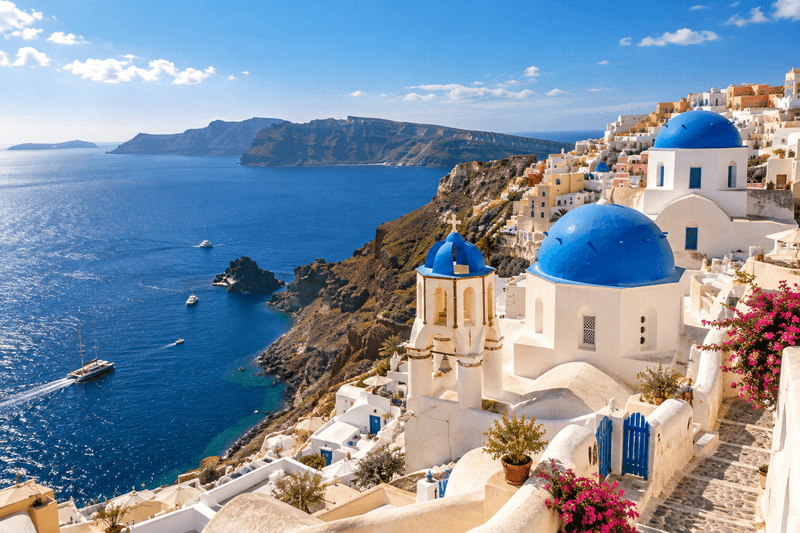
When I was first planning a trip to Santorini, there was a very definite picture in my head: snow-white houses, blue domes, narrow streets, incredible views of the Aegean Sea and, of course, that famous sunset, for which a huge number of people come to the island every year. I imagined myself with a cup of coffee somewhere on the terrace, looking at photos of Santorini and already knew about which photos I would take, although I understand perfectly well that a person who plans photos in advance will still take three times as many shots as he intended. But among all these beautiful plans, there was absolutely no place for an ancient city hidden under a layer of volcanic ash, and it eventually became the most unexpected place on my trip. When I first heard about Akrotiri, it was hard for me to imagine that on such a picturesque island you could find something so different from the usual image of Santorini. I came here for the sea, the white houses and the feeling of eternal summer, but instead one day I went to see an ancient settlement and did not expect at all how much it would impress me. That's probably why I remember Akrotiri especially strongly, because the most striking discoveries in travel often happen where you originally did not intend to go at all. The road took me to a completely different Santorini Before the trip, it seemed to me that Santorini was primarily about beautiful towns on the edge of the caldera, endless staircases, terraces overlooking the sea and photos that look like they were specially processed for a tourist catalog. But the further I got away from the most famous places on the island, the more the impression changed, because behind the usual tourist pictures, a completely different Santorini gradually opened up, more peaceful, ancient and somehow surprisingly real. It was then that I realized that the island is much more interesting than it looks from the photographs, and that behind its white facades there is a story that I had hardly thought about before. I remember driving towards Akrotiri and thinking that I would probably watch everything pretty quickly and then return to my usual walks around the island. I generally have this wonderful habit of underestimating certain places in advance, and then wondering why I didn't set aside half a day for them, because it turns out that's where I want to stay the longest. At that moment, I didn't know yet that in a few hours I would be walking around an ancient settlement and trying to imagine what life looked like here thousands of years ago. The city that was under the volcano Akrotiri turned out to be completely different from the places I used to see when traveling, because here the story literally lies in front of you in the form of streets, buildings and preserved details of an ancient settlement. This is an archaeological monument of the Minoan era, which was buried under volcanic ash after a powerful eruption, and it is thanks to this that many elements of the ancient city have been preserved to this day. When you learn this story, you begin to look at everything around you with completely different eyes, because you realize that this is not just ruins, but a place that was once a real city, where people lived, worked, walked the streets, built houses and completely did not suspect that thousands of years later travelers would come here. and try to imagine their lives. The most amazing thing for me was the feeling of time that almost physically arises here, although it sounds a bit pretentious, and I usually try to avoid such formulations. But when you stand among the ancient walls and look at the preserved elements of the houses, you really begin to feel how huge is the distance between your life and the lives of the people who were once here. I even caught myself thinking that my usual problems like a lost ticket, a dead phone, or another search for the right road look completely ridiculous against the background of the history of this place. I didn't expect to see houses here at all. I was especially surprised by how developed this settlement was, because in my head the ancient city looked very different. I imagined a few stones, a couple of walls, and a plaque with a long historical description, which I would read about halfway through, and then move on, because tourist concentration sometimes lives by its own laws. But Akrotiri turned out to be much more interesting, and gradually I began to notice the layout of the streets, multi-storey buildings, rooms and various details that made it possible to imagine how difficult life was for people here many thousands of years ago. I especially liked that here you can not just look at individual artifacts, but try to mentally reconstruct the whole city, and this completely changes the impression of the tour. You walk along the ancient streets and realize that once upon a time there were people walking here who were in a hurry about their business, talking, cooking, meeting with neighbors and, perhaps, also sometimes getting annoyed because of some completely everyday trifles. And it was this thought that for some reason made ancient Akrotiri much closer to me, because history ceased to be a set of dates and became the history of ordinary people. The most unexpected discovery of my trip It was probably here that I finally realized that travel rarely gives us what we expect from it, and this is one of the main reasons why I love it so much. I came to Santorini for beautiful views, the sea, white houses and photos, and in the end, I was most impressed by a place that I knew much less about before the trip than about the famous streets of Ai. It turns out to be quite funny: I could choose a beautiful postcard from Santorini for a long time, and then the most valuable memory turned out to be the ancient city, which thousands of years ago was hidden under volcanic ash. I came out with a completely different feeling of the island, because now Santorini was no longer just a beautiful setting for photos and romantic walks. Behind the white houses and blue domes, a huge story suddenly appeared, in which there were volcanic eruptions, ancient civilizations, cities and people whose traces have been preserved after thousands of years. And I liked this discovery precisely because it happened completely unexpectedly and made me look at the island I already knew from photographs with completely different eyes. After Akrotiri, I looked at Santorini in a different way. Later, when I found myself among the white houses and narrow streets again, everything around me was perceived a little differently, because now I saw beyond the beautiful landscapes not only a modern tourist island. I looked at the volcanic landscape and thought that it was he who once changed the fate of an ancient settlement, and the sea, which travelers admire today from the terraces of restaurants, was a part of the lives of people who lived here long before the first tourists appeared. Even an ordinary walk now seemed like a small time trip to me, although, of course, I still continued to photograph beautiful doors and stop at each particularly good view or temple. And that's probably where the real value of travel lies for me, because sometimes it imperceptibly changes our perception of familiar things. Before the trip, Santorini was for me a beautiful Greek island that I had seen many times in photographs, and after Akrotiri it became a place with an incredibly deep history, where the beauty of nature coexists with the memory of an ancient civilization. I came for one impression, but I got a completely different one, and that's why this day has remained in my memory much more vividly than many pre-planned points on the route. A place I wasn't expecting at all If you ask me now which place turned out to be the most unexpected in my entire trip to Greece, I will name Akrotiri without much thought. Not because there were the most spectacular photos or the most famous views, but because it was there that I went without any special expectations and it was from there that I left with the feeling that I had accidentally discovered a completely different side of Santorini. Sometimes it seems to me that such places become the main memories of a trip, because we don't have time to think in advance what our impression should be, and therefore we perceive everything much more honestly. Now, when I remember Santorini, I see not only white houses, blue domes and sunset over the Aegean Sea, but also the ancient streets of Akrotiri, the silence of the archaeological complex and the feeling that there is a history that is several thousand years old under my feet. And if they had told me before the trip that the ancient city would be the most unexpected place for my trip, I probably would have just smiled and replied that I was definitely going to Santorini for something completely different. And now I understand that it's these unexpected turns that make traveling really interesting, because you never know which place will suddenly stay with you much longer than everyone else.

Read more →
1 0