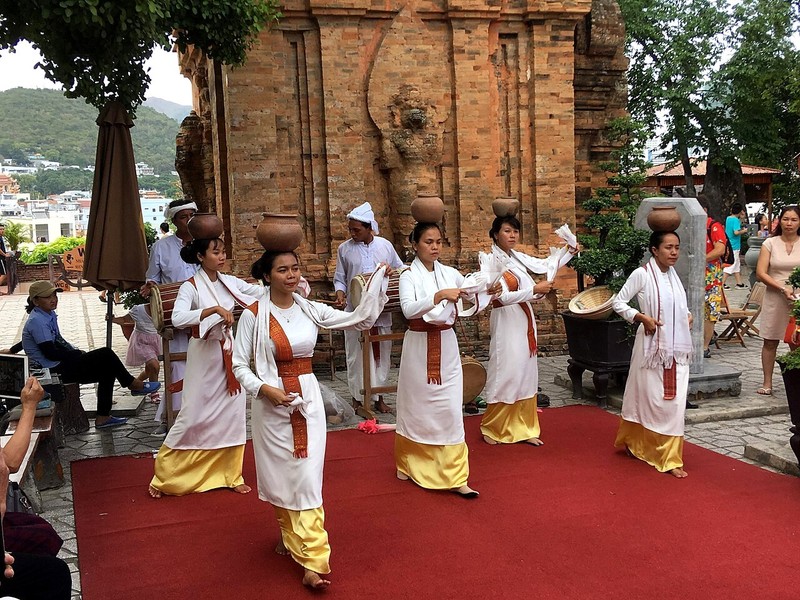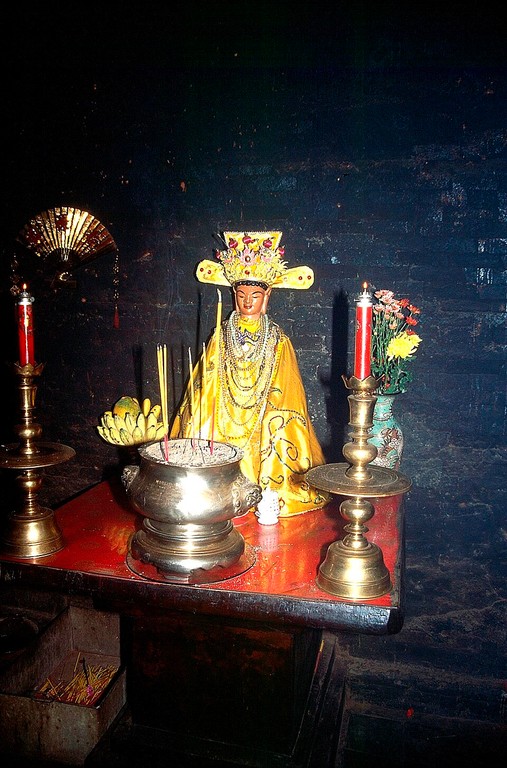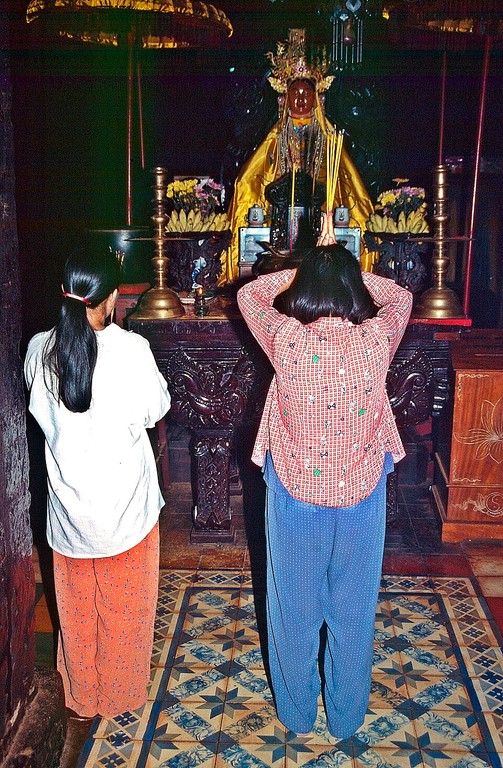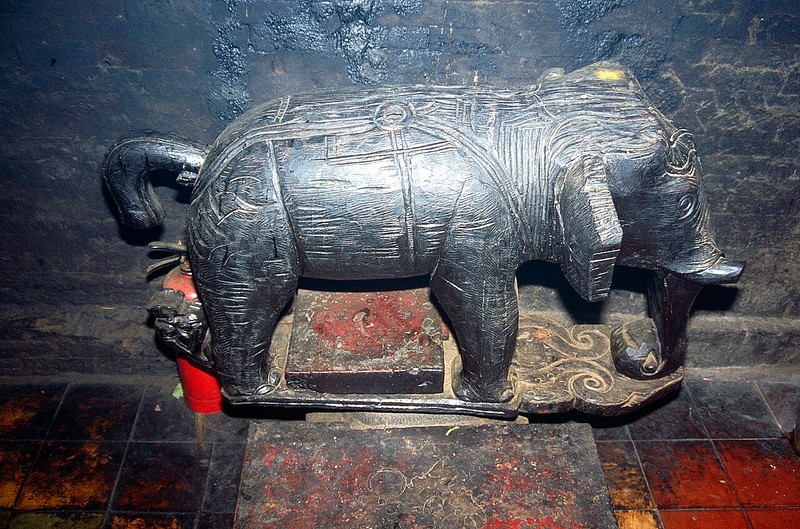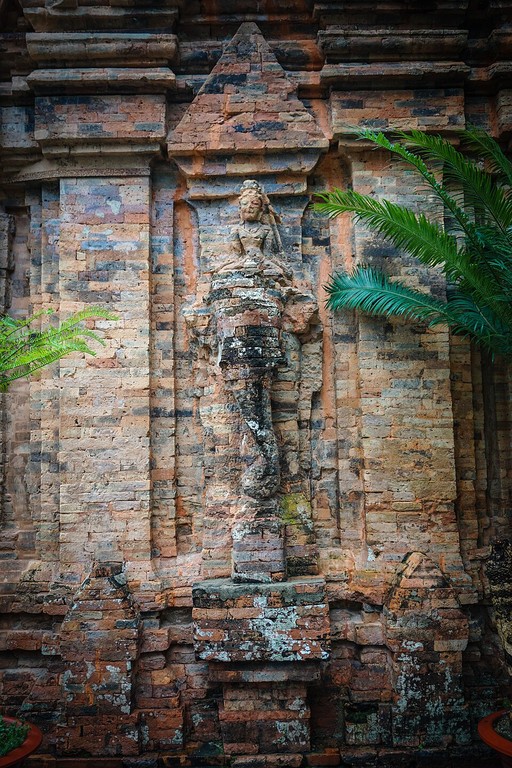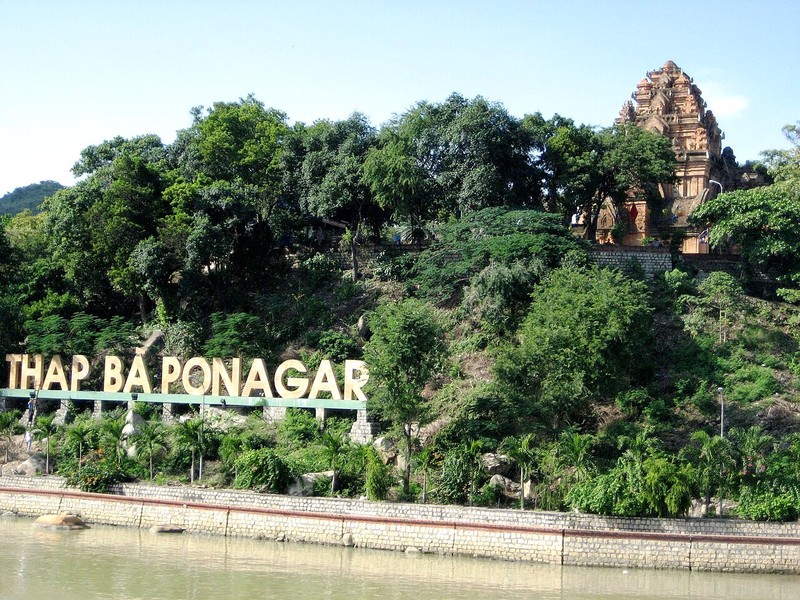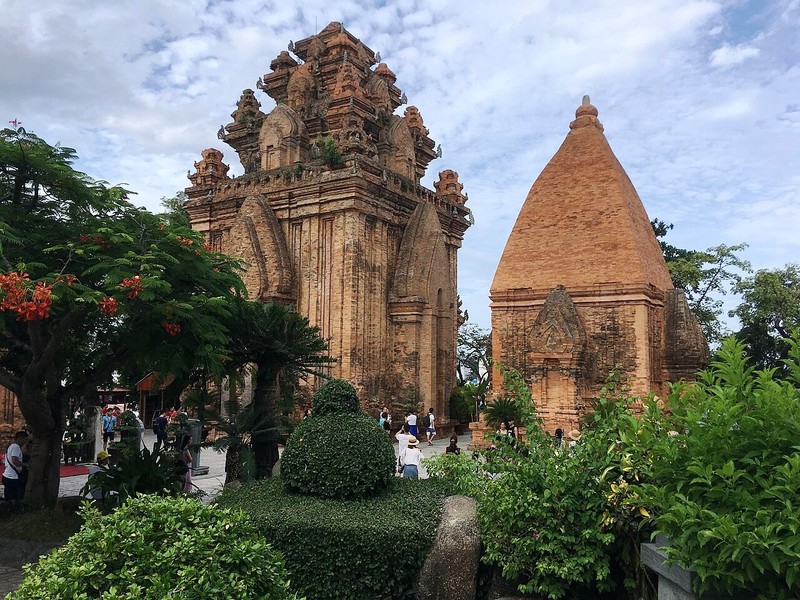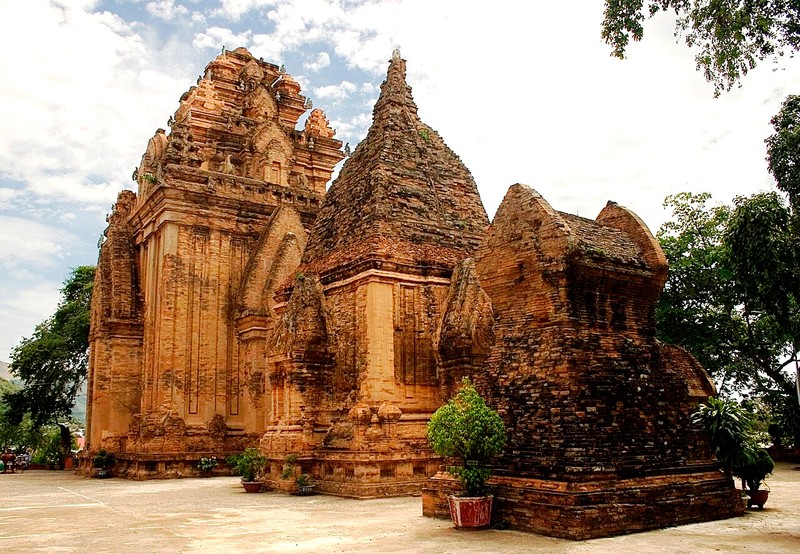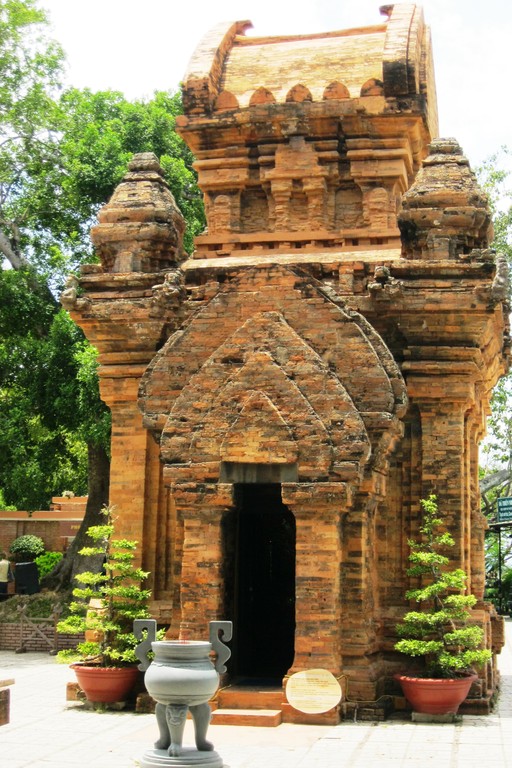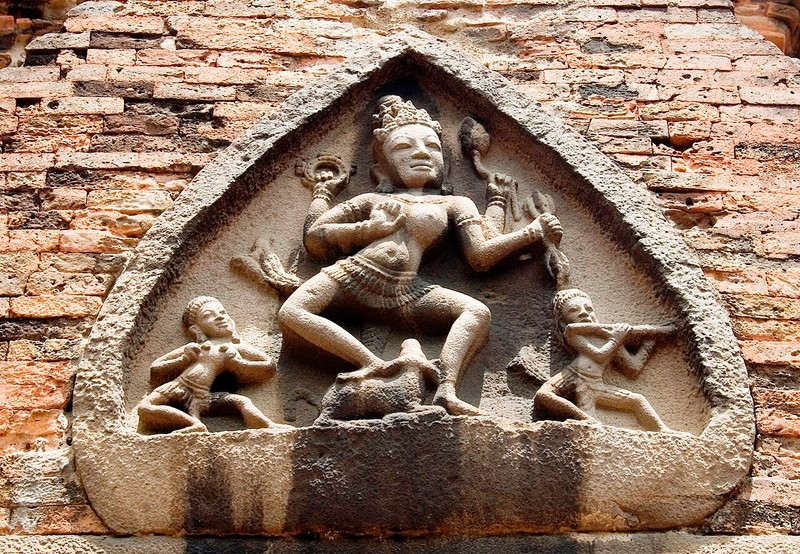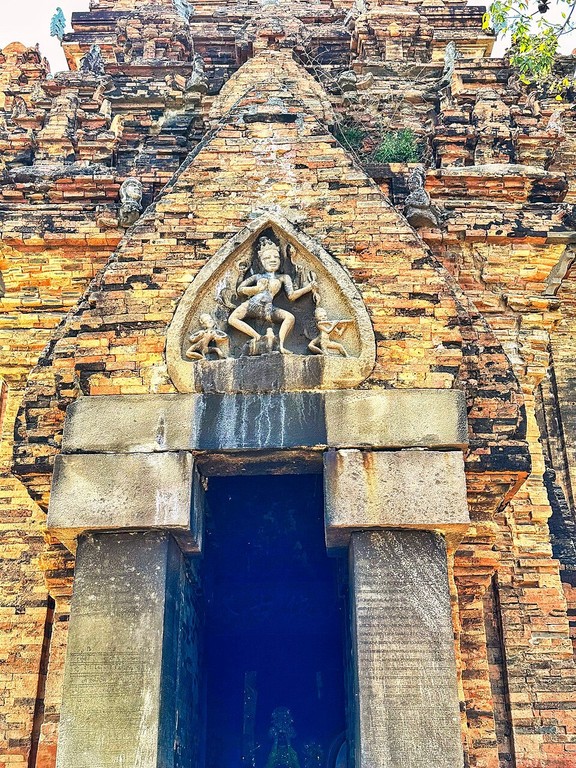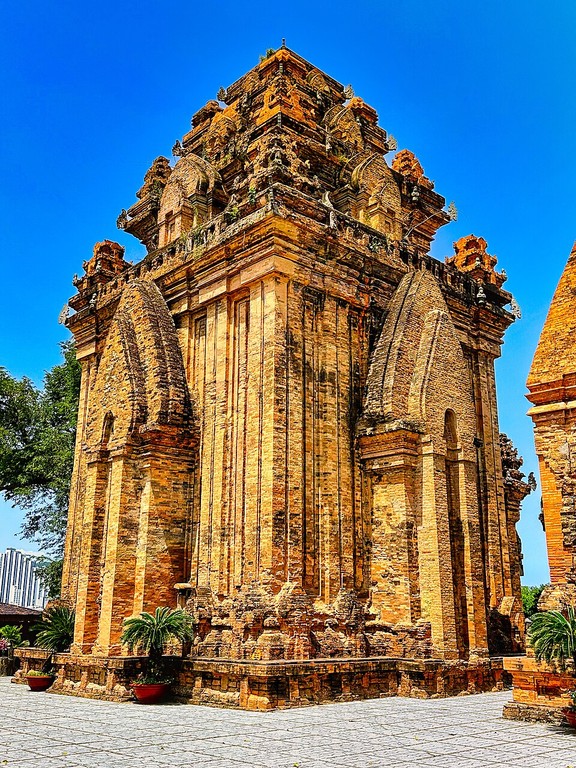

The Cham Towers of Po Nagar are an ancient temple complex in Nha Trang. The walls are decorated with terracotta statues and bas-reliefs depicting gods, mythical creatures, and sacred animals. They reflect what the Cham people believed in, what stories were passed down from generation to generation.
History
Before the appearance of the Cham Towers, there was a Nagar place on Ku Hill‑Lao was considered sacred. Since the 2nd century AD, there has been a wooden shrine of the Chams, also known as Tyams. This territory was of great importance to the people. In 774, robbers looted and burned the sanctuary, and this was recorded in the inscriptions on the steles.
Restoration work began under King Satyavarman. The 781 stele states that he defeated the bandits and began to rebuild the temple. In 784, they began to build a building made of baked bricks, and this is called the beginning of the Cham Towers According to Nagar. The complex was created in stages, so the towers differ both in style and size. The main period of construction took place in the VIII–XII centuries.
Description
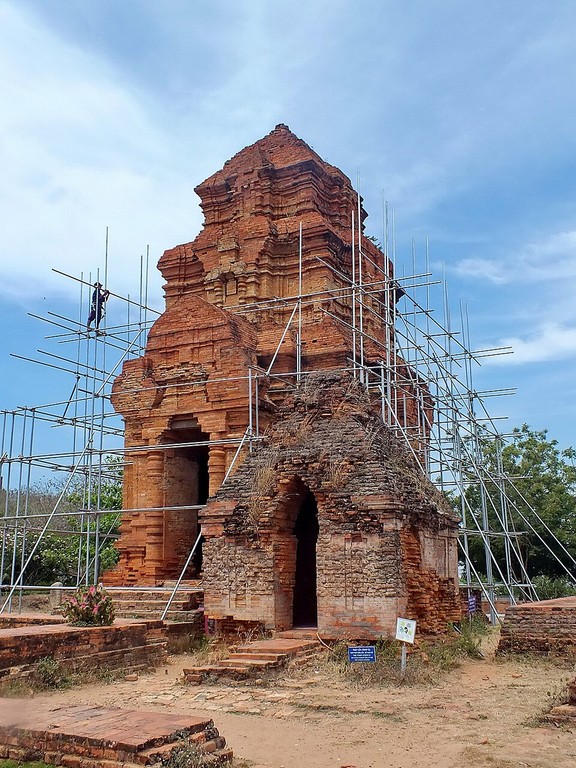
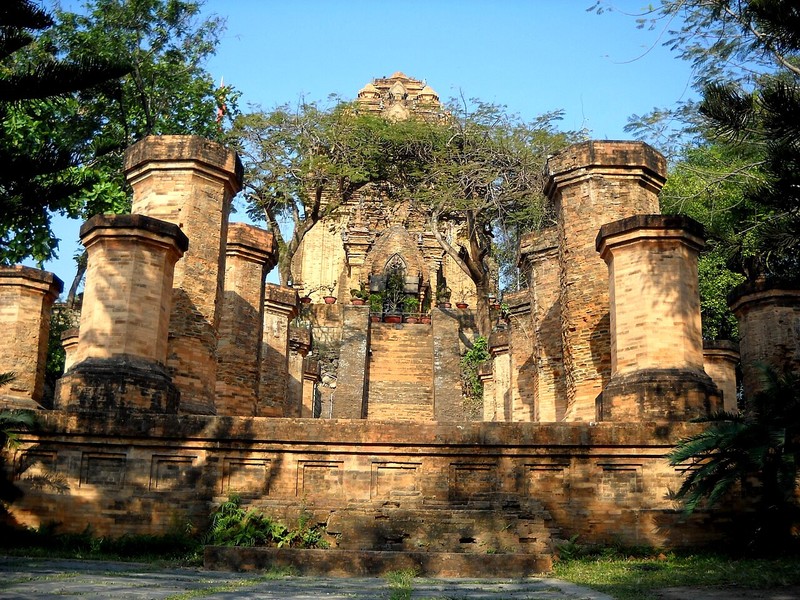
Temples in the Cham towers were built according to Nagar as part of a religious and political system. They consolidated the royal power and served as cult centers. Ancient steles with memorial inscriptions in Sanskrit and ancient Vietnamese have been preserved to this day. Initially, there were up to 10 towers, but only 4 survived.:
- The north tower of Thap Chin is considered the tallest – about 23-28 meters. It was built in 817 of the 9th century during the reign of Harivarman I, and it was rebuilt in the 11th century. It is dedicated to the goddess Po Nagar, inside there is a statue of her made of black granite.
- The northwest tower of Thap Tei Bak appeared in the 10th century. Initially, she was associated with Shiva's son Ganesha, the god of wisdom and prosperity, but later became associated with Kree Kambhu, the personification of fertility.
- The central tower of Thap Nam, created in the 12th century, is dedicated to Shiva. In Chama, as in the Hindu cult of Yugo‑In East Asia, one of the main gods of Hinduism was revered as a deity combining the power of destruction and renewal.
- The south tower of Myeu Dong Nam, also built in the 12th century, is dedicated to Ganesha. The son of Shiva and Parvati is called the god of wisdom and prosperity. In the Hindu tradition, before any important matter, it was necessary to contact him to remove obstacles, the placement of his sanctuary was called a symbolic start for rituals.
The craftsmen used a special technology: the bricks were laid so tightly that almost no binding mortar was needed. After the decline of the Champa state, the significance of the temples has changed, but the place continues to be sacred for both local communities and pilgrims. In the 20th century, extensive research and restoration began. In 1979, the Cham Towers of Nagar were recognized as a national monument, and in 2025 they were awarded the status of a special national monument of Vietnam.
How to get
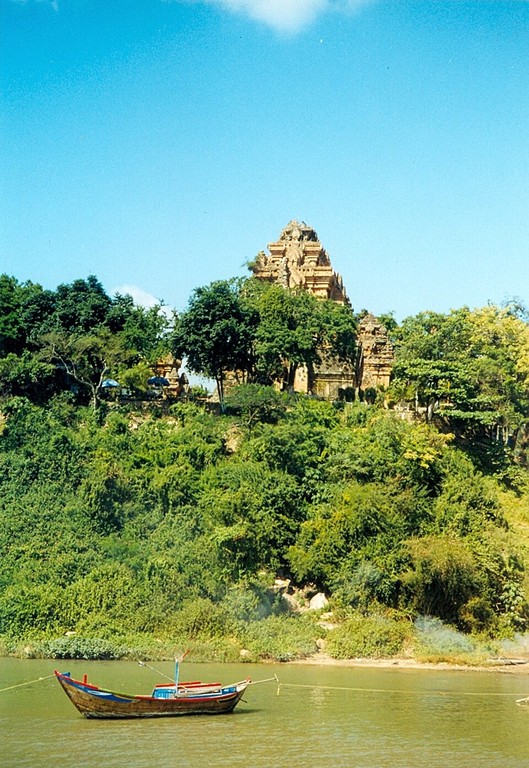
The Cham Towers of Po Nagar are located about 2 kilometers north of the center of Nha Trang, on Ku Lao Hill by the Kai River. You can walk from the center. The towers are clearly visible from afar, so it is impossible to pass by. Public transport route No. 05-2 runs next to the temple complex, which has become a replacement for bus No. 4. You need to get off at the bus stop after the Xom Bong Bridge, the way to the attraction takes 1 minute. You can also rent a bike, motorbike or car, or call a taxi.
Gallery