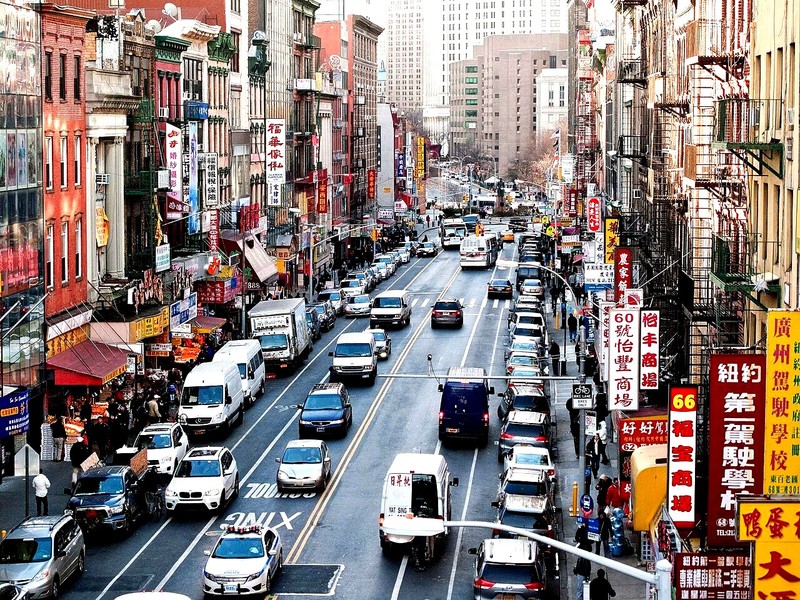
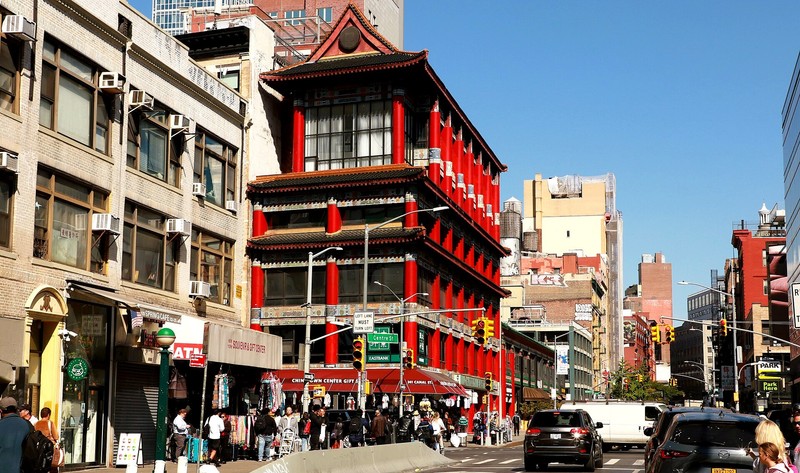
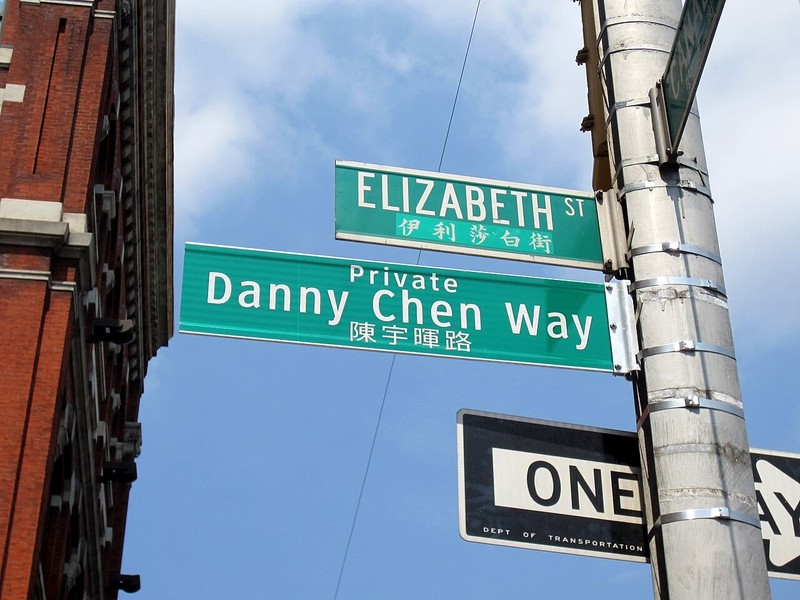
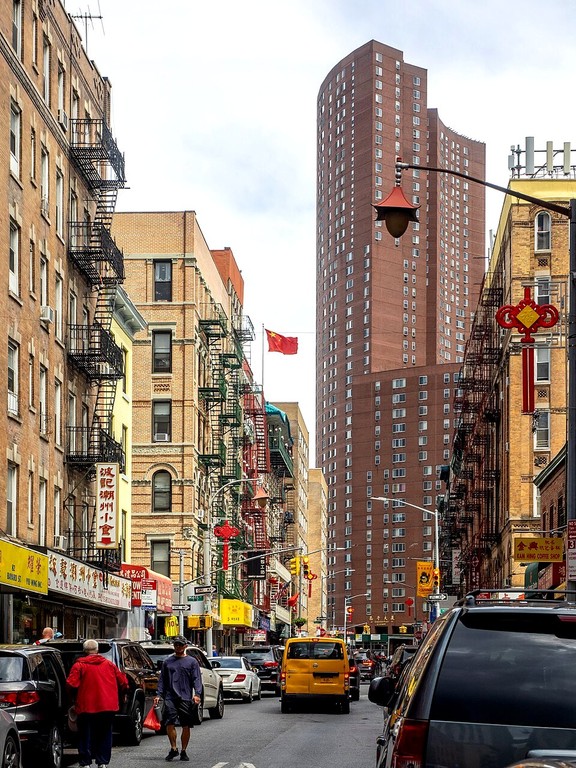
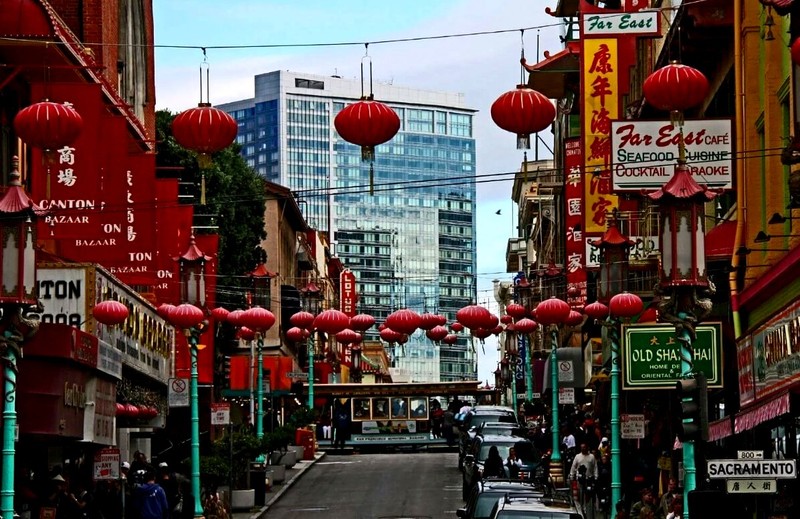
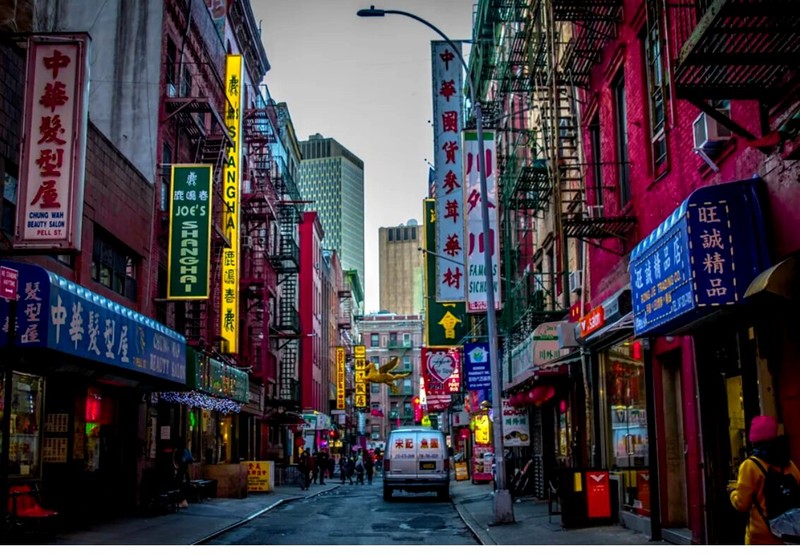
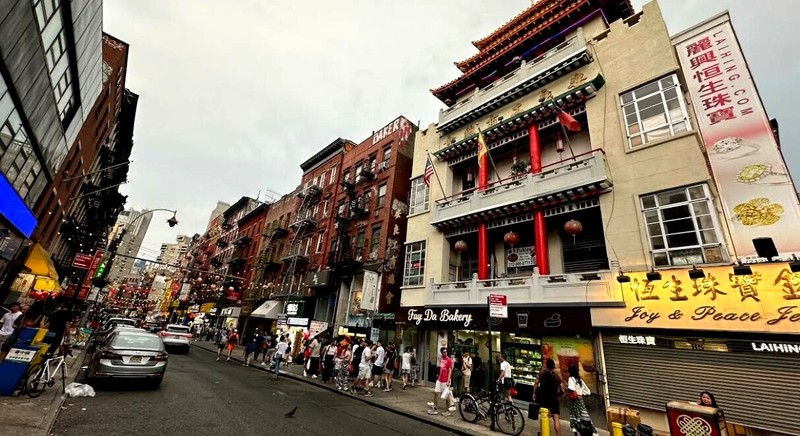
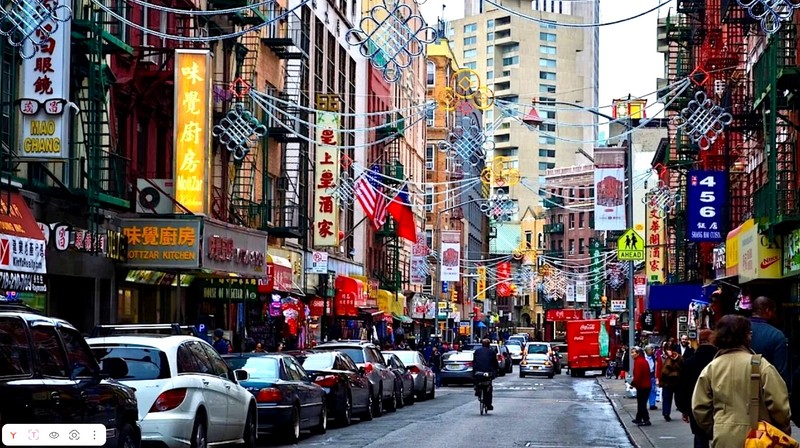
Chinatown in New York is located in the southeastern part of Manhattan and occupies approximately 35 residential blocks. The name is due to the fact that immigrants from China mainly live here. The signs in the area are written in hieroglyphs, Chinese is spoken everywhere, along the sidewalks there are stalls with low-price goods and Asian fast food, which has conquered the whole world.
History
At the end of the 18th century, the Chinese began to move to New York. Merchants and sailors went here in search of a better life, but they usually did not stay in the city for long. But those who decided to stay in the United States often changed their names to English to make it easier for others to address them, and created families with local women.
It is believed that the first immigrant who came from China in 1825 married an Irish woman and began to introduce himself as William Brown. The newspapers reported that by 1859, New York City had become home to at least 150 Chinese. By 1870, the number of immigrants from China exceeded 2,000 people.
Immigrants respect history. Many people know that in 1840, Ah Ken from China received a residence permit from the American authorities and opened a tobacco shop not so far from the center. His business flourished, and this allowed him to open a chain of stores. He bought a multi-storey building and began renting out housing to fellow countrymen.
Description
Chinatown in New York is considered the largest settlement of Chinese immigrants in the hemisphere of the Earth, located west of the Greenwich Meridian and east of the 180th meridian. Chinatown appeared as a neighborhood in the 19th century. The "Act on the Exclusion of the Chinese", signed in the early 1880s and in force until the middle of the last century, had a great influence. The entry of Chinese residents was restricted, and after these restrictions were lifted in 1965, the population of the Chinese city in the United States began to grow.
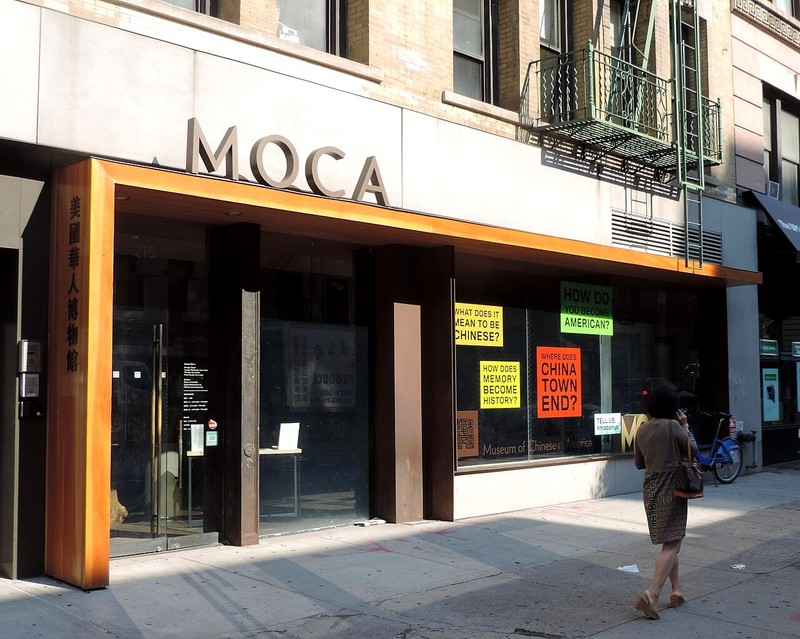
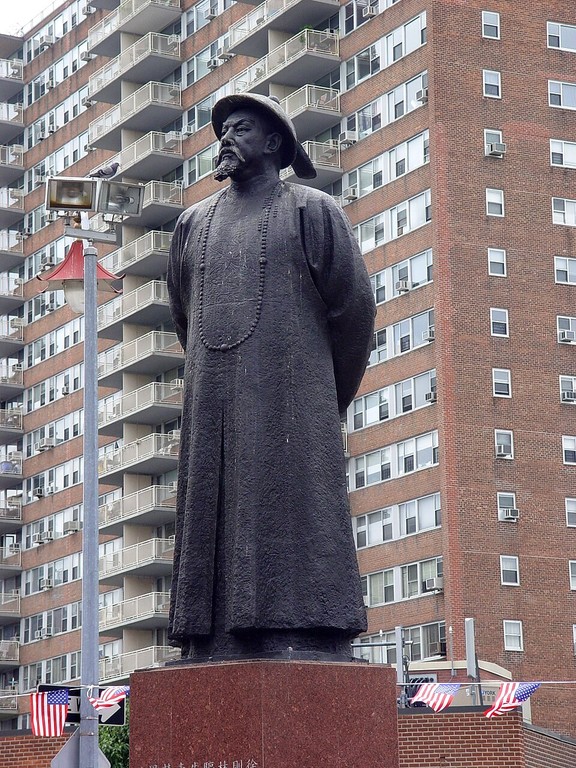
In the area you can see a huge number of houses with 5 or 6 floors. The Confucius Tower stands out against their background, a 132-meter skyscraper built next to the entrance to the Manhattan Bridge. In front of him stands a 15-meter-high statue of Confucius. Bank offices and representative offices of companies from China and Singapore are open in the building. Nearby is the Museum of Chinese Immigration, which houses documents, photographs, and artifacts that can be used to track how history developed in stages.
Attractions
You can start exploring Chinatown in New York with the Mahayana Temple, which is recognized as the largest Buddhist temple in New York City. It is located at the entrance to the Manhattan Bridge. At the entrance to the Chinese-style building, there are 2 golden lions, which, according to an ancient legend, protect against hostile spirits. Inside, you can see the largest 5-meter Buddha statue in New York, sitting in the lotus position.
In 1966, the 3-story house of wealthy butcher Edward Mooney with an attic and basement was recognized as a New York landmark, and 10 years later the oldest brick townhouse in the city was added to the list of the National Register of Historic Places. At various times there was a tavern, a brothel, a hotel, a general store, a billiard room, a restaurant and a club.
The Chinatown Fair Family Entertainment center on Mott Street has retained the nostalgic atmosphere of the slot machine room. It was once a very popular place, and they still offer arcade tokens and souvenirs. The first hall, after opening in 1944, worked until 2011. The center reopened in 2012 under the management of another owner.
What can I buy
In Chinatown in New York, you can buy anything from exotic spices, tea, medicines, and ending with carnival costumes, souvenirs, and replicas of fashionable designer clothes. People often come here for shopping, because prices in the area are lower than in other areas. In addition, it is customary to bargain in stores. Almost all the ground floors and even the basements of multi-storey buildings are occupied by shops or eateries.
Clothing and shoes, watches, perfumes and electronics are sold along Canal Street. Nearby in small shops you can buy bracelets, rings, chains, earrings and other jewelry. The Chinese city offers not only goods on sale, but also high-quality electronics stores, boutiques, and department stores. You can buy martial arts accessories and Chinese medicine products in stores. Sellers urge not to self–medicate, but to go to the hospital - Chinese traditional medicine can be considered as an addition to the main treatment in the absence of contraindications.
What can I eat
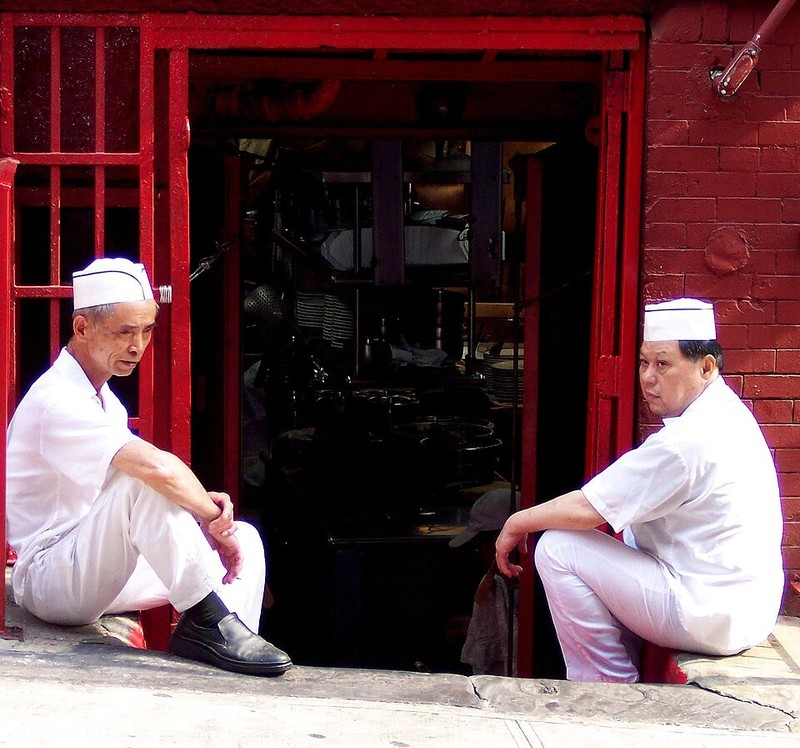
Asian cuisine is very popular in the USA, as well as in other countries. There are many fans of Chinese fast food, but the area offers a wide variety of dishes from China, Vietnam, the Philippines, Indonesia and Hong Kong. Street food is in high demand: it is prepared quickly and it is inexpensive. The most commonly bought Cantonese snack is cheung fan, also known as chung fan, rice rolls with various fillings: fish, veal stomach, ground beef, seafood and vegetables. Roast duck, chicken, and pork served with rice and cabbage are also popular. Many people like fried pork dumplings and spicy sweet and sour soup.
In Chinatown in New York, there are restaurants Bowery, Hop Key, Grand Sichuan and other establishments where you can try shrimp in nut sauce, wontons with spicy butter served as soup or in dry form, Peking duck and much more. Frequently ordered drinks include freshly squeezed sugar cane juice, pu-erh tea, light and dark oolong, and refreshing bubble tea.
How to get
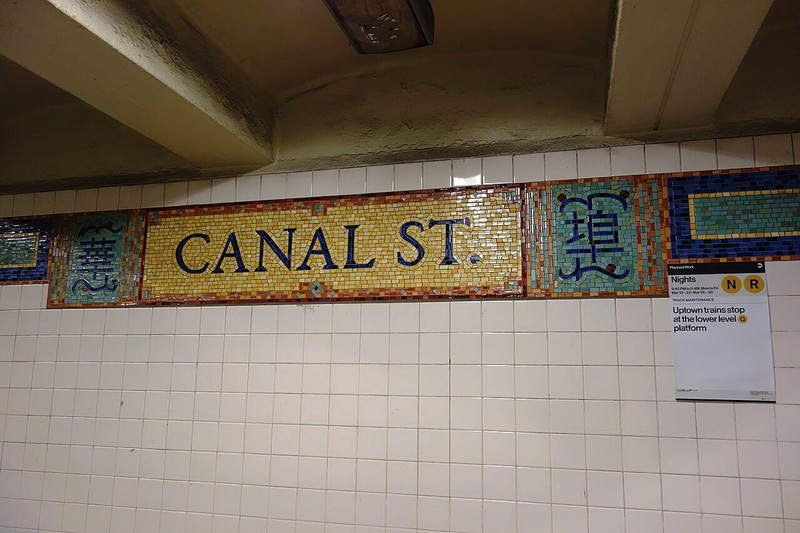
There are direct buses serving Chinatown in New York City, including the M1, M6, M9, M15, M22, and M103 routes. Take the MTA 6, N, R, Q or W trains to Canal Street Station. If you take the B or D train, the right station is Grand Street. You can call a taxi or rent a car.
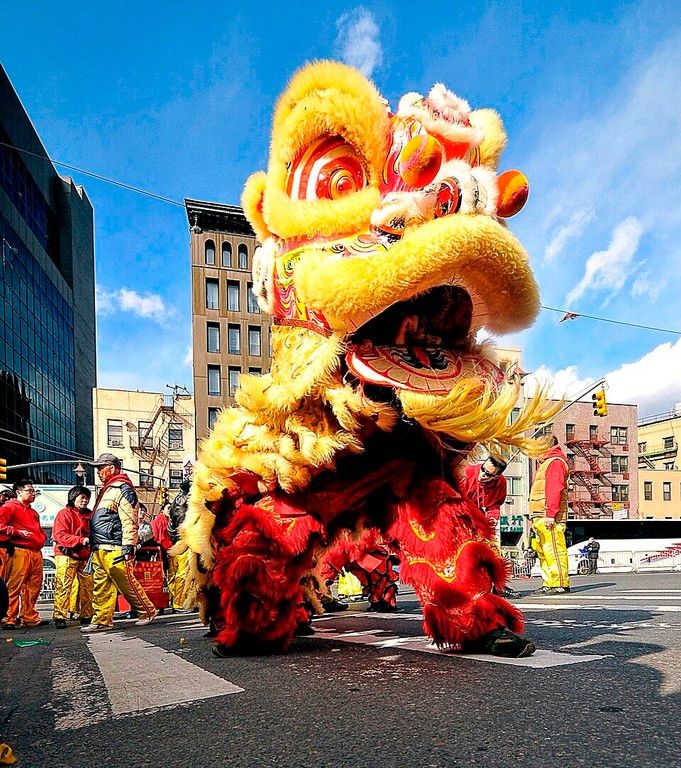
It should be noted that every winter, traffic is blocked on the streets of Chinatown in New York as part of the Lunar New Year celebrations. Parades and festivals are organized, where people in national clothes carry colorful dragons on poles, dancers disguised as lions rhythmically move to the drums, artists demonstrate martial arts techniques and acrobatics elements. Vendors set up stalls with traditional treats and souvenirs. A fireworks ceremony is always held, as the Chinese believe that they can be used to ward off evil spirits and prepare the ground for a successful year in various spheres of life.
Gallery