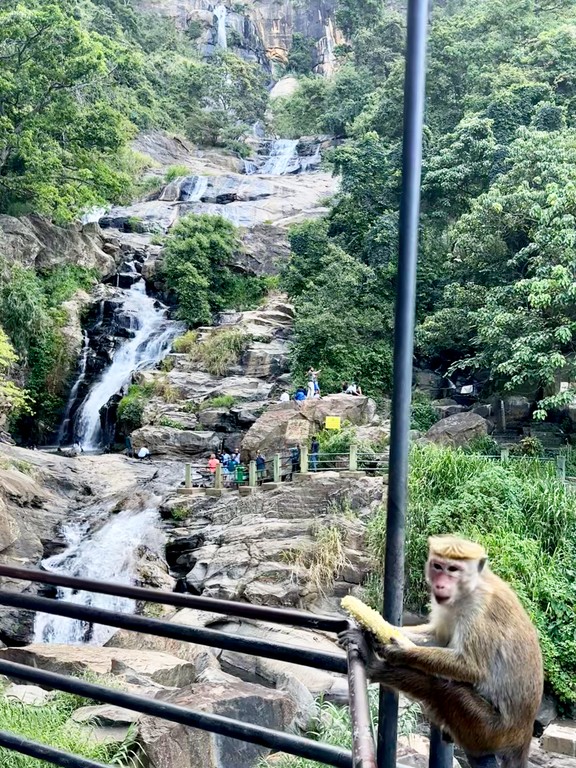
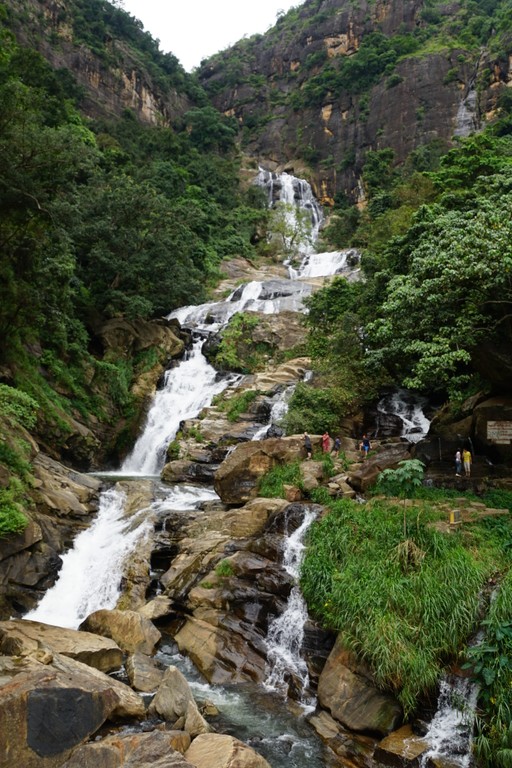
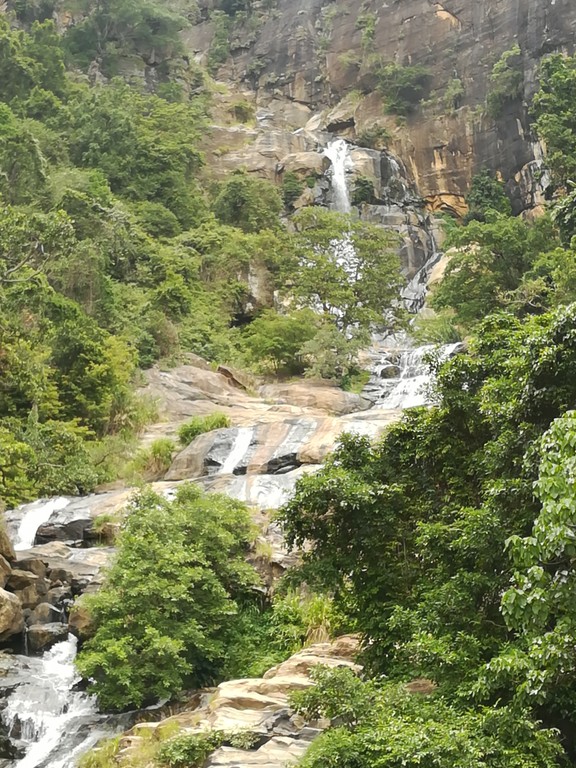
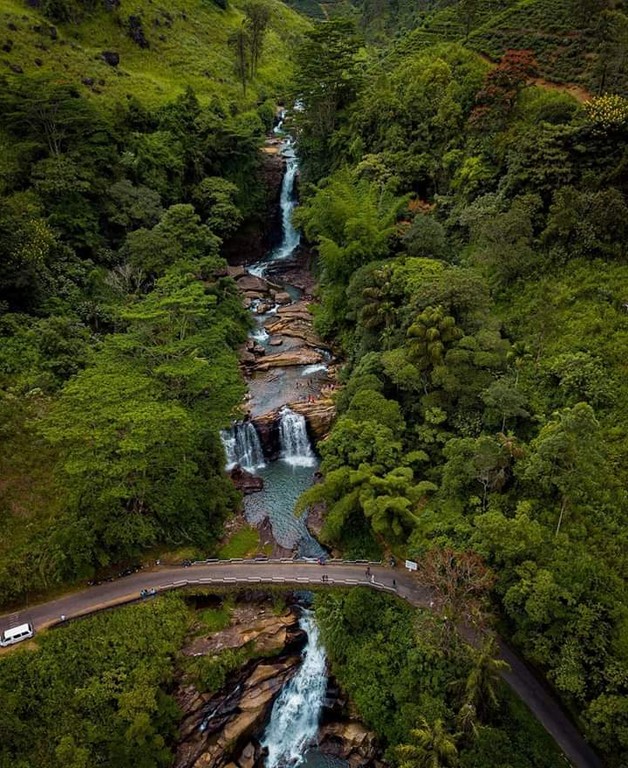
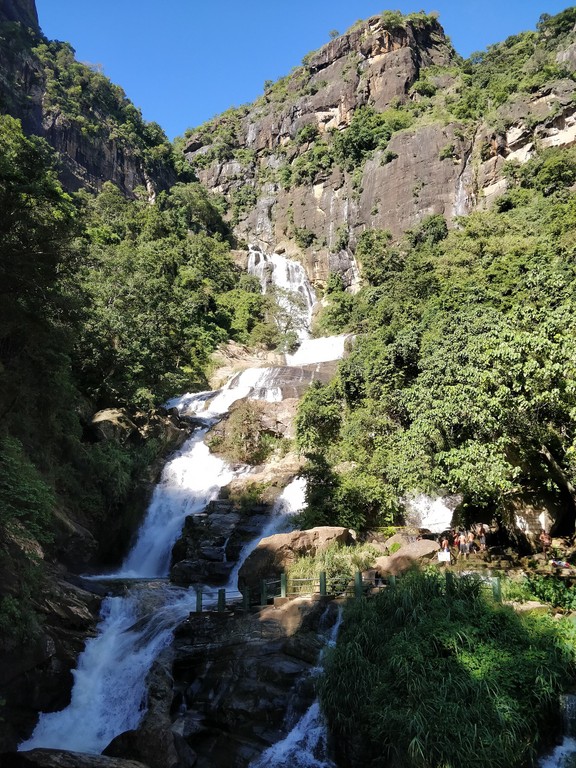
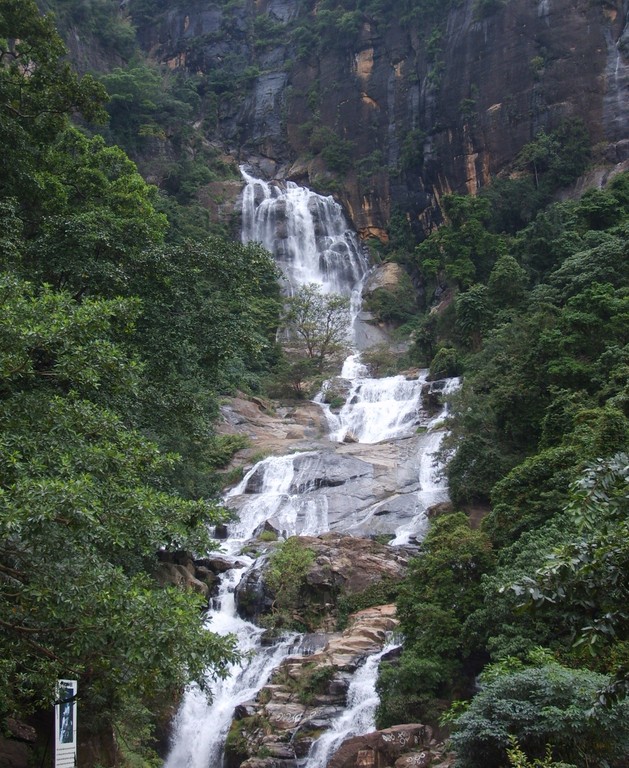
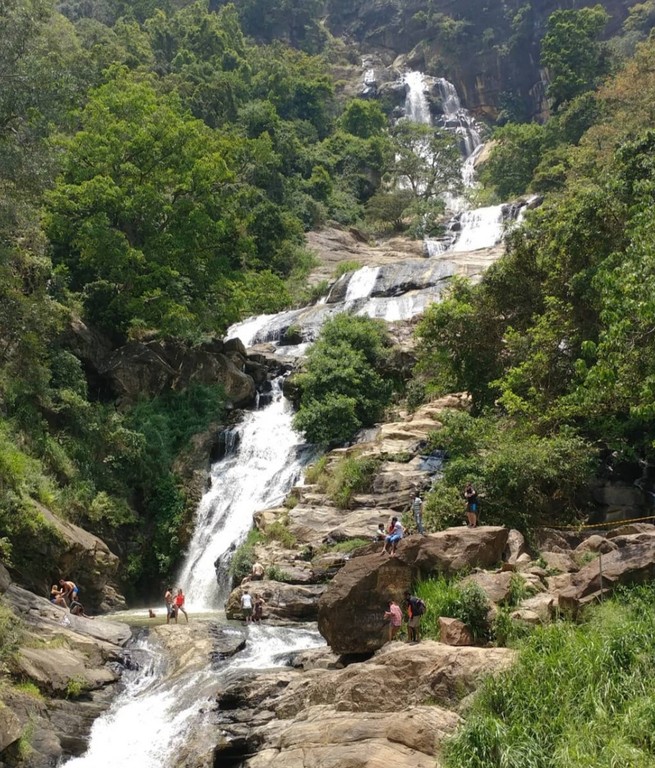
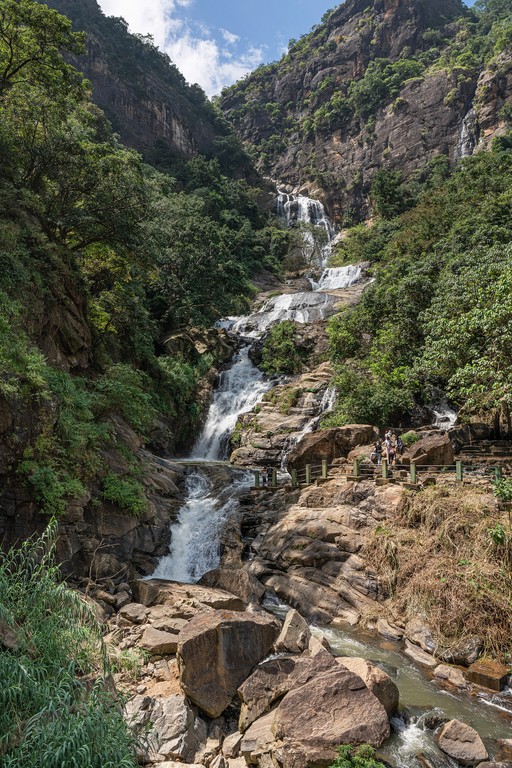
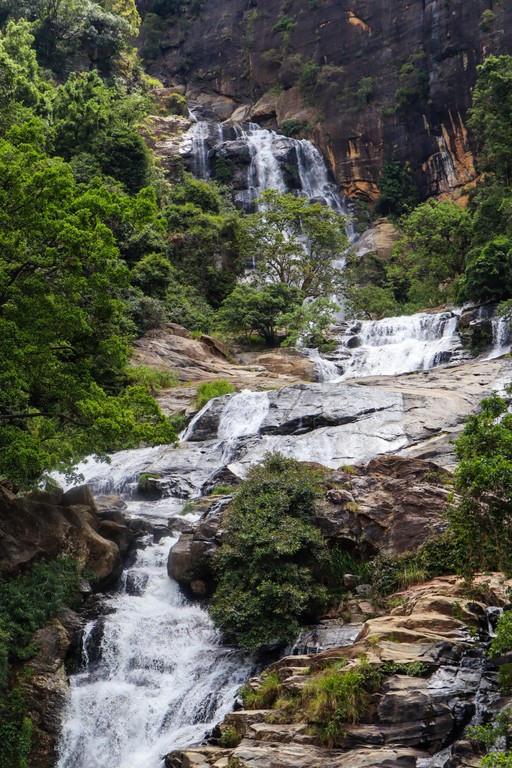
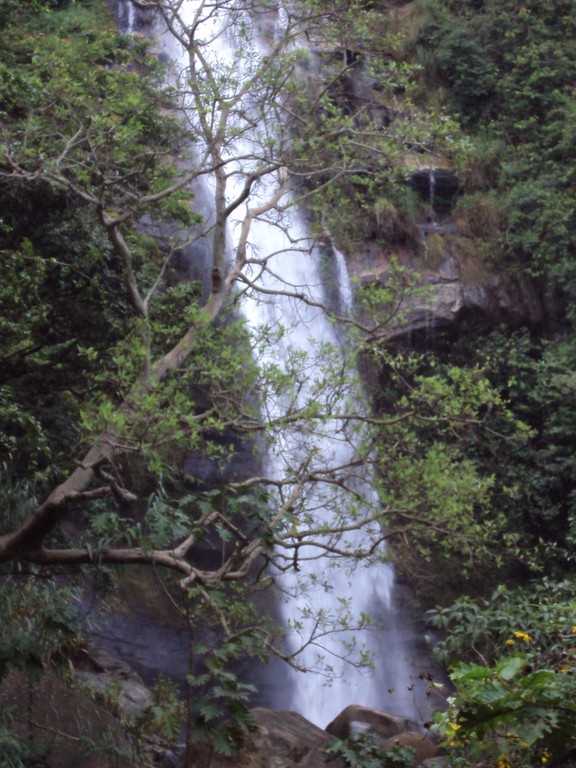
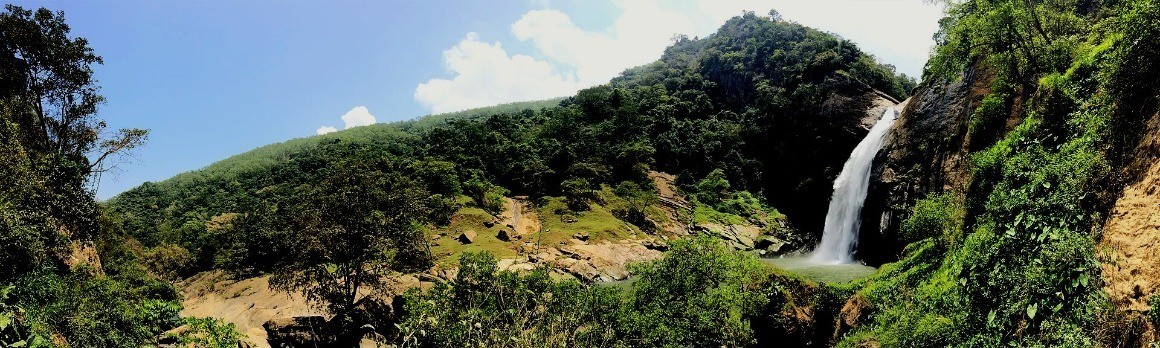
Ravana Falls is one of Sri Lanka’s best-known natural attractions, located near the hill-country town of Ella in Uva Province. Water cascades down a broad, tiered rock face from a height of approximately 25 metres, creating a scenic waterfall surrounded by tropical greenery. The falls lie directly beside the road between Ella and Wellawaya, making them an easy stop on a journey through Sri Lanka’s central highlands.
Ravana Falls is known not only for its natural beauty but also for its connection to the ancient Indian epic, the Ramayana. According to local legend, King Ravana concealed the abducted Sita in a cave near the waterfall. This story gives the site cultural significance and attracts visitors interested in South Asian mythology.
Features of Ravana Falls
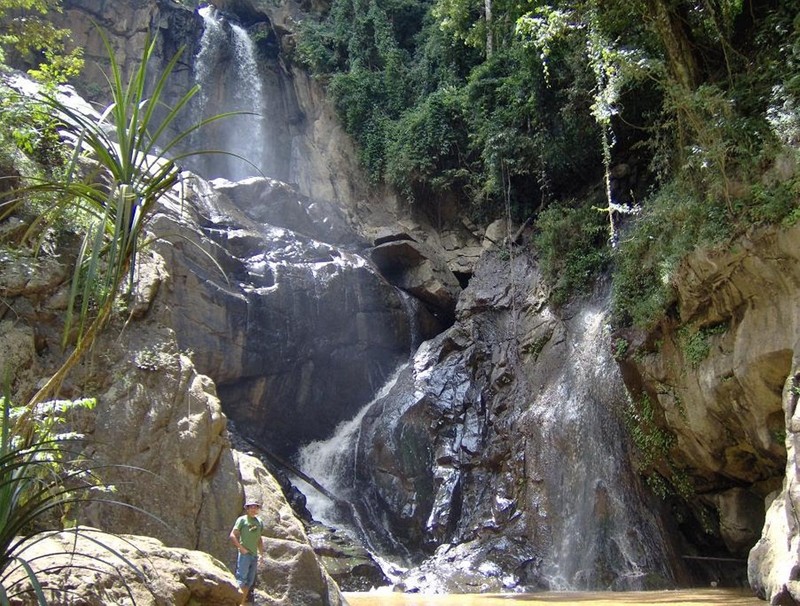
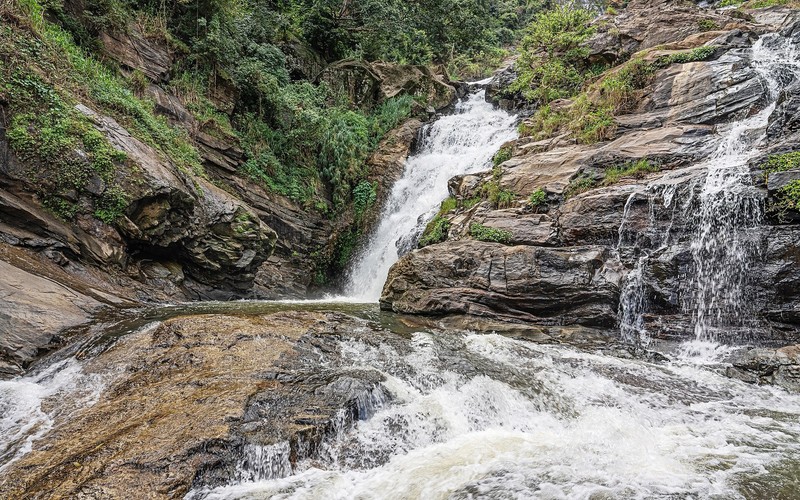
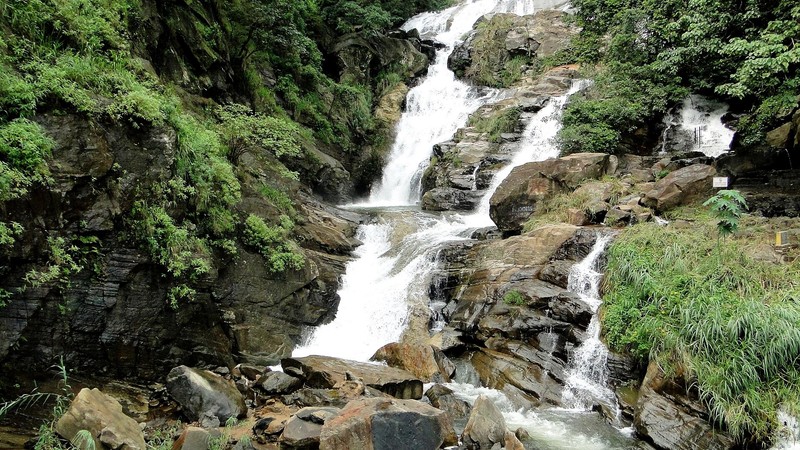
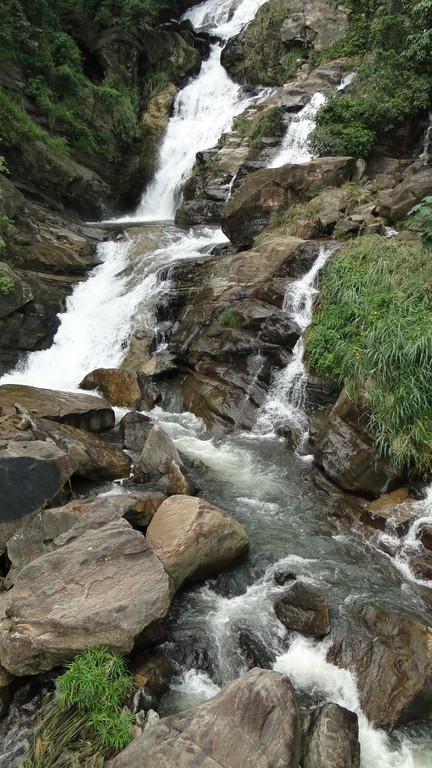
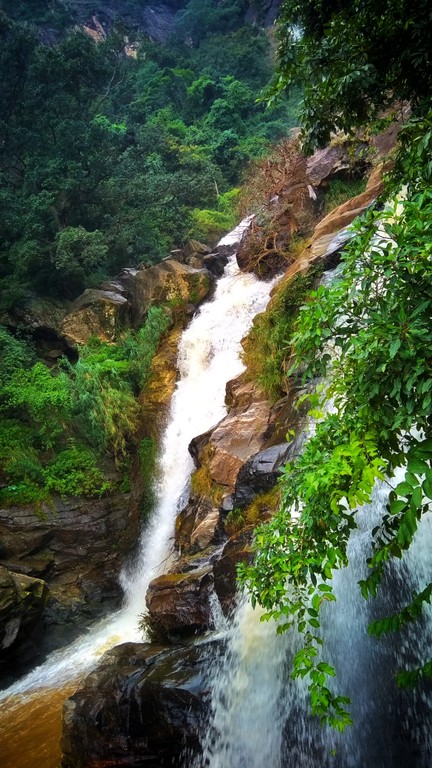
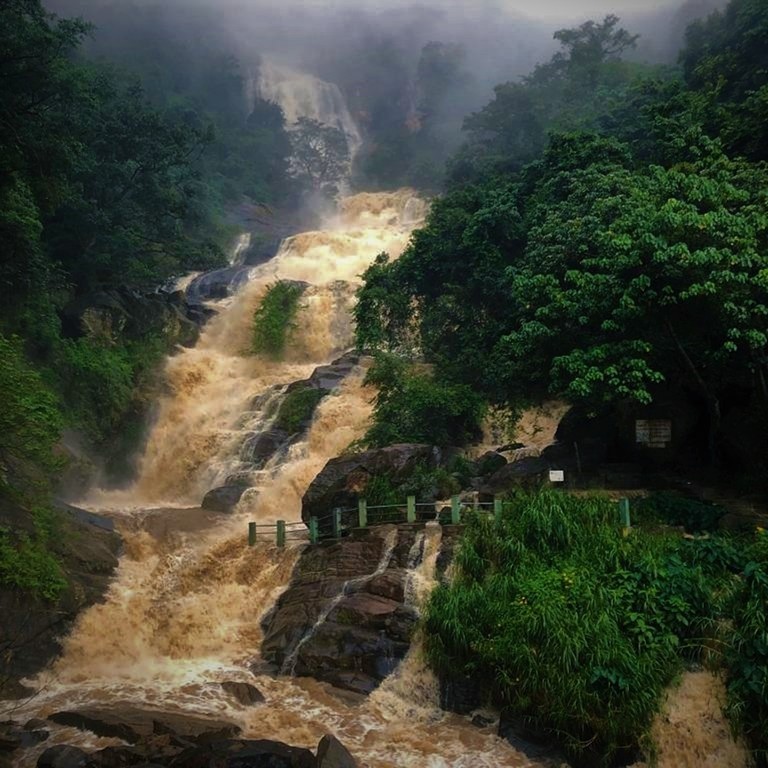
The waterfall is approximately 25 metres high. It is relatively wide, with several rocky ledges dividing the water into separate streams. During the rainy season, water spreads across much of the rock face, forming a broad white curtain. In drier periods, the flow becomes weaker and the layered rock formations are more visible.
After rainfall, the waterfall can be particularly impressive as water rushes over the rocky steps and creates spray and mist. Dark rocks and green vegetation provide a striking setting for photographs.
The legend of Ravana and Sita
The falls take their name from Ravana, the legendary ruler of Lanka featured in the Ramayana. Local tradition says that Ravana abducted Sita, the wife of Prince Rama, and hid her in a cave near Ella. Ravana Ella Cave on a nearby hillside is associated with this story.
Some versions of the legend suggest that Sita bathed in water collected beneath the falls. These accounts belong to local folklore and should not be treated as established historical events. The combination of scenery and mythology makes the waterfall especially interesting to visitors.
Ravana Cave nearby
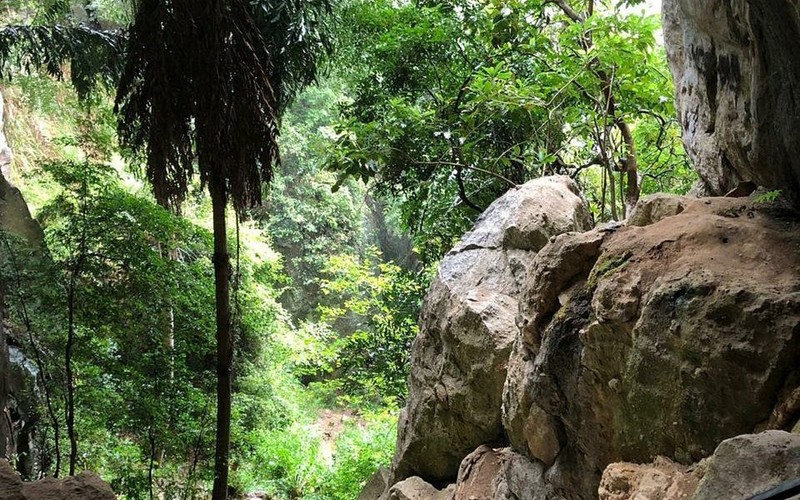
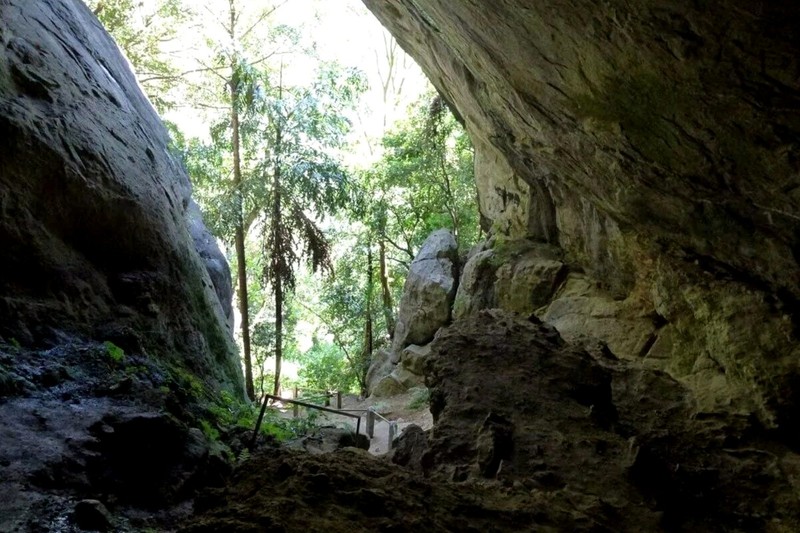
A visit to the waterfall can be combined with a trip to Ravana Cave, located on a hillside near Ella. The cave is associated with the legend that Ravana hid Sita there. Reaching it requires a steeper walk along a trail and steps, making it more physically demanding than viewing the waterfall.
The climb includes uneven steps and rocky sections that can become slippery after rain. Move carefully and check current access conditions before setting out.
Location and how to get there
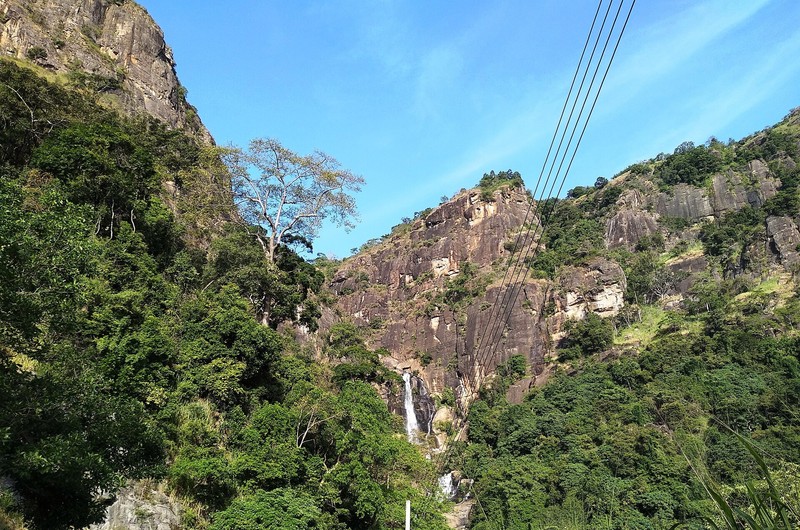
Ravana Falls lies about six kilometres south of Ella along the A23 road towards Wellawaya. Visitors can reach it by tuk-tuk, car or bus. The drive from Ella usually takes around 10–20 minutes, depending on traffic. The main cascade is visible from the road, so no long hike is required.
Best time to visit
The waterfall is most powerful during rainy periods and shortly afterwards. In dry weather, the flow decreases, revealing more of the rock formations. Check the local forecast before travelling. Morning is often a good time for photography, as there may be fewer visitors and the light is softer.
Safety and photography
The rocks near the waterfall are uneven and slippery, especially after rain. Do not climb the cascade, approach steep edges or enter the water when currents are strong. Keep children under close supervision. Take photographs from stable, safe areas, and avoid leaving rubbish or damaging vegetation.
Places to visit nearby
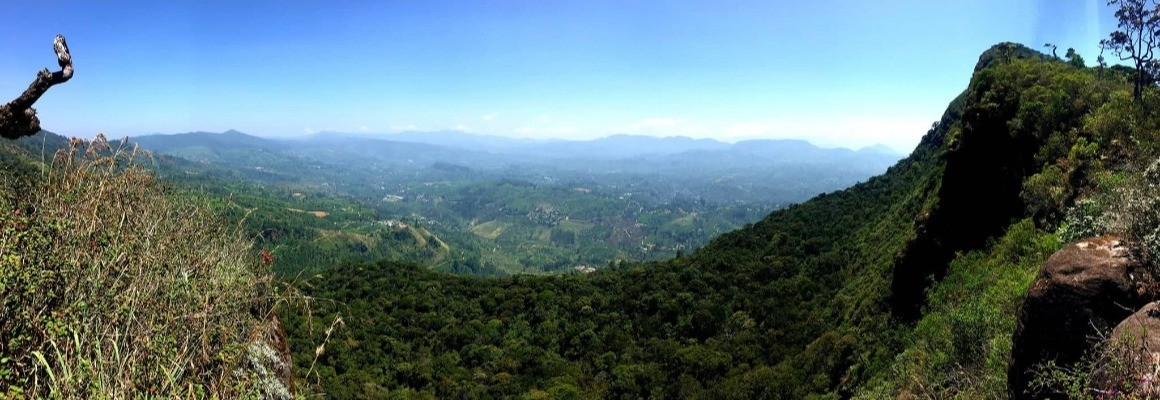
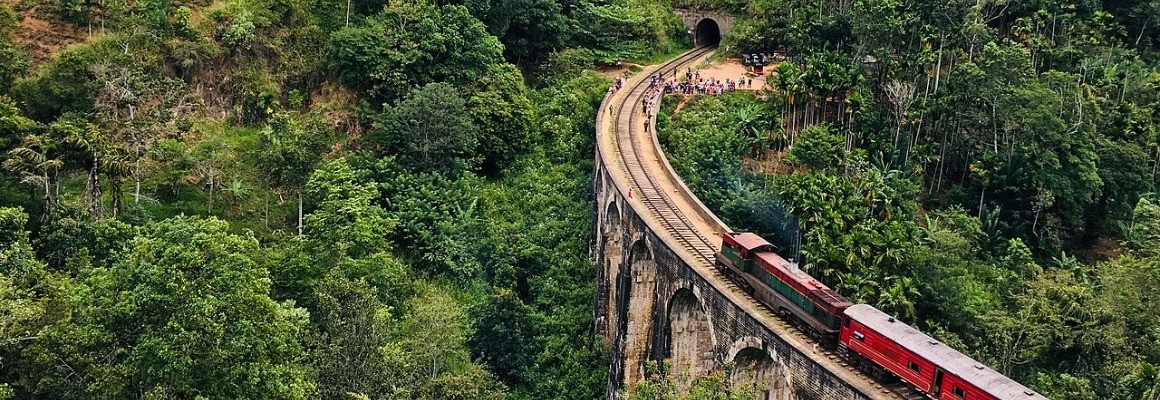
The waterfall fits easily into a sightseeing route around Ella. Nearby highlights include the Nine Arch Bridge, Little Adam’s Peak and Ella Rock. Visitors interested in local legends can also explore Ravana Cave and nearby temples.
Why visit Ravana Falls?
Ravana Falls combines a scenic cascade, green mountain slopes and legends associated with the Ramayana. Its convenient location makes it possible to visit without a long hike. It is a rewarding stop for travellers exploring Sri Lanka’s natural landscapes and cultural heritage.
Gallery