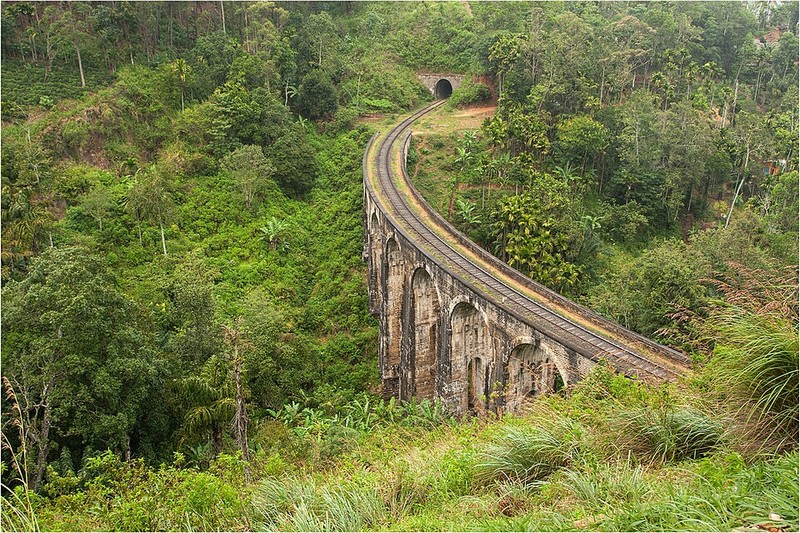
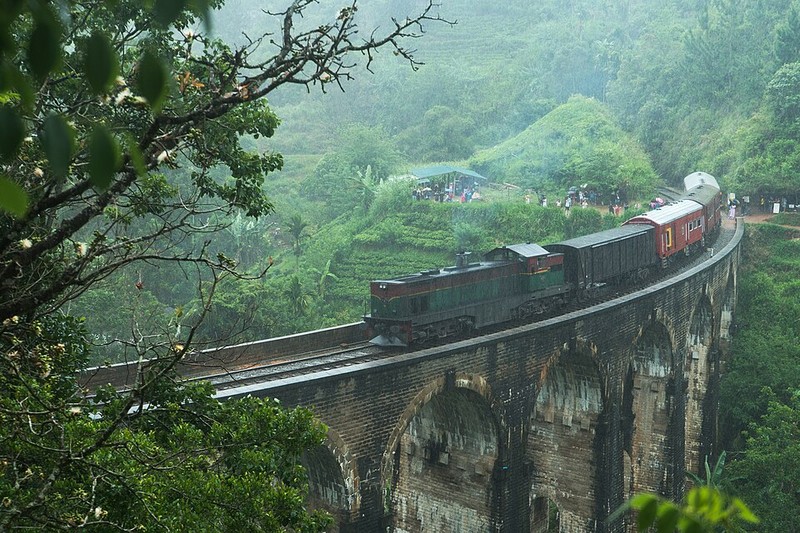
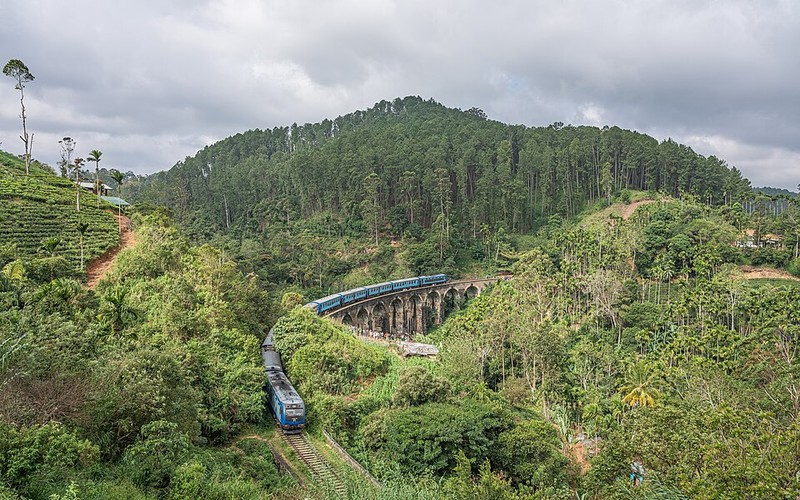
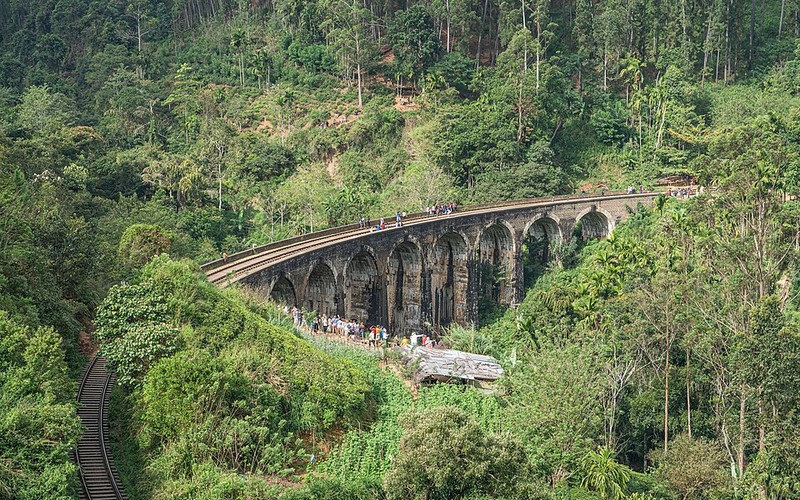
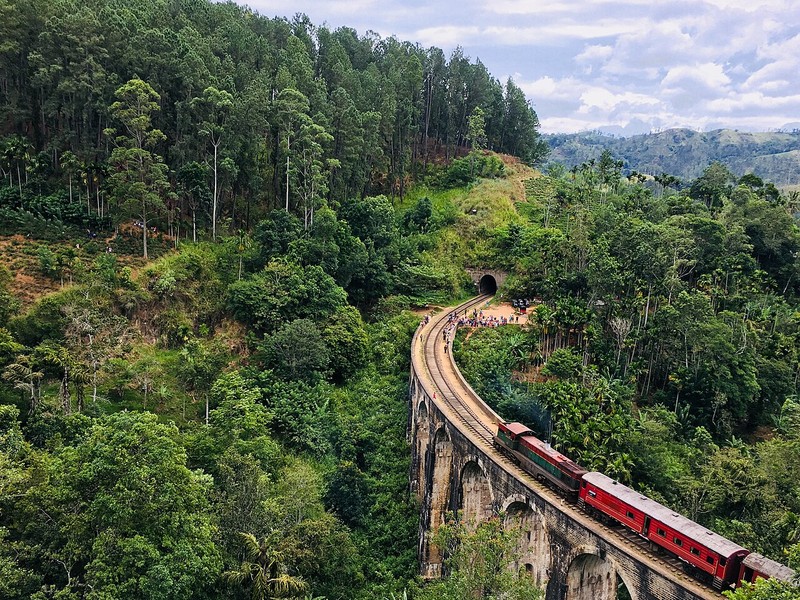
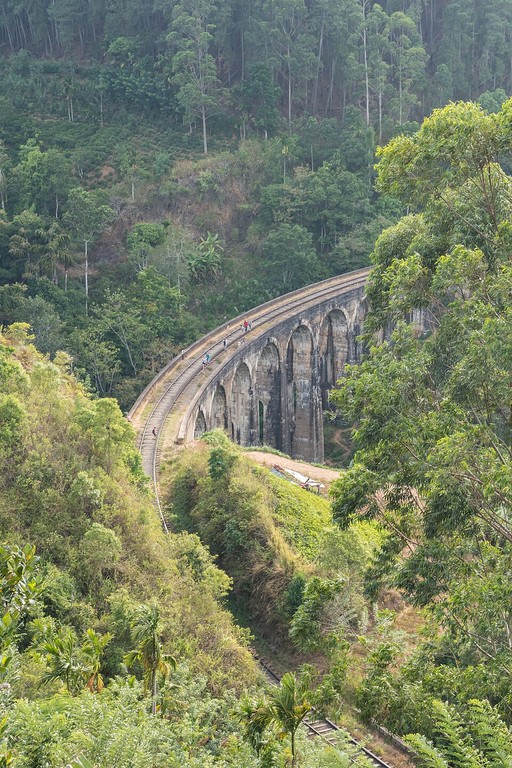
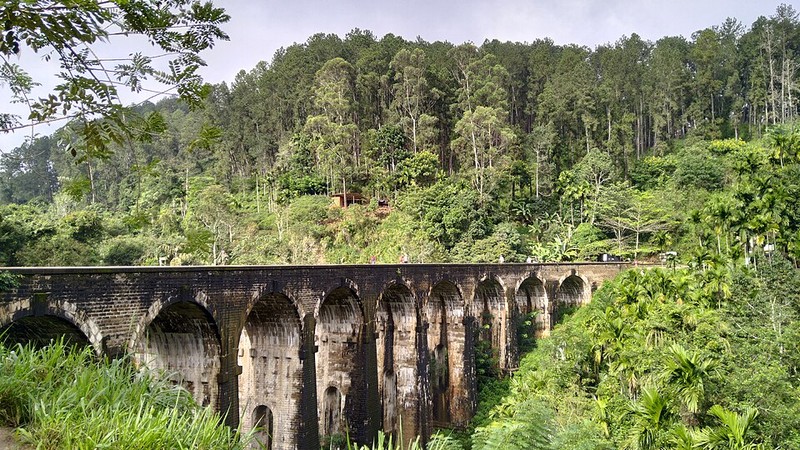
The Nine Arch Bridge is one of Sri Lanka's best-known landmarks, located in the hill country near Ella in Badulla District. This railway viaduct crosses a green ravine surrounded by tropical vegetation and tea plantations. Its nine arches, curving railway track and trains passing through the hills have made it one of the island's most recognisable sights.
History of the bridge
The bridge was built during British colonial rule in Ceylon, when the railway network was being expanded to transport tea and other goods from the central highlands to the ports. It became part of the railway line between Ella and Demodara and remains in railway use today.
Sources commonly give either 1919 or 1921 as the completion date, depending on whether they refer to the end of construction or the start of service. British railway engineer Harold Cuthbert Marwood is associated with its design. Local accounts also mention builder P. K. Appuhami as a participant in its construction.
Architecture and dimensions
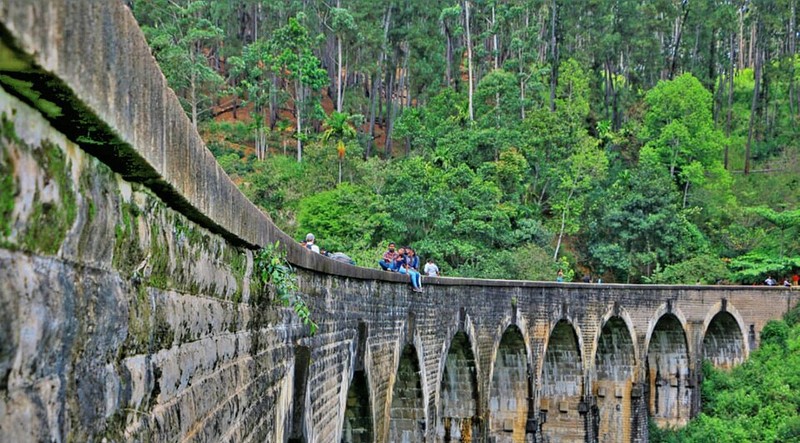
The Nine Arch Bridge is a railway viaduct with nine semicircular arches. It is approximately 91 metres long and 7.6 metres wide, while its height above the valley is commonly given as about 24 metres. The structure curves across the ravine, making the arches and railway line especially striking from side viewpoints.
Stone, brick and cement-based materials shape its appearance. A popular story says the bridge was built without steel structural elements because steel was scarce during the First World War. This should be treated as a widely repeated account rather than an indisputably verified explanation in every detail.
Why it is called the Bridge in the Sky
The bridge is sometimes called the Bridge in the Sky because it stands above a deep, green valley. From certain viewpoints, the railway appears to float above the forest, while the arches connect the opposite sides of the ravine. The combination of engineering and natural scenery makes the bridge especially appealing to photographers.
Tea plantations and scenery
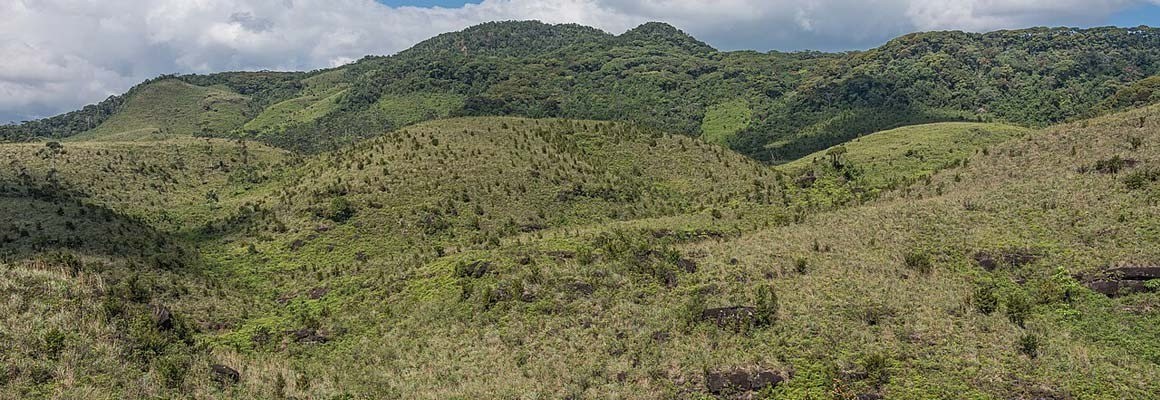
Hills covered in tropical greenery, shrubs and tea plantations surround the bridge. Narrow paths pass through vegetation and small rural plots. The valley can look particularly beautiful in the morning, when soft light brings out the contours of the hills and humid air may create a light mist among the trees.
After rain, the vegetation becomes vivid, but the paths may be muddy and slippery. On clear days, the arches, railway line and surrounding hills are easier to see.
Trains crossing the bridge
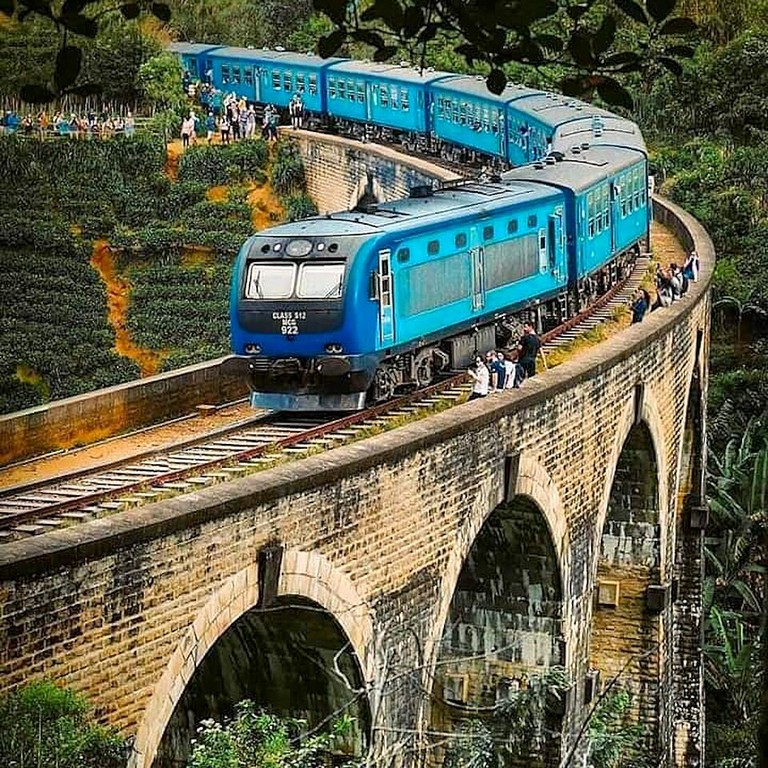
For many visitors, the main attraction is watching a passenger train cross the bridge. The railway runs through some of Sri Lanka's most scenic highland country. As a train emerges slowly from behind the hills and rolls across the arches, it creates one of the country's most recognisable views.
Train schedules can change because of maintenance, weather and railway service updates. Check the current times at Ella station or with local railway staff rather than relying on old online timetables. Arrive early to choose a safe place to watch.
Best photography viewpoints
Well-known views are available from the slopes on both sides of the bridge. Upper viewpoints allow photographers to capture the entire structure, including all nine arches and the curve of the track. Lower viewpoints emphasise the height of the viaduct and the scale of the green ravine.
If you want to photograph a train, consider the direction of the sunlight and choose a spot with a clear view of most of the bridge. Morning and late-afternoon light often creates softer shadows. Popular viewpoints can become crowded, so arrive early for a quieter experience.
How to get there
The nearest tourist hub is Ella. From town, visitors can walk along paths through greenery and tea plantations or take a tuk-tuk closer to the access points. Walking time depends on the route and trail conditions; allow roughly 20–40 minutes for the walk.
The bridge lies on the railway between Ella and Demodara stations. Travellers exploring the highland railway can plan around these stations. However, seeing the bridge from a viewpoint and crossing it by train are different experiences: viewpoints reveal the whole structure, while a train ride gives a sense of the line's curve and elevation.
Best time to visit
The bridge can be visited throughout the year, but conditions depend on the weather. Dry periods make walking and reaching viewpoints easier. After rain, the landscape looks fresh, although dirt paths may become slippery. Morning is often a good time for a quieter visit, while midday can bring more tour groups.
If seeing a train is your priority, check the schedule in advance and allow for delays. Do not plan your arrival so tightly that you have only a few minutes before the expected crossing.
Nearby attractions
The bridge fits easily into a walk around Ella. Popular activities in the region include hill walks, tea plantation visits and nature trails. Nearby highlights include Ella Rock and Little Adam's Peak, both known for views across mountain valleys and green slopes.
You can also explore Ella itself, where small cafés, restaurants and guesthouses serve visitors. Its tourism facilities make the town a convenient base for exploring Sri Lanka's hill country.
Safety
The Nine Arch Bridge remains an active railway structure, not simply a tourist attraction. Railway tracks are not safe walking paths: a train may appear unexpectedly, and there is little room to step aside on the bridge. Use safe viewpoints on the slopes and near the approaches for observing and photographing it.
Do not step onto the tracks for a photograph, stand on the edges of the arches or climb the masonry. Keep children close, avoid steep wet ground after rain, stay away from drop-offs and take all rubbish with you.
Why visit the Nine Arch Bridge
The Nine Arch Bridge combines railway engineering history, striking architecture and the natural beauty of Sri Lanka's hill country. Its arches, curved track and passing trains have made it an emblem of Ella. Even without a train, the viaduct is impressive as an engineering structure set within a green valley. It deserves a place on the itinerary of anyone interested in architecture, photography and scenic landmarks.
Gallery