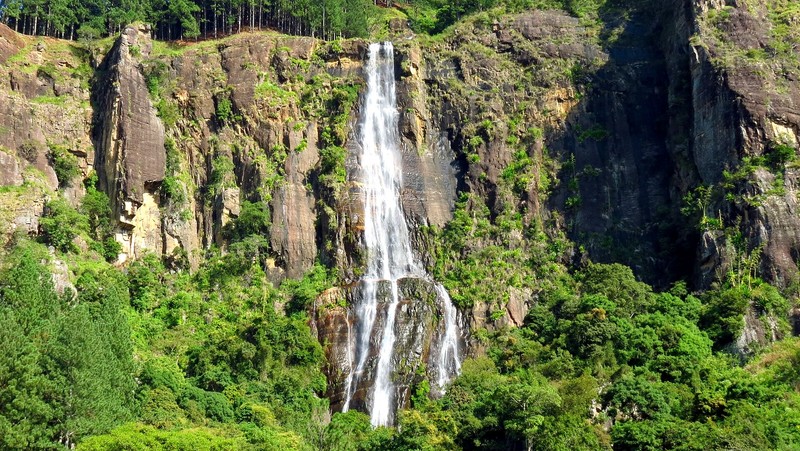
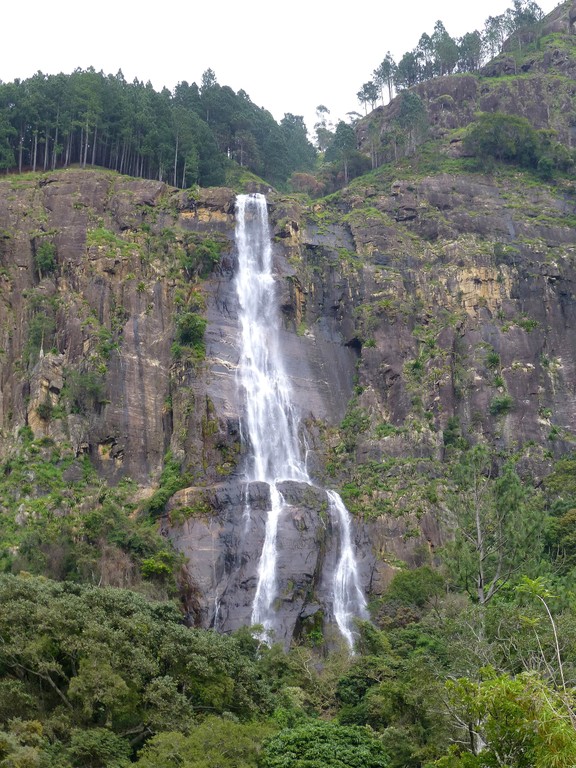
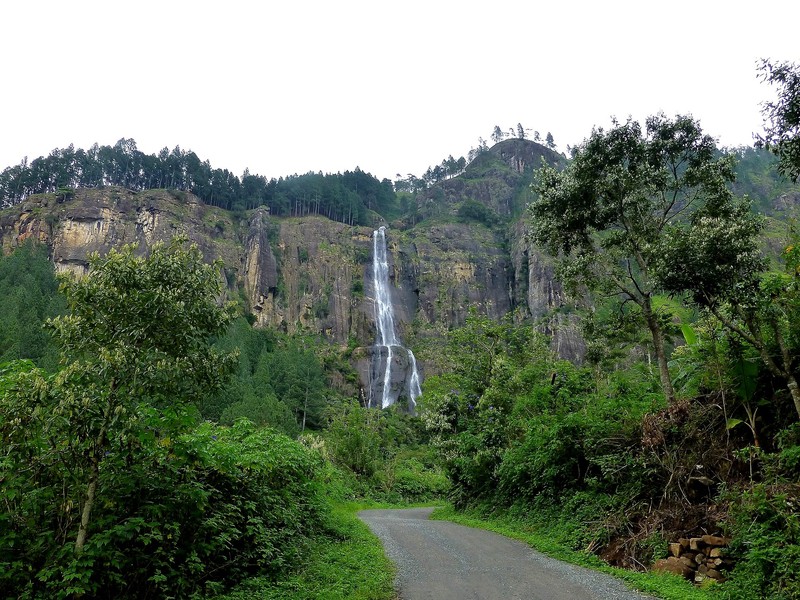
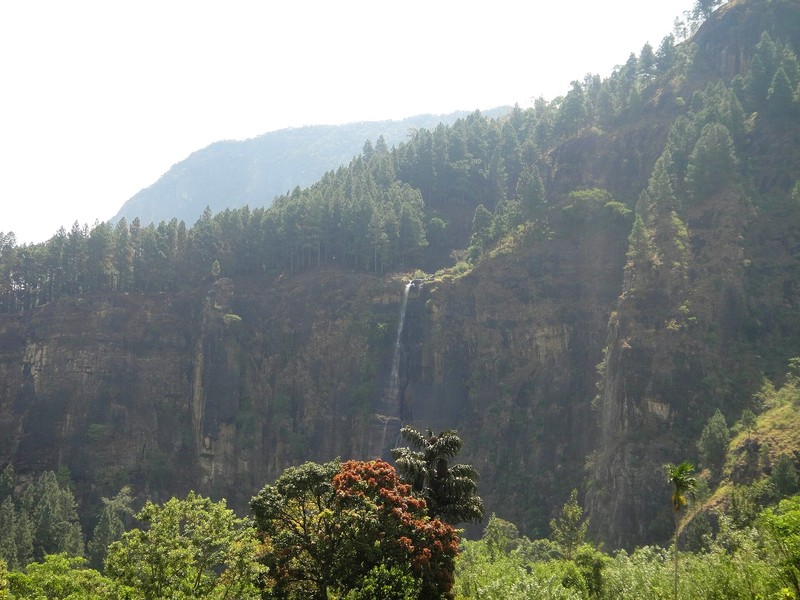
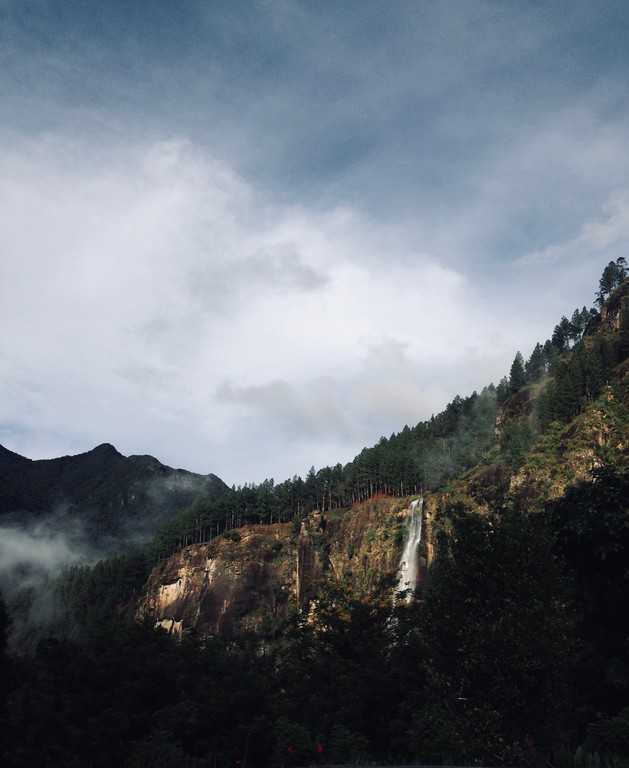
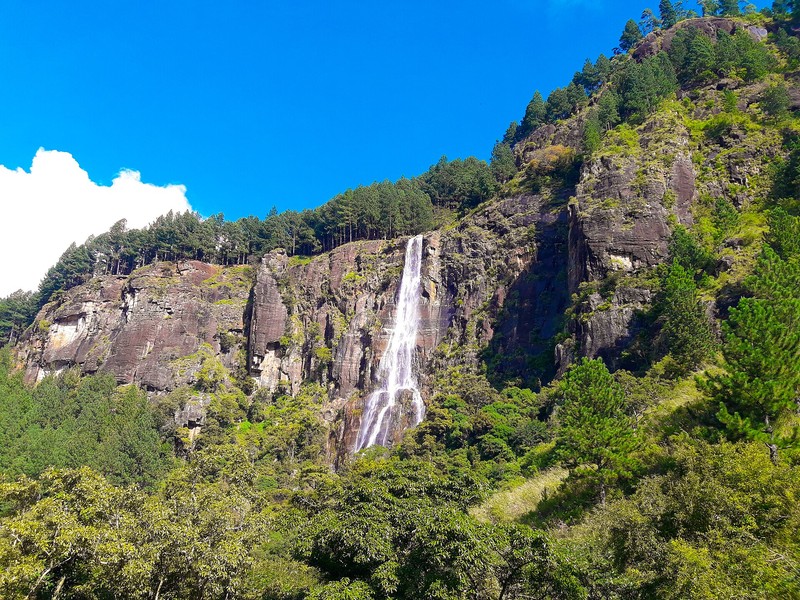
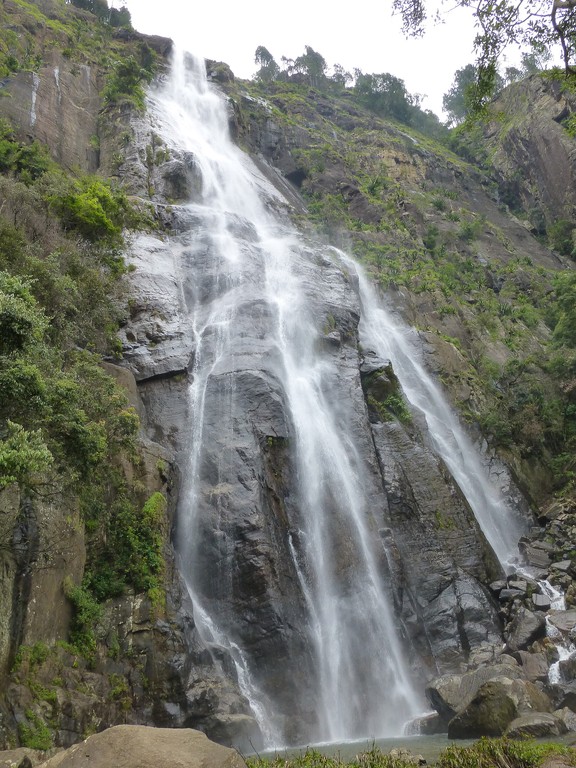
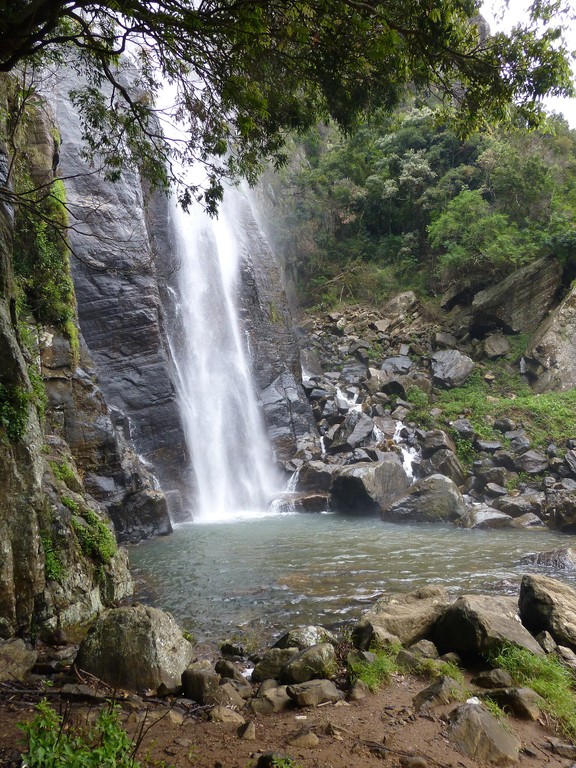
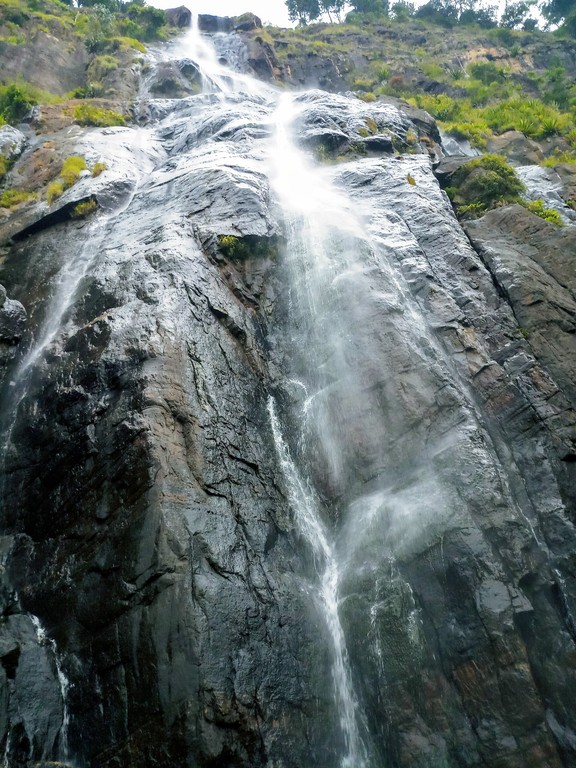
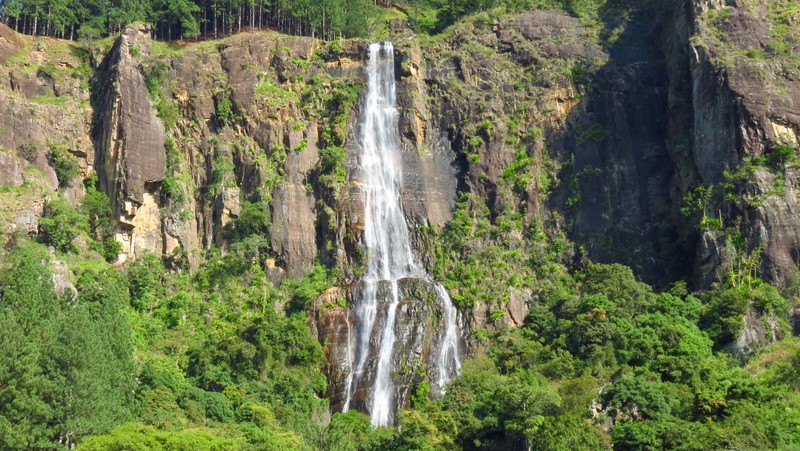
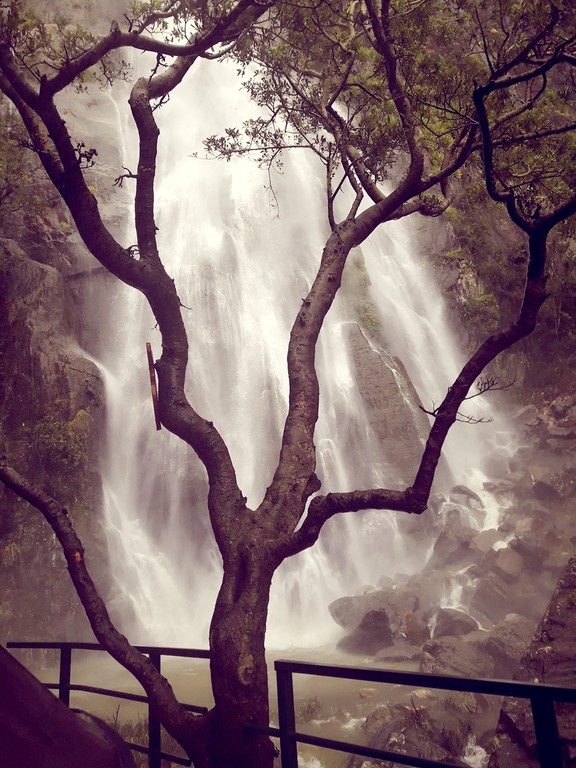
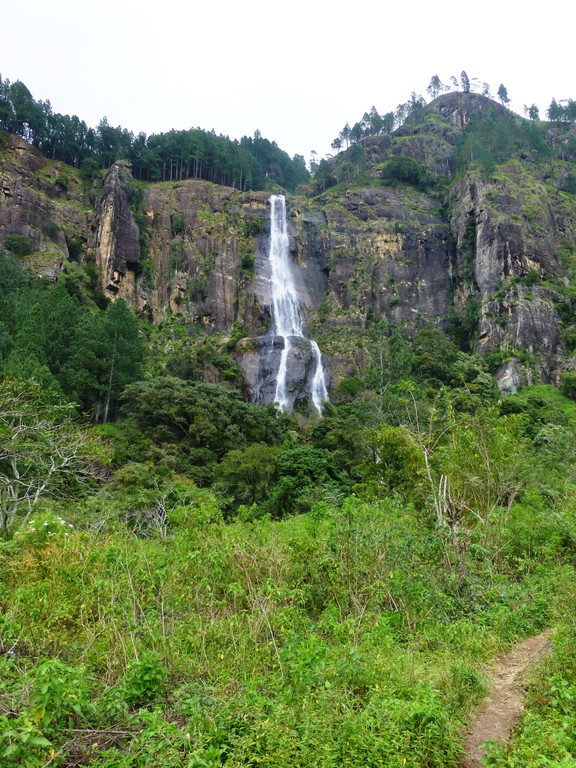
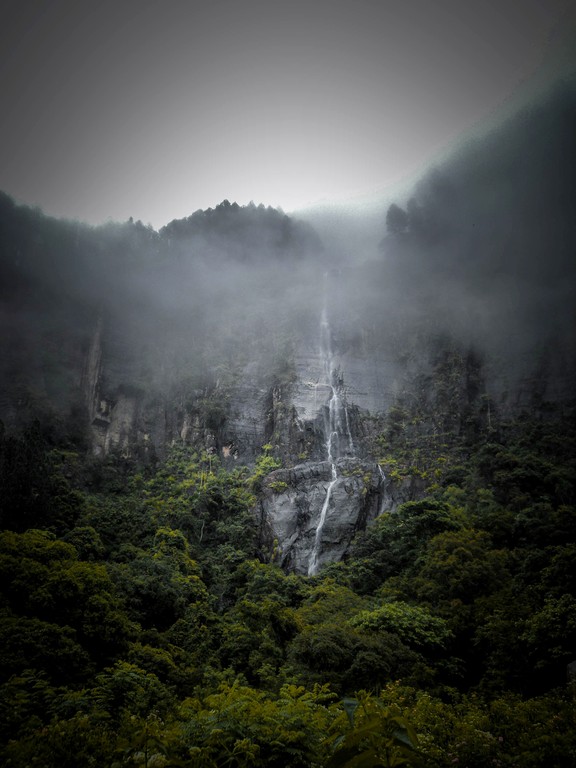
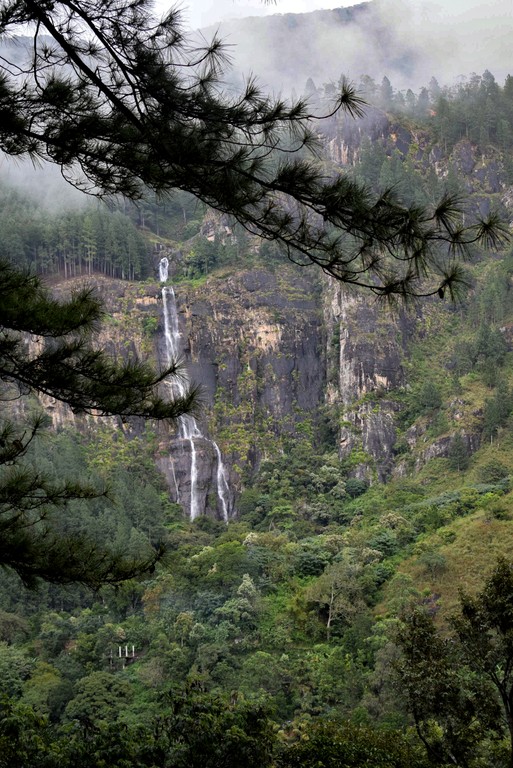
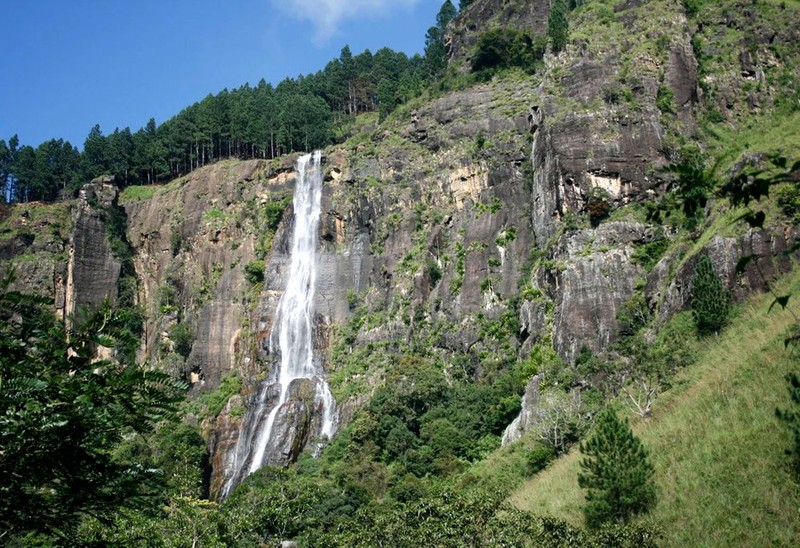
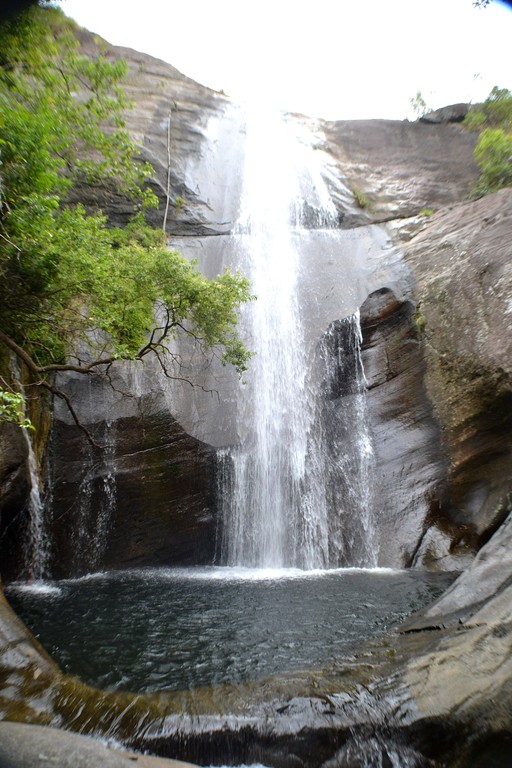
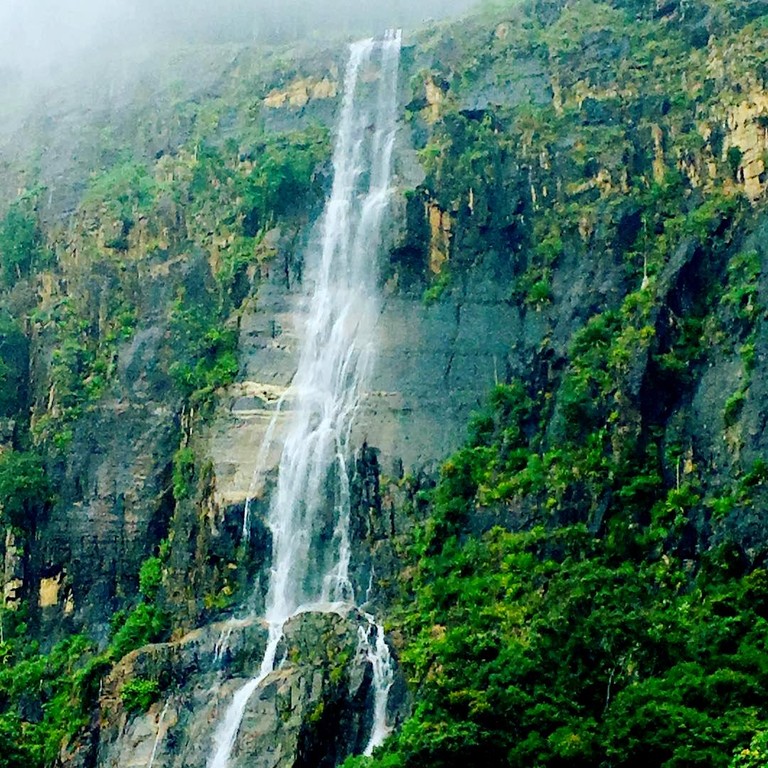
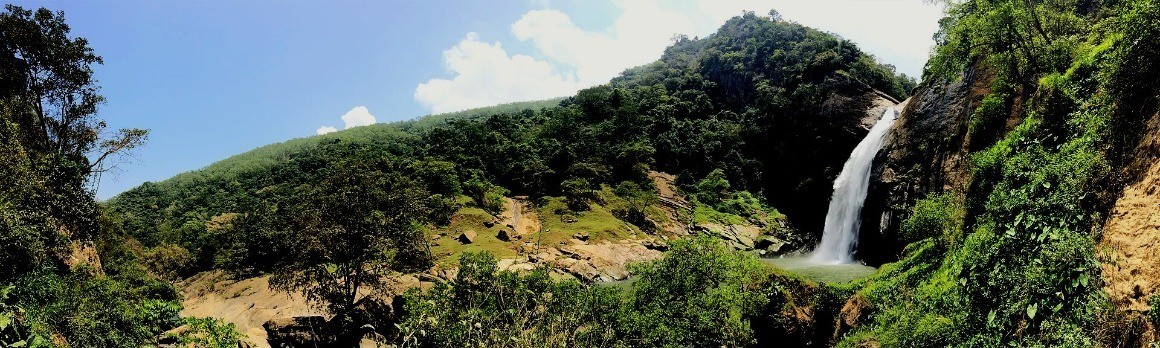
Bambarakanda Falls is the tallest waterfall in Sri Lanka, located near the village of Kalupahana in Badulla District. Its water plunges approximately 263 metres against a backdrop of rocky slopes and tall pine trees. Unlike broad, multi-tiered waterfalls, Bambarakanda resembles a slender white ribbon descending through the mountain landscape.
Height and characteristics
Bambarakanda Falls has a total height of about 263 metres. The water drops from a high escarpment along a nearly vertical rock face. Depending on the season, the cascade may appear as a thin stream or become broader and more powerful. It is formed by Kuda Oya, a tributary of the Walawe River, which drains the higher terrain of Sri Lanka.
Mountain scenery and pine forest
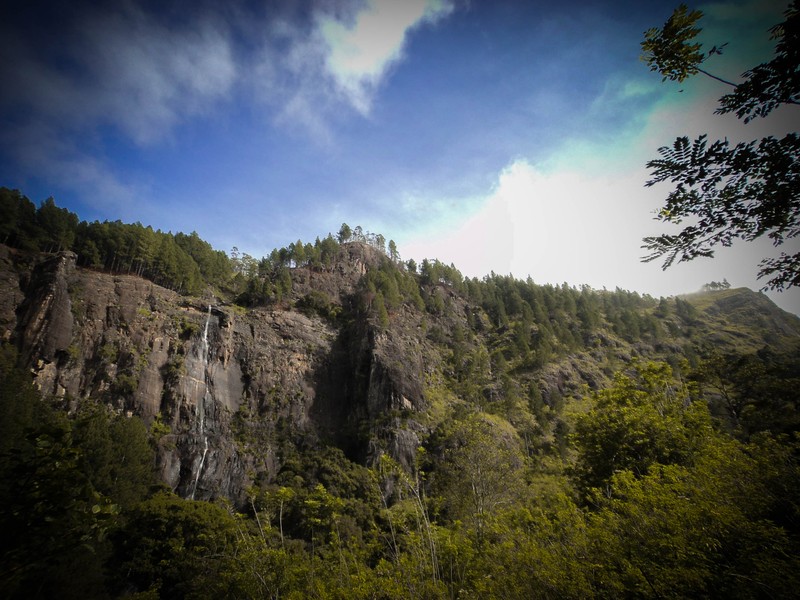
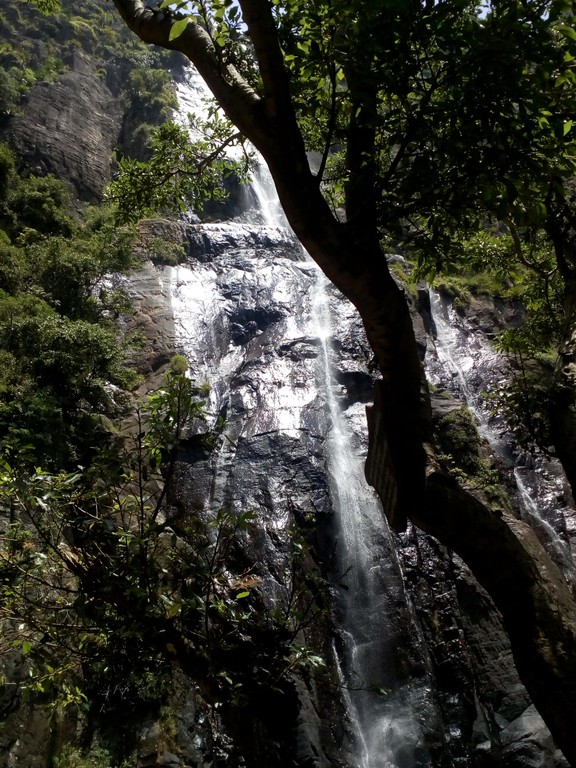
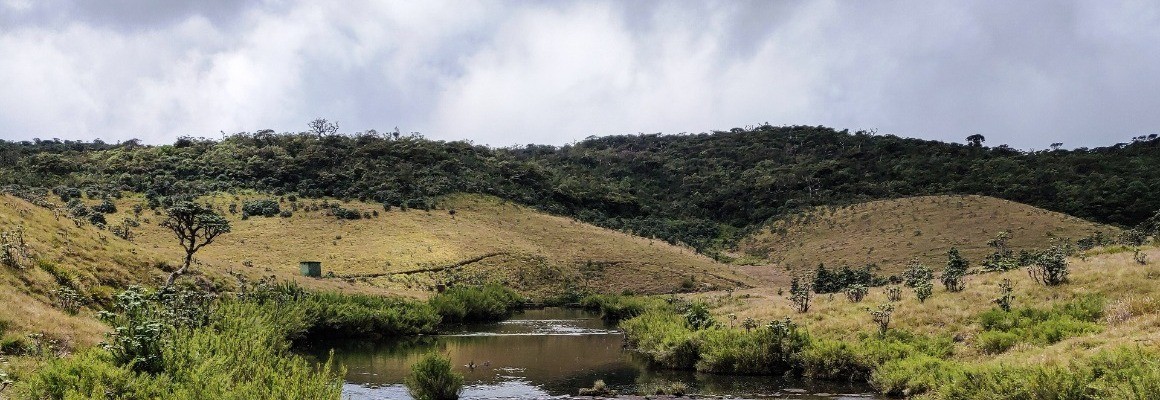
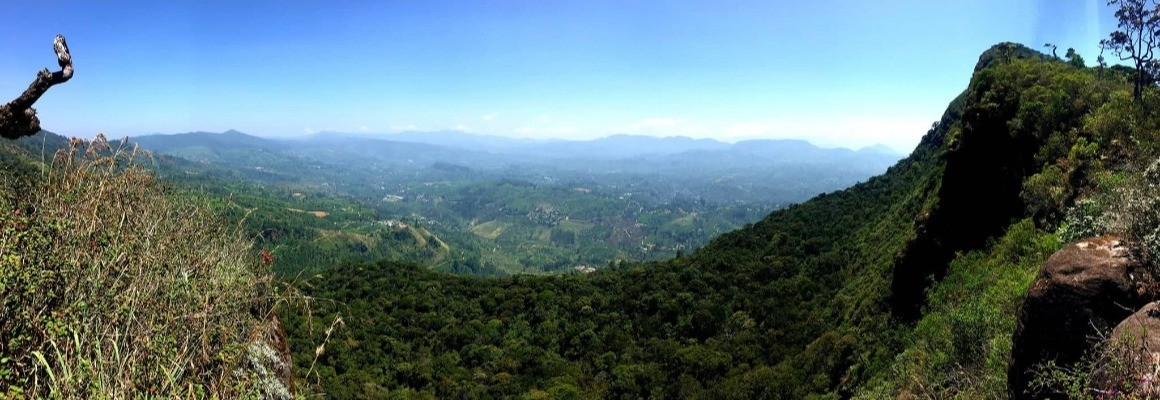
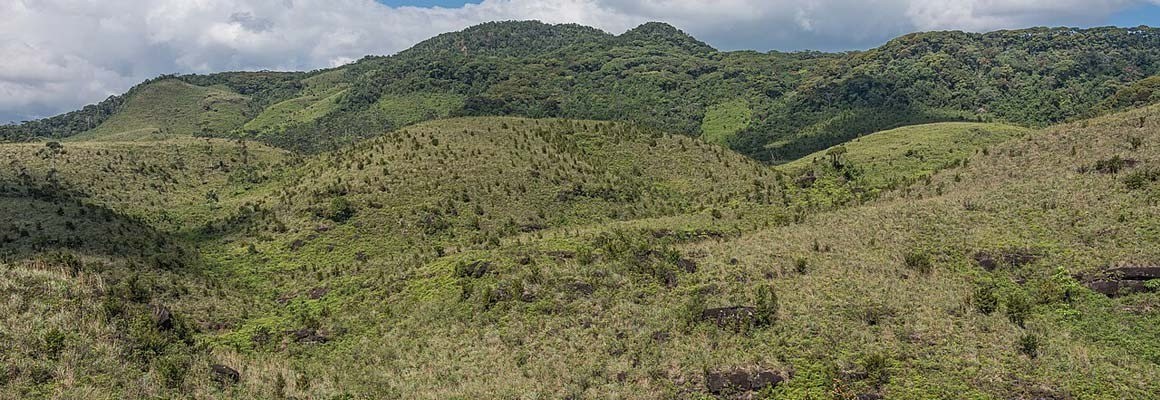
The waterfall lies among the hills of Sri Lanka's central highlands, where rocky slopes alternate with valleys and forested areas. Tall pines grow near the approach route, while patches of natural montane vegetation remain in wetter and less accessible gullies. The cooler air and mountain scenery offer a contrast to the island's hot coastal regions.
The pine trees provide a striking setting for photographs, and gaps between the trunks reveal views of the surrounding slopes. After rainfall, the vegetation becomes greener and moisture on the rocks adds to the atmosphere.
Where is Bambarakanda Falls?
The waterfall is near Kalupahana in Badulla District, Uva Province. It lies approximately five kilometres from the A4 highway. Travellers coming from Colombo generally drive through Ratnapura and Balangoda towards Kalupahana, then turn onto a local road leading to the falls. The final stretch can be narrow, winding and uneven, so careful driving is essential.
The walking route
Visitors continue on foot from the access point. Depending on the available road access and chosen path, the walk to the main viewing area may take around 10–20 minutes. The trail passes through pine woodland and over uneven ground. Some hikers attempt a steeper route towards the upper section of the waterfall, but this is more demanding and may involve exposed slopes without reliable barriers.
Best time to visit
The appearance of Bambarakanda Falls depends on rainfall. During wetter periods, the flow becomes stronger and more impressive, while in dry months it may narrow to a thin stream. Check the weather forecast and local trail conditions before travelling. Morning light is often suitable for photography and offers a softer view of the cliffs and water.
Photography and viewpoints
The waterfall is best photographed from safe, open viewpoints where the cascade and surrounding slopes are visible. Including pine trees or rock formations in the frame can help convey its scale. Wet rocks and narrow paths can be hazardous, so avoid approaching cliff edges for a dramatic angle. A stable viewpoint is safer than standing close to the drop.
Safety and visitor advice
After rain, paths and rocks can become slippery. Do not approach the edge of the escarpment, descend unmaintained slopes or enter the water when the current is strong. Wear shoes with good grip and follow local instructions. Take rubbish away with you and avoid damaging plants. Check current access rules before your visit.
Places to visit nearby
A visit to Bambarakanda can be combined with exploring the mountain areas around Belihuloya and Haputale in Uva Province. The wider region offers other waterfalls, mountain roads, viewpoints and hiking routes. Lanka Ella and Diyaluma Falls are among the natural attractions that travellers may include in a longer itinerary.
Why visit Bambarakanda Falls?
Bambarakanda stands out for its exceptional height, elegant silhouette and mountain setting. Visitors can see Sri Lanka's tallest waterfall, walk among pine trees and experience the natural landscapes of the central highlands. It is a rewarding destination for nature lovers, photographers and travellers exploring the island's hill country.
Gallery