The Paris Catacombs are one of the French capital's most unusual historical sites. Beneath the busy streets lies an underground world of former quarries, narrow galleries and an ossuary containing the remains of several million people. A visit reveals how Paris dealt with overcrowded cemeteries, developed its underground infrastructure and transformed abandoned quarries into a historic monument.
How the Paris Catacombs began
The story of the Catacombs is closely connected with the extraction of building stone. For centuries, limestone was quarried beneath Paris and used to construct houses, churches and other buildings. Over time, a complex network of tunnels and excavated chambers developed underground. Some sections were abandoned, and their condition became a concern as ground subsidence and collapses threatened streets and buildings.
In the eighteenth century, the city also faced a public health crisis. Parisian cemeteries were overcrowded, and decomposing remains and environmental contamination caused serious concern. Conditions were particularly difficult at the Cemetery of the Innocents, which had been used for many centuries. Authorities decided to transfer human remains to underground quarries outside the city's boundaries at the time.
The first large-scale transfers took place between 1785 and 1787. The remains were transported mainly at night to avoid public unrest. Transfers continued after the French Revolution and during major urban redevelopment in the nineteenth century. On 7 April 1786, the site was consecrated as the Paris Municipal Ossuary. The name Catacombs became established by analogy with the ancient underground burial sites of Rome.
Why the Catacombs contain millions of bones
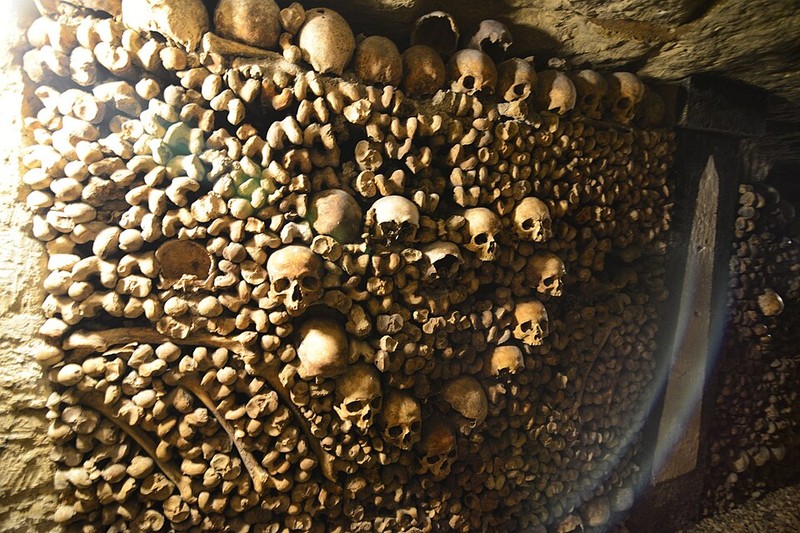
The ossuary holds remains from many Parisian cemeteries used over several centuries. As old burial grounds closed, bones were transferred into the former quarries. They belong to men, women and children who lived in different historical periods. The exact number of individuals cannot be established, but official sources refer to the remains of several million people.
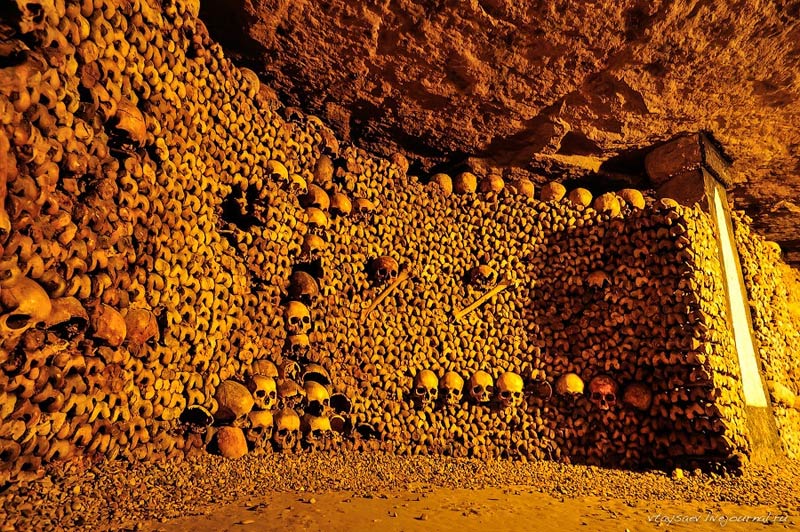
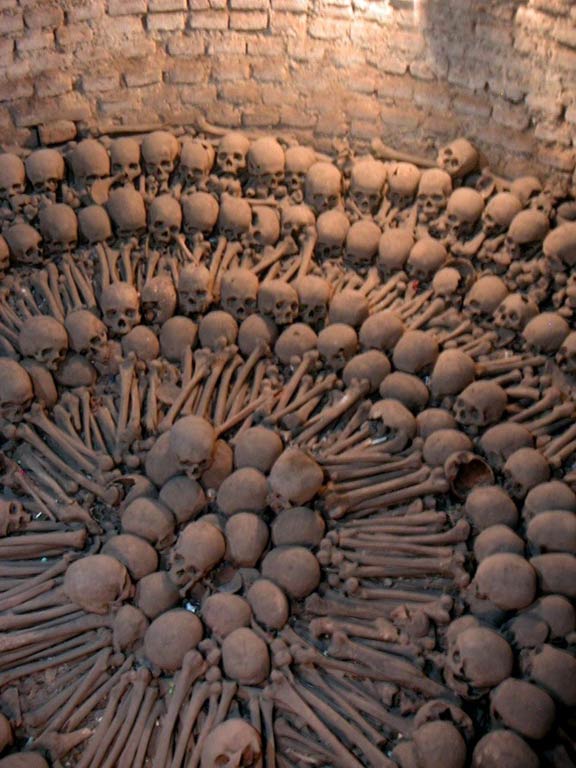
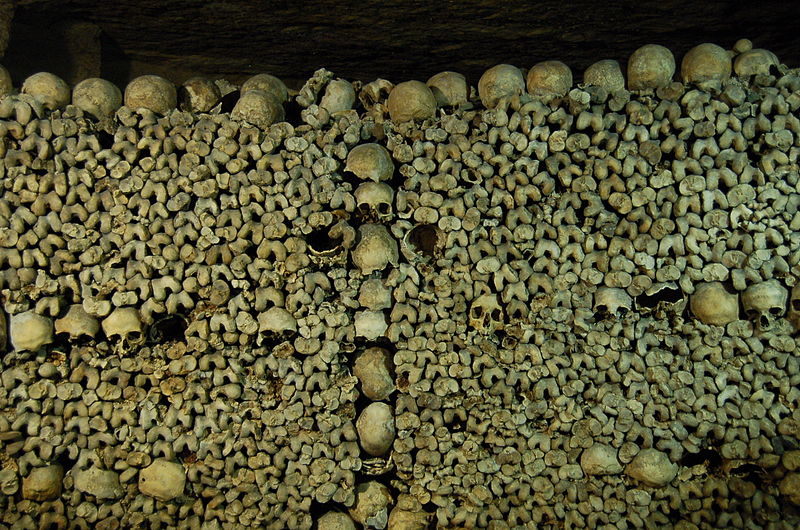
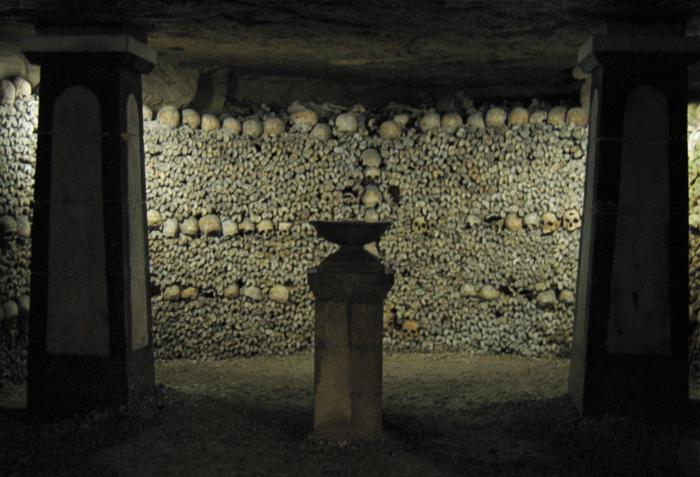
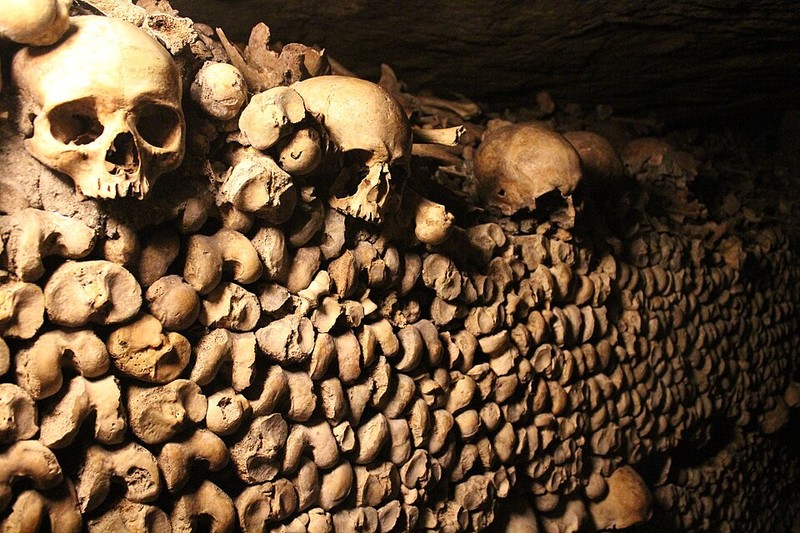
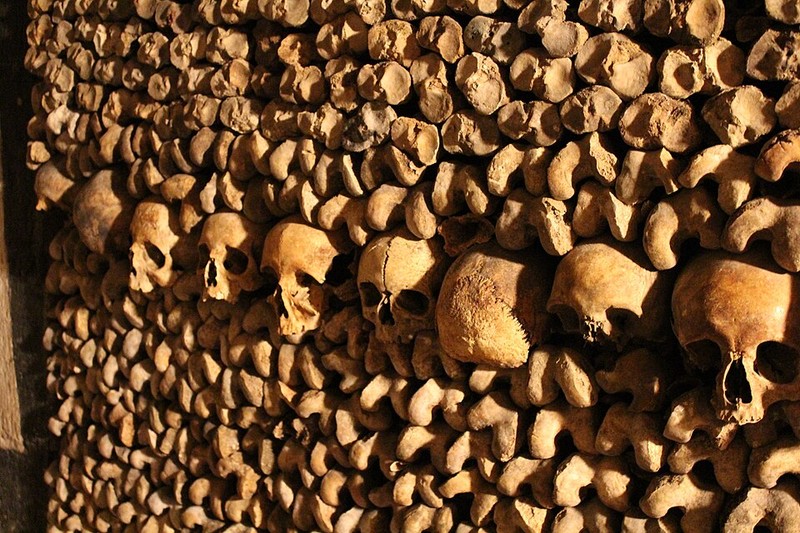
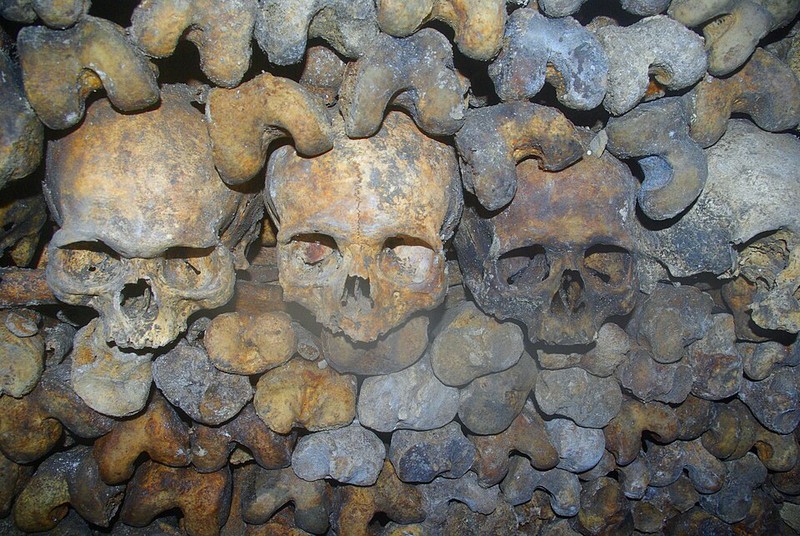
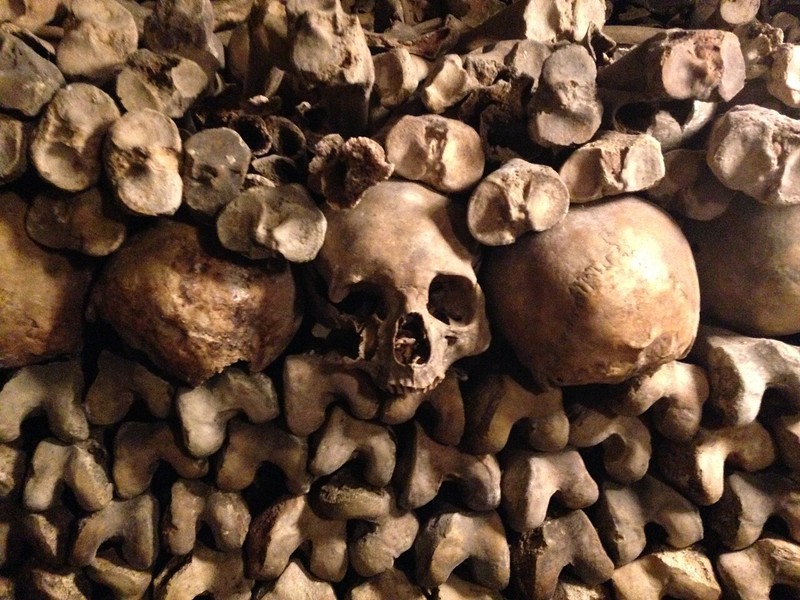
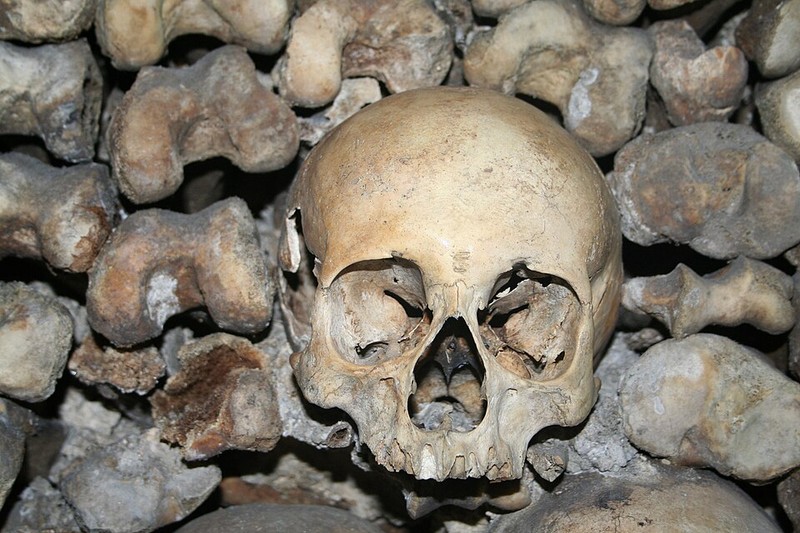
At first, the bones were placed in the underground chambers without a unified decorative arrangement. In the early nineteenth century, quarry inspector Louis-Étienne Héricart de Thury organized a major reworking of the ossuary. He ordered the bones to be arranged into orderly walls, alternating long limb bones with skulls. Other remains were placed behind the decorative facades. This work gave the galleries their famous, carefully organized yet sombre appearance.
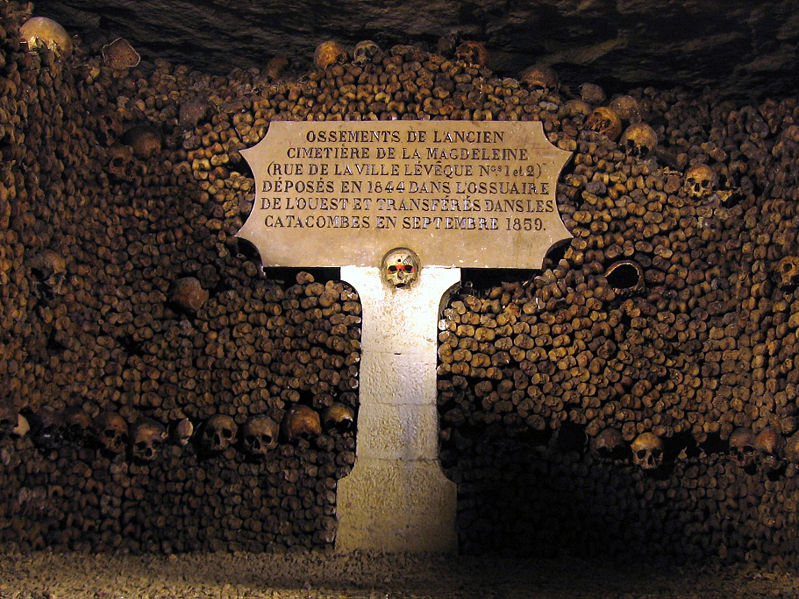
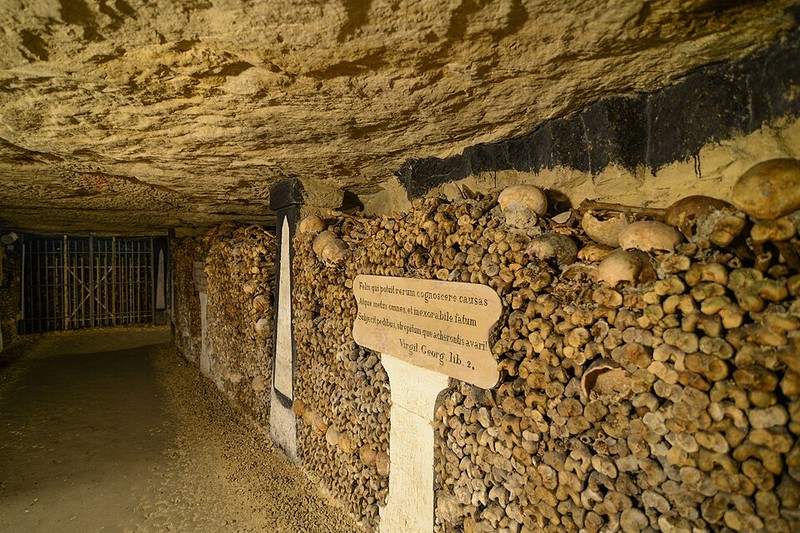
Memorial plaques, section names and religious or philosophical inscriptions can be seen on the walls. One of the best-known inscriptions greets visitors with the words, “Stop! This is the empire of death.” These messages encourage reflection on human life, memory and mortality.
The architecture of the underground world
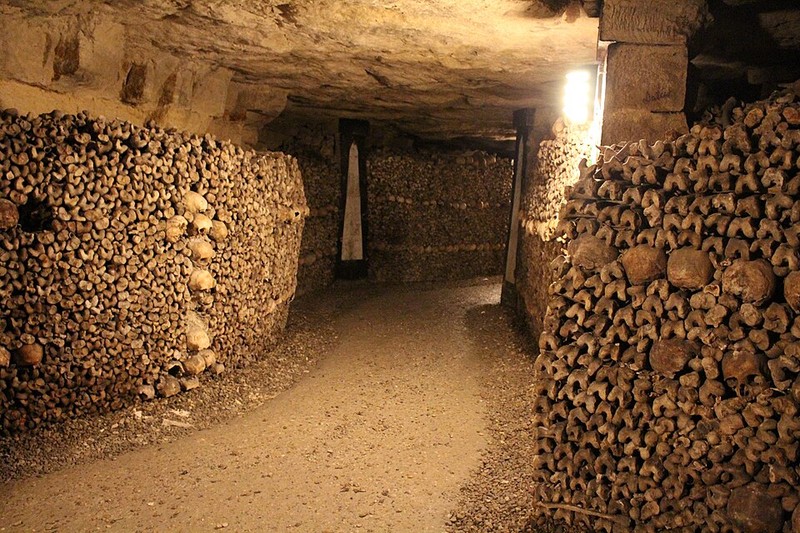
The Paris Catacombs are not only an ossuary but also part of the city's former quarry infrastructure. The galleries were cut into limestone and include low ceilings, uneven walls and narrow passages. Marks left by quarry workers, inscriptions and engineering notations remain visible in some places, documenting the extraction of stone and efforts to stabilize the underground structures.
The arranged sections of the ossuary feature decorative compositions made of skulls and bones, stone elements and structures inspired by classical monuments. Some areas received names associated with their appearance or historical references. The combination of working quarry galleries and carefully arranged human remains creates an atmosphere unlike that of an ordinary museum or cemetery.
It is important to distinguish the official visitor route from the entire network of underground quarries. The subterranean workings beneath Paris extend far beyond the section open to the public. Many tunnels are closed, unsafe or inaccessible to ordinary visitors. Entering restricted areas without permission can lead to injuries, disorientation and other serious dangers.
The Catacombs and the history of Paris
The ossuary became an important part of the cultural history of the French capital. During the nineteenth century, the Catacombs attracted travellers, scientists and members of high society. Famous historical figures visited the galleries, while geologists, engineers and naturalists studied their unusual underground environment.
The Catacombs recall the major changes that transformed Paris. The transfer of remains was linked to improving public health standards, closing old cemeteries and reshaping the urban environment. Stabilizing the quarries also helped reduce the risk of surface collapses. The site's history therefore connects archaeology, architecture, urban planning and public health.
Over time, the Catacombs became an attraction in their own right. Their atmosphere inspired writers, artists and filmmakers, and the image of an underground labyrinth entered popular culture. The documented history, however, is more revealing than many legends: it tells of engineering decisions, the lives of ordinary Parisians and the growth of the city.
What to see during a visit
The official route runs through galleries approximately 20 metres underground and extends for about 1.5 kilometres. Visitors walk through former quarries, learn how they were used and enter the ossuary, where remains are arranged into long walls and decorative patterns.
Along the way, visitors can see historic inscriptions, memorial plaques, sections of old quarry galleries and unusual architectural details. The displays explain how limestone extraction shaped Paris and why the underground spaces became a repository for human remains.
After extensive renovation work, the Catacombs reopened to visitors on 8 April 2026. The visitor route received an updated presentation and multimedia interpretation. An audio guide explains the history of the quarries, the creation of the ossuary and the people associated with the site. Temporary exhibitions and visitor arrangements may change, so check the official website before travelling.
Preparing for your visit
The underground temperature remains around 14°C, and humidity can be high. A light jacket is useful even on a hot day. Floors are uneven and sometimes slippery, so comfortable shoes with good grip are recommended.
The route includes 131 steps down and 112 steps up. The visit is one-way, so it is not possible to return to the entrance along the same route. Allow about an hour for the visit, with extra time if needed. Narrow passages, dim lighting and the underground setting may be uncomfortable for people with claustrophobia.
Touching the bones and historic features is prohibited. Eating, drinking and smoking are not allowed inside. Suitcases and large bags are forbidden; only small bags within the specified size limits are permitted. The site is not wheelchair accessible because of the stairs and route conditions. Children must be accompanied by an adult.
How to reach the Paris Catacombs
The entrance is at 1 Avenue du Colonel Henri Rol-Tanguy in Paris's 14th arrondissement, near Place Denfert-Rochereau. The nearest metro and RER B station is Denfert-Rochereau. City buses also serve the area.
The Catacombs are generally open Tuesday through Sunday. According to official information for 2026, opening hours are 9:45 a.m. to 8:30 p.m., with last admission at 7:30 p.m. The site is closed on Mondays and certain public holidays. Timed tickets are strongly recommended because visitor numbers are limited and popular time slots may sell out.
The Paris Catacombs are a remarkable historic site where the engineering history of the city, the memory of millions of deceased people and the architecture of underground spaces come together. A visit offers a different perspective on the French capital and reveals that its history lies not only in palaces, museums and boulevards, but also deep beneath the streets.
Gallery