The Tuileries Garden is one of Paris’s best-known historic parks, located between the Louvre and Place de la Concorde near the Seine. It is a fine example of formal French garden design, with symmetrical avenues, geometric flowerbeds, ornamental ponds, and sculptures. The garden covers approximately 23 hectares.
Its history began in 1564, when Catherine de’ Medici ordered a residence and garden to be built here. In 1664, André Le Nôtre redesigned the grounds, introducing the symmetry and long perspectives that define the garden today. French monarchs and emperors later used the area, and it became fully open to the public in 1871.
The Tuileries Palace
The palace once stood at the eastern end of the garden and played an important role in French political life. It housed members of the royal family and later served as a residence for Napoleon Bonaparte and Napoleon III. During the Paris Commune in 1871, the palace was burned. Its ruins were demolished in 1883, but the garden survived.
André Le Nôtre’s gardens
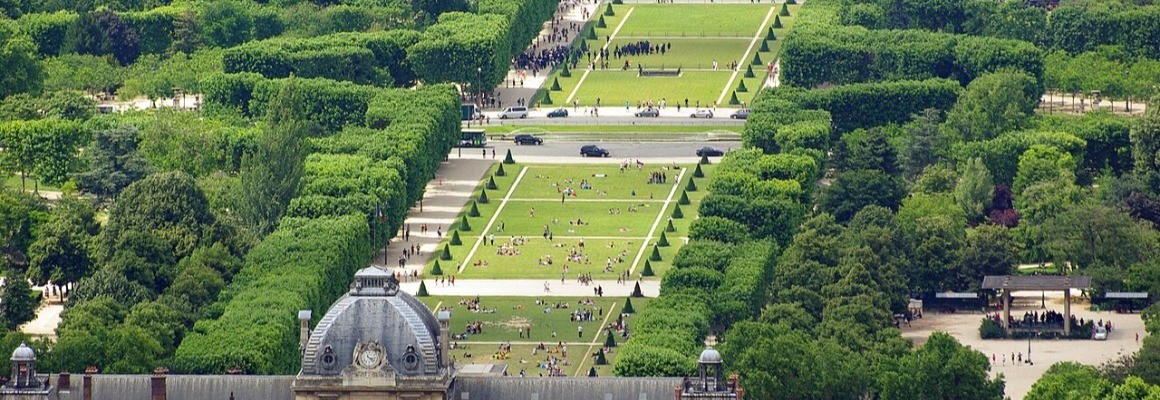
Le Nôtre created a long central axis linking the Louvre with Place de la Concorde and continuing towards the Champs-Élysées. The garden features ornamental flowerbeds, long avenues, shaded paths, and open spaces. Geometric order is balanced by trees, flowers, and changing views.
Fountains and sculptures
Ponds and fountains are essential elements of the garden’s design. Famous green metal chairs around the water provide places to relax. The Tuileries also functions as an open-air sculpture museum, with works from different periods displayed along paths and beside the ponds, from classical pieces to modern art.
The Arc de Triomphe du Carrousel
Near the eastern entrance stands the Arc de Triomphe du Carrousel, built between 1806 and 1808 on Napoleon’s orders. It connects the garden with the Louvre complex and forms part of Paris’s grand east-west perspective. At the western end lies Place de la Concorde, marked by its Egyptian obelisk.
The garden today
Today, the Tuileries is a historic monument, a public park, and a cultural space. Tourists and local residents come here to walk, relax, and attend seasonal events. Since 2005, the Louvre Museum has managed the garden, maintaining its historic plantings, avenues, and sculptures.
When to visit
Spring brings fresh flowers and greenery, summer offers shade and relaxing views of the ponds, and autumn colours the trees in gold and red. In winter, the garden’s geometric layout becomes more visible. For a quieter visit, come early in the morning or on a weekday. Entry is free, but opening hours vary by season.
Getting there
The garden is in central Paris, near the Tuileries, Concorde, and Palais Royal–Musée du Louvre metro stations. Nearby attractions include the Louvre, the Musée de l’Orangerie, Place de la Concorde, and the Champs-Élysées. Allow at least an hour for a walk through the grounds.
Respect the plants and sculptures, avoid picking flowers, and follow the park’s rules. The Tuileries Garden brings together French royal history, André Le Nôtre’s landscape design, and everyday life in modern Paris.
Gallery