The Eiffel Tower is one of Paris’s most recognisable landmarks and a symbol of France. Located on the Champ de Mars near the River Seine, it attracts visitors with its distinctive iron structure, observation levels and panoramic views of the French capital. Built for the 1889 World's Fair, the tower was originally intended to be temporary but eventually became one of the world's best-known architectural icons.
History of construction
The project was developed by engineers Maurice Koechlin and Émile Nouguier with the involvement of architect Stephen Sauvestre. Engineer and entrepreneur Gustave Eiffel supported the design, organised the construction and gave the monument its name. Work began in January 1887 and was completed on 31 March 1889. The tower was built for the World's Fair celebrating the centenary of the French Revolution. For its time, it was an extraordinary engineering achievement.
At first, the unusual iron structure sparked controversy among artists and writers. Some critics considered it too industrial for Paris. However, the tower soon became popular with the public. Although it was initially meant to be dismantled, it proved useful for scientific experiments, radio communication and signal transmission. These practical uses helped ensure its survival beyond the original concession period.
Height and structure
The Eiffel Tower currently stands 330 metres tall, including its antenna. At its opening in 1889, it measured about 312 metres. Antenna equipment was changed several times during the 20th and 21st centuries, increasing its total height. The tower is made of iron rather than steel. Its framework contains approximately 18,038 iron pieces joined by around 2.5 million rivets. The metal structure weighs about 7,300 tonnes, while the entire monument weighs approximately 10,100 tonnes.
Four curved legs rise and gradually converge towards the summit, creating the tower's distinctive silhouette. Its lattice design helps reduce the effects of wind while giving the structure a surprisingly light appearance. The iron is regularly repainted to protect it against corrosion. Temperature changes also affect its dimensions: the metal expands in hot weather and contracts when temperatures fall.
Three visitor levels
The tower has three main levels open to visitors. The first is about 57 metres above ground and allows visitors to examine the structure, walk across sections of transparent flooring and explore exhibition spaces. The second level stands approximately 115 metres high and offers excellent views of central Paris, including the Seine and nearby landmarks. The third level is about 276 metres above ground and provides a broad panorama of the city and its surroundings.
Visitors can use lifts, while stairways provide access to some levels. Routes and access to particular areas may change because of maintenance work or safety requirements.
Restaurants and evening lights
The tower houses restaurants and places to relax. Madame Brasserie is on the first level, while Le Jules Verne is on the second. Dining usually requires separate planning, and restaurant reservations may not replace a standard tower ticket. At night, the monument is illuminated. After dark, a sparkling light display usually begins at the start of each hour and lasts for several minutes, creating one of Paris's most familiar sights.
The tower and science
The Eiffel Tower played an important role in the development of scientific research and communications. Meteorological and aerodynamic experiments were conducted there, and it later became an important site for radio and television broadcasting. In 1889, it became the world's tallest structure and retained that distinction until 1930, when New York's Chrysler Building was completed.
Location and nearby sights
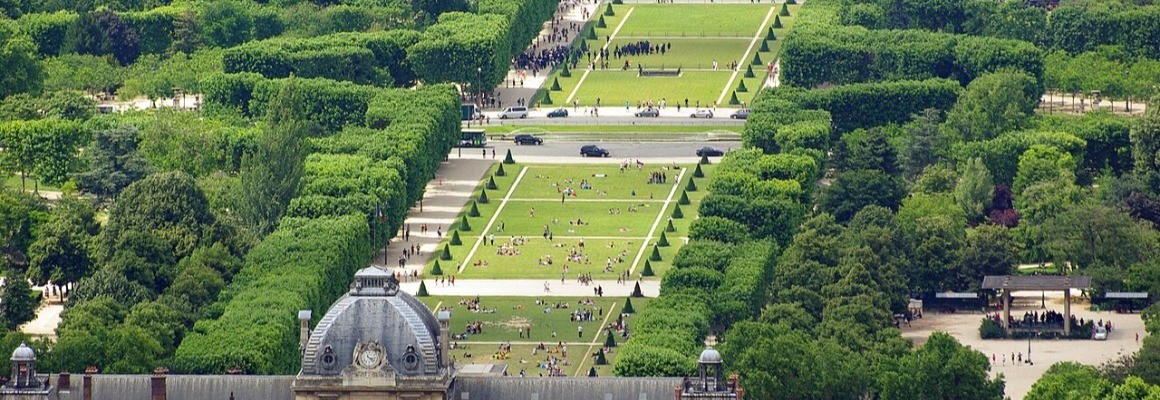
The tower stands in western central Paris on the Champ de Mars, close to the Seine. Across the river, the Trocadéro offers one of the best-known views of the monument. Visitors can also walk along the riverbanks, explore the gardens of the Champ de Mars and admire the bridges over the Seine. Early mornings and the evening illumination are particularly popular times for photography.
Planning a visit
The Eiffel Tower is easy to reach by metro, bus or on foot from central Paris. Tickets can be purchased through the official website, with options for lifts or stairs to certain levels. Booking in advance is advisable during busy tourist periods. Visitors should allow time for security checks and queues and be aware that temporary access restrictions may apply. Check current opening hours and summit availability before travelling.
The Eiffel Tower remains more than a 19th-century engineering landmark: it is a living symbol of Paris and France. Its history shows how a daring project that initially divided public opinion became one of the most famous structures in the world.
Gallery