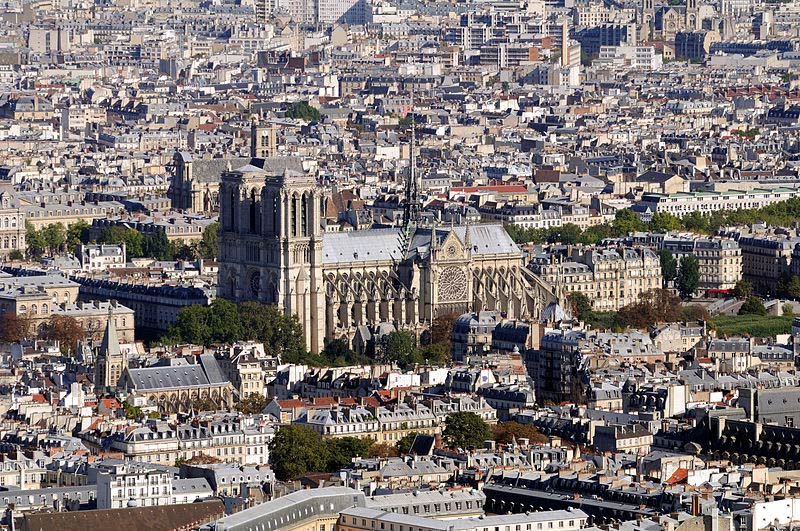
Notre-Dame de Paris Cathedral, known around the world as Notre-Dame, is one of France’s most celebrated architectural landmarks. It stands on the Île de la Cité in the Seine, in the historic heart of Paris. For more than eight centuries, the cathedral has remained an important religious centre, a symbol of French history and an outstanding work of Gothic art.
History of the Cathedral
Construction began in 1163 at the initiative of Maurice de Sully, Bishop of Paris. At the time, Paris was growing rapidly and becoming one of Europe’s most important political, commercial and cultural centres. Existing churches could no longer accommodate the increasing number of worshippers, so a larger and more impressive building was planned.
The work continued across several generations. Most of the structure was built during the 12th and 13th centuries, while some elements and later alterations took longer to complete. Notre-Dame became one of the leading examples of early French Gothic architecture, which sought greater height, spacious interiors and abundant natural light.
During the Middle Ages, the cathedral hosted religious ceremonies and important historical events. In 1239, King Louis IX of France brought relics of the Passion of Christ to Paris in a solemn procession. The building changed repeatedly over the centuries. Its interior was remodelled in the 17th and 18th centuries, and the French Revolution damaged the cathedral and temporarily interrupted its religious role.
19th-Century Restoration and Victor Hugo
By the beginning of the 19th century, the cathedral had fallen into poor condition. Victor Hugo’s novel The Hunchback of Notre-Dame, published in 1831, played an important role in renewing public interest in the monument. The book introduced a wide readership to medieval architecture and drew attention to the need to preserve the historic building.
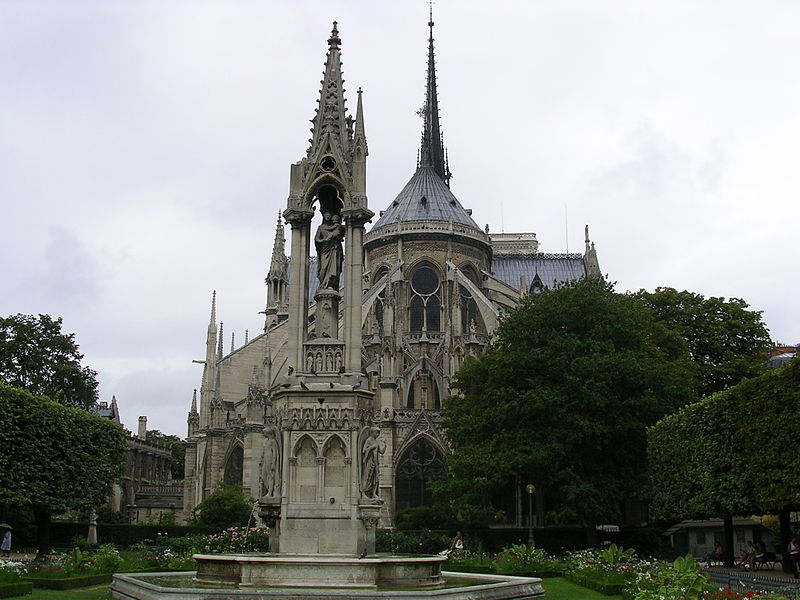
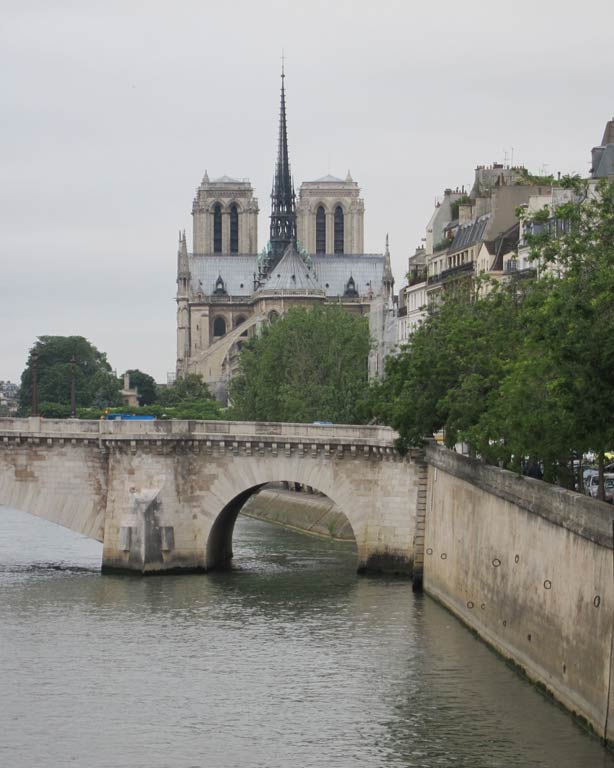
A major restoration began in the 1840s under architects Eugène Viollet-le-Duc and Jean-Baptiste Lassus. They reinforced the structure, repaired sculptural decoration and created new features inspired by medieval models. The famous spire above the roof was added during this restoration and later became one of the cathedral’s most recognisable features.
Architecture and Facade
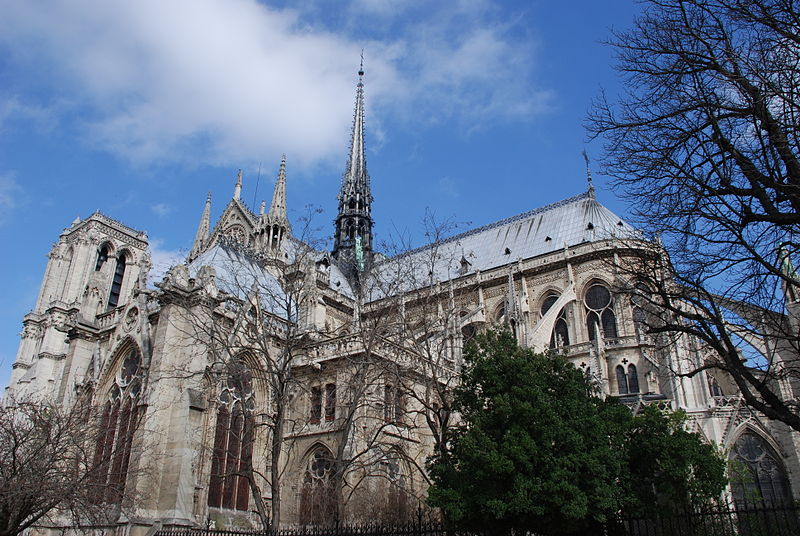
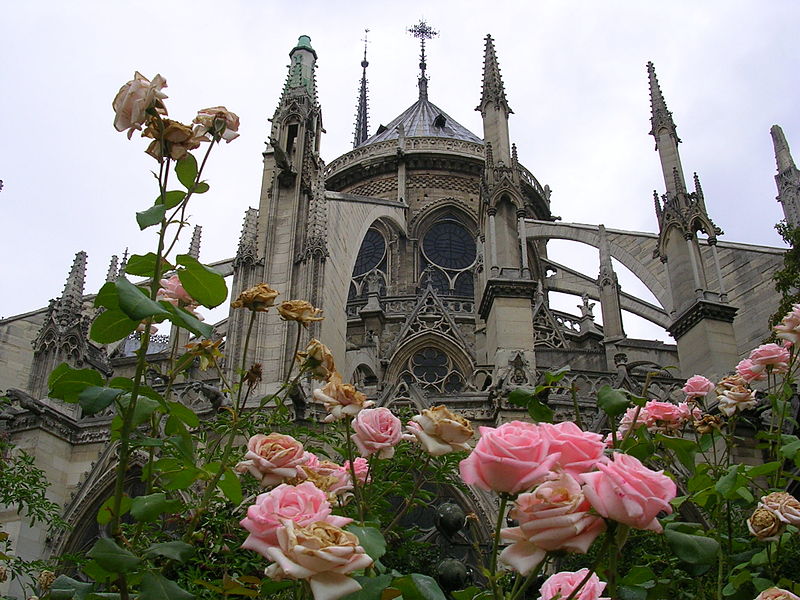
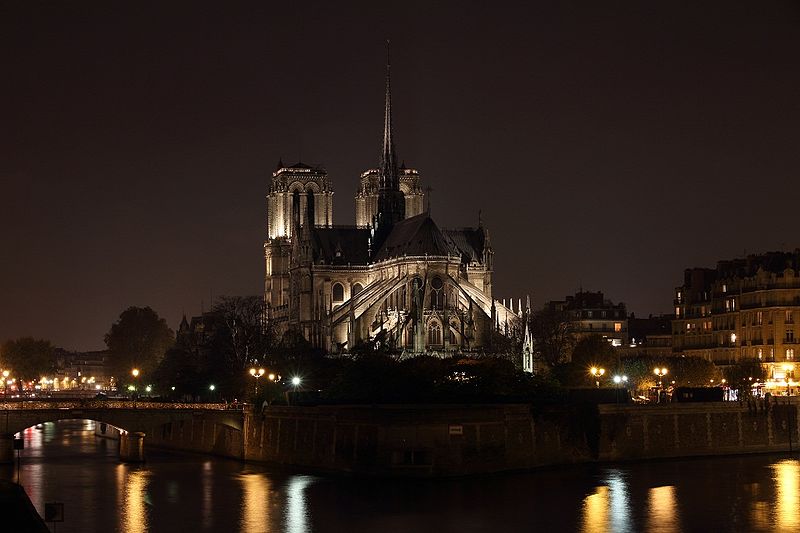
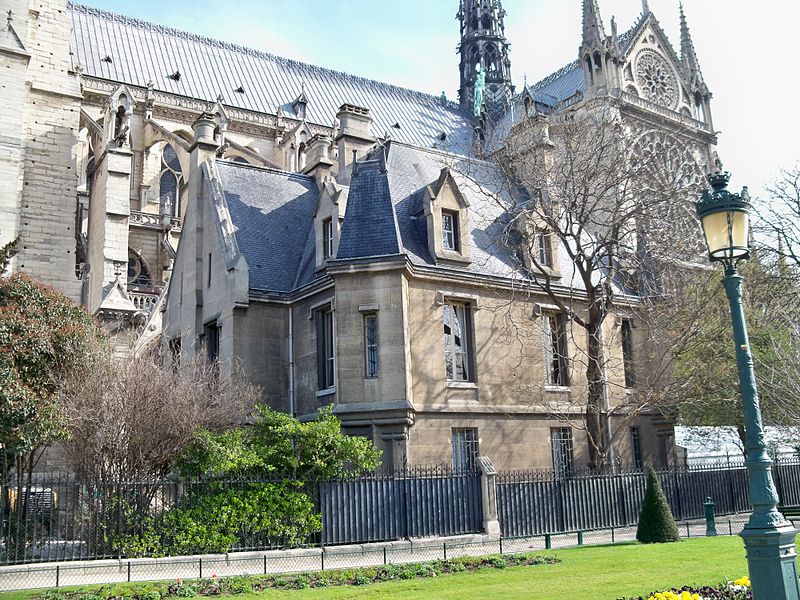
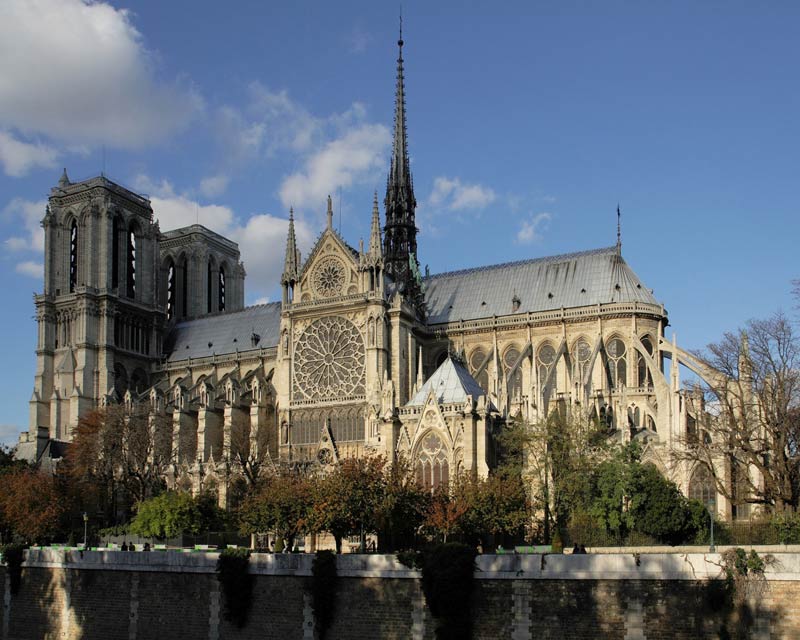
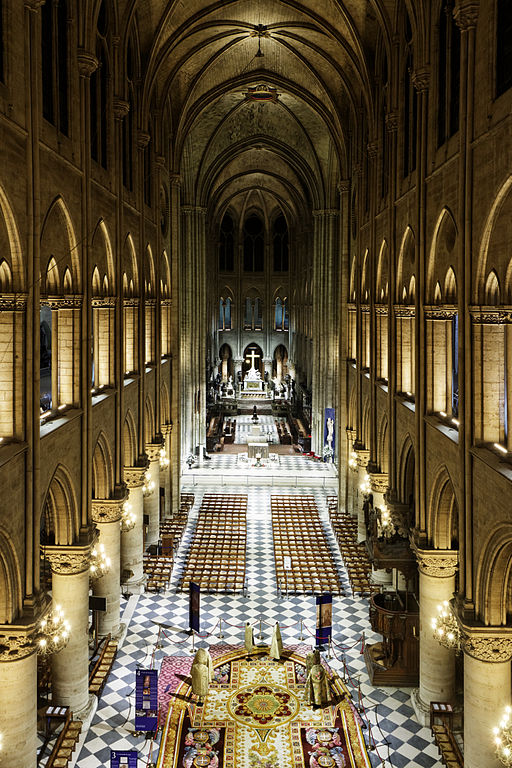
Notre-Dame is considered a masterpiece of French Gothic architecture. Its design combines vertical lines, pointed arches, ribbed vaults and flying buttresses, which help distribute the weight of the walls and high vaults. These structural innovations made it possible to create a spacious interior and large window openings.
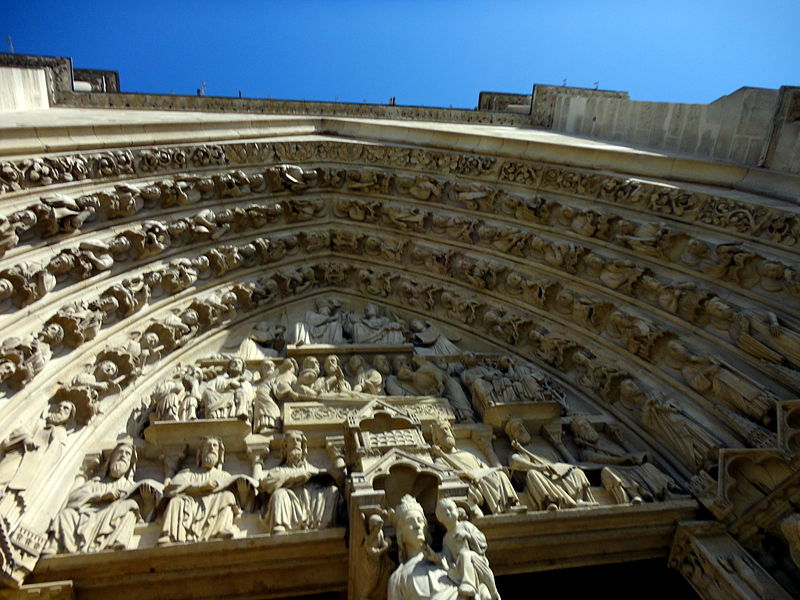
The western facade faces the square in front of the main entrance. Its composition is carefully symmetrical: three richly sculpted portals occupy the lower level, the Gallery of Kings stands above them, and a large circular rose window rises higher up. Two massive towers define the building’s distinctive silhouette.
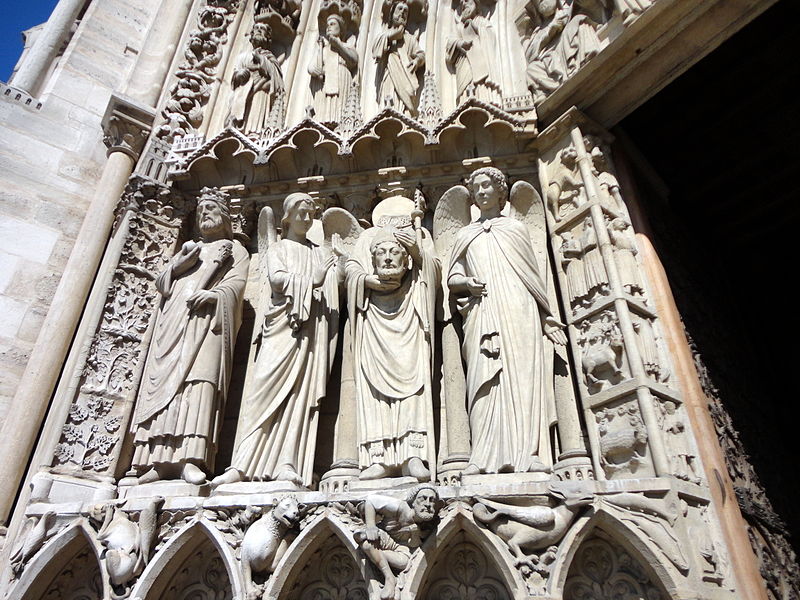
The portal sculptures tell biblical stories and reflect medieval ideas about the world, faith and human life. The Gallery of Kings features statues of rulers of ancient Judah. Some figures were damaged during the French Revolution, and many elements were later restored or recreated.
Gargoyles and Chimeras
Among Notre-Dame’s most recognisable details are the stone figures of fantastic creatures on the roof and towers. They are often all called gargoyles, although the term more precisely describes sculpted waterspouts that carry rainwater away from the walls. Fantastic figures that do not function as drains are more accurately known as chimeras.
The expressive chimeras silhouetted against Parisian rooftops are particularly famous. They resemble demons, birds and other mythical beings. Many of the best-known figures date from the 19th-century restoration rather than the original medieval construction. Their unusual appearance adds to the cathedral’s mysterious atmosphere and has become part of its popular image.
Stained Glass and Interior
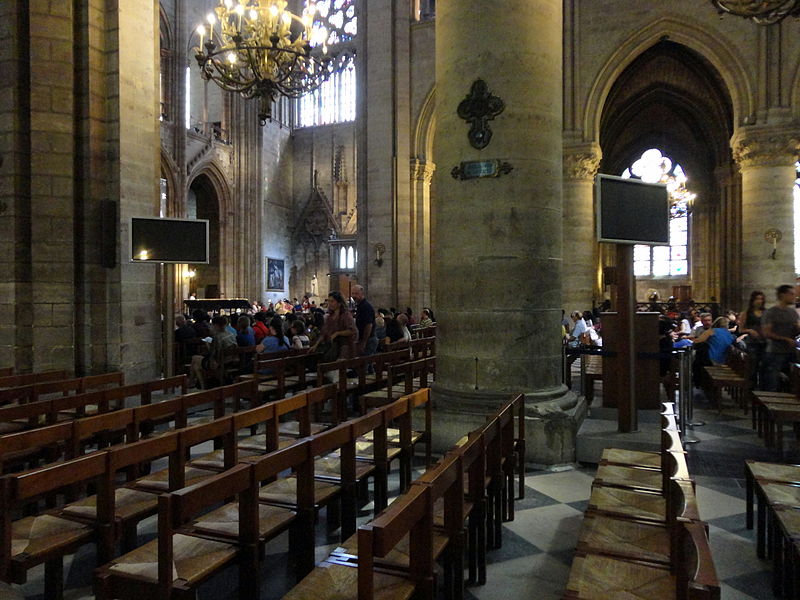
Inside, visitors enter a lofty nave surrounded by columns and side aisles. Pointed arches and vaults draw the eye upward, emphasising the vertical character of Gothic architecture. Daylight filters through numerous windows and stained-glass panels, creating changing patterns of colour on the stone surfaces.
The great rose windows are especially striking. These circular stained-glass windows feature intricate radial designs and rank among the best-known examples of medieval glass art. The cathedral also contains sculptures, altars, religious artworks and historic objects connected with worship and French ecclesiastical tradition.
Important interior features include the main altar and the organ. The grand organ has a long history and has been modified several times. Music and choral singing have played a central role in Notre-Dame’s services for centuries and continue to be heard following the building’s restoration.
The Fire of 15 April 2019
On 15 April 2019, a major fire broke out in the cathedral. The flames destroyed a substantial part of the medieval timber roof structure and brought down the 19th-century spire. The stone vaults and much of the main structure survived, but the monument suffered serious damage. The disaster prompted a worldwide response and a large international fundraising campaign for its restoration.
In the following years, specialists stabilised the building, cleaned stone surfaces and rebuilt timber structures, roofing, the spire and elements of the interior. Architects, conservators, stonemasons, carpenters, roofers, sculptors and other craftspeople took part. The project combined modern surveying techniques with traditional skills.
A New Chapter
The cathedral reopened in December 2024 after five years of restoration work. Notre-Dame’s return was a major cultural event for Paris and France. Visitors were once again able to see the restored interior, light-coloured stone surfaces, renewed furnishings and historic features.
Reopening does not mean that every conservation task is finished permanently; specific restoration and preservation projects may continue. The cathedral forms part of the UNESCO World Heritage property “Paris, Banks of the Seine”, inscribed in 1991.
The Cathedral and French Culture
Notre-Dame has long been more than a religious monument. It is associated with literature, painting, music, the history of the monarchy and everyday life in the French capital. Victor Hugo’s novel made the cathedral famous among readers worldwide, while its silhouette became one of Paris’s defining visual symbols.
The cathedral is also known as a venue for important religious services and national commemorations. Its history reflects changes in French society, from the medieval kingdom and revolutionary upheavals to modern cultural-heritage protection programmes.
Places to Visit Nearby
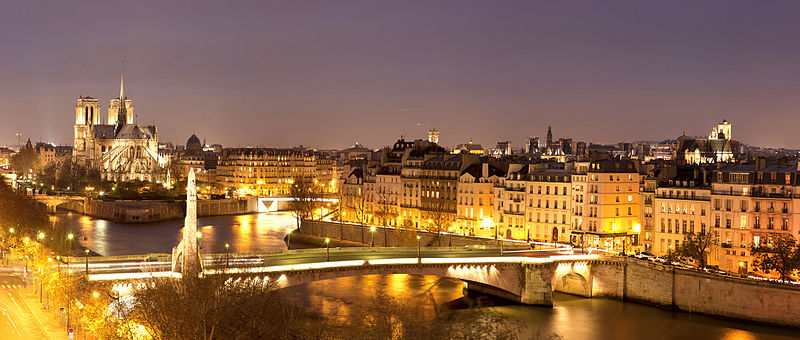
Notre-Dame stands on the Île de la Cité, making it easy to combine a visit with a walk through historic Paris. Nearby attractions include Sainte-Chapelle, renowned for its stained glass, the Conciergerie, a former royal residence and prison, and the banks of the Seine.
Bridges provide quick access to both sides of the river. The Latin Quarter, bookshops, cafés and other historic streets in central Paris are within walking distance. A stroll around the island reveals how medieval monuments coexist with contemporary city life.
Getting There and Visitor Tips
The cathedral is in central Paris on the Île de la Cité. It is easily reached by metro and public transport. Nearby stations include Cité and Saint-Michel, as well as the Saint-Michel–Notre-Dame RER station. From these stops, the cathedral can be reached on foot.
Before visiting, check the current entry rules, opening hours and visitor arrangements, as these may change because of services, events or security measures. During busy tourist periods, it is worth checking in advance whether a reservation or time-slot registration is required.
To appreciate the architecture, examine the western facade from the square and then walk along the riverbanks to see the side walls, flying buttresses and overall silhouette. Inside, keep noise to a minimum and respect the building’s religious purpose. If taking photographs, follow the current rules and avoid disturbing people who have come to pray.
Why Visit Notre-Dame
Notre-Dame de Paris brings together the architectural achievements of the Middle Ages, centuries of French history and the craftsmanship of successive generations. Its portals, towers, rose windows and sculptures offer an introduction to Gothic art, while the story of the fire and restoration demonstrates the importance of preserving cultural heritage and passing on traditional skills. For travellers, Notre-Dame remains one of Paris’s essential landmarks and a place where the city’s history feels especially vivid.
Gallery