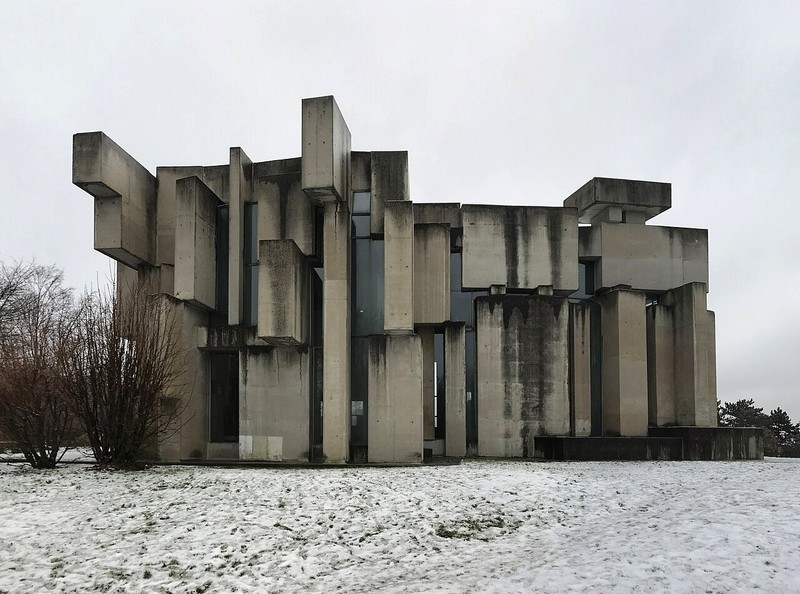
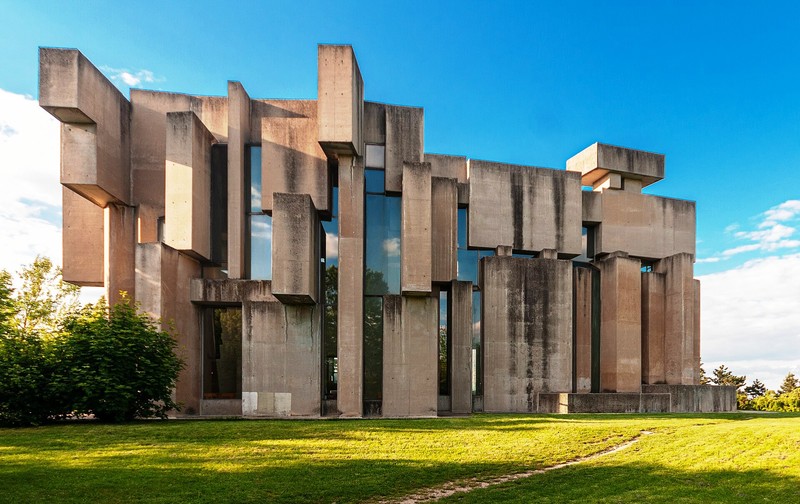
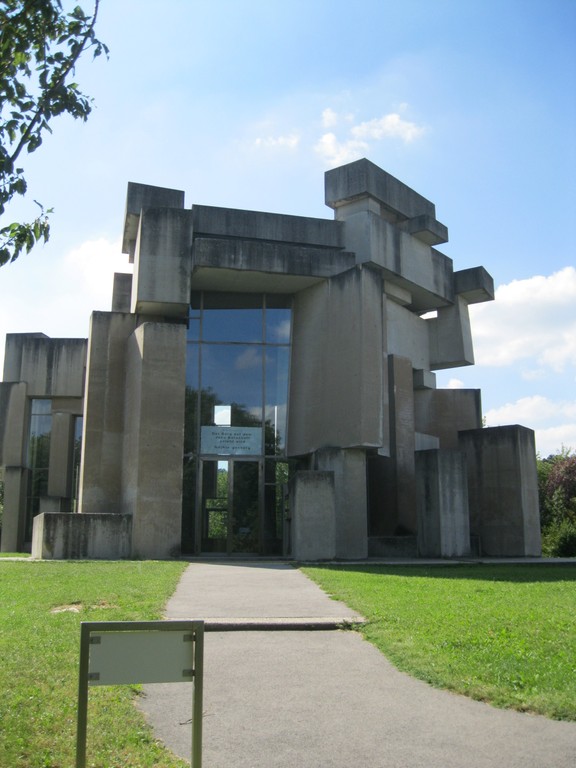
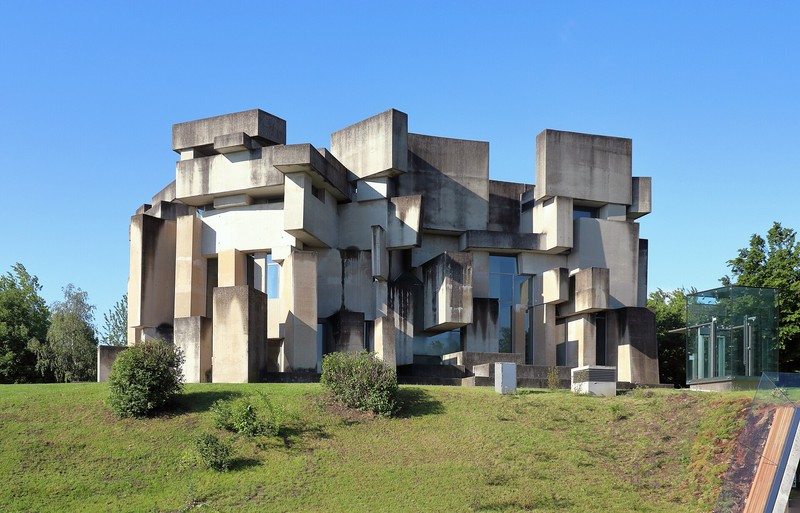
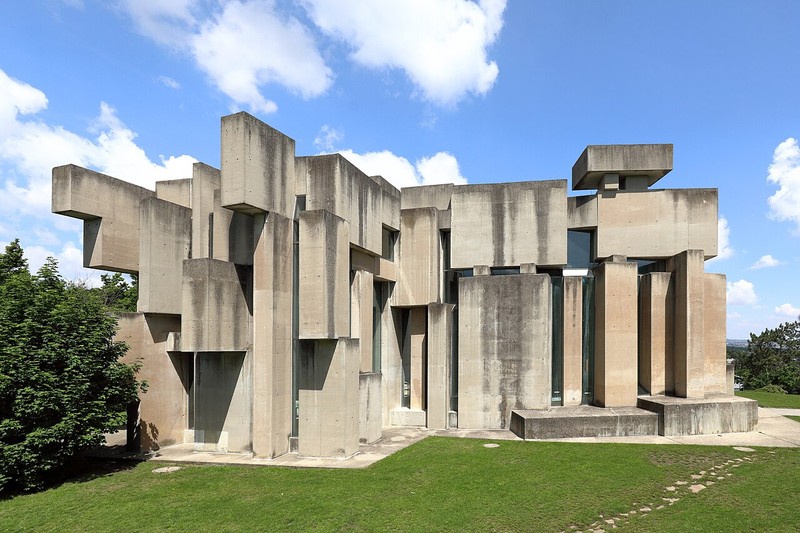
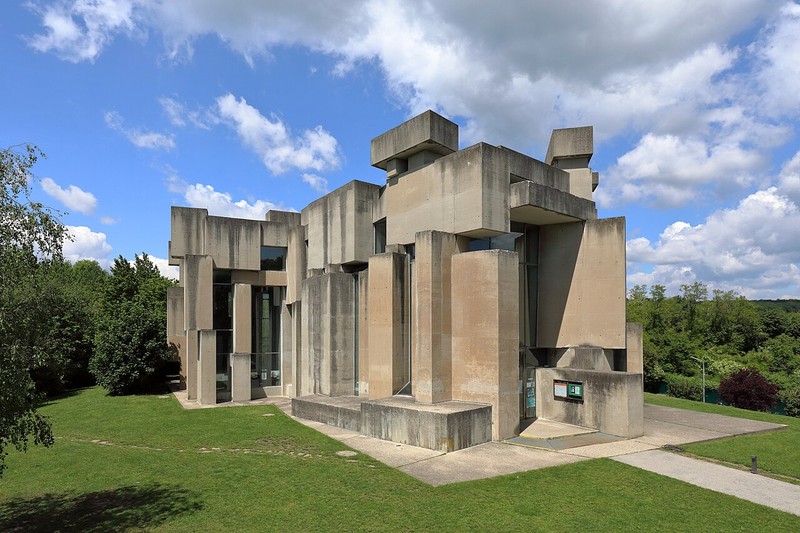
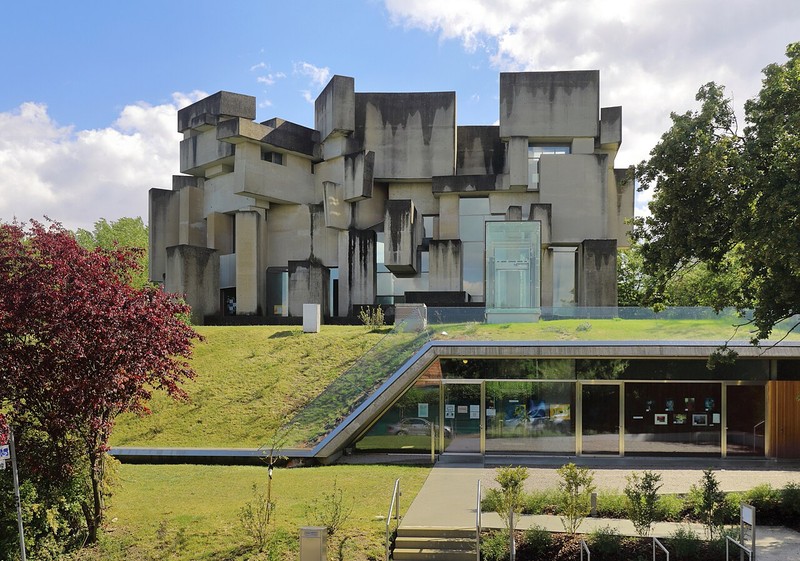
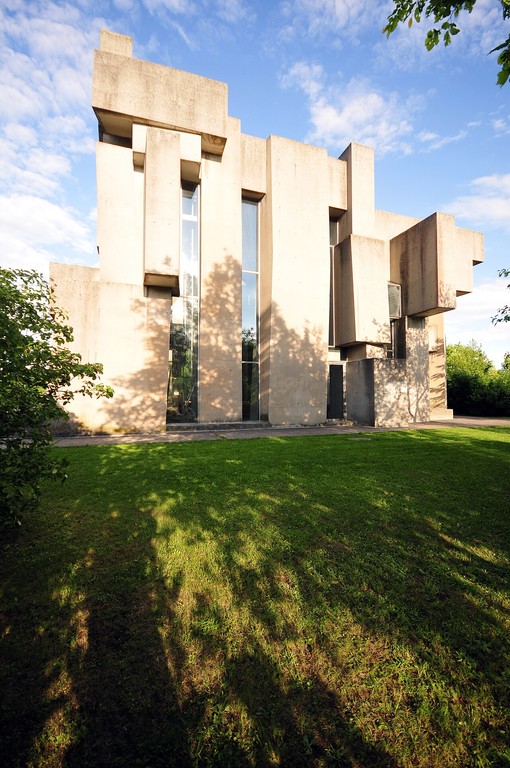
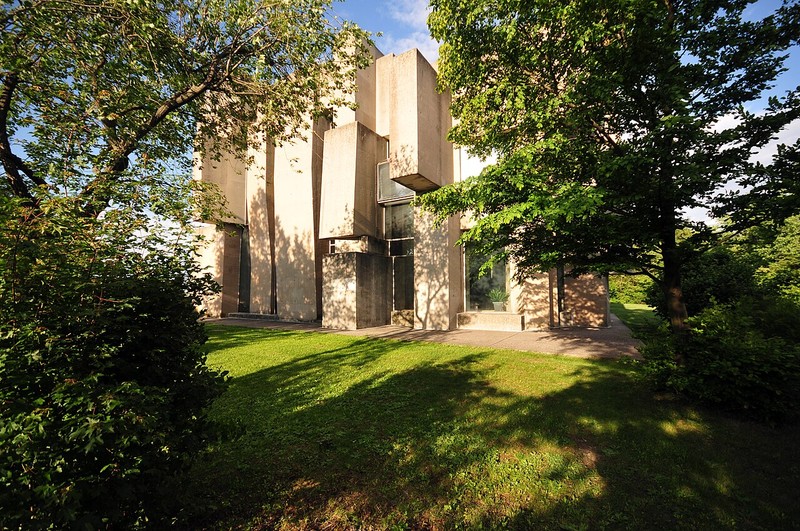
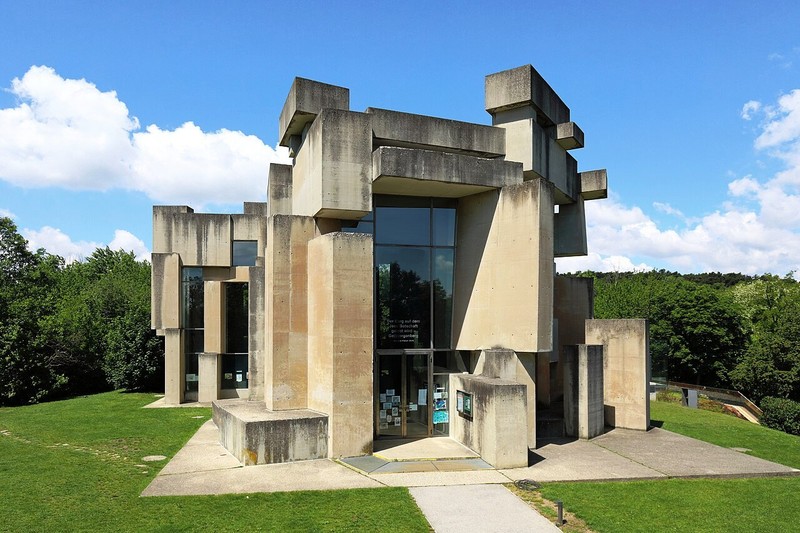
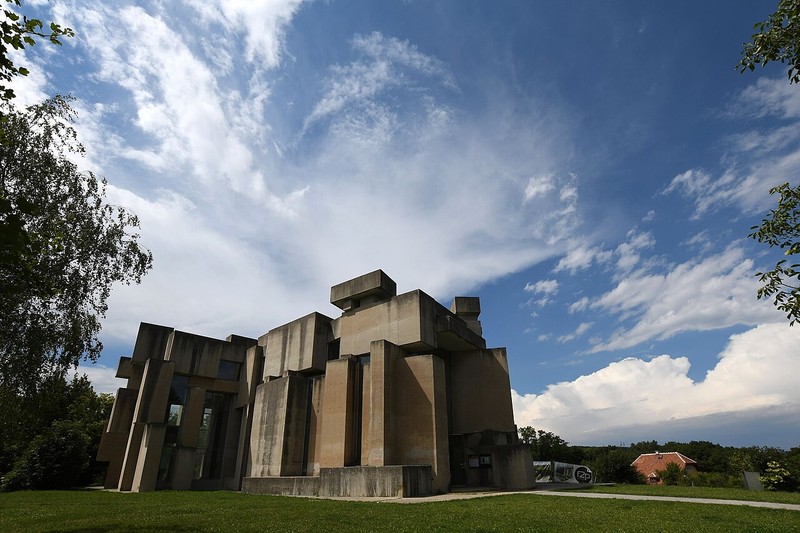
Wotruba Church, officially known as the Church of the Most Holy Trinity, is an unusual Catholic church on the southwestern outskirts of Vienna. It stands on Georgenberg hill in the Mauer area of Liesing, Vienna’s 23rd district, close to the Vienna Woods. The church is famous for its Brutalist architecture: massive concrete blocks are arranged asymmetrically to create the impression of a monumental abstract sculpture.
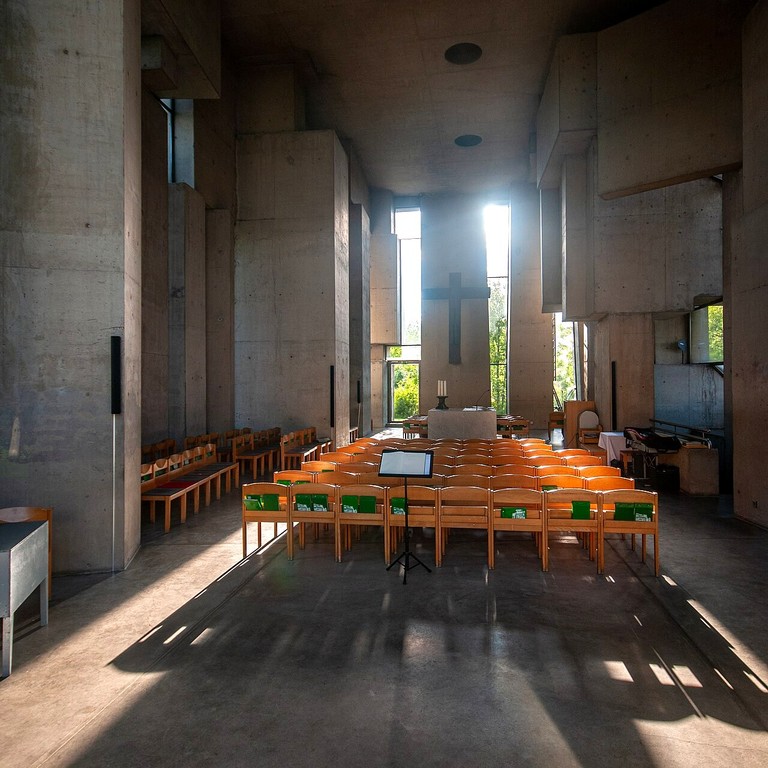
The building attracts admirers of contemporary architecture, art and unusual sights in Vienna. Despite its heavy concrete structure, the interior is filled with natural light thanks to large glazed surfaces and windows of different shapes.
History of Wotruba Church
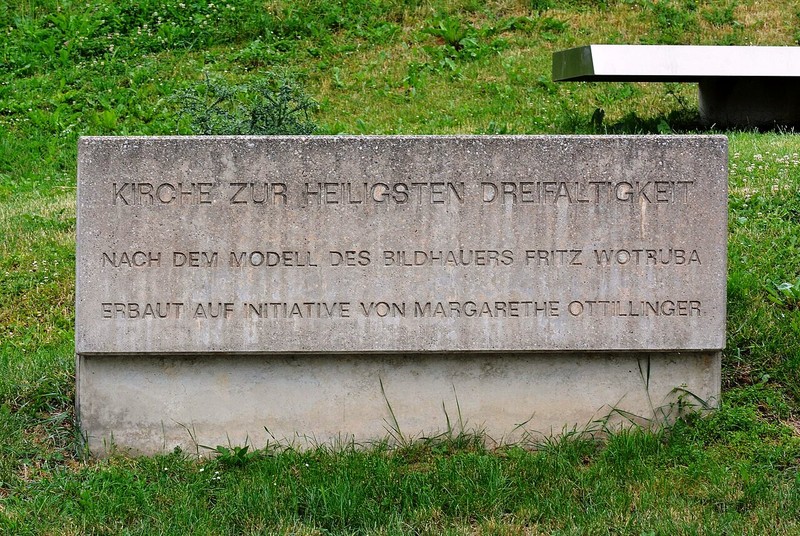
The idea for the church came from Margarethe Ottillinger, an Austrian civil servant and public figure. In the 1960s, she advocated an unconventional religious building that would serve as a striking artistic and spiritual statement. The design was created by sculptor Fritz Wotruba, one of the best-known figures in 20th-century Austrian art. Architect Fritz Gerhard Mayr helped develop and realise the architectural project.
Construction began in August 1974 and was completed in 1976. Wotruba died in 1975, before the church was consecrated. The ceremony took place on 24 October 1976. The church was built on a site where military barracks had stood during the Second World War.
Architecture and design
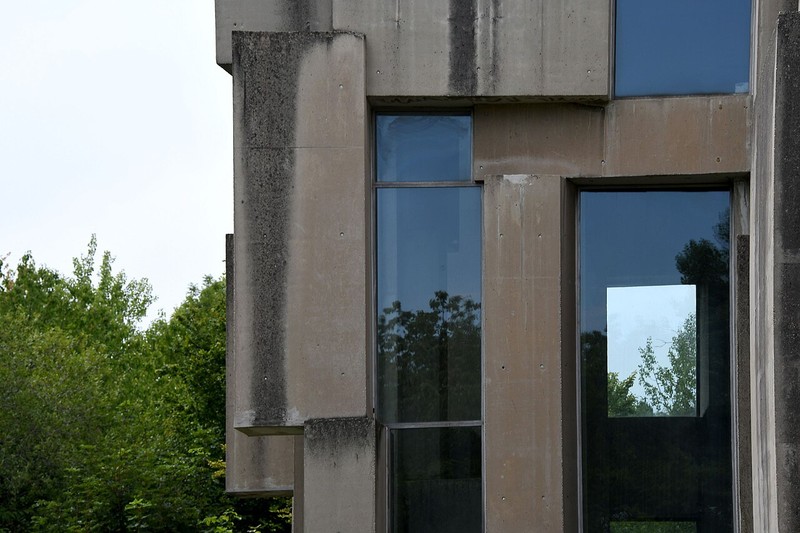
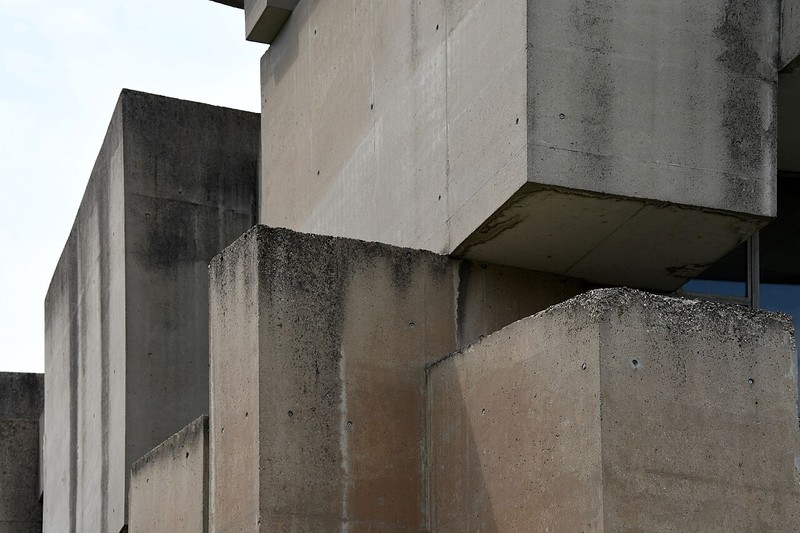
Wotruba Church is considered one of Vienna’s most unusual religious buildings. Its architecture belongs to Brutalism, a style that uses simple geometric forms, massive structures and the visible texture of materials to create a strong visual effect. Instead of a traditional façade with towers and elaborate ornamentation, visitors see a composition of concrete volumes in different shapes and sizes.
According to Vienna’s official tourism website, the church consists of 135 concrete blocks arranged without strict symmetry. Individual elements weigh up to 64 tonnes, and the structure has a total weight of around 4,000 tonnes. The blocks create a complex silhouette that changes with the viewing angle, lighting and surrounding landscape.
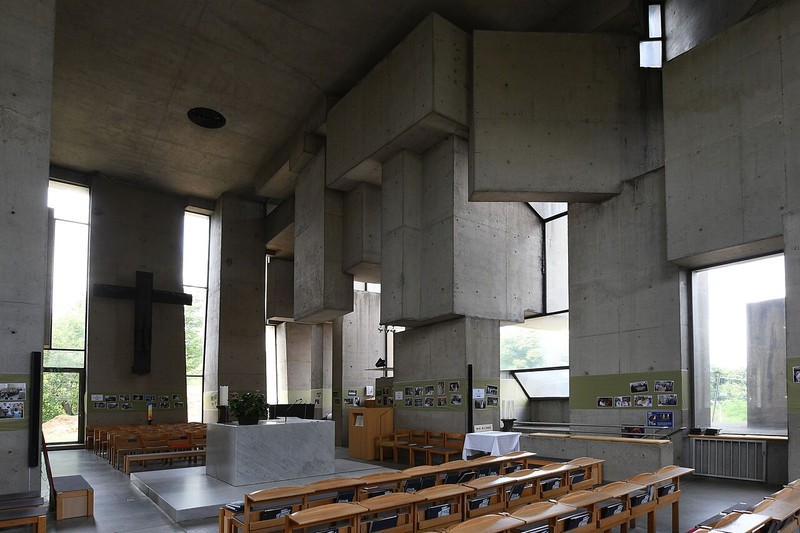
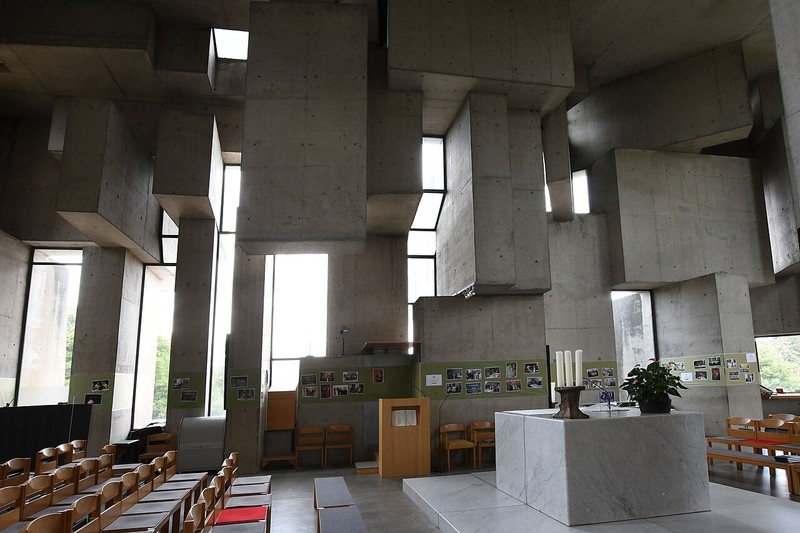
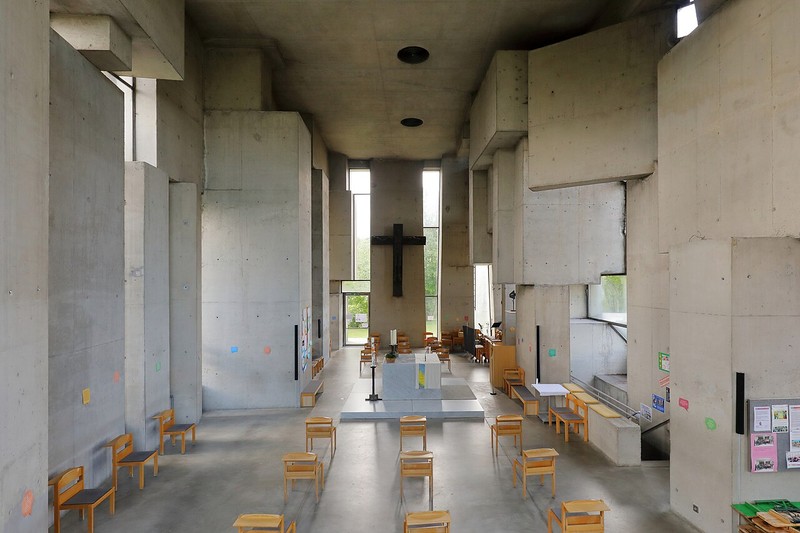
The massive exterior contrasts with the bright interior. Window openings vary in height and shape, while large glazed surfaces allow daylight to enter. The interior is deliberately restrained, directing attention towards the space, geometry and spiritual purpose of the building rather than expensive decoration.
The vision of Fritz Wotruba
Fritz Wotruba was primarily a sculptor, and his artistic approach is evident throughout the church. The building can be seen as a large-scale spatial composition in which individual concrete elements form a unified whole. Its design expresses the idea that simplicity and the absence of luxury can still produce architecture that is powerful and spiritually meaningful.
Chartres Cathedral in France is cited among the sources of inspiration for the project. However, Wotruba Church does not imitate the traditional forms of Gothic churches. Instead, it reinterprets religious architecture through modern sculpture and design. The project was controversial at first but later became one of Vienna’s recognised landmarks of contemporary architecture.
What to see inside
During a visit, look at the contrast between the heavy concrete blocks outside and the natural light inside. The irregular arrangement of windows creates changing patterns of light and shadow, while the simple interior helps visitors focus on the architectural space. The church contains an altar and a bronze crucifix.
Outside, walk around the building to appreciate its changing heights, projecting blocks and unusual façade composition. Photographers may want to capture both the overall silhouette and the texture of the concrete. The visit can also be combined with a walk through Vienna’s green outskirts and the nearby Vienna Woods.
Location of Wotruba Church
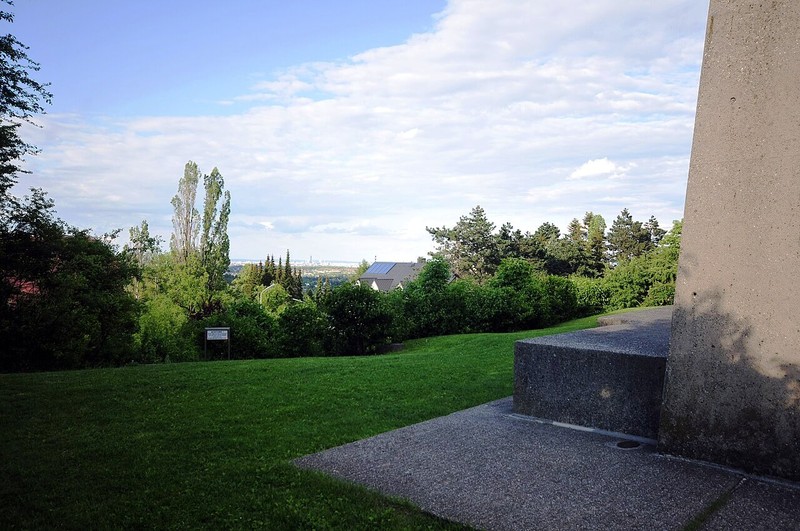
Address: Ottillingerplatz 1, 1230 Vienna, Austria. The church stands on Georgenberg in Mauer, within Vienna’s 23rd district, Liesing. Nearby is Sterngarten, an outdoor platform used as an open-air planetarium.
How to get there
From central Vienna, take underground line U4 to Hietzing, then transfer to tram 60 and travel to Maurer Hauptplatz. From there, take bus 60A to Kaserngasse. Tram 60 also runs from the Westbahnhof area to Maurer Hauptplatz, where you can change to the bus.
Opening hours
According to Vienna’s official tourism information, the church is open to visitors on Saturdays from 2 pm to 6 pm and on Sundays and public holidays from 9 am to 4:30 pm. Hours may change, so check the parish’s official website before travelling. Individual guided visits can be arranged in advance.
Why visit Wotruba Church
Wotruba Church is an unusual attraction for anyone wishing to explore Vienna beyond its imperial palaces and historic centre. It brings together religious architecture, contemporary art and the striking geometry of Brutalism. A visit offers a different perspective on the city and shows how concrete, light and simple forms can become a memorable work of architecture.
Gallery