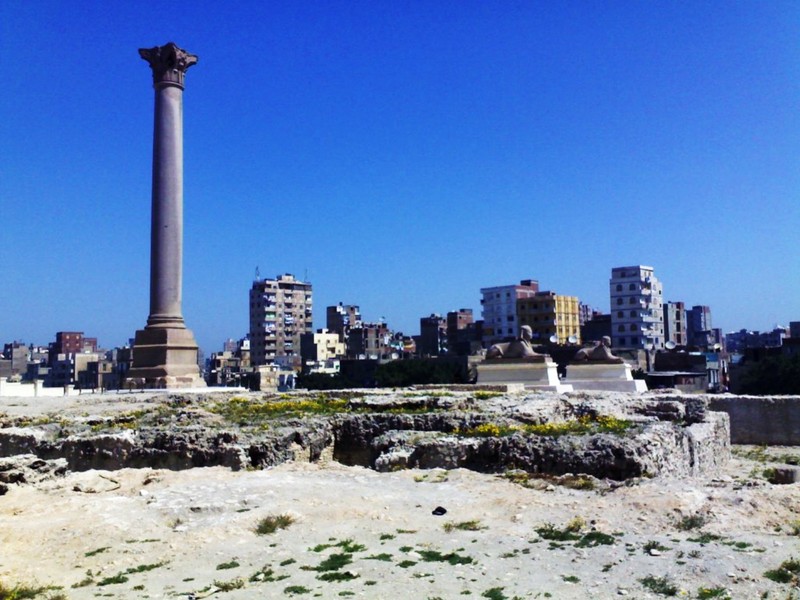
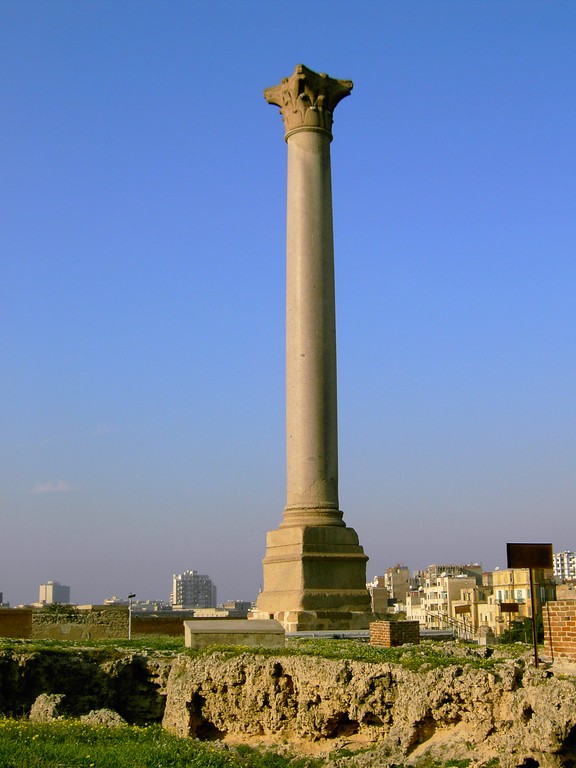
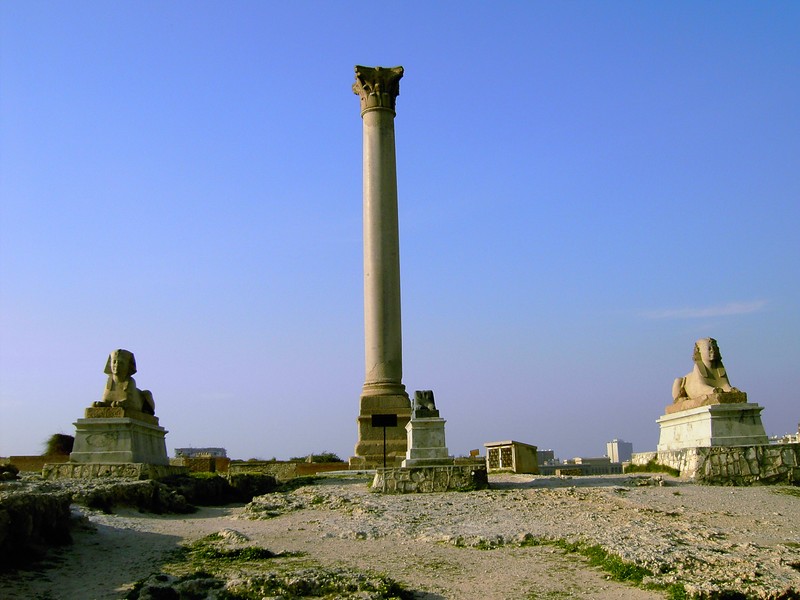
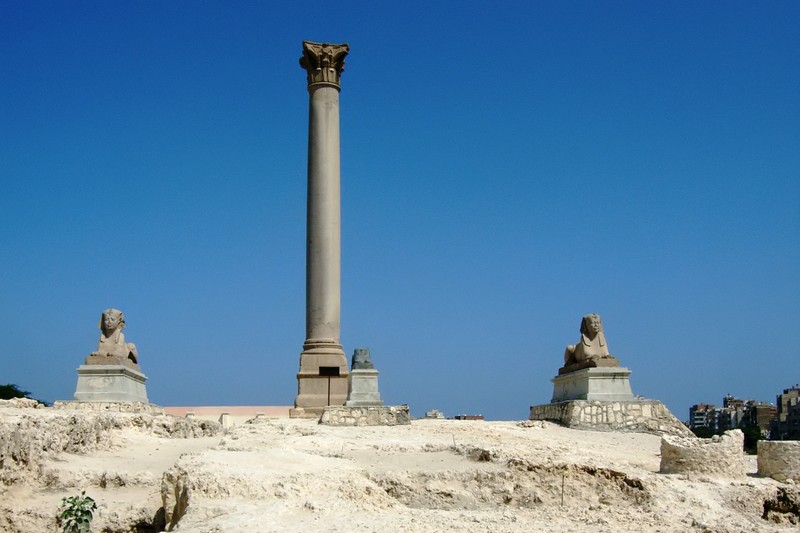
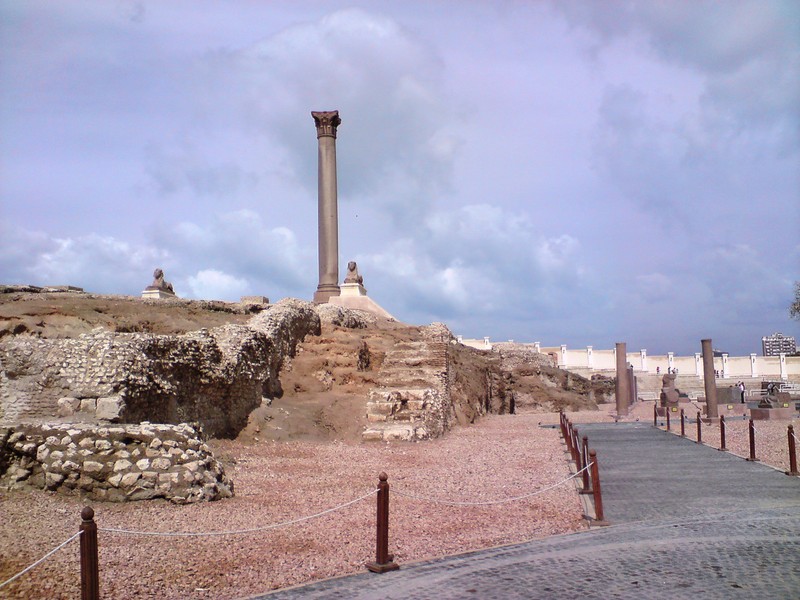
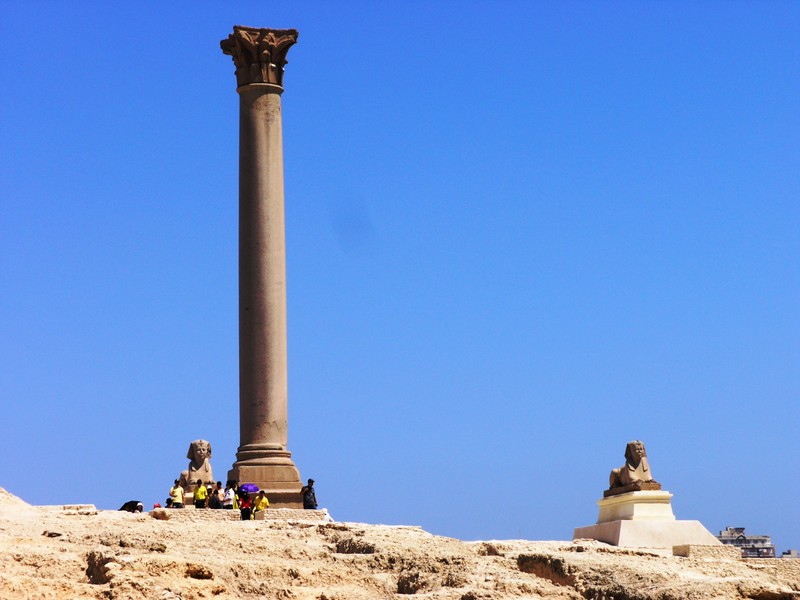
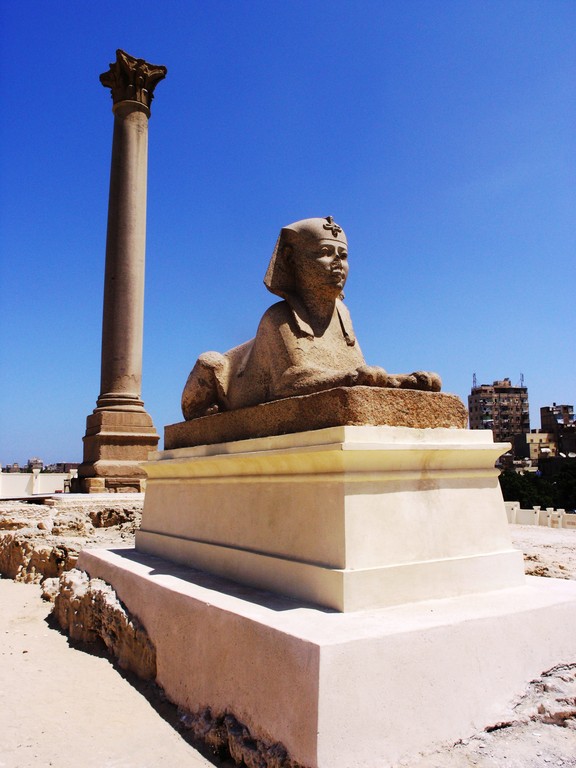
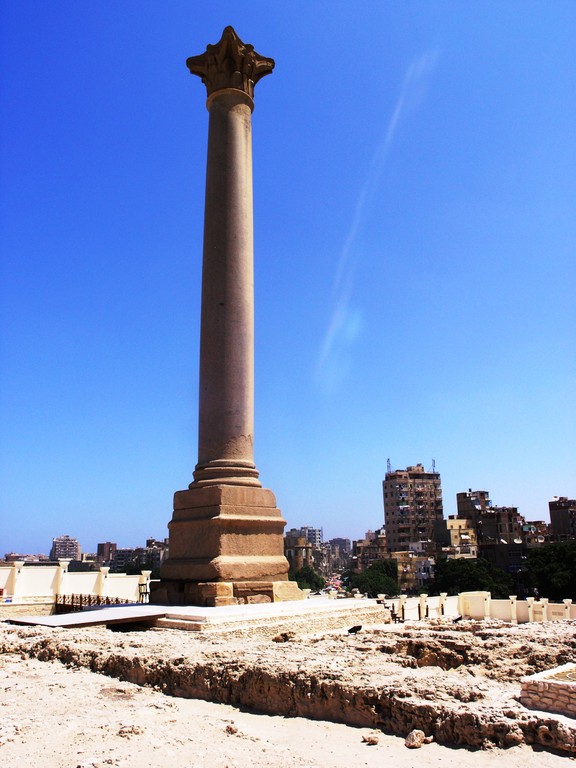
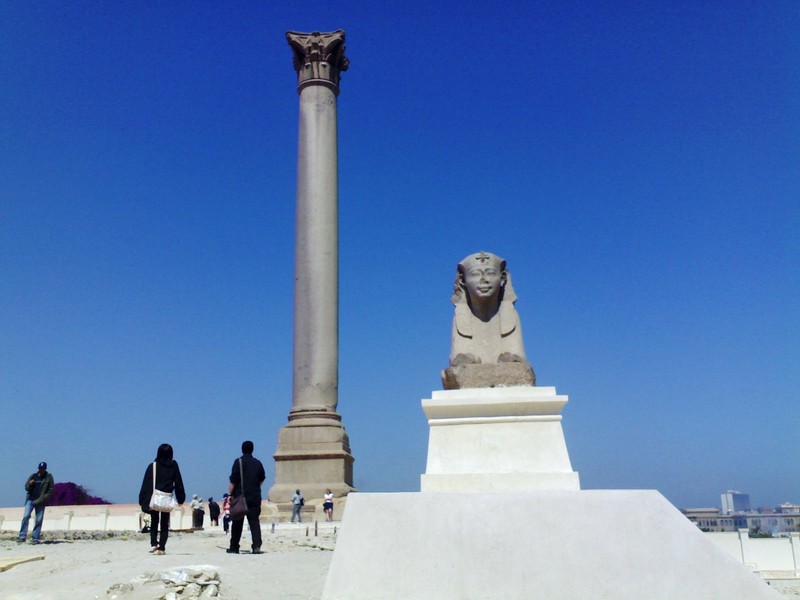
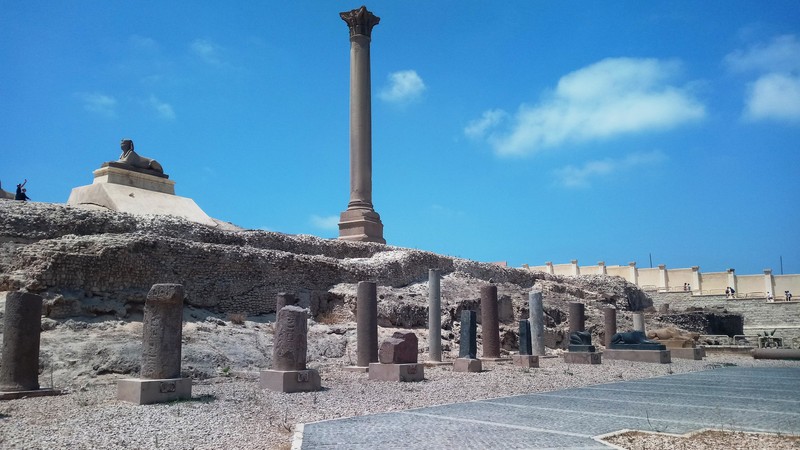
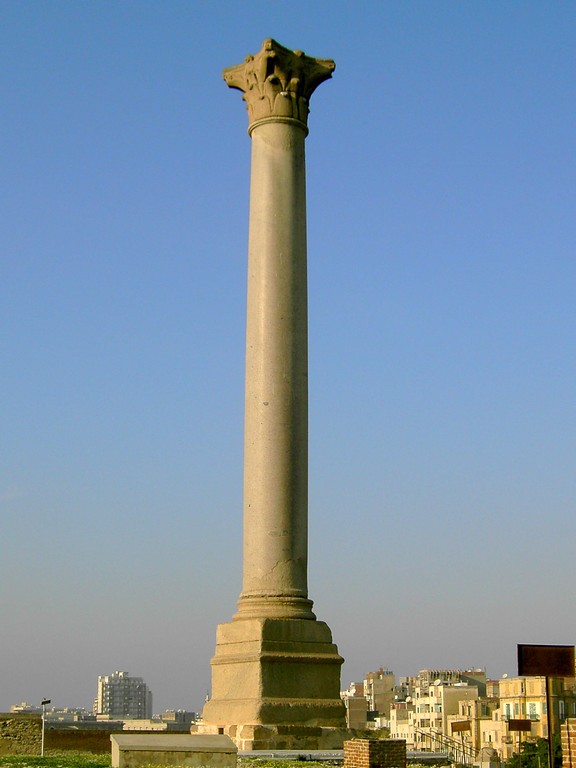
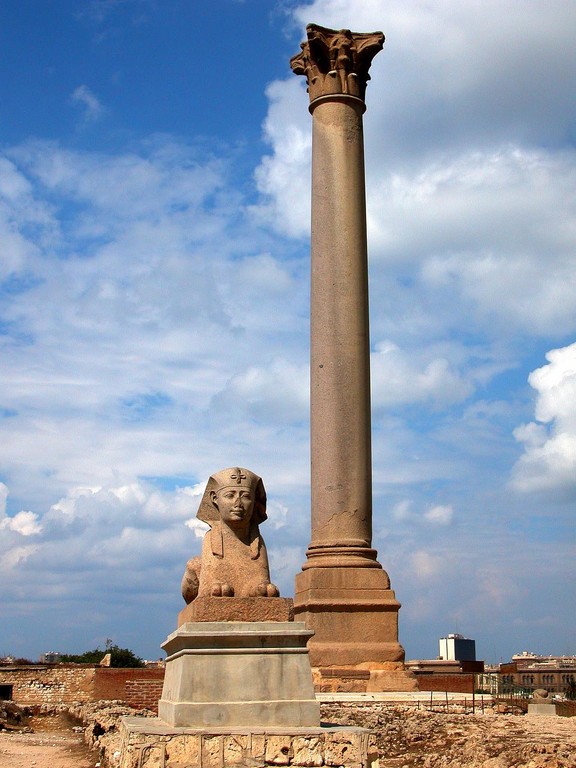
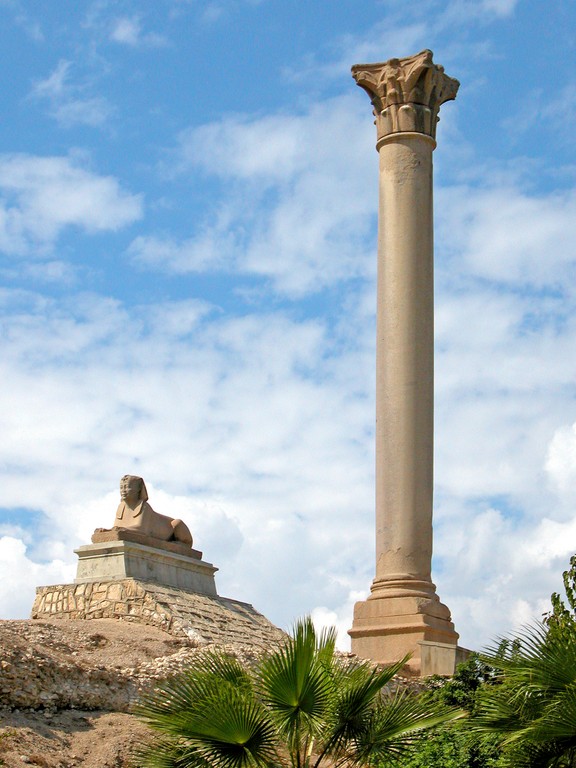
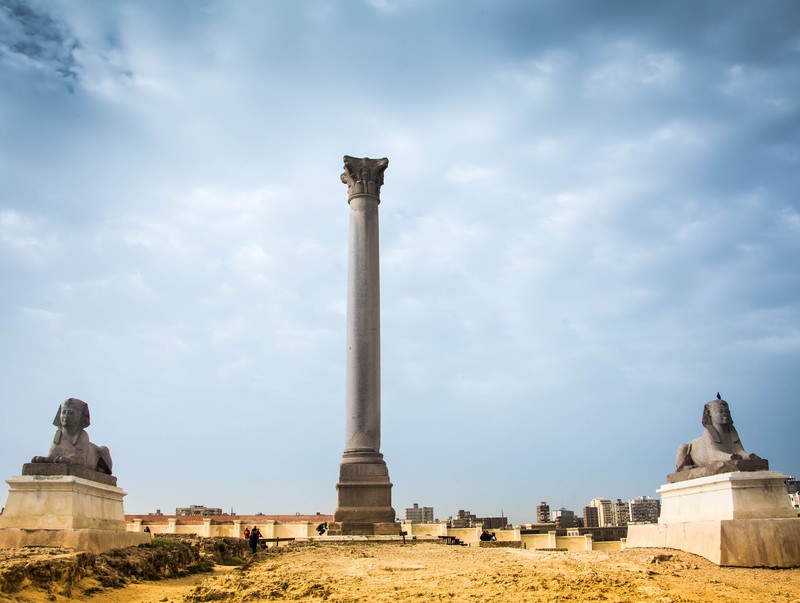
Pompey's Pillar is a famous ancient monument in Alexandria, Egypt. Erected in honor of the Roman emperor Diocletian in the late third century CE, it rises above the ruins of the Serapeum, a sanctuary dedicated to the god Serapis. Despite its traditional name, the monument has no established connection with the Roman general Pompey the Great.
History and the Name
The column is generally dated to around 297–303 CE. Its dedicatory inscription indicates that it was erected by order of Publius, the Roman prefect of Egypt, in honor of Diocletian. The name Pompey's Pillar appeared much later, when European travelers mistakenly associated the monument with the famous Roman commander, who died in Egypt in 48 BCE. Its Arabic name, Amud al-Sawari, is often translated as the Column of the Masts.
Architecture and Dimensions
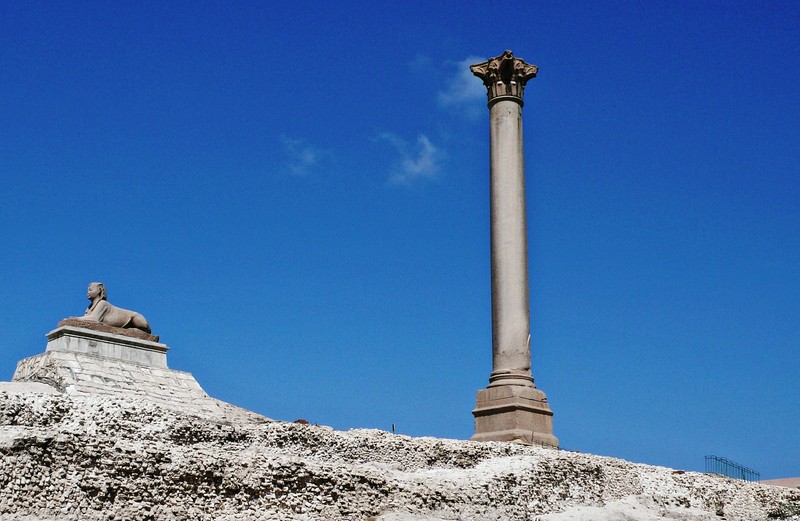
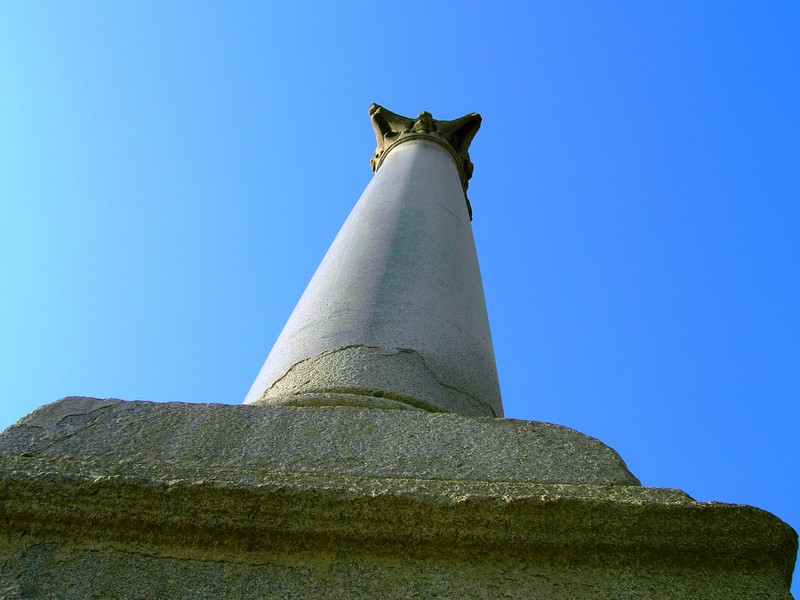
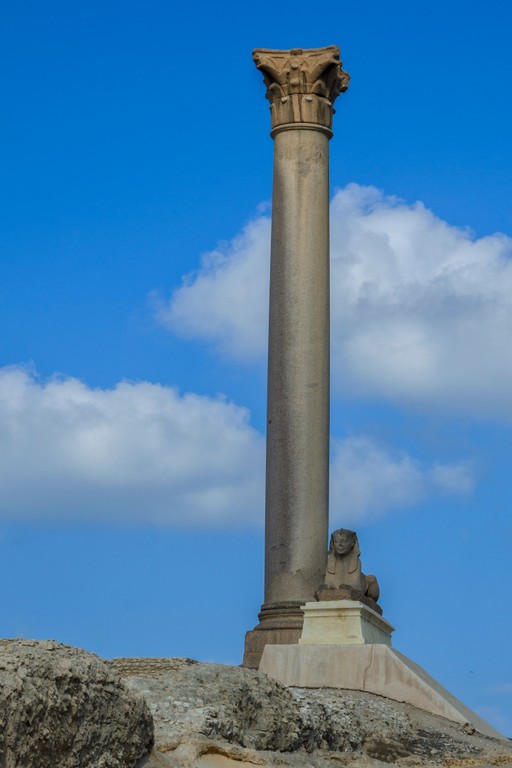
The monument is carved from a single massive block of red granite transported from the Aswan region in southern Egypt. Its surviving height, including the base and capital, is approximately 26.8 meters, and the shaft measures about 2.7 meters in diameter at its base. A Corinthian-style capital crowns the column, while a dedicatory inscription survives on the pedestal. A statue of Diocletian probably once stood on top, but it has disappeared.
The Serapeum and Nearby Ruins
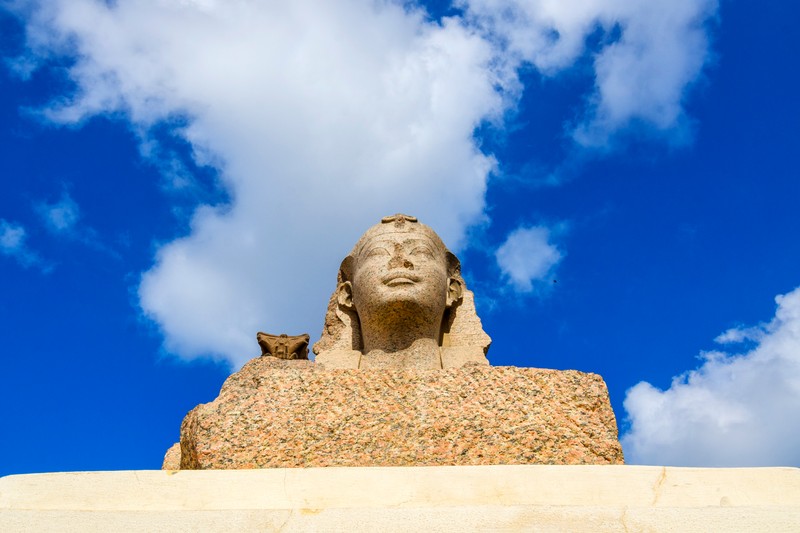
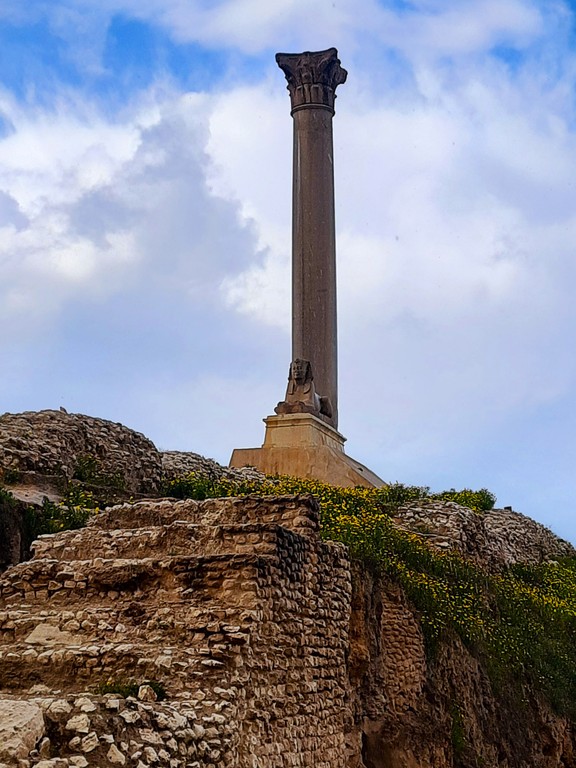
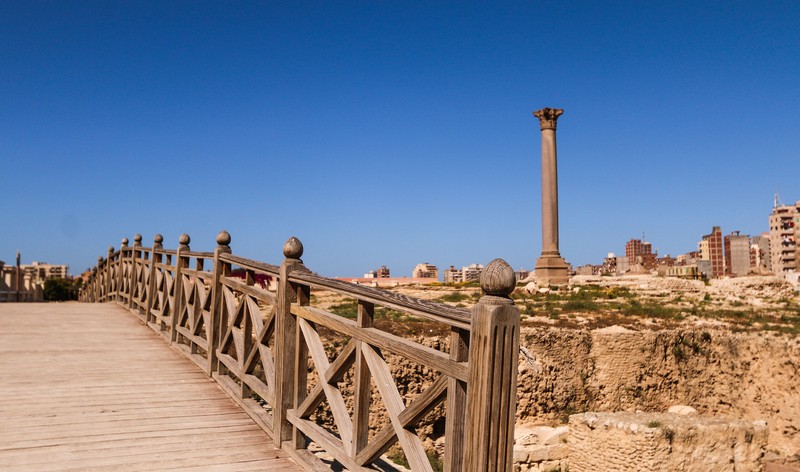
The column stands within the grounds of the Serapeum, an important religious complex dedicated to Serapis, a deity whose cult combined Egyptian and Greek traditions. Visitors can see foundation remains, architectural fragments, Ptolemaic granite sphinxes, and underground galleries. The function of some underground spaces remains debated, so they should not all be described as library storage rooms.
Historical Significance
Pompey's Pillar is an important surviving witness to Roman Alexandria. It demonstrates the engineering skills needed to quarry, transport, and erect a huge granite monolith. The monument also reflects the interaction of Egyptian, Greek, and Roman cultures in one of the ancient Mediterranean's major cities.
What to See Nearby
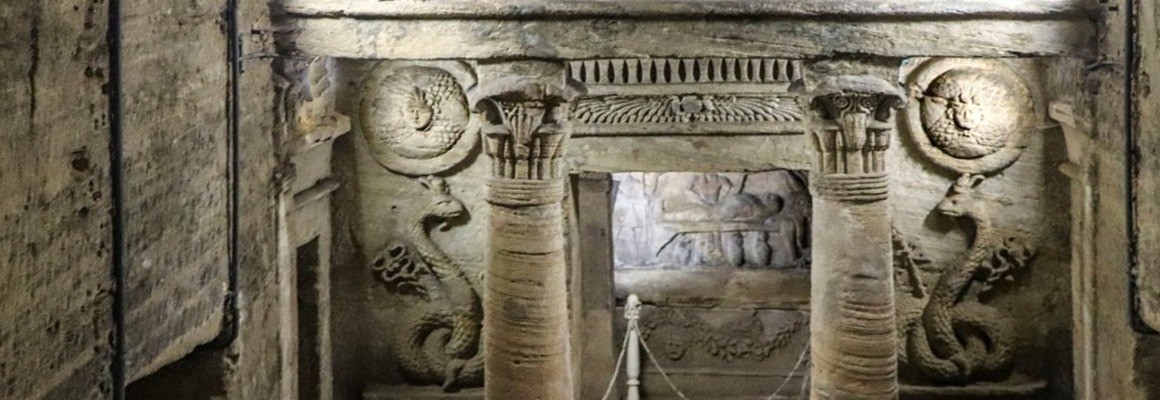
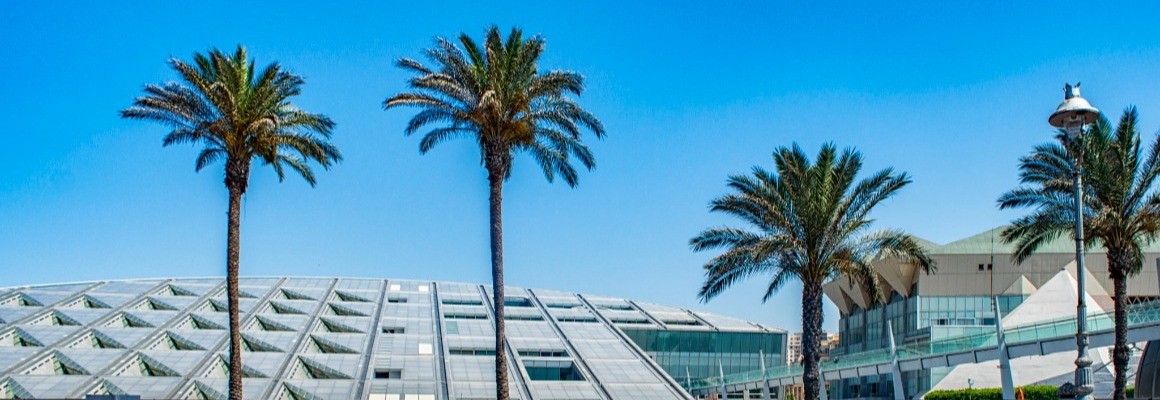
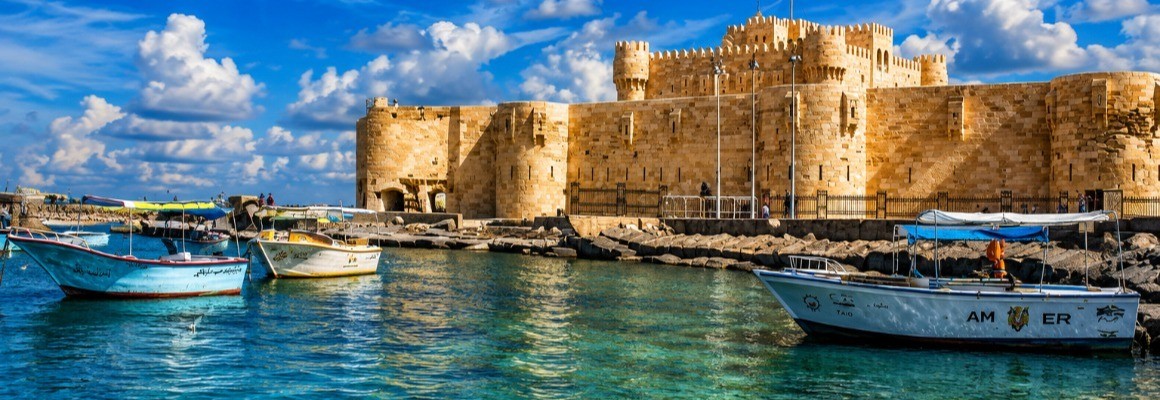
The Catacombs of Kom el-Shoqafa, a burial complex blending Egyptian, Greek, and Roman artistic traditions, are nearby. Other sites worth considering include the Roman amphitheatre at Kom el-Dikka, Qaitbay Citadel, and the modern Bibliotheca Alexandrina.
Visitor Information
The monument is located in the Karmouz district of Alexandria, within the archaeological area of the Serapeum. Check current opening hours, admission prices, and access to underground areas before visiting. Around 30–60 minutes is usually enough to see the pillar and the visible ruins, although a longer visit is useful if combining it with nearby attractions. Comfortable shoes are recommended for uneven archaeological ground.
Gallery