Catacombs of Kom el Shoqafa – an underground necropolis in Alexandria
The Catacombs of Kom el Shoqafa are among Alexandria’s most unusual archaeological monuments and an important example of Greco-Roman funerary architecture in Egypt. Located in the Karmouz district, the complex features underground halls, a spiral staircase, stone sarcophagi and reliefs that combine ancient Egyptian beliefs with Greek and Roman artistic traditions.
History and the origin of the name
The necropolis developed around the late first or early second century AD and remained in use until the fourth century. The name is commonly translated as “Mound of Shards,” referring to pottery fragments that accumulated in the area. The catacombs were discovered in 1900 after the ground accidentally gave way, revealing the underground chambers.
The complex may originally have been a private family tomb before expanding into a larger burial ground. Its remains help archaeologists understand burial customs in Alexandria during a period of strong Greek and Roman influence.
Three underground levels
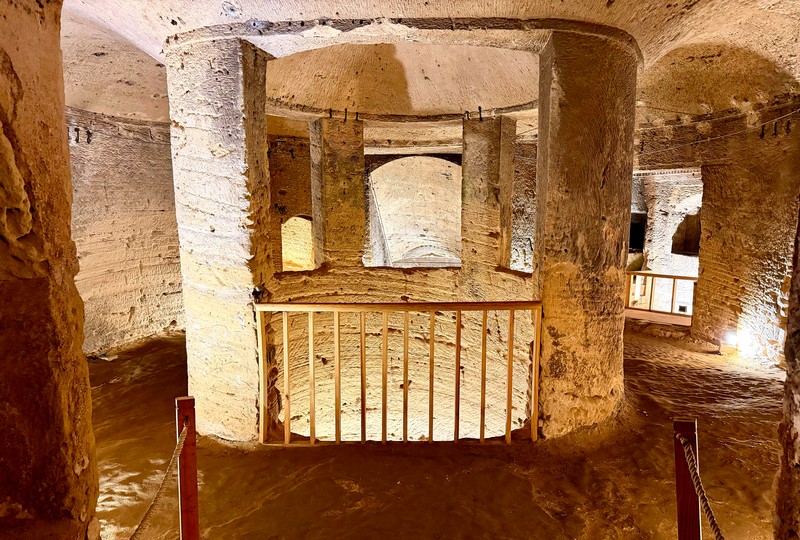
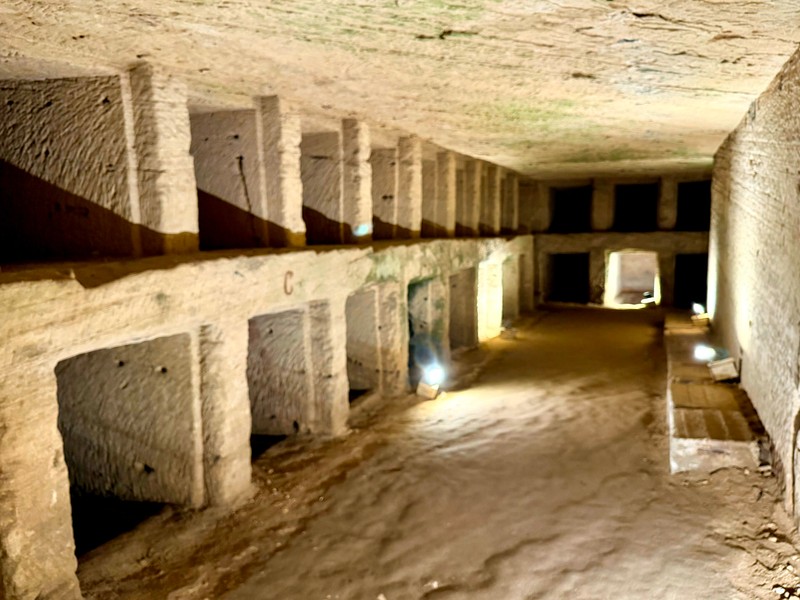
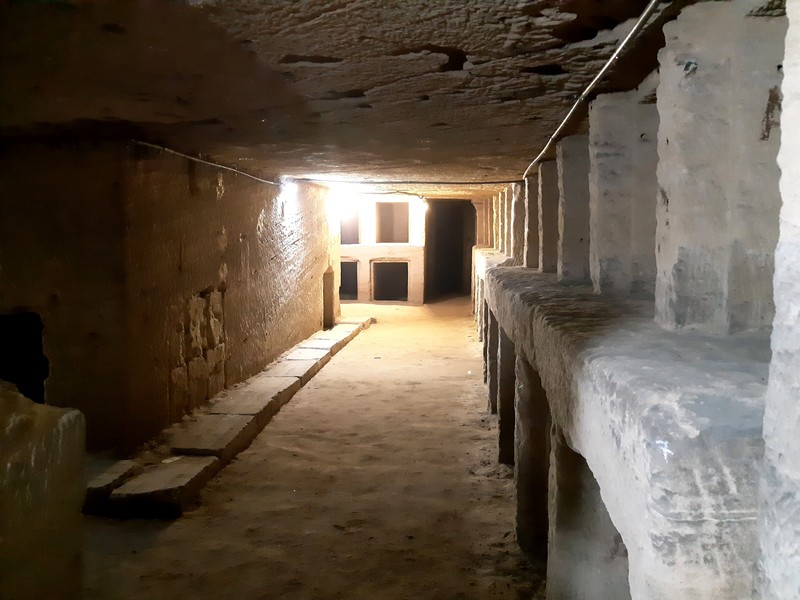
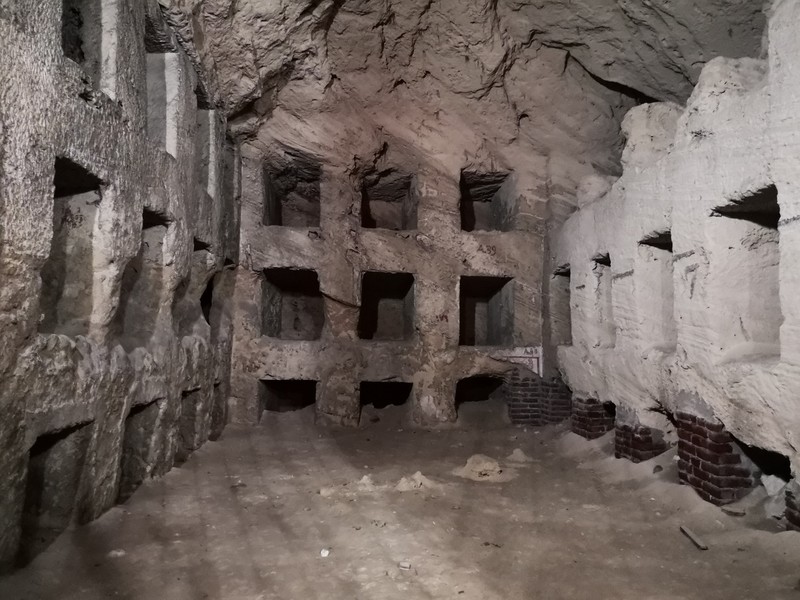
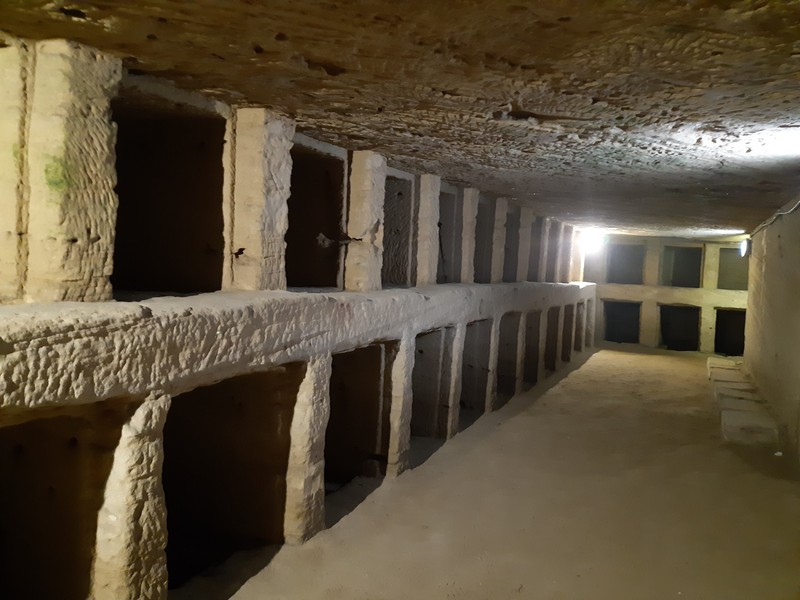
The catacombs were carved into bedrock and originally consisted of three levels. A spiral staircase descends toward a rotunda, burial chambers, galleries and rooms used for funerary ceremonies. Niches in the walls held the deceased, while the overall layout combined practical burial needs with religious symbolism.
Groundwater has affected parts of the site at different times. The accessibility of particular levels therefore depends on conservation conditions and the visitor route currently open to the public.
The spiral staircase and rotunda
The spiral staircase is one of the complex’s most distinctive features. It organises the descent into the rock and leads to a rotunda, a circular space connected to other sections of the necropolis. The layout reflects careful planning of access to the underground burial chambers.
The main burial chamber
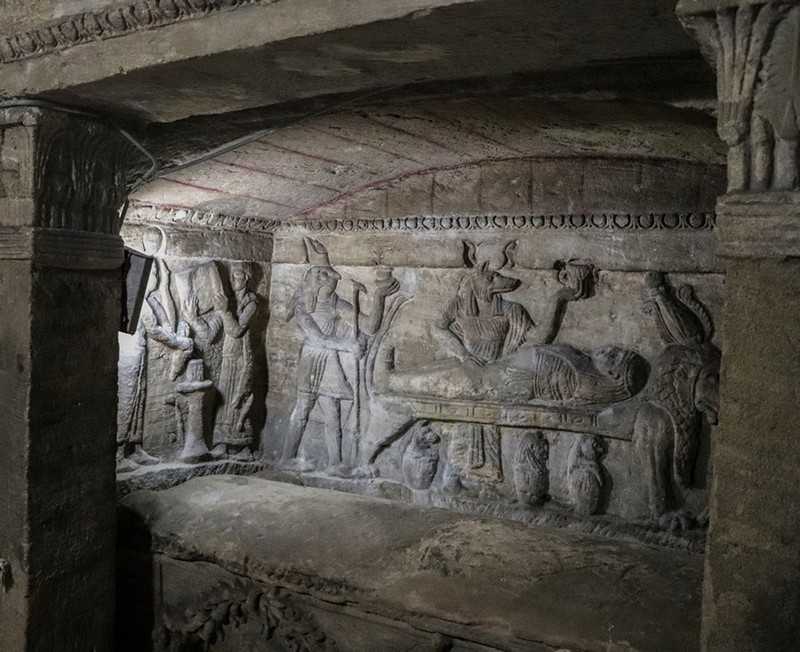
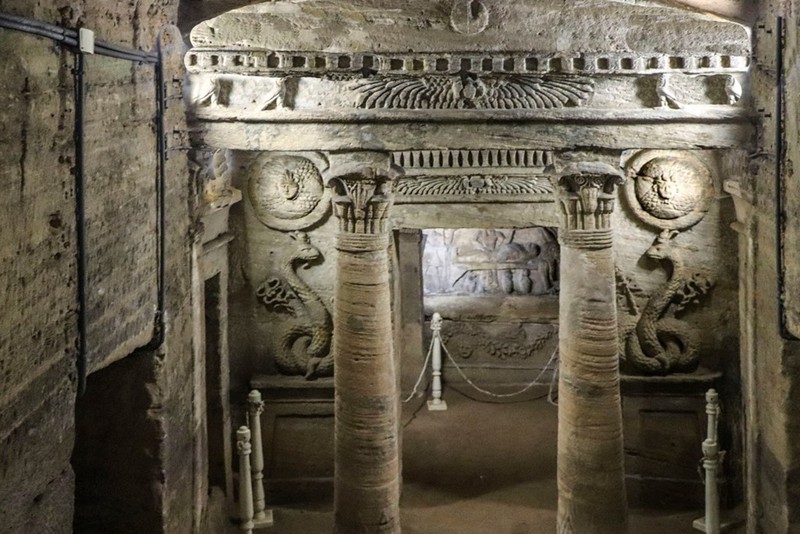
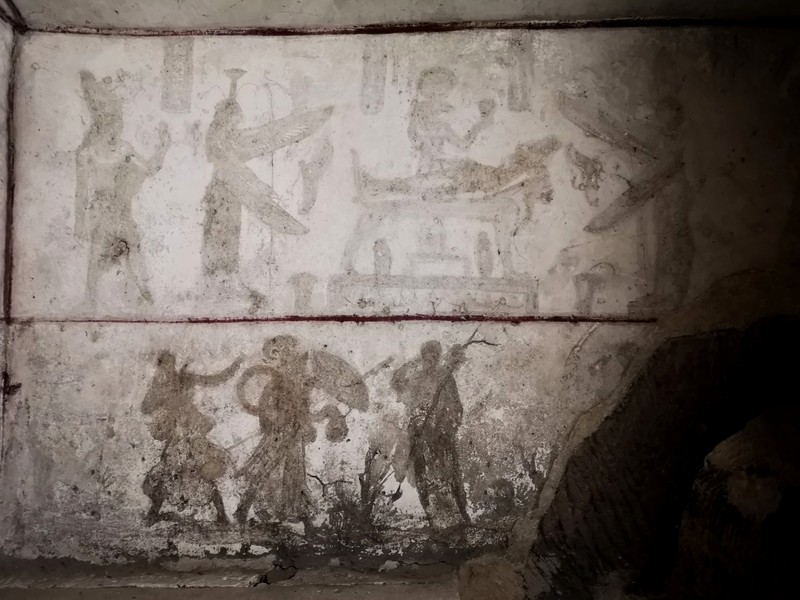
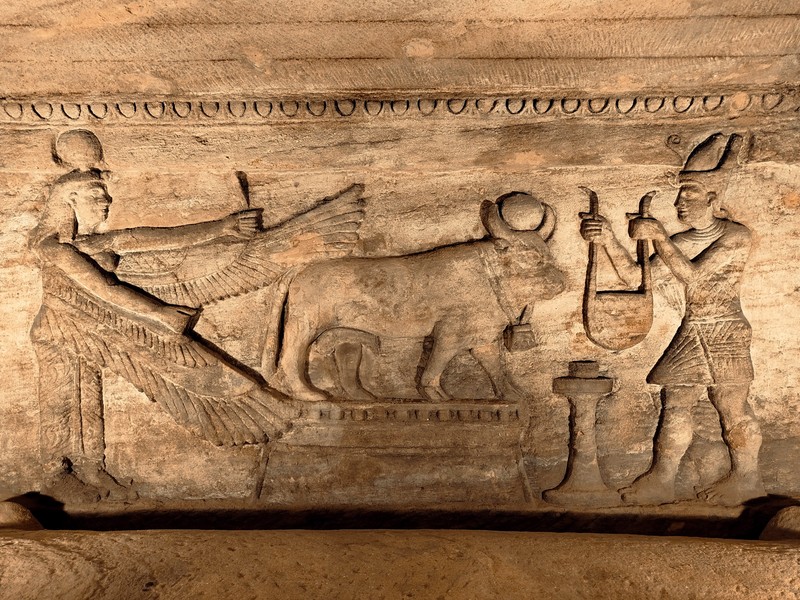
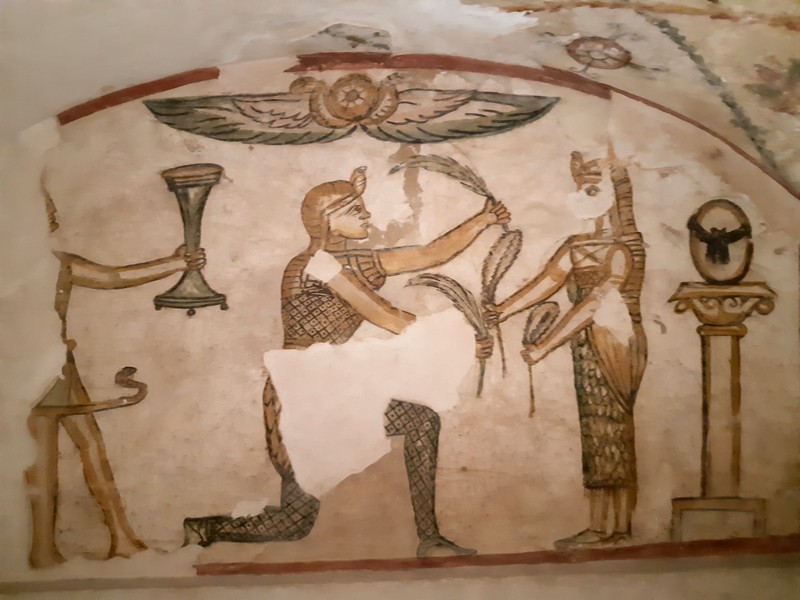
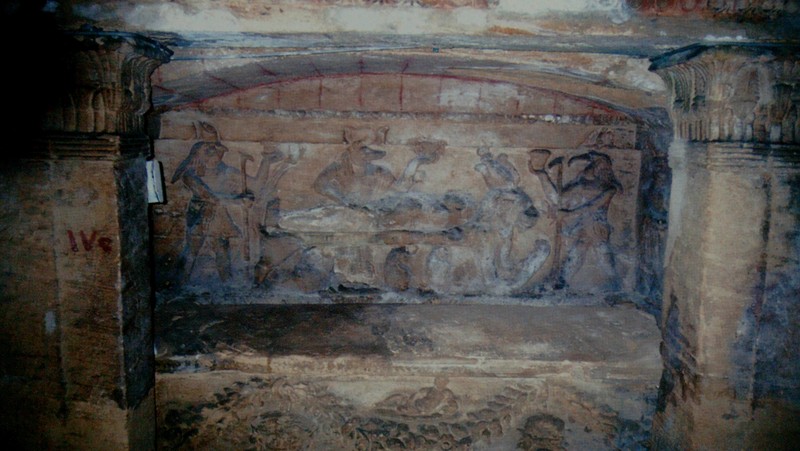
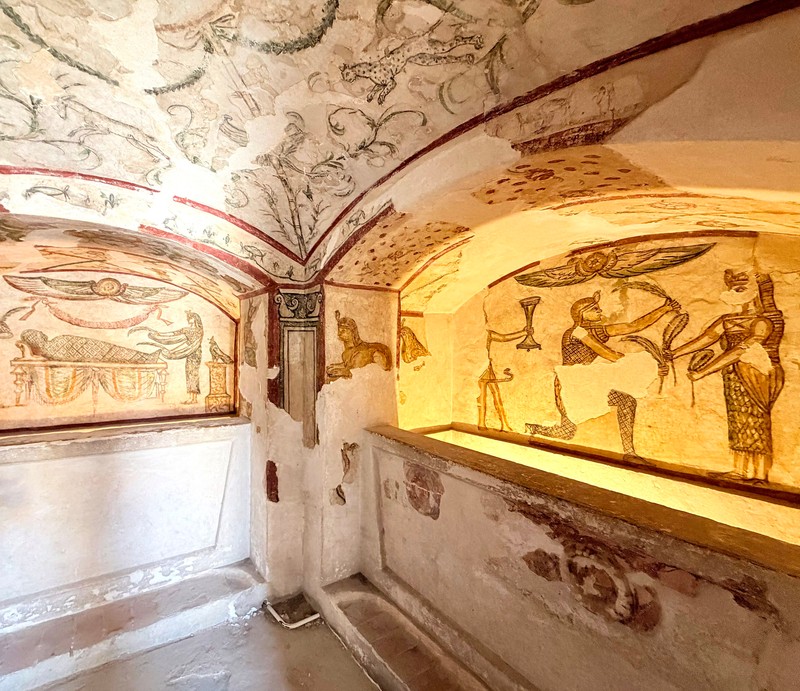
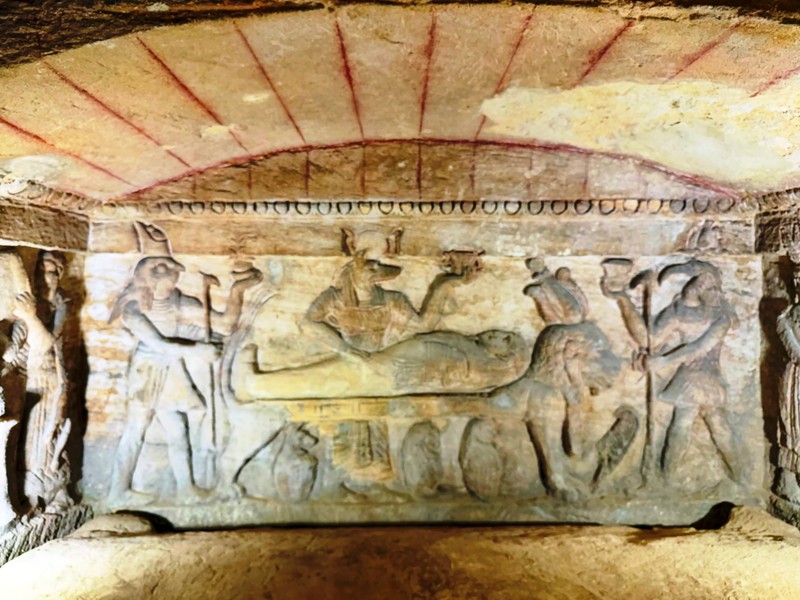
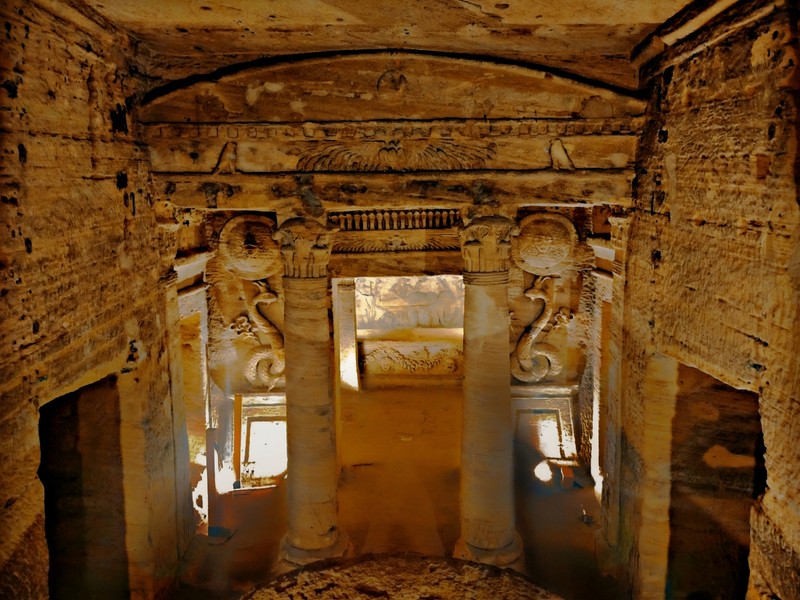
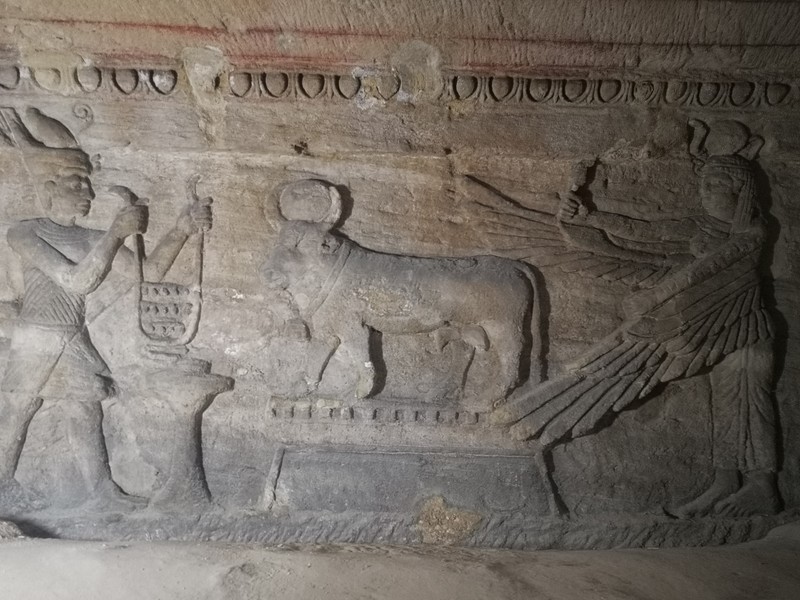
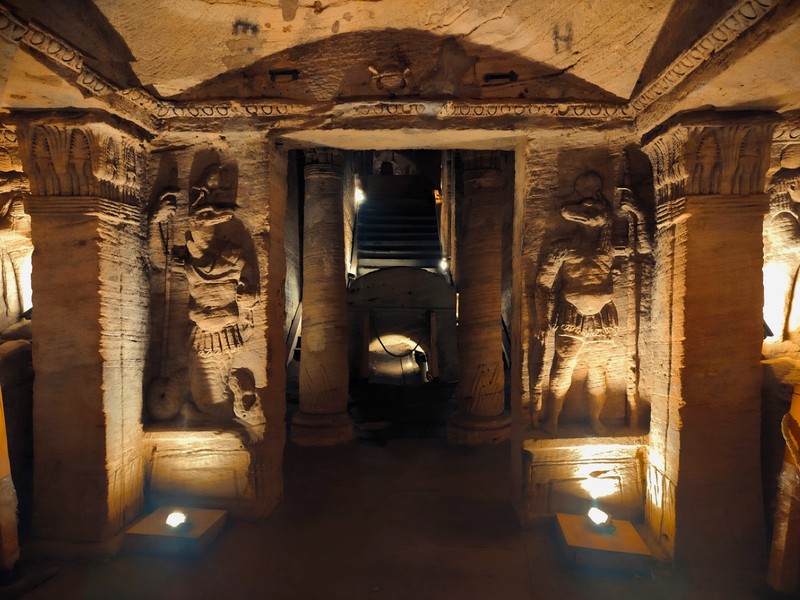
The main chamber combines forms reminiscent of Egyptian sanctuaries with decorative elements from the Greco-Roman world. Particularly striking are representations associated with Anubis, the ancient Egyptian god of funerary rites, usually depicted with a jackal’s head. In some compositions, he appears with features of a Roman soldier, illustrating the blending of artistic traditions.
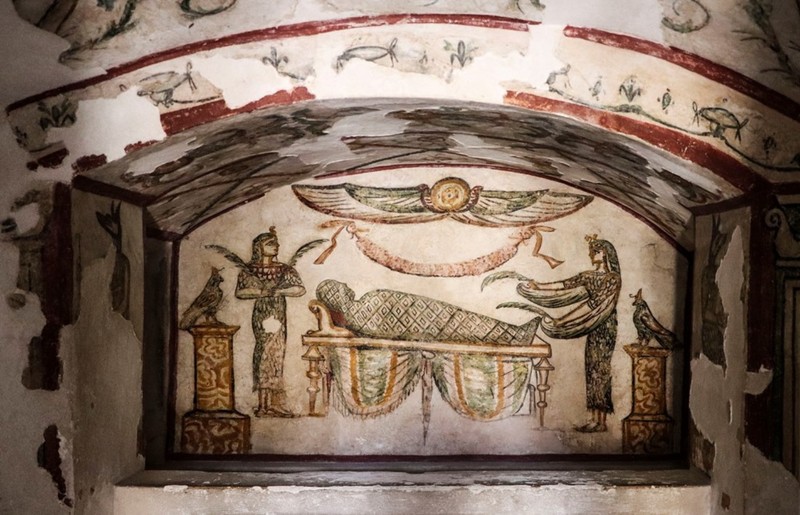
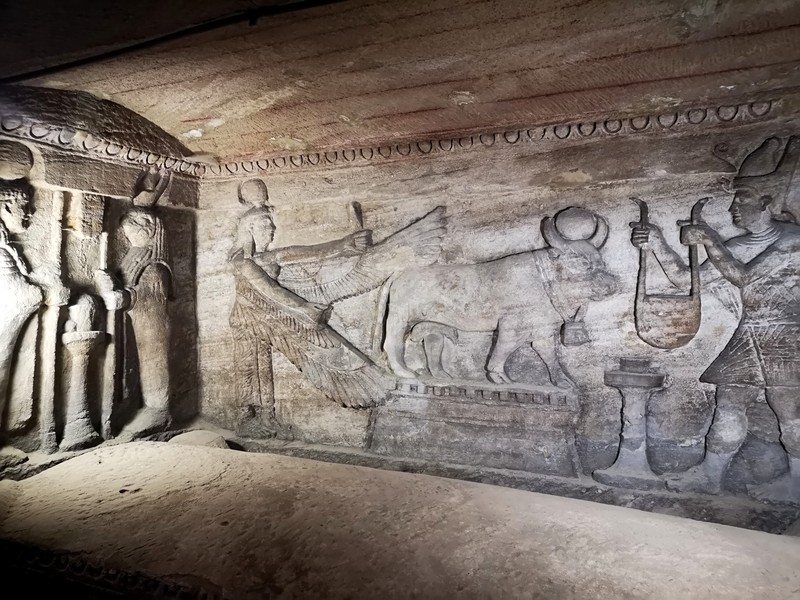
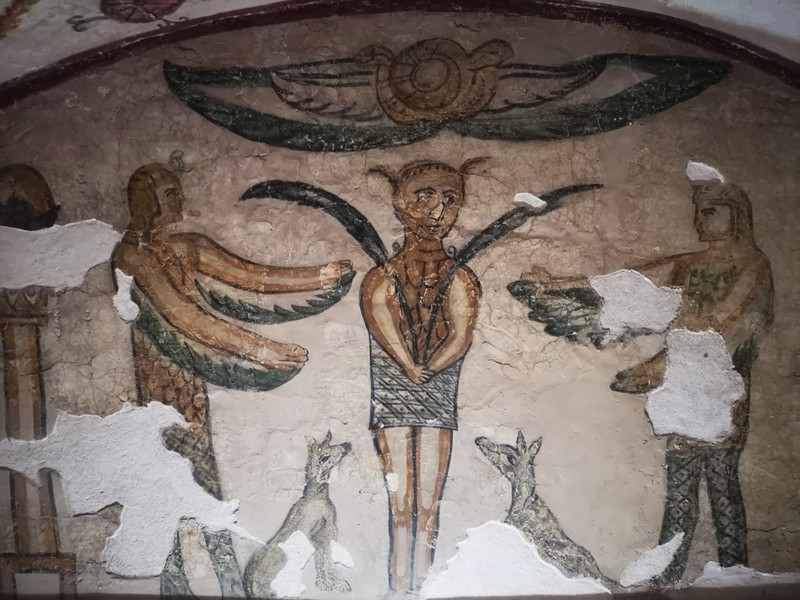
The reliefs and ornaments relate to funerary beliefs and ideas about the afterlife. The precise meaning of some details remains a subject of scholarly discussion.
Egyptian, Greek and Roman traditions
The catacombs are important because they bring different cultures together. Egyptian ideas about the afterlife coexist with Greek architectural forms and Roman decorative features. Columns, reliefs, divine figures and ornaments reflect Alexandria’s multicultural environment, where languages, religions and artistic traditions met over many centuries.
The triclinium and funerary banquets
The complex includes a room known as a triclinium, a dining hall in the Greco-Roman tradition. In a funerary setting, such spaces could be used for memorial meals and gatherings in honour of the deceased. These rituals helped families maintain remembrance and social bonds.
Galleries and burial niches
Corridors branch from the central chambers and contain numerous burial niches. This arrangement made efficient use of the rock and allowed the necropolis to expand. The underground passages form a connected system whose design was shaped by the geology and the requirements of funerary practices.
The catacombs in the history of Alexandria
Alexandria was one of the Mediterranean’s most important cities. Founded by Alexander the Great in the fourth century BC, it became the capital of the Ptolemaic kingdom and later a major centre of the Roman Empire. The catacombs add another dimension to the city’s history, revealing everyday religious practices alongside its famous trade, harbour and intellectual life.
Visiting the catacombs
The site is in Alexandria’s Karmouz district. A visit can be combined with Pompey’s Pillar and the archaeological area of Kom el-Dikka. Take care on the stairs and in the passages, wear shoes with good grip and follow staff instructions. Check current opening hours and photography rules before travelling.
Why visit Kom el Shoqafa?
Kom el Shoqafa is a rare monument where Egyptian funerary beliefs meet Greco-Roman art. Its spiral staircase, underground galleries, triclinium and distinctive reliefs make it one of Alexandria’s most fascinating archaeological sites.
Gallery