The Bibliotheca Alexandrina is one of Alexandria’s best-known modern landmarks and a major cultural center in Egypt. Located on the Mediterranean coast, it revives the idea of the celebrated ancient Library of Alexandria, once regarded as one of the great centers of learning in the ancient world. Today, the complex brings together a major library, museums, exhibition spaces, research institutions, and a planetarium.
History of the Library
The ancient Library of Alexandria emerged under the Ptolemies after Alexander the Great founded the city in the fourth century BCE. It formed part of the Mouseion, a scholarly institution where thinkers studied mathematics, astronomy, medicine, philosophy, literature, and other subjects. The exact story of its disappearance remains debated. Rather than being lost in one clearly documented event, its collections and buildings may have declined through several episodes over centuries.
The idea of reviving the famous institution gained momentum in the twentieth century with support from Egypt and UNESCO. The foundation stone for the new complex was laid in 1988, and an international architectural competition was won by the Norwegian firm Snøhetta. The modern Bibliotheca Alexandrina was officially inaugurated on 16 October 2002.
Architecture
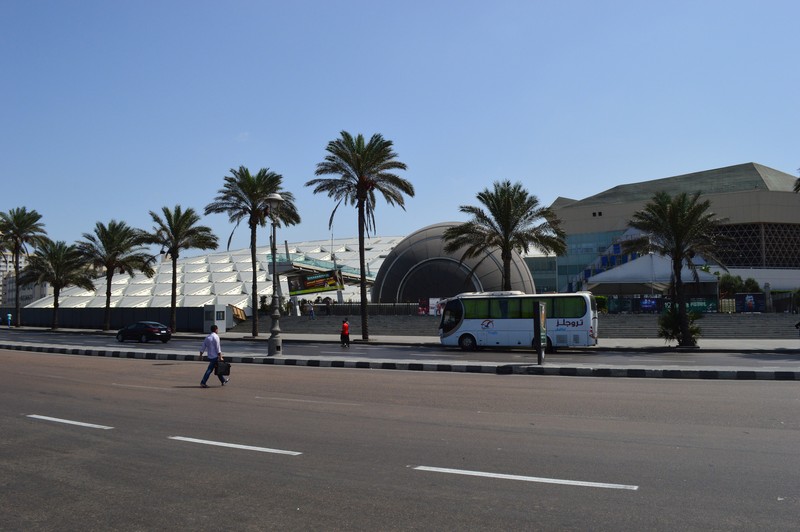
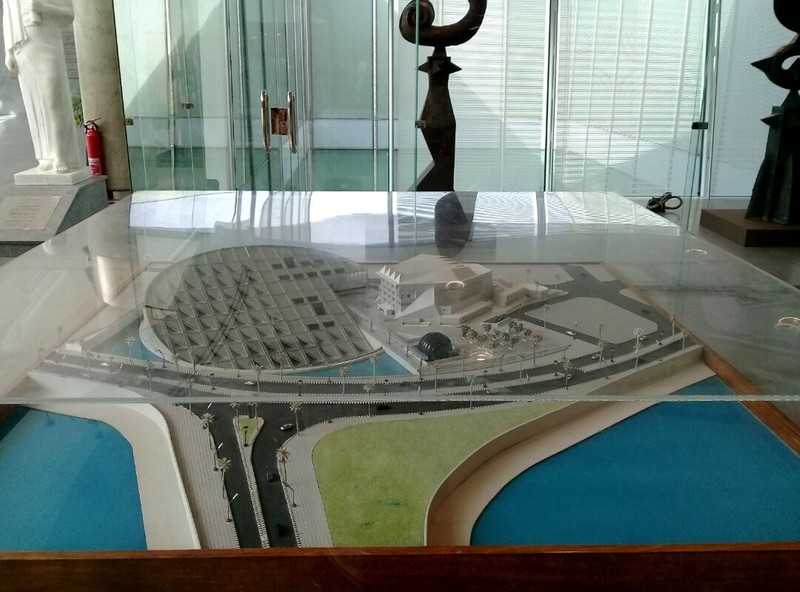
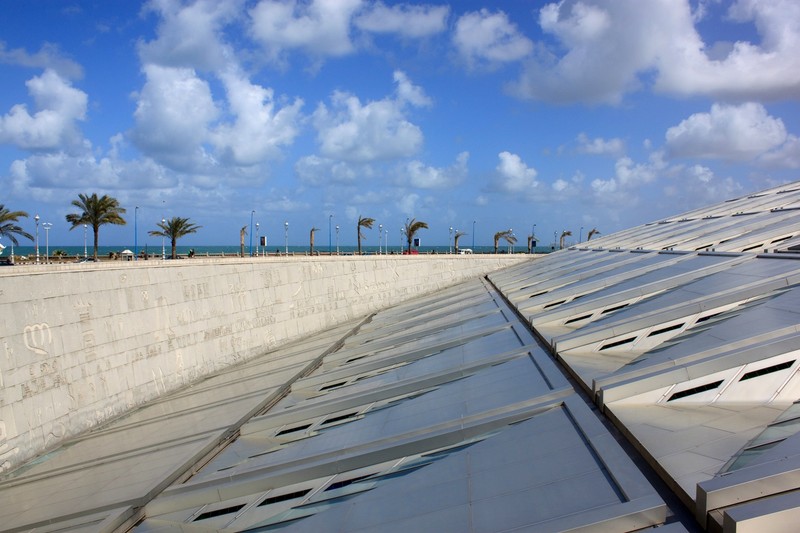
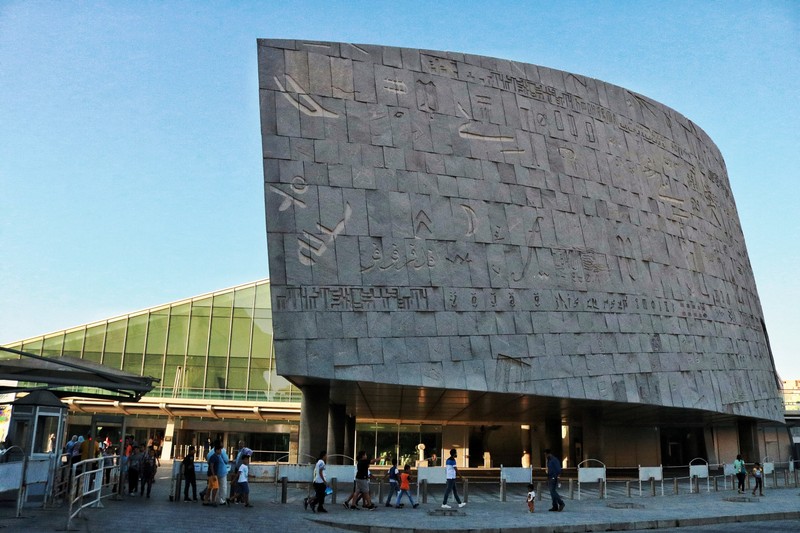
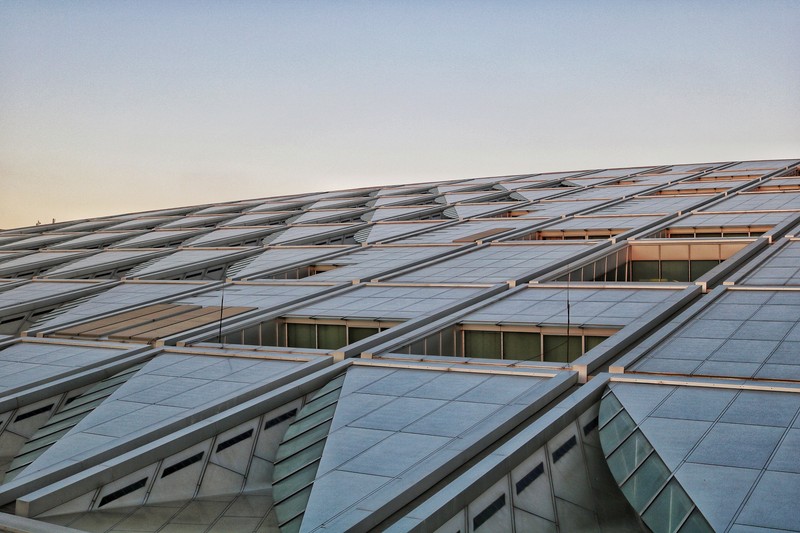
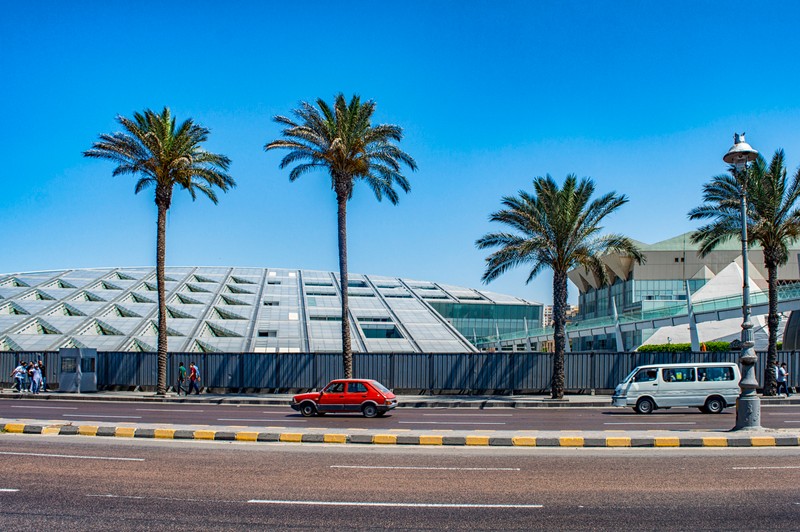
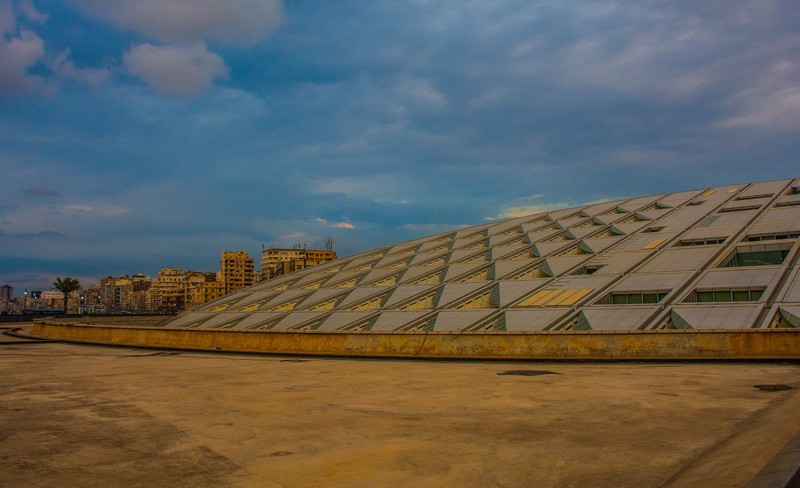
The building is distinguished by its enormous circular form and sloping roof. Its silhouette resembles a sun rising beside the sea. The circle represents the continuity of knowledge, while the roof evokes Alexandria’s history and its famous ancient lighthouse. The structure measures about 160 meters in diameter, rises approximately 32 meters above ground, and extends partly underground.
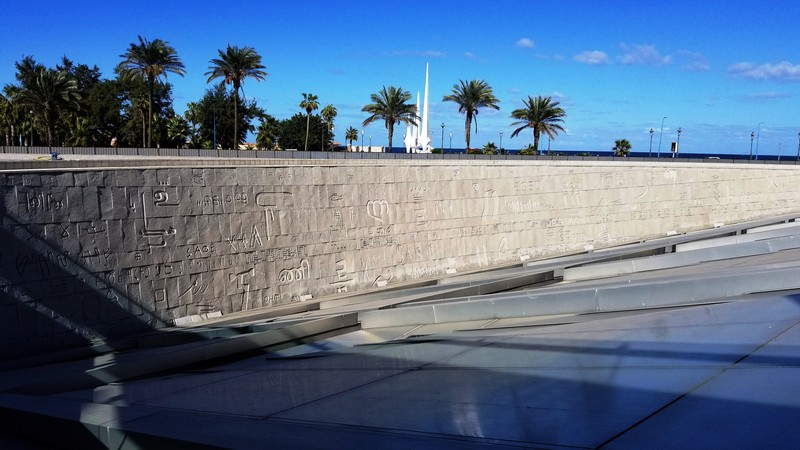
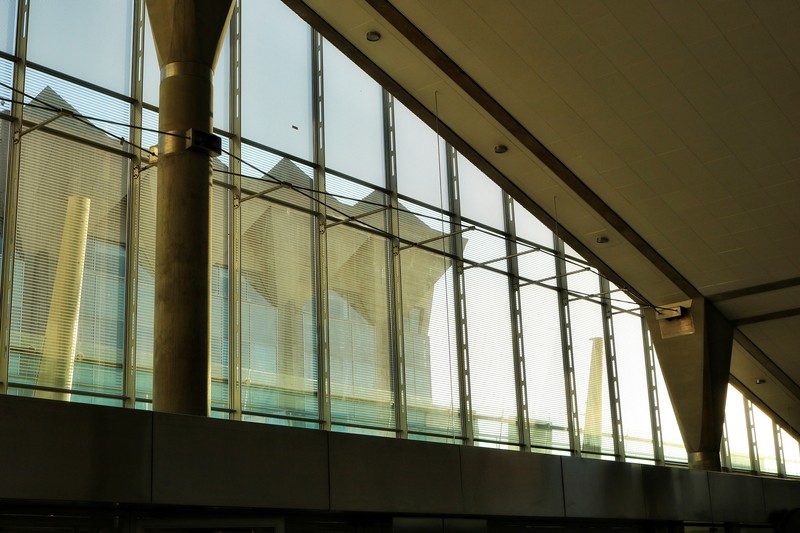
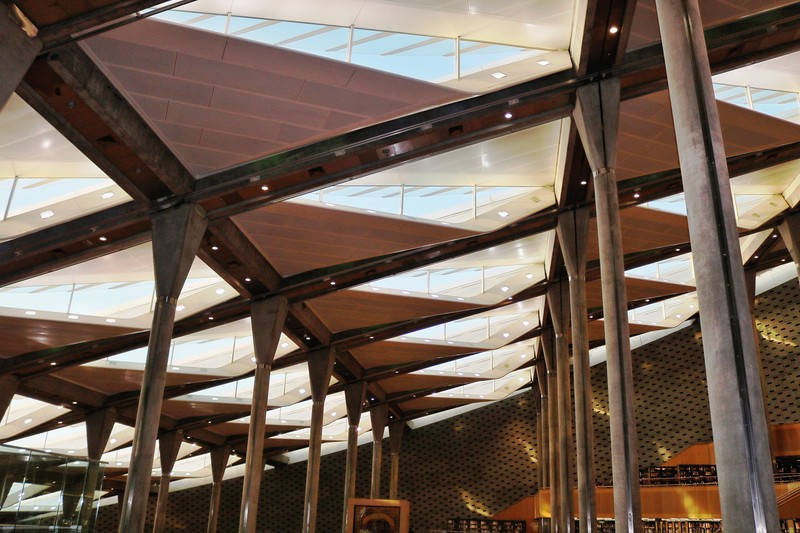
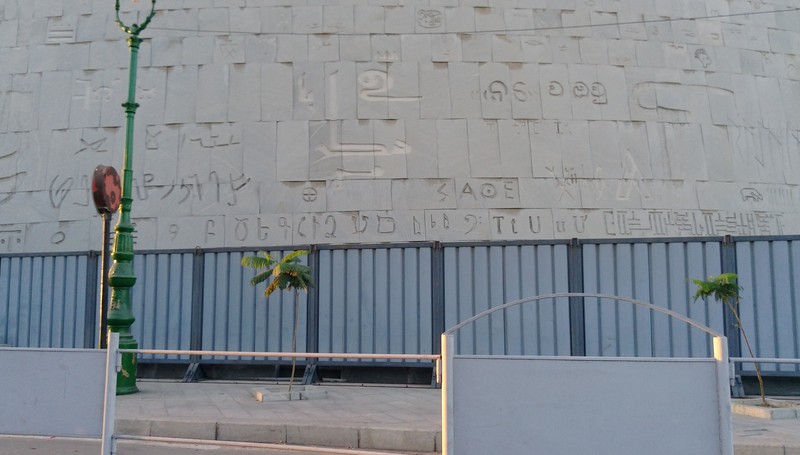
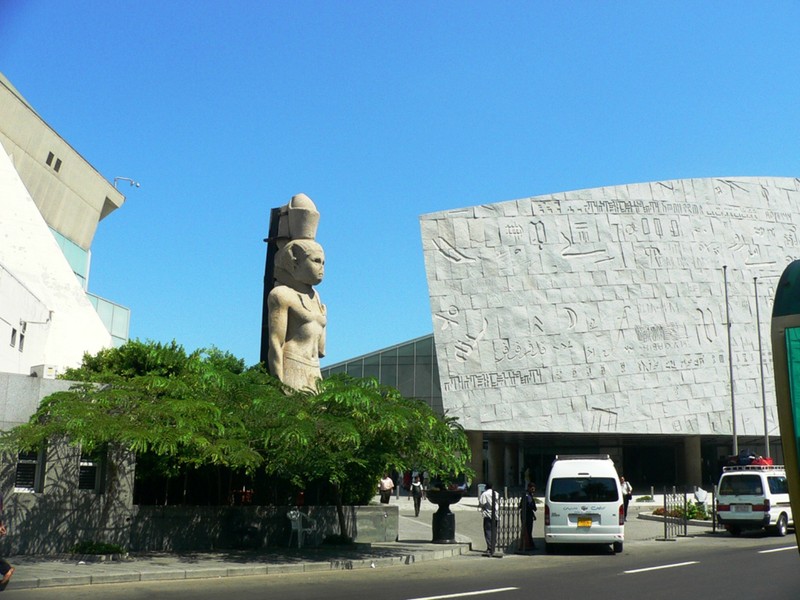
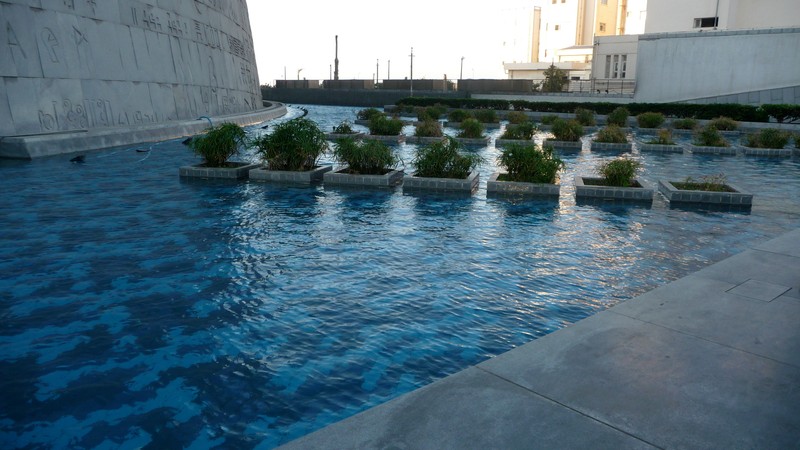
The exterior wall is clad in granite from the Aswan region and engraved with letters and symbols from writing traditions around the world. Natural light enters through carefully designed openings that illuminate reading areas while helping protect books from direct sunlight. An open plaza and reflecting pool surround the building, creating a striking setting beside the Mediterranean.
The Main Reading Hall
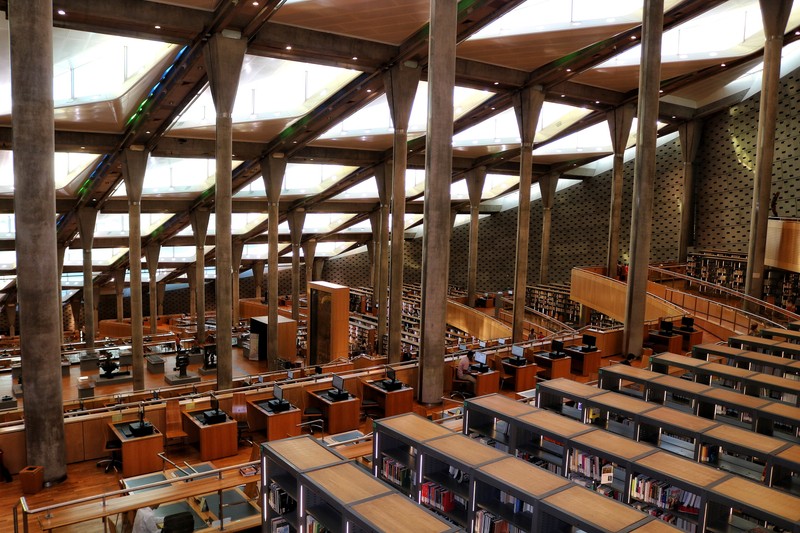
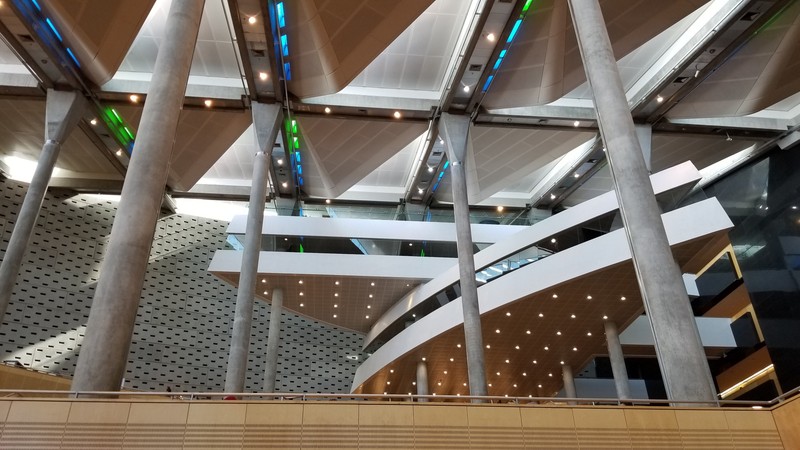
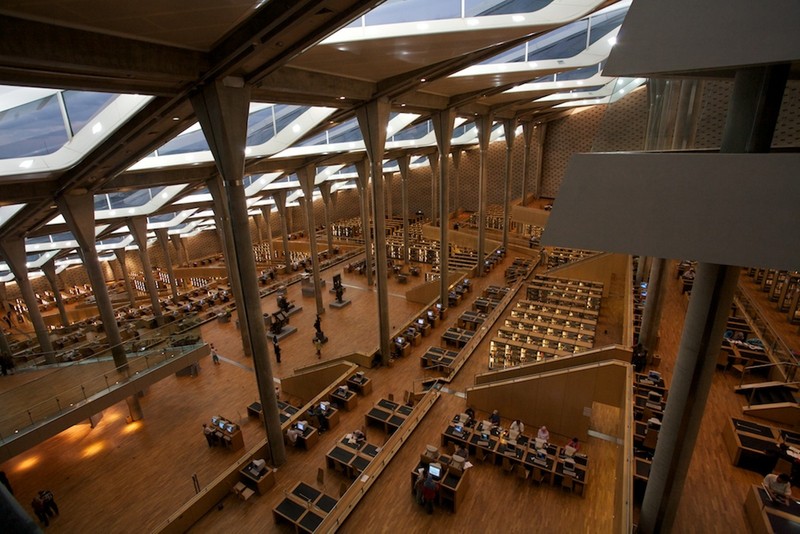
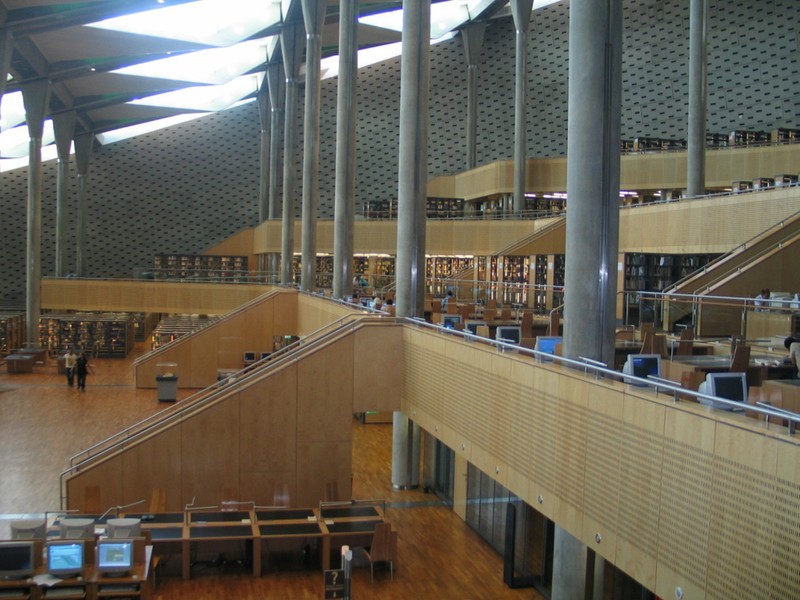
The main reading hall occupies several levels beneath the sloping roof. Its terraces descend through the building, creating a vast, naturally lit interior. The library was designed to accommodate millions of books, with a total planned capacity of up to eight million volumes when compact storage is included. Its resources include books, periodicals, maps, manuscripts, multimedia collections, and digital materials.
The library serves not only researchers and students but also the general public. Its collections cover subjects ranging from Egyptian and Mediterranean history to modern science, technology, and the arts. The architecture of the reading space is itself a major attraction and one of Alexandria’s defining contemporary images.
Museums and Cultural Spaces
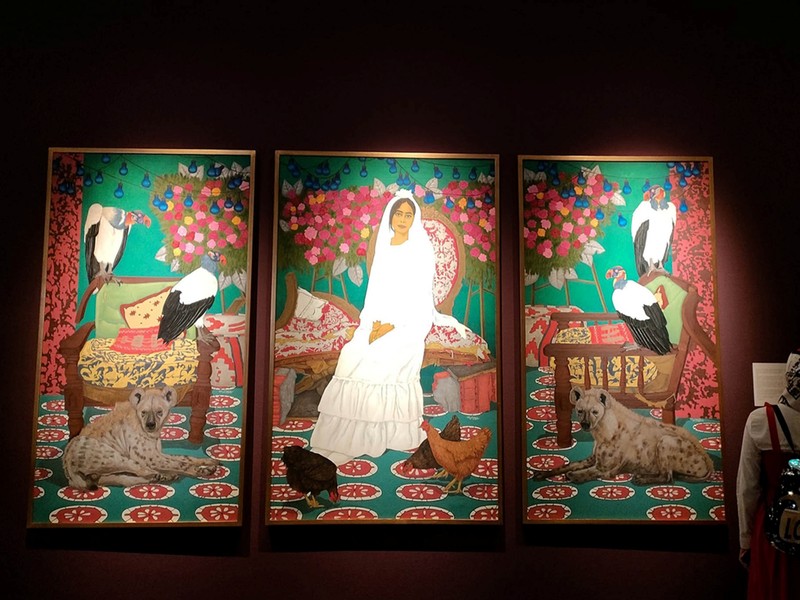
The Bibliotheca Alexandrina is a cultural complex rather than simply a place to borrow books. It includes specialized libraries for children, young people, and visitors with visual impairments, as well as collections devoted to art, multimedia, rare books, and manuscripts. Museums and exhibition galleries are also part of the site.
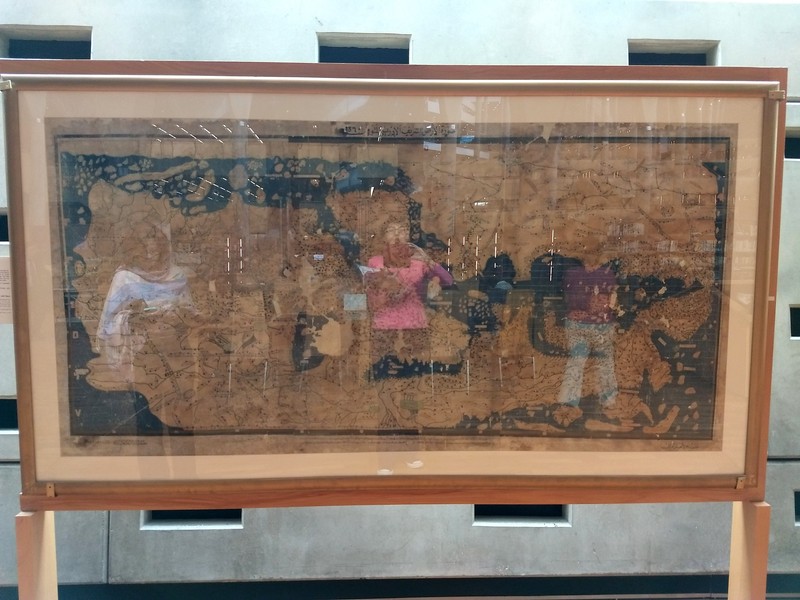
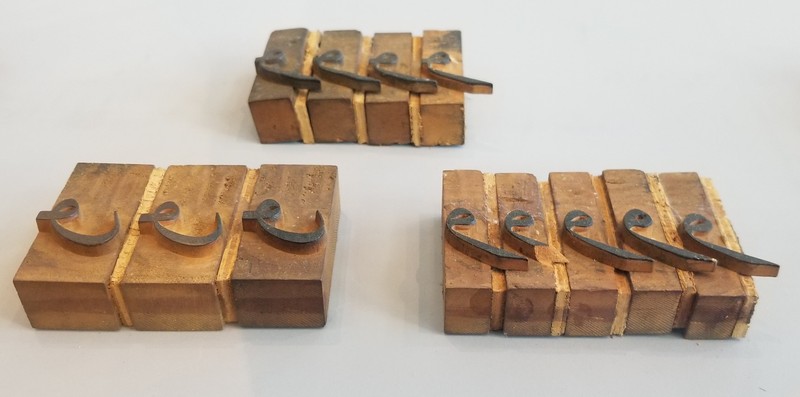
The Antiquities Museum presents objects related to Egypt’s and Alexandria’s past, including finds discovered during archaeological work at the library site. Its collections include material from the Hellenistic, Roman, and Byzantine periods. The Manuscript Museum focuses on the history of writing and the preservation of documentary heritage. The complex also houses the History of Science Museum and a museum dedicated to former Egyptian president Anwar Sadat. Exhibitions and access arrangements may change.
Planetarium and Research Centers
The planetarium introduces visitors to astronomy and space through educational programs and multimedia presentations. Research and cultural departments organize lectures, seminars, conferences, classes, and public events. The library therefore functions not only as a repository of books but also as a meeting place for research, education, and cultural exchange.
What to See During a Visit
Begin by admiring the building’s distinctive shape and granite façade, covered with carved symbols. If the main reading hall is open to visitors, take time to appreciate its terraces and natural lighting, and ask about guided tours. The Antiquities Museum, temporary exhibitions, and planetarium are also worth considering. Architecture enthusiasts will enjoy seeing how the sloping roof, layered interior, and daylighting system work together.
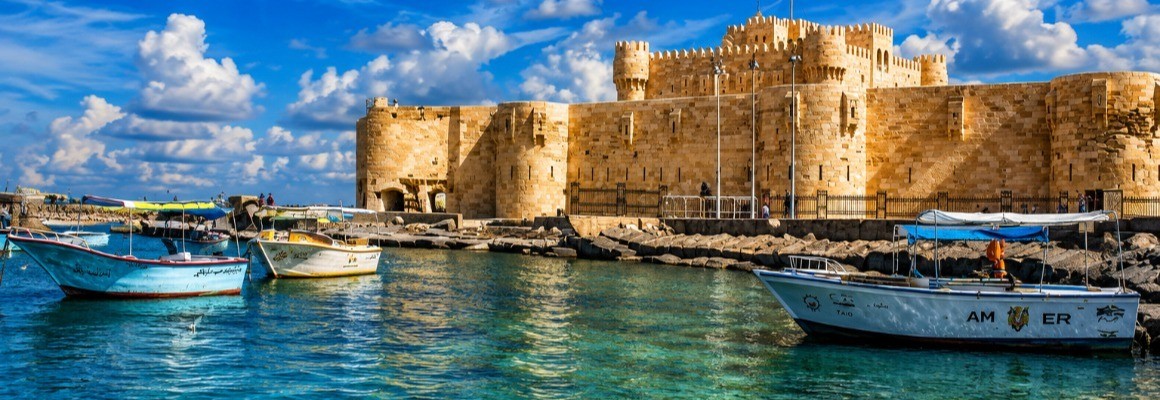
After visiting the library, stroll along the Mediterranean waterfront or continue to other Alexandria landmarks, including Qaitbay Citadel and the historic harbor area. The library is located in the Shatby district, near Alexandria University.
Visitor Information
Check the official Bibliotheca Alexandrina website before your visit because opening hours for the reading hall, museums, exhibitions, and planetarium may differ. Some areas may require separate admission or participation in a guided visit. Confirm ticket conditions, event schedules, and photography rules in advance.
Allow several hours to explore the building and its main exhibitions. More time is useful if you plan to visit several museums and the planetarium. The Bibliotheca Alexandrina is especially rewarding for travelers interested in the ancient world, architecture, books, and Mediterranean culture.
Gallery