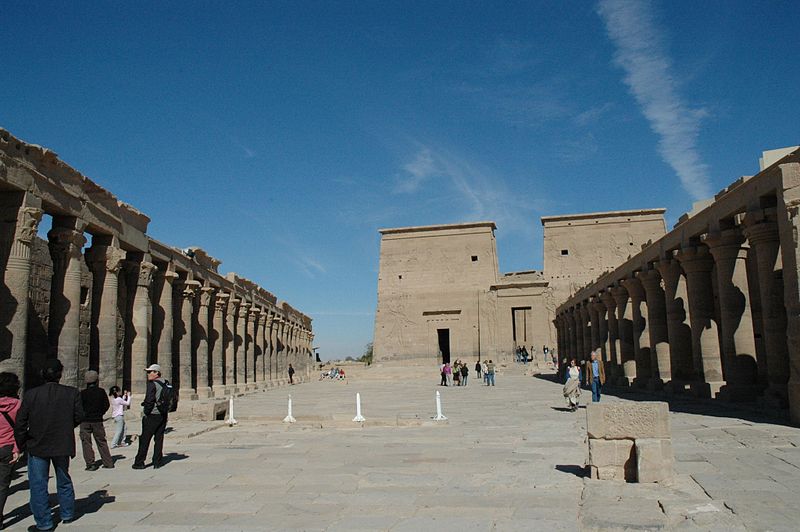
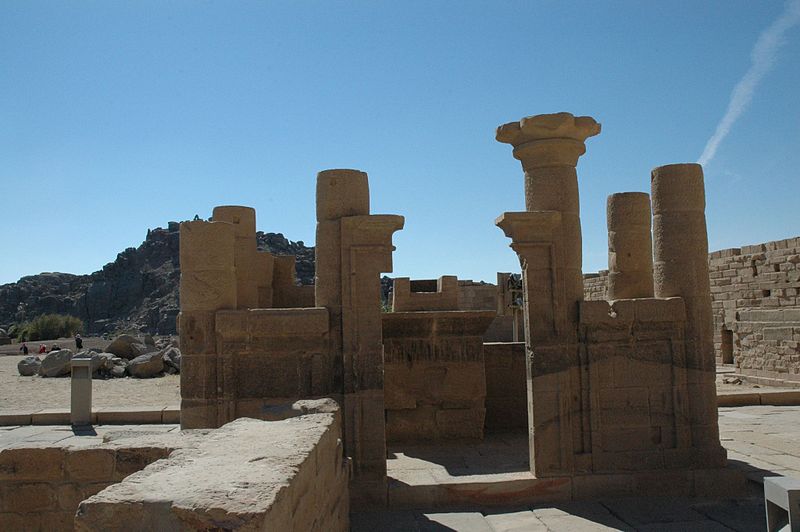
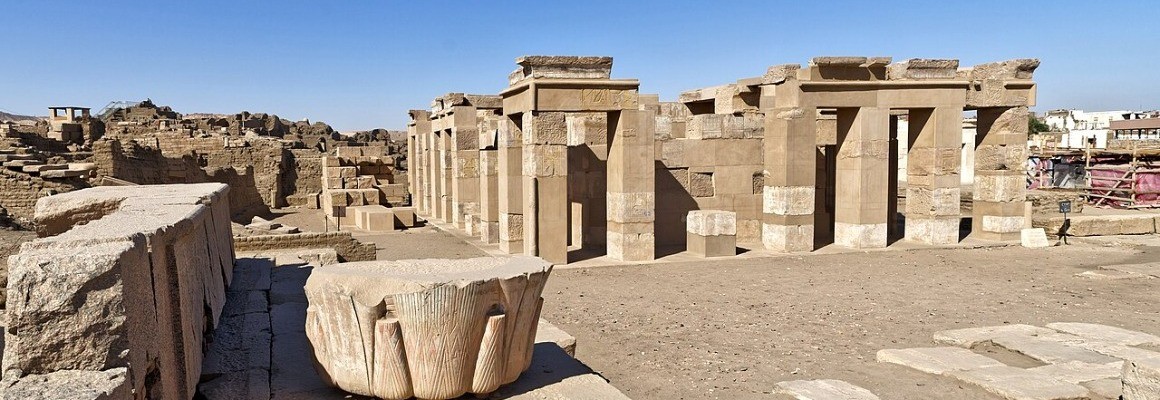
Philae is a celebrated archaeological complex on the Nile near Aswan, best known for its sanctuary of the goddess Isis. Its monumental pylons, elegant colonnades, carved reliefs and the graceful Kiosk of Trajan form one of southern Egypt’s most distinctive temple ensembles. Although the monuments are traditionally called the Temples of Philae, they now stand on nearby Agilkia Island. The complex was moved there in the twentieth century to protect it from flooding.
History of Philae
In antiquity, Philae was a sacred place associated with Isis, a goddess of motherhood, magic and protection. Her worship was closely connected with the myth of Osiris and the birth of Horus, a figure associated with kingship. The sanctuary attracted pilgrims from different parts of Egypt and Nubia and remained an important religious centre for centuries.
Most of the surviving complex dates to the Ptolemaic period. Construction of the principal temple began under Ptolemy II Philadelphus in the third century BCE, and later rulers enlarged and decorated the sanctuary. Building continued under Roman emperors, producing an ensemble that combined ancient Egyptian religious traditions with the artistic and political culture of the Greco-Roman world.
The Temple of Isis
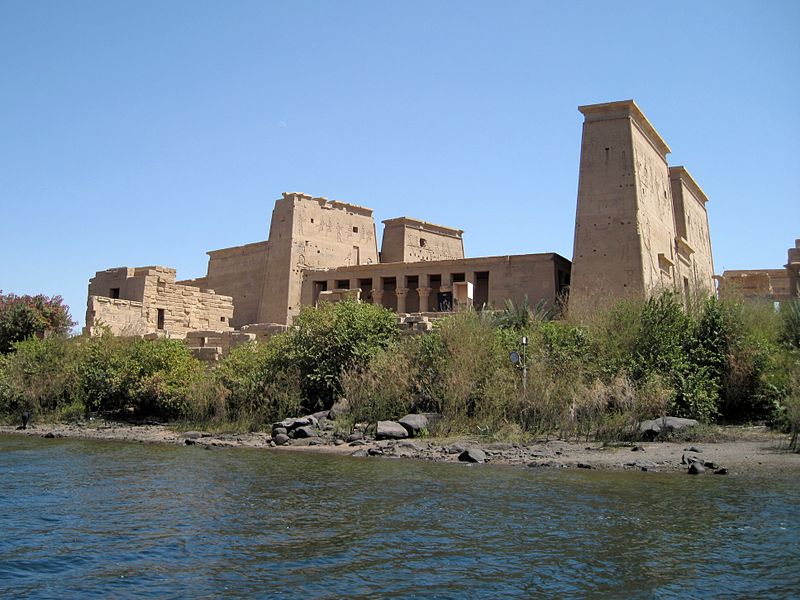
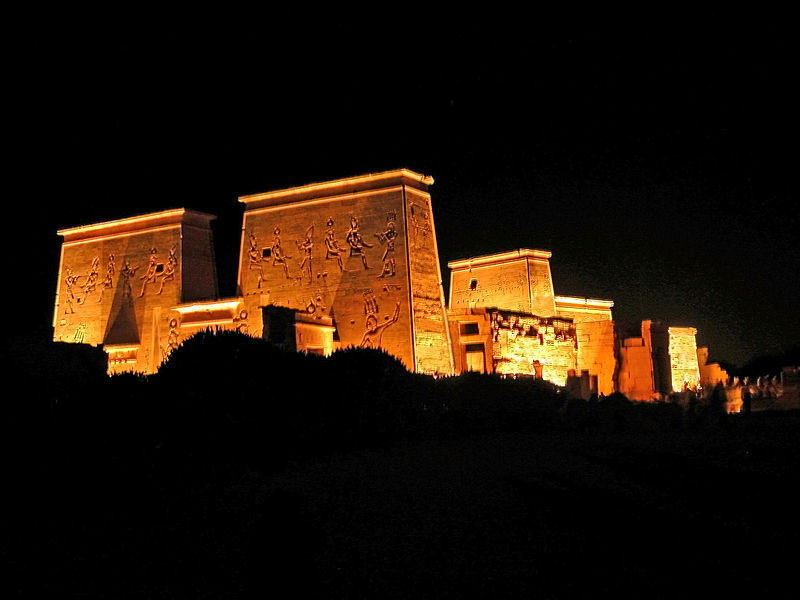
The main monument is dedicated to Isis. Its layout includes an entrance pylon, an open courtyard, a second pylon, a columned hall and an inner sanctuary. Reliefs show rulers making offerings to the gods and depict scenes from Egyptian mythology. The mammisi, or birth house, was associated with celebrations of the birth of Horus, the son of Isis and Osiris. Its imagery also reinforced the idea that royal authority had a divine foundation.
The Kiosk of Trajan and other monuments
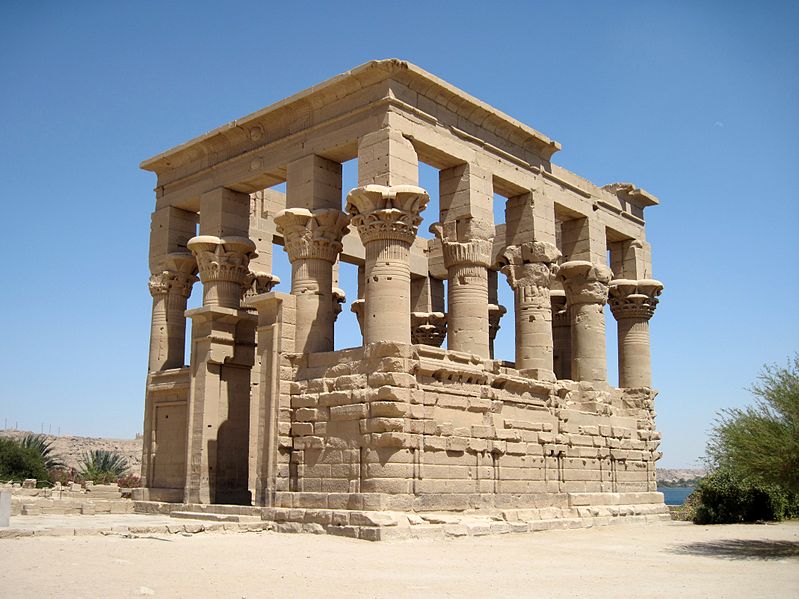
The Kiosk of Trajan, standing beside the water, is one of Philae’s most recognisable structures. Its open arrangement of columns creates a striking silhouette against the Nile. Reliefs portray the Roman emperor Trajan making offerings to Egyptian deities. Other surviving monuments include the Temple of Hathor, the Kiosk of Nectanebo I, Hadrian’s Gate and several colonnades. Hathor was associated with music, joy, love and motherhood.
The last hieroglyphic inscription
The Temple of Isis remained active long after many traditional Egyptian sanctuaries had ceased functioning. A dated inscription carved by a priest named Esmet-Akhom in 394 CE survives at Philae and is regarded as the latest known dated hieroglyphic inscription from ancient Egypt. During late antiquity, parts of the complex were adapted for Christian use, and some earlier religious images were altered. These traces reflect the region’s transition into a new religious era.
Relocation to Agilkia Island
Rising water levels following the construction of the Aswan dams threatened to submerge the original island of Philae. As part of UNESCO’s international campaign to save Nubian monuments, the buildings were dismantled, documented and reassembled on nearby Agilkia Island. The new island was reshaped to resemble the original setting. In 1979, Philae became part of the UNESCO World Heritage property known as the Nubian Monuments from Abu Simbel to Philae.
Visiting Philae
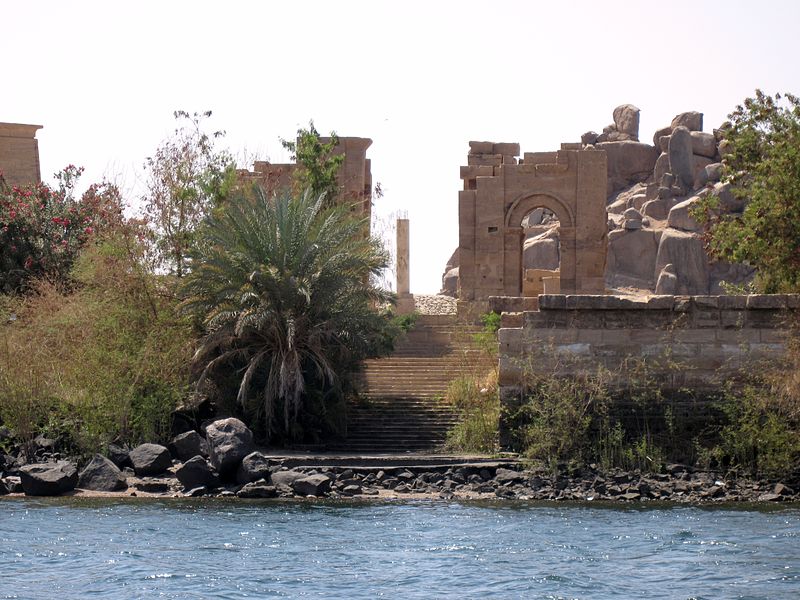
The complex lies south of Aswan and is usually reached by boat. Approaching from the river offers memorable views of the colonnades and the Kiosk of Trajan. Visitors should allow time to explore the Temple of Isis, the mammisi, Hadrian’s Gate and the carved reliefs. Philae is remarkable not only for its architecture but also for the story of its survival, which links ancient worship, the Greco-Roman period, early Christianity and a major twentieth-century conservation project.
Gallery