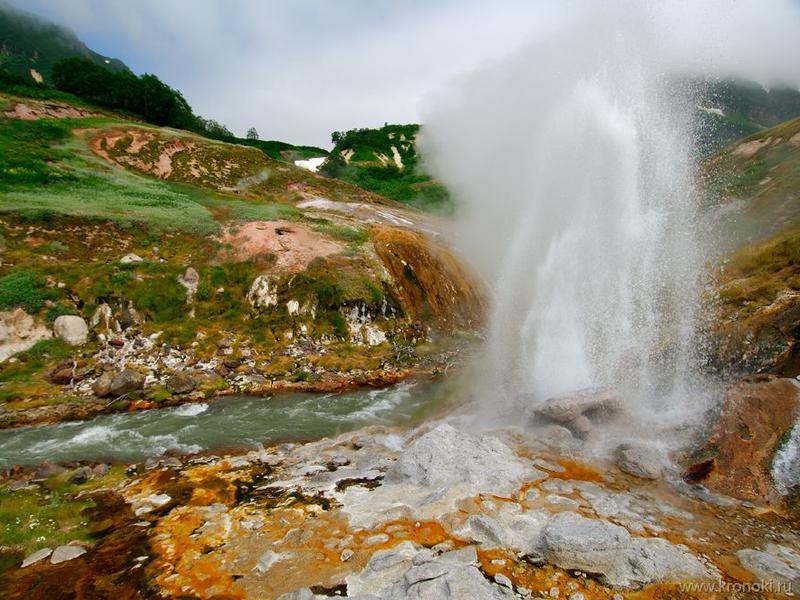
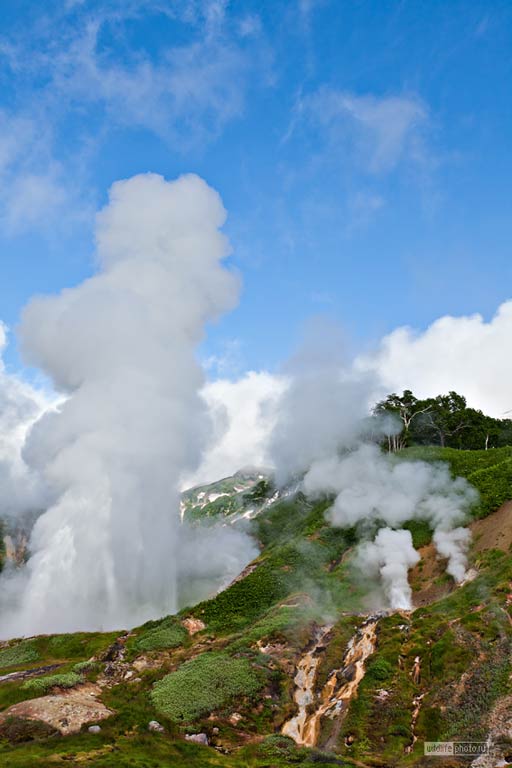
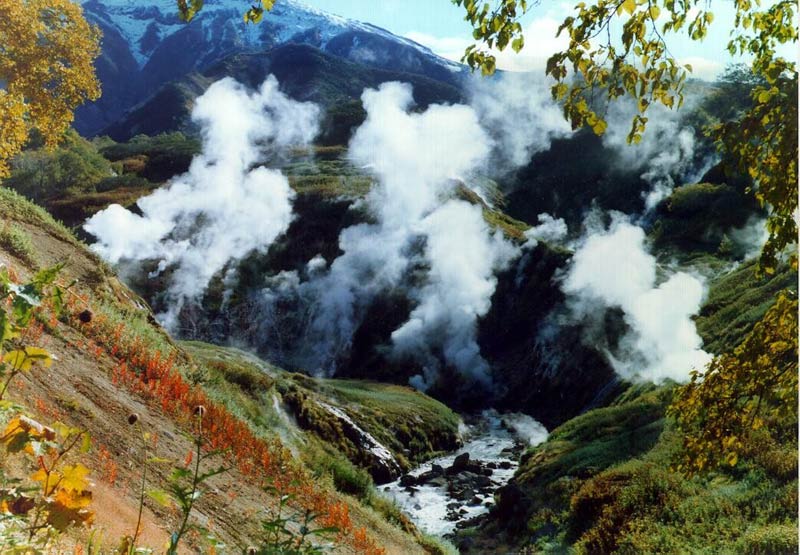
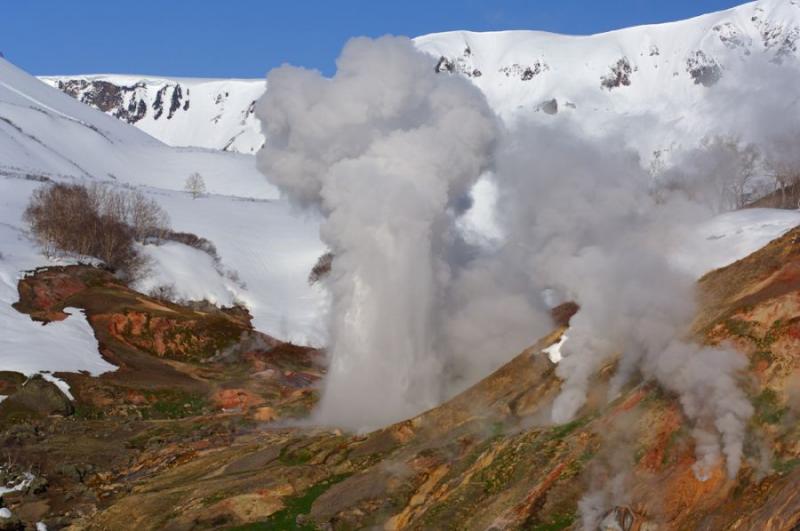
The Valley of Geysers is one of Kamchatka’s most extraordinary natural attractions and one of the largest geyser areas in Eurasia. It lies within the Kronotsky State Biosphere Reserve, surrounded by volcanoes, mountain rivers and remote wilderness. Jets of hot water and steam burst from the ground, mud pots bubble, and mineral deposits paint the canyon slopes in different colours. The valley resembles a vast natural laboratory where visitors can observe processes taking place beneath the Earth’s surface.
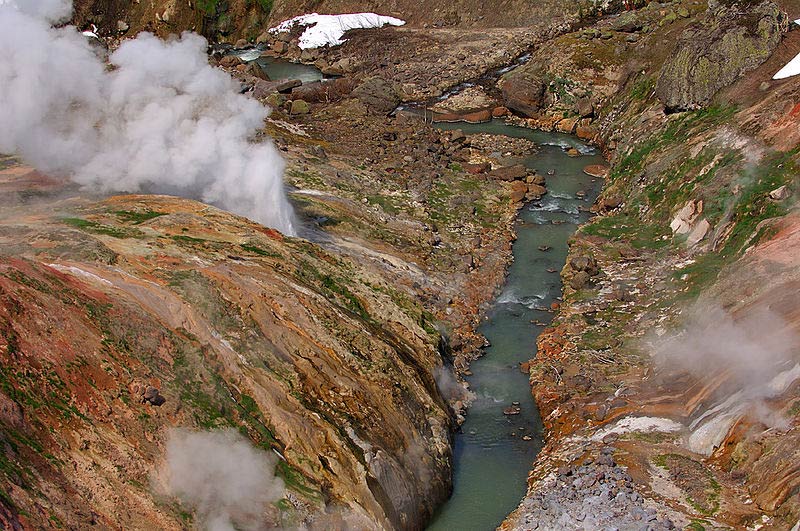
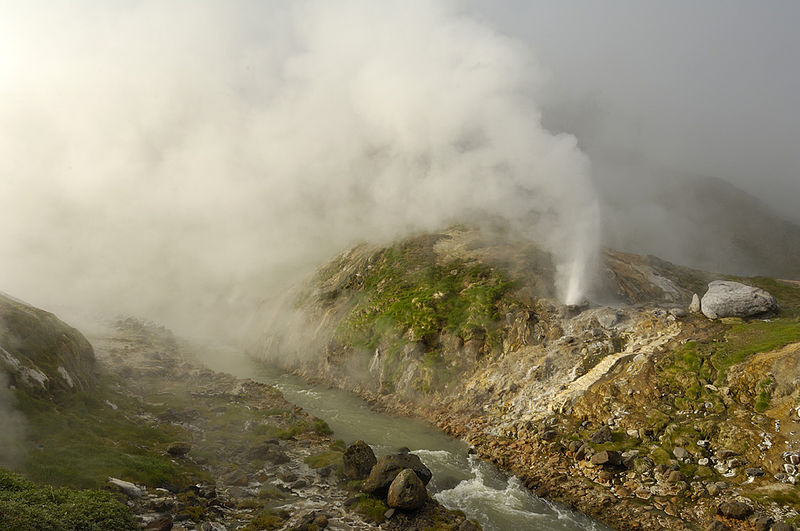
The Geysernaya River runs through a deep canyon lined with dozens of geysers, hot springs, steam vents and small thermal pools. The scenery is constantly changing: steam rises above the water, wet mineral rocks glisten, and individual geysers periodically send hot water into the air.
Location and landscape
The valley is located in eastern Kamchatka, within the Kronotsky Reserve, roughly 180 kilometres in a straight line from Petropavlovsk-Kamchatsky. Reaching it is difficult because of the mountainous terrain, lack of ordinary roads and strict nature-reserve regulations.
The canyon of the Geysernaya River is about 8 kilometres long, up to 4 kilometres wide and around 400 metres deep in places. Dozens of major geysers and other geothermal features are concentrated along part of the river valley.
How the geysers form
Geysers are powered by volcanic heat that warms groundwater. Rainwater and melting snow seep into cracks in the rocks and become heated by hot underground formations. Water accumulates in a system of channels and cavities, where heat and pressure build up. When conditions are right, hot water and steam erupt at the surface.
After an eruption, the system refills and heats up again. Geysers do not all follow the same schedule: some erupt relatively regularly, while others behave unpredictably. The valley also contains hot springs, mud pots and fumaroles, which release hot gases and steam.
Discovery and research
The Valley of Geysers was discovered in 1941 by geologist Tatyana Ustinova and her guide Anisifor Krupenin. While exploring the Shumnaya River, they noticed an unusual jet of hot water emerging from the ground. Their discovery marked the beginning of systematic research into this remarkable geothermal area.
Scientists later studied the springs, recorded their eruption patterns and investigated the water chemistry. The valley gradually became known to researchers and travellers alike. However, uncontrolled tourism also demonstrated how fragile its thermal landscapes are, and visitor access is now carefully managed.
The 2007 mudflow
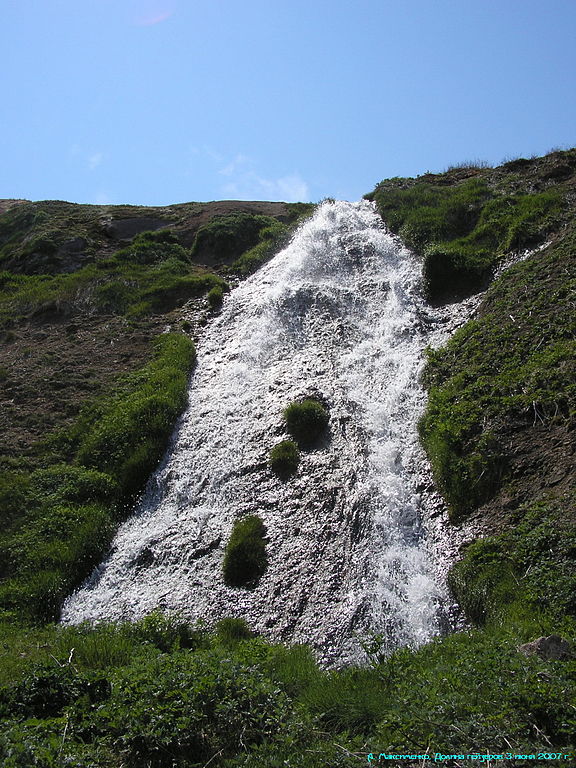
In June 2007, a powerful mudflow dramatically changed part of the valley. Water, rocks and soil buried or blocked some springs and altered the appearance of the geothermal fields. Certain geysers changed their activity, while other areas were covered by deposits.
The geothermal system continued to evolve, and the landscape gradually changed again. This event shows that the Valley of Geysers is not a static monument but a living environment shaped by volcanic heat, water, rainfall and slope processes.
Wildlife and vegetation
Despite its hot springs and Kamchatka’s harsh climate, the valley supports a variety of plants and animals. Grasses and shrubs grow on the slopes, while the microclimate near warm areas can differ from that of the surrounding terrain.
Brown bears are among the best-known inhabitants of the reserve. Foxes, wolverines, reindeer, snow sheep and many bird species also live in the wider protected area. Bears may rest near warm springs, but sightings cannot be guaranteed. Visitors must never approach or feed wildlife or leave the marked route to take photographs.
Nature conservation
The Valley of Geysers is part of the Kronotsky State Biosphere Reserve and the UNESCO World Heritage property known as the Volcanoes of Kamchatka. The protected area preserves unique ecosystems, volcanic landscapes and wildlife habitats while supporting scientific research.
Access is regulated. Visitors need the appropriate permission or must join an organised tour with authorised support. Walking is restricted to designated boardwalks and viewing platforms. Thin surface crusts can conceal boiling water or hot mud, making it dangerous to step off the trail.
What a visit is like
Most visitors reach the valley on an organised helicopter excursion. Flights usually depart from the area around Yelizovo or another authorised helipad and take roughly an hour, depending on weather and the route. The trip is often combined with a visit to the caldera of Uzon Volcano.
After landing, visitors receive a safety briefing and follow a boardwalk trail of about one kilometre. Viewing platforms offer safe places to observe the geysers and thermal springs. A standard visit to the valley generally lasts around two to two and a half hours and is accompanied by a reserve staff member.
When to visit and how to prepare
Access depends on weather, trail conditions and reserve regulations. Fog, low clouds, strong winds and precipitation can delay or cancel helicopter flights. In May and June, some routes may be restricted or temporarily closed to protect bears during their breeding season and birds during nesting.
Arrange the trip in advance with a tour operator. Bring waterproof outerwear and comfortable shoes with good grip. Never touch hot water, step onto unstable ground or leave rubbish behind. The Valley of Geysers is a remarkable but fragile natural environment that requires careful treatment.
Why visit the Valley of Geysers
The valley reveals a rare combination of volcanic energy, water and life. Visitors can watch hot-water eruptions, rising steam, warm streams and bubbling mud pots. It is one of Kamchatka’s most memorable natural experiences, particularly for people interested in geology, volcanoes, photography and wilderness.
A visit requires planning and depends on the weather, but it can become one of the highlights of a trip to Kamchatka. This is not an amusement park but a protected ecosystem, and its future depends on responsible behaviour by every visitor.
Gallery