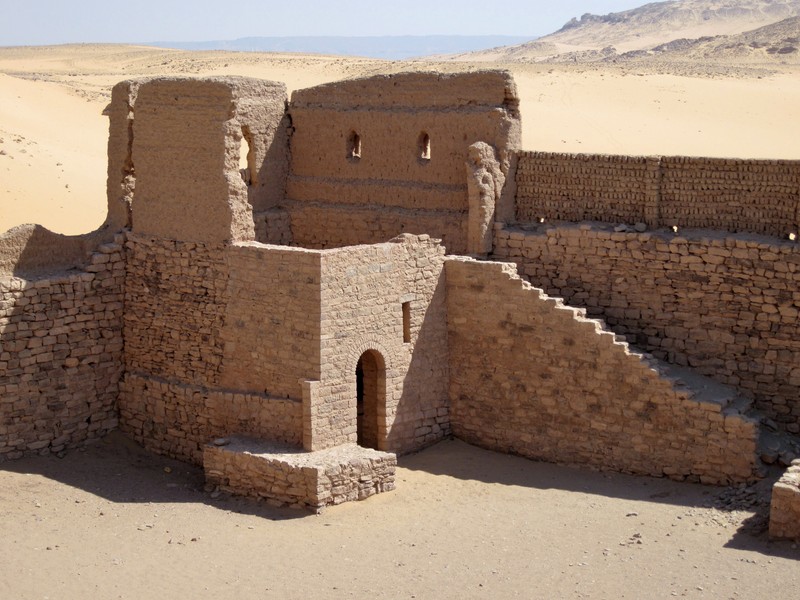
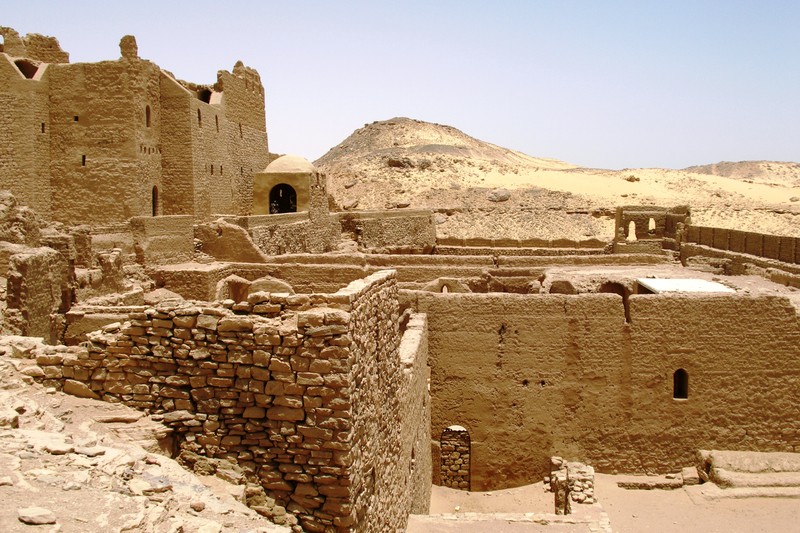
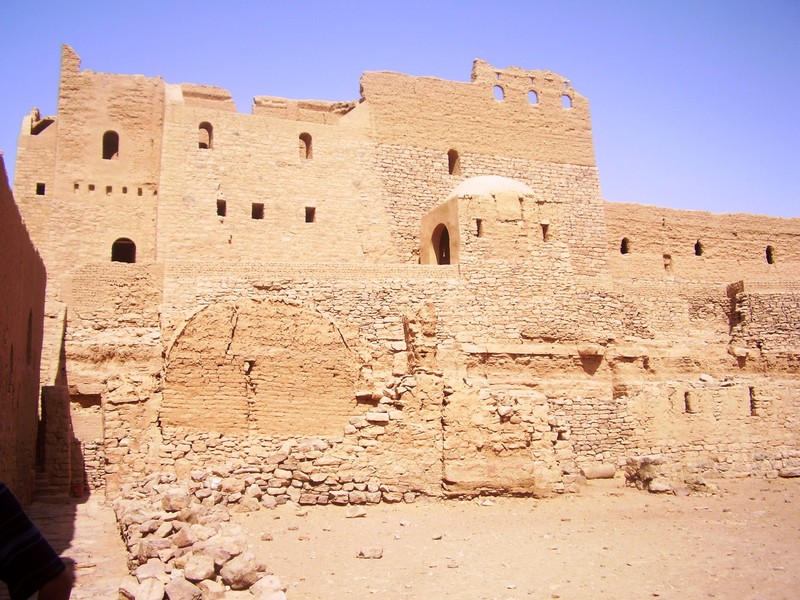
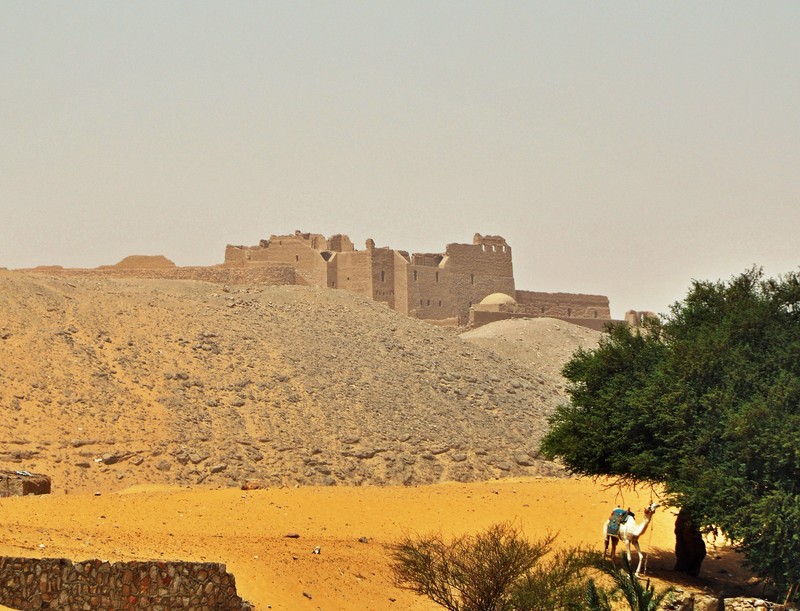
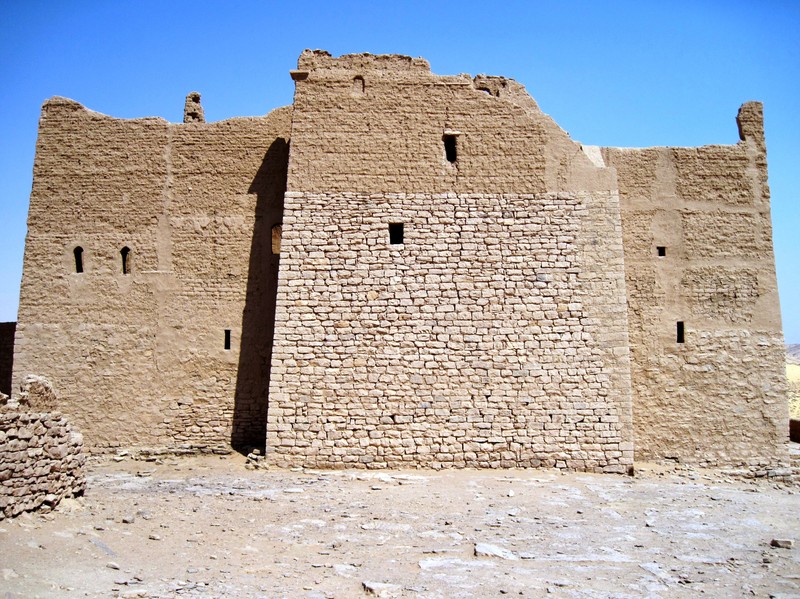
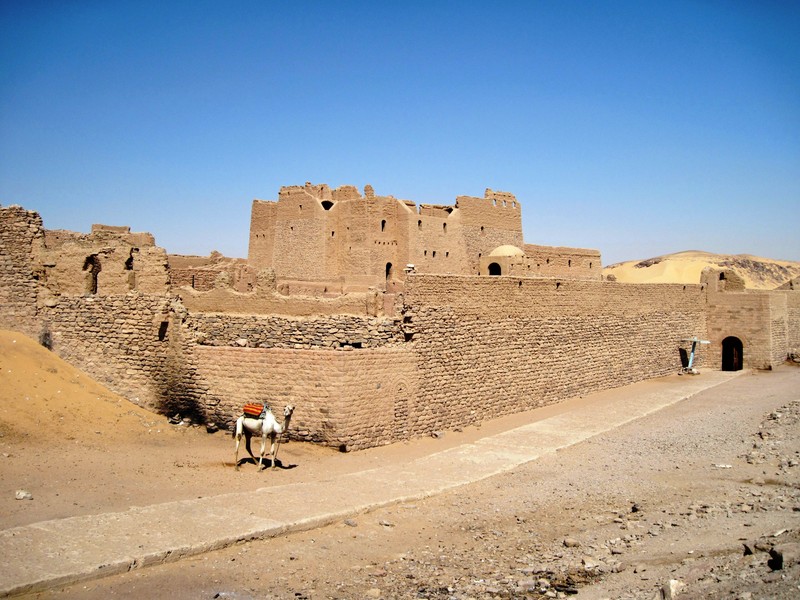
The Monastery of Saint Simeon is one of Egypt’s best-preserved medieval Christian monastic complexes. It stands on the west bank of the Nile, on a rise among desert hills opposite Aswan. Behind its substantial stone and mud-brick walls are a church, monks’ cells, service buildings and traces of ancient wall paintings.
History of the monastery
The monastery is also known by its historical name, Deir Anba Hadra. Its origins are connected with traditions about Anba Hadra, a Christian hermit who lived in the late 4th and early 5th centuries and later became bishop of Syene, the ancient name for Aswan. According to tradition, he lived in seclusion in a nearby rock shelter.
The exact foundation date is uncertain. Archaeological evidence indicates that monastic activity existed here by the early medieval period, with the complex developing through several building phases. It became an important religious and economic centre. Coptic and Arabic inscriptions show that it continued to attract visitors from different backgrounds.
The monastery was probably abandoned in the late 13th or early 14th century. Possible factors include difficulties with water supply and changing conditions in the region. Despite its abandonment, much of the architecture survived.
Why it is called the Monastery of Saint Simeon
The name Monastery of Saint Simeon became common in accounts by travellers and archaeologists. Coptic sources, however, associate the site with Anba Hadra, also known as Hatre or Hadra, a hermit and bishop of Aswan in the early Christian period. The identity of Saint Simeon and his precise connection with the monastery remain uncertain.
Architecture and layout
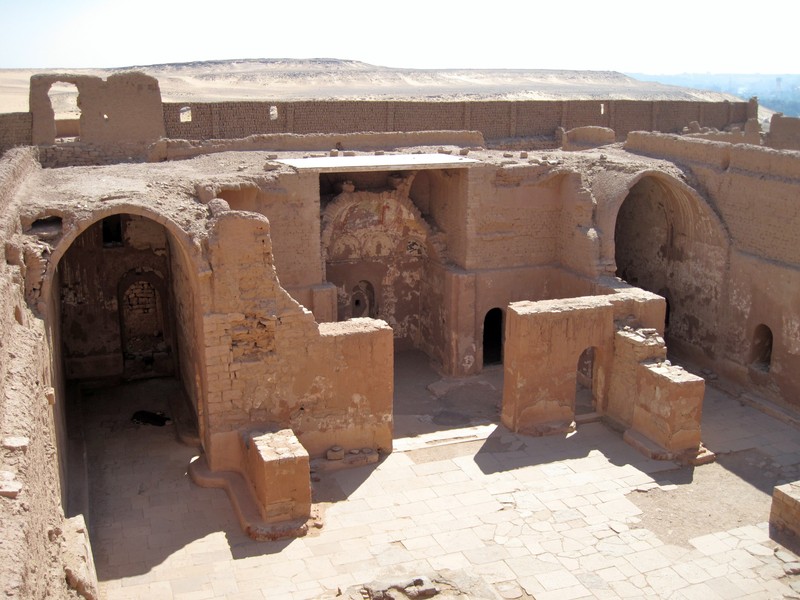
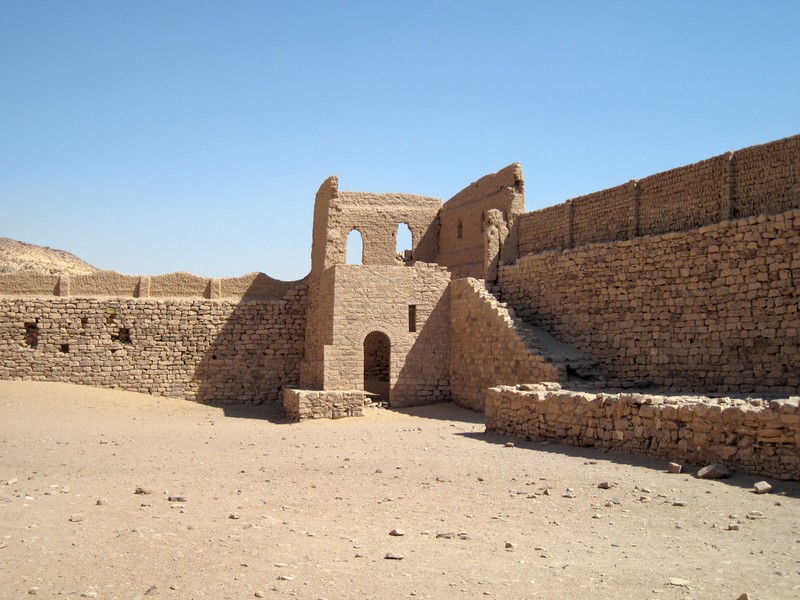
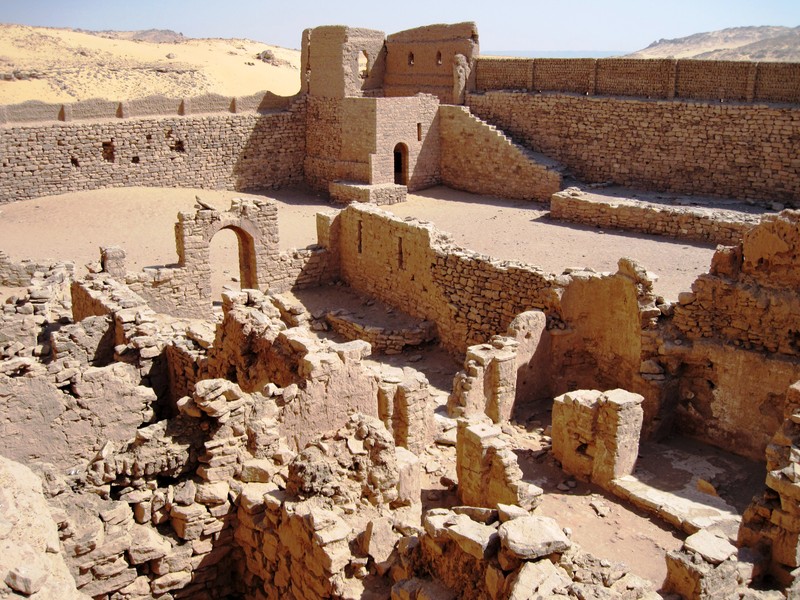
A high enclosure wall made of stone and mud brick surrounds the monastery. A rocky escarpment divides the site into lower and upper terraces. The lower terrace contains the church and small chambers, including the grotto traditionally associated with Anba Hadra. Residential and service buildings occupy the upper terrace.
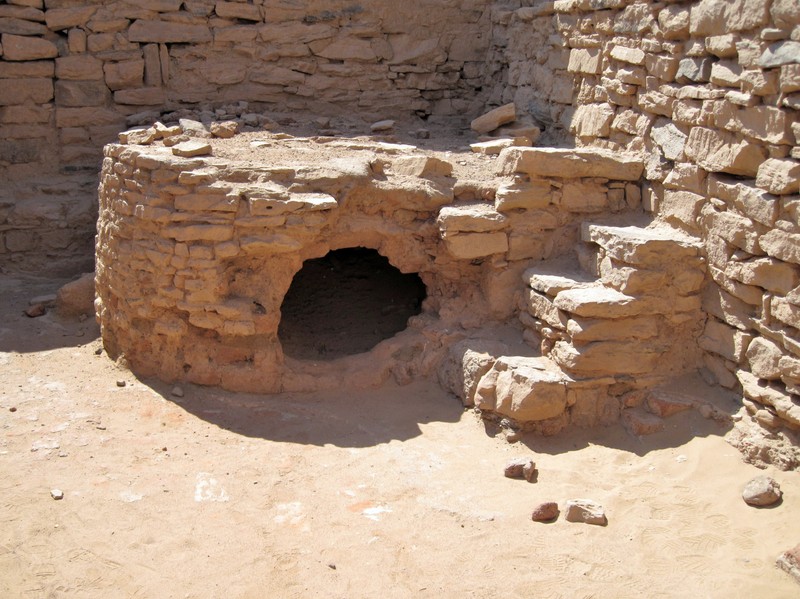
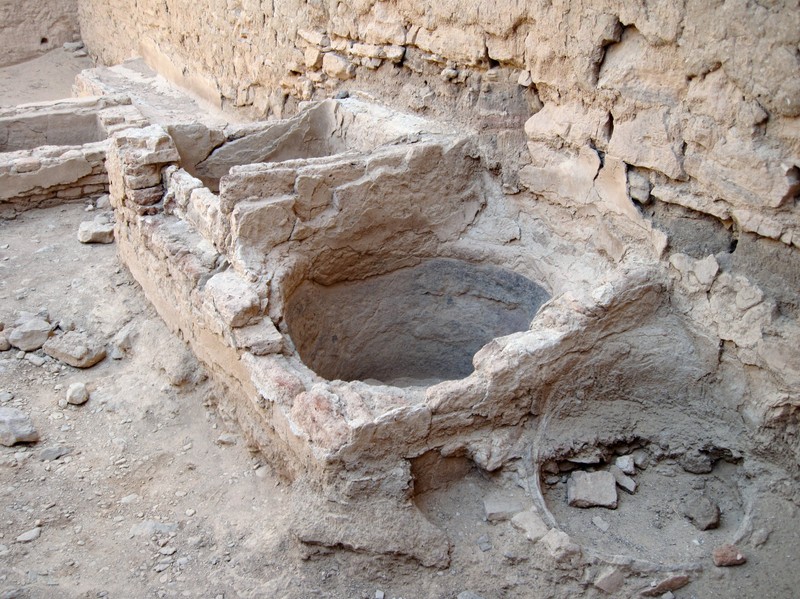
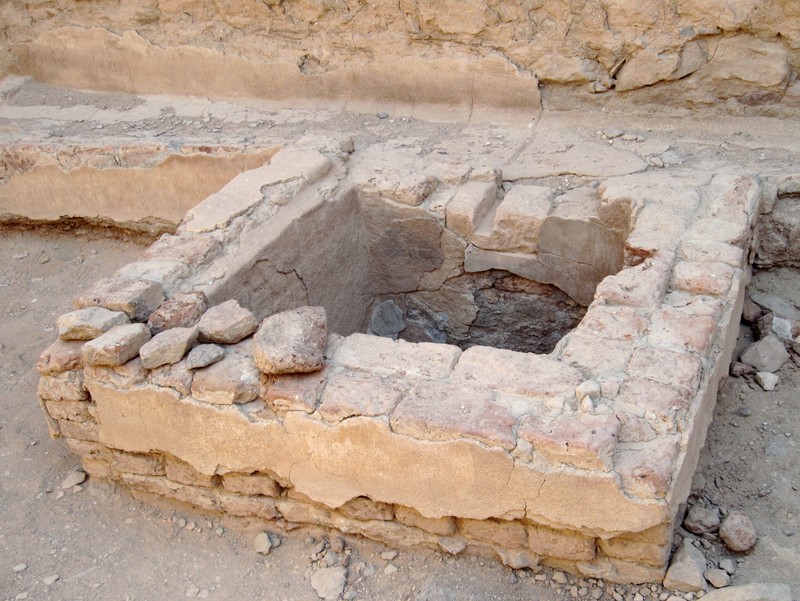
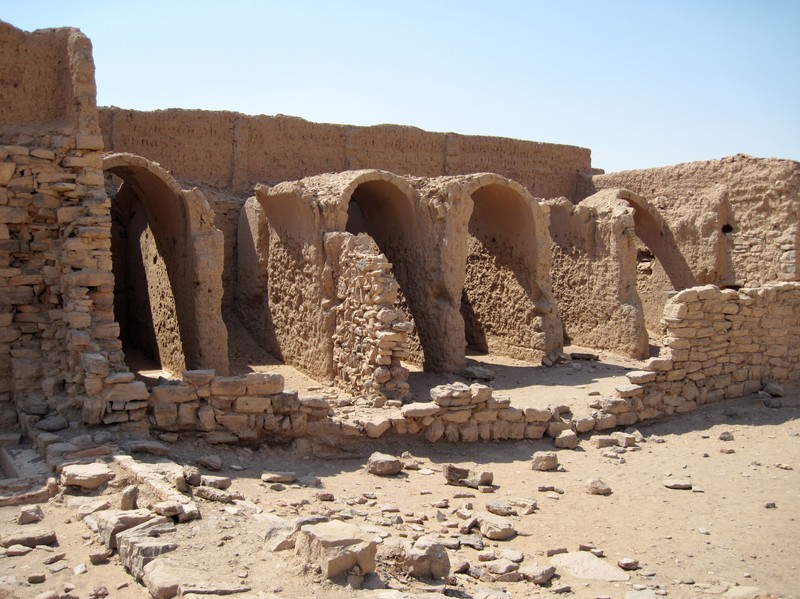
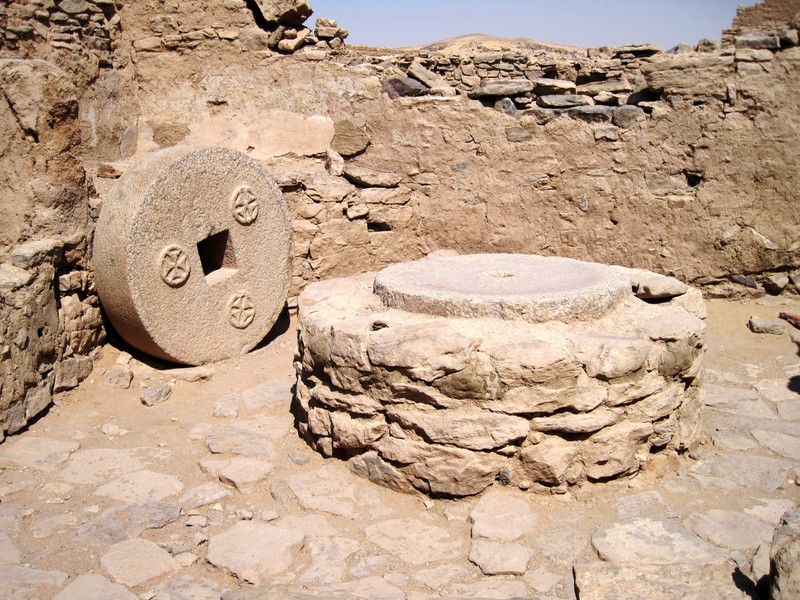
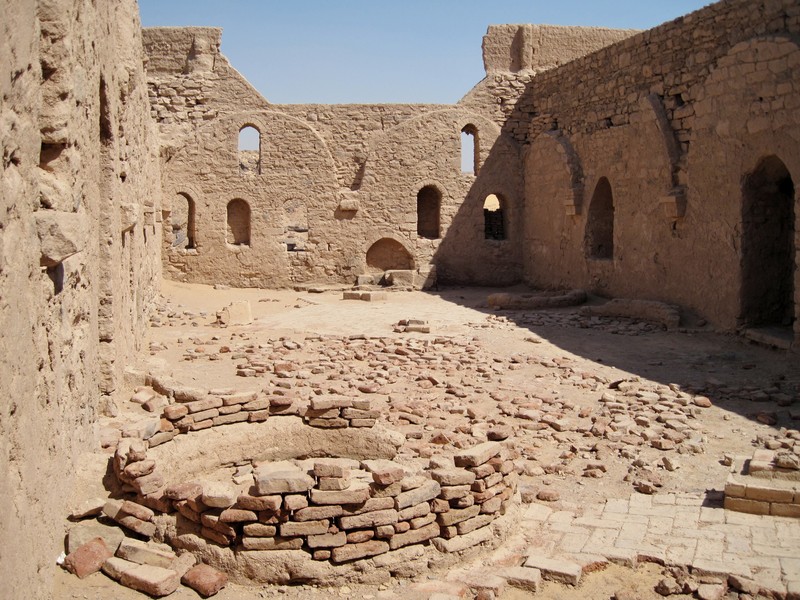
The complex combined religious spaces with cells, a refectory, storage rooms, ovens, oil presses and workshops. This arrangement helped the community organise daily life and provide many of its own necessities.
The church and wall paintings
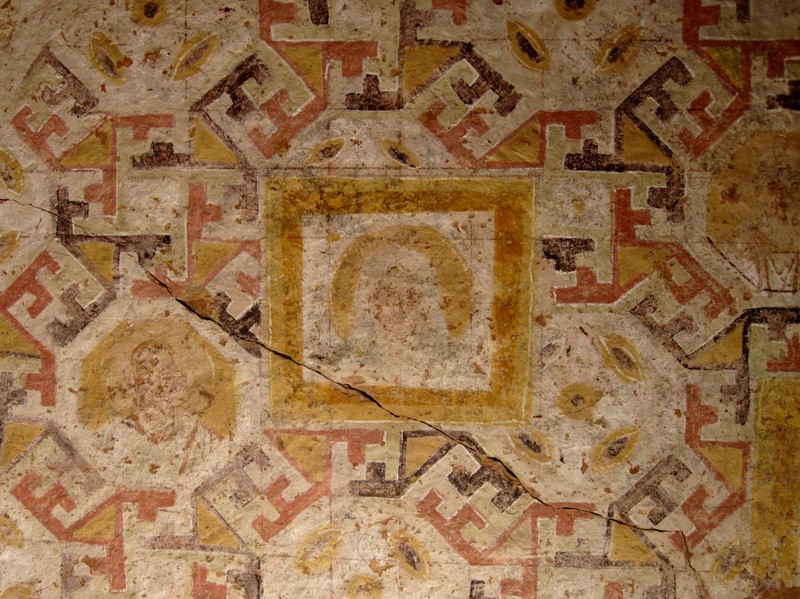
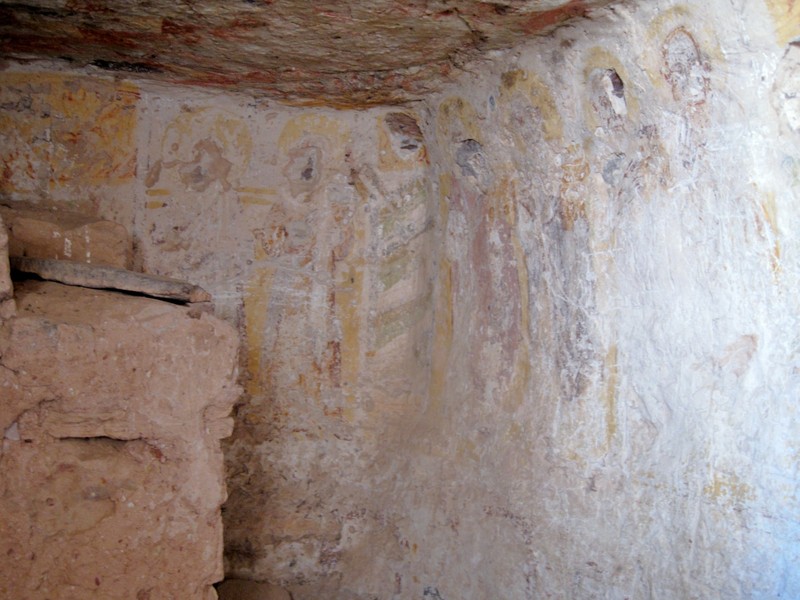
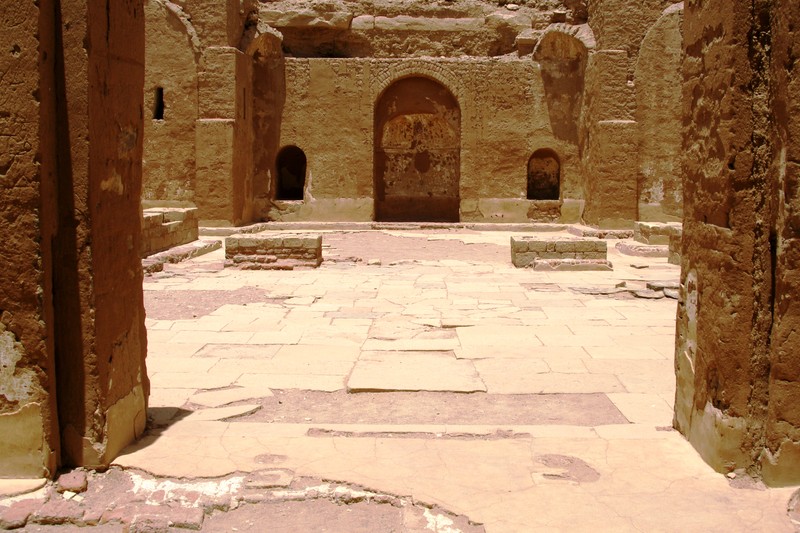
The church is one of the most important parts of the complex. Fragments of colourful paintings survive on some walls and ceilings, depicting saints, monks and other figures from Christian tradition. Particularly notable are the paintings in the rocky chamber known as the Cave of Anba Hadra, which include standing saints and geometric decoration.
These paintings are valuable evidence of Coptic art in Upper Egypt. Some areas have been damaged or lost, so researchers document the remaining images and study the materials used to create them.
Monks’ cells and daily life
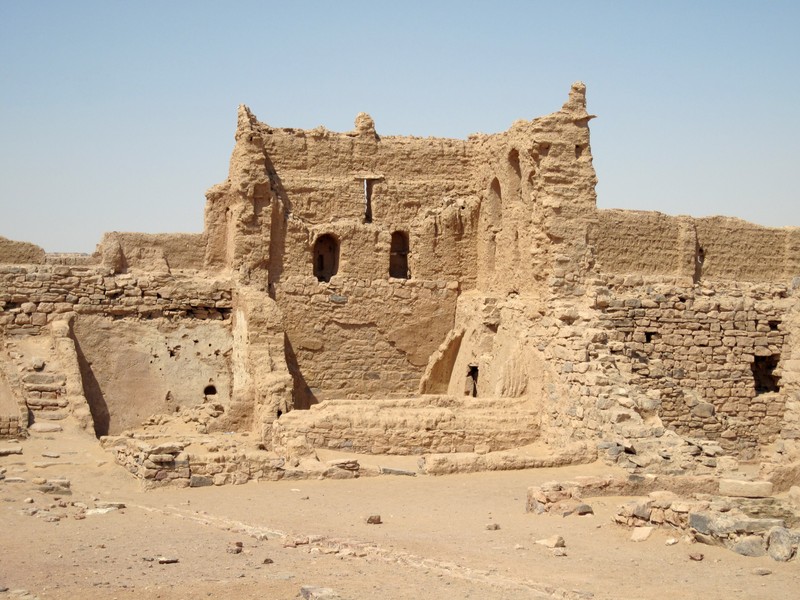
The monastery was not only a place of prayer but also a self-sufficient community. A two-storey residential building on the upper terrace contained small cells. Other spaces were used for food storage, cooking and craft activities. Workshops helped the monks maintain the complex and meet some of their everyday needs. Rooms were also available for pilgrims and visitors.
Coptic and Arabic inscriptions
Graffiti and inscriptions in Coptic and Arabic survive in parts of the monastery. They were left by monks and visitors and help researchers trace linguistic and cultural changes in medieval Egypt. The texts also show that the monastery was connected to the wider society rather than completely isolated from it.
Historical significance
The monastery is an important monument of Coptic monasticism in Upper Egypt. It forms part of the UNESCO World Heritage property known as the Nubian Monuments from Abu Simbel to Philae. Its architecture, inscriptions and wall paintings provide valuable evidence for medieval religious and social life.
Location and views
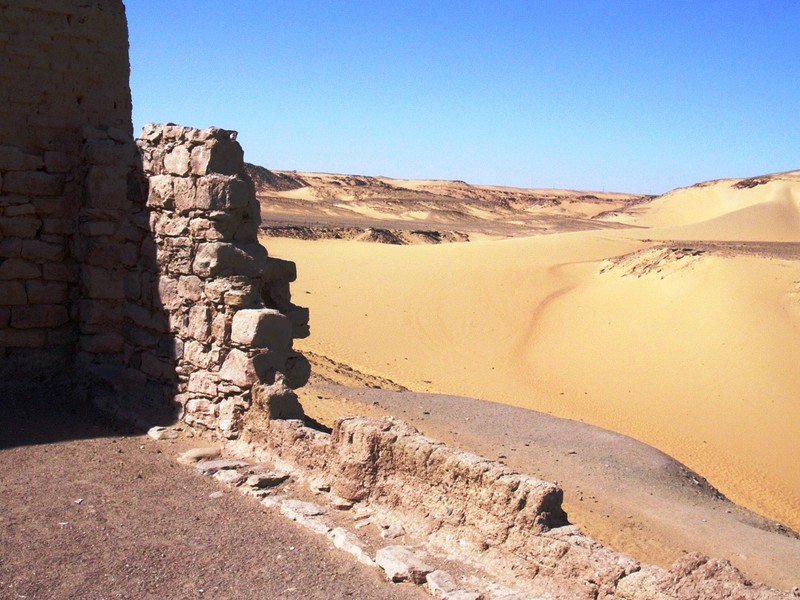
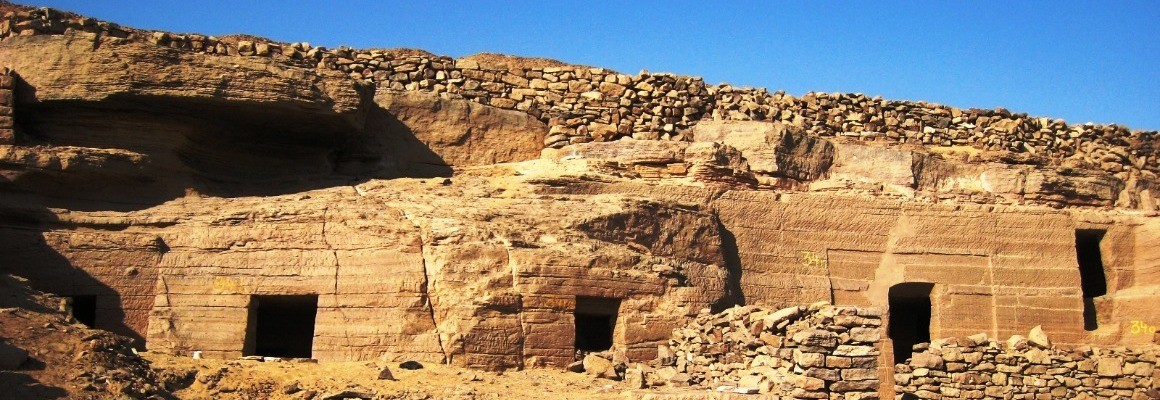
The monastery lies on the west bank of the Nile, north of the Qubbet el-Hawa necropolis and opposite Aswan. Its elevated position offers views over the river, desert hills and the Nile Valley. The rocky surroundings reflect the tradition of retreat and solitude associated with early monastic life.
How to get there and visiting tips
Visitors usually cross the Nile by boat and then continue on foot across the dry landscape and up to the monastery. Check local transport, access conditions and opening hours before travelling. Bring water, a hat, sun protection and comfortable shoes, as the route can be tiring in hot weather.
Inside the church and painted chambers, avoid touching ancient surfaces and follow local photography rules. The Monastery of Saint Simeon offers a distinctive view of Aswan’s history through Coptic Christianity, medieval architecture and the everyday life of a monastic community.
Gallery