Temple of Kom Ombo – a double sanctuary on the Nile
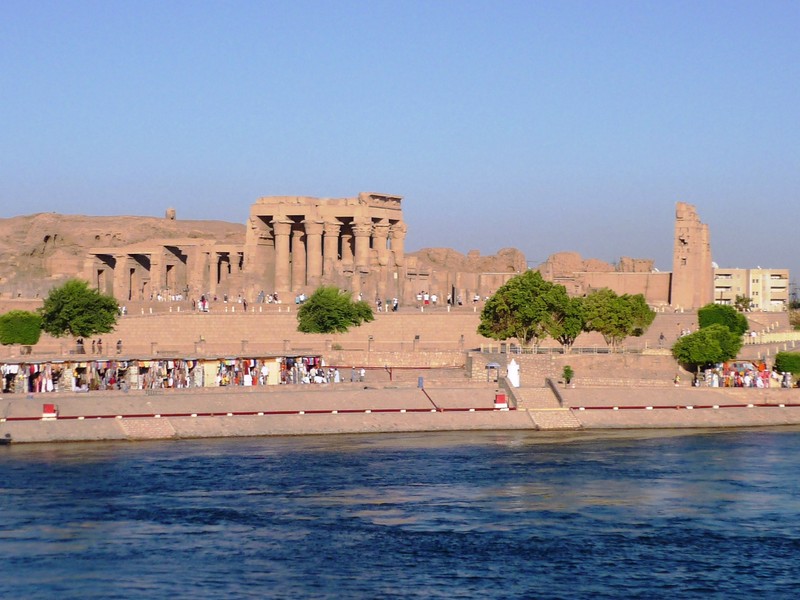
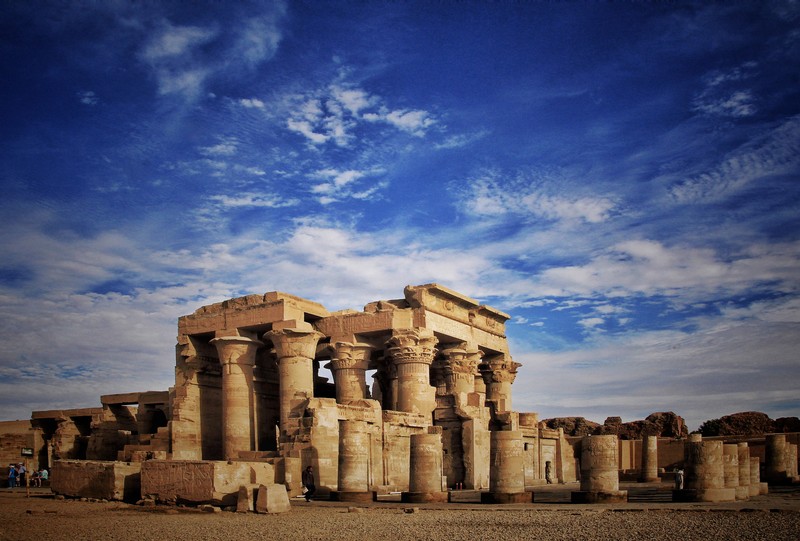
The Temple of Kom Ombo is one of the most unusual monuments of ancient Egypt. It stands on a rise beside the eastern bank of the Nile, about 45 kilometres north of Aswan. Its defining feature is its dedication to two deities: Sobek, the crocodile god, and Horus the Elder, depicted with a falcon’s head. The architecture reflects this dual dedication through two parallel axes and two sanctuaries.
History of the temple
A sanctuary stood in this area as early as the New Kingdom, but most of the surviving complex dates to the Greco-Roman period. Construction began under the Ptolemaic dynasty, and decoration continued over subsequent centuries. One of the earliest royal names recorded at the temple is that of Ptolemy VI Philometor, who ruled in the second century BC. Much of the relief decoration was completed under Ptolemy XII.
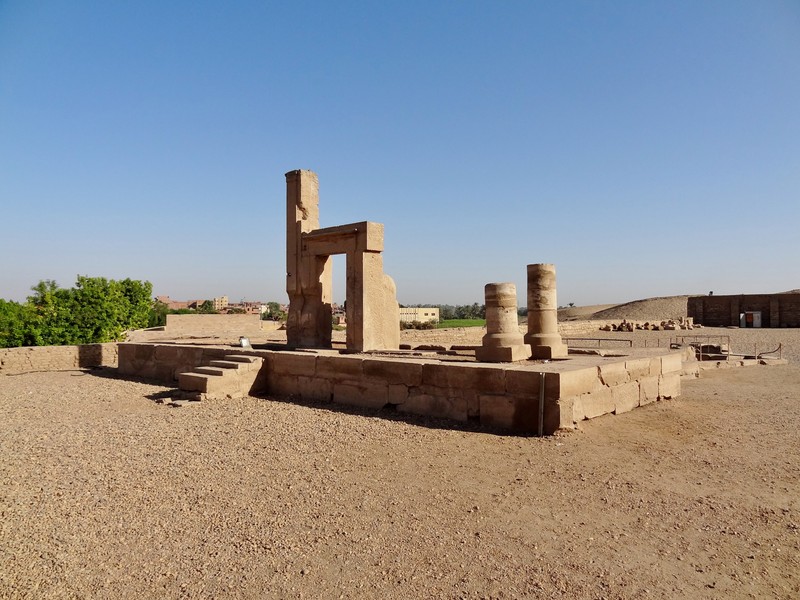
The temple remained in use during the Roman period. Over time, parts of the complex were damaged by Nile floods and earthquakes, while stone was reused in other buildings. Despite these losses, the surviving walls, columns and reliefs reveal its architectural and religious importance.
Two gods and two sanctuaries
The southern part of the temple was dedicated to Sobek, a deity associated with crocodiles, water, fertility and the Nile inundation. He was worshipped here alongside Hathor and the moon god Khonsu. The northern part was dedicated to Horus the Elder, also known as Harwer, who was associated with kingship and victory over Seth. His divine family included Ta-senet-nefert and Panebtawy.
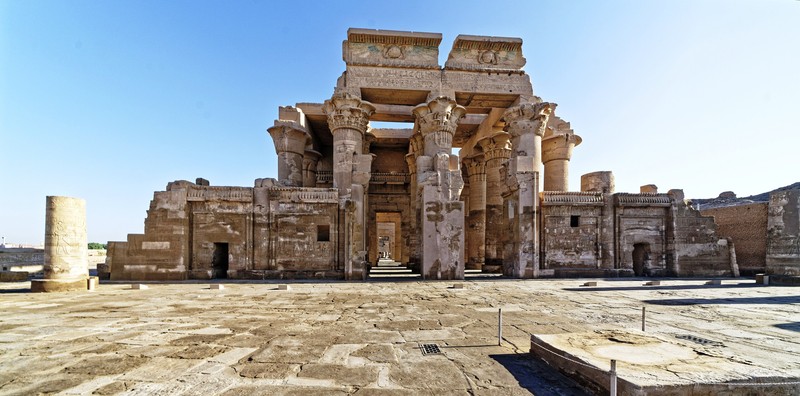
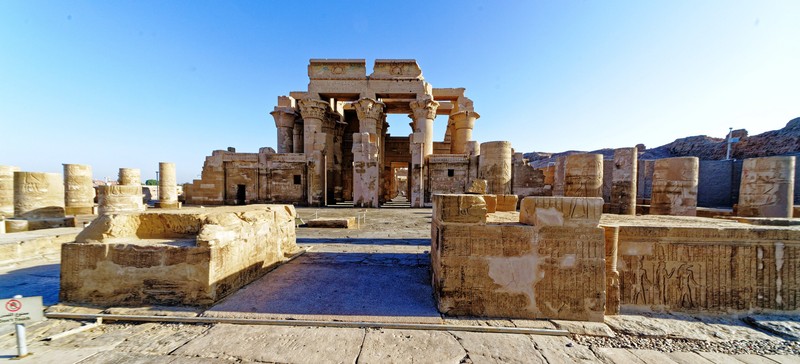
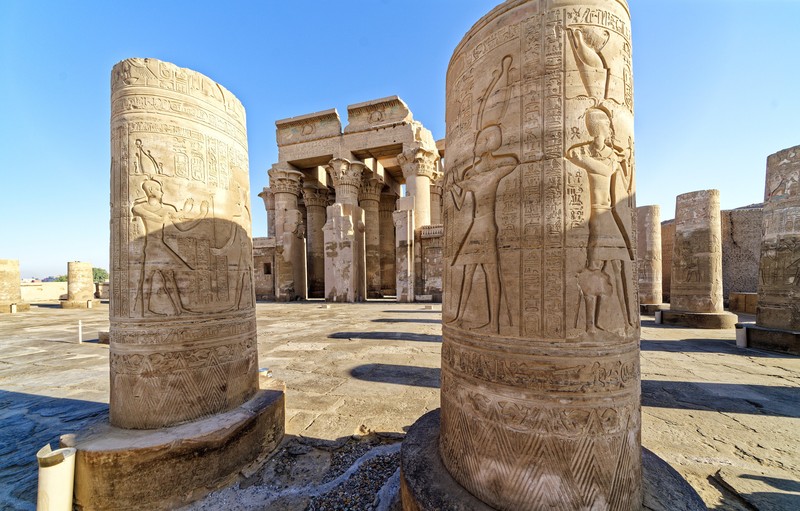
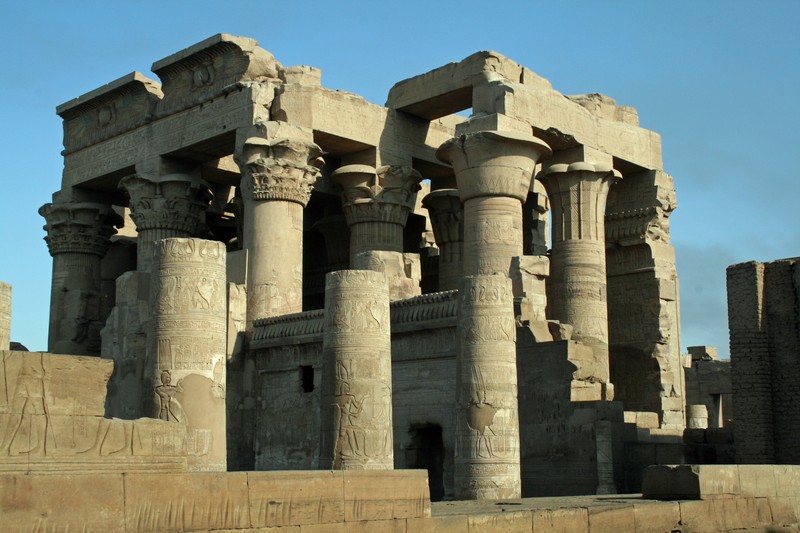
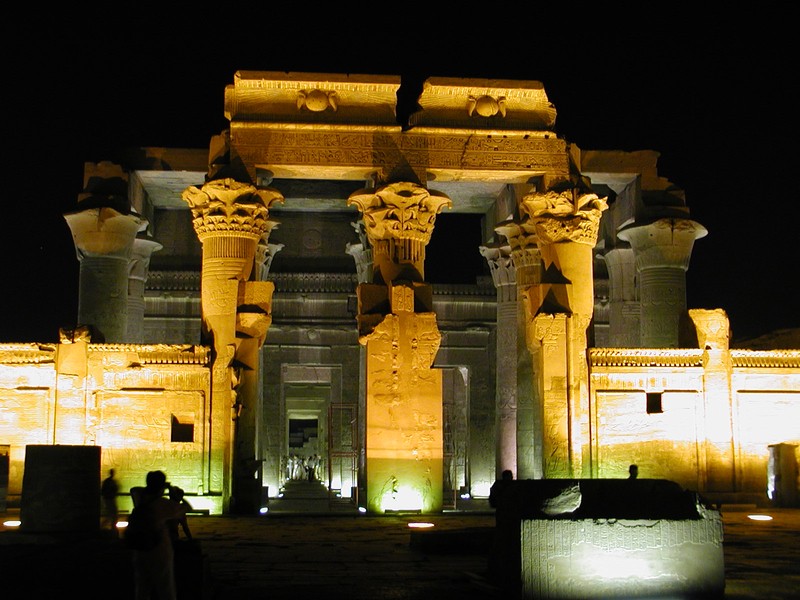
This dual dedication shaped the entire plan. Two parallel routes pass through columned halls and inner rooms, ending at separate sanctuaries. The symmetry is not merely architectural: it expresses the presence of two deities and their distinct religious traditions.
Columns, halls and reliefs
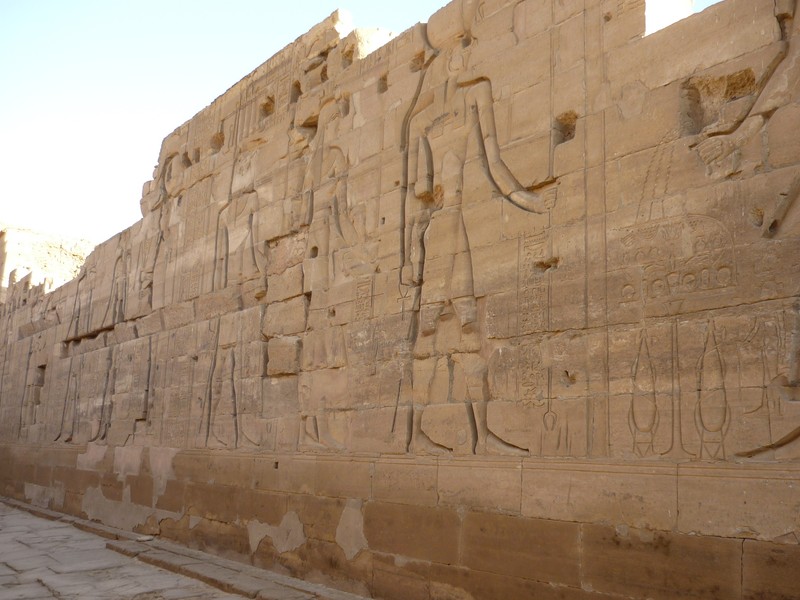
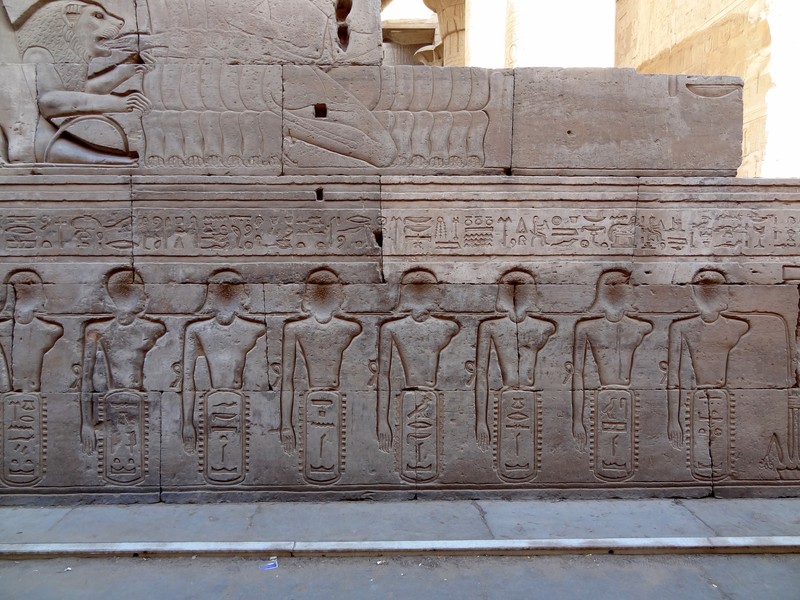
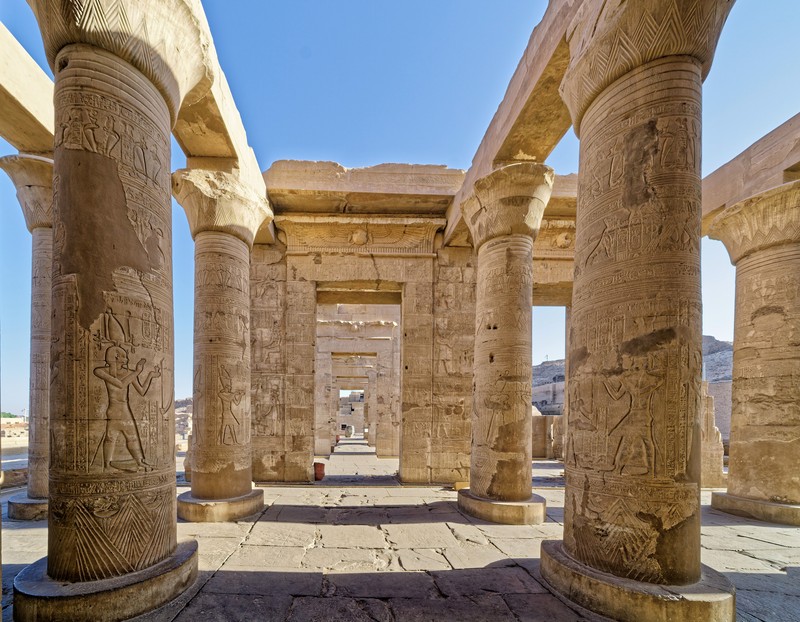
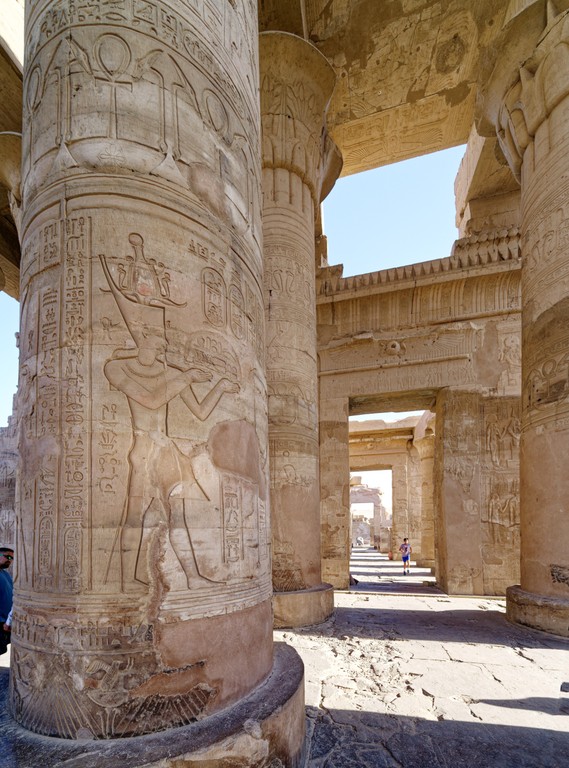
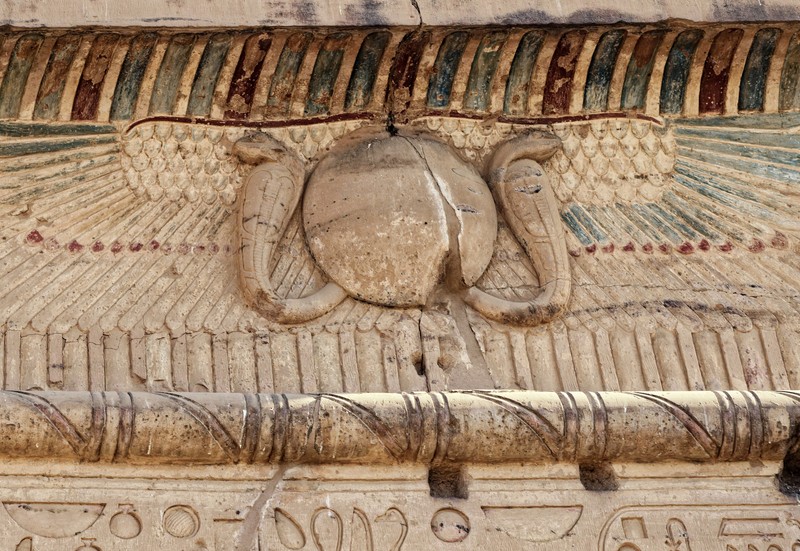
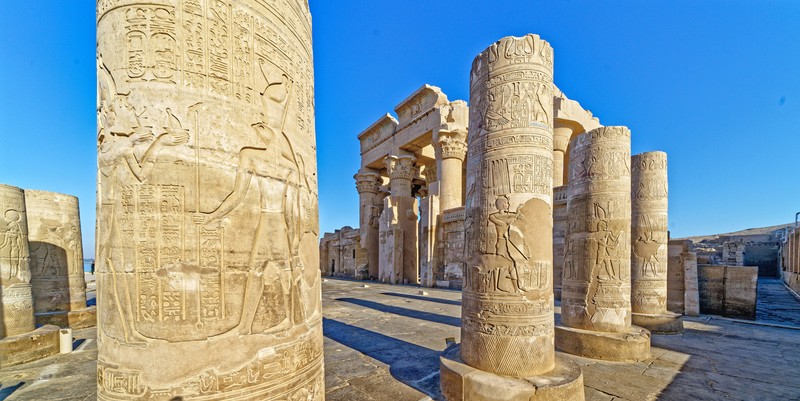
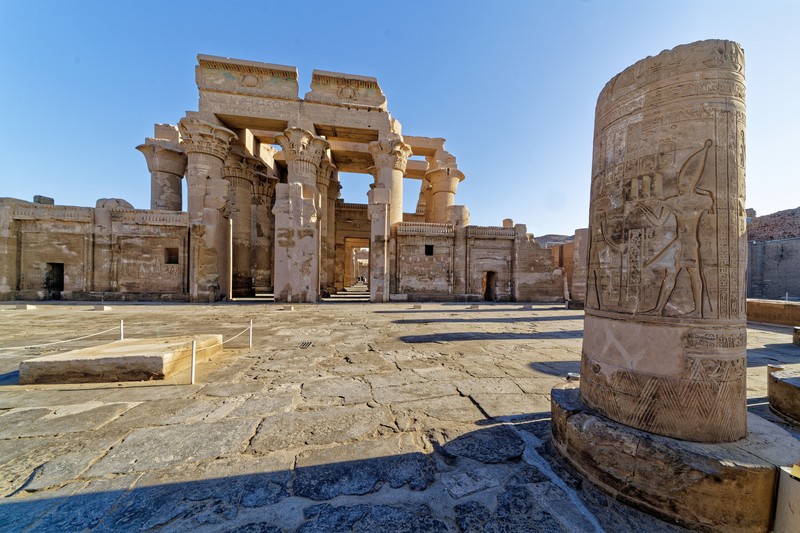
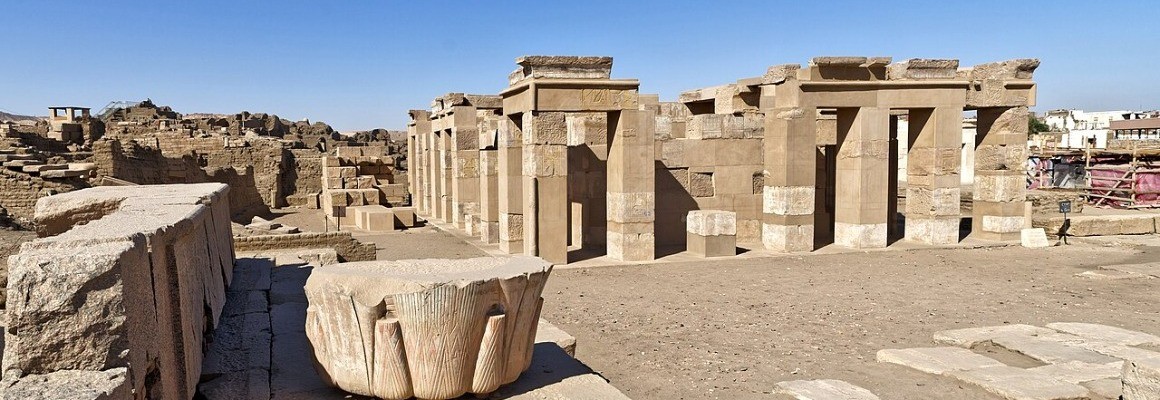
Although parts of the outer complex have disappeared, visitors can still see remains of the entrance area, courtyard, columned halls and inner chambers. The decorated column capitals and stone reliefs depicting kings, gods and rituals are especially notable. The two sanctuaries lay deep inside the temple, where the most important cult activities took place.
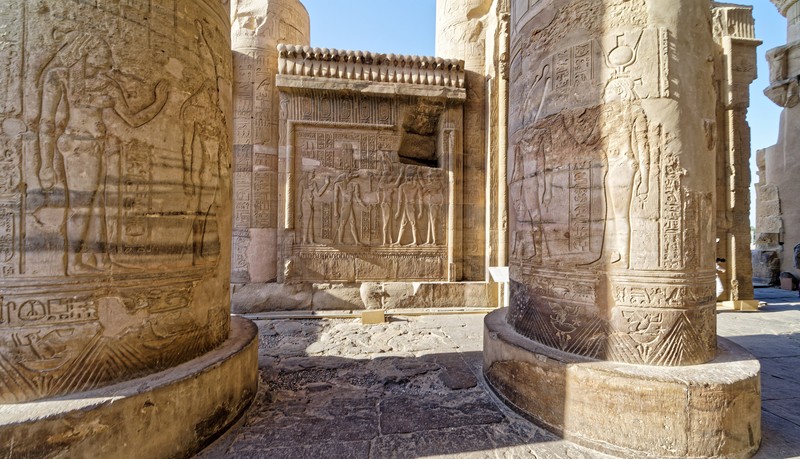
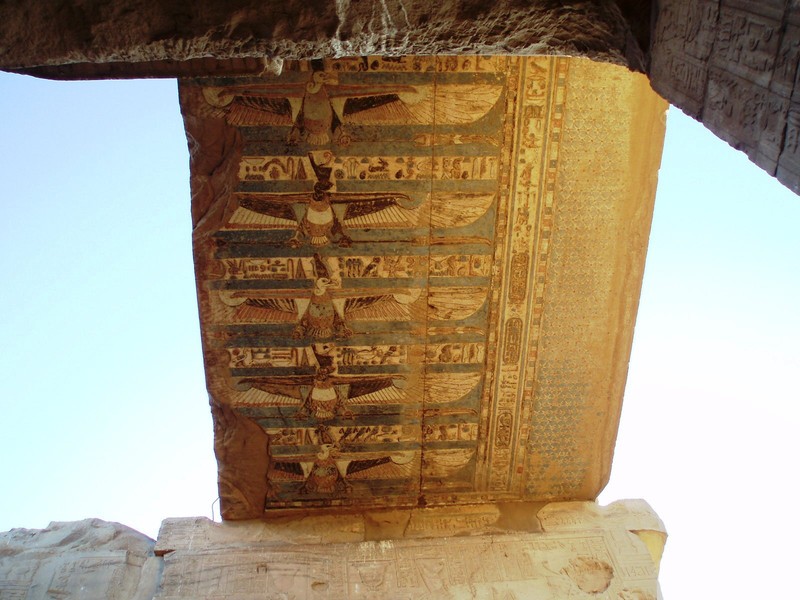
Reliefs show rulers making offerings to the gods and performing acts associated with maintaining cosmic order. Even damaged scenes remain valuable evidence for studying Egyptian religious life during the Greco-Roman era.
Medical instruments and ritual calendars
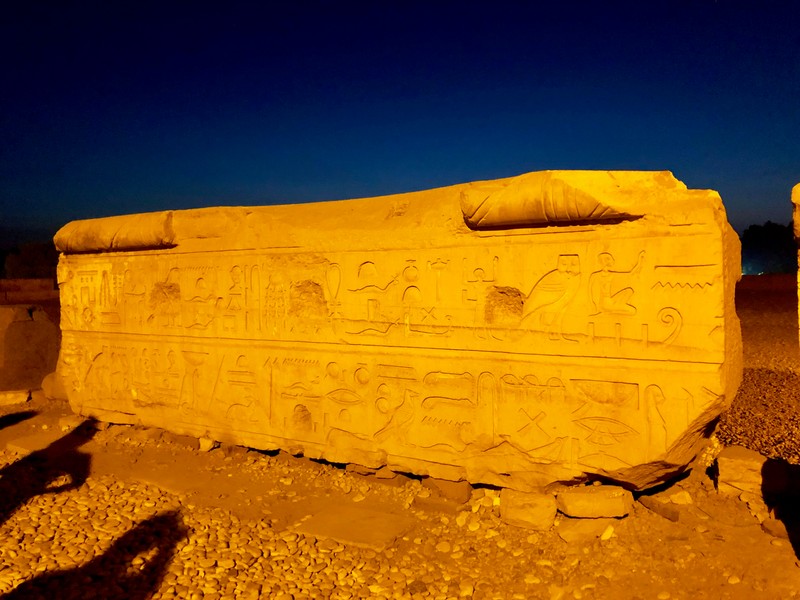
One of the temple’s best-known reliefs depicts objects often interpreted as surgical instruments. Some resemble forceps, knives and other medical tools, although certain items may also have had ritual functions. The walls also preserve calendar inscriptions listing festivals, temple ceremonies and dates of religious observances.
Crocodiles and the Crocodile Museum
Sobek held a special place in the religious life of Kom Ombo. Crocodiles were associated with the power of the Nile, danger and fertility, so they were both feared and revered. In ancient times, crocodiles could be mummified and offered to the deity.
Beside the temple, the Crocodile Museum displays mummified Nile crocodiles discovered during archaeological work, along with statues of Sobek and other objects connected with his cult. The museum provides insight into the importance of crocodiles in local religion and can easily be visited together with the temple.
Visiting the Temple of Kom Ombo
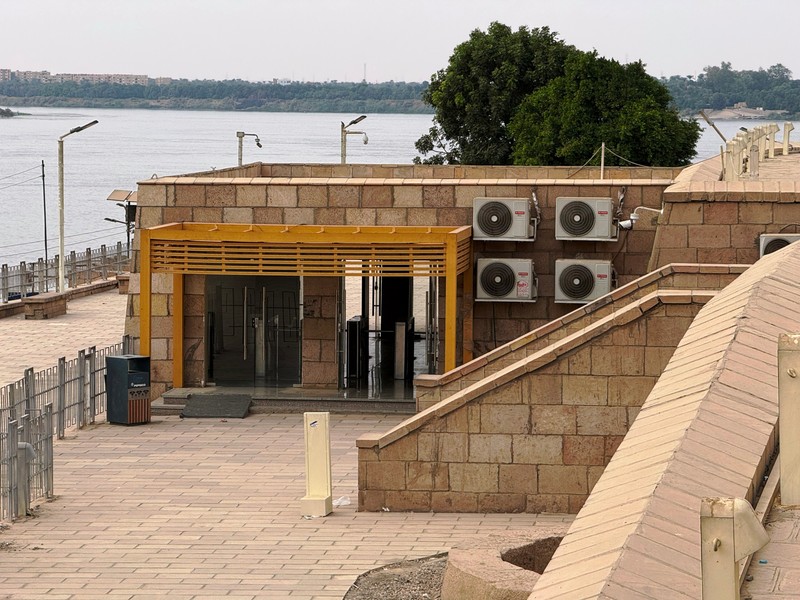
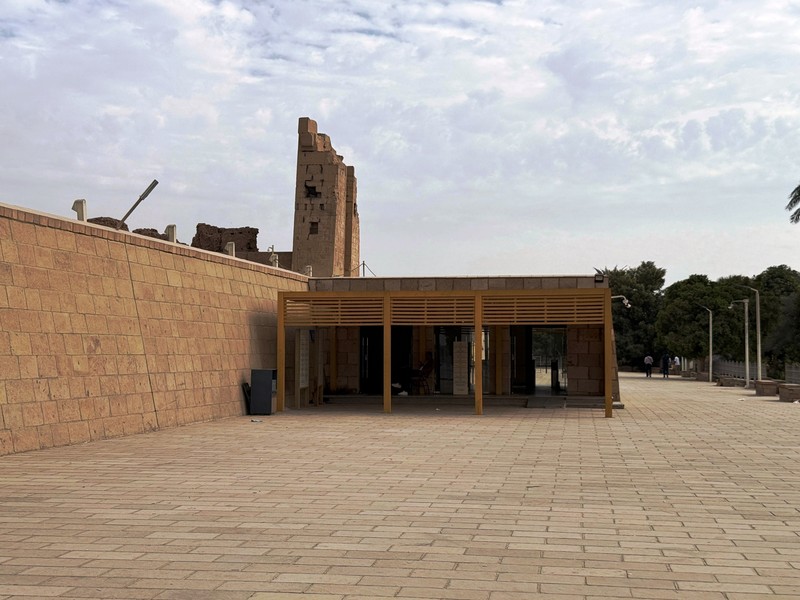
The temple is in the town of Kom Ombo on the Nile’s eastern bank, between Luxor and Aswan. It is a common stop on Nile cruises and day trips from Aswan. Allow enough time to appreciate the symmetrical layout, columns, reliefs and twin sanctuaries. Visiting in the morning or later in the day can make the heat easier to manage. Bring water, sun protection and comfortable shoes, and check current opening hours before travelling.
Why visit Kom Ombo?
Kom Ombo is a rare example of an ancient Egyptian temple whose architecture reflects the worship of two gods. Its parallel passages and sanctuaries, images of Sobek and Horus, calendar inscriptions and scenes with medical instruments reveal different aspects of ancient Egyptian life. Together with the Crocodile Museum, it is one of the most memorable historical sites near Aswan.
Gallery