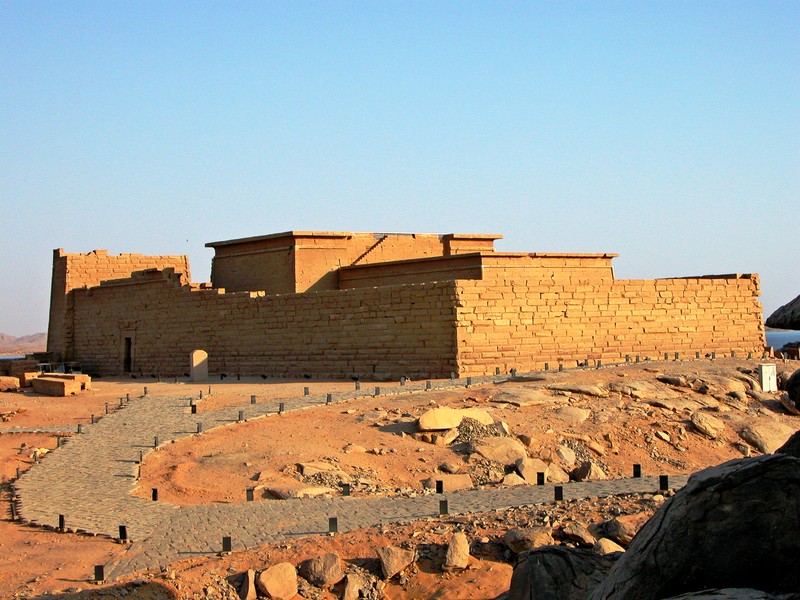
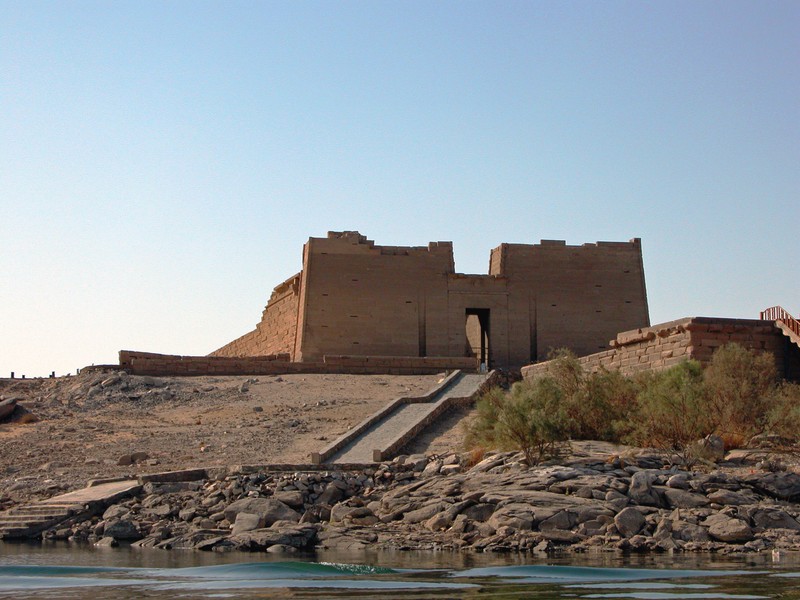
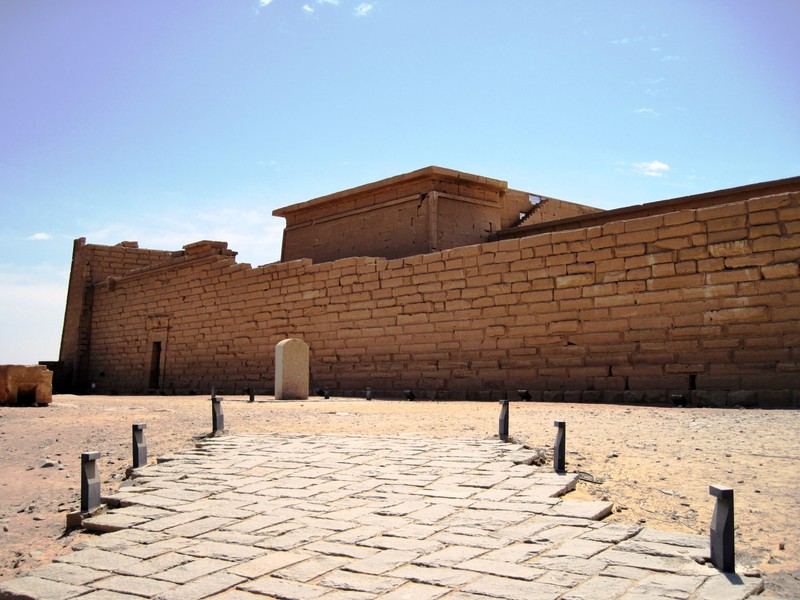
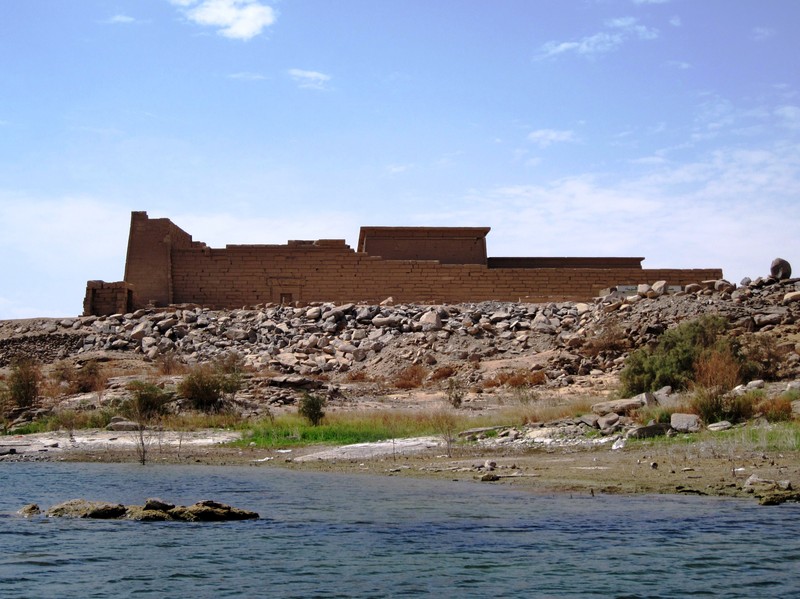
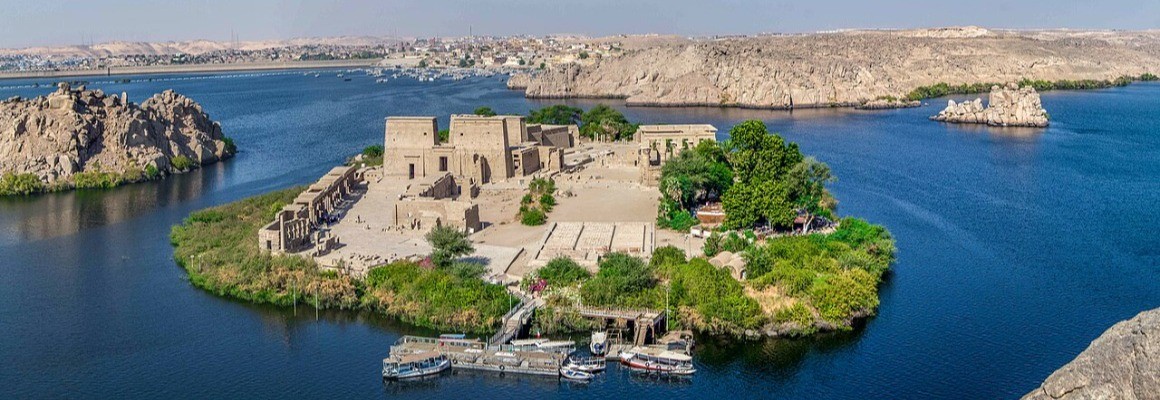
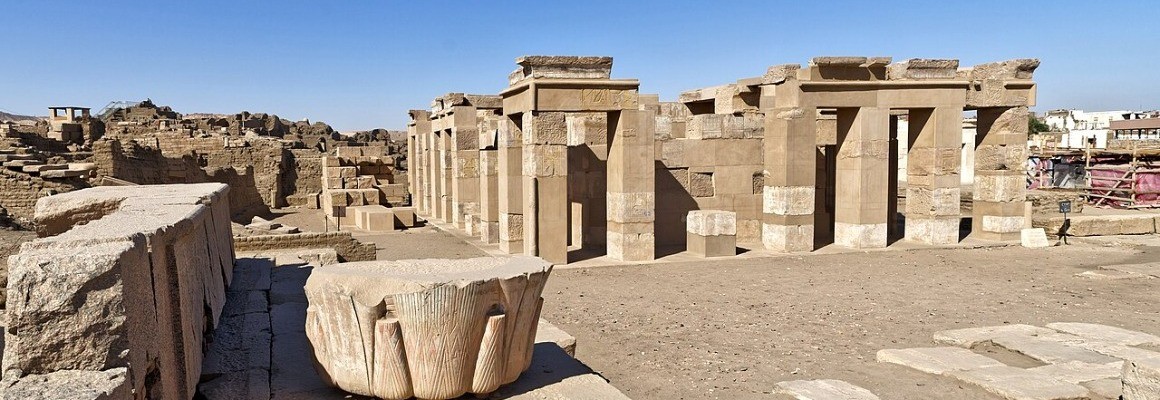
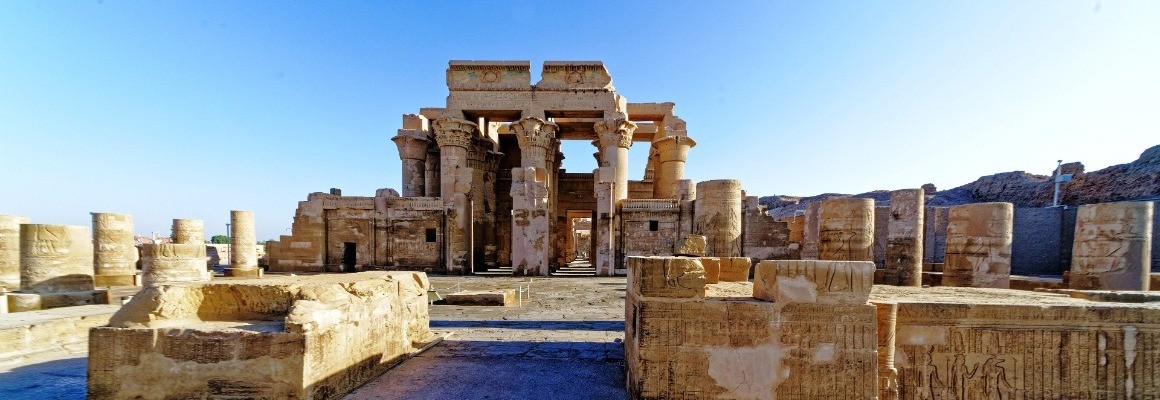
The Temple of Kalabsha is one of the largest and best-preserved free-standing temples of ancient Nubia. It stands on New Kalabsha Island near the Aswan High Dam in southern Egypt. The main structure was built during the reign of the Roman emperor Augustus around the turn of the era and was dedicated to the Nubian god Mandulis. Isis and Osiris were also worshipped here. Its monumental gateway, open courtyard, columned hall and numerous reliefs reveal the interaction of Egyptian, Nubian and Greco-Roman traditions.
History of the Temple of Kalabsha
The sacred site existed long before the surviving temple was built. An earlier sanctuary associated with the reign of Pharaoh Amenhotep II stood in the area. Later, during the rule of Octavian Augustus, the first Roman emperor, a new temple was constructed and became one of the most important religious monuments in Lower Nubia.
Construction began around the late first century BCE and continued into the first decades CE. Some decorative work remained unfinished, while certain inscriptions and details belong to later reigns. The temple is therefore an important source for understanding the transition from the Egyptian dynasties to Roman rule.
Kalabsha occupied a strategically important part of Nubia, where trade and cultural connections linked Egypt with regions farther south along the Nile. The temple served as a place of worship and demonstrated Roman authority in the region. At the same time, the cult of Mandulis retained local characteristics and reflected the distinctive religious traditions of Nubia.
Mandulis and the religious significance
The principal deity was Mandulis, a god worshipped in Lower Nubia and associated with solar symbolism. His cult played an important role in local religious life. Solar deities were commonly connected with light, vitality, renewal and the maintenance of cosmic order.
Isis and Osiris were also honoured at the temple. Isis was one of the most widely worshipped goddesses of the ancient world and was associated with motherhood, protection and magic. Osiris represented renewal and the afterlife. The coexistence of these cults reflects the close interaction between Egyptian and Nubian religious traditions.
Architecture and layout
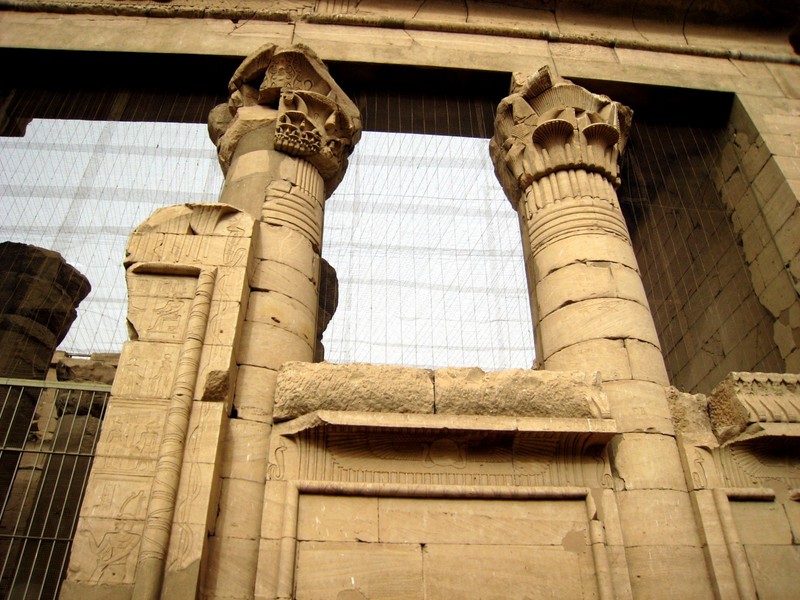
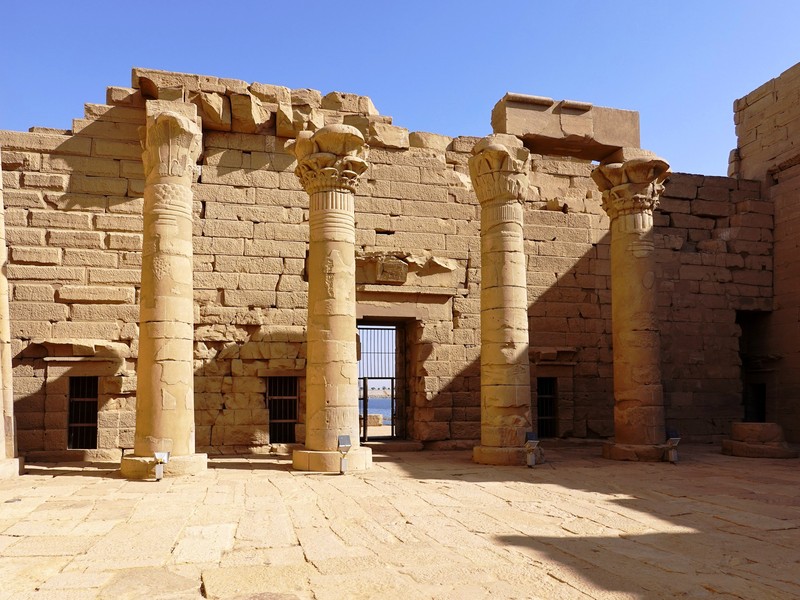
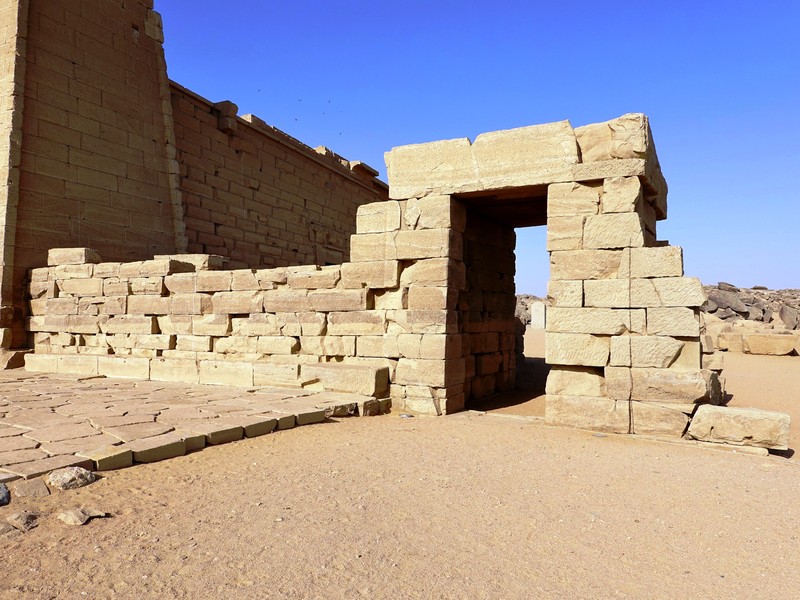
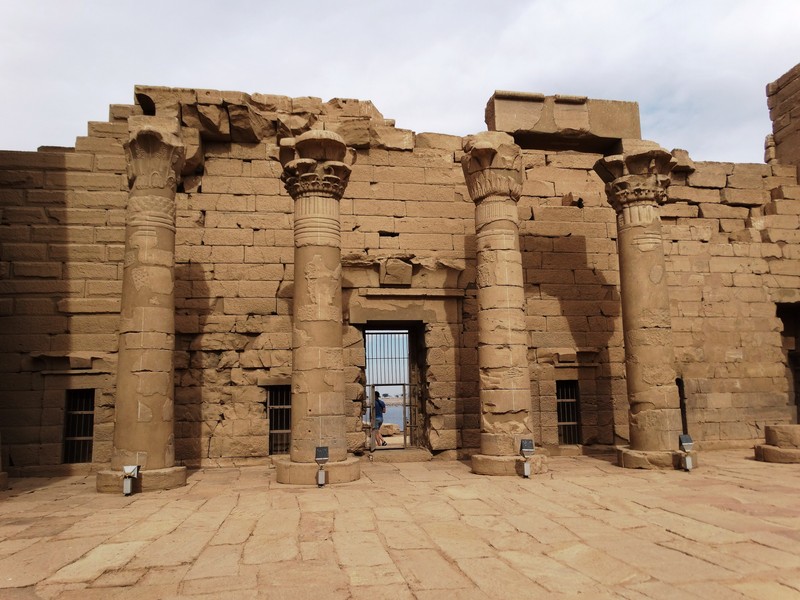
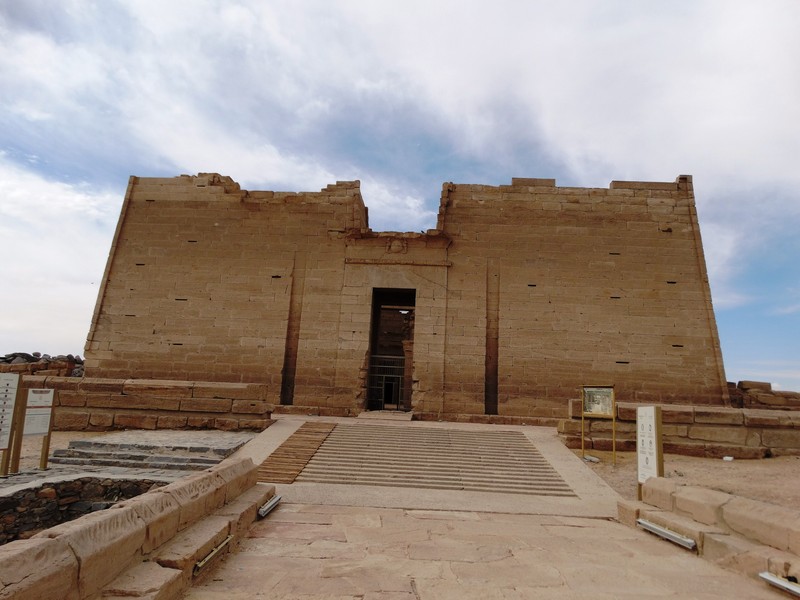
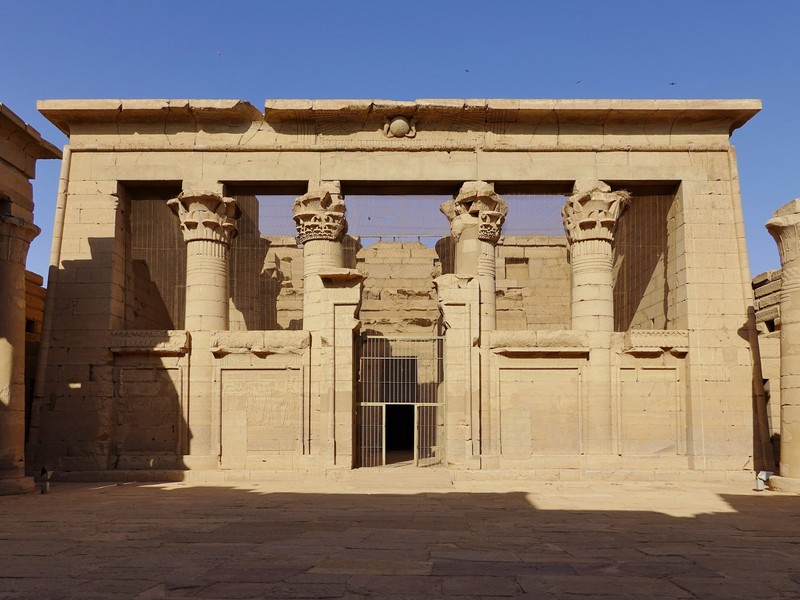
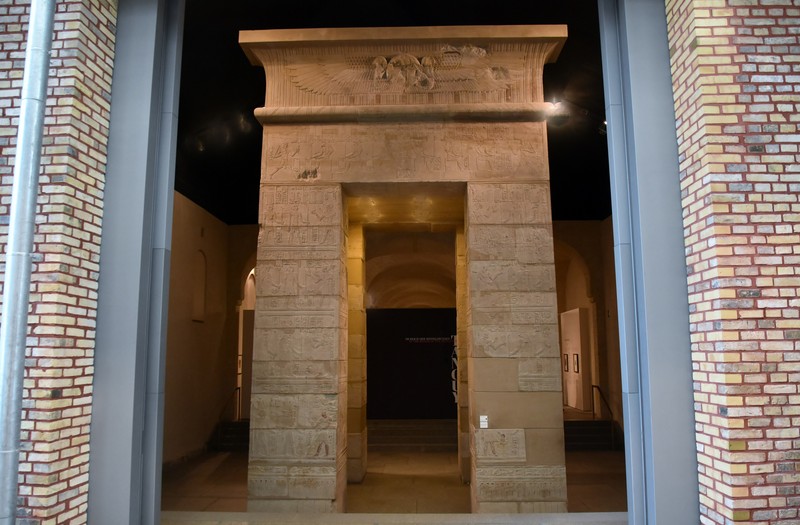
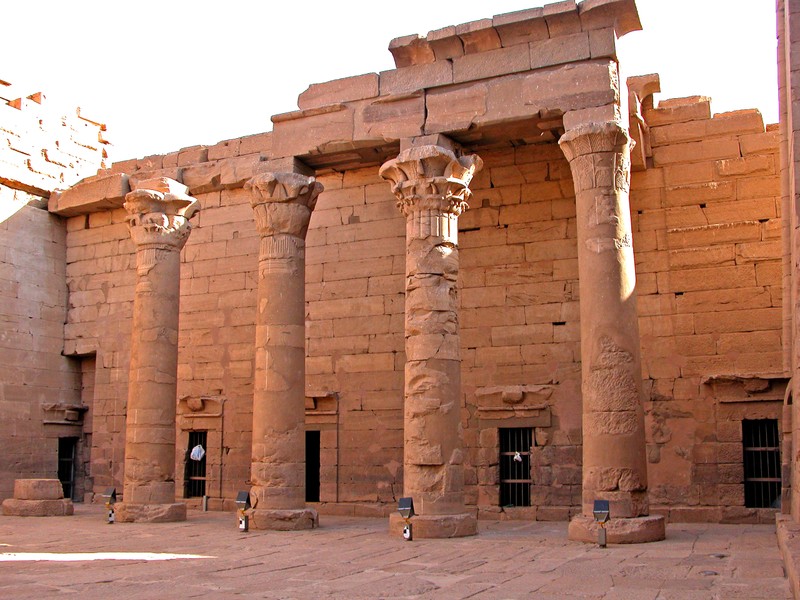
The Temple of Kalabsha is a large sandstone structure. Its traditional plan begins with a monumental gateway known as a pylon. Beyond it lies an open courtyard, followed by a hypostyle hall with columns, transverse offering chambers and inner rooms leading to the sanctuary.
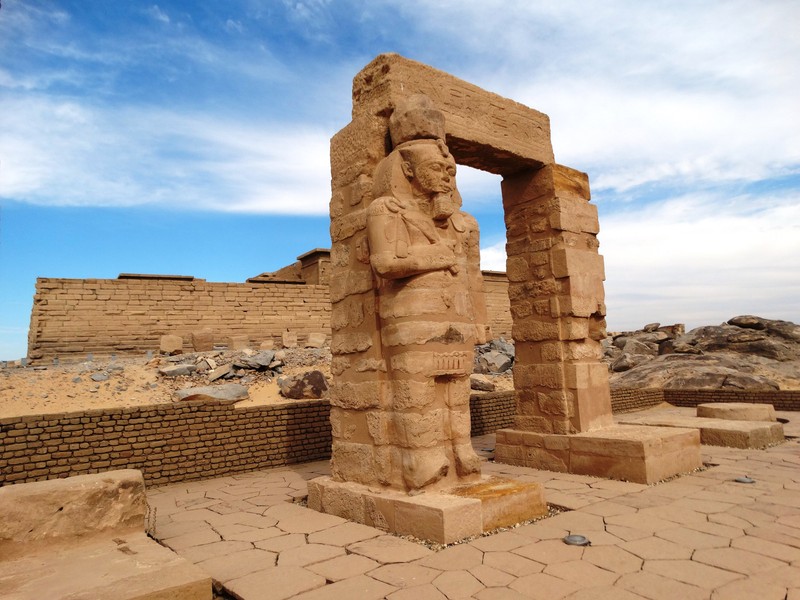
The slender columns and their broad spacing show the influence of Greco-Roman architectural traditions. Nevertheless, the reliefs, symbols and arrangement of sacred space retain characteristic features of Egyptian temple design. A partly rock-cut chapel dedicated to the Nubian god Dedwen stands to the southwest. A small chapel to the northeast is thought to date from the reign of Ptolemy IX in the second century BCE.
Reliefs, inscriptions and cultural heritage
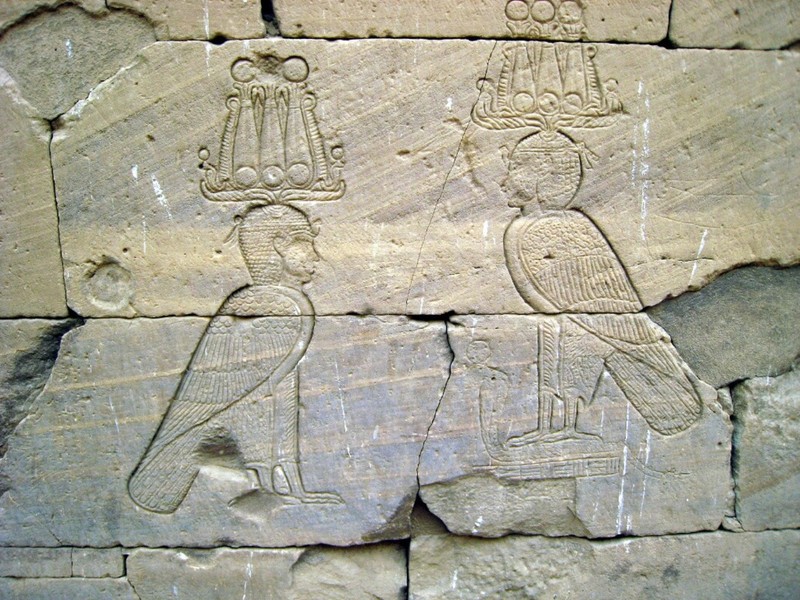
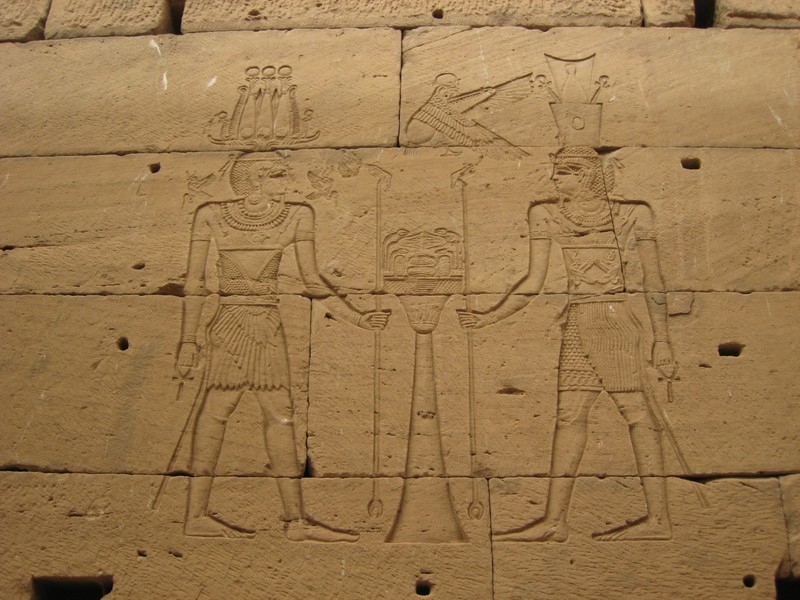
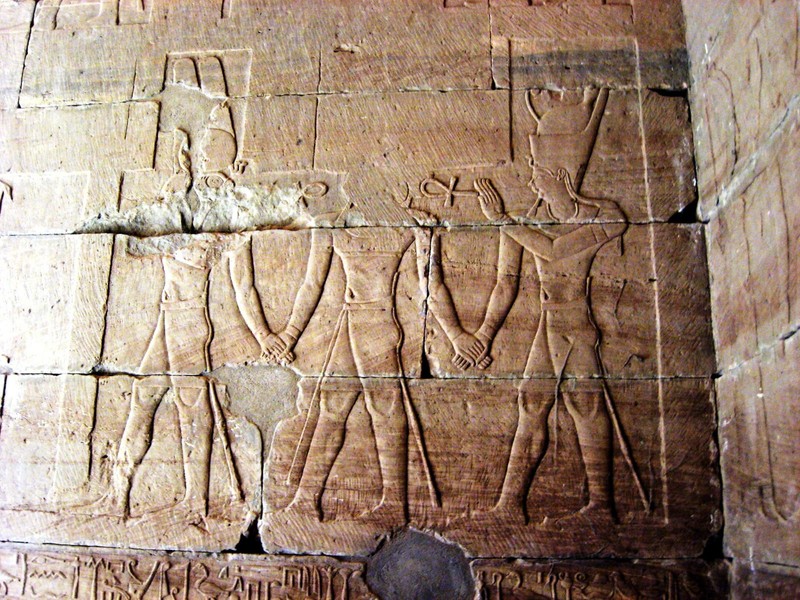
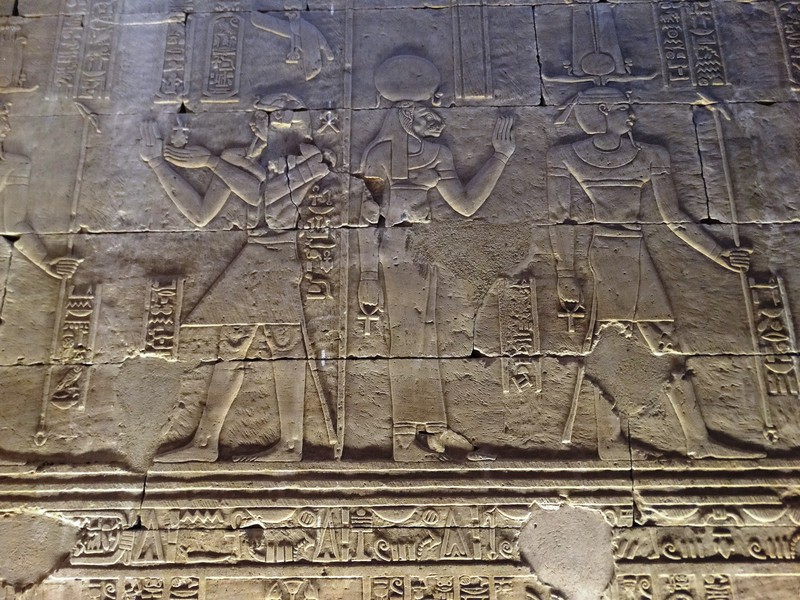
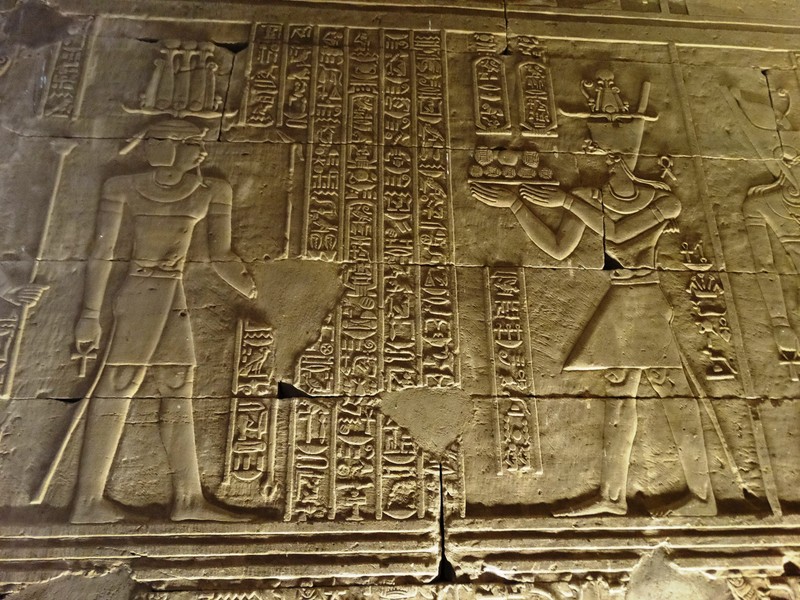
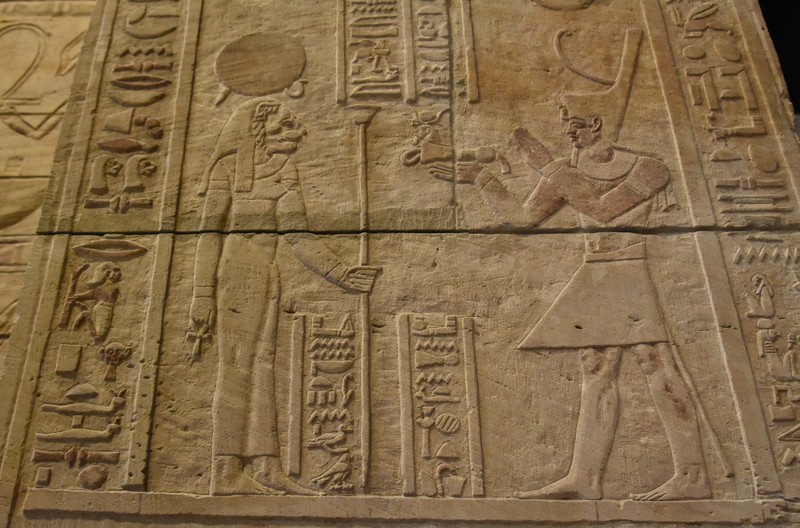
The walls are decorated with reliefs, images of deities and hieroglyphic inscriptions. They depict religious ceremonies, offerings and symbolic scenes connected with royal authority. Inscriptions in different languages and writing traditions, including Meroitic and Greek, are particularly valuable because they reveal the multilingual cultural environment of Nubia.
Crosses carved into the walls also survive from the period when Christianity spread through the region. The sanctuary was later used as a Christian church. These traces show how the building continued to serve religious purposes after the decline of the ancient cults and was adapted to new spiritual needs.
Relocation and the rescue from flooding
During the twentieth century, the construction of the Aswan High Dam and the formation of Lake Nasser threatened to submerge the temple. In 1960, UNESCO launched an international campaign to preserve Nubia’s archaeological heritage. Between 1961 and 1963, the temple was dismantled into blocks, transported and reconstructed on higher ground near the dam, with German participation.
Approximately 1,600 sandstone blocks were moved, some weighing as much as 20 tonnes. New Kalabsha Island also contains the Kiosk of Qertassi, a small ancient Roman monument with columns. In 1979, the Nubian monuments became part of the UNESCO World Heritage property “Nubian Monuments from Abu Simbel to Philae.”
What to see and how to visit
Begin at the monumental pylon and continue through the open courtyard into the columned hall and inner chambers. Look for the reliefs, hieroglyphic inscriptions, the chapel of Dedwen and the Christian crosses. The visit can be combined with the nearby Kiosk of Qertassi and views across Lake Nasser.
The temple stands on New Kalabsha Island near the Aswan High Dam, approximately 15 km from central Aswan in a straight line. Visitors generally arrive on organised excursions. Check opening hours, transport arrangements and island access before travelling.
Gallery